 CN Sweaters
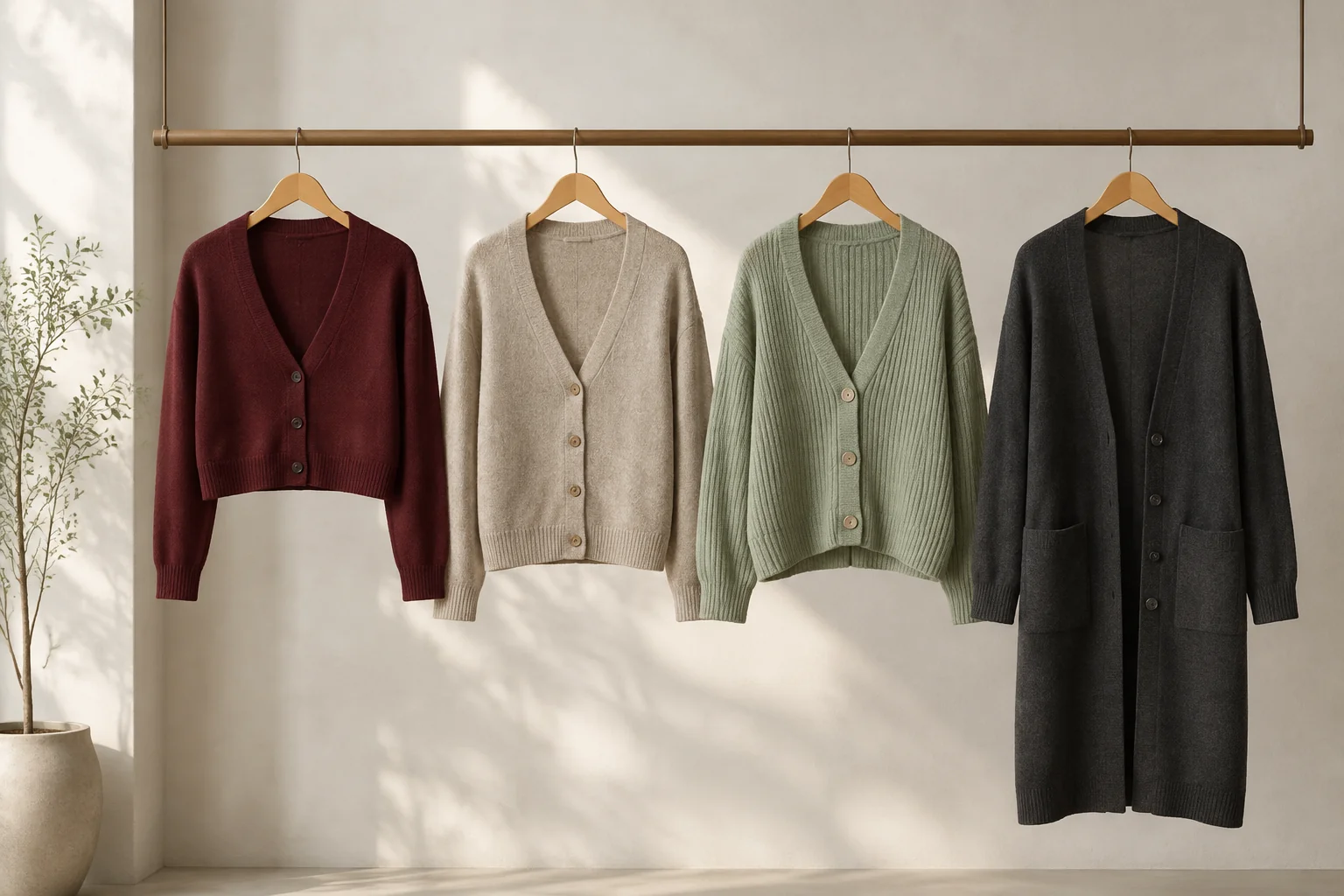
A fall buy of womens cardigan sweaters should start with a subtraction question: which proposed shape would the customer miss if it disappeared? Cropped, fitted, oversized and longline descriptions do not automatically identify four separate needs. A cropped cardigan can also be fitted; an oversized cardigan can also be long. Buying each adjective as a separate category can divide the budget without adding useful choice.
The decision is whether each combination of length, volume and wearing layer deserves its own stock, then how much color and size depth that choice can support. This guide addresses adult womenswear assortment editing, not a universal size ratio or a forecast of customer demand. Use current channel evidence where available and mark untested preferences as assumptions. No silhouette, fiber name or attractive sample guarantees sell-through.
Which Womens Cardigan Sweaters Deserve Separate Stock?
Separate length from fit volume
Draw two columns before naming styles: where the hem should finish, and how the garment should sit around the torso and arms. Then add the intended underlayer and whether the front is normally fastened. This exposes a distinction that a rail of samples can hide. Two short cardigans may compete directly even when one has a different neckline; two similar-looking long cardigans may serve different stature groups.
Describe a specific use, such as a neat layer over a blouse with high-waisted trousers, rather than assuming that every customer wants the same autumn outfit. The broader fall cardigan buying guide covers range architecture. Here the narrower question is which women’s proportions add a job that the current assortment cannot perform.
Make each proposed addition displace something
For every candidate, name the closest existing style, the difference a wearer can actually experience, and the stock it would displace. A new button, photograph or commercial color name is weak evidence of a new use. A different layer capacity, usable body length or supported fit block may justify separate stock, but only if the target channel can explain the need.
| Proposed shape | Distinct need to investigate | Evidence that supports keeping it | Reason to cut or defer |
|---|---|---|---|
| Cropped and fitted | A short, fastened top for a defined waist position | Relevant fit and outfit feedback | Duplicates the existing short top |
| Regular and fitted | A neat layer over a named blouse | Closure comfort across the intended range | Gaping persists in the target fit block |
| Short and oversized | Volume without a long hem | Shoulder and sleeve mobility with the planned layer | Extra volume has no channel demand |
| Longline and relaxed | Coverage for a defined stature and outfit | Length and pocket usability on representative wearers | Length works only on the presentation form |
These are decision examples, not recommended quantities. If evidence is missing, retain the idea outside the committed buy. The women’s knitwear sourcing discussion can support supplier selection after the commercial gap is clear; a supplier’s broad catalogue does not establish that your range needs every shape.
Make the comparison at the planned retail position as well as on the sample rail. If the longline costs more to buy and occupies a higher selling price, ask whether customers are choosing extra coverage, a different material proposition or simply the appearance of length. If the answer is unclear, the buyer cannot yet tell whether it complements the fitted core or competes for the same spending.
When Should Fit Evidence Change the Buy?
Distinguish a styling preference from a block problem
A preference for a lower hem is different from a closure that pulls across the bust. Record the wearing state, underlayer and affected size before changing quantities. If the issue disappears when the intended blouse replaces an unusually bulky fitting garment, the evidence may call for clearer presentation rather than a redesigned cardigan. If it persists on appropriate wearers, greater buying depth will simply expose more units to the same problem.
Keep a fitted style conditional until the fit owner decides whether the correction changes the block or only one detail. Do not move its proposed units into a larger nominal size as an informal repair. That can change shoulder, sleeve and neckline proportions without resolving the original issue. The women’s knitwear maker questions address supplier capability; the buying decision here is whether the available evidence supports stock in this particular block.
Test the proportion that creates the selling claim
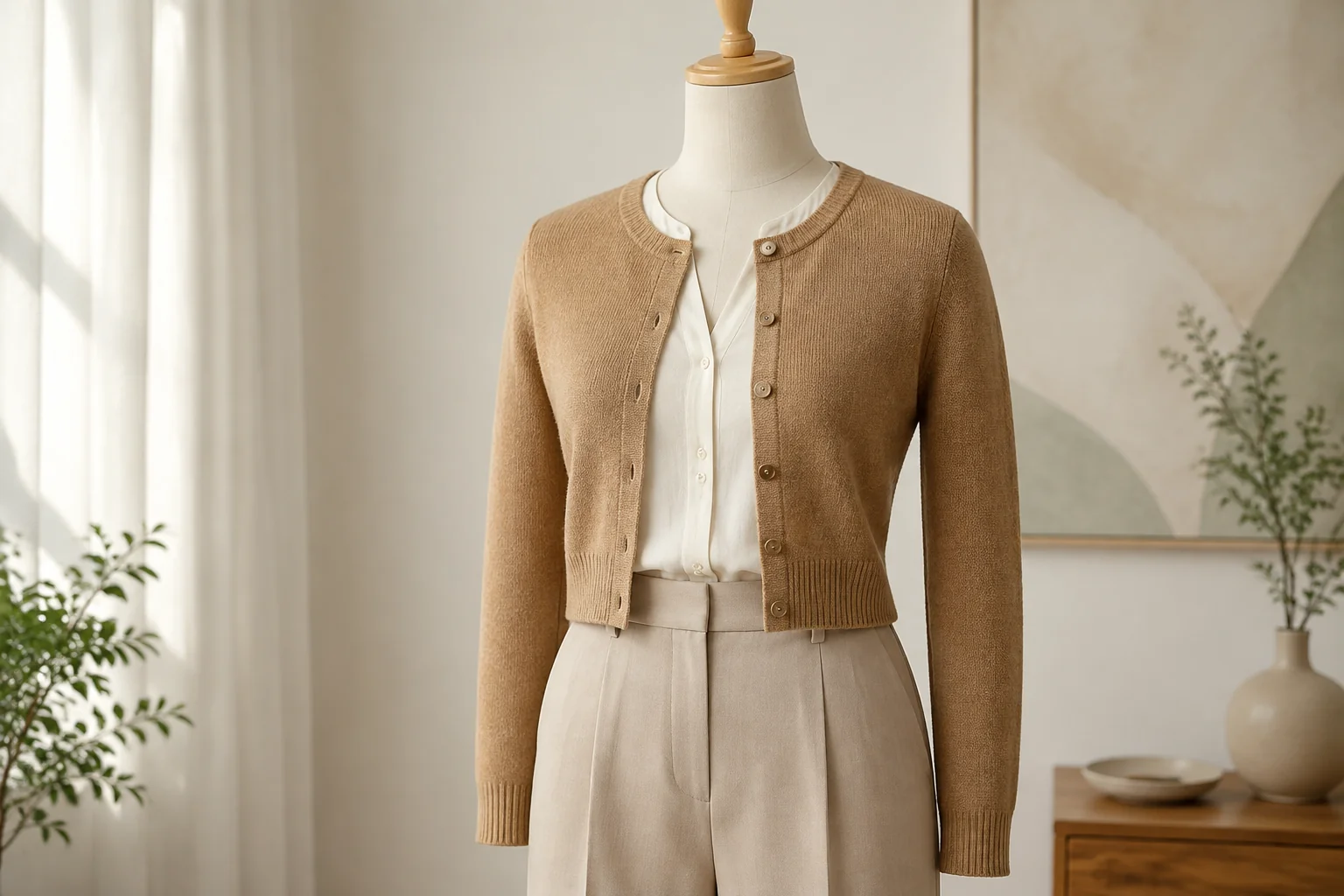
For cropped styles, examine the relationship between hem and intended waistband when standing and sitting. For oversized shapes, confirm that deliberate volume does not obscure sleeve function or create an unintended longline result. For longline styles, check the target stature, walking movement and pocket reach. The same middle-size photograph cannot answer all three questions.
Refer detailed grade work to the cropped cardigan sizing guide and the long cardigan sizing review. Use their topics to request relevant evidence, not to copy an unverified measurement increment. If only the base size has been resolved, keep range-edge depth provisional and name the evidence needed before it becomes a purchase commitment.
An unresolved fit issue does not always require dropping the entire design. It may justify a corrected sample, a separately supported stature block or postponement to a later offer. Record which outcome is being considered so that a temporary hold does not become an unexplained permanent exclusion.
How Much Color Breadth Can Each Shape Support?
Count purchasable combinations before assigning units
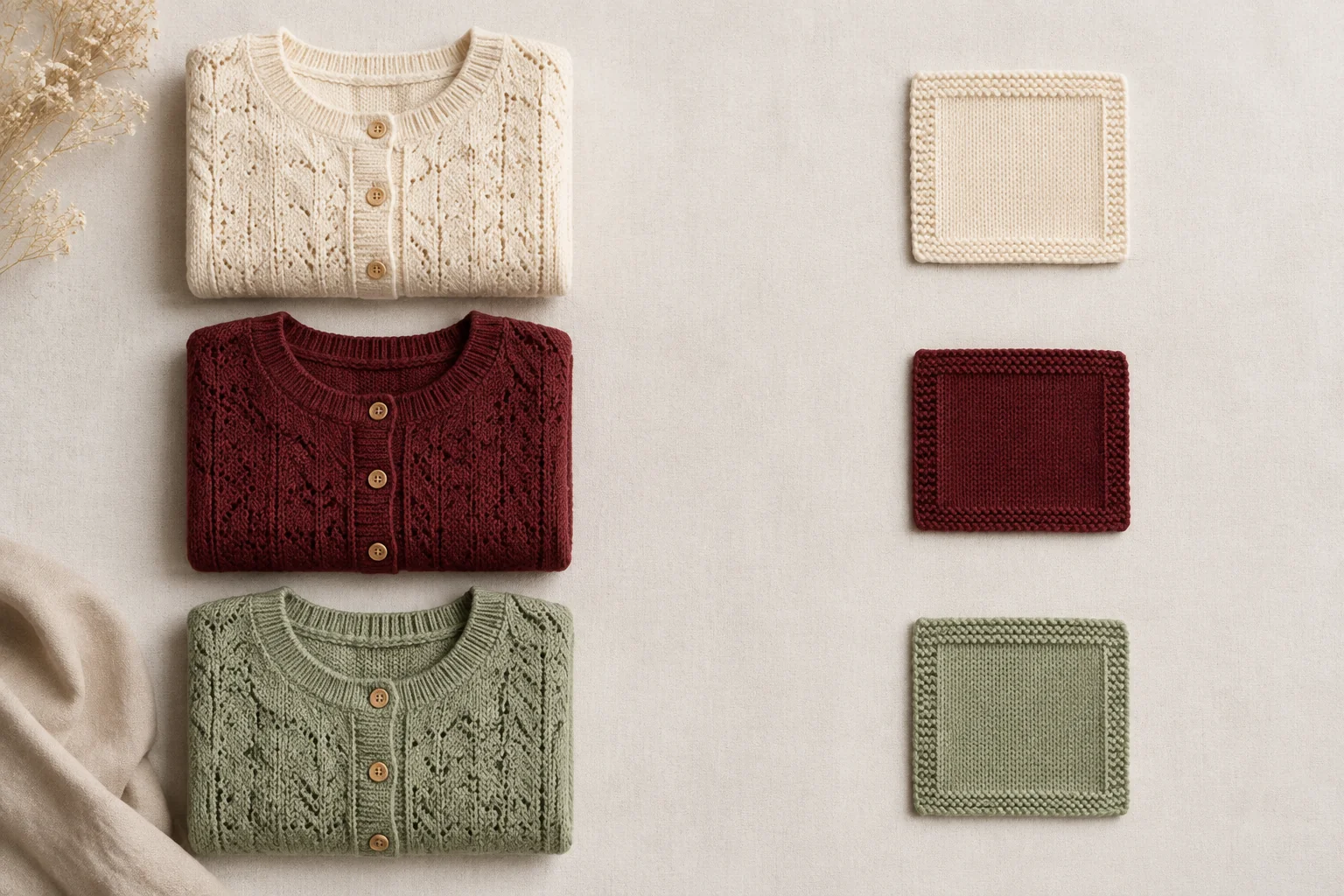
Use one row for each style-color-size combination. In a hypothetical example, four shapes offered in three colors and five sizes create 60 combinations. Removing one color from two shapes leaves 50 combinations, not 40. If the total opening buy were 600 units, equal allocation would average ten units per combination before the edit and twelve afterward. These averages illustrate fragmentation; they are not an allocation recommendation or a production minimum.
Decide where the released units go using demand and fit evidence. A supported fitted core may deserve depth in its established colors while an untested longline shape remains narrow. Conversely, a longline block serving a documented gap may justify priority over another cropped variation. A neutral color is not automatically low risk, and a brighter shade is not automatically a small test.
The wholesale sweater SKU planning guide provides the wider inventory framework. For identifiers, GS1’s size and color guidance explains that distinct product variations need distinct GTINs. Where that identification system is used, reconcile the approved combinations with the item records; an attractive range sheet is not a substitute for distinguishable stock.
Do not spread one color success across every silhouette
Check whether a color sold because of its own demand, the garment carrying it, a promotion or better availability. A cream fitted cardigan worn as a top may face a different opacity requirement from a cream oversized layer worn open. A dark longline cardigan may solve a particular outfit need without proving the same shade should appear in all four shapes.
Attach the color decision to the actual construction. If several styles share a commercial shade but use different yarns or surfaces, separate the approvals and their dependencies. One delayed shade need not hold an unrelated confirmed color, but a shared material purchase can make the commitments commercially linked. Ask for that distinction before calling the range diversified.
For store distribution, check the proposed assortment at the destination level. A total that looks adequate across the business can leave an individual store with one size missing from each color. Decide whether a narrower local offer, online-only extension or different allocation better serves that channel. These are alternative distribution choices, not permission to advertise an unavailable combination or imply that every store carries the full range.
Which Sizes Need Depth Rather Than More Variants?
Use availability-aware evidence within each block
Sales counts are only useful alongside the period and conditions in which each size was available. A fitted size that sold out early should not look less important than an oversized size displayed all month merely because its final unit count is lower. Record stockouts, returns awaiting inspection, promotions and channel coverage before comparing performance.
Separate return reasons. A wrong-size exchange, unwanted color, damaged closure and unsuitable body length should not all become a single instruction to reduce that size. Aggregated reasons can identify the decision without sharing customer identities. If the available history belongs to a different block, state that limitation rather than presenting the ratio as directly transferable.
The cardigan fit comparison is a reminder to examine the actual block and wearing purpose, not to import another collection’s distribution. Commercial size labels alone do not establish equivalence between garments or customers.
Allocate only after the intended range is represented
Ask the fit owner which samples reveal the important changes in proportion, then connect those decisions to the proposed stock. The knit sweater grading guide covers the technical work. This assortment review should record the supported range, unresolved segment and consequence for opening depth, without pretending to replace grading expertise.
When an additional stature or fit block is justified, show its separate demand assumption and quantities. Do not hide it inside a broad size label that suggests one continuous approved fit. Likewise, do not delete range-edge sizes simply to make the matrix easier. First determine whether the constraint is missing fit evidence, insufficient observed demand, an operational condition or a weak initial allocation. Each requires a different response.
What Can a Shared Material Route Actually Save?
Compare the finished garment rather than a fiber name
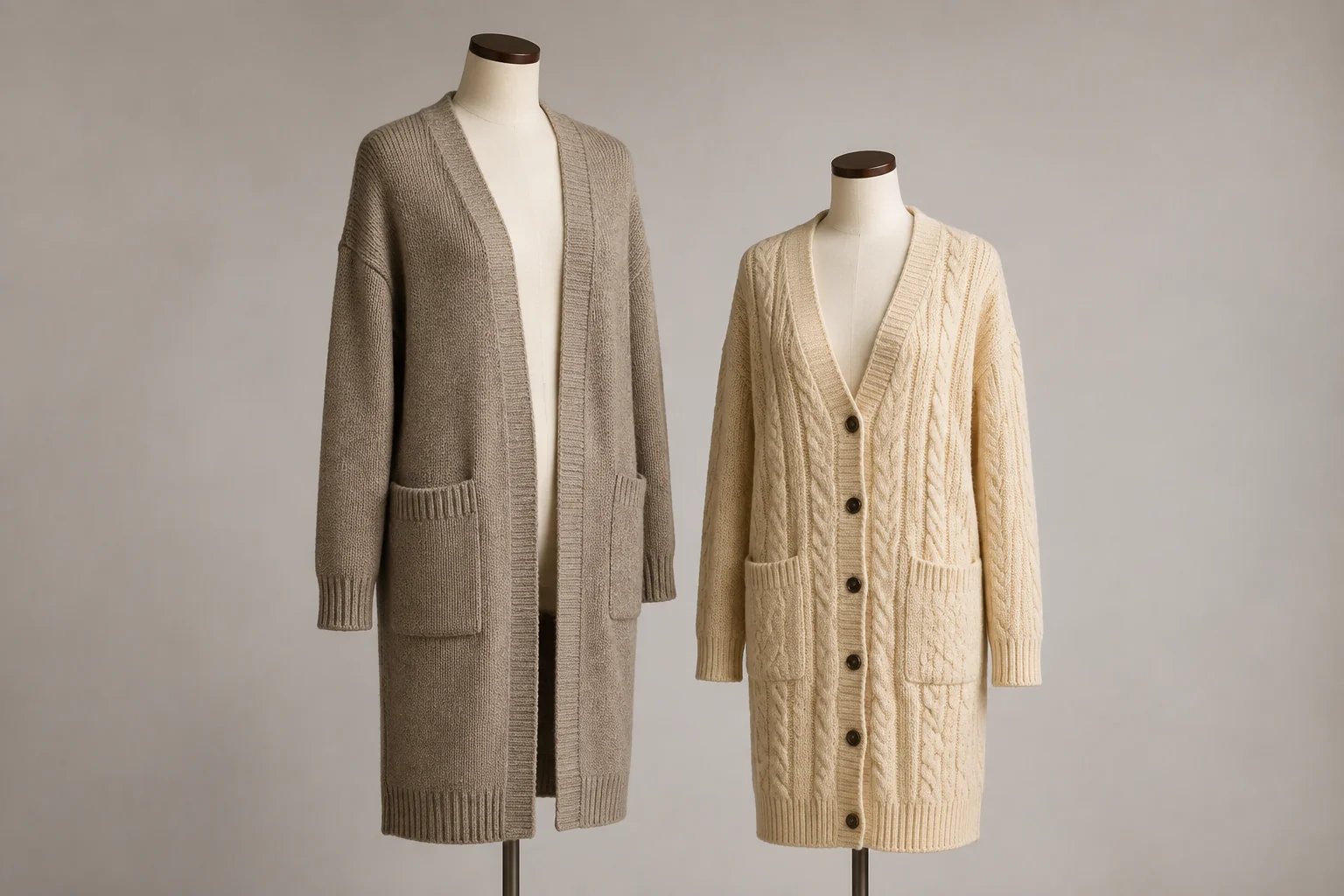
Sharing yarn may reduce some development variation, but it does not prove that a cropped fitted top and a heavy longline cardigan will behave alike. Body dimensions, structure, closures and finishing can change the result. Keep material consolidation only when it preserves the distinct use that earned each silhouette a place in the buy.
The ladies knitwear material mix guide offers questions for comparing routes. Do not turn general fiber descriptions into promised warmth, durability or customer preference. Request actual evidence when a material choice supports a claim such as easy care or reliable shape retention.
For covered US apparel, the FTC care-labeling guidance requires reliable support for the instructions and addresses the garment as a whole. A care result from one body fabric does not automatically settle a different trim or color combination. In the buying review, an unresolved care proposition may change whether a fitted top remains a core purchase or a deferred option.
Keep a dependency from becoming a range-wide promise
List which silhouettes rely on the same yarn purchase, shade approval or special closure. Ask what happens to each remaining style if one is cut. Would the quotation need review? Would a material commitment already made for the dropped longline remain payable? Would moving to a different button reopen the presentation of the fitted style? These are commercial questions requiring current answers, not universal factory rules.
For US-market adult garments, the CPSC clothing guidance identifies the general wearing-apparel flammability framework and distinguishes testing exemptions from exemption from the underlying requirement. Use qualified product-specific review where needed. A women’s category label or a shared fiber description is not proof that every proposed construction has the same obligations or evidence.
What Should the Final Keep or Defer Decision Contain?
Close the range without closing every future option
For each shape, record keep, cut or defer, the reason, approved colors, supported sizes and purchasing conditions. A keep decision should identify the information still required before ordering; it must not be mistaken for production release. A cut decision should remove the proposed units from the working total. A defer decision needs a specific missing answer and a review date tied to a useful selling opportunity.
Then total the revised buy again. Check that cut colors have not survived in barcodes, line sheets or supplier quantity attachments. Compare the remaining shapes side by side with their intended layers. If two retained styles still answer the same need, explain the distinction or edit again. This second comparison is especially valuable after sample changes make initially different designs more alike.
Keep two decision dates where necessary: when the buying team chooses the assortment and when a specific commercial commitment becomes binding under the agreed terms. Neither date should be guessed from the season name. If a material decision must come first, describe the exposure and who can approve it; an internal keep decision alone does not authorize that expenditure.
Reopen depth for evidence, not for sunk development cost
A completed sample can justify learning without justifying inventory. If a cropped test no longer earns its place, show the sample expense separately from the proposed opening purchase. Recovering that expense through an unsupported bulk order is an assumption, not a financial outcome. Similarly, an apparently efficient combined yarn quantity does not prove that every dependent silhouette deserves stock.
When new evidence arrives, identify exactly what changes: one color, a range-edge fit segment, the whole block or the release date. Keep the unaffected decisions visible. Before increasing a later buy, compare current available stock and confirmed incoming units with the remaining demand opportunity. A successful first presentation is useful feedback, but it does not establish a permanent allocation for future seasons.
Conclusion
Buy womens cardigan sweaters by the difference each shape makes for the intended wearer, not by the number of silhouette names on a rail. Separate length from volume, define the underlayer and fastened state, and use fit evidence to decide which cropped, fitted, oversized or longline option deserves stock. Then allocate color and size depth within that supported range.
The final review should show what was kept, what was removed and what remains conditional. Keep hypothetical quantity examples separate from actual demand, and do not treat shared yarn, a care label or one middle-size sample as proof that all variants are equally ready. Preserve the evidence behind each decision so later changes affect only the relevant stock. To discuss the proposed shapes, target layers, fit range and color-size quantities, contact CNSweaters with your women’s cardigan buying brief.
Frequently Asked Questions
Does a cropped cardigan always need a separate style?
Not merely because the name differs. Compare its actual hem position, fit volume, wearing state and customer use with existing styles. A different proportion or supported fit block can justify separate stock; a minor styling variation may not.
Can an oversized cardigan replace missing larger sizes?
Do not assume so. Deliberate shoulder drop and body volume do not establish the intended bust, armhole, sleeve and length relationships for another fit range. Review the appropriate block and representative fit evidence before presenting it as an alternative.
Should every shape launch in the same colors?
Only when the relevant demand and construction support that choice. A shared palette can help presentation, but it also divides units and may create material dependencies. Keep each shade’s purpose and approval status attached to its actual style.
Is low sales volume enough to cut a size?
No. Check how long it was available, where it was offered and why customers returned or exchanged it. A stockout, limited distribution or unresolved fit issue can distort the observed sales count. Missing demand should remain uncertain.
What if a deferred style becomes ready after launch?
Reassess its distinct use, remaining selling time and effect on existing inventory. Readiness alone does not create demand. Add it only if current evidence supports a useful offer and the revised quantities do not duplicate stock already available.