 CN Sweaters
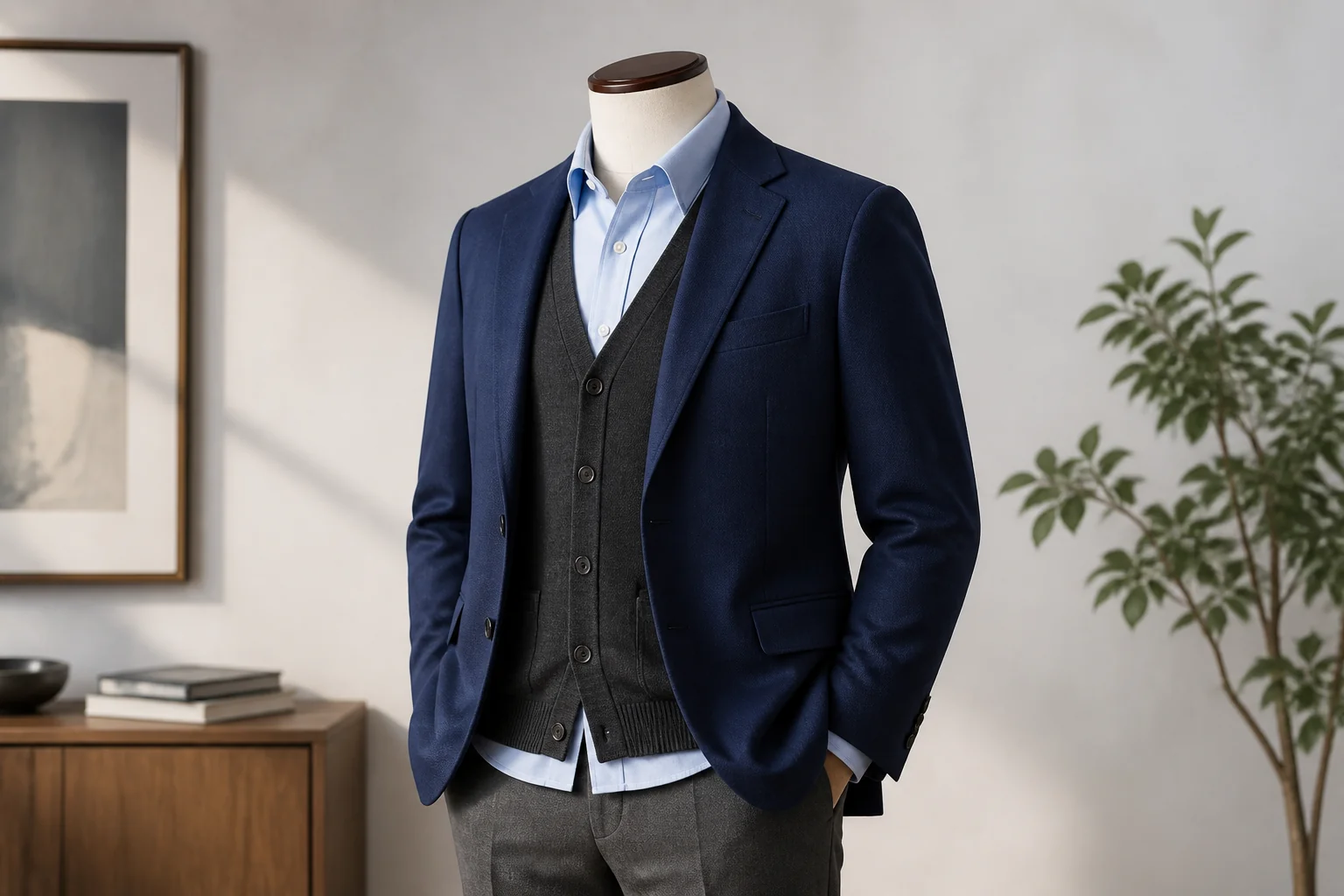
A mens cardigan intended for early autumn has to earn its place between garments the customer already wears. A shirt, cardigan and blazer can each look convincing on its own yet become an awkward outfit when combined. The collar may crowd the neck, the upper sleeves may bunch, or the cardigan may disappear whenever the outer jacket is worn. Adding more neckline options does not resolve that mismatch.
For a retailer building a repeatable office-oriented core, start with the complete wearing combination and decide which cardigan performs the useful middle-layer job. Casual and travel variations can remain separate proposals until they demonstrate another need. This is a conditional buying framework for adult menswear, not a claim about a particular retailer’s customers or a prediction of autumn temperatures. The objective is a coherent opening offer with enough stock in the combinations that actually work.
Which Everyday Outfit Should Anchor the Mens Cardigan?
Choose one primary combination
Write down the shirt type, cardigan wearing state and outer jacket that define the proposed core. A woven business shirt under a neat blazer creates a different comparison from a T-shirt under a loose overshirt. Neither is universally better. The important step is choosing the combination that reflects the intended channel before interpreting a sample as versatile.
The broader mens cardigan sourcing guide addresses customer, materials and supplier selection. This review has a narrower purpose: decide whether one middle layer deserves repeatable stock because it works with a defined outfit. Do not import another article’s style ratios, costs or lead times as evidence for this buy.
Record what the customer is expected to do with the jacket during the day. If it is normally removed indoors, the cardigan must be credible as the visible outer garment too. If the jacket stays on, sleeve bulk and neckline interaction may matter more than a prominent surface texture. That change in use can reverse the preference between otherwise similar candidates.
Keep the climate assumption separate from the season label
Early autumn is a calendar description, not a garment-performance specification. Ask which locations, indoor environments and activities the offer is meant to serve. A buyer can use relevant customer feedback, store experience or current local information, but should mark an unsupported climate assumption rather than converting it into a claim that one fiber is always appropriate.
The CCOHS office thermal-comfort guidance identifies clothing, activity and environmental conditions as interacting factors. Its workplace context does not certify a cardigan’s warmth or establish a universal retail specification. It supports the limited point that the buyer should assess the clothing combination and use conditions, not read comfort directly from composition or finished weight.
Which Neckline Variations Deserve Their Own Stock?
Compare the visible difference in the same outfit
Put competing necklines over the same shirt and under the same jacket. A V-neck may leave the shirt front visible; a higher opening may cover more of it; a shawl collar may introduce a separate visual and physical layer at the neck. Treat these as features to inspect, not as guaranteed preferences for particular ages or lifestyles.
The question is whether that difference remains meaningful at the same price position and in the intended wearing state. If two candidates become indistinguishable once the jacket is on, ask what additional demand justifies separate inventory. If a collar works only without the blazer, it may belong in a casual proposal instead of the office core.
| Candidate | Outfit question | Evidence to request | Stock decision if unresolved |
|---|---|---|---|
| V-neck button cardigan | Does the opening frame the planned shirt? | Front view open and fastened in the complete outfit | Retain as a candidate, not an automatic core |
| Higher button opening | Is the extra coverage useful indoors? | Neck and shirt-collar comfort in normal movement | Defer if its job duplicates another opening |
| Zip cardigan | Does the closed front work beneath the blazer? | Upper-body movement and front balance | Separate from the core if use differs |
| Shawl collar | Can the collar sit without crowding the jacket? | Side and back views with the intended outer layer | Move to a distinct casual offer or hold |
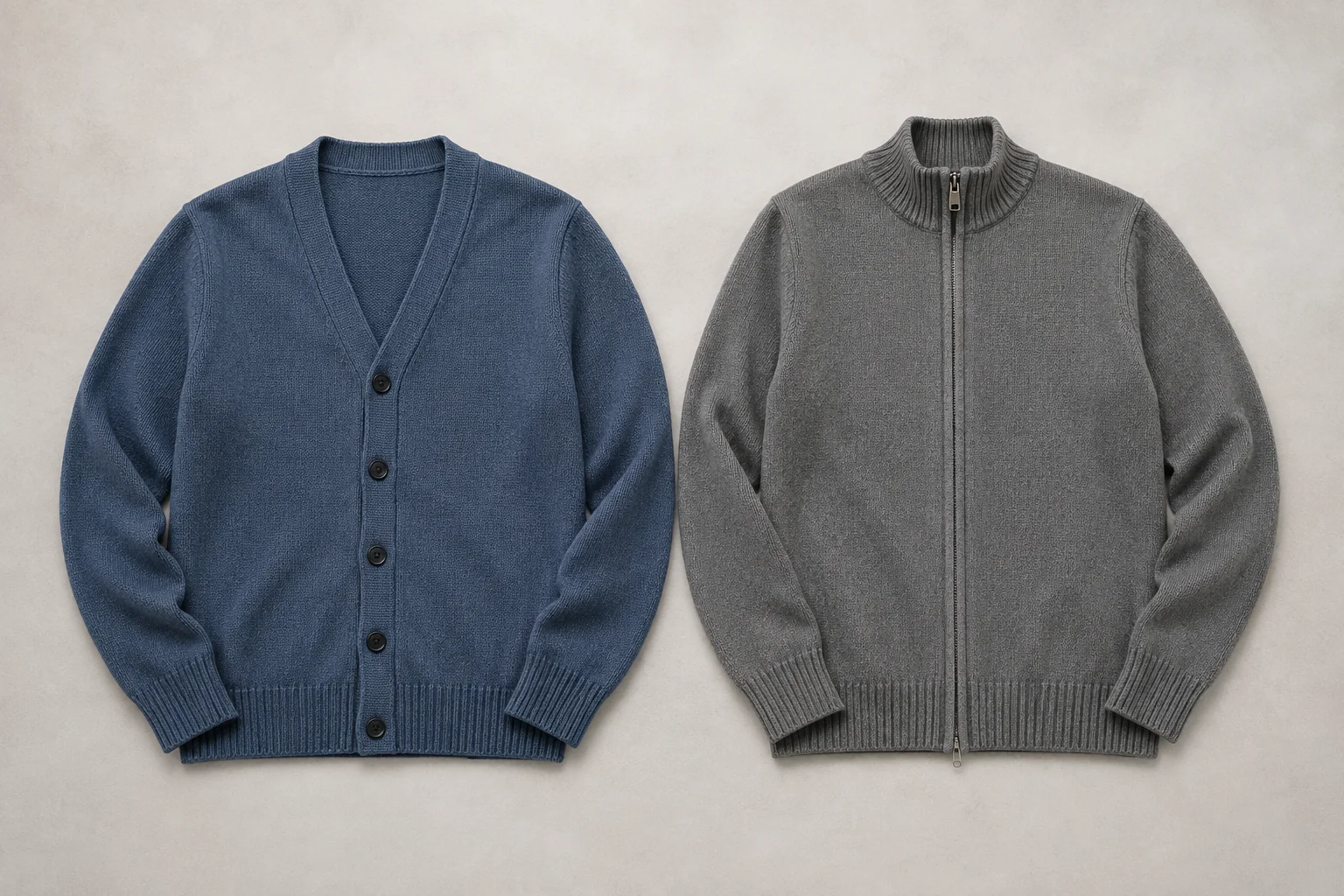
Make the second option answer a different request
A retailer does not need to represent every construction to offer choice. A second neckline should answer a documented objection, another outfit requirement or a supported channel segment. Ask what a buyer who rejects the first option would choose in the second, and why. Without that answer, an additional style may merely divide the same expected demand.
For example, an office-focused buyer might retain one candidate for wearing beneath a blazer and hold a fuller collar for an independent casual offer. That is a hypothetical separation of jobs, not a recommendation that these two products must be bought together. Record whether the casual option has its own customer, presentation space and budget. If those inputs are missing, its attractive sample can remain outside the opening order without weakening the defined core.
Use the focused mens knitwear range guide for the wider editing exercise. Here, record the specific difference in the shirt-cardigan-blazer combination. A new closure with the same role remains an option until evidence supports separate depth; visual novelty alone does not determine its opening quantity.
What Does the Complete Layering Trial Need to Reveal?
Look for interference between garments
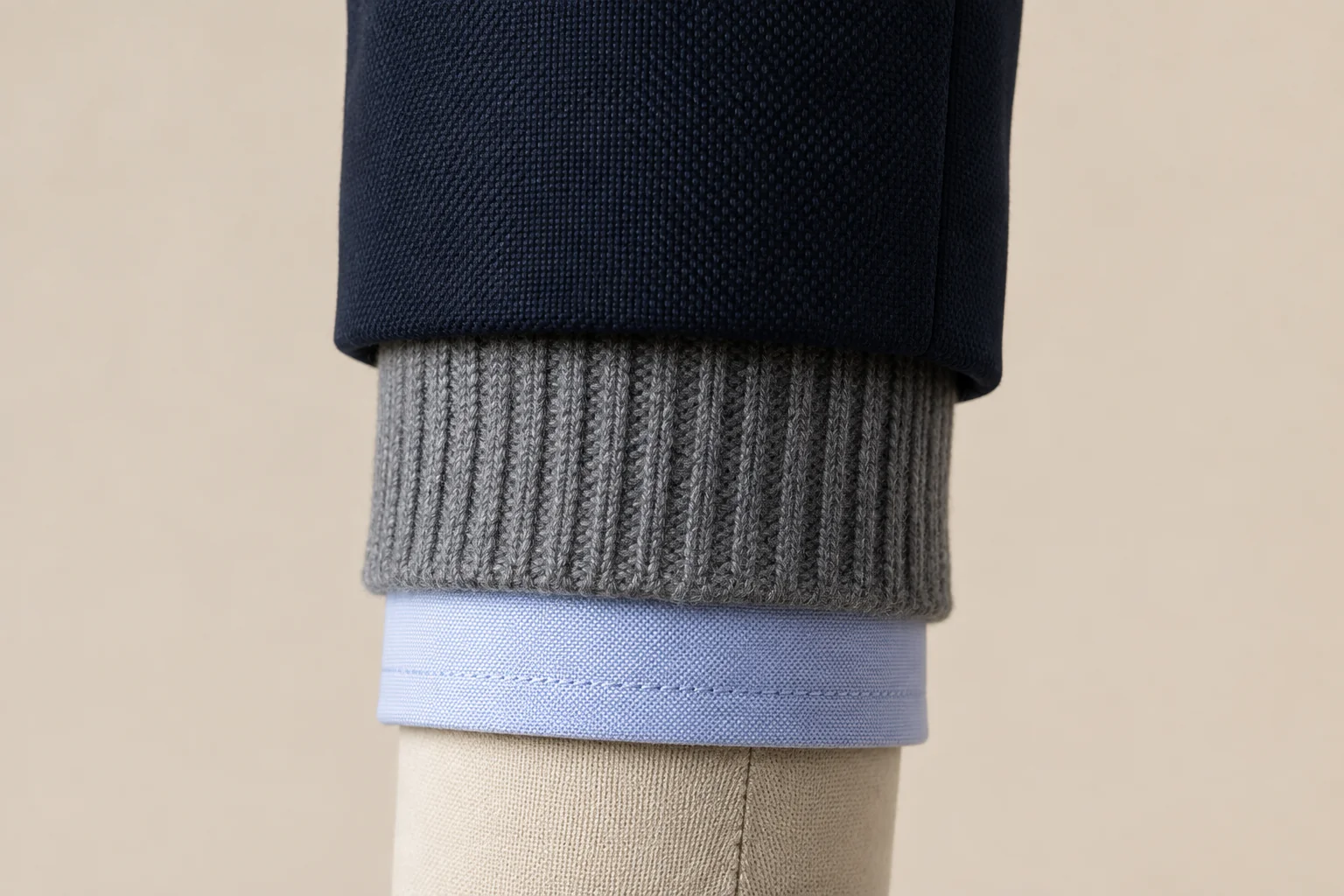
Review the sample on an appropriate wearer or form with the selected layers, then add normal movement where a wearer is available. Examine shoulder position, upper-arm space, sleeve stacking, cuff interaction and cardigan hem in relation to the jacket. A flat chest measurement can be correct while the assembled outfit still feels crowded at the armhole.
Change one item at a time when investigating a problem. If both the shirt and blazer change between observations, the buyer cannot tell whether the cardigan improved. Record the underlayer and outerwear references with the comments, including whether the cardigan was open, partly closed or fully fastened. The aim is a repeatable comparison, not a claim that one fitting proves every customer will be comfortable.
Use a short comparison record with the sample revision, wearer or form reference, complete outfit, observed interference and proposed response. Keep a photograph linked to the observation where permission allows, but do not let a posed front view erase an issue noticed while reaching. The buying owner should receive a clear outcome: suitable for the stated combination, suitable after a named correction, or unsuitable for this role. Technical corrections remain with the responsible product team.
Check the transition from standing to sitting as well. A front opening that looks smooth on a rail may pull when the wearer sits; a hem may become visible below the jacket in a way the buyer did not intend. These observations should determine whether to correct the candidate, present it differently or remove it from the defined core.
Keep size evidence attached to the intended combination
Do not assume that the same commercial size label creates equivalent fit across different cardigan blocks. The men’s and women’s cardigan comparison discusses why construction and fit purpose matter; it is not a substitute for the actual target block. A loose casual sample cannot establish the suitability of a neat office cardigan simply because both carry the same size name.
Ask the technical owner to select representative sizes that expose the relevant changes in shoulder, armhole and sleeve relationship. The knitwear size-grading guide owns the detailed grade work. In the buying record, state which parts of the range have supporting evidence and which remain conditional. Additional sizes need appropriate fit and quantity evidence, not assumptions about who should wear the product.
How Can Color and Size Depth Protect the Core Offer?
Give each color a known pairing
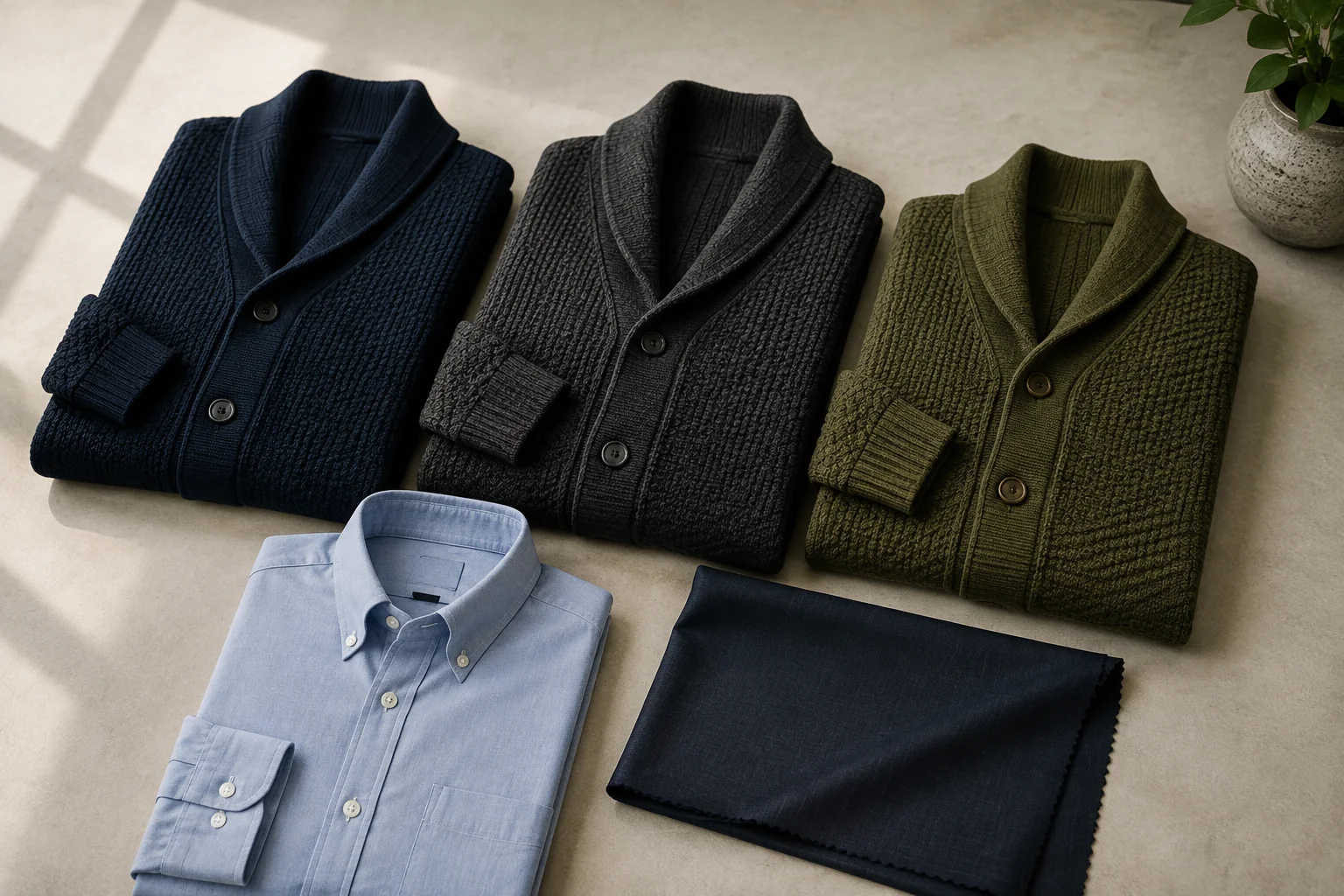
Compare colors with the actual shirt and jacket palette. The purpose is not to declare navy, grey or any other shade universally safe. It is to establish which combinations the intended customer can use and which colors create a separate reason to buy. A shade that photographs well alone may provide little additional choice once it sits between an established shirt and blazer.
Use the fall cardigan assortment guide for the wider seasonal offer, but keep this core’s palette tied to its outfit. If a fashion color needs a different shirt or jacket to work, record that extra assumption. The buyer may still choose it, but should not give it the same confidence as a supported repeat combination.
In a hypothetical illustration, two cardigan openings in three colors and five sizes create 30 combinations. A 600-unit buy spread equally would average 20 per combination. Adding a third opening without adding units creates 45 combinations and lowers the average to about 13.3. Real orders use whole units and a demand-based allocation; this arithmetic only exposes what breadth does to depth.
Preserve the sizes needed to make the outfit available
Review stock at style-color-size and channel level, not only at total style level. A cardigan can look well stocked while the size needed by the target customer is unavailable. Compare sales with the days and locations where the option was offered, and separate stockout effects from genuine lack of interest.
Do not copy one size distribution into every color without checking its evidence. A color carried by fewer stores or promoted differently may show a different sales mix for reasons unrelated to fit. If evidence is sparse, state the provisional allocation and the observation that would cause it to change. An explicit assumption is more useful than an apparently precise ratio with no explanation.
What Must the Wholesale Offer Say About the Product?
Describe the demonstrated layer, not unlimited versatility
The line sheet should state the intended fit, layer and wearing state in language the retailer can use accurately. If the garment was selected as a compact middle layer, avoid presenting it as heavy outerwear without separate evidence. If only a particular blazer combination has been assessed, do not imply it will fit beneath every jacket cut.
Keep proposed product claims tied to their support. For certain US textile products, the FTC Textile Fiber Rule specifies disclosures including fiber information, responsible business identity and country information. That labeling framework does not establish warmth, comfort, durability or a supply relationship. Verify the actual composition and applicable market requirements instead of borrowing a fiber claim from a reference image.
The private-label mens knitwear guide can help organize the wider commercial inputs. The information sent for this core should make clear which features are fixed, which remain options and what evidence supports the proposed offer. Brand presentation must not turn provisional product choices into promises to retailers.
Make each orderable option unambiguous
Match the line-sheet row to the actual style, color and size record. GS1’s product-variation guidance addresses separate identifiers for variations where GS1 identification is used. Its role here is stock identity, not proof that the assortment will sell. Check that optional necklines are not shown as available merely because a prototype exists.
Use the wholesale knitwear line-sheet guide to connect orderable options with current terms. For comparisons, the sweater quotation review helps expose differences in scope. Ask for current quantities, conditions and delivery basis; a cheaper quote with another closure, packing split or material assumption is not automatically the same offer.
Before opening wholesale orders, decide how an unavailable option will be represented. A conditional delivery should carry its condition and review point rather than sharing the confirmed core’s availability wording. If a retailer requests mixed sizes or a separate store pack, have the responsible team confirm that request against current terms. Neither the illustration nor the standard line sheet authorizes an unreviewed packing or delivery promise.
How Should the Core Be Reviewed After Arrival?
Separate customer use from supplier continuity
Once stock is available, collect the evidence that can change the buying decision: which combinations were offered, what sold while available, why items were returned and whether customers used the intended layers. Aggregate observations rather than sharing personal identities. A low-selling color may need better presentation, while a repeated armhole complaint may require technical review before any additional purchase.
The men’s knitwear maker questions own the separate issue of keeping a core product consistent across seasons. That supplier task should not replace the buyer’s evaluation of whether this particular layer remains useful. Even an unchanged, competently repeated garment can become the wrong stock choice when the channel or jacket offer changes.
Set the last useful receipt point for this offer
Before considering more units, decide when a new delivery would stop serving the early-autumn role. Use the current retail plan and expected availability, not a universal week count. If the next offer shifts toward heavier outerwear or another outfit, ask whether the same cardigan still belongs in it rather than assuming that cooler weather always increases its relevance.
Compare the remaining opportunity with saleable stock and genuinely confirmed incoming units. A reorder request is not proof that material or production time is available. Ask for a current response, then decide whether to maintain the core, narrow it to supported combinations or end the offer. Do not add an untested neckline to solve a shortage in an established one unless the substitution is genuinely useful and clearly communicated.
Conclusion
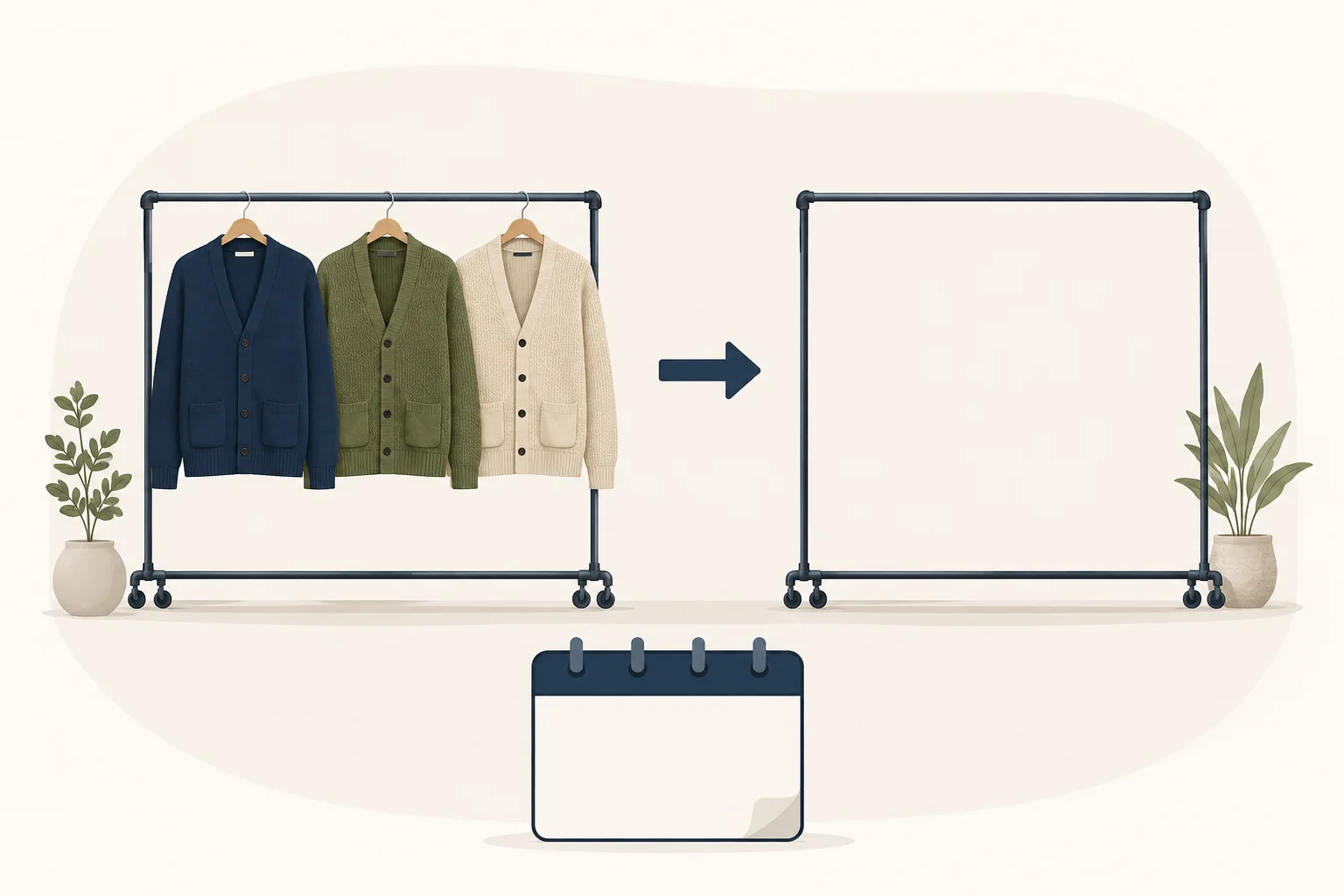
Choose a mens cardigan core by how it works with the shirt and blazer the customer is expected to wear. Establish that combination first, compare neckline options within it, and use complete-layer observations to decide which candidate deserves repeatable inventory. Give a second opening its own stock only when it answers a different supported need.
Color and size depth should keep the chosen outfit available, not merely make the range sheet look broad. Separate hypothetical arithmetic from actual demand, confirm what each orderable option represents and keep product claims within the evidence. After arrival, distinguish changes in customer use from changes in supplier continuity, then reassess whether another delivery still serves the intended selling window. For a discussion of your target outfit, proposed core options, fit range and quantities, contact CNSweaters with your mens cardigan layering brief.
Frequently Asked Questions
Must an office cardigan have a V-neck?
No. The choice depends on the shirt, jacket, wearing state and customer evidence. Compare openings within the same outfit rather than assuming that a neckline defines a channel. Keep a second option only when its difference is useful.
Is garment weight enough to select an autumn layer?
No. Weight does not establish the assembled outfit’s comfort or fit. Review structure, dimensions, sleeve interaction and intended conditions together. A lighter garment can still interfere with the jacket if its proportions or details are unsuitable.
Can one sample prove fit under every blazer?
No. Record the actual outerwear used for the comparison and its relevant relationship to the cardigan. If broader compatibility is part of the intended offer, define and examine representative alternatives before making that claim.
Should the casual neckline share the core’s quantities?
Not automatically. It may serve another use, store group or selling period. Give it a separate demand assumption and review its effect on core depth. Shared yarn or color names do not establish equal commercial demand.
What if core sizes sell out before the review date?
Record the unavailable period and compare current remaining demand with confirmed inbound stock. Reassess quantities using the actual selling opportunity and a current supplier response. Do not treat an unconfirmed reorder or an unrelated style as available replacement stock.