 CN Sweaters
Jacquard is a strong fit for
- Repeating motifs
- All-over graphics
- Brand-led patterns
- Geometric designs
- Seasonal graphics
- Multi-color surfaces
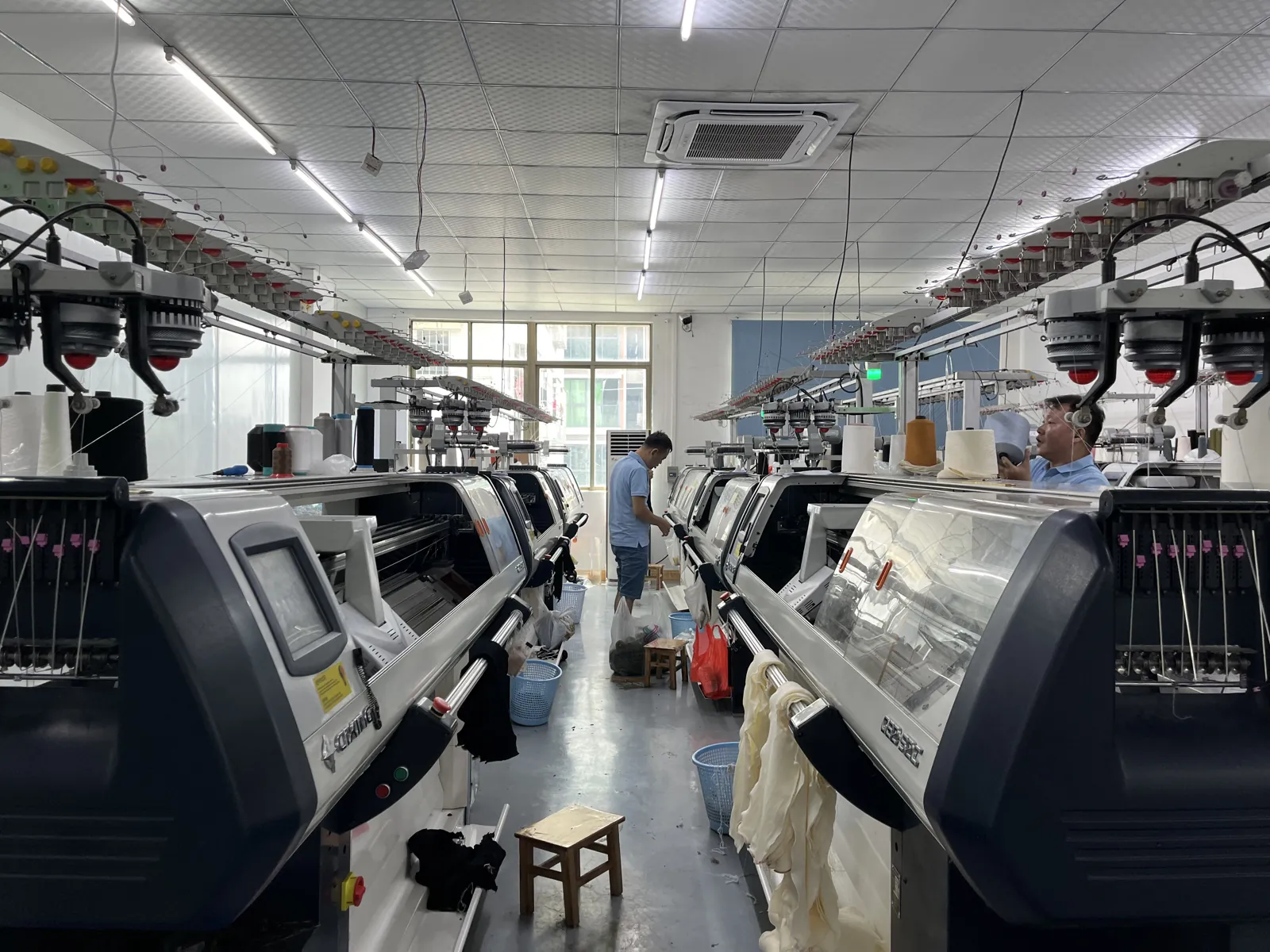
Work with a jacquard sweater manufacturer to turn artwork, logos and multi-color graphics into a knitted sample with agreed motif placement, colors and reverse construction.
Cainan Clothing supports artwork feasibility, yarn and gauge selection, pattern programming, sampling, private labeling, bulk production and inspection.
This page covers jacquard sweaters: knitted logos, motifs and all-over patterns. Related pages: Sweater Manufacturer · Custom Pullover Sweaters · Crewneck Sweaters.
MOQ from 50 pcs per color per size · samples in 3–7 days · bulk in 15–45 days. See MOQ & lead time and quality control.
Use a knitted swatch and garment sample to review the pattern and fit, then record what bulk production must match.
The final production route is reviewed against the artwork, yarn, gauge, color count, garment construction and target cost.
Define the graphic direction before selecting the final repeat, placement, reverse structure and color route.
Best for: statement and seasonal knitwear collections.
Development focus: pattern repeat, garment coverage, seam continuity and color distribution.
Best for: brand-led knitwear and signature products.
Development focus: logo legibility, stitch scale, placement and negative-space clarity.
Best for: contemporary, preppy and graphic-led collections.
Development focus: repeat accuracy, symmetry, panel alignment and garment proportion.
Best for: holiday, winter and heritage-inspired programs.
Development focus: motif scale, color sequence, repeat rhythm and reverse-side structure.
Best for: chest, sleeve, back or localized graphic programs.
Development focus: motif position, panel shape, grading and visual balance.
Best for: heavier or more structured patterned knitwear.
Development focus: reverse control, garment weight, handfeel and structural stability.
Ask your jacquard sweater manufacturer to compare color areas, motif placement and reverse appearance before selecting the knitting route. Neither technique is automatically better.
| Decision area | Jacquard | Intarsia |
|---|---|---|
| Pattern direction | Repeating, all-over or multi-color graphics | Larger localized color areas |
| Color distribution | Multiple colors can repeat across rows | Colors are separated into defined areas |
| Reverse side | Float or backing management | Separate yarn areas and joins |
| Common use | Motifs, logos and seasonal patterns | Placed graphics and color blocks |
| Best route depends on | Repeat, colors, gauge, reverse and cost | Placement, area size, shape and yarn route |
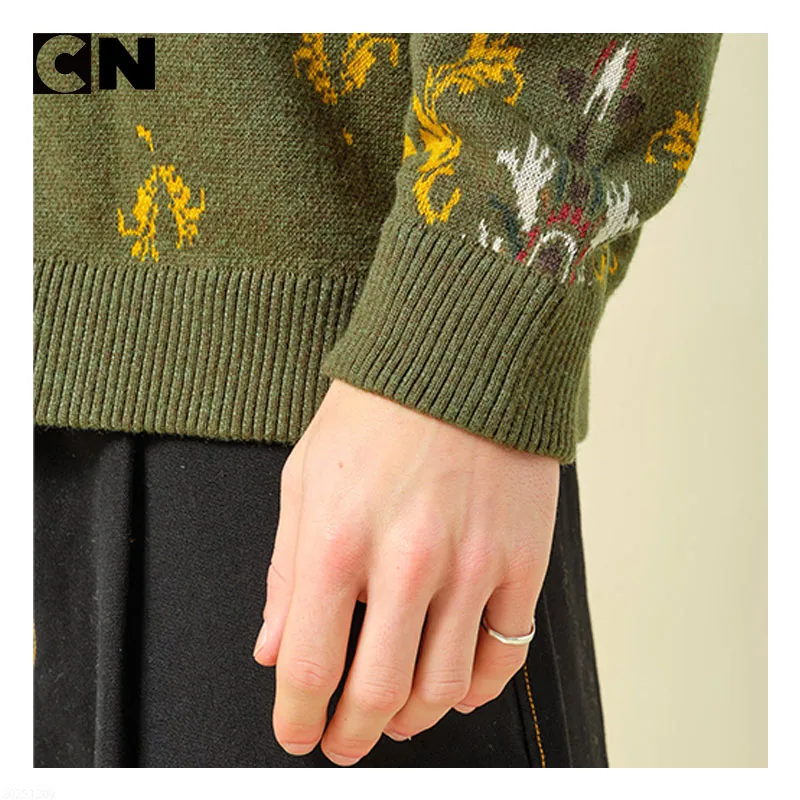
Have your jacquard sweater manufacturer compare artwork with the stitch grid, yarn and garment dimensions. Agree any simplification on the knitted swatch before treating the graphic as ready for a garment sample.
Concern: fine artwork can lose detail at stitch scale.
Development focus: adjust motif dimensions so important features remain readable.
Concern: a repeat may not divide cleanly across a panel.
Development focus: review repeat width and height against panel dimensions.
Concern: more colors can increase weight and complexity.
Development focus: review colors with coverage, backing and commercial target.
Concern: a motif can sit poorly on the finished garment.
Development focus: give placement measurements from an agreed neckline, shoulder or center-front reference point.
Concern: pattern continuity can break where panels join.
Development focus: mark the seams where matching is essential and where a pattern break is acceptable.
Concern: one artwork scale may change across garment sizes.
Development focus: decide whether motif size stays fixed, repeats change, or placement shifts as garment dimensions increase.
The reverse can change garment weight, handfeel, snag risk, stability, yarn use and cost.
Can provide a lighter result, but float length and snag risk need control.
Can create a cleaner reverse, with possible increases in weight, yarn, time and firmness.
Different knitting systems may support other technical routes rather than one universal solution.
Discuss yarn and reverse construction with your jacquard sweater manufacturer against motif size, garment dimensions and target weight. Confirm material sourcing and the knitting route before selecting a gauge.
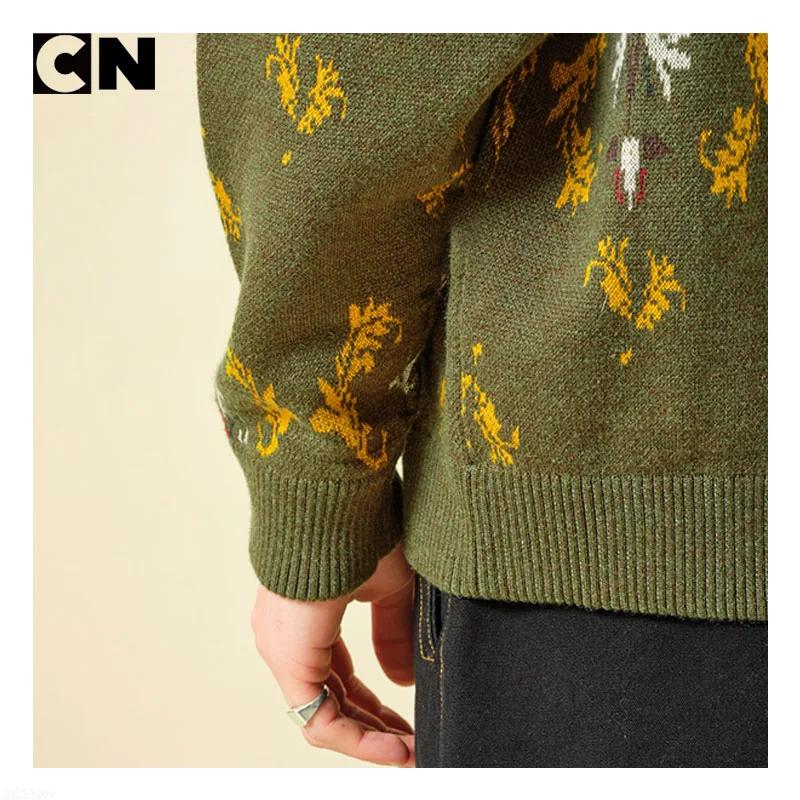
Different jacquard structures work across fine and heavier gauges. Pattern clarity emerges from the relationship between artwork, yarn, gauge, stitch structure and garment dimensions.
The right decision protects both the desired appearance and the production route required to repeat it.
Start with vector artwork, a tech pack, a reference image, an existing garment or a defined graphic direction.
Provide artwork, garment direction, quantity, size range and target delivery.
Review motif scale, repeat, color distribution, placement and likely knit route.
Align weight, handfeel, artwork and cost with the technical direction.
Translate the selected artwork version to stitch scale. Review a knitted swatch for motif readability, colors, reverse appearance and handfeel before approving the garment sample.
Review pattern appearance, garment fit and overall construction physically.
Incorporate changes to motif scale, placement, color, fit or construction.
Confirm the sample, artwork direction and specifications as the bulk reference.
Produce, inspect and pack against the approved requirements.
Ask your jacquard sweater manufacturer to quote artwork development and garments together. Include the swatch scope, colors, size mix and reverse construction so programming, material and revision costs can be reviewed separately.
Review quantities by style, color and size alongside yarn and trim minimums.
Confirm the artwork version, swatch requirements and material availability before setting the sample date.
Timing depends on the requested pattern, fit, color or construction changes.
Request the development charge, included revisions and any separate yarn, trim or sample-shipping costs.
| Planning stage | What to confirm |
|---|---|
| Production start | Approved artwork, sample, colors and material availability |
| Shipment plan | Production finish, inspection, packing and transit to your destination |
Confirm sample charges, revision scope and any bulk-order credit in the written quotation before development begins.
Agree the dates and start conditions for each stage in the order plan.
| Quotation factor | Why it matters |
|---|---|
| Artwork Complexity | Affects programming and knitting route. |
| Number of Colors | Changes yarn management and machine passes. |
| Pattern Coverage | All-over and localized graphics use different resources. |
| Reverse Structure | Changes yarn use, weight and machine time. |
| Yarn | Affects material cost, handfeel and pattern clarity. |
| Gauge | Changes density, appearance and production route. |
| Garment Weight | Changes total yarn consumption. |
| Size Range | Can affect pattern placement and grading review. |
| Quantity | Affects purchasing and production planning. |
A jacquard sweater can meet basic measurements and still fail visually, so inspection must protect both garment specifications and the approved pattern.
Risk: the motif changes shape or proportion.
Focus: compare scale and appearance with the approved sample.
Risk: the motif sits too high, low or off-center.
Focus: check against approved garment reference points.
Risk: long or uncontrolled floats increase snagging.
Focus: verify float management and reverse structure.
Risk: order or shade differences change the design.
Focus: compare shades and arrangement with the reference.
Risk: graphics break or shift at joining points.
Focus: review continuity around relevant seams.
Risk: bulk no longer matches the approved motif.
Focus: keep the dated artwork, swatch, placement measurements and color references together, including accepted simplification.
Branding and packaging are quoted according to artwork, material, quantity and supplier requirements.
For U.S. sales, review FTC textile-labeling guidance when preparing label artwork.
Brand identity.
Care information.
Size identification.
Retail presentation.
Knit-in brand graphics.
Additional surface branding.
Standard or branded.
Buyer-defined packing.
A stitch-ready file is not needed to start. Send your jacquard sweater manufacturer the artwork version, motif dimensions, colors and placement measurements. Mark features that must stay unchanged and whether motif size stays fixed across garment sizes.
Our MOQ starts from 50 pcs per color per size. Bulk production usually takes 15–45 days after sample approval, depending on quantity, yarn and season. MOQ is reviewed against the artwork, yarn, colorways and garment size mix. Send quantities by style, color and size so the quote can identify garment minimums and separate yarn or trim requirements.
Yes. Vector artwork, sketches or clear reference images can support the initial technical review. The design may need adjustment when translated to stitch scale.
Jacquard commonly suits repeating or distributed multi-color graphics, while intarsia is often more practical for larger localized color areas. The final route depends on artwork, colors, shape, yarn and construction.
There is no useful fixed answer without reviewing the artwork. Color count must be evaluated with pattern coverage, yarn, gauge, backing structure, garment weight and target cost.
Yes, when the artwork remains readable at the available stitch scale. Very small text, thin lines or tight negative spaces may require simplification or another branding technique.
No. A structured backing can create a cleaner reverse but can also add yarn, weight and machine time. The appropriate structure depends on the design and commercial target.
Samples usually take 3–7 days once the brief and materials are confirmed. Confirm timing after the artwork, yarn and reverse structure are reviewed. Allow for a knitted swatch, motif or color revisions and garment fitting; courier transit is separate from development time.
Key variables include artwork complexity, color count, pattern coverage, reverse structure, yarn, gauge, garment weight, size range, branding and quantity.
Yes. Labels, hangtags, knitted branding, embroidery where appropriate, packaging and other brand components can be included according to confirmed project requirements.
Send your artwork, tech pack, reference image or existing sample. We will review the technical route before quotation and production planning.
Artwork → Pattern Scale → Technique → Colors → Yarn → Gauge → Reverse Structure → MOQ → Sampling → Bulk Production