 CN Sweaters
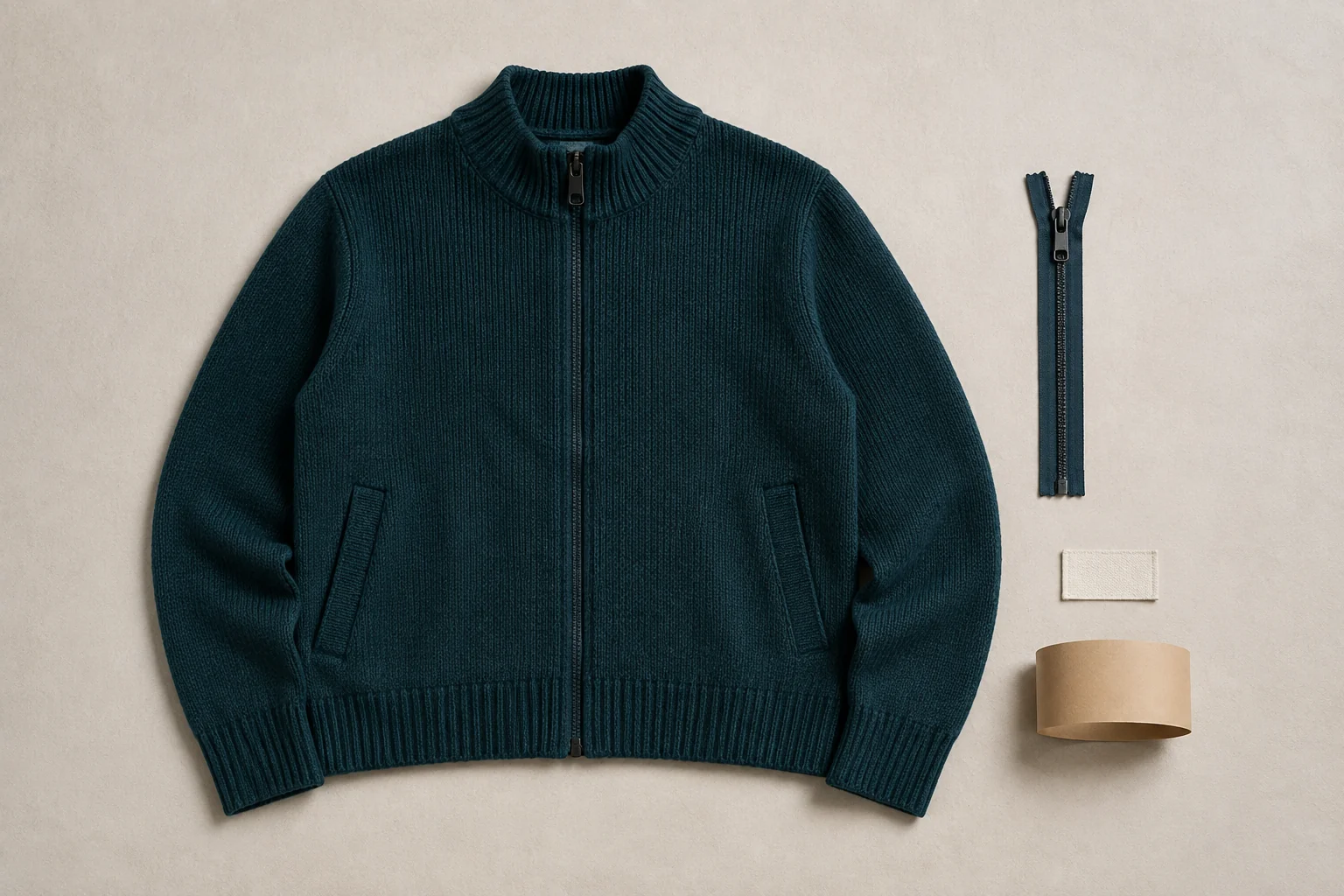
A zip cardigan should move into the next production stage only when the buyer can name the exact version being released, the evidence that supports it and the work that remains prohibited. A knitwear factory, zipper supplier and label printer can each approve their own component while the finished garment still combines incompatible revisions. The buyer’s task is to connect those approvals before money or materials become committed.
This guide is for private-label sourcing teams coordinating adult knitwear across several suppliers. It focuses on release authority and document handoffs. Detailed zipper engineering belongs in the existing zip-up knit sweater specification guide. No checklist here establishes a universal test limit, production date, order minimum or destination-market compliance result.
Start with the purchase order, current tech pack, physical sample identities and the people allowed to approve changes. Where one of these is missing, record a hold against the affected action. A neat spreadsheet cannot make an unresolved decision safe; its value is showing who must resolve it and what may proceed meanwhile.
What Does the Zip Cardigan Release Actually Authorize?
Name the next commitment
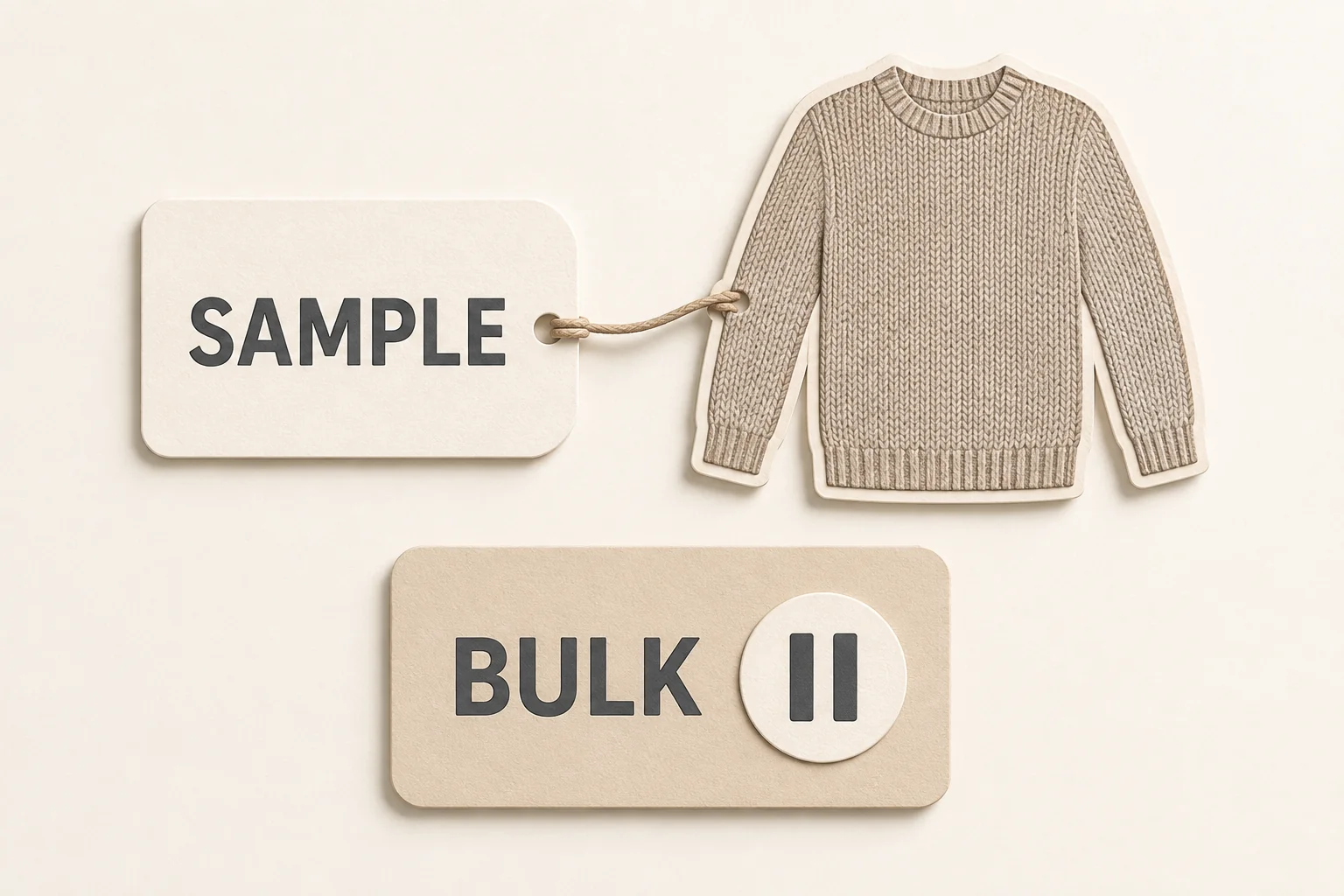
Separate permission to make a development sample from permission to order production zippers, knit bulk panels, print labels or pack finished units. These actions have different dependencies. A silhouette review may support another sample without supporting a bulk trim order. Label artwork may be visually acceptable while the size mapping is still open.
Write the release as a short instruction containing the style, revision, affected sizes and colors, permitted action and explicit exclusions. For example, a hypothetical decision could authorize one fitting sample using a temporary zipper while prohibiting production trim purchasing. It is not a manufacturing approval and should not appear in the bulk purchase file as one.
Confirm the style identifier before allocating documents. Retail names such as zip cardigan or full-zip sweater do not replace the garment drawing or closure specification. All suppliers need the same style identifier even when their internal product descriptions differ.
Assign one decision owner
Give each supplier responsibility for its own factual inputs, and name the buyer-side person who combines them into a release. The zipper supplier confirms the purchasable trim; the knitwear factory confirms the assembly sample and production route; the label supplier confirms the artwork and material version. None should silently decide another party’s unresolved requirement.
State who can impose a hold, who can remove it and who must receive the revised instruction. A commercial manager may accept a cost change without authority to approve a failed technical requirement. Where responsibilities overlap, identify both required approvals rather than assuming that the latest email wins.
Agree a substitute approver for absences. If that person is unavailable, the safe administrative response is to leave the relevant action on hold, not to convert silence into consent. Record the hold’s operational consequence so the schedule can be revised honestly.
Put financial limits beside technical permissions where the action creates a commitment. Permission to request a sample does not itself authorize tooling, unused trim stock or a non-cancellable bulk order. Ask the supplier to identify any such consequence before proceeding. The sweater quotation scope guide helps distinguish confirmed, optional and excluded work. The buyer can then approve the expenditure separately, with its scope visible to purchasing rather than buried in a technical comment.
Which References Must All Suppliers Match?
Build a compact common register
Create a register linking the buyer’s style revision to each supplier’s reference. Include the garment specification, zipper article and length mapping, sample identity, label artwork, packing instruction and purchase-order revision. A reference needs an owner and location where the actual file or retained sample can be recovered.
Avoid a single entry such as “latest tech pack.” Record the revision and issue date. If a supplier uses a different internal code, put the cross-reference beside it. This lets a buyer notice that a trim acknowledgement still refers to an earlier garment length before the wrong zippers are manufactured.
Use the zip-up construction checks to identify which construction references belong in that register. Keep the technical instructions in their controlled documents; the release register should point to them rather than copy partial instructions that can drift independently.
Identify the complete zipper assembly
YKK’s zipper structure explanation distinguishes elements, slider and tape as cooperating components. For purchasing, that means a matching visible color alone is not enough to identify the approved closure. Request the supplier’s complete article reference and the relevant component details.
Connect that reference to opening function, length by size, tape color, slider, pull, finish and any approved alternative. Ask the knitwear factory to acknowledge the same reference against the garment sample. A supplier acknowledgement confirms what it intends to supply; it does not prove the garment was sampled with that item.
For the assembly evidence, use the full-zip sweater development guide as the technical owner. This checklist needs the resulting sample ID, review outcome and open conditions, not another set of generic instructions about zipper insertion.

How Should Conditional Approvals Be Closed?
Record what the condition prevents
Conditional approval is useful only when its limits travel with the sample and documents. Write the unresolved item, the replacement evidence needed, the responsible role and the action that remains blocked. “Approved with comments” is insufficient if nobody can tell whether purchasing or assembly is allowed.
Use a small control table instead of a wide sheet containing every specification. Add record IDs in the evidence cell and keep detailed measurements in the referenced document. The following entries are suggested fields, not evidence that a real project has passed.
| Decision record | Evidence required | Responsible handoff | Close the hold when |
|---|---|---|---|
| Production zipper | Exact article and size-length mapping | Trim supplier to factory and buyer | Production-intent trim is identified and its affected sample checks are accepted |
| Garment version | Sample ID and current construction revision | Factory to technical approver | Physical garment and controlled documents agree |
| Label artwork | Copy, material and placement references | Label supplier to buyer and factory | Authorized copy and physical application are confirmed |
| Packed SKU | Item, size, color and packaging mapping | Buyer to packer and receiver | Actual packed-unit check matches the approved mapping |
Do not let a table’s status color replace the closure evidence. “Closed” should link to the decision, date and person who accepted it. If the condition changes, reopen that row and notify the people whose work depends on it.
Limit a hold to the traceable affected scope when the evidence permits that distinction. If one proposed zipper length is unresolved, identify the corresponding sizes and ask whether the remaining sizes use independently approved components. Do not release the whole range merely because most rows are complete. Equally, do not assume every color must stop when the disputed item is genuinely separate and authorized reviewers have confirmed that boundary.
Separate substitution from correction
A replacement zipper from another source is a substitution even if its dimensions look identical. A revised label with corrected spelling is a document change. Both require review, but they do not necessarily require the same evidence. Identify what changed before deciding which checks must be repeated.
Ask whether the change affects appearance, fit, assembly, operation, care, product identity or timing. Use the custom cardigan construction and fit guide when a revision changes the garment interface. Do not demand unrelated tests merely because the revision number increased.
Record the old reference as superseded, not deleted. Retaining it helps explain why an early sample differs from production and prevents an old attachment from being mistaken for a valid alternative later.
What Evidence Can Support a Stage Release?
Match the report to the decision
A test report should identify the submitted item, method, edition, result and applicable acceptance requirement. Check that its zipper article or garment sample matches the release register. A report for a similar closure can be background information without being evidence for the item being purchased.
The official ASTM D2061 strength-test scope covers zipper and component strength and cautions that one test does not establish suitability for every end use. Ask a qualified supplier or laboratory which methods address the project’s actual risks. Do not turn the standard’s name into a universal pass criterion.
Retain the difference between component evidence and assembled-garment evidence. A suitable zipper can still be attached incorrectly, while an attractive garment can contain an unverified pull or tape. The release owner needs to know which question each record answers and which questions remain open.
Confirm the production-intent handoff
Use a physical sample or other agreed evidence representing the intended materials, trims, construction and finishing. Record deliberate exceptions. If a temporary label is used, the sample may answer fit questions while leaving placement, comfort or final copy unresolved.
The pre-production sample review guide explains the garment-level review. Here, the important handoff is the signed decision connecting that sample to the current supplier documents. The factory should confirm receipt of the decision before treating it as permission for the named stage.
Where assembly quality remains disputed, request evidence from the affected construction rather than another general factory presentation. The linking quality guide provides relevant technical context. Photographs can locate a concern, but a photograph alone does not establish strength, comfort or performance after care.
When Are Labels and Packing Ready to Release?
Keep content authority visible
Separate the person approving brand presentation from the person responsible for product information and destination requirements. A printer’s proof confirms its interpretation of artwork; it does not establish the truth of fiber, origin or care wording. Request the evidence supporting the copy from the responsible business.
Use the garment label supplier confirmation guide to organize label dimensions, material, placement and artwork references. Give the supplier one approved file set and identify obsolete versions. If information is still awaiting verification, hold the affected print order instead of adding a provisional claim that may reach bulk goods.
Review the label on the actual garment configuration. A correct file can still be attached at an unsuitable position or paired with the wrong size. Record the physical check separately from the artwork approval so neither is mistaken for the other.
Connect the carton to the saleable unit
The GS1 GTIN Management Standard distinguishes new products from changes to existing products and defines when identification must change. Where the program uses GTINs, the responsible brand team should apply the relevant rules; do not assume every artwork correction creates a new item or that every substitution can keep the old identity.
Reconcile the approved item identifier with color, size, label, bag or band, carton ratio and receiving requirement. The retail packaging and barcode guide covers the packing details. This release check asks whether the buyer, packer and receiver are using the same mapping.
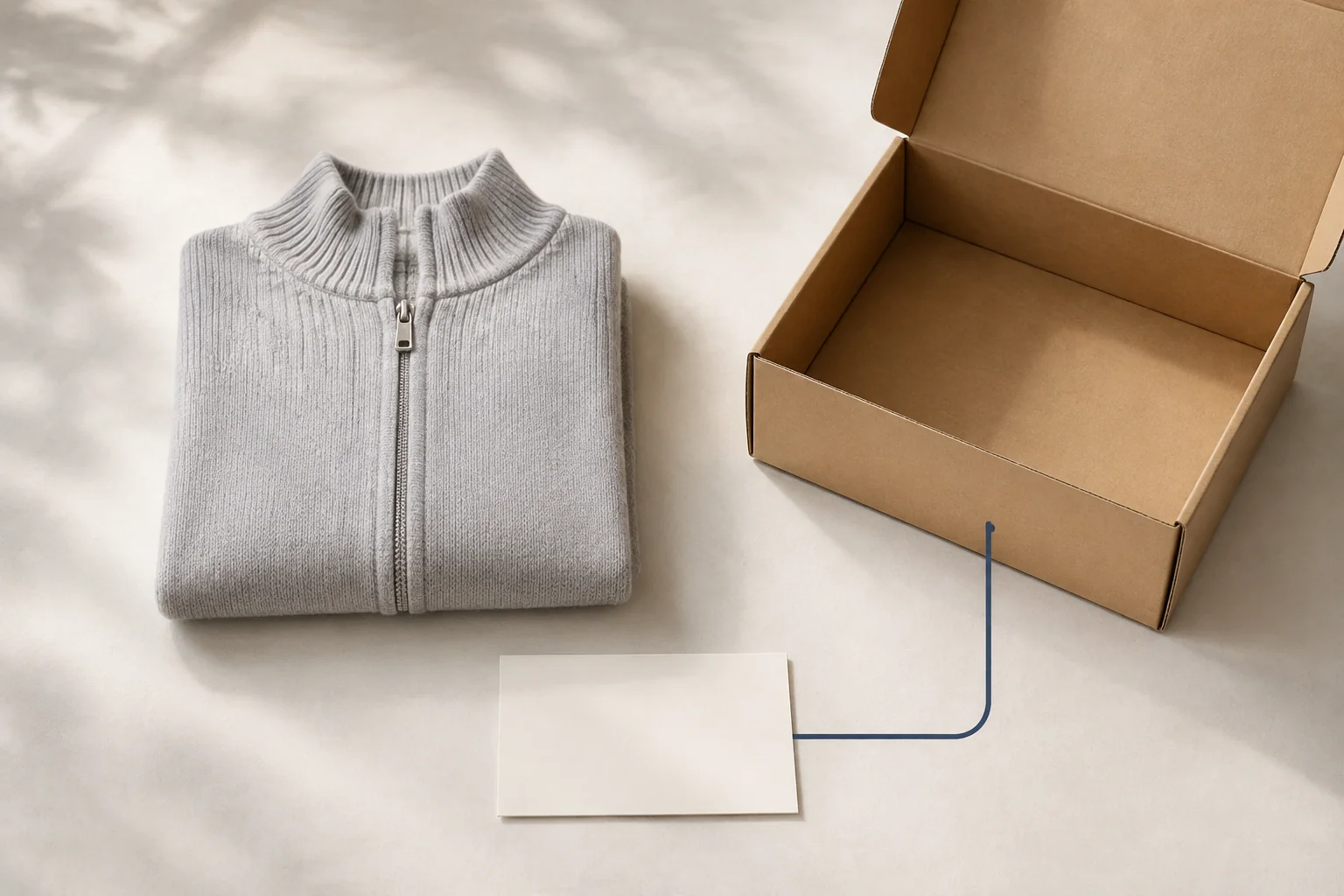
A hypothetical small-size carton carrying a large-size sticker illustrates the distinction: the cardigan may be physically correct, but its receiving identity is wrong. Before wider packing, inspect an actual packed unit and its carton record together. A barcode that scans is not sufficient if it retrieves the wrong item.
Who Can Reopen the File After Release?
Make changes interrupt the affected work
Tell suppliers which changes require notification before implementation. Examples include a different zipper source, revised garment dimensions, changed label copy or a replacement packing material. The list should be specific to the product and contract, not a claim that every change is equally risky.
When a change arrives, record the affected purchase orders, work in progress and finished quantities. Ask the factory what has already been committed under the previous revision. This separates a decision about future production from the disposition of material already made.
The release owner should issue a clear stop, limited continuation or revised authorization for the affected work. Share it with purchasing, production, packing and the buyer’s receiving contact as relevant. Merely uploading a revised file does not show that the old instruction stopped being used.
Ask each affected supplier to acknowledge the replacement reference and report any work already completed under the superseded instruction. When teams work in different languages, keep the technical identifiers unchanged and clarify the operational action in plain language. A translated “approved” without its original limitation can turn sample permission into bulk permission. Resolve inconsistent acknowledgements before assuming the new instruction has reached the workshop or packing station.
Close with a recoverable handover
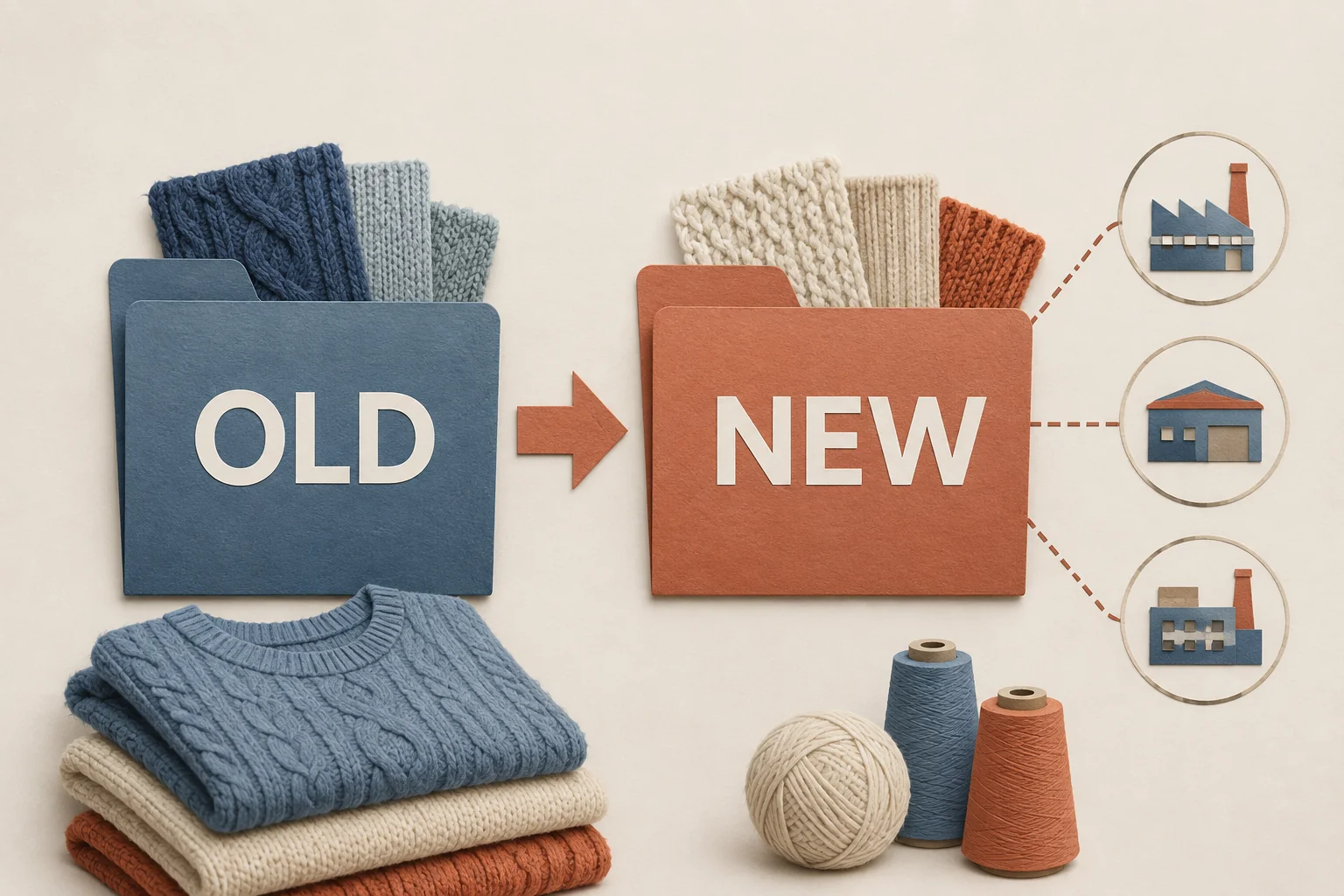
At the end of the order, retain the actual references supplied, accepted deviations, sample decisions and final packing mapping. Do not archive only the original intention. A future buyer needs to distinguish what was planned from what was manufactured and accepted.
For a repeat order, reopen current availability, destination, artwork and size demand. Unchanged evidence can remain useful, but it must still apply to the repeat product. Identify the person responsible for that comparison rather than treating “same as last time” as a complete instruction.
Keep unresolved disagreements visible in the handover. An order can be administratively closed while a supplier improvement remains open; those are different statuses. A concise final record should tell the next team which references it may reuse and which decisions it must make again.
Conclusion
A private-label zip cardigan release should authorize a defined action against one traceable set of references. Start by naming the buyer-side decision owner and the separate responsibilities of the knitwear factory, zipper supplier and label or packaging supplier. Connect their acknowledgements to the garment revision and physical evidence before purchasing or production moves ahead.
Treat conditional approvals as limited permissions with explicit closure requirements. Match test reports to the actual component or garment, keep artwork approval separate from product-information responsibility, and verify that the packed unit carries the right identity. When a supplier proposes a change, review both future work and anything already committed. Retain the accepted production references for the next order, including deviations and unresolved questions. The result is a usable handoff: everyone can see what is authorized, what remains on hold and whose evidence will support the next decision.
Discuss your zip cardigan release requirements.
Frequently Asked Questions
Can a factory approve a zipper substitution itself?
Only within authority explicitly agreed for that project. Otherwise, request the replacement reference and review the affected garment, operation, appearance and care evidence before issuing a revised instruction.
Does a sample approval permit label printing?
Not automatically. The sample may have been approved only for fit or construction. Label printing needs the authorized copy, artwork version, size mapping and other applicable inputs to be settled.
What if two suppliers use different revision codes?
Keep their codes and add a buyer-controlled cross-reference. Ask each supplier to acknowledge the mapping so a later change can be traced without guessing which file its internal code represents.
Must every change trigger a complete new test program?
No universal rule is proposed here. Review what changed, which evidence is affected and what the applicable product requirements demand. Have qualified technical reviewers define the necessary reassessment.
What belongs in a hold-closure message?
Identify the affected style and revision, the issue, the accepted replacement evidence, the approver and the exact action now permitted. Retain any conditions that have not been closed.