 CN Sweaters
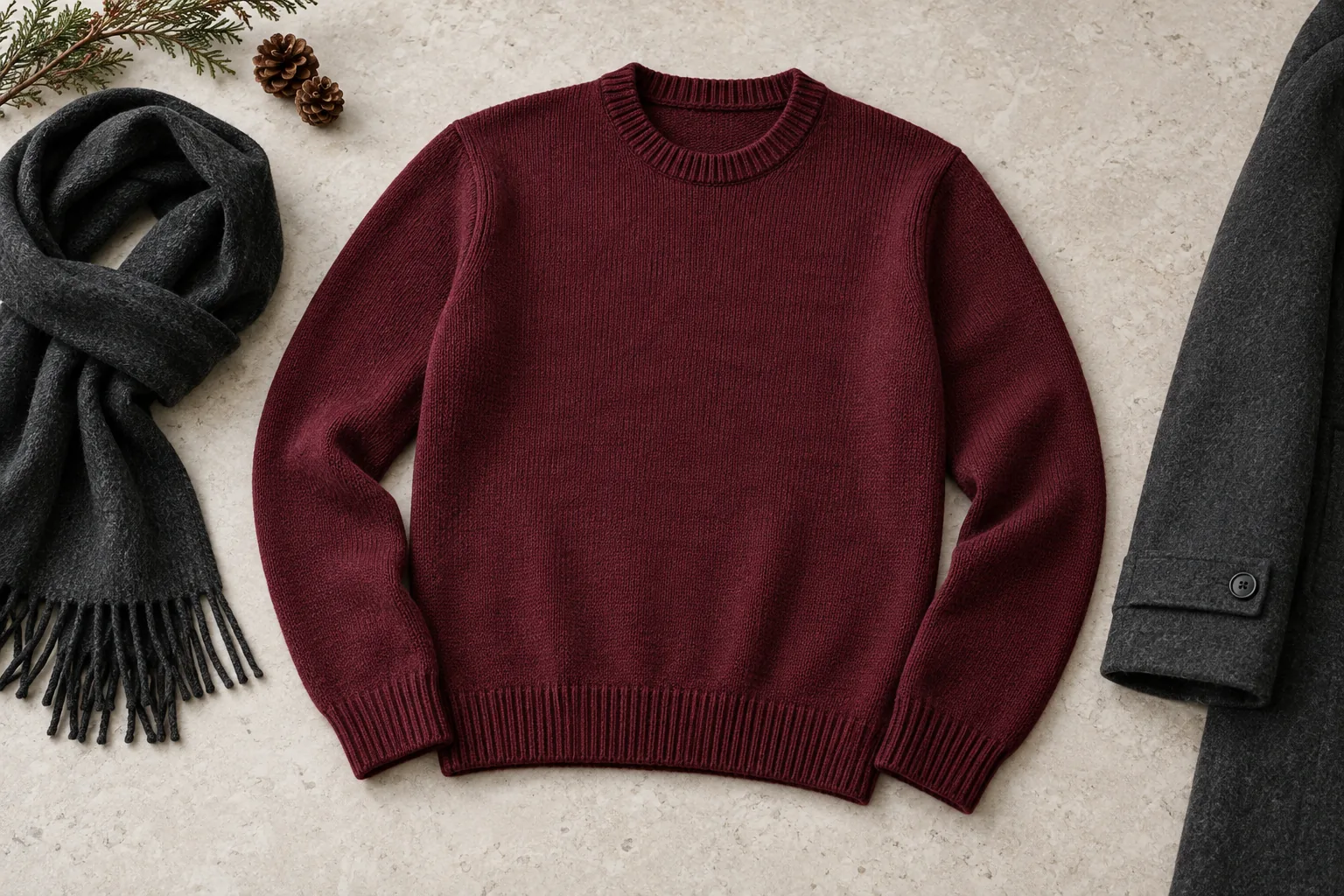
Merino wool pullovers in a winter core range may be quiet products: a familiar crew neck, dependable colours and little seasonal decoration. Yet it must fit consistently, survive frequent wear, remain available when stock sells through and look like the same product when a second yarn lot reaches the warehouse.
That makes a core program different from a one-off merino wool sweater order. The first approved sample is only the starting point. Buyers also need a product identity that can survive colour additions, size replenishment, mill changes and a later production window. Micron alone will not protect that identity. Neither will a generic instruction such as “same as last order.”
This guide sets out the controls needed to build merino wool pullovers as repeatable winter lines, including decisions to freeze, evidence to retain and events that trigger reapproval.
What Makes Merino Wool Pullovers Core Styles?
A core style earns its place by solving a stable customer need and by being practical to replenish. It should not depend on a short-lived surface effect, a single unavailable yarn lot or an approval that nobody can reproduce.
Define the permanent product promise
Write down why the customer returns to this pullover. The promise might be a fine everyday layer that fits under tailoring, a warmer standalone crew neck or a washable travel knit. Each role implies a different target for finished weight, gauge, opacity, hand and ease.
Turn that promise into observable requirements. A useful core brief identifies the layer worn underneath, the expected outerwear, indoor and outdoor use, target climate, wear frequency and care route. It also names the features that must remain recognisable: neckline shape, shoulder position, body length, rib depth, surface cleanliness and colour character.
The custom cardigan or pullover guide can help settle the basic product architecture before development starts. Keep fashion options outside the permanent specification. If a contrast tipping colour or seasonal embroidery can be removed without changing the core product, control it as a variation rather than rewriting the base standard.
Separate the core block from seasonal variants
Assign a style code to the permanent block and separate codes to approved variations. The core record should hold the measurement method, grade, yarn identity, stitch structure, rib construction, finishing route and packing standard. A seasonal colour card can then change without altering the block.
This separation prevents a colour sample from carrying an unrecorded fit or finishing adjustment into the next reorder. Use a change log that names the variable, reason, approver and effective purchase order.
Core does not mean frozen forever. Customer returns may justify a longer body, stronger neck rib or revised care instruction. Apply the change to a dated version and decide whether old and new stock may be sold together.
How Should Micron, Hand and Yarn Identity Be Fixed?
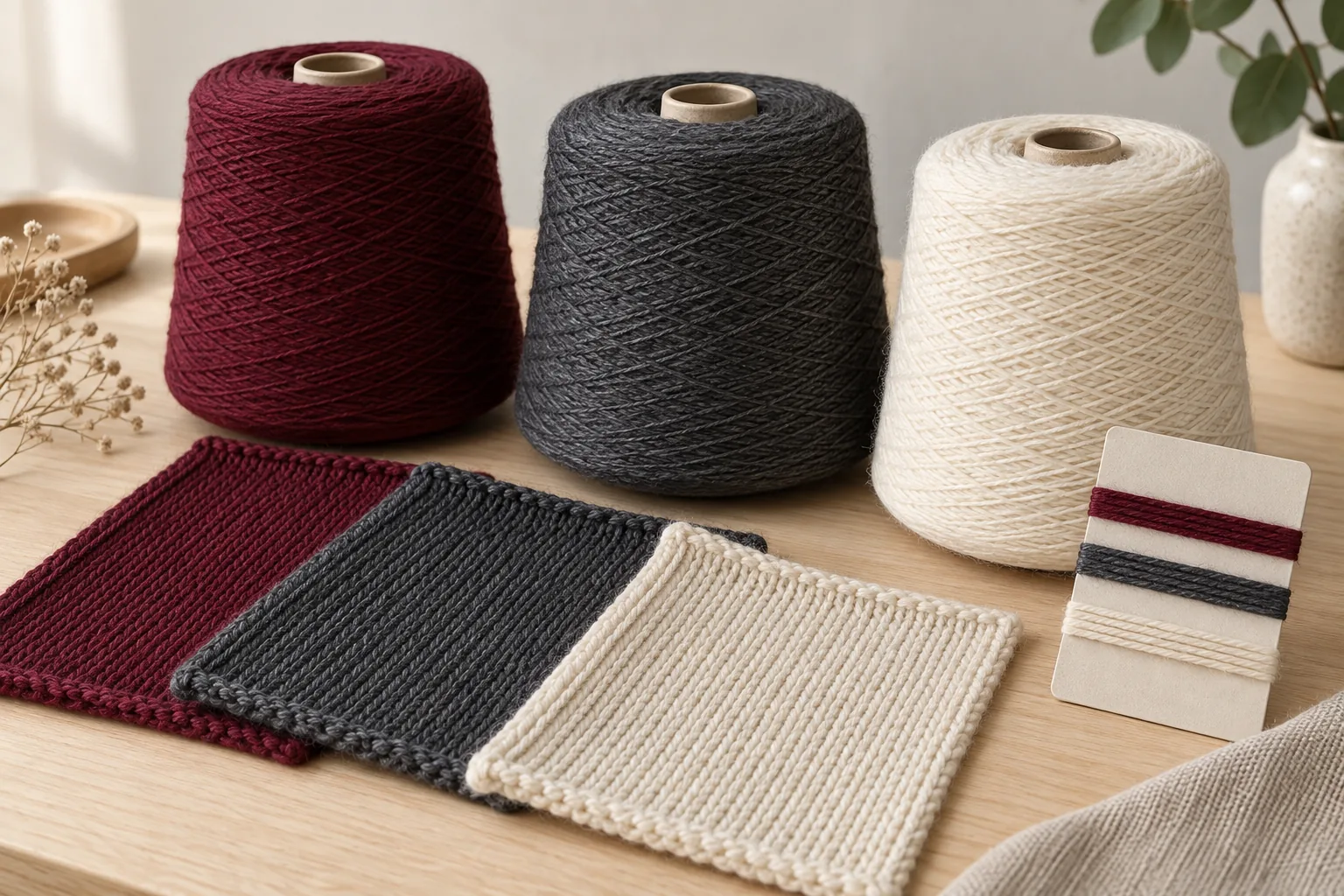
Merino is a fibre category, not a complete yarn specification. Two yarns with the same fibre-content label can differ in fibre diameter, yarn count, twist, ply, source, preparation, dye route and finish. Those differences can change softness, cover, pilling and dimensional behaviour.
Specify the yarn beyond fibre content
Record the supplier, mill article, fibre composition, nominal micron range, yarn count system, ply or number of ends, colour reference and dye lot. Add any certification or claim documents that the selling market requires. If the program permits an equivalent yarn, define which fields must match and which tests must be repeated.
Use the private-label knitwear yarn-planning guide to connect yarn identity with gauge, consumption, colour minimums and lead time. A commercial name cannot identify a changed blend or lot.
Woolmark’s wool fibre overview explains relevant fibre properties, while the FTC Wool Products Labeling Rules set requirements for wool-product claims in the United States. Buyers should confirm the exact rules for every destination and retain order-level evidence for the yarn actually used.
Build a hand standard that can be compared
“Soft merino” is not a release criterion. Hand is affected by fibre, yarn construction, stitch density and wet finishing. Approve it on a conditioned knitted panel made in the intended structure, then confirm it again on the garment.
Keep a sealed yarn cone or labelled yarn card, an approved knit-down and a finished garment standard. Record the conditioning conditions. Photographs document shade and surface but cannot preserve softness, loft or resilience. Protect physical references from light, moisture and uncontrolled handling.
For repeat orders, compare the new lot side by side with the retained standard. Judge dry hand, compression recovery, surface hairiness and any oily or over-softened feel. If a finish is being used to make a harder yarn feel temporarily acceptable, laundering and wear tests should expose the difference before bulk release.
Which Fit and Construction Decisions Must Remain Stable?
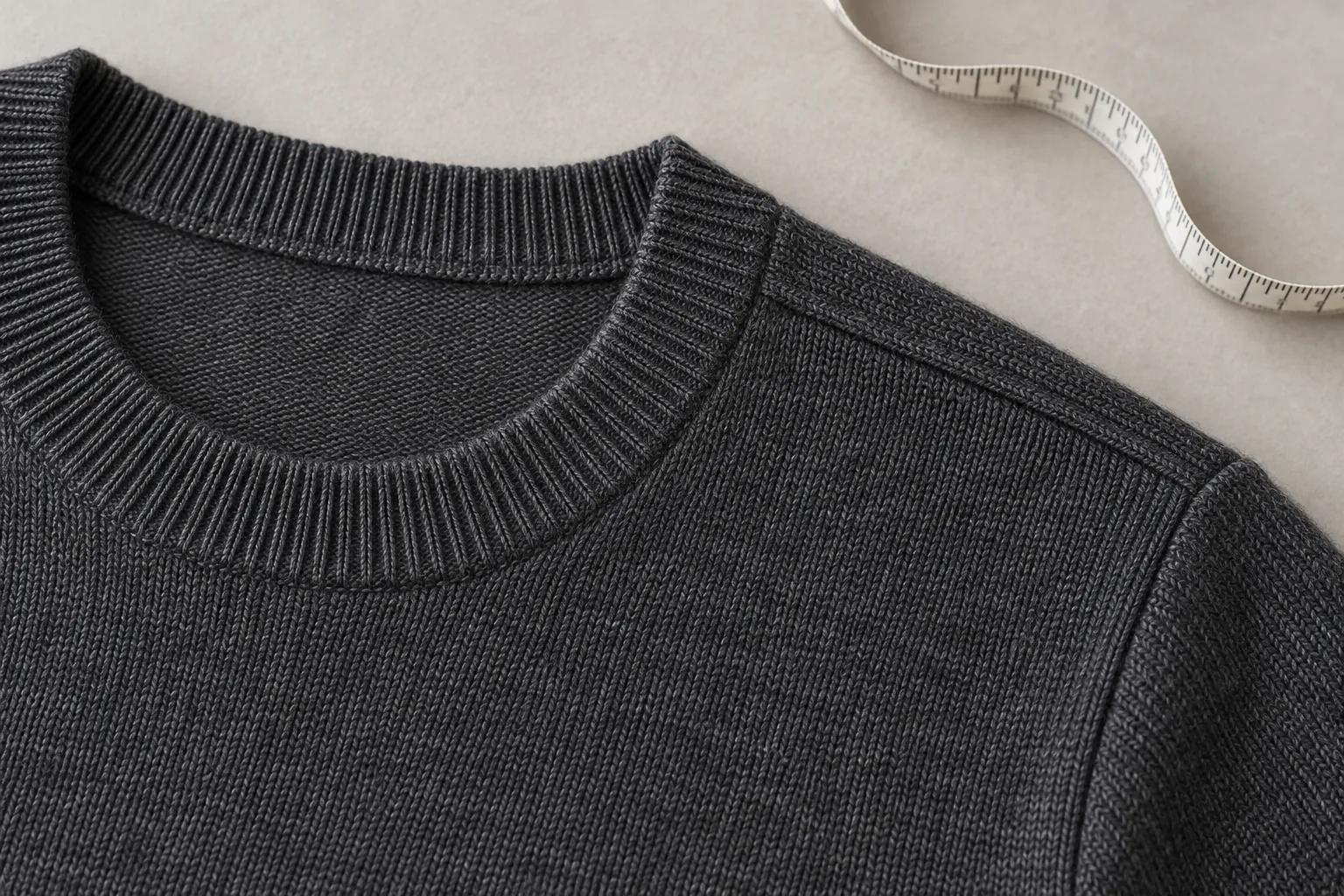
Customers often notice a core-style change first. A different neckline opening, shoulder position or hem grip can make a familiar SKU feel unfamiliar.
Lock the block and measurement method
Define the base size around the intended layer and body ease. Control shoulder width, chest, armhole depth, sleeve length, body length, neck width and front-neck drop, then add rib and opening measurements that affect dressing and recovery. State whether each point is measured straight, along a curve or between seam landmarks.
The knitwear tech-pack checklist provides a structure for sketches, points of measure and construction notes. Include a version-controlled grade and review the smallest and largest commercial sizes, where balance problems are easiest to see.
Use a base-size fit sample to settle proportion and a size set to validate the grade. The pre-production sample review guide explains why these are different approvals. A perfect medium does not prove that the neckline, shoulder and length remain balanced across the range.
Control ribs, seams and recovery
Specify the body stitch and finished density rather than relying on machine gauge. Record the neck-rib structure, relaxed opening, extended opening, rib height and recovery after a defined stretch. Do the same for cuffs and hem when their grip is part of the product promise.
Name the joining method at shoulder, armhole, side seam and neckline. Check seam stretch against the knitted panel so that a stable body is not joined by a brittle edge. Reinforcement should protect the shoulder and neckline without creating a ridge or changing the drape.
After fitting, rest the pullover flat and remeasure it. Observe elbow growth, sleeve twist, shoulder movement, body-length change and hem flare. Set tolerances by function using the measurement-tolerance guide. A tolerance describes acceptable production variation; it should not be widened simply to absorb a different block.
How Should Core Colours and Dye Lots Be Planned?
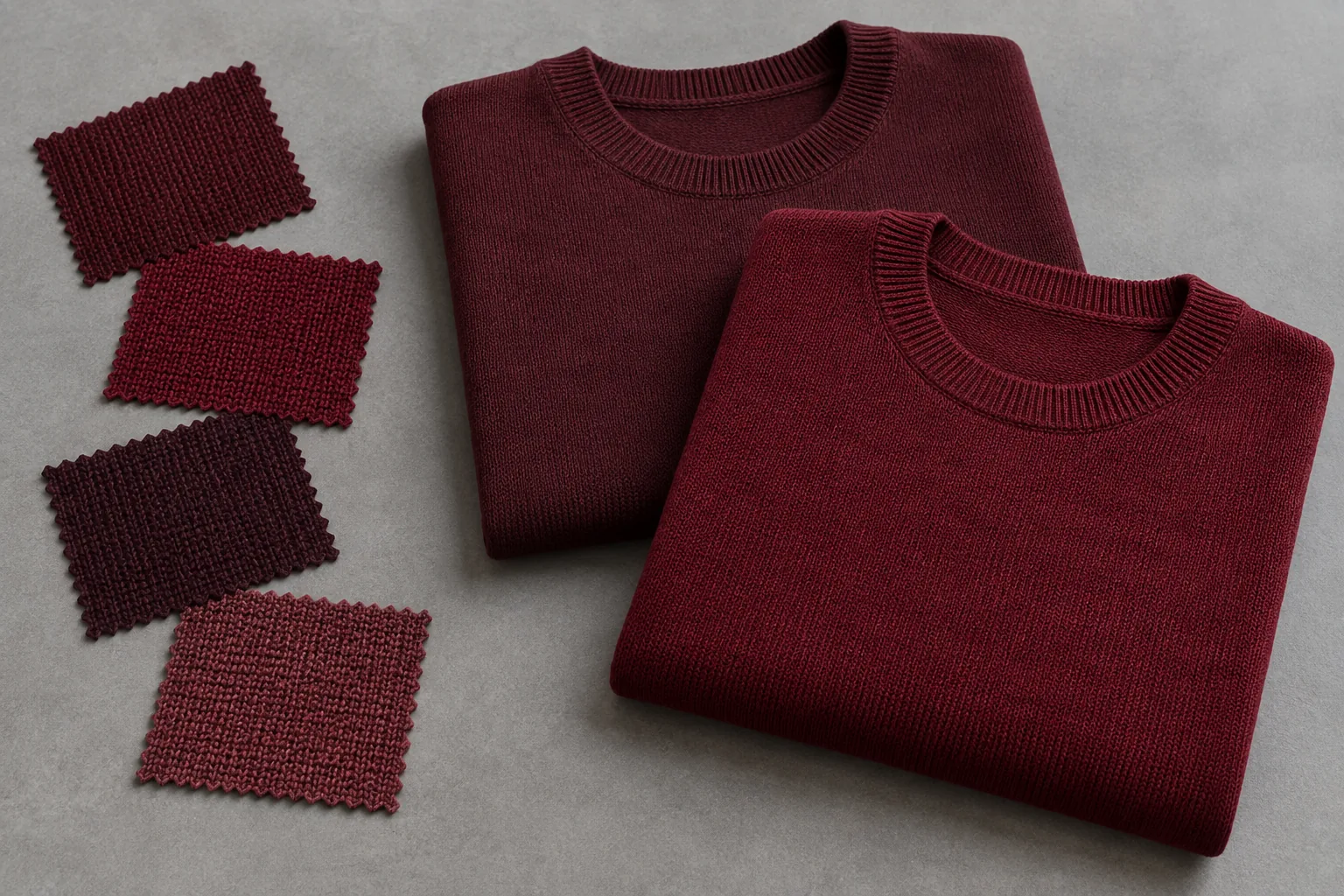
Core colours look commercially simple, but they create long-lived obligations. Black, navy, charcoal and neutral mélange shades may be sold across several deliveries, photographed once and compared by customers in the same wardrobe.
Create a continuity plan for each colour
Classify colours by expected demand, minimum yarn commitment and replenishment speed. A high-volume black may justify reserved stock or a forward mill commitment. A lower-volume seasonal neutral may need to share a dye lot with the first order because a later custom lot would not meet the minimum.
Confirm whether the yarn is stock service, custom dyed or spun to order. Record mill lead time, dye minimum, available undyed stock and the point at which a colour can no longer join the planned production window. The wholesale jumper MOQ and yarn planning guide helps expose the difference between the minimum number of sweaters and the yarn commitment that actually controls the buy.
Use sales scenarios rather than one forecast. Calculate yarn demand for the opening order, a conservative reorder and an upside case. Decide in advance what happens to residual yarn, which sizes receive priority and whether low-volume colours can be closed without disrupting the core block.
Approve shade on the intended construction
Approve a lab dip or yarn standard before the garment sample, then evaluate the colour in the intended stitch and finish. The colour-shade variation control guide sets out the handoff between colour direction, dye approval and production use.
Assess shades under agreed light sources and record metamerism concerns. Mélange and heather yarns need a distribution standard as well as a colour target because the balance of light and dark fibres changes the garment’s character. Compare rib and body panels together; different structures can make one yarn lot appear like two shades.
For replenishment, do not promise an invisible lot-to-lot match unless it can be proven. Ship the new lot separately, allocate one lot per store or size run, or approve a controlled shade difference. Identify lots on cartons and warehouse records.
What Must Sampling and Testing Prove?
Sampling for merino wool pullovers must establish both product quality and a repeatable method. The useful question is not merely whether the approval sample looks good, but whether another production window can reproduce it.
Give each sample a release question
Begin with a knit-down to approve yarn identity, density, colour, surface and preliminary hand. Use the fit sample to settle block and construction. Use the size set to test the grade, and use a pre-production or first-off sample to confirm the intended bulk yarn lot and finishing route.
Maintain one comment sheet for each coded sample, recording yarn lot, machine or gauge, finish, size, date and measurement condition. The custom sweater sampling checklist keeps unresolved yarn, fit and trim questions separate.
State who can approve hand, fit, shade, compliance and commercial release. When a comment such as “make softer” is issued, translate it into a controlled action and retest the affected properties. Extra softener may improve first touch while reducing seam stability or changing measurements.
Test normal wear and the proposed care route
Build the test plan from the product promise. For an everyday winter pullover, consider pilling, abrasion, colourfastness, dimensional change, seam performance and recovery after wear. Add snagging or appearance-after-cleaning tests when the structure and customer use make them relevant.
Measure before care, immediately after the defined procedure and after a stated rest period. ISO 5077 is an official reference for determining dimensional change in washing and drying, but the buyer and qualified laboratory must select the applicable method and pass limit. Care instructions need a reasonable basis for the whole garment; the FTC Care Labeling Rule is one destination-specific reference.
Run a wear trial on representative sizes. Observe dressing through the neck, elbow recovery, shoulder shape, rubbing under outerwear and body-length growth. Record failure location and severity.
How Should Forecast, MOQ and Replenishment Be Built?
Merino wool pullovers need a commercial model that survives imperfect demand. The lowest quoted unit price is not useful if it forces excessive colour depth, consumes all yarn before bestsellers are known or places a reorder outside the winter selling window.
Cost the platform, not just the first order
Ask the manufacturer to separate yarn, knitting, linking, finishing, testing, labels, packing and development charges. Confirm the consumption basis by size and finished weight. The custom knit sweater cost guide helps buyers identify costs that change with units and costs that belong to setup or development.
Use a scenario table before committing yarn:
| Program decision | Evidence to request | Reorder implication |
|---|---|---|
| Approved yarn identity | Mill article, lot and retained standard | Determines whether a new lot needs requalification |
| Core colour commitment | Dye minimum, stock status and reservation period | Controls how quickly colour can be replenished |
| Size-depth plan | Sales forecast and size-level consumption | Protects bestsellers from stranded fringe sizes |
| Production window | Capacity hold and approval deadlines | Determines whether stock arrives in season |
| Residual-yarn rule | Ownership, storage and usable balance | Sets the true cost of a smaller reorder |
| Change trigger | Supplier declaration and test matrix | Prevents an unreviewed “same quality” substitution |
Compare a base order, a downside case and an upside reorder, including residual yarn, storage, testing and split-shipment costs. Define who owns reserved yarn, its holding period and how its balance is verified.
Set a reorder clock before launch
Work backwards from the last commercially useful delivery date. Include sales review, yarn confirmation, lab approval if needed, knitting, assembly, finishing, testing, packing and freight. The knitwear lead-time planning guide provides a practical basis for recording those dependencies.
Define the sell-through signal that starts the review and the date at which a reorder becomes too late. Check stock by colour and size because a healthy total can hide a sold-out core size and excess fringe inventory.
Ask the factory to confirm current capacity at each release. A production slot from the first order is not automatically available for the second. Keep an alternative decision ready: reduce colours, prioritise sizes, use air freight for a limited quantity or close the season without a late order.
How Should Each Production and Reorder Lot Be Released?
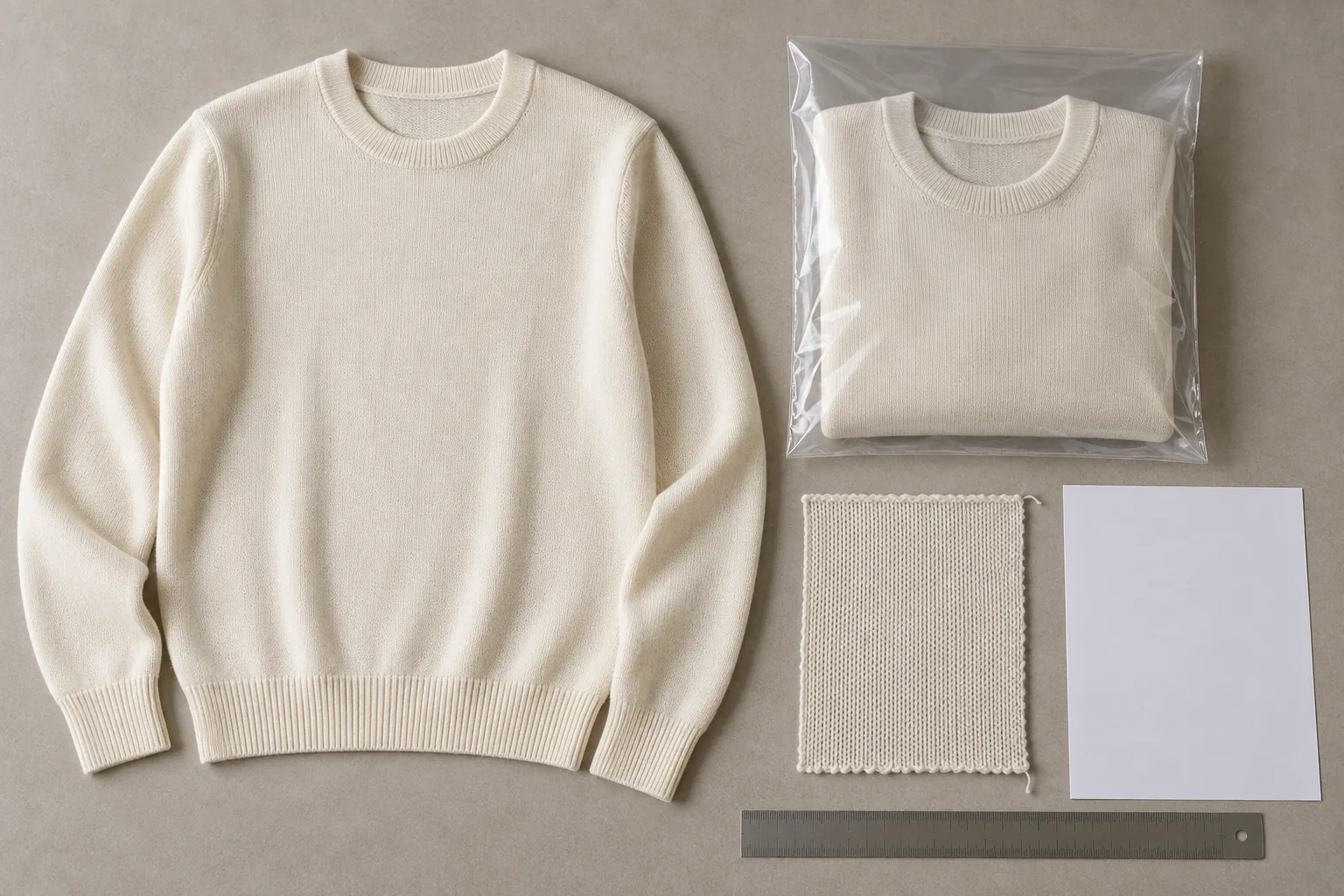
Bulk quality control should show whether production is reproducing approved merino wool pullovers and whether variation is moving. A final random inspection alone cannot recover a yarn or finishing problem that began weeks earlier.
Release the first production lot with evidence
Approve a first-off garment made with bulk yarn, intended machinery and actual finishing. Compare it with the sealed standard for shade, hand, surface, finished weight, critical measurements and rib recovery. Record the lot, line, finishing batch and conditioning time.
The knitwear quality-control inspection guide connects incoming yarn, knitting, linking, finishing and final inspection. Define hold points in advance. Isolate a batch when shade, weight or a critical measurement moves outside its warning limit.
Track results by size, colour and finishing batch. Averages can conceal a drifting large size or one colour that reacts differently to washing. Photograph recurring defects in a consistent position and light, and record corrective action with the follow-up measurement.
Requalify changes before a repeat order
Request a written change declaration for yarn source, mill article, fibre blend, machine route, stitch density, finishing chemicals, trims, labels and packing. “Same specification” is not proof that nothing changed. Compare order documents with the retained product archive.
Reopen only the gates affected by the change. A new dye lot needs shade and construction review. A new yarn article needs identity, hand, performance and dimensional tests. A machine or finish change may require a new first-off and measurement study. A major block revision should receive a new style version rather than being hidden inside a reorder.
Archive the final tech pack, grade, colour standards, sealed garment, yarn reference, tests, bulk measurements, concessions and feedback. Use the bulk knit-sweater planning guide to carry ownership and decision dates into the next order.
Conclusion
Merino wool pullovers become dependable winter core lines when the buying team protects a product identity across more than one order. That identity combines a defined wearer role, controlled yarn and hand standard, stable block, colour-continuity plan and a documented finishing route.
The commercial plan matters just as much as the sample. Buyers need size-level forecasts, yarn and colour minimums, a reorder deadline and a rule for residual stock. Bulk then requires a first-off made from the real production lot, followed by measurements and appearance checks that reveal movement by colour, size and batch.
Before every repeat, ask what changed. Compare the answer with retained physical and documentary standards, reopen the affected tests and record the new release. That discipline helps the buying team keep a familiar pullover recognisable while the program scales. To review the yarn, fit, colour and release inputs for your next order, contact the CNSweaters team with your winter core brief.
Frequently Asked Questions
Is micron count enough to specify a merino pullover?
No. Micron helps describe fibre diameter, but buyers also need fibre composition, yarn count, ply, twist or construction, mill article, dye lot, stitch density and finishing controls. Approve hand and performance on the intended knitted structure.
Should a core colour use one yarn lot for the whole season?
One lot provides the strongest continuity, but it may require an early commitment. If later lots are expected, approve each lot against the retained standard and keep a warehouse allocation rule that prevents uncontrolled mixing.
When should the reorder decision be made?
Set the decision date by working back from the last useful delivery date. Include yarn availability, approval time, current factory capacity, production, testing and freight rather than relying on the first order’s lead time.
What evidence should be retained after bulk production?
Keep the released tech pack and grade, yarn and colour references, sealed garment, test reports, first-off approval, batch measurements, change records, concessions and customer feedback. Give every item a version or order identifier.
Does a repeat order need another pre-production sample?
Not automatically. First determine what changed. A new yarn, dye lot, machine route, finish or block may require partial or full requalification. If inputs and route are demonstrably unchanged, a bulk first-off against the retained standard may be the more useful gate.