 CN Sweaters
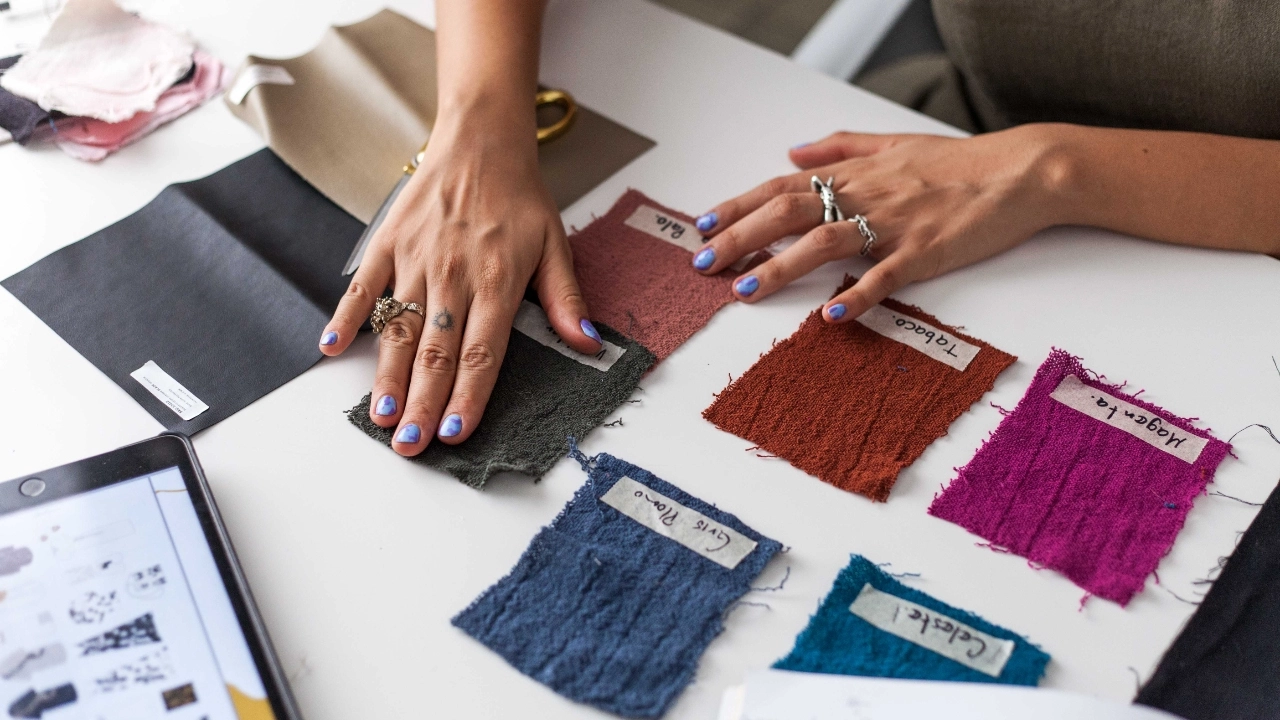
A pre production sample is not a showroom piece; it is the last practical checkpoint before knitwear production moves into bulk production. If a buyer approves it after only checking photos, styling, or a general “looks good” impression, the factory may have no clear standard for yarn composition, gauge, size spec, measurement tolerance, trims, washing behavior, packaging, or final quality inspection.
For custom knitwear, custom sweater, and private label knitwear projects, the real question is not whether the sample looks attractive on one hanger. The question is whether the same hand feel, fit, color, structure, and finishing can be repeated across sizes, colors, and cartons. A production sample that is approved without written limits can create expensive disputes later: the sweater factory thinks it followed the sample, while the buyer measures the bulk order against expectations that were never recorded.
The strongest sample review treats the pre production sample as a technical contract in garment form. It should confirm the product standard, the acceptable deviation, and the approval conditions before yarn booking, machine allocation, linking, finishing, packing, and final inspection begin.
Why Is a Pre Production Sample Not Just a Better Photo?
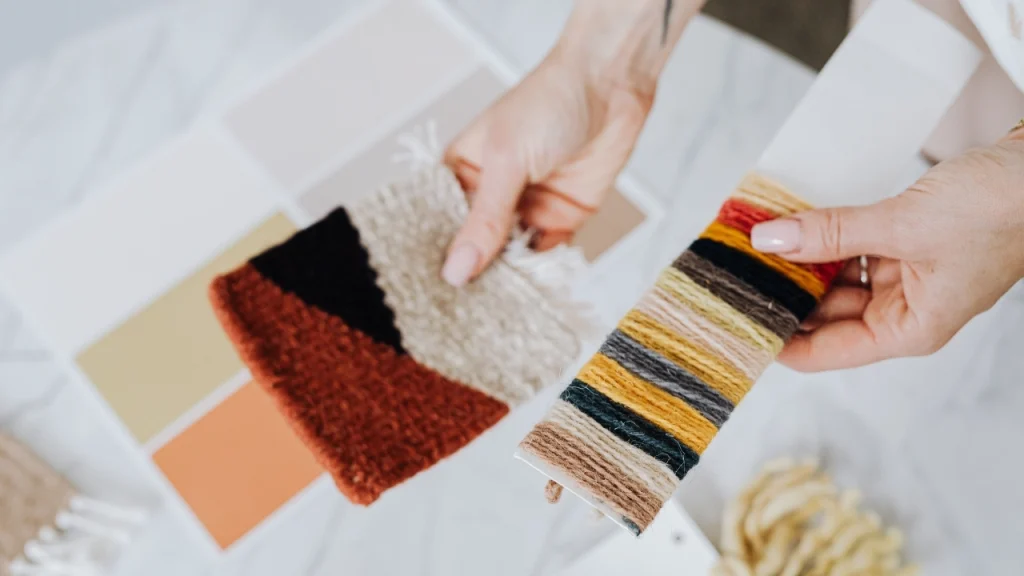
A pre production sample should be approved only when it represents the bulk production method, not just the intended appearance. In knitwear, a sample made with substitute yarn, a different gauge, hand-adjusted dimensions, or temporary trims can look close in photos but fail as a bulk approval standard.
The sample must prove repeatability
Knitwear is more sensitive than many cut-and-sew categories because yarn behavior, stitch density, washing, steaming, and recovery all affect final measurements. CottonWorks explains in its sweater manufacturing basics that sweater production may use cut-and-sew, panel knitting, full fashioning, or whole-garment methods, and each method affects shaping, seams, and repeatability. That means buyers should ask how the pre production sample was actually made.
If the sample was hand-corrected after knitting, approved before final washing, or measured before relaxation, it may not be a stable production standard. This is especially risky for ribbed hems, full-cardigan structures, cable panels, intarsia artwork, and heavy-gauge custom sweater styles, where tension and finishing can shift the garment after steam or wash.
Production sample and pre production sample are not the same checkpoint
A production sample can mean different things depending on the supplier, so the buyer should define the term in writing. In some workflows, it means a sample made during actual production. In others, it means the approved pre production sample used to guide bulk. For a B2B buyer, the safer approach is to treat the pre production sample as the sealed standard before bulk approval and treat any later production sample as a verification pull from the live order.
The practical rule is simple: if the yarn lot, gauge, trims, label layout, size spec, and finishing process are not bulk-ready, do not call it final approval. CN Sweaters describes this milestone in its OEM/ODM knitwear process as the stage that locks size, color, trims, workmanship, and packing before bulk starts. That is the role buyers should expect from a serious knitwear manufacturer.
What Should Be Checked Before Bulk Approval?
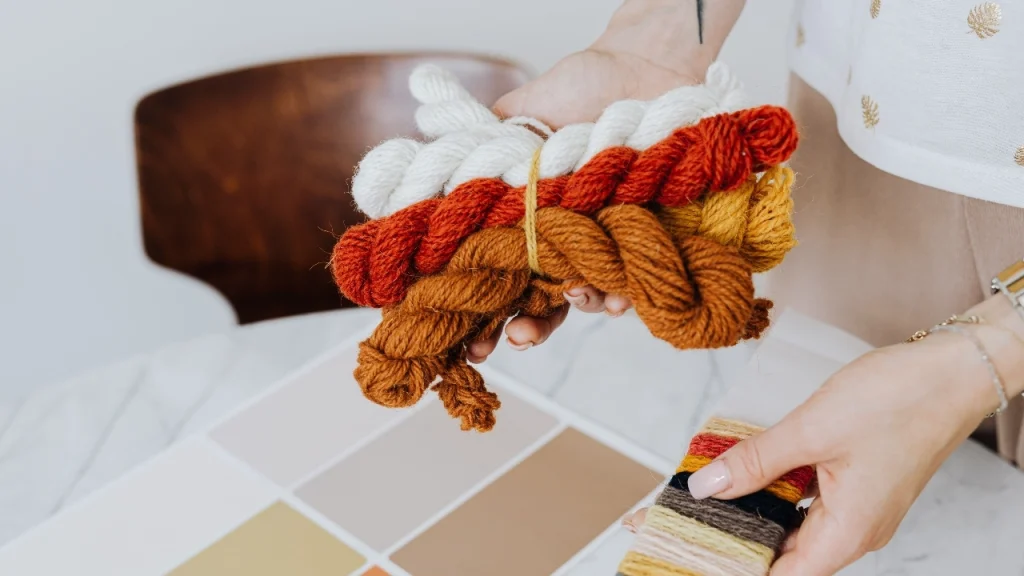
Bulk approval should not be issued until the buyer has checked the sample against the tech pack, not against memory. The pre production sample must be reviewed as a physical confirmation of material, structure, measurements, color, workmanship, trims, labels, and packing.
Material and structure checks come first
Start with yarn composition because it affects hand feel, weight, pilling risk, wash behavior, price, and labeling. A 100% cotton sweater, acrylic blend, wool blend, cashmere blend, viscose blend, or nylon-reinforced yarn can behave differently under the same size spec. The FTC states that most textile and wool products require labels listing fiber content, country of origin, and the responsible business identity under its textile and wool labeling requirements, so private label knitwear buyers should not leave fiber wording until the packing stage.
Then check gauge, stitch structure, fabric weight, and hand feel. CottonWorks notes in designing knit textiles that yarn, knit construction, productivity, and fabric weight are linked, and that fabric cost can drive a large share of garment price. This matters because a sample that feels softer or heavier than the quoted bulk yarn can hide a cost or performance mismatch.
Use a written review grid
The review grid should separate “approved,” “approved with correction,” and “not approved.” Vague notes such as “make it better” do not help a sweater factory reproduce the standard. The buyer should record what changed, where it changed, and how the factory should confirm it in the next sample or bulk production.
| Review Area | What To Confirm | Approval Risk If Missing |
|---|---|---|
| Yarn composition | Fiber percentage, yarn count, yarn lot plan | Bulk hand feel or label content differs from sample |
| Gauge and stitch density | Machine gauge, stitch tension, panel stability | Size drift, loose structure, or different weight |
| Size spec | POMs, graded sizes, measurement tolerance | Fit disputes across sizes after bulk inspection |
| Color standard | Lab dip, shade band, approved light condition | Color mismatch between sample, sizes, or lots |
| Trims and labels | Position, size, attachment method, artwork | Private label errors and relabeling cost |
| Washing and finishing | Shrinkage, steaming, hand feel, appearance | Bulk changes after care or final finishing |
| Packing | Polybag, hangtag, carton ratio, carton mark | Retail readiness problems and shipment delays |
This table should be attached to the PP approval record, not kept in a buyer’s inbox as casual comments.
How Should Buyers Review Measurements and Fit?
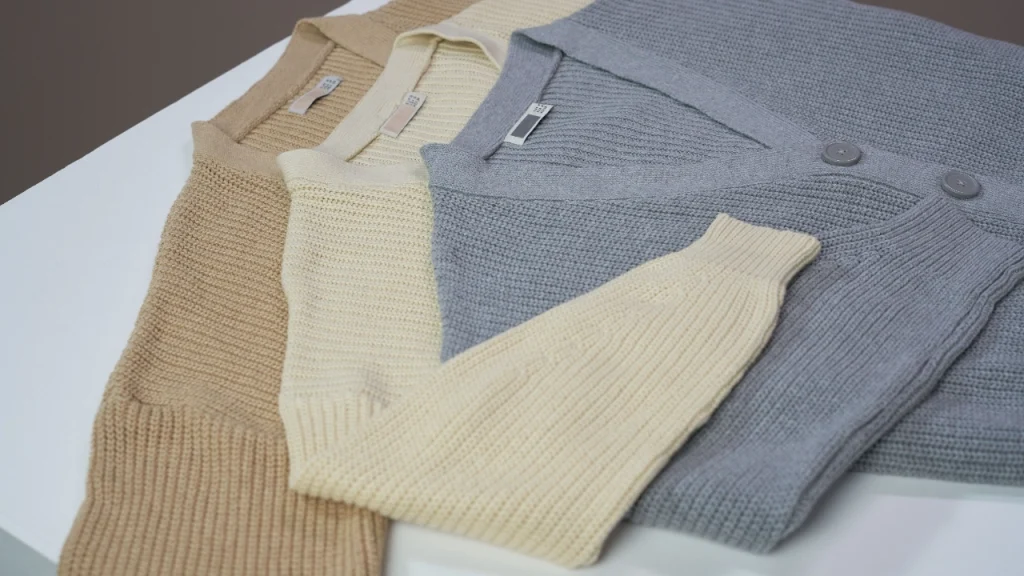
Measurements should be reviewed after the sample has been relaxed and finished in the same condition expected for bulk. If the sample is measured too early, especially after steaming or packing compression, the buyer may approve a size spec that bulk garments cannot consistently meet.
Define tolerance by point of measure
A knitwear size spec should include POM names, measuring method, base size, graded sizes, and measurement tolerance. The tolerance should not be copied blindly from woven shirts or activewear. Knitwear stretches, recovers, and relaxes differently depending on yarn composition, gauge, stitch structure, and garment weight.
For example, body length, chest width, sleeve length, shoulder width, neck opening, rib height, hem width, and cuff opening should not all use the same tolerance. A chunky 3GG cardigan may need a different measurement tolerance from a 14GG fine-gauge pullover. A ribbed hem may recover after stretching, while a heavy cotton knit dress may drop slightly after hanging. CN Sweaters notes in its quality control system that size tolerances are evaluated based on gauge, yarn type, and structure, which is the right logic for knitwear production.
Wash and recovery checks protect the buyer before bulk
A sample that measures correctly before washing may still fail after care testing. Intertek lists textile testing areas such as dimensional stability, colorfastness, pilling resistance, and fiber composition, which are directly relevant when the buyer needs proof beyond hand feel. For pre production sample review, the buyer should decide which tests are required before approval and which can be confirmed during bulk or final inspection.
For washable sweaters, check length, chest, sleeve, rib recovery, twisting, and surface change after the agreed care method. For wool, cashmere, mohair, brushed yarns, or novelty blends, confirm whether the garment is intended for dry clean, hand wash, or machine wash. Do not approve care labels based only on what looks commercial; care wording should reflect the tested or agreed performance.
How Do Production Sample Details Become Factory Instructions?
A production sample becomes useful only when its details are translated into factory instructions. The physical garment is important, but bulk consistency depends on written standards that production, QC, packing, and the buyer can all read the same way.
Convert sample review into exact corrections
After sample review, separate comments into fit, yarn, color, workmanship, trims, label, packing, and inspection items. Each correction should include the original issue, required change, target measurement or standard, and confirmation method. “Same as sample” is not enough if the sample itself contains a deviation.
A good correction note sounds like this: “Increase sleeve length from 57 cm to 58.5 cm on size M; keep tolerance at +/-1 cm; apply proportional grade to L and XL; confirm after wash and steam.” A weak note sounds like this: “Sleeves a bit short, please improve.” The first note can be followed by a knitwear manufacturer. The second creates room for disagreement.
Trims and packaging must be reviewed with the garment
Private label knitwear often fails late because the garment was approved separately from trims and packaging. Neck label placement, care label content, hangtag string position, button quality, zipper color, spare yarn, polybag warning, barcode sticker, carton ratio, and carton mark should be checked before bulk approval.
CN Sweaters’ OEM/ODM services include private label items such as neck labels, care labels, hangtags, stickers, polybags, and cartons. Buyers should use that stage to confirm artwork version, placement, language, material, and packing ratio. If the approved pre production sample has temporary labels, the approval should clearly say that bulk is still conditional on final label and packaging confirmation.
For assortment programs across sweaters, cardigans, hooded knitwear, knit dresses, and sleeveless knitwear, the same label and carton rules should be repeated across styles only when the garment type allows it. A thick cardigan and a fine-gauge pullover may not fit the same carton quantity or folding method.
When Is Bulk Approval Too Early?
Bulk approval is too early when the sample looks right but the production conditions are still open. If the buyer has not confirmed yarn lot, color standard, size spec, measurement tolerance, trims, packaging, and quality control criteria, approval only transfers risk into the bulk stage.
Do not approve while key variables are still conditional
Some conditional approvals are workable, but only when they are narrow and written. For example, it may be acceptable to approve fit while still waiting for final barcode artwork. It is not safe to approve bulk production while the yarn composition, gauge, wash shrinkage, or color standard remains undecided.
This is where MOQ and lead time planning matter. CN Sweaters lists MOQ and lead time variables such as style, color, size ratio, yarn sourcing, complex stitches, peak season capacity, and extra sample revision rounds. If approval is delayed because the sample review was incomplete, the impact may not be limited to one sample fee. Yarn booking, machine scheduling, packing material preparation, and shipment windows can all move.
Final inspection standards should be agreed before production starts
Quality inspection should not be invented after bulk is finished. Intertek’s textile and apparel inspection page describes checks across raw materials, production stages, workmanship, labeling, fabric weight for sweaters, hand feel, packaging lists, carton count, and defect levels. For knitwear, the buyer should agree which defects are critical, major, or minor before production starts.
AQL can also be useful, but it must be matched to the product risk. QIMA explains that AQL sampling sets the maximum acceptable number of defective items in a sample batch, with different limits typically used for critical, major, and minor defects. For a custom sweater order, this means the buyer should define whether open seams, holes, wrong labels, shade mismatch, measurement out-of-tolerance, needle contamination, stains, or loose ends are treated differently.
Conclusion
A pre production sample should answer one hard question: is this custom knitwear style ready to be copied into bulk production with controlled risk? If the answer depends on memory, photos, or informal chat notes, bulk approval is premature.
Before approving, buyers should confirm yarn composition, gauge, stitch density, weight, hand feel, size spec, measurement tolerance, wash result, color standard, trims, labels, packaging, and quality inspection criteria. For a new style, private label program, or seasonal reorder, the safest next step is to send your pre-production sample details, tech pack, yarn composition, size spec, measurement tolerance, color standard, packaging request, quality standard, and delivery timeline to the CN Sweaters team to review what should be confirmed before bulk approval.
FAQ
What is the difference between a pre production sample and a production sample?
A pre production sample is usually the approval standard before bulk starts. A production sample is often pulled from the live production run to verify that bulk is following the approved standard. Buyers should define both terms with the factory because suppliers may use them differently.
Can I approve a pre production sample if only one size is made?
Yes, but only if the graded size spec and measurement tolerance are confirmed before bulk. If only size M is sampled, the buyer should still check how chest, length, sleeve, shoulder, rib, and neckline measurements will grade across other sizes.
What should I do if the sample looks good but measurements are outside tolerance?
Do not approve it as final. Record each failed point of measure, the actual measurement, the target, and the required correction. If the deviation is caused by yarn, gauge, washing, or steaming, request confirmation that the correction can be repeated in bulk.
Should packaging be reviewed during sample approval?
Yes. Packaging affects retail readiness, carton quantity, barcode control, and private label presentation. At minimum, confirm folding method, polybag size, hangtag placement, care label, carton ratio, carton mark, and any market-specific warning or sticker requirements.
How does CN Sweaters support pre production sample review?
CN Sweaters is an OEM/ODM knitwear manufacturer with integrated knitting, linking, washing, ironing, QC, and export packing. The About Us page notes PP sign-off deliverables such as sealed PP sample, stitch cards, lab dips, and graded spec, which are useful for controlling bulk consistency.