 CN Sweaters

Bulk knit sweaters should be planned as a production program, not as a simple purchase of product photos, unit prices, and total quantity. For first-time wholesale buyers, the real cost and delivery risk usually comes from unclear product positioning, scattered colors, wide size splits, unapproved yarn details, and late packaging decisions.
The terms bulk knit sweaters, wholesale sweaters, wholesale knit sweaters, wholesale knitted sweaters, and bulk sweaters are close in search intent, but they do not always mean the same buying situation. A buyer looking for blank sweaters wholesale may want plain stock-like basics. A private label knitwear team may need custom labels, lab dips, measurement files, and PP approval. A brand searching for custom knitwear or custom knit sweaters may still be testing a concept, while a distributor buying sweaters in bulk may care more about repeatable size ratios and replenishment. Before requesting a quote, the buyer needs to define the product type, target market, retail price band, season, yarn composition, gauge direction, MOQ target, and sales channel.
Why Do Bulk Knit Sweaters Need Planning Before RFQ?

Bulk knit sweaters need early planning because every unclear decision becomes a quotation variable. A knitwear manufacturer cannot price a crew neck sweater wholesale order accurately if the buyer has not confirmed yarn level, gauge, stitch structure, color assortment, size range, branding, packaging, and delivery window.
Search terms do not equal purchase intent
Wholesale knitwear can include sweaters, cardigan wholesale programs, knit dresses, vests, hoodies, and custom knit projects. Wholesale clothing sweaters may suggest a broader apparel buying need, while plain sweater wholesale or bulk crew neck sweaters usually points to simpler basics. Bulk wool sweaters introduce fiber cost, shrinkage behavior, hand feel, pilling risk, and care-label expectations. Custom sweater and private label knitwear projects add labels, hangtags, packaging, grading, and brand approval steps.
This distinction matters because a buyer may compare suppliers using the same keyword but ask for very different work. A blank basic pullover in three stock colors is not the same production task as a 7GG jacquard custom sweater with brand labels, custom polybags, and carton marks. CottonWorks explains that sweater manufacturing can involve cut-and-sew, panel knitting, full fashioning, and whole-garment methods, so construction method alone can change fit, waste, seam appearance, and production planning.
A first quote should be based on a working specification
A useful RFQ does not need to be perfect, but it should be specific enough for a knitwear factory to judge feasibility. At minimum, provide product category, reference images, intended fit, target yarn composition, gauge direction, stitch preference, quantity by color and size, target delivery date, and packaging request.
For CN Sweaters programs, the OEM/ODM knitwear process is built around RFQ intake, quotation, yarn and color confirmation, sampling, PP approval, bulk production, inline QC, final QC, and shipment handover. That structure is valuable for first orders because it turns a vague request into a controlled production plan.
How Should First-Time Buyers Define Product Direction?
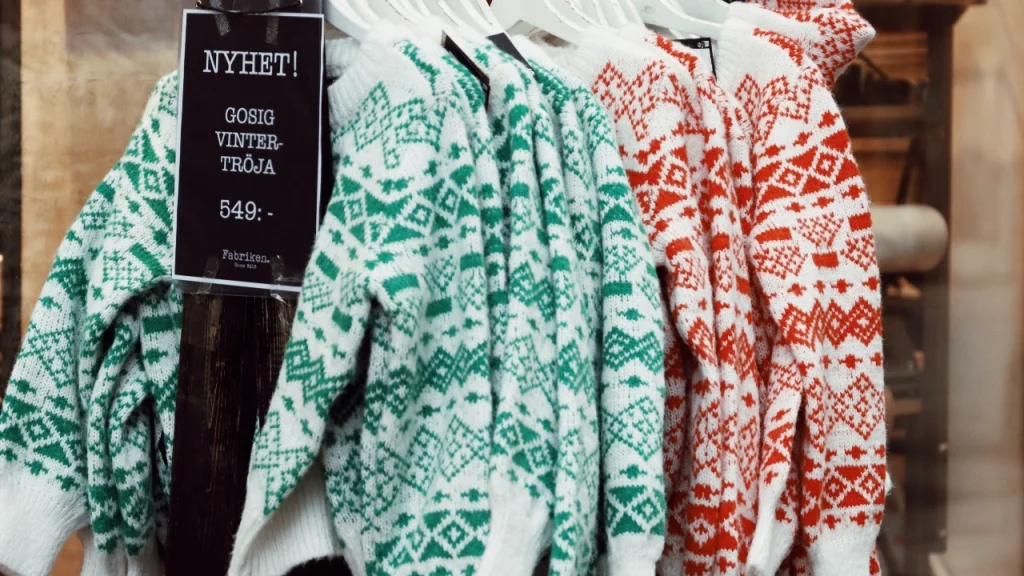
First-time buyers should define product direction by market, channel, season, price band, and intended use before choosing materials. Without that hierarchy, yarn and style choices may look attractive in sampling but become too expensive, too heavy, too late, or too difficult to replenish in bulk production.
Match product type to channel and season
Fall winter sweaters for boutiques, wholesale mens sweaters, women sweater wholesale programs, ladies sweater wholesale capsules, and bulk wool sweaters do not need the same planning logic. A boutique may accept fewer colors and richer texture. A wholesale distributor may need repeatable core colors, stable sizing, and simpler packaging. An e-commerce private label team may prioritize photography-ready fit, clean labels, and fast replenishment.
Use the channel to decide whether the order should be deep or broad. Oracle describes assortment planning as the process of balancing product variety, product variation, color, size, seasonal trends, customer segments, and sales channels. For sweaters, that means a first order should usually protect the strongest style and color story before spreading quantity across too many test SKUs.
Connect yarn, gauge, and price band
Yarn composition affects hand feel, warmth, drape, pilling behavior, wash care, and price. Gauge affects fabric density, weight, texture scale, production speed, and fit tolerance. A 3GG-5GG chunky pullover may work for winter outer-layer styling, while 12GG-14GG fine-gauge knitwear may suit layering and cleaner office looks. CN Sweaters lists sweater manufacturing options across heavy, mid-weight, fine, and extra-fine gauge directions, with yarn and construction confirmed during development.
The buyer should not ask for “premium hand feel at the lowest price” without defining what premium means. Does the market expect wool warmth, cotton breathability, cashmere touch, acrylic value, viscose drape, or a blended balance? Each answer changes MOQ, yarn sourcing, testing, and reorder consistency.
How Does MOQ Really Work For Wholesale Knit Sweaters?
MOQ for wholesale knit sweaters is not just a factory number. It is a planning result shaped by yarn minimums, color count, size range, gauge, machine setup, stitch complexity, trims, packaging, and the delivery calendar.
MOQ is split by style color and size
For CN Sweaters, the reference minimum is shown as 30 pcs each size per color on the MOQ and lead time page, with flexibility depending on yarn type, gauge, complexity, and order structure. The practical point is that MOQ manufacturing becomes harder when one order is split into too many small units.
For example, 600 pcs can be efficient if it is one style, three colors, and four core sizes. The same 600 pcs can become inefficient if it is two styles, six colors, and six sizes. Each SKU needs yarn allocation, machine setup, production tracking, measurement checks, shade control, labeling, packing, and carton counting. When single-color quantity is too low, the sweater factory has less room to manage yarn loss, shade sorting, repairs, and final size balancing.
| Planning variable | Low-risk first order choice | Higher-risk first order choice |
|---|---|---|
| Style count | 1-2 proven silhouettes | Many untested silhouettes |
| Color assortment | 2-4 colors with clear priority | Many colors with equal quantity |
| Size range | Core selling sizes plus limited edge sizes | Full wide range with low units each |
| Yarn direction | Confirmed available yarn or realistic match | Custom yarn with unclear minimum |
| Packaging | Standard pack or confirmed private label set | Late label and carton changes |
| Reorder plan | Reserve yarn and repeat core colors | Change colors after launch without planning |
The first order should make production stable enough to learn from sell-through, not so fragmented that every SKU becomes a weak test.
Low MOQ can raise hidden costs
Low MOQ can be useful for market testing, but it may raise the unit cost because setup work is spread across fewer garments. Custom dye, special yarn, jacquard artwork, intarsia placement, embroidery, branded trims, and multiple packaging formats can all reduce efficiency. A low MOQ custom knitwear order should therefore be simpler in structure: fewer colors, fewer size splits, one packaging standard, and clear approval points.
For buyers planning wholesale sweaters bulk programs, the key question is not “What is the lowest MOQ?” It is “What is the lowest MOQ that still protects fit, hand feel, color consistency, and delivery?”
How Should Color Assortment And Size Range Be Planned?
Color assortment and size range should follow expected demand, not equal division. Equal quantity across every color and size looks fair on a spreadsheet, but it often creates stockouts in core sizes and trapped cash in weak colors.
Separate main colors from test colors
A first bulk order should classify colors into main colors, support colors, and test colors. Main colors receive the largest quantity because they match the target customer, season, and channel. Support colors complete the collection story but stay controlled. Test colors are used to measure response and should not consume the same MOQ as proven colors unless the buyer has strong sales data.
For fall winter sweaters, neutral colors may support larger wholesale placement, while brighter or trend colors can be tested in smaller runs if MOQ allows. For blank sweaters wholesale, plain sweater wholesale, and crewneck sweaters wholesale programs, the assortment may lean toward repeatable basics. For wholesale cardigan sweaters or cardigan wholesale programs, color depth may depend on whether the cardigan is sold as a layering basic, office knit, or fashion item.
Size ratios should reflect real customers
A size range is not just XS to XXL. It is a quantity decision by market. Wholesale mens sweaters may need different chest, shoulder, and length priorities than ladies sweater wholesale programs. Oversized custom knit sweaters need careful grading because sleeve length, shoulder drop, body width, and hem tension can affect returns.
For first orders, buyers should identify core sizes and edge sizes. Core sizes get depth. Edge sizes provide market coverage but may not need equal quantity. If the selling channel includes regional size differences, wholesale accounts, or online return sensitivity, share that information with the sweater supplier before sampling. The approved size chart should include shoulder width, chest, body length, sleeve length, cuff, hem, and acceptable tolerance by measurement point.
What Should Be Approved Before Bulk Production Starts?
Bulk production should start only after the buyer and knitwear supplier have locked the PP sample, yarn, color, measurements, trims, packaging, and QC standard. A nice-looking sample is not enough if the production file does not define what must be repeated.
Approve hand feel density and measurements
Knitwear is elastic, so measurement control is different from woven garments. Buyers should check shoulder width, chest, hem, sleeve length, body length, neck opening, rib recovery, seam balance, and wash-after behavior. A bulk crew neck sweater may look correct on a hanger but fail after steaming, folding, or washing if density and rib tension are not stable.
CottonWorks notes that knit construction, yarn, and machine capability influence productivity, fabric weight, stretch, drape, pattern design, and cost. That is why sample approval should include hand feel, gauge, stitch definition, garment weight target where relevant, and measurement points instead of only front-view photos.
Lock private label materials early
Private label knitwear requires more than the garment body. Neck labels, care labels, size labels, hangtags, stickers, polybags, carton labels, and barcode placement may affect both timing and final packing. CN Sweaters supports OEM and ODM knitwear services for tech-pack production, ODM development, and private label packaging, but the buyer still needs to provide accurate brand artwork and approval before shipment pressure begins.
Late branding decisions create preventable delays. If hangtags arrive after final QC, finished garments may need to be reopened, relabeled, repacked, and recounted. If care labels are missing fiber content or care instructions, retail compliance can become a delivery issue rather than a design detail.
How Should Quality Packaging And Lead Time Be Controlled?
Quality, packaging, and lead time should be controlled from the RFQ stage because they are connected. A buyer who confirms QC requirements only after bulk production may discover that the garment, carton, label, or test standard was never built into the schedule.
Use inspection points before final packing
A practical sweater QC plan includes yarn checks, lab dip or shade confirmation, panel measurement, linking inspection, finishing control, final measurement, surface inspection, and packing verification. Intertek describes textile and apparel inspection as covering pre-production checks, during-production inspection, inline garment inspection, before-delivery inspection, defect classification, workmanship assessment, labeling, packaging list review, carton count, polybags, hangtags, barcodes, and shade identification.
CN Sweaters’ quality control system focuses on raw material inspection, inline QC, finishing, final audit, dimensional consistency, seam elasticity, clean appearance, symmetry, and knitwear-specific risks. For a first bulk order, buyers should define which defects are critical, major, and minor; what measurement tolerance applies; and whether third-party testing is needed for dimensional stability, colorfastness, pilling resistance, or fiber composition.
Build the calendar backward from launch
Lead time is not only knitting time. It includes RFQ clarification, yarn sourcing, lab dips, sample making, sample review, revision, PP approval, material booking, bulk knitting, linking, washing or steaming, finishing, QC, packing, booking shipment, and transit. CN Sweaters gives reference timing for samples and bulk production in the MOQ and lead time section, with bulk production depending on quantity, style mix, and season.
For fall winter sweaters, do not wait until the selling season to confirm colors. Peak-season capacity, yarn availability, and freight schedules can narrow options quickly. A first-time wholesale buyer should prepare the product brief early, confirm approval deadlines, and keep packaging files ready before the PO is released.
Conclusion
Turn a first order into a repeatable program
A successful first order of bulk knit sweaters is not measured only by a low unit price. It is measured by whether the product matches the target market, arrives before the selling window, fits consistently, passes quality checks, and can be reordered without changing hand feel or shade unexpectedly.
Before placing a PO, align the product category, yarn composition, gauge, MOQ, size range, color assortment, sample approval, packaging, quality standard, and delivery plan. CN Sweaters supports buyers across knitwear product categories, bulk development, private label execution, and export-ready production from Dongguan. Send your bulk knit sweaters plan, target market, yarn composition, gauge direction, size range, color assortment, MOQ target, packaging request, quality standard, and delivery timeline to review a practical wholesale production plan with CN Sweaters.
FAQ
MOQ and sampling questions
What MOQ should first-time buyers expect for bulk knit sweaters?
MOQ depends on style, yarn, gauge, color count, size ratio, trims, packaging, and production season. A practical first order should avoid too many colors and sizes with very low units per SKU.
Can I buy sweaters in bulk without a complete tech pack?
Yes, but the sweater supplier still needs reference photos, target fit, yarn direction, size chart, quantity by color and size, delivery window, and branding requirements. A complete tech pack makes quoting and sampling more accurate.
How many sample rounds are normal before bulk production?
One or two focused revision rounds may be enough for simple wholesale knit sweaters. Complex custom knitwear, special stitches, custom yarn, jacquard, or private label details may need more approval time.
Quality and reorder questions
What should I check on a sweater sample before approving bulk production?
Check yarn hand feel, gauge, stitch density, shoulder, chest, length, sleeve, rib recovery, hem stability, color, wash behavior, pilling risk, trims, labels, folding, polybag fit, and carton plan.
How can I reduce reorder problems after the first wholesale sweaters order?
Keep the approved PP sample, yarn lot information, color standard, graded size chart, packaging file, and QC comments. Reorders are easier when the first order is documented as a repeatable production standard.