 CN Sweaters
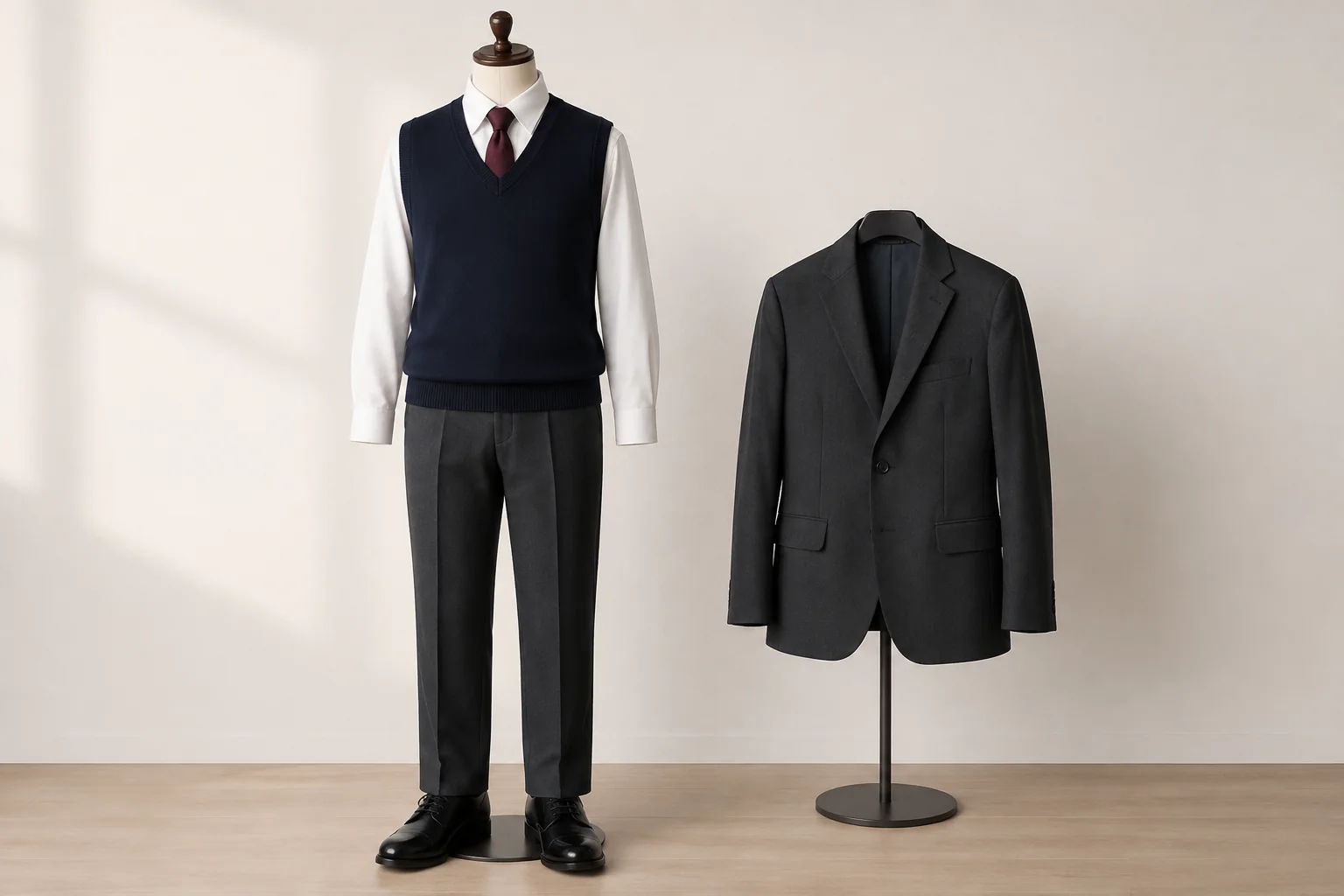
Plan a school uniform sweater vest as part of a complete outfit and a continuing supply program. Before approving it, identify the shirts, ties and blazers it must work with, the wearer groups it must fit and the way replacement pieces will be supplied during the school year. An attractive sample is not enough if families cannot choose the right size or obtain a compatible replacement later.
This guide is for uniform retailers, school purchasing teams and brands coordinating student and adult ranges. The decision is whether each outfit and wearer route has enough evidence for an opening order and a workable replacement policy. Detailed neck, shoulder and armhole construction belongs in the sweater vest layering guide, not in a second technical manual here.
No universal ease allowance, lifespan, wash result, minimum order or delivery promise is proposed. The US regulatory references below are limited to their stated product scope; other destinations require their own review. Start with actual dress-code requirements and buyer records, and label missing demand or fit information as provisional.
Which Outfit Must the Sweater Vest Fit?
Freeze the controlling shirt and outer layer
Name the shirt or polo that controls the fitting decision. Record its supplier reference, collar shape, sleeve volume and intended wearing condition. If a tie is required, include it. If a blazer is worn over the vest, review that complete combination rather than adding the blazer after the knitwear sample has been approved.
A school may allow different shirts on different days. Identify the combinations that are mandatory and the alternatives that are merely permitted. The sample should not be enlarged indiscriminately to accommodate every imaginable underlayer. Decide which outfits require evidence and whether a separate vest option is necessary.
Use the V-neck sleeveless layering development guide for construction questions arising from that choice. The uniform brief should keep the approved outfit references and intended appearance, while technical specialists decide how the garment can achieve them.
Separate dress-code approval from fit approval
A school representative may approve color and neckline without evaluating movement or garment measurements. A technical reviewer may accept fit without authority to approve a crest. Record these as separate decisions, with a named person responsible for each. “School approved” should never obscure which question was answered.
Ask whether students must be able to dress independently, whether the shirt remains tucked and whether the vest is used daily or only for formal occasions. Translate the relevant answers into review conditions. Do not infer performance from a static outfit photograph.
If the approved shirt or blazer changes during the year, identify the affected sizes and repeat the necessary outfit checks. A vest does not become a failed product solely because another garment changed, but its earlier approval may no longer cover the new combination.
How Should Youth and Adult Routes Be Separated?
Match a size label to its actual wearer block
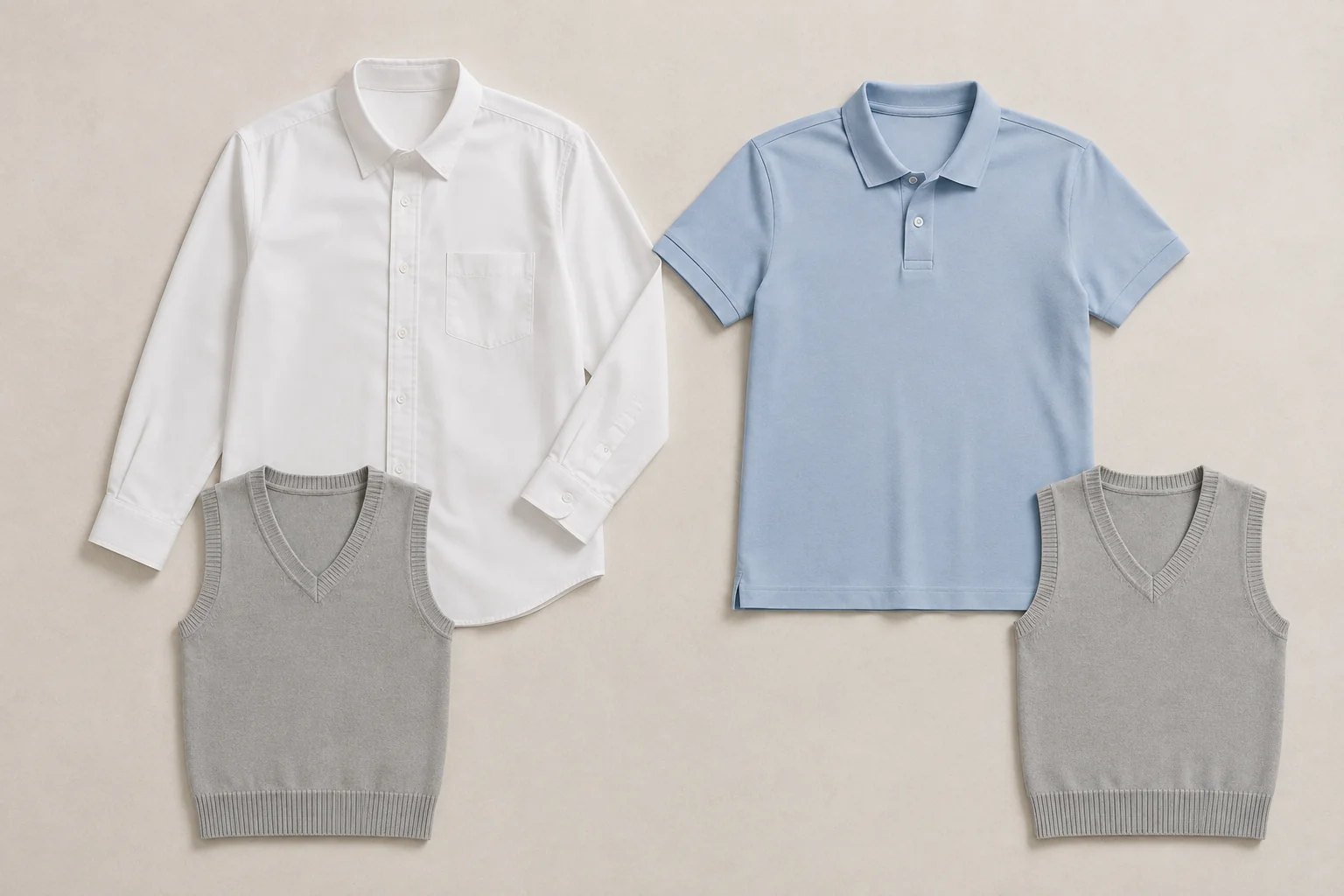
Youth medium and adult medium are labels, not equivalent body or garment measurements. Define each range through its intended wearers, body-data basis, finished measurements and fitting references. Decide whether a shared visual design uses separate blocks rather than assuming the smallest adult pattern can simply be reduced.
Keep the published size chart consistent with the approved garment specification. Explain whether the customer-facing chart describes body measurements or the garment itself. Otherwise, a family can follow the chart correctly and still receive a vest with the wrong intended allowance.
The custom knit sweater grading guide addresses the technical relationships across sizes. For this uniform decision, record which sizes have been physically assessed and how the remaining sizes will be checked. Do not imply that one wearer proves every proportion in the range.
Classify the product separately from the sales channel
The US CPSC children’s-product guidance defines the relevant category around products designed or intended primarily for children aged 12 or younger and describes multiple classification factors. Selling through a school does not by itself settle every product’s classification.
Give the responsible compliance reviewer the actual age intent, size range, materials, trims, decoration and marketing presentation. Keep adult staff garments and younger-student garments identifiable even when their colors match. Do not use an “adult” label to override the way a product is actually designed or promoted.
This classification record belongs beside the size-route decision because it affects which evidence must be obtained before release. It is not a substitute for qualified product-specific review, and a buyer should not invent a single test list that automatically applies to every school vest.
What Should a Complete Outfit Trial Prove?
Observe ordinary use under agreed conditions
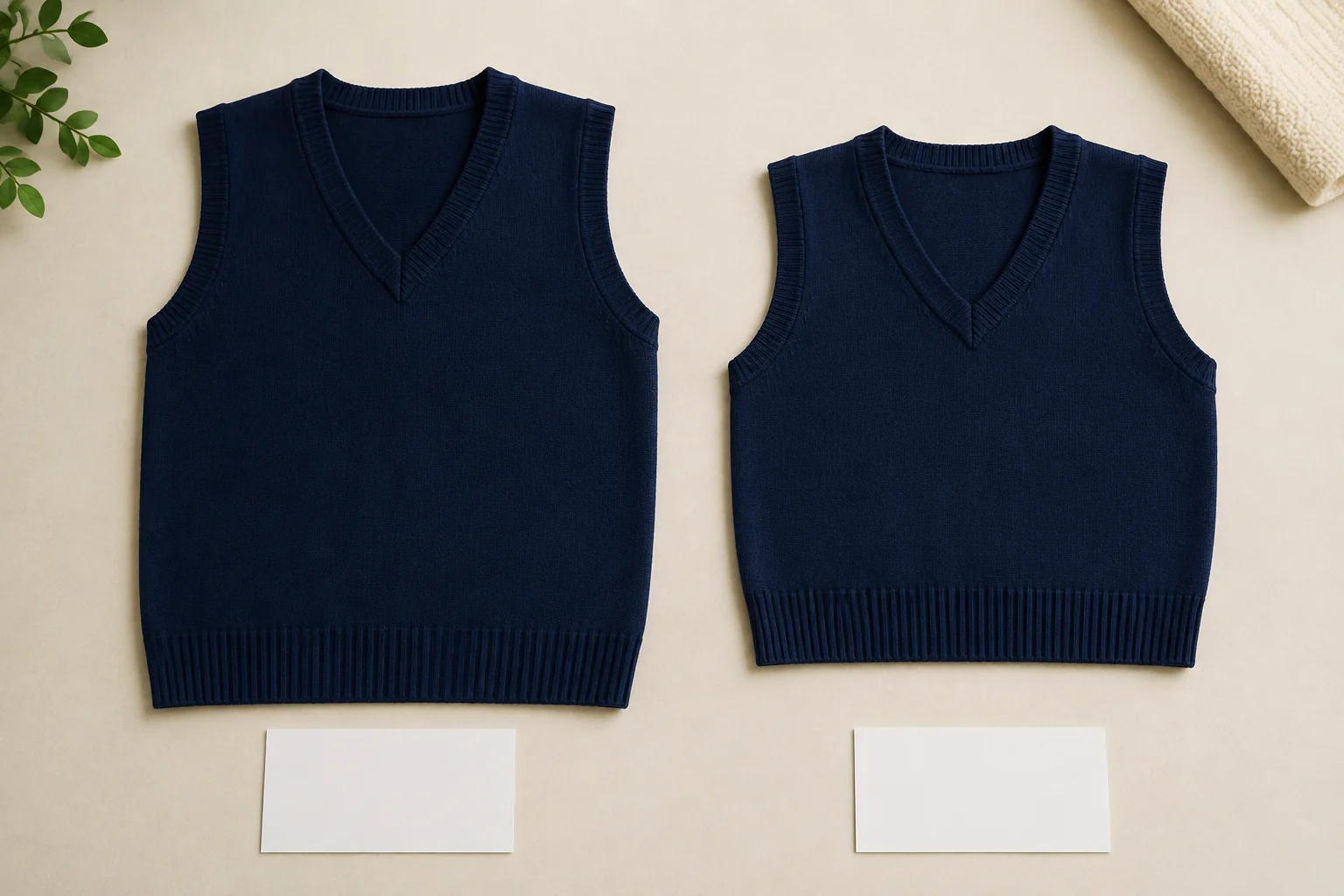
Review the vest over the controlling shirt, with the tie and blazer where required. Look at the collar, neckline, shoulder, armhole and hem together while the wearer stands, sits and reaches comfortably. The purpose is to identify interference or appearance problems, not to force a garment through an artificial movement test.
Record the exact sample size and the other garments used. A comment such as “armhole too tight” needs enough context to distinguish the vest opening from a bulky shirt sleeve or restrictive blazer. When appropriate, compare the outfit with and without the outer layer to locate the cause.
Use the V-neck vest pre-production checks for the resulting technical questions. Keep personal information from trials to the minimum needed, obtain appropriate permission for participation and photographs, and do not publish identifiable student images as routine sourcing evidence.
Turn observations into route-specific decisions
For each concern, record the garment reference, observed condition, proposed correction, reviewer and next evidence required. Avoid changing the entire range because one trial identified a problem in one block. Equally, do not close a concern merely because a different wearer found the sample comfortable.
| Review situation | Record to retain | Buyer decision | Recheck trigger |
|---|---|---|---|
| Shirt collar or tie is crowded | Outfit references and neckline observation | Adjust the affected outfit or vest specification | Shirt, tie or neckline changes |
| Armhole interferes during ordinary movement | Size, shirt sleeve and movement note | Review the relevant block and opening | Block or underlayer changes |
| Vest feels bulky under the blazer | Complete outfit review | Compare construction options with the technical team | Yarn, structure or blazer changes |
| Adjacent sizes look inconsistent | Approved size evidence and measurement revision | Correct the grade or customer size guidance | New size or revised grade |
The table is a proposed decision record, not a checklist of universal acceptable dimensions. Keep measured technical corrections in the controlled specification. The purchasing record should show which route is approved, which remains conditional and who can close the condition.
Also record situations the standard outfit does not accommodate. A wearer may need an alternative opening, different underlayer or another agreed adaptation. Route that need to the school’s responsible contact and the product team without exposing personal information in a general supplier file. Do not present one standard block as suitable for every student, or promise that a construction change will resolve an individual need before it has been reviewed.
How Should the Opening Order Cover Real Demand?
Separate new entrants from replacement demand
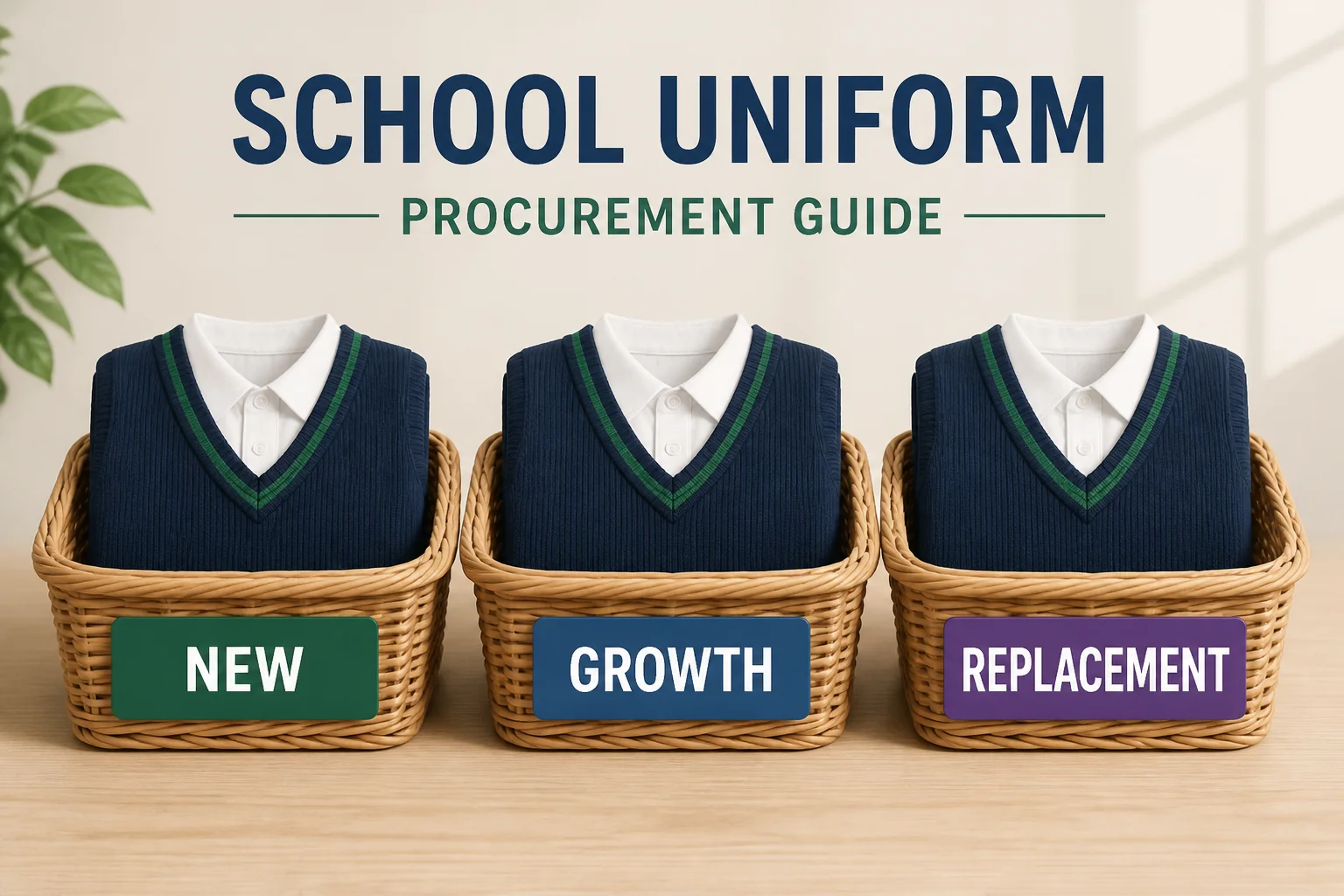
Build the opening size matrix from the information the school or retailer actually holds. New entrants, returning students who have grown, damaged-item replacements and adult staff purchases are different demand groups. Avoid converting total enrollment directly into a vest order without checking whether the garment is compulsory and how many families already own usable pieces.
Ask how orders will be collected and when the buyer can distinguish reservations from confirmed purchases. If demand is estimated, state the basis and who may revise it. Do not present a provisional size split as a proven sales ratio.
The custom sweater vest sourcing guide helps define supplier inputs, while the vest MOQ and size-planning guide explains the questions to raise about quantity splits. Obtain current commercial answers for this specification instead of importing historical minimums from another program.
Reserve a defined replacement route
Decide whether replacements come from finished stock, a later combined order or another explicitly agreed arrangement. A supplier’s ability to make the original batch does not prove that individual sizes will remain available throughout the year. Ask about the actual options before families depend on them.
Keep replacement stock attributable to its wearer block, size and accepted production reference. A spare adult small should not be offered as an automatic substitute for a youth size simply because the chest width is close. The neckline, shoulder and length may answer a different fit brief.
The private-label sweater vest sourcing guide provides broader program context. Here, the buyer needs a clear promise it can responsibly make to families: what is stocked, what requires a new order and what remains subject to supplier confirmation.
Name who holds the stock and who can allocate it. If school-office reserves and online retail stock are counted separately, reconcile them before placing another order. Record reservations that cannot yet be fulfilled instead of selling the same available unit twice. Where a size becomes unavailable, give families a confirmed alternative or a transparent update; do not substitute another block without explaining the fit difference.
Which Care and Product Records Must Be Ready?
Connect care wording to the actual garment
Families need usable care information for the vest they receive, not instructions copied from a visually similar product. Give the responsible reviewer the actual yarn, construction, color, decoration and attached components. Ask what evidence supports the proposed instruction and whether it covers the finished garment.
The FTC Care Labeling Rule guidance explains the reasonable-basis requirement for covered US products and identifies certain institutional commercial-use exceptions. A retail student uniform is not automatically exempt merely because it is associated with a school. Review adult staff arrangements separately rather than applying one blanket statement to every route.
The care-label evidence guide helps organize questions about the proposed wording. Do not promise a fixed service life or resistance to every household washing practice. Keep the actual care basis, approved copy and label revision connected in the product file.
Identify who supplies the applicable certificate evidence
For US children’s products subject to applicable children’s-product safety rules, the CPSC Children’s Product Certificate guidance explains the manufacturer’s or importer’s certification responsibility and supporting testing framework, including relevant exceptions. The certificate must identify the product it covers; a generic supplier document cannot automatically stand in for it.
Ask the responsible business to confirm the applicable rules, product references, reports or permitted exceptions and required certificate information. The current CPSC page also flags import eFiling changes, so a saved certificate PDF should not be treated as proof that current import-filing duties are complete.
Keep this work distinct from school appearance approval. A crest, size chart or successful outfit trial does not establish regulatory compliance. Release the affected product only after the responsible reviewers have resolved its actual requirements; this article does not provide a complete legal or testing determination.
How Will Replacement Vests Remain Compatible?
Define acceptable coexistence between deliveries
Ask the school whether old and new deliveries will be worn together and what visual continuity it expects. An opening order for a new uniform design and a replacement vest joining an existing classroom have different comparison conditions. Record that difference before approving the next shade.
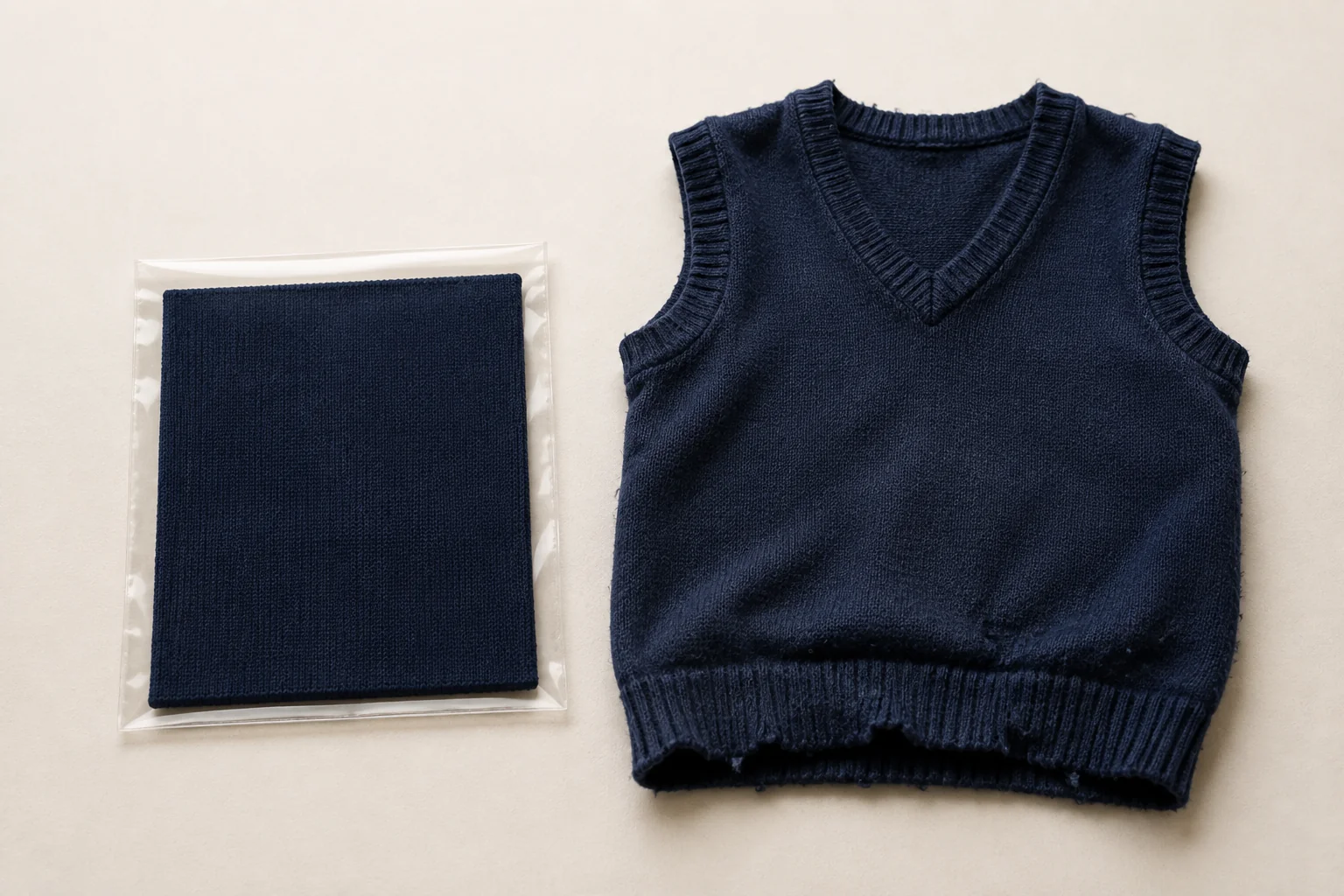
Retain an identifiable physical color reference under appropriate storage, along with yarn, structure and finishing details. Use the sweater lab-dip approval guide for color-development controls. A commercial name such as navy is not enough to prove a later batch will coexist acceptably with the retained standard.
A worn family garment can illustrate the customer’s situation, but it should not silently replace the original production standard. Record its age and care history where known. If a new delivery differs, compare traceable references under agreed conditions before deciding whether the cause is production variation, use or a changed specification.
Separate growth exchanges from product corrections
Record the reason for each return or exchange in usable categories. A student needing a larger size after growth is not the same signal as several unworn vests measuring outside the approved specification. Combining both as “size problems” can lead the buyer to change a sound block or reorder the wrong mix.
Review the evidence by wearer block, size, delivery and reported issue. When a pattern needs investigation, retain examples and ask the technical team to compare them with the approved references. Do not assume a return proves a manufacturing defect without examining the item and the original selection guidance.
Before another term’s purchase, confirm any changes to the shirt, blazer, dress code, size chart, care copy and replacement policy. Keep the stable decisions, reopen the changed ones and communicate what families should use as the current ordering reference.
Keep the transition date and affected product references visible when a uniform is deliberately updated. The school should decide whether earlier garments remain acceptable and how mixed deliveries will be described. That policy cannot be inferred from a new supplier color approval or a warehouse’s remaining stock.
Conclusion
A school uniform sweater vest program needs an approved outfit, credible wearer routes and a replacement plan that can be explained before the first order. Freeze the controlling shirt, tie and blazer, then review the vest in ordinary use rather than relying on a flat sample. Separate youth and adult sizing evidence, and keep dress-code decisions distinct from technical and product-safety responsibilities.
Build quantities from actual demand groups and identify what the replacement route can genuinely supply. Keep care wording, applicable product records and the approved size chart tied to the garment being sold. Across terms, compare new deliveries with traceable standards and distinguish growth exchanges from specification problems. This gives the buyer a practical basis for deciding which routes may proceed, where more evidence is needed and what information families require to choose and replace the right vest.
Discuss your school uniform sweater vest plan.
Frequently Asked Questions
Can one vest fit both a polo and a formal shirt?
It may, but both approved combinations need appropriate review. Record which shirt controls the fit and whether the alternative changes collar, sleeve or shoulder clearance.
Should families always buy a larger size for growth?
Do not make that a blanket instruction. Provide the approved size guidance and explain its measurement basis; an oversized vest may create a different neckline or armhole problem.
Can youth and adult sizes share a color standard?
They can share a stated visual target, but confirm the actual yarn, structure and finish in each route. A shared color name does not prove the garments will match.
Does school approval replace product compliance review?
No. School approval may cover appearance or dress-code use. The responsible manufacturer or importer still needs to address the rules and evidence applicable to the actual product and market.
What should happen when a replacement looks different?
Identify its delivery and product reference, retain the comparison item and assess both under agreed conditions. Do not mix uncertain stock or promise a remedy before the difference and responsibilities are understood.