 CN Sweaters
Custom knit sweaters for campus retail need three decisions to agree before an opening order: who may authorize the institution’s identity, which physical garment represents that approval and where the resulting stock is allowed and expected to sell. A bookstore can like a design that the licensing office has not approved. A licensed artwork file can also produce a sweater that does not meet the buyer’s retail brief.
This guide is for adult campus bookstores, alumni retailers and brands coordinating collegiate merchandise. It focuses on an authorized retail assortment, not school-uniform fit or corporate gifting. The corporate crewneck merchandise guide covers the adjacent internal-distribution program. Youth merchandise and staff uniforms need their own wearer and product-requirement review rather than an automatic extension of this adult retail plan.
Bring the proposed institution, selling channels, artwork authority, target customers, garment references and store-level demand evidence. If any input is unknown, keep the affected proposal provisional. No company license, approved campus relationship, minimum order, sales result or delivery capability is asserted here.
Which Campus Retail Need Should the Range Serve?
Choose one buying occasion for the first proposal
A year-round alumni layer, a student fashion item and a dated reunion sweater are different propositions. They may share a crewneck shape, but the customer, useful selling period and acceptable leftover stock differ. Choose the first proposal’s job before deciding how many colors or campus marks it should carry.
Ask the bookstore what it already stocks and what customers request but cannot find. Use actual records where available. A supplier’s reference gallery can suggest a silhouette; it cannot establish that the campus needs another version of it. Record whether the new sweater replaces an existing item or adds a genuinely different choice.
Prepare the product discussion with the custom knit sweater manufacturer briefing guide. Keep the retail purpose prominent in that brief. Otherwise, a precise technical specification can be developed for a product whose allocation has never been justified.
Separate retail stock from internal distribution
Identify who buys the stock, who sells it and which physical or online channels are involved. A department-funded gift order is not automatically the same program as a bookstore purchase for resale. Treat a proposed change from one route to the other as an authorization and commercial question, not simply a different delivery address.
Define whether stores own their allocations or draw from a shared pool. If an online shop and campus counter can sell the same stock, establish a common availability record. A large overall quantity can hide a shortage at one location and unwanted inventory at another.
Give the initial range a stopping rule. A buyer may defer an unapproved mark, omit a weak color or postpone a dated design when the selling window is no longer realistic. Those choices preserve an option to develop later without describing an unresolved product as ready for sale.
Who Can Authorize the Campus Artwork?
Obtain the relevant permission rather than assuming it
The USPTO trademark explanation connects trademark rights to identifying particular goods or services; it does not mean every campus word or color is owned in every context. As a purchasing control, treat proposed institutional identity as requiring an authority check until the responsible party confirms the permitted use.
Request the current artwork source, approving office or licensee, covered product, channel and any stated conditions. Do not ask a manufacturer to copy a crest from a website or infer permission from an old purchase order. A buyer’s relationship with a campus department is not evidence of authority over every mark.
For institutions represented by CLC, its licensing information distinguishes retail and internal license routes and notes that institutions make their own licensing decisions. Apply the route relevant to the actual institution; CLC’s framework is not a universal rule for every school or a claim that CNSweaters holds a collegiate license.
Resolve conflicting approvals before release
Make an authority map separating the retail buyer, licensing or brand office, product reviewer and purchasing approver. Record what each may approve. The bookstore may control the buy, while another office controls the mark; neither approval should be presented as a substitute for the other.
When feedback conflicts, send one consolidated question to the responsible decision owners. For example, if the bookstore requests a larger crest but the authorized artwork rules restrict its treatment, hold that artwork version until a permitted solution is confirmed. Do not let production choose which email to follow.
Keep permission evidence linked to the exact file and proposal. Mark superseded artwork clearly while retaining its history. If several institutions are involved, maintain separate authorization records so an approval for one cannot be copied into another campus’s folder merely because the garment body is shared.
Ask which application, sample, label or other program costs are already committed and which depend on approval. Request the applicable written terms rather than adopting another institution’s fee schedule. A payment or application receipt is evidence of that transaction, not proof that the product has been licensed. Keep any non-refundable development exposure visible to the person deciding whether to continue the proposal.
Can the Approved Art Work on the Actual Knit?
Review the reproduction at intended scale
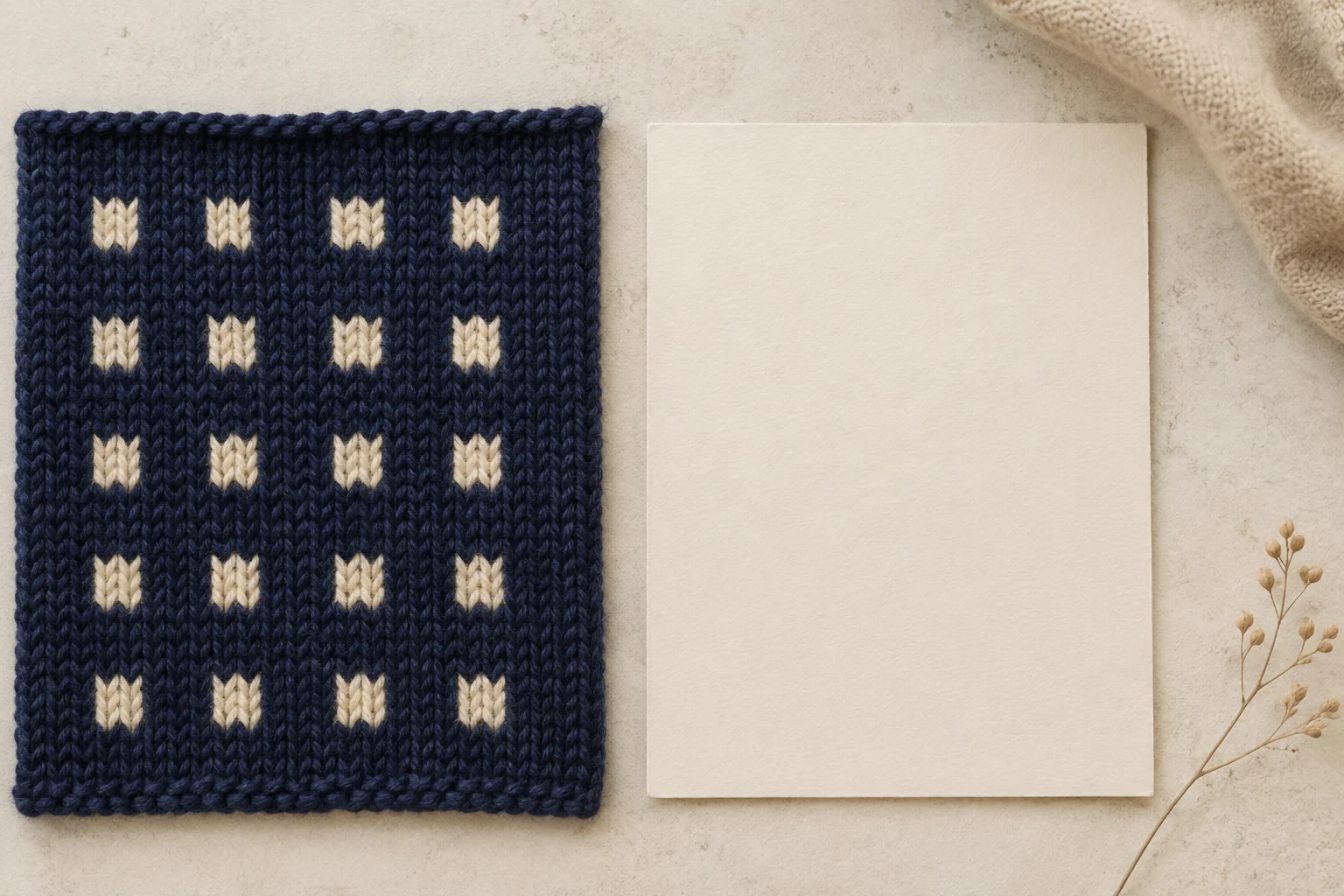
A digital design can be approved as artwork while its knitted or applied version remains unresolved. Request a physical trial using the proposed method and intended scale. Review readability, proportion, placement, reverse-side finish and the way the treatment affects the garment’s surface and movement.
Use the custom sweater logo-technique guide to compare relevant methods. The selection should come from a real trial, not a blanket statement that embroidery, jacquard or a badge is always best. Fine detail may require discussion with the artwork authority before the technique or design can change.
Record the trial’s artwork revision, yarn or thread references, dimensions and garment construction. A successful mark on a different fabric is useful background but does not automatically approve its behavior on the proposed knit. Keep the permitted design and the accepted physical result connected.
Keep visual approval and production approval distinct
The sketch-to-sample guide covers the broader development process. For a campus buyer, the key decision is whether the sample matches both the authorized identity and the intended retail product. A technique trial alone does not answer fit, care or finished-garment questions.
For campus colors, use an identified physical reference and agreed review conditions. The sweater lab-dip approval guide explains the color-control background. A screen value or campus color name does not establish how a specific yarn and knitted surface will appear.
If the physical trial requires a changed outline, color arrangement or placement, return that change to the appropriate authority. Do not call it a harmless technical correction without checking the permission boundary. Retain the accepted trial so the factory and buyer compare later output with the same object.
Which Variants Deserve a Store Allocation?
Build quantities below the headline total
List the proposed style, artwork version, color, size and selling location before evaluating the total buy. Each combination needs a reason to exist and a credible allocation. A familiar institution name does not remove the risk of spreading demand across too many weak cells.
Separate confirmed store commitments, genuine customer reservations and forecasts. Identify the source and date of each forecast. Where the program is new, explain why a bounded trial is being proposed rather than inventing a precise size curve from unrelated merchandise.
Keep fit blocks explicit. An adult unisex label should not be treated as proof that every intended customer will choose from the range successfully. The custom knit sweater grading guide provides the technical size background; the retail plan needs a clear customer chart and evidence for the proposed block.
| Allocation question | Evidence needed | Decision owner | Possible response |
|---|---|---|---|
| Does this campus mark have a permitted retail route? | Current authorization linked to the product and channel | Licensing or authorized brand role | Proceed, revise or hold the affected version |
| Does this store need the proposed variant? | Existing assortment, demand basis and available budget | Retail buyer | Allocate, reduce or omit the cell |
| Can the size be offered responsibly? | Current chart and appropriate fit evidence | Product and retail reviewers | Approve or keep the size provisional |
| Can the item be received and identified correctly? | Product-to-SKU and packing mapping | Retail operations | Confirm the mapping before wider packing |
This is a proposed decision table, not a prediction of demand or a list of approvals already obtained. Keep the underlying references available instead of filling every cell with a reassuring status word.
Distinguish product identity from store destination
Where GTINs are used, the GS1 GTIN Management Standard provides the new-product and product-change rules. Have the responsible brand team determine the applicable identification. A delivery location and a product variant are different data fields; moving stock does not by itself answer whether the product identity changes.
Use the custom knit sweater tech-pack checklist to keep style references and specifications controlled. Link those references to the retail system without allowing a store nickname to replace the manufacturing identity.
Before adding another institution or color, ask whether it can share unchanged development work and where it creates new approvals, material commitments or packing complexity. Obtain the actual cost and timing effect from the supplier. A shared body is not a guarantee that every branded variant has the same commercial conditions.
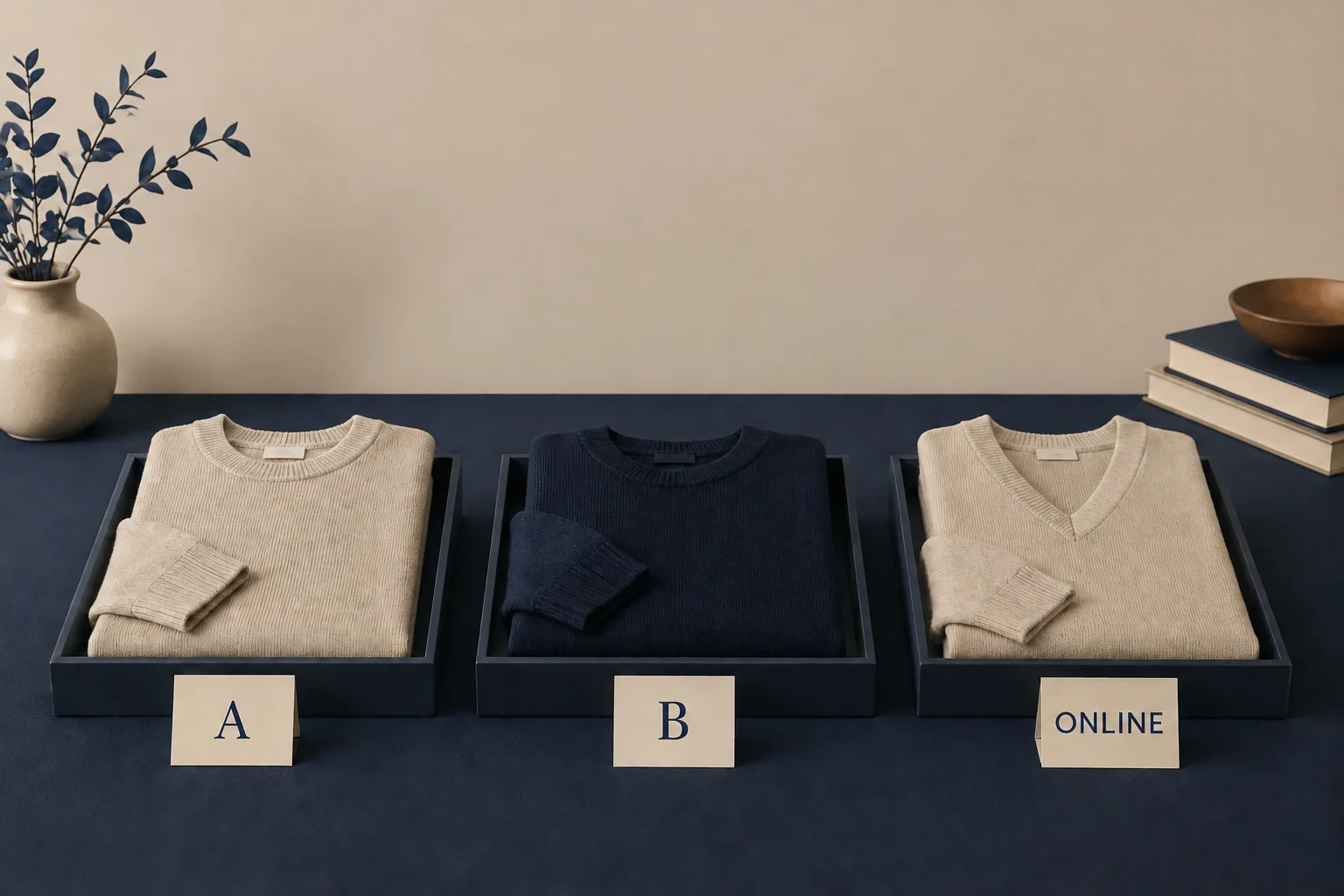
What Must Each Retail Location Receive?
Specify the saleable unit and its information
Define the unit as the customer will receive it: garment, correct size and color identification, approved labels, required program presentation and any agreed packaging. Keep licensed-product requirements separate from optional retail decoration so their respective approval owners remain clear.
Ask who supplies authorized labels or other licensing-program identifiers where required. Do not let the factory invent an official-looking tag or copy an authentication device from a reference photograph. A visually convincing label is not proof of permission.
Use the retail packaging and barcode guide to prepare the receiving review. Check an actual packed unit against the product mapping, then compare its carton information with the intended location. Scanning alone is insufficient if the system retrieves the wrong campus or size.
Keep transfers inside the agreed selling route
Store transfers can correct an allocation imbalance only when the destination is permitted to receive and sell the item. Confirm the relevant channel and institutional conditions before treating all campus stock as freely interchangeable. An internal-consumption item should not simply be moved into public retail to clear excess units.
Record the product reference, quantity, sending location, receiving location and responsible approval for a transfer. This is an inventory control recommendation, not a statement that every transfer requires a new license. The actual conditions come from the applicable agreement and responsible authority.
Plan what happens to an incorrectly packed delivery. Keep the affected units identifiable, reconcile the item and location records, and agree who will correct labels or routing. Do not silently amend inventory to make the delivery appear correct while the physical garments remain mismatched.
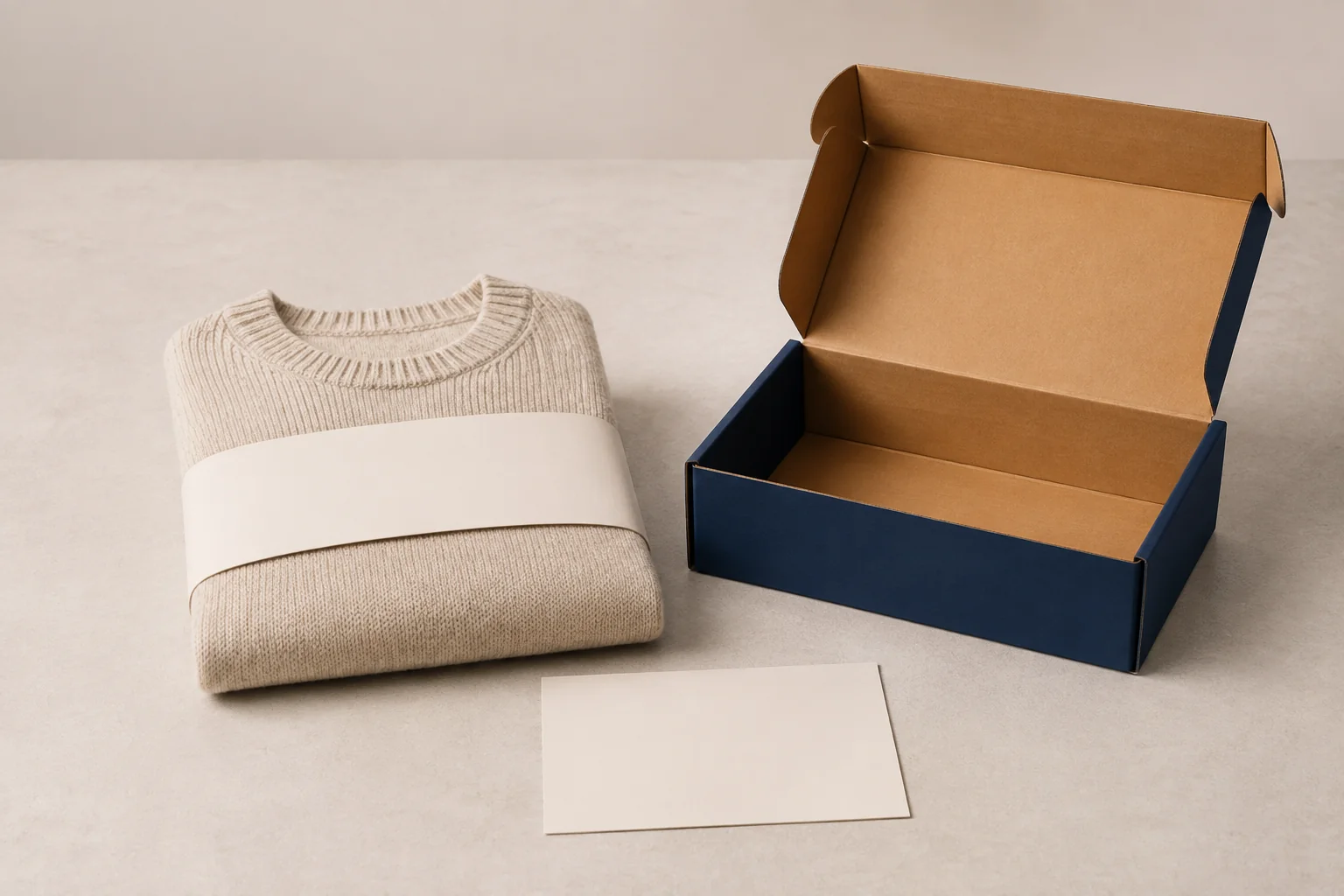
When Is the Program Ready to Proceed or Repeat?
Release only the variants whose decisions agree
Review authorization, physical sample, commercial scope and location allocation together. The fall sweater sampling checklist helps preserve sample identity and open comments. The campus release should additionally show that the artwork authority and retail buyer approved the same version.
If one campus is ready and another is not, ask whether the ready portion can proceed independently. Confirm the supplier’s actual material and production dependencies before splitting the order. A separate permission record does not guarantee a separate economical production run.
Put buyer review dates beside supplier work dates. A fixed campus event does not shorten an uncompleted approval process. If the last useful decision date is missed, compare a reduced approved assortment, a later release or deferral; do not send production an unapproved mark to preserve an unsupported arrival promise.
Confirm who will consolidate feedback while reviewers are absent or changing roles. A new semester can bring a new bookstore contact without changing the institution’s artwork authority. Transfer the current decisions and remaining conditions explicitly so the new buyer does not restart approved work or unknowingly revive an obsolete proposal.
Reconfirm authority as well as stock need
Before a repeat, compare current demand and remaining stock with the accepted product reference. Review artwork status, permitted channel, current materials, size requirements and any changed agreement conditions. A previous approval records what was allowed then, not what is automatically allowed indefinitely.
Separate stock that remains valid from a dated design or superseded identity. Ask the appropriate authority how existing units may be handled. Do not assume that changing a hangtag resolves an obsolete mark or that a clearance channel is permitted because it would recover cash.
Retain the final accepted garment, artwork files, approval references, product mapping and location history. The next buyer should be able to recover both the retail reasoning and the permission boundary without relying on a former colleague’s inbox. That record is useful even when the decision is not to repeat the product.
Conclusion
Custom knit sweaters for campus retail should connect a permitted institutional identity to a credible garment and a justified store allocation. Begin with one retail purpose, identify the authority for the actual mark and selling route, and keep bookstore approval separate from licensing and product review. A familiar campus name or an attractive mock-up cannot close those decisions.
Approve the physical artwork treatment on the intended knit, then build the buy by variant, size and location using real commitments or clearly labeled forecasts. Check product identity and the packed unit before wider distribution. When an approval or date changes, release only the scope that is genuinely ready and commercially workable. For a repeat, reconfirm permission as well as demand and material continuity. The buyer can then explain what is being ordered, where it may be sold and which evidence supports the commitment.
Discuss your custom knit sweaters campus retail brief.
Frequently Asked Questions
Does a bookstore purchase order prove artwork permission?
Not by itself. Identify the institution’s actual authority and the applicable product and channel permission. A retail buying decision and a mark-use decision can belong to different people.
Can a campus gift design be sold in the bookstore?
Check its permission and license conditions first. Internal distribution and retail can have different routes. Do not assume that remaining gift stock may automatically be offered for public sale.
Can the factory simplify a crest for knitting?
It can propose a technically workable change, but the appropriate artwork authority must confirm whether that change is permitted. Approve the resulting physical treatment at the intended scale.
Should every store receive the same size mix?
Only when the actual demand and range evidence support that decision. Keep local commitments, online sales and provisional forecasts distinguishable rather than dividing the total evenly for convenience.
What if one campus approval arrives late?
Hold that affected version and evaluate whether the approved portion can proceed independently. Confirm shared material, quantity and timing constraints before changing the order; separate approvals do not guarantee separate production economics.