 CN Sweaters
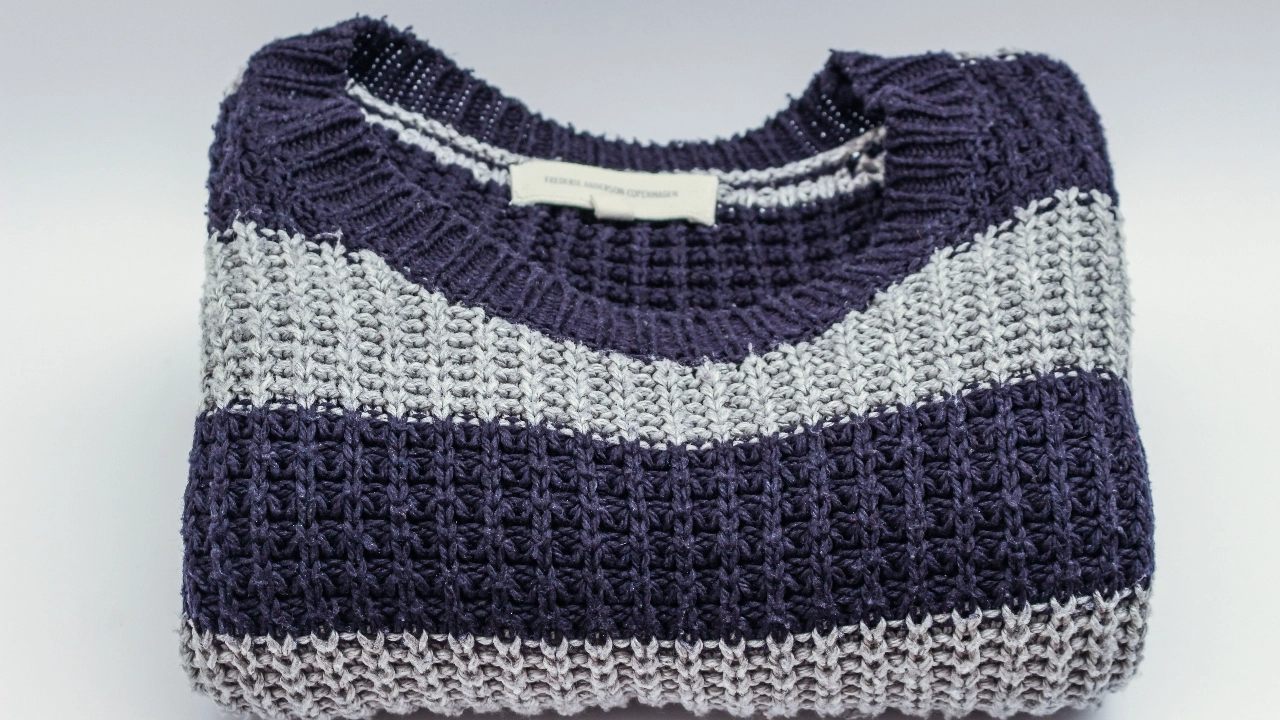
Getting care labels and fiber content right is the single most underestimated step in private label knitwear development, and it is also the most common reason finished bulk orders get rejected, relabeled, or held at customs. Before a knitwear factory cuts the first sample, the buyer should already have a confirmed list of fiber percentages, care symbols, label language, and brand label artwork tied to the target selling market. Sending only a logo file and expecting the factory to fill in the rest is how compliance gaps, mismatched composition, and last-minute relabeling costs enter the project.
This is especially true for private label knitwear, where the same blank sweater body may be sold under different brand names in the US, EU, UK and Japan, each with its own labeling rules. From a factory perspective, we see buyers lose weeks and money not because of yarn defects or stitching issues, but because the label inside the neck does not match the actual fiber composition, the care instructions were copied from a similar product, or the size label language was never confirmed for the destination market. Treating labels as the last 1% of the project is what creates the biggest downstream risk.
Why Private Label Knitwear Labels Need Market-Specific Confirmation
The first rule before any private label knitwear sample is booked: confirm the target selling market in writing. Care labels, fiber content disclosures, country of origin marking, and responsible party identification are regulated differently in each major market, and a label that is fully compliant in one region can trigger a customs hold or recall in another.
In the United States, textile and wool products must show fiber content, country of origin, and the identity of the manufacturer or marketer, with care instructions governed by a separate rule that requires reasonable basis for every claim made on the label, as explained in the FTC care labeling rule. The European Union requires fiber names to follow a fixed list of allowed designations and percentages, declared in the official languages of the member states where the product is sold, under the EU textile label requirements. The UK applies a similar framework with its own enforcement guidance described in the UK textile labelling guidance.
What buyers should lock down before sampling
For each SKU, the buyer should send the factory: target market list, required label languages, fiber name spelling rules, whether care symbols or written instructions are needed, and who acts as the responsible party on the label. Without this, the factory has no basis to draft a compliant label, and any artwork produced will be a guess.
A label that reads “55% Cotton 45% Acrylic” may be acceptable in plain English for the US market under the FTC textile labeling requirements, but the same product sold in France or Germany must show the fiber names in the local language with the percentages declared by weight. For B2B buyers, this means a single SKU may need two or three different woven label versions, and that decision must be made before sampling, not after bulk is cut.
How to Confirm Fiber Content Without Copying From Other Brands

Fiber content on a private label must match the actual yarn used in production, not the label of a similar product on the market. We routinely see buyers send a reference sweater photo with its existing label and ask us to “use the same composition,” only to find that the yarn they approved during sampling is a different blend. This creates a direct compliance gap.
The fiber content declared on the label must be based on the actual yarn certificates from the spinning mill, verified against the construction of the finished garment. Under the FTC textile fiber rule, generic fiber names must be used in the order of predominance by weight, and any fiber present at 5% or more must be disclosed by name and percentage, while fibers under 5% are usually grouped as “other fiber” unless they have a functional significance.
For knitwear, the calculation is rarely as simple as one yarn. A typical custom knit sweater may have a main body in a wool blend, ribbing in a slightly different composition, and decorative panels in a third yarn. Each component contributes to the overall weight, and the label must reflect the weighted average, not just the main body yarn.
Handling multi-component knitwear correctly
When the body, rib, collar, lining, or trim use different yarns, the buyer and the knitwear manufacturer should agree on a component-by-component fiber breakdown before sample approval. The table below shows how we typically organize this information for a single SKU before drafting the final label artwork:
| Garment Component | Yarn Used | Fiber Composition | Weight Share |
|---|---|---|---|
| Main body | 2/28 Nm worsted | 70% Merino Wool, 30% Acrylic | 78% |
| Ribbing (cuff, hem, neck) | 2/24 Nm | 50% Wool, 50% Acrylic | 12% |
| Decorative jacquard panel | 2/30 Nm | 100% Cotton | 7% |
| Sewing thread and trim | Polyester | 100% Polyester | 3% |
This breakdown lets the factory calculate the weighted fiber percentage for the final label and gives the buyer a defensible record if a market authority requests substantiation. For wholesale custom sweaters shipped across multiple regions, this single document often prevents weeks of dispute later.
Why Care Instructions Must Be Tested, Not Assumed
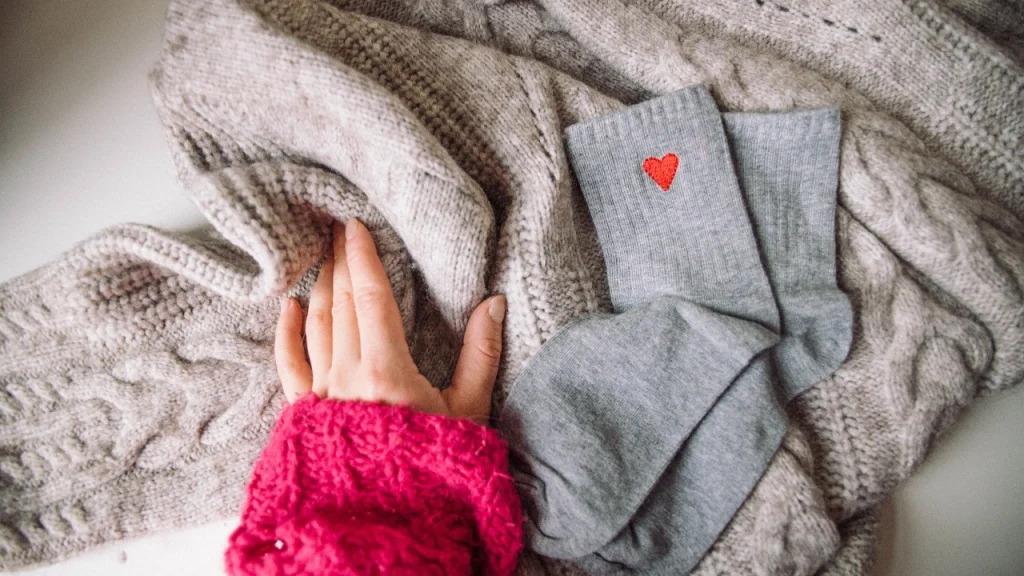
Care instructions are the most copied and least verified part of most private label knitwear projects. A factory cannot responsibly write “Machine wash cold, tumble dry low” on a cashmere blend that has never been tested under those conditions, and a buyer should not approve such a label just because a competitor uses similar wording.
Care claims on a US label need a reasonable basis under the FTC clothes captioning guidance, which generally means wash testing, dry cleaning testing, or reliable industry data supporting each instruction shown. The same expectation applies in the EU and UK in practice, even where the wording of the regulation differs, because customs authorities and retailers will both push back on claims that cannot be substantiated.
Aligning care symbols with actual garment construction
The care label should be drafted after the yarn, knit structure, dye method, and finishing process are locked. A pigment-dyed cotton sweater behaves differently from a reactive-dyed one. A felted wool cardigan cannot tolerate the same wash as a standard wool jumper. A garment with bonded interlining or sequin trim usually requires hand wash or dry clean only.
From our quality control workflow described on the knitwear quality control page, we recommend a short pre-bulk wash test on at least one full sample per colorway, covering dimensional stability, colorfastness, and surface change. The results then dictate which symbols appear on the final care label, instead of the buyer assuming a generic care set. For a white label cashmere jumper, this step is non-negotiable, because cashmere shrinks and pills very differently across blends and finishing routes.
What Goes on a Compliant Private Label Knitwear Label Set
A complete private label set is not a single woven tag. It is a coordinated group of labels and printed information, each carrying a specific compliance and brand function. Treating them as one artwork file is where most buyers create errors.
For most knitwear shipped into the US, EU, UK, or Canada, the label set covers: brand label, size label, fiber content label, care instruction label, country of origin label, and responsible party information. These can be combined onto one woven or printed label, or split across multiple labels depending on brand design and material constraints. The buyer decides the layout, but the factory must verify that every required element is present before bulk cutting.
Typical label structure we confirm before bulk
The following structure is what we ask buyers to approve in writing before we move a custom knitwear program from sampling to production:
| Label Type | Required Content | Common Placement | Decision Owner |
|---|---|---|---|
| Brand label | Logo, brand name | Center back neck | Buyer artwork |
| Size label | Size code, optional size chart | Below brand label or side seam | Buyer + factory |
| Fiber content | Fiber names, percentages by weight, language per market | Side seam or back neck | Buyer + yarn supplier |
| Care label | Symbols or written instructions, tested | Side seam, lower left | Factory test + buyer approval |
| Country of origin | “Made in China” or applicable wording | Side seam or back neck | Factory |
| Responsible party | Importer, brand owner, or distributor name and address | Side seam, hangtag, or care label | Buyer |
After this is locked, the factory prepares the final label proof for written approval. Any change after this point, even a font weight adjustment, should be resubmitted in writing rather than handled by phone or chat, because verbal label changes are the source of most mismatched bulk runs we have seen.
How Label Material and Construction Affect Bulk Quality
Label content is only half of the decision. The material, weave, edge finish, and sewing method of the label directly affect both customer perception and return rates, and this is often where private label brands underinvest.
Woven damask labels feel premium and hold print clarity well, but they can scratch the neck on lightweight knit dresses if the edges are not properly heat-cut or folded. Printed satin labels are soft against the skin and work well for cashmere or fine merino, but ink can fade after repeated washing if the print quality is low. Heat transfer labels remove the itch issue entirely but require careful application to avoid bubbling on textured knit surfaces.
Matching label type to garment category
For our custom sweaters and cardigan programs, we typically suggest woven center back neck labels for structured sweaters and zip knitwear where the label is hidden under a collar, and printed or heat transfer labels for soft-touch styles like cashmere jumpers, knit dresses, and lightweight hoodies. The sewing method also matters: a label sewn only at the top edge feels softer than a fully boxed-stitched label, but it can curl during wash, which affects the perceived quality of the garment.
Buyers should approve a physical label sample, not just a digital proof. We send labels stitched onto a fabric swatch matching the bulk yarn, so the buyer can feel the hand, check the label thickness against the knit surface, and confirm that the color of the woven label coordinates with the garment colorways. This step adds two to four days to lead time but prevents the much larger cost of relabeling a finished bulk order.
How to Coordinate Labels With MOQ, Lead Time, and Bulk Production
Labels look like a small line item, but they sit on the critical path of every private label knitwear order. Label suppliers usually have their own MOQ, sampling time, and production lead time, and a delay here delays the whole shipment. Building label timing into the project schedule from day one is what separates organized buyers from the ones who end up air-freighting labels at their own cost.
Most woven label suppliers in our region work with an MOQ of 500 to 1,000 pieces per label design, with sampling taking three to five working days and bulk label production taking another seven to ten working days. For a private label knitwear order with multiple sizes, colors, and SKUs, the total label count grows quickly, and the buyer needs to decide whether to centralize on one combined label or split into multiple smaller runs. The MOQ and lead time page outlines how this interacts with garment-level minimums.
Practical sequencing we recommend
The label workflow that we have found to be most reliable runs in parallel with garment sampling rather than after it. As soon as the yarn composition is approved at the proto stage, we ask the buyer to start label artwork. By the time the size set is approved, the label artwork is also signed off, and bulk label production starts at the same time as bulk yarn dyeing. This typically saves seven to ten days on the overall lead time.
Buyers should also plan for refill orders. Keeping a small label inventory at the factory, or holding the digital files with a pre-approved supplier, allows future repeat orders of custom knit sweaters or wholesale custom sweaters to skip the artwork and proofing stage entirely. For programs that reorder seasonally, this turns label preparation from a four-week task into a same-week confirmation.
Conclusion
Care labels and fiber content are not the closing paperwork of a private label knitwear project. They are the first technical decision that should be locked, because they determine which markets the goods can legally enter, how the garments must be tested, and what the buyer is committing to on every piece sold. Sending the factory only a logo file is the most expensive way to learn this.
Before sample approval, confirm target markets, fiber percentages by component, tested care instructions, label materials, sewing method, country of origin wording, and the responsible party for each region. Lock the full label set in writing, approve a physical label sample, and align label production with garment lead time. To review your private label knitwear setup before sampling and bulk, send your target market, product type, yarn composition, size range, care test results, brand label artwork, packaging requirements, order quantity, and delivery timeline to our knitwear factory team for written feedback.
FAQ
What is the minimum order quantity for private label knitwear with custom care and brand labels? Our garment MOQ is typically 100 to 300 pieces per style per color depending on yarn and construction, but woven label suppliers usually require 500 to 1,000 pieces per label design. Buyers ordering smaller garment quantities often combine label designs across SKUs or use printed labels to meet the label MOQ without overstocking.
How long does it take to develop and approve the full label set? From confirmed target market and yarn composition, label artwork drafting takes three to five working days, sampling another three to five days, and bulk label production seven to ten days. We run this in parallel with garment sampling, so it does not normally extend the overall lead time if started at proto approval.
Can the factory write the fiber content label based on the yarn we approved? We can draft the label based on the spinning mill certificate of the approved yarn, but the buyer must confirm the percentages in writing because the buyer is the responsible party in the destination market. We do not recommend copying fiber content from a competitor garment, since the actual yarn used in your order will rarely match exactly.
Do we need different care labels for the US, EU, and UK versions of the same sweater? Often yes. The US allows care symbols or written instructions, the EU requires fiber names in local languages and accepts standard symbols, and the UK follows a similar framework with its own enforcement notes. Many brands use one multi-language label to simplify, while others split into market-specific versions to keep the neck label clean.
What happens if the bulk arrives with the wrong fiber percentage on the label? The buyer typically has to relabel before the goods can be sold, which means cutting out the existing label and sewing in a new one, either at the factory before shipment or at a third-party service in the destination country. This adds cost and delays, which is why we require written approval of the final label proof against the yarn certificate before bulk cutting.