 CN Sweaters
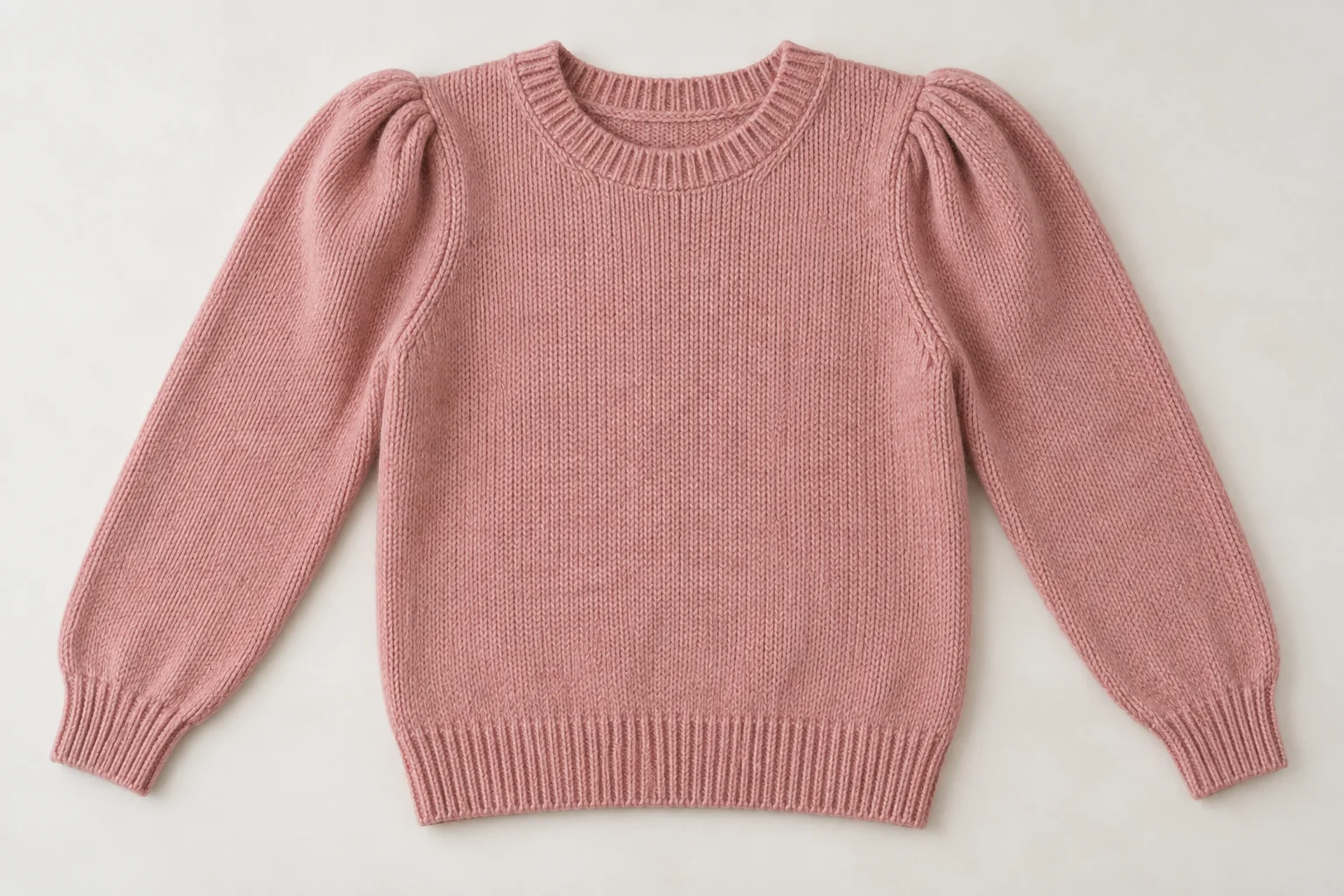
A sleeve photographed with the arm raised can look fuller than it does at rest. For a puff sleeve sweater, mark whether volume belongs at the head, across the upper arm or lower down, then compare the relaxed front, side and back. Adding width alone does not choose that shape.
For a cashmere or cashmere-blend proposal, review the actual yarn, knit and finish with the sleeve construction. Fibre identity alone cannot establish how the shape will hold. The sample needs to show the intended volume together with its shoulder attachment, cuff and complete body balance.
Where should the puff sleeve sweater carry its fullness?
Map sleeve fullness from several views
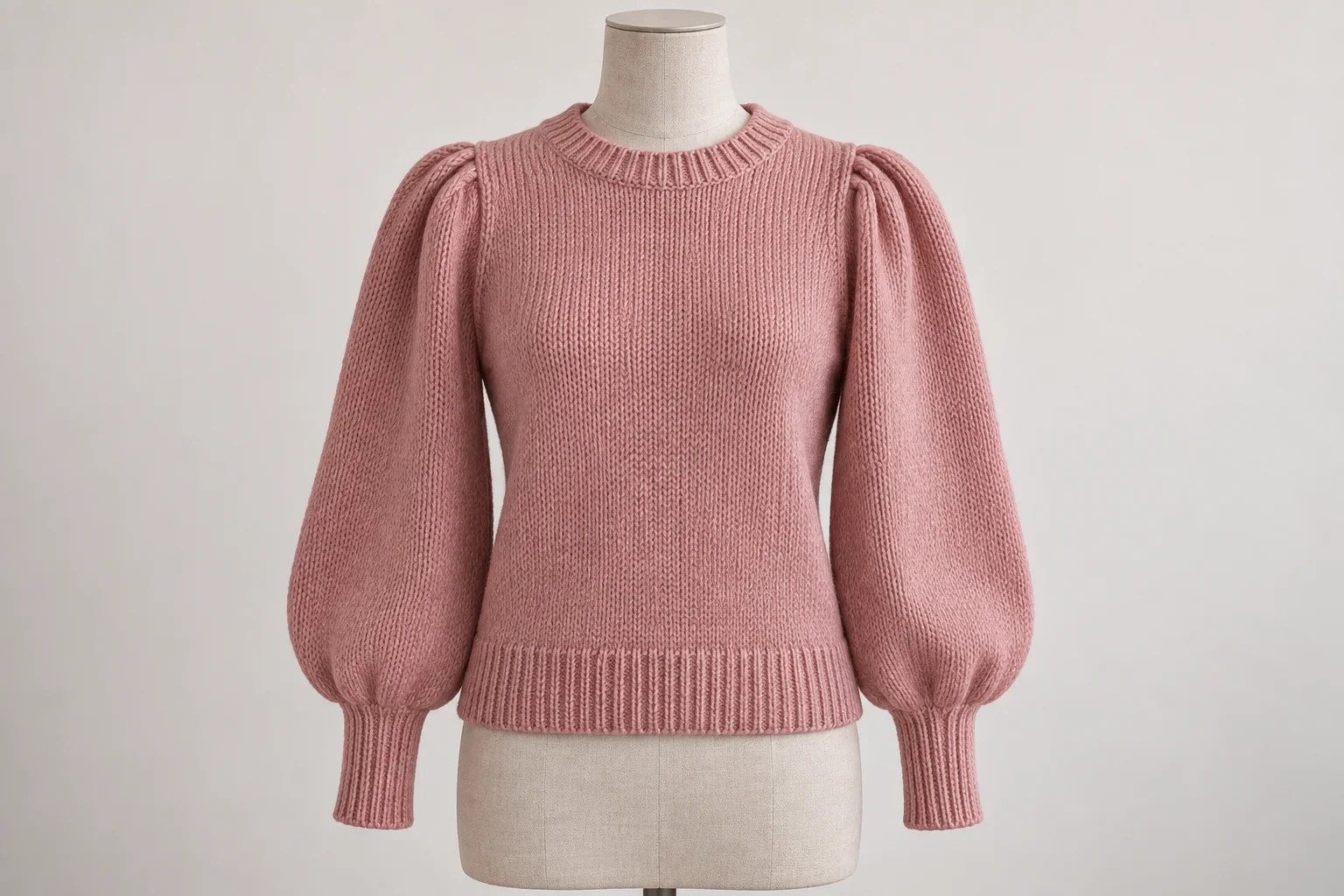
Draw the sleeve at rest in front, side and back views. Mark the shoulder attachment, highest visible point of the puff, upper-arm outline and transition towards the cuff. A front-only image can conceal a sleeve that projects mostly forwards or backwards.
Distinguish a concentrated sleeve-head puff from a broader upper sleeve or a lower balloon shape. These descriptions should refer to the drawing, not replace it. If the intended product combines more than one volume zone, identify their relative priorities so the sample room does not enlarge every area equally.
The pullover fit and approval guide covers the complete upper garment. Keep that body reference available while developing the sleeve. A changed shoulder position or body width can alter how the puff appears even when the sleeve itself is unchanged.
Use a reference in the intended garment state. A sleeve arranged by hand for photography should be identified as a styling reference until the actual sample demonstrates the required resting shape.
Specify the relationship to the wearer and outfit
Identify the selected fit reference and intended underlayer. The sleeve may need room to move without changing the body’s position, and a layering requirement can affect the acceptable volume. Record those uses before treating a static silhouette as the complete brief.
If the product is intended to fit beneath an outer layer, state which arrangement the review will represent. Do not promise compatibility with every coat or jacket. Compare the actual outfit and retain the observation needed for the product description.
A statement sleeve is a visual choice with physical consequences to review. The buyer should choose the acceptable relationship between projection, movement, hand and the rest of the sweater, rather than assuming the largest visible puff is the best sample.
Identifying the sleeve component and join
Identify how the fullness is formed
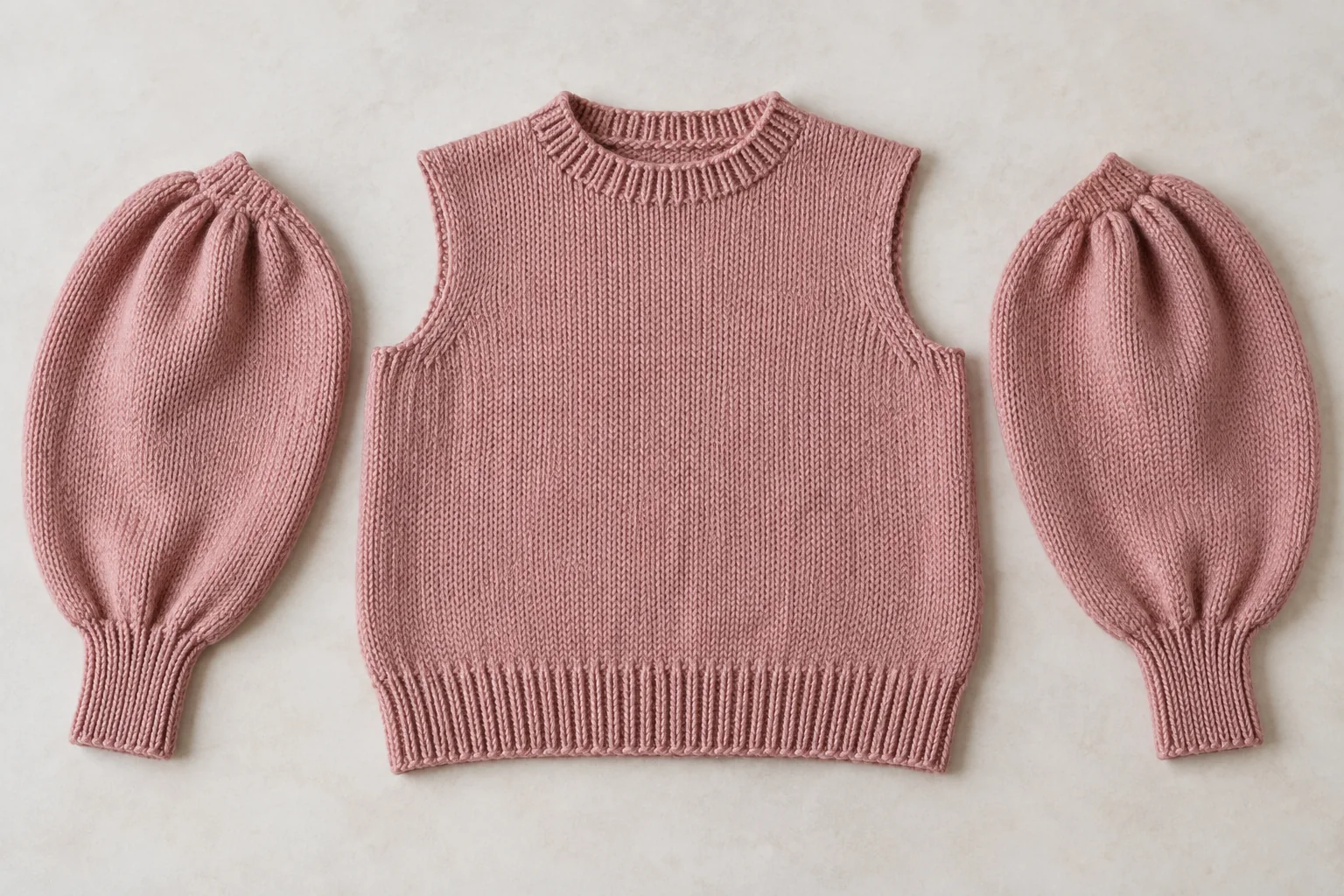
Ask the supplier to show the sleeve shape before attachment and explain the proposed route. Fullness may involve a shaped component, an assembly arrangement or another documented construction. The buyer needs to know which inputs the technician is changing when a new sample looks fuller or flatter.
| Sleeve input | Record needed | Buyer decision supported | Limit to retain |
|---|---|---|---|
| Fullness location | Front, side and back volume map | Where the puff should sit | One posed image does not establish resting shape |
| Sleeve component | Shape and programme or pattern reference | How the proposed volume is formed | A changed component needs a new identity |
| Body armhole | Marked attachment path and shoulder position | Which body the sleeve is designed to meet | Similar perimeter does not prove identical placement |
| Joining arrangement | Matching marks and any planned gathering or ease | How fullness is distributed at attachment | Technician proposes the allowance for review |
| Cuff and lower sleeve | Opening, length and construction reference | How the sleeve rests and moves below the puff | Cuff behaviour must be reviewed on the assembly |
| Material and finish | Yarn identity, knit and sample-state records | Whether proposals use comparable inputs | Fibre name alone does not predict volume retention |
Give the buyer an inside view where it clarifies the attachment. A smooth exterior cannot show an unseen support or confirm how the sleeve was joined.
Keep measurement paths tied to the shape map
ISO 18890 provides garment-measurement references. Define additional sleeve-volume landmarks with the technical team. A sleeve-head height, an upper-arm width and the visible projection on a form are different observations; label the method and state for each.
Record whether the sleeve is measured flat, relaxed on the form or in another agreed arrangement. Pulling the gathered area open can produce a useful construction measurement, but it should not be compared directly with the resting silhouette without explanation.
Use the knitwear tech-pack guide to connect the drawing, component and measurement references. If the buyer moves the intended puff position, update the matching marks and image reference together so the next sample answers the revised brief.
How do shoulder and cuff details influence the comparison?
Review the sleeve shoulder attachment
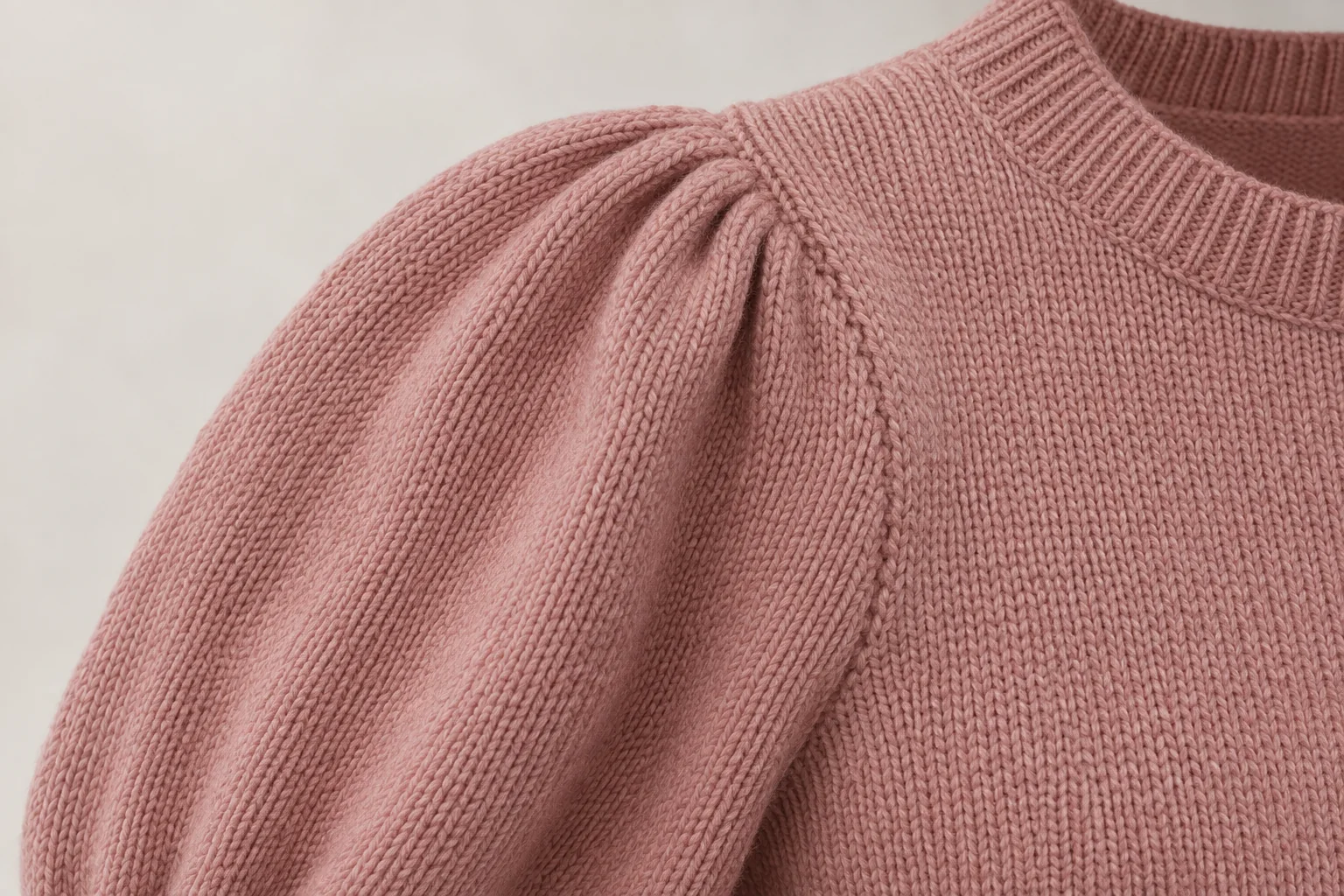
Fit the puff sleeve sweater on the selected wearer or form. Record the neckline and body shoulder positions before focusing on the sleeve. If the entire shoulder shifts, the puff may move with it. That observation calls for a connected fit review rather than an automatic increase in sleeve volume.
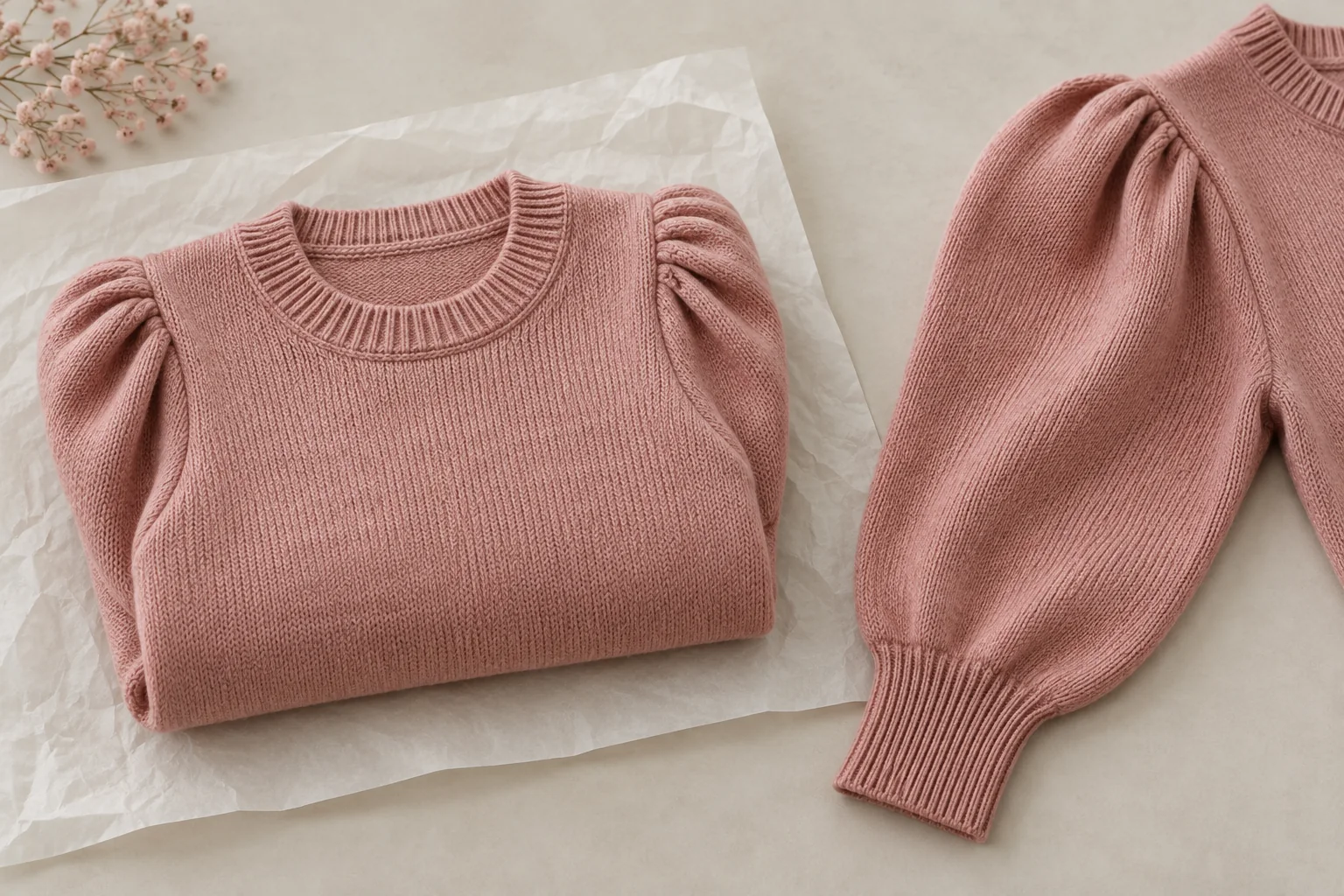
Compare left and right sleeves in the same resting arrangement. Check component identity, orientation and attachment references where their appearance differs. A difference in the photograph can reflect positioning, construction or the fit reference; the image alone does not isolate the cause.
The linking-quality guide supports a discussion of the actual join. Ask the technician to identify any proposed change to matching, attachment or support. Keep the change explicit instead of accepting an instruction to attach more firmly without a defined construction.
A support proposal should be reviewed as a separate input. Record its material, location and effect on the handled sample. Do not assume that adding a hidden layer will preserve softness, movement or the desired appearance without comparison.
Check the sleeve cuff relationship
The lower sleeve and cuff help determine where the fullness rests. Record the sleeve length, cuff opening and intended wrist position. A sleeve that accumulates above a restrictive cuff can look fuller in one pose while giving a different shape when the arm changes position.
Compare the cuff and upper sleeve together through the required movement. Keep any deliberate blousing in the design reference. If the buyer wants fullness concentrated near the shoulder, a lower-sleeve accumulation should not be accepted as equivalent simply because the total sleeve appears larger.
A change to cuff construction or length can require another sleeve comparison. Retain the actual cuff item with the sample revision so later reviewers do not treat two visually similar sleeves as the same construction.
Yarn, finish and care-state comparisons
Compare sleeve yarn and construction proposals
Ask the supplier to compare material or stitch proposals against the same volume map. Keep body shape and attachment constant where practical. If a new yarn also requires a different programme or finish, list those changes and assess the combined proposal.
A yarn substitution after approval should reopen the relevant sleeve evidence. A matching colour and similar hand do not establish the same resting shape. State which observations the replacement must reproduce, including the material and care states involved.
A component swatch may help the team select a proposal, but it cannot show how the complete sleeve rests on the shoulder. Request the sample format that can answer the current question rather than treating all development evidence as interchangeable.
Retain the sequence from finish to later use
Record the sleeve immediately after the selected finish, after the agreed rest and in the required wearing state. Keep the sample identity and any handling clear. A puff restored by arranging it manually should be distinguished from one that settles into the required shape independently.
AATCC TM150 concerns laundering-related dimensions in applicable garments. The brand’s volume and appearance requirements need their own reference alongside any formal test result. A dimensional pass does not establish the intended three-dimensional sleeve shape.
Where a laboratory method requires conditioning, identify the applicable procedure. ASTM D1776 provides conditioning guidance for that situation. Keep a newly steamed sample and a conditioned comparison distinct in the record.
Review the proposed packing fold as well. If it compresses the sleeve head, compare the unpacked state required by the brief. A photograph taken before packing cannot establish the appearance after the garment has been folded and handled.
Transferring volume and reach across sizes
Grade sleeve volume and reach separately
Use the knitwear grading guide to organise the range, then identify the sleeve-specific choices. Shoulder position, upper-arm room, fullness location, sleeve reach and cuff relationship may need separate decisions. A chest increment does not define all of them.
The designer should state which visual proportions must remain recognisable. A larger sleeve component may need a different distribution of fullness rather than a uniformly enlarged puff. Ask the technician to show the proposed relationship on the size map and explain any programme or component transition.
Select represented sizes around those transitions. Keep the relevant body and sleeve together in the review. A sleeve component approved alone cannot establish how it sits on an unreviewed body size.
Keep dimensional allowances separate from the visual target
Agree measurement tolerances for defined points and states. The intended silhouette also needs a visual reference. Two sleeves can fall within the same width allowance while distributing their fullness differently.
Which sleeve observation needs another trial?
Match the observation to the next comparison
| Observed condition | Relationship to compare | Proposed next action | Closing evidence |
|---|---|---|---|
| Puff settles below its intended location | Sleeve map, shoulder position and cuff | Compare the connected fit and construction | Unadjusted resting views of the revised sample |
| One sleeve projects differently | Component identity, orientation and attachment | Inspect matching and assembly references | Paired sleeve and inside-join views |
| Added support changes the hand | Support location against the required handling | Compare a documented alternative | Handled prototype and accepted trade-off |
| Shape changes after care | Same sample and declared care state | Review affected material or construction inputs | Dimensions and volume views before and after care |
| Packing flattens the sleeve head | Fold and unpacked reference | Revisit packing or shape requirement | Agreed unpacked-state comparison |
| A size transition changes the puff proportion | Body and sleeve grade relationships | Assess the affected component group | Size-specific map and sample views |
Use the sample-feedback guide to mark the sleeve zone and observed state. Say which accepted shoulder, cuff and hand features the next revision must preserve.
Any unresolved variation needs a named next action. If the buyer accepts a different fullness position or hand, update the product reference and inspection record. That decision changes the target; it should remain visible beyond the sample room.
For a development discussion with CNSweaters, provide the volume sketch, unadjusted sample views and the comment the next trial must resolve when you send your puff sleeve sweater brief.
Frequently Asked Questions
Does a bigger sleeve pattern always create a higher puff?
The visible result depends on where fullness is placed and how the sleeve meets the body and cuff. A larger component may distribute volume elsewhere. Compare the proposed component and assembly against the intended resting silhouette before deciding that more width is the correct change.
Is hidden shoulder support required for every puff sleeve?
Select support through the actual sample comparison. Ask the supplier to identify its proposed construction and compare shape, hand and movement. If support is added, record its material and location and assess the resulting trade-off rather than assuming it improves every requirement.
Can a cashmere fibre label establish volume retention?
It cannot establish the behaviour of the assembled sleeve. Verify material identity through records, then compare the actual yarn, knit, attachment and finish on the garment. The required shape needs evidence in the specified resting, wearing and care states.
Should the sleeve be judged only with the arm raised?
Use the states required by the product brief, including the resting position. An elevated arm can change the distribution of fullness and conceal a low resting puff. Retain the starting and returning views so the buyer can see which relationship the garment maintains without rearrangement.