 CN Sweaters
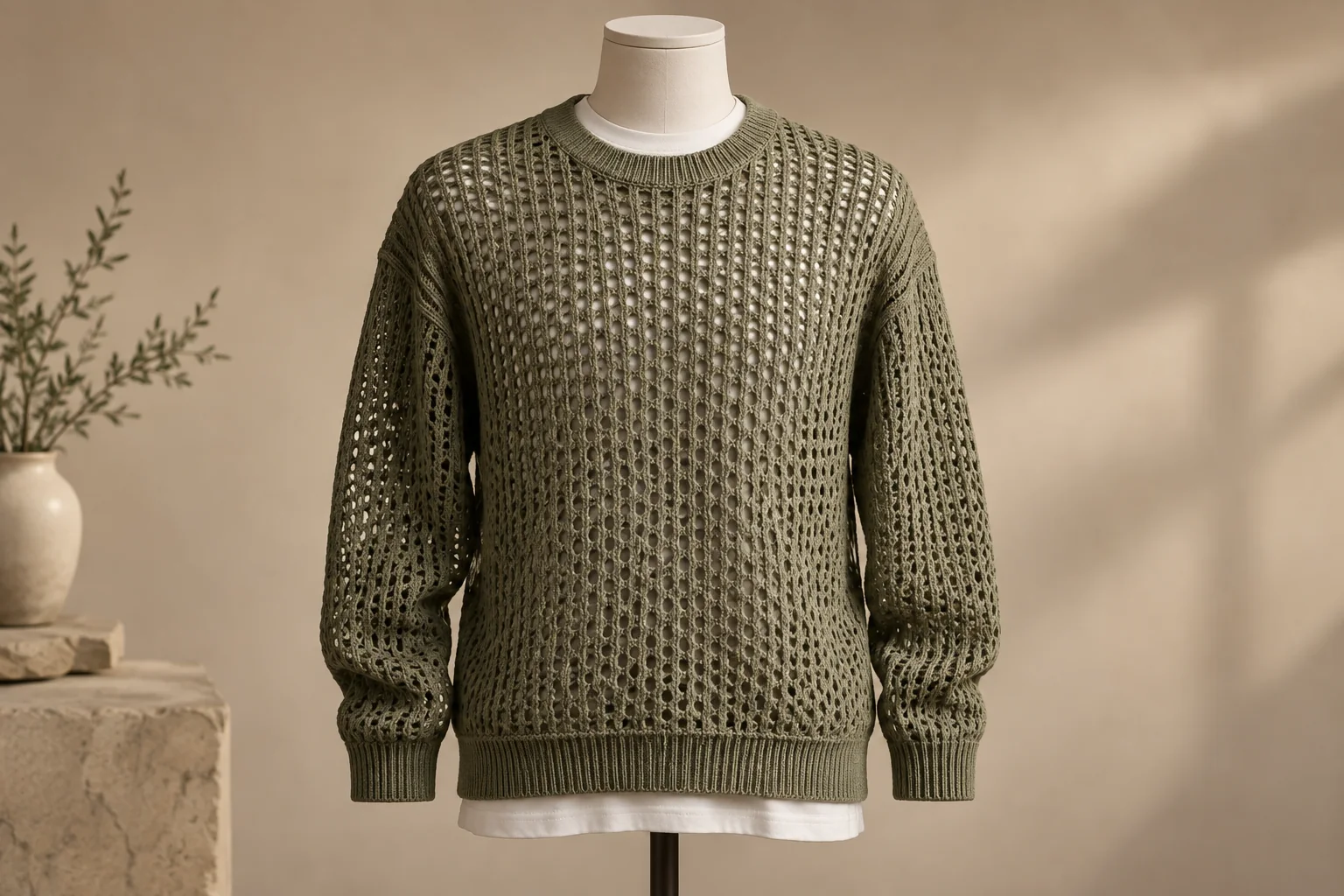
When a buyer asks for an airy men’s open knit sweater, clarify whether the requirement is visible openings or measured fabric air permeability. A photograph can establish the first appearance; the second needs a suitable test on an identified specimen. Neither approves the shoulder join or demonstrates how cool a wearer feels.
What is the men’s open knit sweater meant to do?
Choose a pullover wearer and layering brief
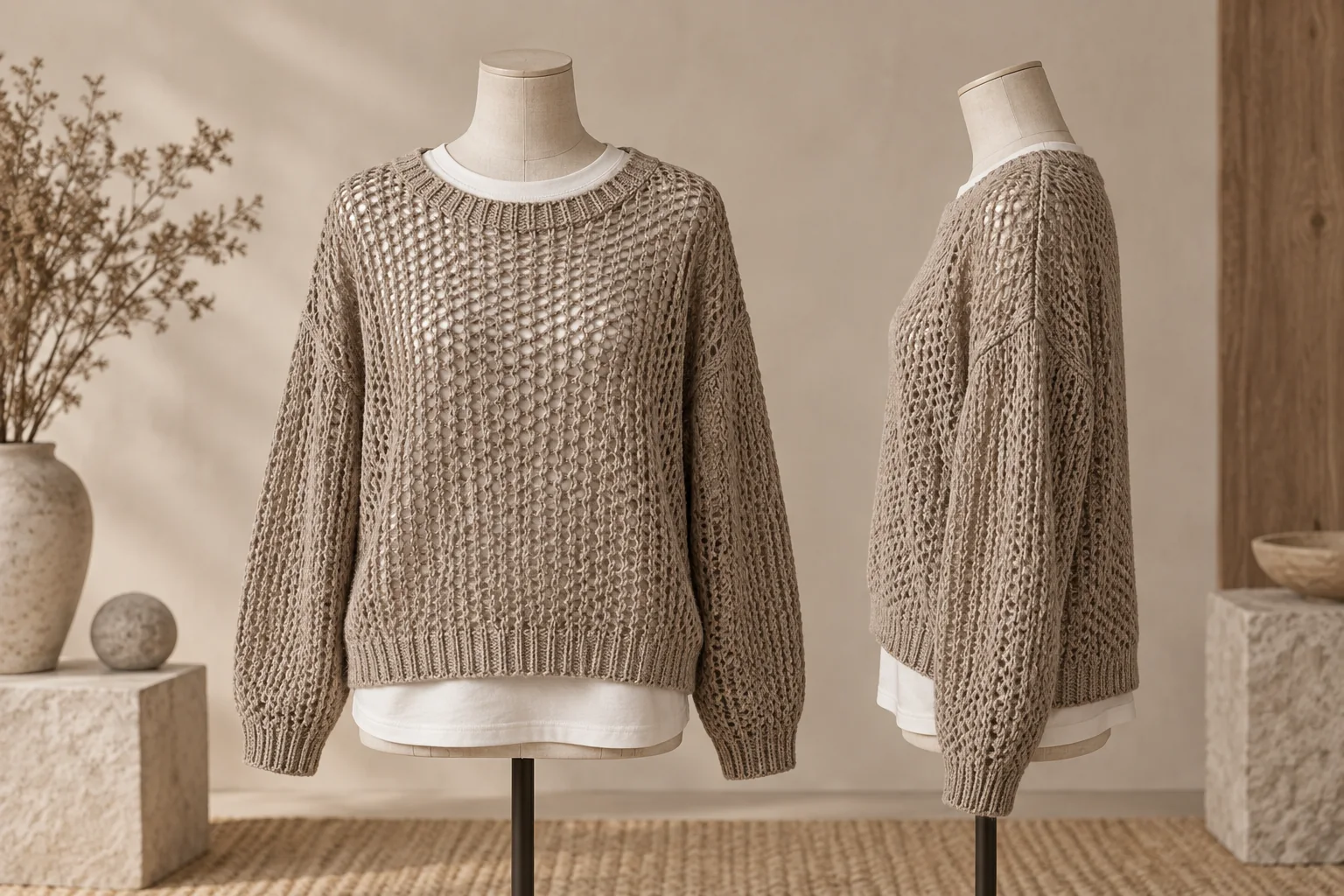
“Open knit” can describe a widely spaced stitch over the whole body, a panel zone, or a smaller decorative pattern. State which is intended and what should appear beneath it. Use a named shirt, tee or other underlayer rather than a generic bare mannequin. A larger body that hangs away from that layer gives a different visual result from a fitted sweater in the same knit. Save an unadjusted front and side photograph before styling the shoulders or hem.
Decide where a pullover needs denser knitting
An open surface can meet a neckline, shoulder seam, armhole, cuff and hem. Mark where the aperture pattern should stop or change, and what visual transition the designer will accept. A solid shoulder band may support the chosen shape but can make the open body look smaller. An open neckline can look light but may need a different edge proposal. Compare those options on the whole garment, not only separate swatches.
Fixing aperture, material and shoulder inputs
Mark the body and garment references separately
Set the wearer’s shoulder, chest and upper-arm profile separately from the finished sweater dimensions. ISO 8559-1 describes body-measurement definitions for apparel profiles; it does not assign the amount of ease this men’s pullover should use. ISO 18890 describes garment measurement points and permits additional agreed points. On the drawing, mark shoulder seam or drop, armhole, neck, chest, hem and where the open zones begin and end.
A body-width measurement cannot alone say whether the shoulder edge will retain its intended line. Add a front, back and side view with the wearer standing naturally and the selected underlayer visible. The knitwear tech-pack guide can carry the marked points, yarn specification and sample identity. Do not treat a product photo of one size as a universal grading rule for the range.
| Knit-zone input | Record needed | Comparison supported | Owner or limit |
|---|---|---|---|
| Target wearer | Body profile and underlayer | Locates shoulder and coverage | Brand sets market brief |
| Aperture artwork | Zones, stitch route and transition | Preserves visible design | Designer approves map |
| Shoulder route | Seam, edge and body support | Checks outline in wear | Technician marks construction |
| Garment points | Chest, neck, armhole and hem | Compares finished sizes | Fit team fixes origins |
| Material | Yarn, gauge and finished revision | Identifies trial proposal | Sample room records version |
| Performance question | Visual openness or tested airflow | Prevents mixed claims | Buyer defines needed evidence |
Keep the yarn and aperture route traceable
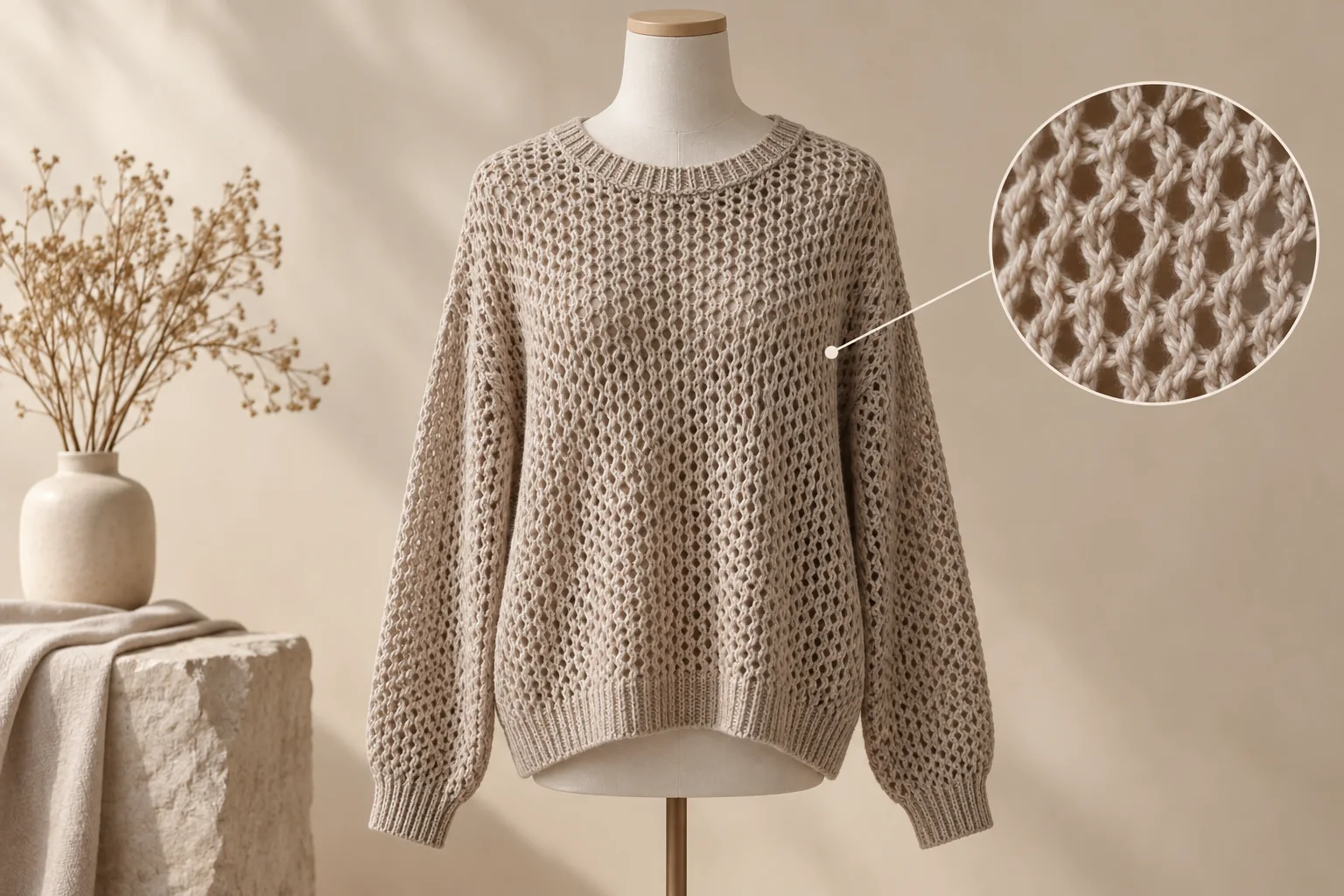
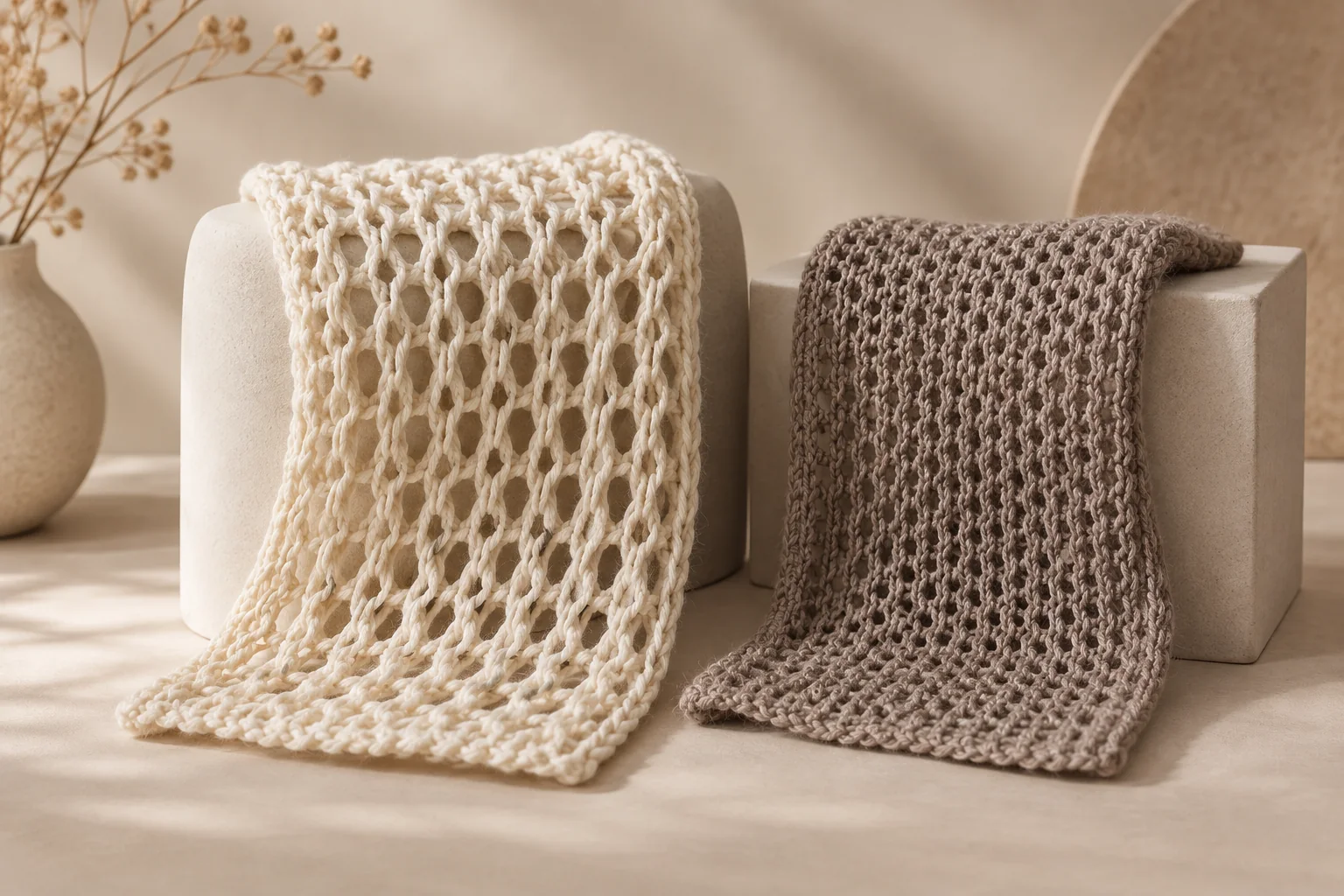
Two swatches with similar holes may use different yarn or stitches. Record supplier item, yarn construction, knit program, finish and the actual garment where each option appears. A swatch can screen appearance and suitable testing, but shoulder load, armhole shape and whole-pullover drape require an assembled sample. The private-label yarn guide helps maintain that option identity.
If a colour or finish changes the apparent openness, show the product in the proposed retail shade. A pale sample against a pale background may conceal holes that show clearly over a dark shirt. That is a visual observation, not a fibre-property test. Keep the background, underlayer and lighting named when comparing candidate designs. The buyer can approve a layered look without claiming that the same garment provides a specified ventilation level under every outfit.
Inspecting the joined shoulder
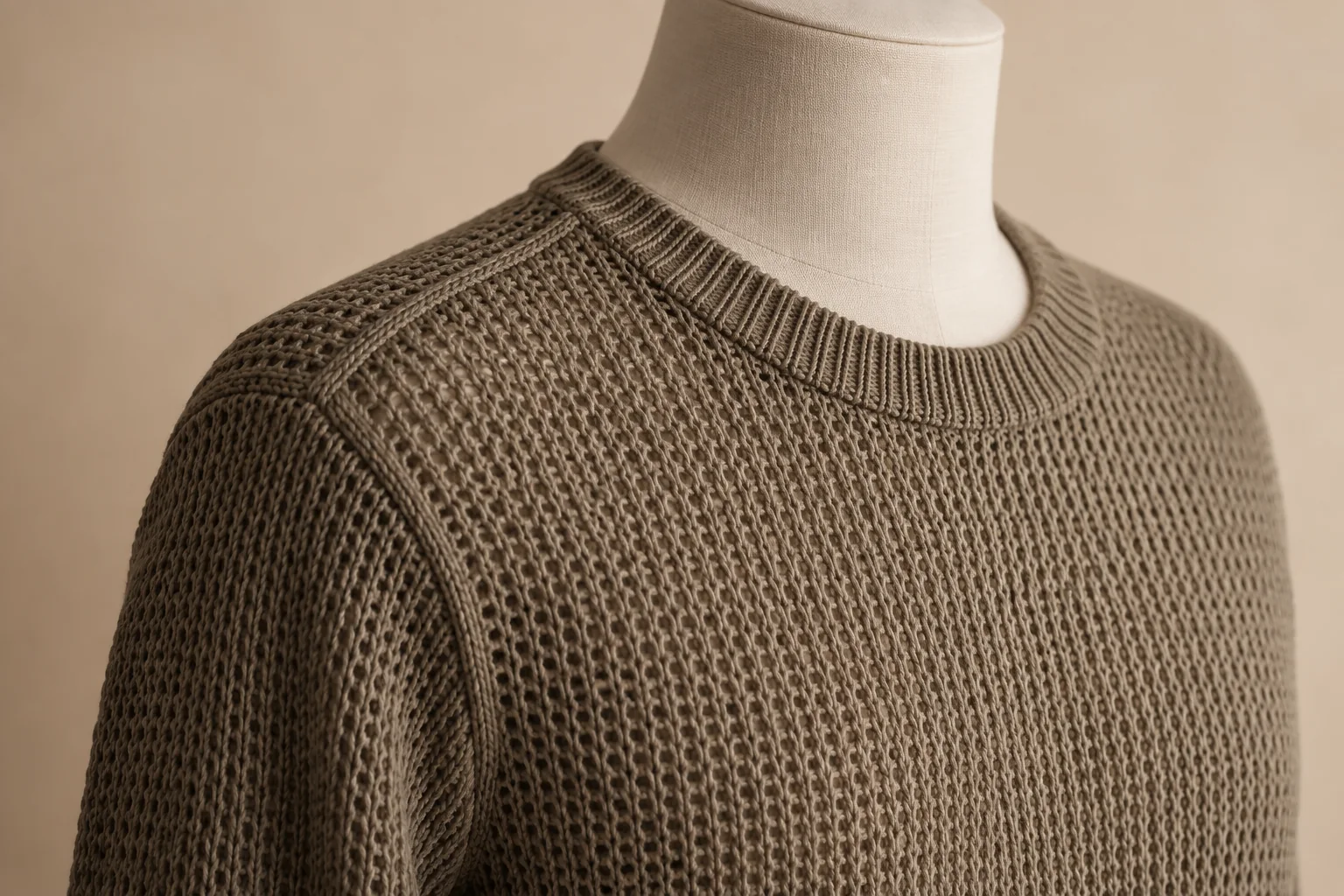
Inspect the opening around a joined shoulder
Photograph the full pullover on the chosen form or wearer, then inspect the shoulder and reverse side. Mark whether open stitches approach the seam, whether the seam creates a thick ridge, and whether the neckline edge remains in the intended position. Ask the technician for an option that changes a defined junction while preserving the visual aperture map. A wider shoulder band might move the problem toward the armhole; a different joining route might alter the visible motif.
Review movement and the underlayer together
Have the wearer put on the sweater with its intended layer, lift an arm and return to rest as the product use requires. Note whether the shoulder line, armhole, neckline or hem moves first. A shirt sleeve may catch an exposed loop where a bare arm would not. A light top can be visible through the holes without causing any structural issue. Record these separate findings rather than correcting the hole pattern for an unrelated fit problem.
How should aperture changes enter a trial?
Hold the shoulder route steady for the first comparison
When a buyer asks for a more open surface, the first option should identify which stitch zone changed. Keep the shoulder seam, neck finish and fit block stable where practical, then compare the actual swatch and an assembled sample in the same yarn. If a new aperture is produced by changing yarn, gauge and finish together, label it as a combined option. The result can still guide design, but it cannot isolate the effect of opening size alone. Photograph the front and back of each named candidate on the same underlayer and in the same lighting. A brighter scene can make a fabric look denser or more transparent without a construction change.
Transfer the chosen field without losing its boundary
A promising central swatch must meet the sleeve, side seam, shoulder and hem in the complete sweater. Mark where its pattern starts and ends and inspect those transitions from both sides. If a technician moves the pattern away from a seam to make assembly easier, compare the revised visual area with the brand’s design reference. A single close-up of the new knit cannot show whether the garment still has the intended proportions on the wearer. Keep the candidate number, art map and physical sample together. That package makes a later air-permeability result traceable to the construction actually proposed, rather than to a similar-looking piece of fabric from another route.
What does a fabric airflow result establish?
Use an applicable method for the fabric question
ASTM D737 addresses air permeability of textile fabrics and includes knitted fabrics in its public scope. A valid result describes airflow through an identified fabric specimen under the method. It does not by itself establish how cool a wearer feels in a finished pullover. Fit, underlayer, garment openings and environment affect the wearing experience. If marketing wants an airflow claim, define the exact claim and the evidence required to support it.
Do not turn visual openness into a cooling number
A photograph locates holes and shows their appearance over the chosen layer. Keep that visual decision separate from any fabric test. The brand can select openness as a design feature; a numerical airflow claim requires the relevant result and specimen identity.
Care states and programme transitions
Repeat the declared care comparison
An open-knit pullover may change dimensions, aperture appearance or edge position after the product’s intended care route. Label the actual wash, dry, finishing and rest state before comparing samples. AATCC TM150 addresses garment length and width changes after home laundering on applicable products and has limits for certain stretch fabrics. An informal photograph after washing is a development observation, not proof that a formal standard procedure was completed.
Take front, back, side and shoulder views with the same underlayer. A garment dimension can stay within its approved range while a visible opening shifts. Conversely, a changed dimension may leave the chosen look intact. Keep both outcomes. The yarn-substitution guide explains why a later material proposal reopens the affected design even if the new fabric looks similar on a small card.
Sample transition sizes in the range
A pattern that ends neatly before the armhole in one size may intersect the opening when its shoulder or chest grade changes. Select lower, base and upper risk sizes, adding a transition where the stitch program, shoulder route or aperture zone changes. The custom knitwear grading guide offers the broader size-system method. This product needs a size-specific shoulder and open-zone view over the intended layer.
A grade defines how the sweater should change. A tolerance defines accepted measured variation from that chosen size specification. Neither can be used to excuse an unapproved motif intersection or a shifted shoulder. Retain physical references at construction transitions. Ask the technical team to identify what remains fixed across sizes and what moves so later bulk inspection has a meaningful comparison point.
Choosing the next structural or evidence comparison
Turn an observation into a bounded trial
| Fit or airflow finding | Relationship to investigate | Buyer action | Closing evidence |
|---|---|---|---|
| Shoulder edge distorts | Seam, knit and fit route | Hold upper-body approval | Inside and worn shoulder views |
| Holes expose more than intended | Layer, lighting and aperture map | Review visual option | Same-outfit front/side views |
| Underlayer catches a loop | Edge and yarn placement | Trial one zone change | Dressing and action sequence |
| Fabric airflow differs | Specimen and knit construction | Compare named fabric routes | Applicable method record |
| Care moves neckline or hem | Finish and edge response | Reopen affected version | Identified pre/post-care views |
| One size crowds an aperture | Program and grade transition | Restrict that size group | Size-specific panel and sample |
Frequently Asked Questions
Do larger visible holes prove better cooling?
No. They change the visible design. Measured fabric air permeability and wearer comfort are different questions with separate evidence needs.
Can a fabric D737 result approve shoulder fit?
No. It concerns an identified fabric specimen. Review the assembled sweater’s shoulder, armhole and wear states physically.
Must every zone use the same open stitch?
No. Define denser edges and open areas where the design needs them, and keep the transitions visible in the approved artwork and sample.
Can one underlayer approve all styling conditions?
It approves the named condition. Add further outfits to the brief if the product is intended to show different levels of coverage.
What if care changes the hole pattern?
Identify the exact garment, material and care route, then compare the affected open zone and edge in the same front and side views.
Identify the unresolved shoulder junction, aperture view or fabric-test question in the CNSweaters open-knit enquiry, with the selected garment and underlayer references attached.