 CN Sweaters
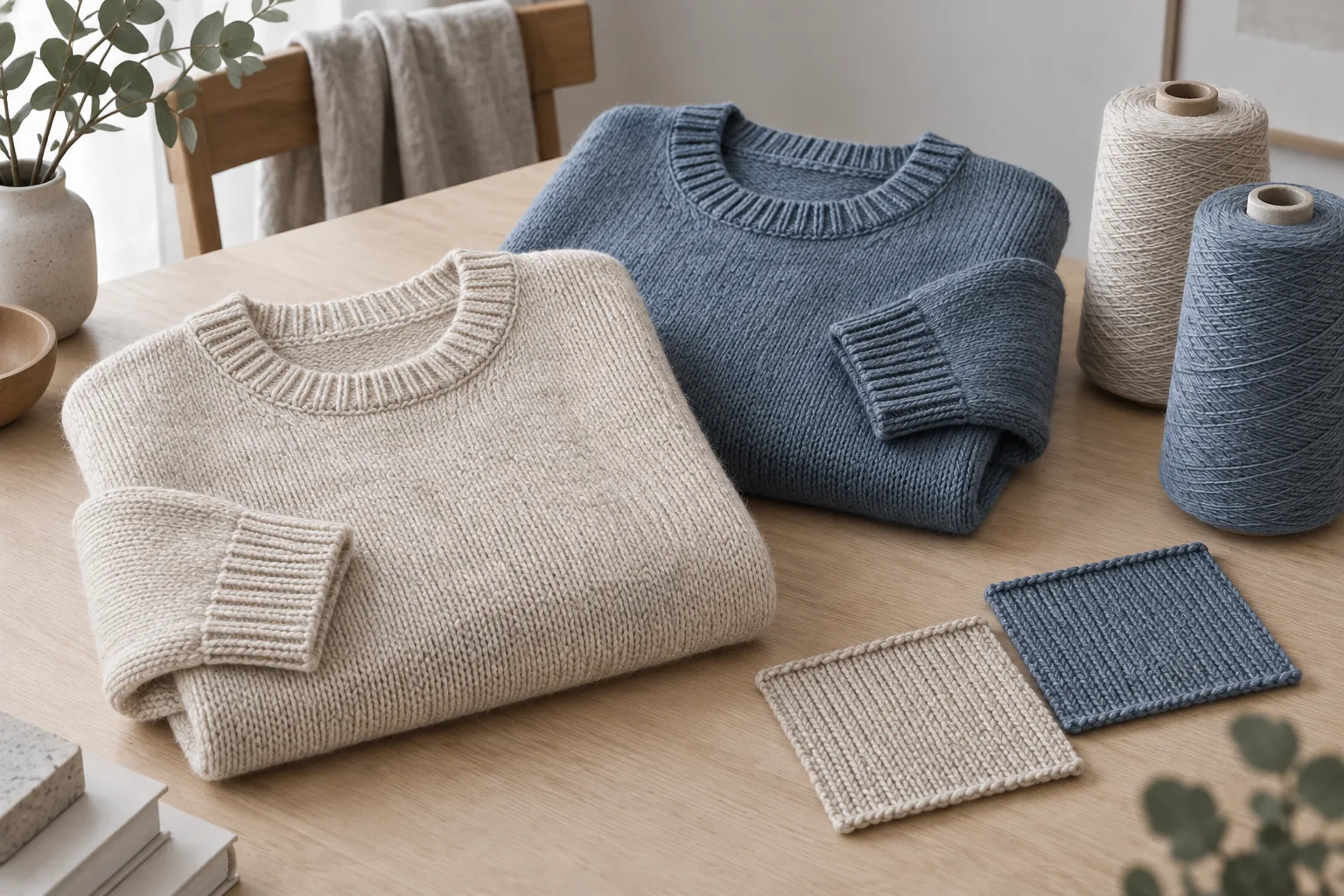
Sweater yarn substitution after sample approval should reopen the decisions that depended on the original yarn. A replacement is ready for production only when its identity, finished appearance, fit, relevant performance and commercial consequences have been checked against a named reference. Matching a fibre percentage or a colour name is a starting point, not an approval.
For a private label buyer, the practical question is how much of the approved programme can safely continue. Holding every activity wastes time, but allowing knitting to continue while the replacement is still being assessed can turn a sourcing problem into finished stock that nobody has approved. Separate work that remains valid from work that depends on the changed material.
This guide proposes a change review for that situation. It does not prescribe a universal test grade, promise that one yarn can replace another, or establish a supplier’s capabilities. The buyer, technical team and manufacturer need to agree the comparison, acceptance conditions and release authority for the actual style.
What Has Changed Since the Approved Sample?
Identify the replacement precisely
Start with a short change request that names the style, approved sample revision, original yarn reference, candidate reference and reason for replacement. Record the mill or supplier, declared composition, count system, ply, colour reference, lot identity and any declared treatment. If a detail is unavailable, leave it as an unresolved input; do not copy the original yarn’s specification into the candidate column.
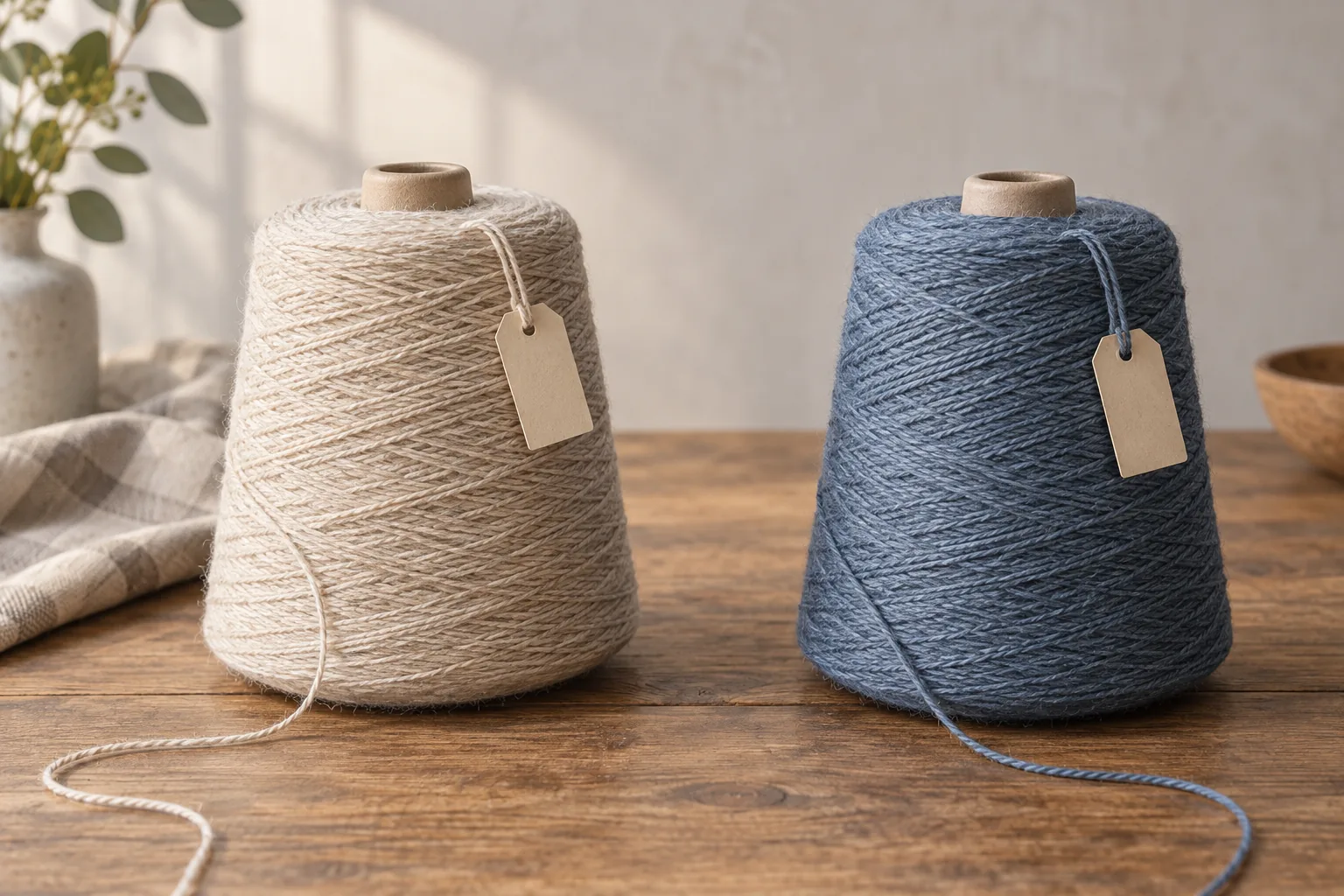
Ask whether the problem concerns the whole yarn quality, one colour, one delivery, or a particular lot. A colour shortage in one style does not automatically justify replacing material across the collection. Conversely, several styles may share the same original yarn. The request should list every affected style and size range before anyone approves a supposedly isolated change.
The existing private label knitwear yarn planning guide helps establish the original material direction. Here the starting point is different: a buyer has already accepted a product reference, and the team must identify which parts of that acceptance the proposed change could invalidate.
Preserve the original reference
Retain the approved garment, its measurement record, colour reference, finishing instructions and dated comments. Give the candidate a different sample identifier. Photographing the two together can help discussion, but photographs cannot establish equivalent touch, recovery or care performance. Keep physical references available to the people making those judgements.
Avoid the phrase “same quality” in the approval record unless the compared attributes are stated. One person may mean composition, another price, another surface softness. A useful reply specifies what stayed unchanged, what changed and what has not yet been checked. The order file should make that distinction visible even to someone joining the project after the original approval call.
Which Approvals Does Sweater Yarn Substitution Reopen?
Trace the dependency rather than restarting blindly
Review the approved specification one decision at a time. Ask whether the decision used the original yarn’s behaviour or only an independent input. A logo artwork file may remain valid, while its knitted execution needs another review. A size chart may retain its targets, while the knitting settings needed to achieve those targets require adjustment.
The table below is a proposed review aid, not a laboratory standard. Assign an owner and a specific evidence item to each affected row. Mark unaffected rows with a reason, so a later reviewer can distinguish a considered decision from an omitted check.
| Decision | Evidence to compare | Release condition |
|---|---|---|
| Material identity | Original and candidate specifications, lot references | Differences are explicit and acceptable |
| Colour and surface | Finished comparison samples under agreed viewing conditions | Named reviewer accepts the intended appearance |
| Fit and weight | Garment measurements, weight and relevant size samples | Agreed product targets remain achievable |
| Care and performance | Applicable tests on representative candidate material or garments | Agreed requirements are met for the stated use |
| Cost and timing | Revised consumption, process steps and dated supply plan | Buyer accepts the complete revised commitment |
Consider a hypothetical reorder in which the original yarn is available for the body colour but not for a contrast cuff. The first question is whether the replacement affects only that cuff or requires a different finishing route for the whole garment. If the latter is proposed, the body material has not changed, yet its finished appearance and measurements may still need review. Scope follows the proposed process, not only the purchasing line.
Write the decision as a request for evidence: compare the assembled garment using the original route with the proposed combination and route. Leave the outcome open until that comparison exists. This makes the sample request actionable without claiming that the two materials will behave identically or that every unaffected component needs redevelopment.
Keep colour approval separate from material approval
A colour match does not release the yarn for every other property. Equally, an acceptable test report does not approve a visible shade difference. Use the lab dip approval workflow for the colour decision and attach its outcome to the material change record.
If the style combines colours or textures, compare the candidate alongside the materials that will remain in production. A single attractive swatch does not show whether the assembled garment will still meet the design intent. Define the relevant combinations before asking for samples, rather than accepting whichever combination happens to be available first.
Do not carry forward a previous care statement automatically. The separate guide to evidence behind care label claims addresses that decision. In a substitution review, record whether its supporting evidence still represents the proposed garment and who will resolve any gap before labels are released.
What Should the Comparison Sample Actually Prove?
Compare the intended finished product
Request a knit-down that uses the candidate yarn and the intended stitch construction, then record its finishing route. A raw panel and a finished panel answer different questions. The Woolmark training manual Introduction to Knitwear discusses yarn selection and finishing within Merino wool knitwear production. For this review, that means a comparison should identify the stage at which each sample was assessed.
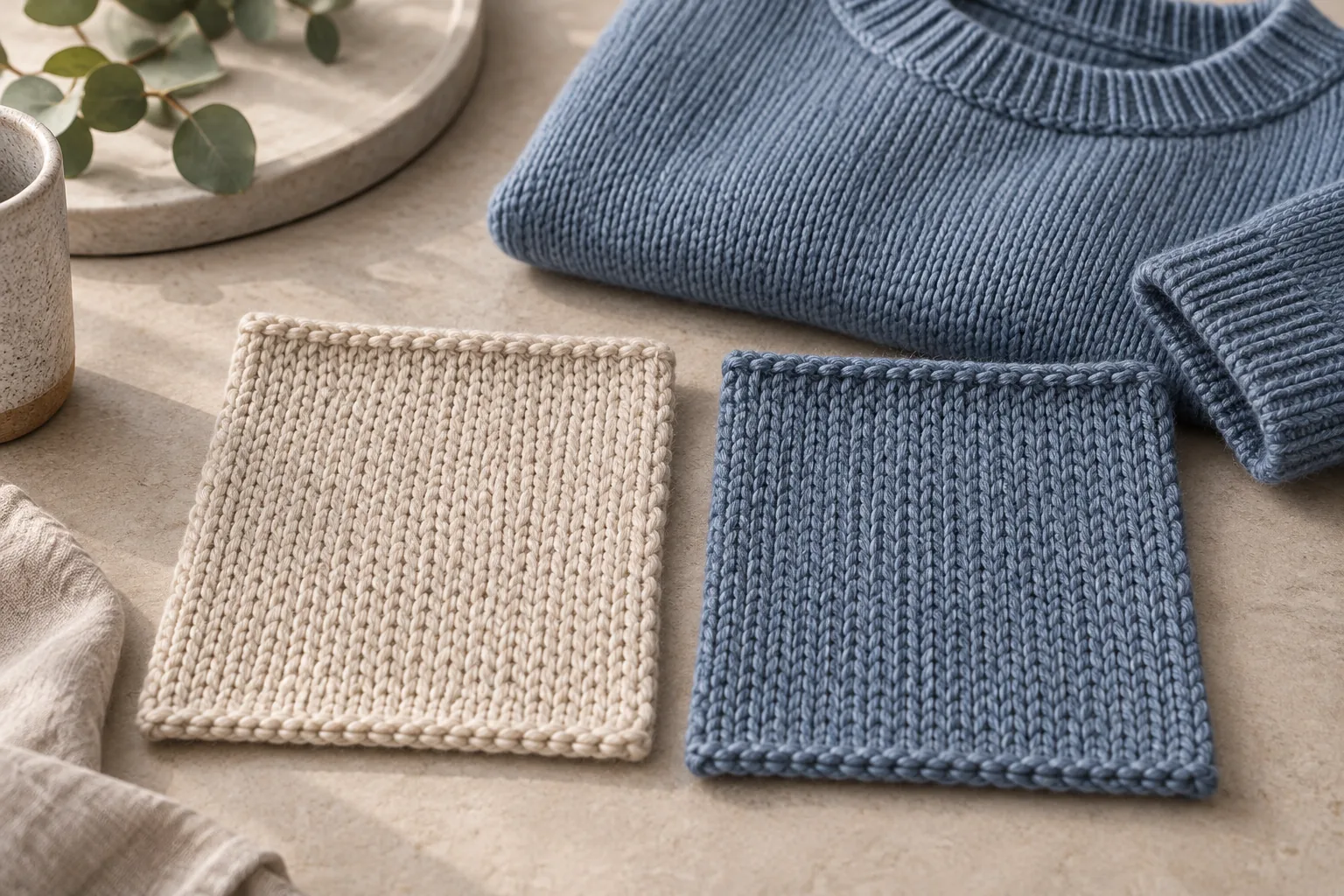
Use the original approved reference alongside the candidate. Record observable differences in stitch definition, surface, handle, drape and dimensions. Where a judgement is subjective, name the reviewer and the reference rather than inventing a numerical tolerance. A commercial decision to accept a different handle can be legitimate, but it is a changed product decision and should be written that way.
If the candidate requires different knitting or finishing settings, retain both sets of instructions. Otherwise, a successful sample may be impossible to repeat when the bulk team returns to the original settings. The established OEM knitwear workflow provides the wider handover sequence; the substitution record supplies the revised instructions within it.
Escalate from a panel when the decision needs a garment
A panel can screen a candidate, but it cannot demonstrate the balance of an assembled cardigan, the weight of a long dress or the behaviour of a finished neckline. Ask the technical team which product features the replacement could affect and request representative garments accordingly. Do not call a panel review complete garment approval.
When fit or grading may be affected, separate the base size decision from the size range decision. The guide comparing fit samples and size set samples explains their different roles. Retaining an accepted base size does not, by itself, settle what evidence is needed at the ends of the range.
Give each sample a purpose before it is made. A candidate produced to assess appearance should not later be presented as a completed durability trial. Clear labels on the sample and record prevent an informal visual acceptance from becoming an unintended approval for all production properties.
Which Tests Need to Be Repeated?
Choose tests from the affected requirement
Build the test request from the garment’s agreed requirements and the changes under review. Ask the technical team or laboratory to identify which existing results remain applicable and which require new specimens. Record their rationale. The objective is evidence that represents the candidate product, not the largest possible stack of reports.
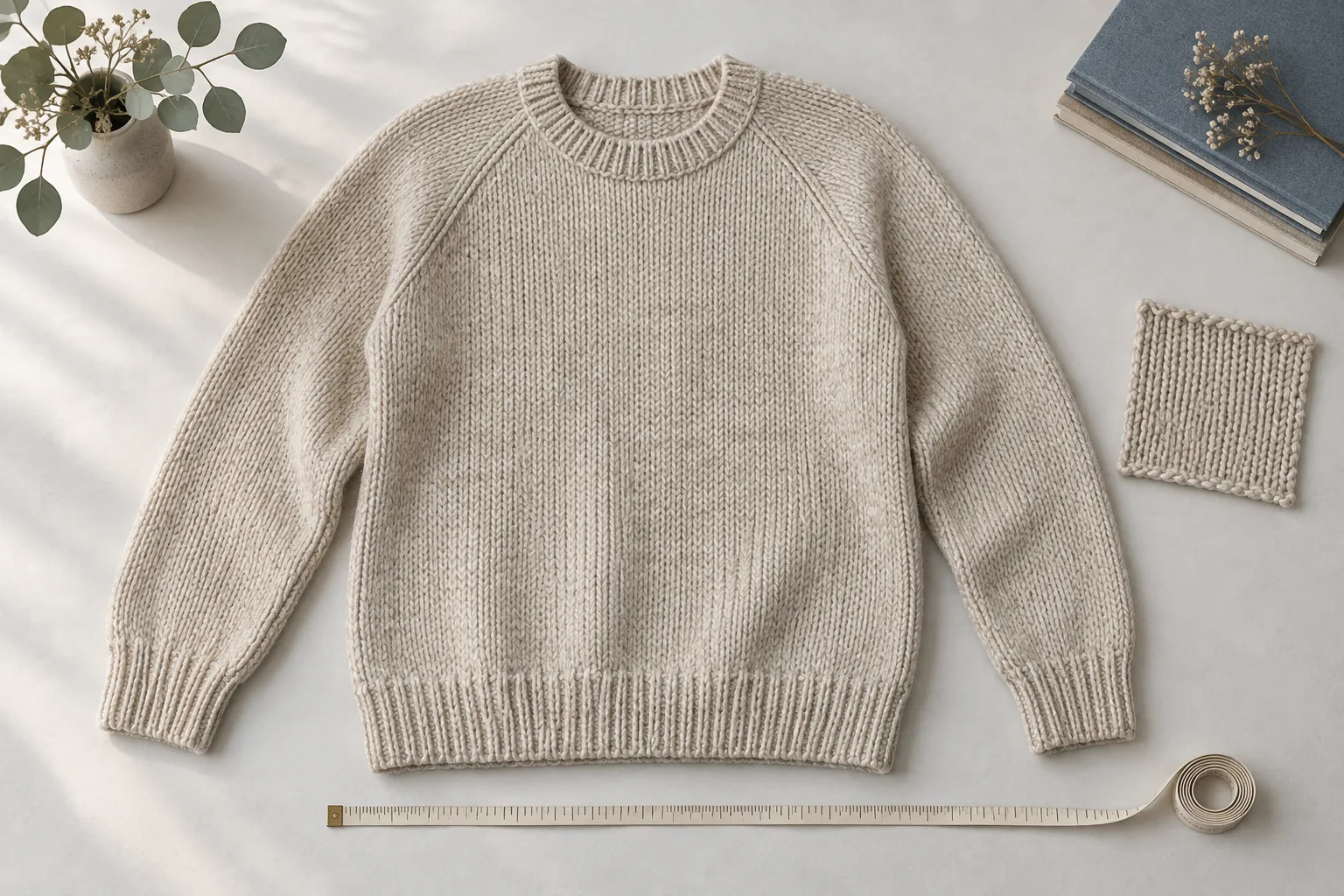
For dimensional change, ISO 5077 provides a method for assessing changes following specified washing and drying procedures. The report needs to identify the procedure used and the material or garment tested. A percentage without that context gives the buyer little basis for comparison with the original approval.
The washing and drying conditions are a separate part of the request. ISO 6330 covers domestic washing and drying procedures for textile testing. Agree the applicable procedure with the laboratory instead of using an unexplained “wash test” label. The buyer’s product requirements should state the intended care route and acceptance conditions.
For surface performance, ISO 12945-2 describes the modified Martindale method for evaluating pilling, fuzzing and matting. Referring to that method is not the same as agreeing an acceptable result for every sweater. State the requested assessment and acceptance requirement before testing, and avoid comparing results from different methods as though they were interchangeable.
Check what the report represents
Match the report’s sample identifier to the candidate yarn, colour, construction and finishing record. Note the test date and any departure from the proposed production route. If the tested specimen differs from bulk, ask for an explicit assessment of that difference; do not silently rename the specimen in the order file.
A passed test on one property cannot close unrelated questions. Dimensions may be acceptable while appearance remains unresolved. A satisfactory surface result may coexist with an unapproved colour. Keep the decision rows separate so a favourable result does not conceal a missing one.
Where a test fails, record the proposed correction and identify which earlier conclusions it could affect. A finishing change intended to improve one property may require the team to revisit appearance or dimensions. Recheck the affected evidence after the correction; repeating an unchanged test solely to obtain a preferable result is not a sound approval process.
How Does the Change Affect Cost and Delivery?
Recalculate the finished garment commitment
Ask for a revised quotation that states its assumptions. Compare yarn purchase terms, expected consumption, sample work, finishing steps, testing, unused original material and any changes to packing or freight. The buyer needs the revised cost of an accepted garment, not merely a lower price per kilogram of yarn.
Use yarn and garment MOQ planning to distinguish material purchasing constraints from finished order quantities. A candidate that is available quickly may still create an unwanted balance of unused yarn, particularly when only a small part of the original colour range is affected.
Keep the original and revised quotations side by side. The guide to comparing sweater quotes is relevant here because a change can move work between included and separately charged items. Confirm which extra samples or tests are included and when a revised price becomes binding.
Rebuild the sequence around actual dependencies
Write a dated sequence from candidate availability through sampling, review, testing, production and shipment. Distinguish a supplier’s estimated availability from material physically allocated to the order. Do not promise an unchanged delivery date until the remaining dependencies have been checked by the people responsible for them.
Some work may continue while the candidate is reviewed. Artwork preparation, carton specifications or unaffected material sourcing may be independent. Record exactly what can proceed and what remains on hold. A broad message saying “continue production” is too ambiguous when one team may interpret it as permission to knit with the replacement.
If additional development is needed, agree its scope and payment basis before commissioning it. The existing sample fee confirmation checklist helps keep the new work identifiable. A paid sample request still does not constitute approval of the replacement for bulk manufacture.
Who Can Release the Replacement into Production?
Issue a specific written disposition
Choose an explicit outcome: accept the candidate for the stated scope, hold pending listed evidence, or reject it. A conditional acceptance should name the remaining condition and the exact activity that remains prohibited. Avoid an approval that says “proceed, subject to testing” if production itself depends on the missing result.
Identify the buyer’s commercial approver, the technical approver and the manufacturer’s person responsible for issuing revised production instructions. Record the style revision, candidate identity, approved colours and sizes, reference samples, applicable results and any accepted difference from the original product. Approval belongs to that defined combination, not to every future purchase of a similarly named yarn.
Make the release easy to act on at the production boundary. The wider knitwear factory production process includes several handovers. For this change, confirm which instruction set knitting, assembly, finishing and inspection teams should actually use, and how superseded instructions will be distinguished.
Separate old and new material through the handover
Identify the remaining original yarn and any work already produced from it. State whether that work can continue under the original approval, needs separate review, or must remain held. Keep lots and sample references distinguishable; mixing material before the decision makes later inspection and traceability harder.
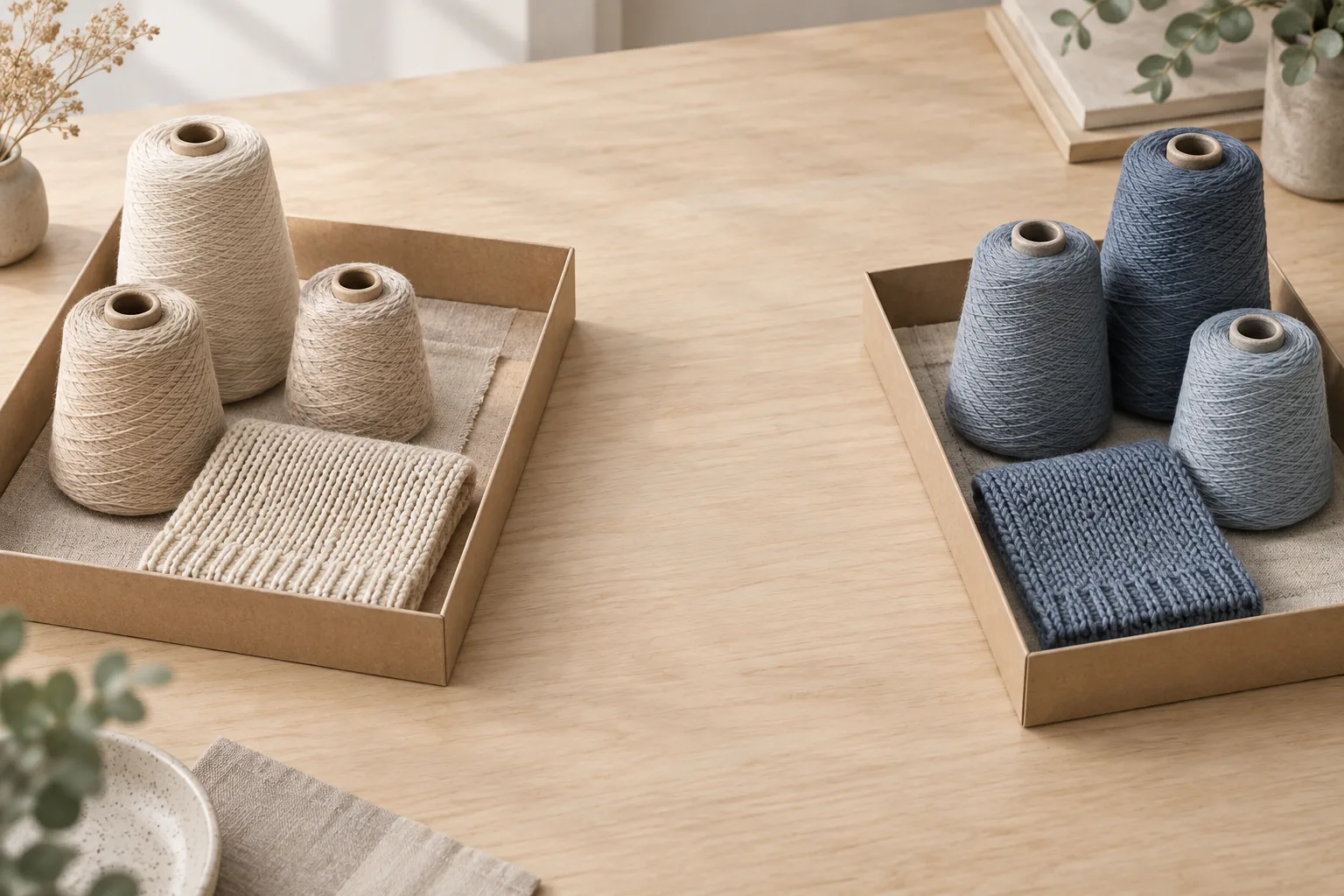
Ask for an initial production check against the released candidate reference before the whole affected quantity proceeds. Agree who examines it, which properties are checked and where the result is recorded. This is a proposed control point, not a claim that every supplier already operates the same system.
Finally, retain the substitution decision with the order and reorder record. The next buyer or merchandiser should be able to tell which yarn actually produced the accepted shipment. A later reorder should start from that final approved specification, with current availability and any further changes reviewed openly.
Conclusion
A replacement yarn becomes usable when the evidence supports the revised garment and the responsible people approve a defined scope. Start by identifying the original and candidate materials, then trace which appearance, fit, performance, care and commercial decisions depend on the change. Preserve valid work, but reopen conclusions that the original material can no longer support.
Compare representative finished samples, request tests against agreed requirements and update the cost and delivery assumptions. Keep acceptance of colour, technical performance and commercial terms distinct until each is resolved. The final release should identify the material, style revision, evidence and production instructions that now apply.
Before asking CNSweaters to review a proposed replacement, prepare the approved reference, candidate specification, affected styles and unresolved questions. Those inputs make the discussion specific without assuming that an equivalent material or unchanged delivery date is already available. Send that defined change brief through the CNSweaters contact page.
Frequently Asked Questions
Can the same fibre percentage justify a direct replacement?
No. Treat composition as one identity field. Ask which other yarn and finished product attributes differ, then compare the evidence needed for the actual style. A declared match does not settle appearance, fit or care performance.
Can we approve only the affected colour?
Yes, if the review and written release clearly limit approval to that colour and its affected styles. Confirm whether other colours or shared materials depend on the same change before treating the scope as isolated.
Should every earlier test be repeated?
Not automatically. Ask the technical team or laboratory to assess whether earlier results still represent the candidate product. Record the reasoning and repeat the tests needed to close affected requirements. Missing applicability evidence should remain an open item.
What if replacement yarn has already been knitted?
Identify and separate the affected work, record the material and process used, and obtain a disposition against representative evidence. Do not relabel it as approved production simply because the knitting is complete. Agree responsibility and next steps through the order’s commercial process.