 CN Sweaters
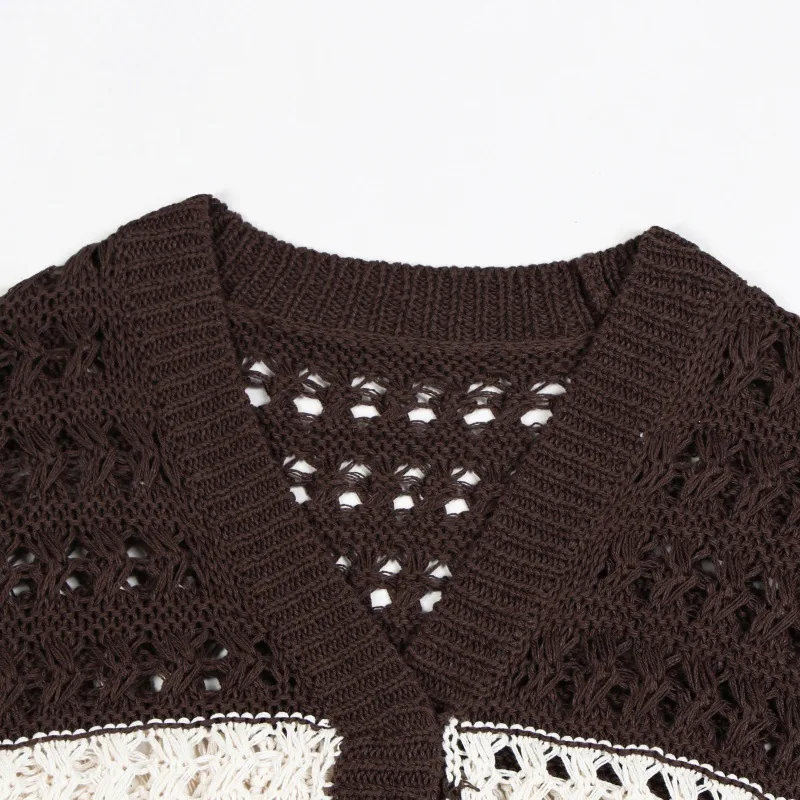
An open-knit body and its front band can look acceptable separately yet ripple where they are joined. For a mesh cardigan, inspect the edge loops, the band and the first visible holes together. The neckline, cuff and hem transitions may each need a different local comparison. The same sample also has to answer three buyer questions. Do the loops snag? What can an airflow claim honestly say? How much shows through over the intended underlayer?
What “mesh” means on a knitting machine
Buyers use the word mesh for several different looks. For example, it can mean a pointelle pattern of small eyelets, a larger openwork lace, a crochet-style net or a drop-stitch ladder. Confirm the actual formation route, since an appearance described as crochet-style does not by itself establish a knitting-machine process.
Use the reference swatch and the supplier’s actual formation route to map hole shape, repeat and any open-to-closed transitions. Include armhole and neckline shaping where the repeat is interrupted.
Define where coverage matters on a mesh cardigan
Name the intended use and the underlayer first. Then choose where openings may be visible and where a denser or supported zone is proposed. A shoulder, button line or pocket attachment needs its actual receiving structure identified. A blanket instruction for all mesh to stay closed there does not help the sample room.
Photograph the sample over its intended layer. A diagnostic contrast view can also help, because a matching color can conceal openings that show clearly against another color. Label that view as a diagnostic so it does not replace the actual use brief.
Check coverage on a sheer mesh cardigan in the actual outfit
Where the design is meant to be see-through, agree the test conditions before the first review. Use the named underlayer, one lighting setup and one wearer or form. Then view the front, side and back at rest and again after a normal movement sequence. Mark any area where more skin or underlayer shows than the brief intended.
A translucent garment is not automatically a failed one, since the acceptance decision belongs to the design and its stated use. However, one styled photograph can miss what happens during movement. A later change of underlayer or color can also reopen the review, so record the material version behind each image. For a different garment shape, the white knit dress opacity guide covers the same coverage question on a dress.
Yarn and gauge for a mesh cardigan
Compare the selected yarn and stitch after the intended finish and rest. Inspect hole boundaries, edge shape and hanging response on identified swatches and garments. Cotton, linen or viscose labels alone do not establish crisp openings or stable dimensions.
Compare proposed gauges with the actual yarn and repeat. Nominal gauge cannot specify the finished aperture, so request a swatch from each represented route and confirm the supplier’s available construction.
The custom sweater gauge guide explains broader gauge, weight and hand decisions.
Lock the settings together
Keep yarn, gauge, stitch settings, knit program and finish with the selected sample. If one of them changes, identify the affected hole and edge relationship and request its relevant comparison before carrying over the earlier result.
Building stable mesh cardigan edges
Inspect which loops the band actually captures. Local attachment tension or a changed edge phase can distort adjacent holes. This can happen even when the band and body looked sound separately, so compare the complete junction on both faces.
A plain transition, rib or doubled band is one construction proposal. Locate its width and joining relationship, then inspect the assembled edge and the functional holes before selecting it. A wider closed zone can steady an edge, but it also reduces the share of visible mesh, so approve that trade on the whole garment.
Mesh cardigan shaping, pockets and buttons
Show where shaping removes part of a repeat. The designer should choose complete or deliberately partial motifs at each boundary and inspect that result on the finished garment.
For buttons or pockets, identify the loops and surrounding fabric that receive the attachment. A closed patch or band is one support proposal. Compare its visible extent and the complete loaded or fastened result instead of claiming it has already been knitted for the order. The cardigan pocket placement guide covers where pocket load sits on the front.
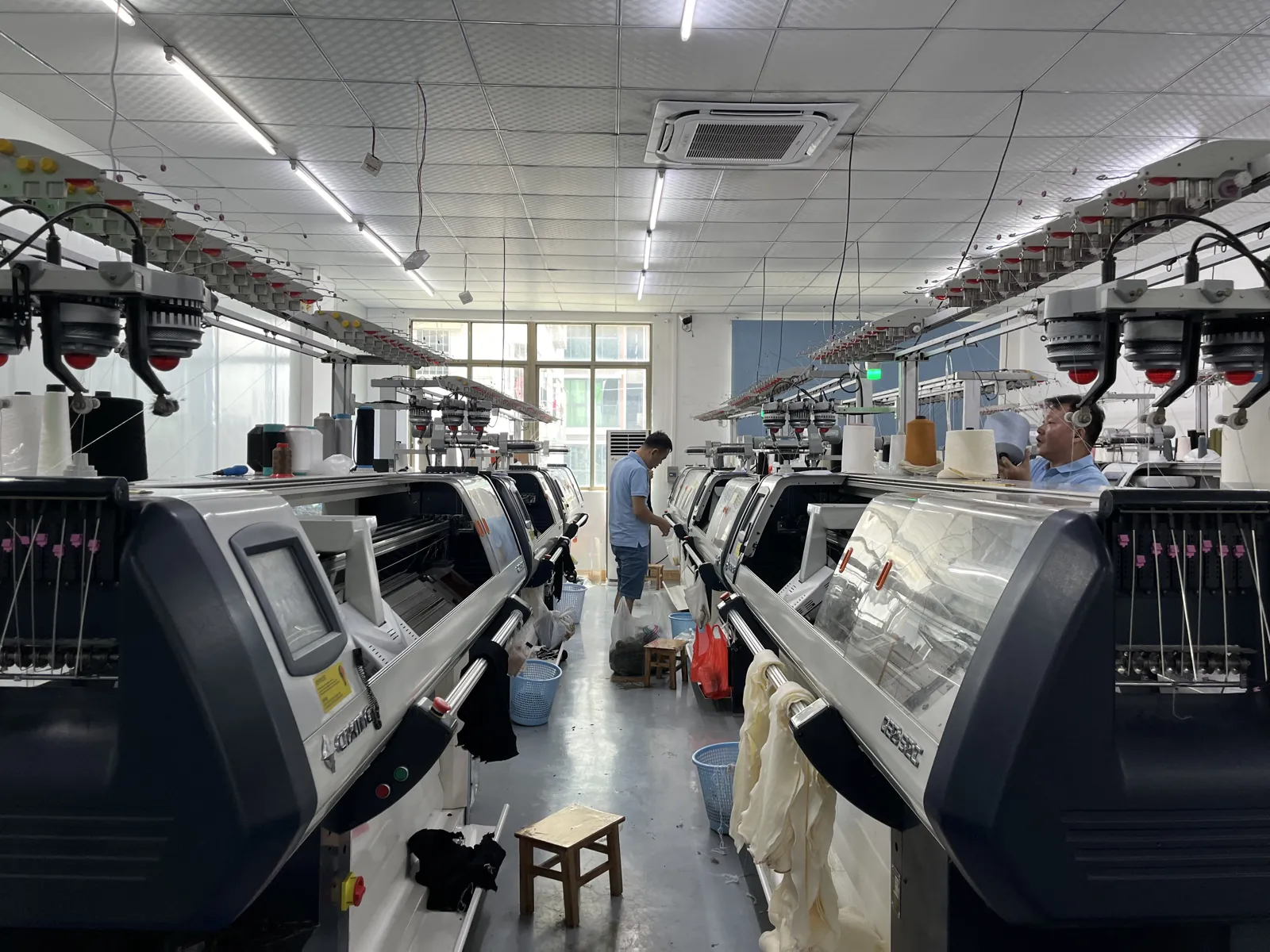
Checking holes and edges on the mesh cardigan sample
Measure the rested sample using marked relaxed points. If an extension comparison is needed, define the action and observation conditions, then inspect the released holes and edges. An arbitrary hand pull is a development observation rather than a standard result.
Compare any residual change with the selected appearance and use criteria. For a hanging question, identify the support and duration, then measure paired front and band lengths before and after the same interval.
Washing the whole garment
Compare the assembled cardigan after its intended washing, drying and rest route. Ask the responsible provider whether AATCC TM150 suits the garment dimensional question. A swatch omits the band and body join, so keep dimensions and local appearance as separate observations.
Which snag checks suit a mesh cardigan?
Exposed loops can catch on a ring, a zipper tooth or a rough surface, so snagging is a fair question for an open knit. The harder question is which test gives an honest answer. Snag-resistance methods are written around particular fabric constructions, and a very open mesh may not behave like the fabric a method assumes.
Confirm the method fits an open knit before asking for a score
ASTM D3939 is a fabric snagging test, but a knitted fabric does not automatically qualify for it. Do not write “passes ASTM D3939” into a brief only because the product is knitted. Ask the testing provider to decide in writing whether the actual specimen suits the method.
If it does not, define a development observation instead, or ask a qualified laboratory for a defensible alternative. State the contact object, the handling state and what counts as a snag. An improvised rub is useful for comparing two sample routes, but it is not a formal standard result and should not be labeled as one.
Keep the snagged and clean references
When a pulled loop appears, keep an unhandled view, a close detail and a whole-garment view. Record where the loop was exposed, which sample revision it was and how it was handled. Then compare it with a sample of the same construction where no fault appeared. This lets the technical team look at yarn, hole spacing, seam proximity or finishing.
If a snag shows up only near the front edge, inspect that junction and its material version before changing the body mesh everywhere. Do not assume a denser mesh resists snagging, either. A photograph also cannot show how often a fault will occur in bulk, so treat it as a lead for the next sample round.
What can an air-permeability result say about a mesh cardigan?
ASTM D737 is a fabric air-permeability test method. An applicable result describes air passing through a defined fabric specimen. It does not, by itself, tell you whether a wearer will feel cooler in the finished cardigan. Fit, layering and the openings at the edges all play a part.
Visual openness is not a measured result either. Two fabrics can look equally open yet differ in structure, yarn and finish. If an airflow claim is part of the product story, define the exact claim first. Then ask the laboratory for a method and specimen that match it. Keep the garment photograph beside any fabric data, and do not let one stand in for the other.
| What you see on the sample | What to check | Buyer decision |
|---|---|---|
| Loop catches near a seam | Mesh, yarn and joining at that spot | Keep close and full views, then trial one change |
| Proposed snag method may not suit the mesh | Whether the actual specimen fits the method | Get a written method decision from the lab |
| More shows through at the side than briefed | Underlayer, fit and hole map | Hold coverage approval until matched views are reviewed |
| Airflow claim wanted | Fabric specimen and construction | Define the claim before choosing any test |
Grading the mesh cardigan pattern
Map how repeat, shaping and closed zones change by size. Adding repeats, adjusting the background or using another program group are proposals to assess. The selected samples must show their intended placement.
Select sizes where an edge phase, repeat, shaping or component changes. Compare the motif at the placket and side seams in those actual groups rather than extending the base result to the whole range. The size grading guide for custom knit sweaters covers the wider method.
Mesh cardigan bulk production and inspection
Ask how the selected repeat and edge route enter the production instructions. Agree inspections of hole shape, captured loops and local junctions in the defined finished state, and do not substitute a stretched or restyled reference.
Open loops can catch on handling surfaces or hardware, so compare the chosen folding and protection after unpacking. The knitwear quality control checklist can inform the order’s inspection scope, and the quality control page gives the general process.
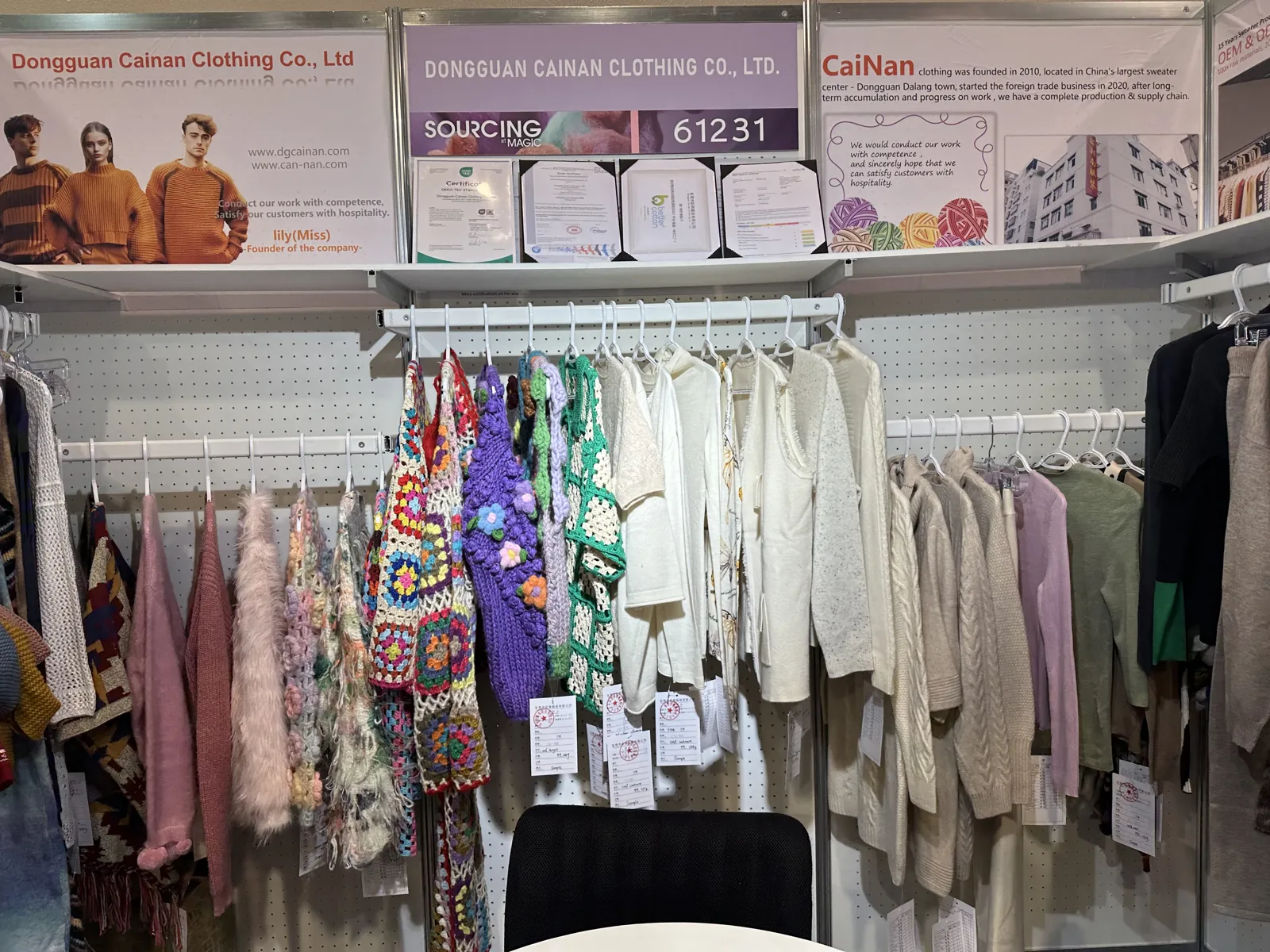
Approve the mesh edge before requesting a quote
Before a mesh cardigan moves to a quote, identify the open-knit repeat, yarn and edge construction on a swatch. Then compare the first assembled sample after care and after hanging, especially where the front band joins the mesh. A different repeat or yarn can change both programming time and snag exposure, so agree the sample rounds before setting an order date.
For planning, MOQ starts from 50 pcs per color per size. Samples usually take 3 to 7 days, and bulk usually runs 15 to 45 days after sample approval. See the MOQ and lead-time page for the general terms, and agree any extra sample rounds for a new mesh construction before setting dates.
Include the repeat map, actual yarn, shaped-edge swatch and any unresolved junction view when you send your mesh design or swatch. For a wider range around this style, see the custom cardigan sweaters page.
FAQs
Is there one right hole size?
Choose the visible opening from the product brief and the actual finished swatch, then inspect it at shaping and attachment. No single size follows from the word mesh.
Should holes be measured relaxed or stretched?
Use marked relaxed dimensions. Add a defined extension and release comparison if relevant, keeping its action and rest state identifiable. Do not combine those values as interchangeable measurements.
Which yarns suit a mesh cardigan?
Compare identified yarn and knit routes against the desired aperture, hand and edge. Fiber type alone does not predict how the complete mesh construction responds.
Can buttons go on the mesh?
Use an attachment and support route demonstrated on the actual mesh. A closed patch or band is one possible approach, but its suitability still needs sample review.
Can an open mesh automatically be tested with ASTM D3939?
No. Whether the method suits a very open knit depends on the actual specimen. Ask a qualified laboratory to confirm it before anyone cites a standard result.
Does a more visible opening prove better airflow?
No. Visual openness and a fabric air-permeability result are different evidence, and neither alone predicts comfort in a layered cardigan.
Can one photo decide coverage approval?
Not reliably. Use a repeatable outfit, wearer, lighting and front, side and back views. A single styled image can miss a change during movement or with another underlayer.