 CN Sweaters
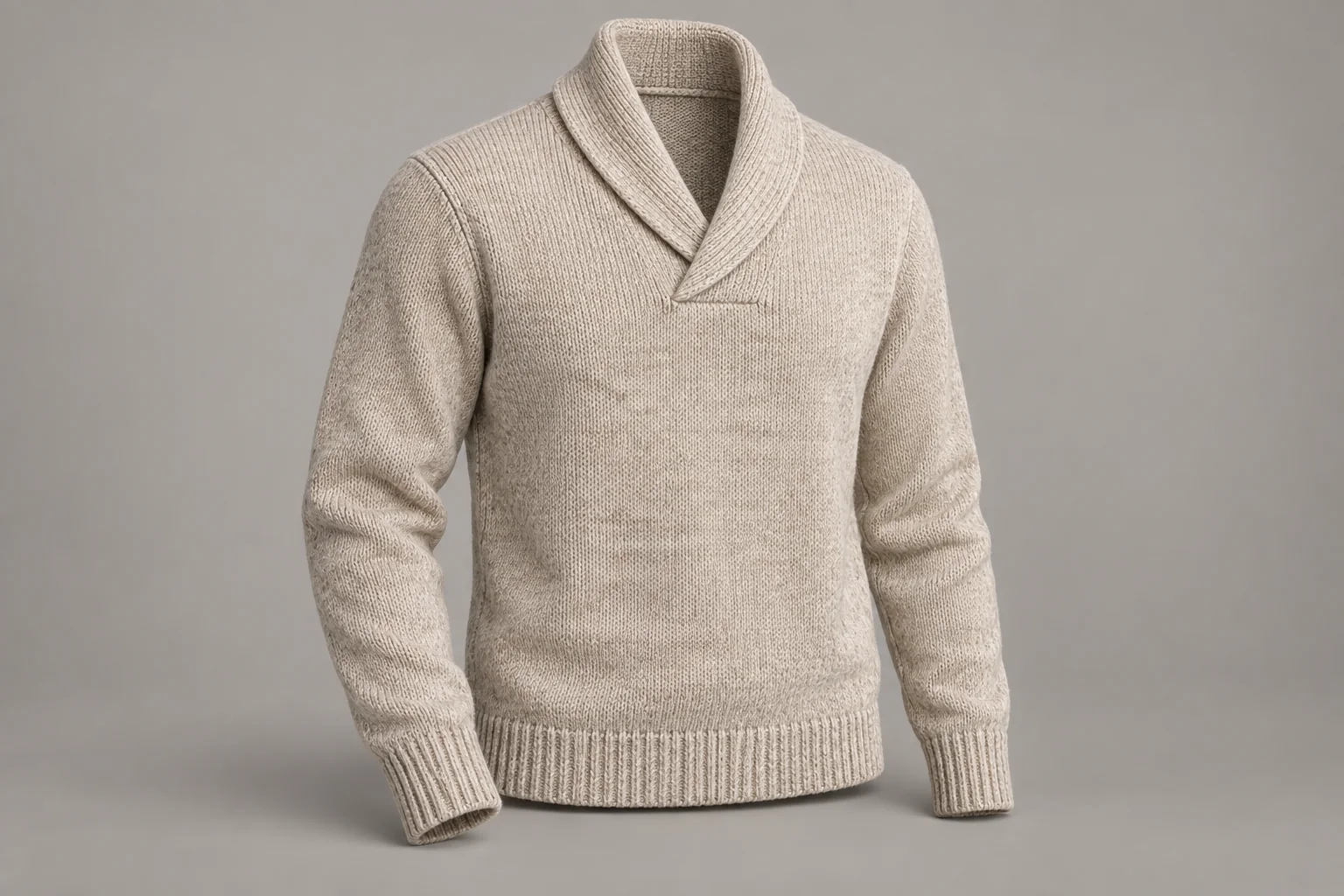
On a shawl collar pullover, the front body does not open to the hem. That leaves the pattern engineer with two linked choices: where a wearer enters and where the collar joins the neck. A sample can hold an attractive roll on a table yet resist dressing or pull the front neck off-centre. The first approval should locate the opening and collar attachment on one drawing, then test them on the same garment.
Which neckline route defines this shawl collar pullover?
Decide how the wearer enters the garment
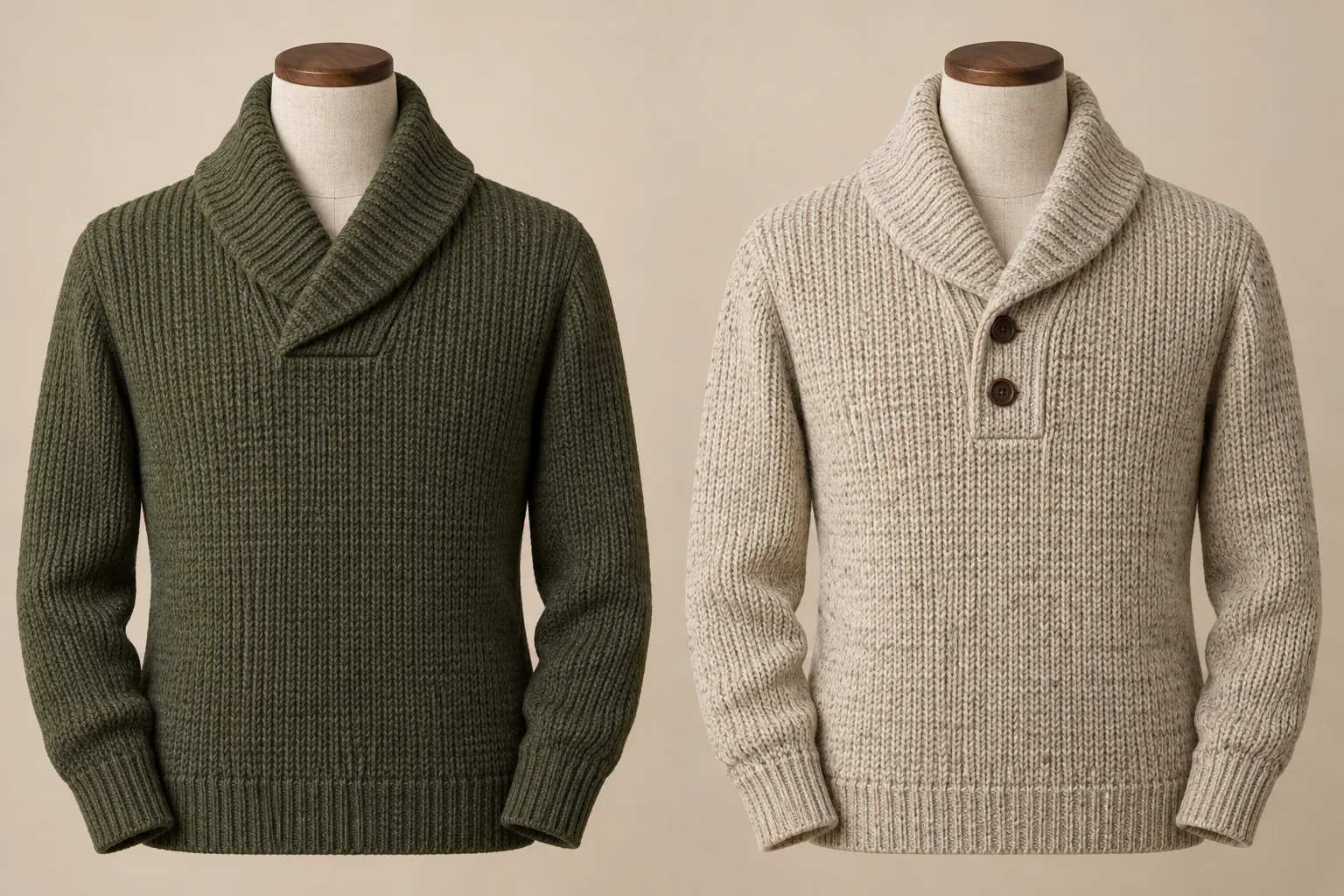
A closed pullover neck, a shallow overlapping V and a functional short placket can all carry a shawl-like turn. They do not ask the same thing of the knitted opening. A closed route relies on enough usable extension for dressing without leaving the neckline loose in wear. An overlapping route creates a visible junction that must remain in its intended order. A placket adds fastening hardware and a new stop point. Choose the route in the product brief before asking a technician to refine the roll.
Draw both the fully relaxed opening and the state needed for dressing. Record the intended wearer group, underlayer and styling position. A bulky shirt collar may change how the shawl sits, while a bare-neck photograph will not reveal that conflict. The pullover development guide covers the broader body and gauge decisions; approve the neck entry and turned collar together. Ask for a sample of the selected route with the actual proposed collar material, not a different yarn used simply to demonstrate a fold.
Separate collar appearance from entry approval
The turned edge may look balanced on a flat garment because nobody has stretched the opening. Dressing can displace the overlap, twist the attachment or leave one side standing higher. Record an unadjusted front and back view immediately after the garment is put on. Give the wearer a normal way to settle the collar, then take a second view. Keep both. A hand-arranged photograph alone cannot establish the shape that the product will hold during ordinary use.
For the route with a functional opening, identify its open and closed states. For a fixed overlap, explain how the wearer enters without calling the overlap a fastening. The bill of components, pattern drawing and fit review must name the actual entry route. The cardigan or pullover comparison helps a buyer choose the collection category. It does not specify this neckline geometry. Name the exact design state in the sample comment so the next revision does not improve the photographed fold while making the opening harder to use.
Locating the opening and collar ends
Mark the body and collar landmarks
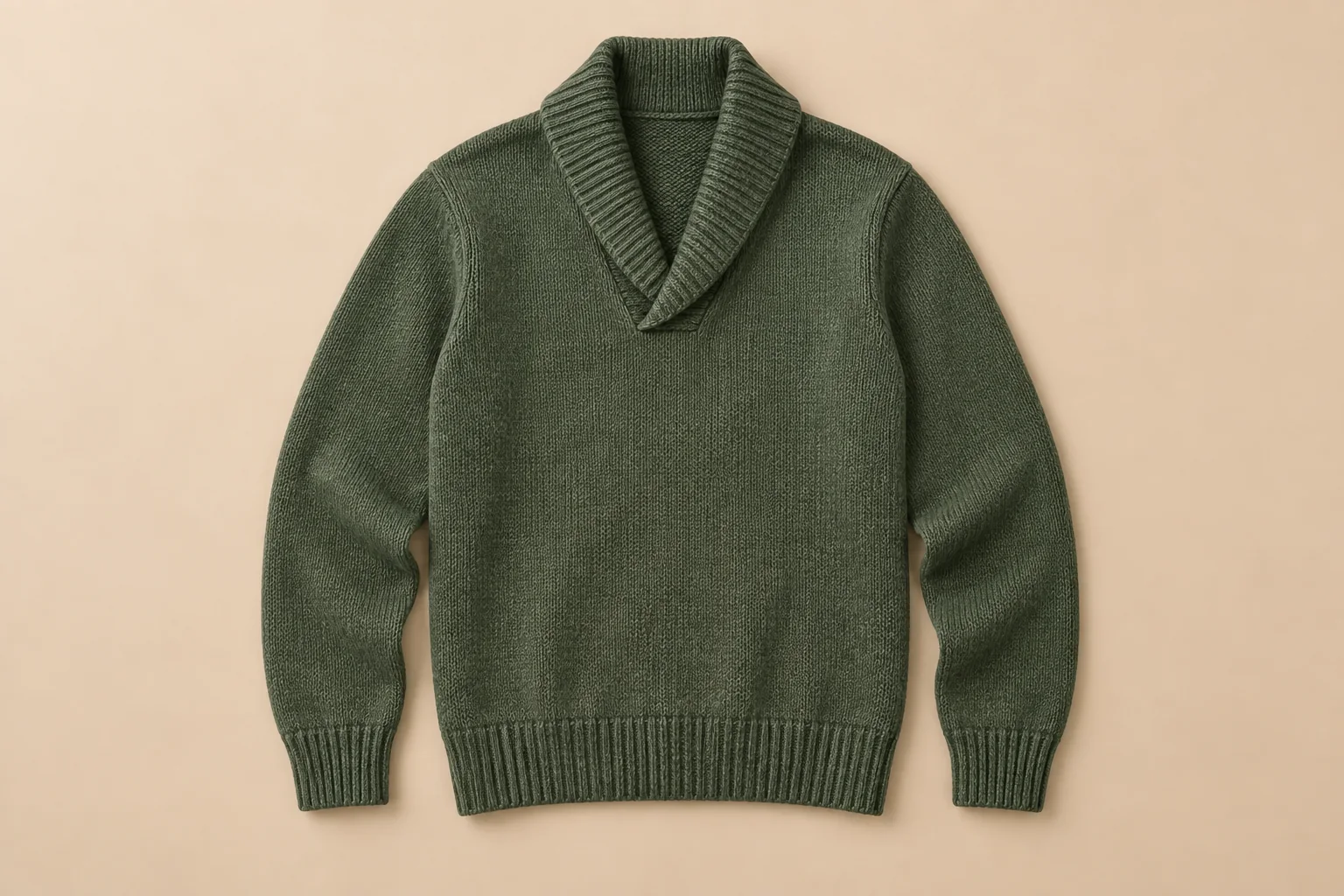
Use a front drawing that shows the neck opening, overlap ends, collar attachment line, front centre and the point where the collar turns. If the design has a short placket, show the length from a stated origin, its band width and where the split stops in the body. If it has a fixed V, show which collar side crosses and which edge remains visible. Avoid a single neck-width number without the shape and finished state. Two openings with the same width can create different dressing and roll behaviour.
ISO 18890 describes garment measurement points and permits parties to agree additional points. It does not prescribe a shawl overlap or a neckline tolerance for this product. Record the chosen origins on the buyer’s drawing and measure the same conditioned garment state each time. The knitwear tech-pack guide explains the wider document handoff. Here the extra drawing is a control for where the collar meets the pullover’s continuous front.
This input table gives the sample room a common reference before comparing collar proposals.
| Neck-entry reference | Record on the brief | Comparison it enables | Decision owner |
|---|---|---|---|
| Wearing route | Fixed neck, overlapping V or working placket | Checks the proposed entry method | Brand confirms the intended route |
| Front landmark | Centre line, split end and overlap direction | Finds left-right displacement | Technical team marks the drawing |
| Collar outline | Attachment path, ends and turn line | Compares the folded shape | Designer approves the visual reference |
| Material state | Yarn, stitch, finish and sample revision | Separates route from material change | Sample room identifies the trial |
| Underlayer | Named shirt, tee or bare neck | Repeats the wearing condition | Buyer fixes the review outfit |
| Dressing action | Sequence and unadjusted view | Finds an entry or recovery conflict | Fit reviewer retains evidence |
Define which edges can move
A cardigan’s two front edges remain free down the body. A shawl collar pullover usually keeps the body closed below its neck opening. The front split therefore ends inside a continuous panel, and that end can become the point where opening forces concentrate. Ask the technician to show the inside as well as the visible face. Identify the edge finish, any local reinforcement, and the relationship between the collar end and split end. Do not prescribe a tape, stitch or facing before comparing the actual trial.
For a fixed overlap, decide whether the outer edge is caught into the body, attached along part of its length, or allowed to lie free. These are construction choices that change both entry and drape. For a working placket, confirm that fasteners can be used without drawing the neckline out of shape. The custom cardigan construction guide discusses full-length bands; its band advice should not be copied mechanically into a short pullover opening. A side-by-side inside view and an unfastened view make the difference visible to a buyer.
What should the attachment trial prove?
Compare collar attachment and turn together
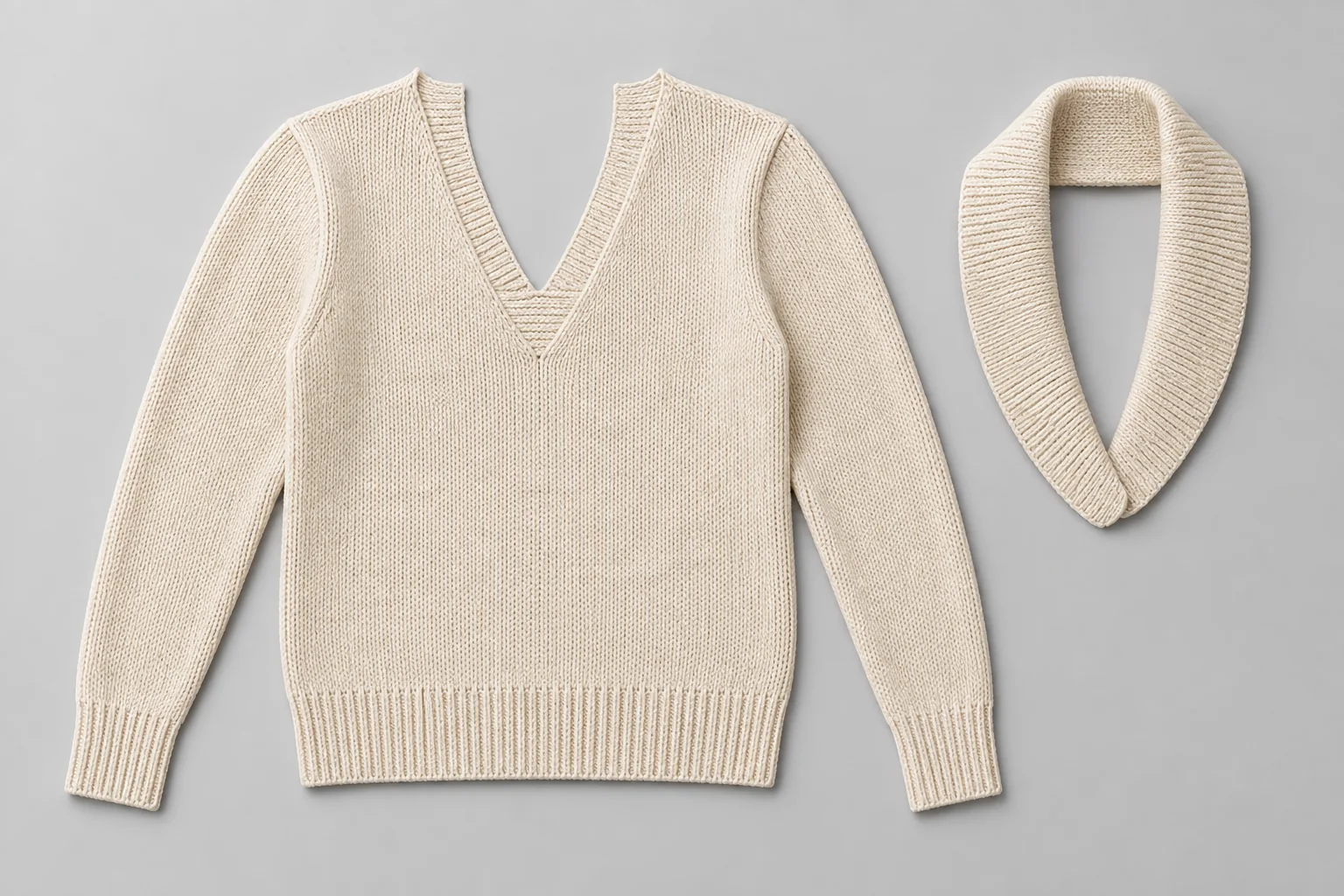
A shawl collar can be formed as an extension of a front edge or as a separately prepared component, depending on the design and production route. Ask for a sample drawing of the chosen assembly, with the attachment path and the face that will be seen when the collar turns. A neat folded edge is insufficient if its lower end bunches at the neck split or if the back neck is pulled out of place. The assembly trial needs a front, back and inside view after normal dressing.
Inspect the point where the collar changes direction
At the front, the collar often changes from an attached neck edge into an overlapping or free front end. Mark the transition on the drawing and on the physical sample. Check whether a seam allowance, rib junction or extra layer is creating a local ridge. Observe whether the ridge remains when the garment is worn; a flat-table image may overstate it or conceal it. If one side behaves differently, compare the left and right construction before asking to change the entire neckline.
Using a cardigan reference without copying its front
Compare only the collar feature that carries over
A buyer may already have an approved shawl collar cardigan. Its colour, yarn and collar outline can provide visual references, but its front structure is different. The cardigan carries two front pieces and a complete opening. The pullover carries a closed body below the neck entry. Compare only the feature under review, such as the visible collar depth or the intended turn position, while recording that the supporting panel has changed. A match in the front photograph does not mean the samples share a valid grading rule.
Keep body fit from masquerading as a collar fix
If the neckline climbs when the wearer raises an arm, the collar alone may not be responsible. Check shoulder position, upper chest, armhole and sleeve relationship before changing the collar depth. The body may move and take the neckline with it. Conversely, if the collar twists while the body stays in place, review the collar attachment and its material response. The size-grading guide offers the general distinction between base fit and graded relationships.
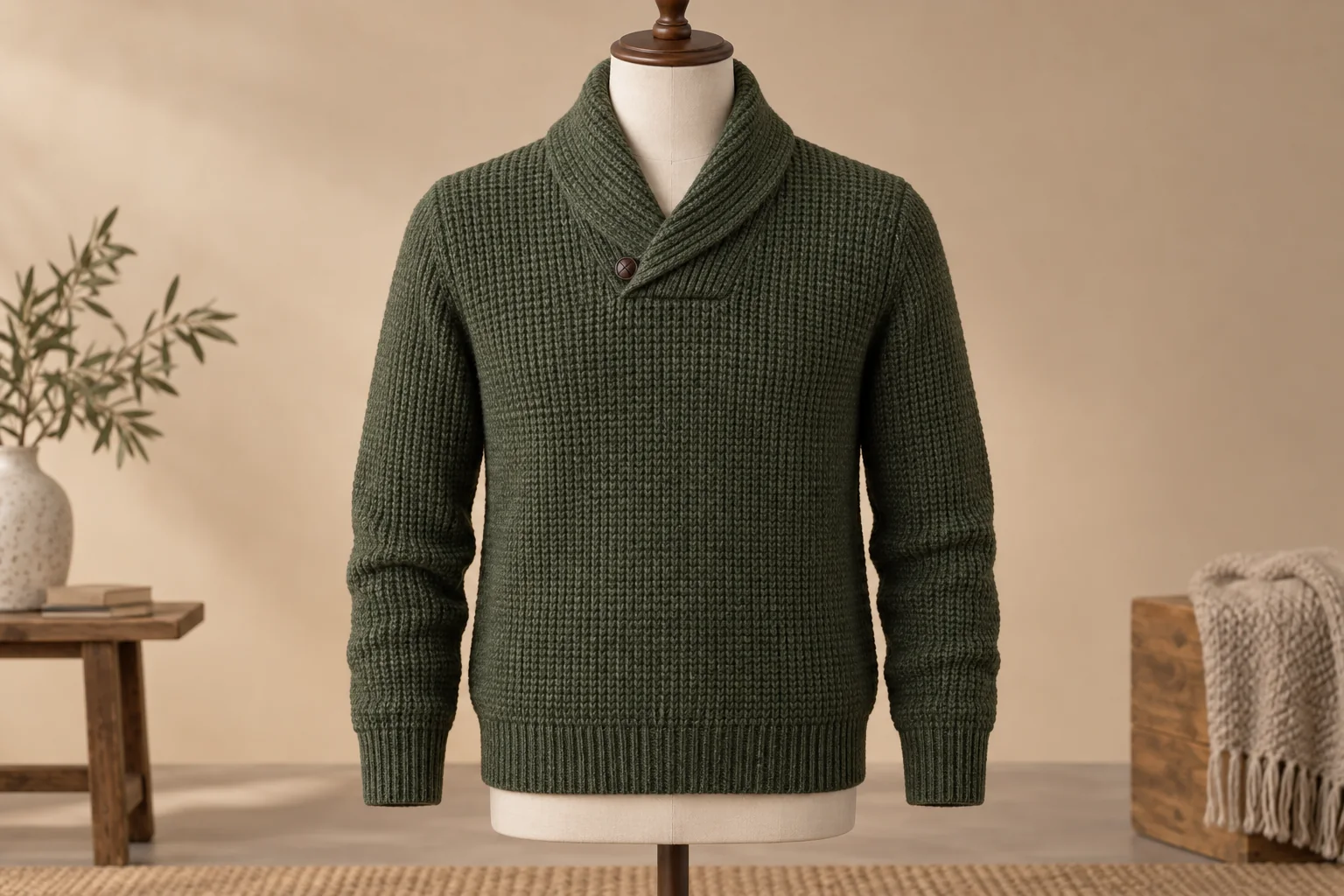
Size and care changes that alter the collar
Check the range at the opening
A base-size pullover can pass dressing and still fail at a size transition. If the neck opening grows by a simple width increment while the collar repeat or overlap remains fixed, the turn may move relative to the front split. The buyer should request lower, base and upper size views, adding a transition size if the collar component, placket length or program changes. The precise sample set follows the offered range and construction; there is no universal number that substitutes for a risk-based size plan.
Mark front-neck width, overlap or split depth, collar end position and back-neck relationship with common origins. ISO 18890 helps describe the measurement basis; the target values and allowable differences still belong to the approved product specification. If one size needs a different assembly route, document the exception instead of hiding it in a single grade table. The measurement-tolerance guide gives the wider procedure for agreeing tolerances, not a ready-made shawl collar limit.
Revisit the collar after the declared care route
A neckline judged only before care may settle differently once the body, edge and collar have been washed and dried by the intended route. Record the exact material and sample revision, the stated care condition and the garment’s resting state before comparing views. AATCC TM150 addresses garment length and width change after home laundering for applicable garments, while warning that certain stretch fabrics may be outside its scope. Its public summary does not turn a photograph of a collar into a completed standard test.
For a visually moved roll line, compare the measured neck opening and collar relationship before and after care, then identify which element changed. If the fabric is too flexible for the chosen measurement or test method, agree another comparison and state its limitation. Keep the appearance review alongside any dimensions. The two can disagree: a stable width may accompany a changed overlap, and an altered width may leave the desired visual roll intact. Retain both observations for the next sample rather than reducing them to a single pass label.
Choosing the next neckline trial
Translate a fault into a bounded next trial
The next trial should answer one named question. A collar end that sits unevenly with the body stable asks for an attachment or end-shape comparison. A neckline that shifts only during dressing asks for an entry-route review. A split end that puckers calls for an inside construction view. The buyer does not need to choose the factory’s exact stitch solution in the first comment; the comment should identify the observed state, the affected relationship and the evidence required from a proposed correction.
This decision table ties sample observations to the next accountable comparison.
| Collar-roll finding | Relationship to investigate | Buyer decision | Closing record |
|---|---|---|---|
| Opening strains during dressing | Entry width or functional placket | Hold the entry route | Dressed and undressed views of revised sample |
| One collar end sits higher | End geometry or attachment path | Request a paired component review | Left-right marked assembly views |
| Split end forms a ridge | Layer stack or local finish | Trial a defined junction change | Inside and worn views of both versions |
| Neckline moves with arm raise | Shoulder, armhole and upper body | Review the body before a collar-only edit | Movement sequence with body landmarks |
| Roll changes after care | Material or edge-to-collar response | Reopen the affected approval | Identified pre/post-care garment records |
| Only one size loses overlap | Grade or component transition | Hold that size group | Size-specific drawing and physical sample |
Retain the marked collar drawing, dressed views and intended underlayer. Identify which sizes and care states were checked. A later change to the yarn, entry route or collar assembly needs another comparison of the affected relationship.
Frequently Asked Questions
Can a cardigan shawl collar pattern be used unchanged?
Use it as a visual or component reference only. The pullover’s front below the neck remains continuous, so the split, entry route and attachment ends require their own drawing and trial.
Is a wider neck always easier to approve?
A wider relaxed opening may improve dressing but move the visible overlap or let the neckline sit loose. Approve entry and worn position together on the intended wearer.
Should a short placket be treated as a full cardigan opening?
No. Mark its stop point and test its functional open state. The pullover’s body remains joined below that point, and construction stresses can collect at the junction.
Does a passing garment dimension approve the collar roll?
No. Keep the measured opening and the worn front, back and inside views. A dimensional result does not by itself show where a turned collar rests on the body.
When should a new yarn reopen approval?
Recheck the collar-to-neck relationship when the material proposal changes. Label the new sample and compare the same entry, wear and care states instead of transferring a prior result.
A construction release needs the entry depth, collar join, overlap direction and dressed roll view together. If the garment still resists dressing, specify the component to trial instead of changing the whole front. The CNSweaters construction enquiry can carry that marked drawing and the one unanswered entry question to the sample room.