 CN Sweaters
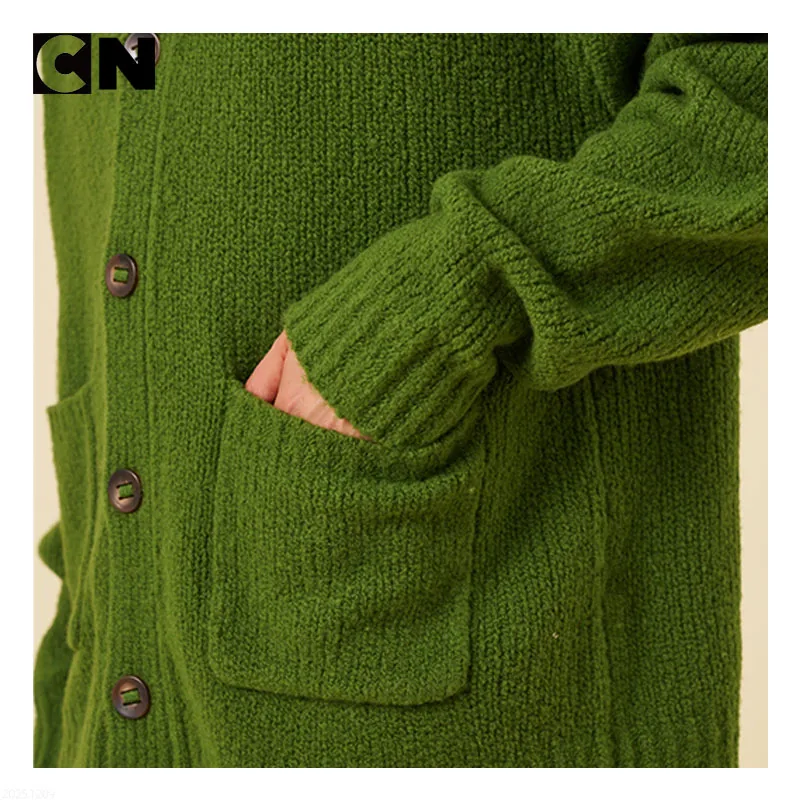
Customers put their hands, phones and keys into cardigan pockets, so the pocket opening, attachment and front panel need a defined use condition. A pocket that sits too low looks sloppy. A pocket that sits too high feels awkward to reach. And a pocket that stretches under load pulls the whole front out of shape.
Specify cardigan pockets by construction, opening position, intended contents and attachment. Compare those choices on the worn garment before approving the pocket and front panel together.
Choosing the right type of cardigan pockets
Each pocket style behaves differently on a knitted front. Therefore the first decision concerns construction, not position.
- Patch pockets: knitted separately and linked or hand-sewn onto the front. They suit chunky and mid-gauge cardigans and show off stitch detail.
- Knitted-in (integral) pockets: the pocket bag forms during knitting, so no seam shows. They need careful programming, but they sit very flat.
- Welt or slit pockets: an opening with a rib welt and a hidden bag behind it. They give a cleaner, more tailored face.
- Side-seam pockets: hidden in the side seam. They work on long, relaxed cardigans; however, they can gape on slim fits.
A patch pocket and a welt give different front-panel lines and different support demands. Compare the actual yarn, gauge, garment length and intended use before choosing one. The factory’s published 3–7-day sampling window describes standard samples; ask for a separate date for a pocket-construction comparison.
Where to place cardigan pockets
Start from the hand, not the hem
Many tech packs position the pocket as a distance up from the hem. Review that reference when body length changes; a hem-based distance alone may not preserve the intended reach. Instead, we prefer to measure the pocket opening from the high point shoulder (HPS) down. Because the arm hangs from the shoulder, this keeps the opening near the natural reach of the hand.
Next, we fix the horizontal position from the center front edge. On a button cardigan, the pocket should clear the button band with room for the fingers. In practice, we check that the opening does not start inside the band overlap.
Balance with the rest of the front
Pocket size should match the scale of the garment. For instance, a cropped cardigan needs a smaller, higher pocket than a long coatigan. Compare pocket width with the front-panel drawing and the intended worn silhouette. So we sketch the pocket outline on a flat of the front panel before knitting, which helps the buyer see proportion early.
Why cardigan pockets sag and how we prevent it
Load pulls on a soft fabric
Knitted fabric stretches under weight. A phone in a patch pocket can drag the front down and make the hem uneven. As a result, the button band may twist and the cardigan hangs longer on one side.
Practical fixes for sagging cardigan pockets
We use several methods, often in combination:
- A firmer stitch or tighter tension on the pocket bag than on the body.
- A rib or tubular top edge on the pocket opening, which holds its width better than a plain edge.
- Linking or sewing the pocket along a straight wale, so the join does not twist.
- A light tape at the top corners of a patch pocket, where the stress concentrates.
For a pocket-load trial, agree a representative object, loading time and hanging or wearing state before sampling. Compare the left and right front lengths before and after that trial. A changed front calls for inspection of the pocket, attachment and supporting body; it does not by itself identify which part caused the change.
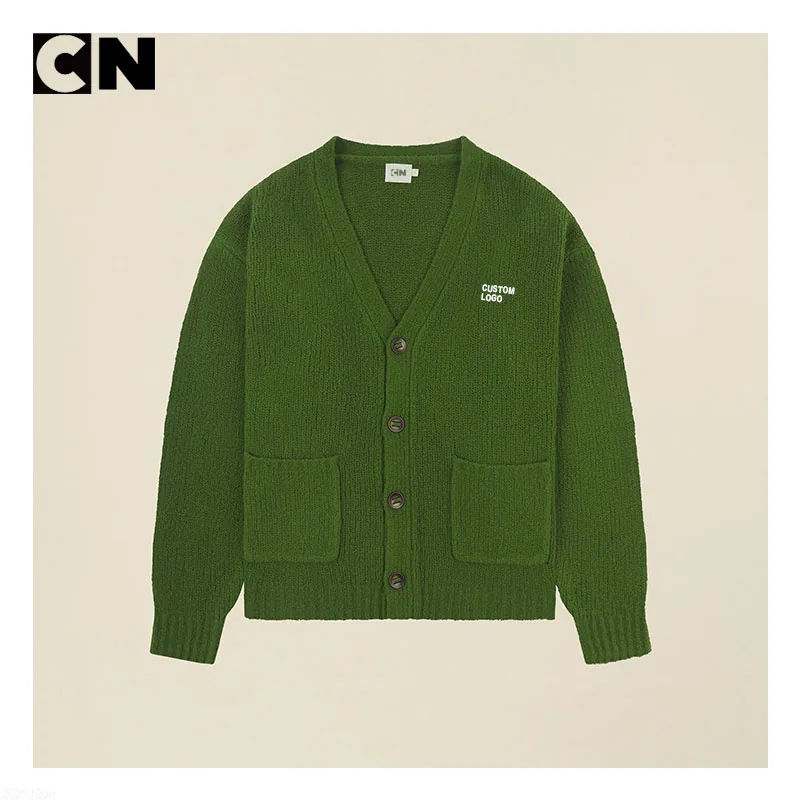
Finishing the edges of cardigan pockets
Pocket finishing shows at eye level, so buyers notice it quickly. First, the linking line around a patch pocket must follow the same wale on both sides; otherwise the two pockets look different. Next, the corners need a small reinforcement stitch so they do not open after wear.
Heavy steam can flatten a textured pocket until it no longer matches the body. Specify the finishing condition used in the trial and compare the pocket after rest, not only on the pressing table. The linking-quality guide covers the joining decision.
If the care label permits washing, compare pocket level and attachment before and after the chosen wash, drying and rest route. A lab can advise whether AATCC TM150 is applicable for garment dimensions; the pocket-position observation remains a separate approval.
Grading cardigan pockets across sizes
Pocket position should grade with the body, but pocket size usually grows less. When a grade rule scales pocket width with the chest, the XL pocket often looks oversized. In contrast, a pocket that never grows can look tiny on a large front.
Define pocket position and pocket size as separate grade decisions, referenced to body length and front width. Check the represented sizes for reach and front balance before bulk. For more on grading logic, see our guide to grading sizes for custom knit sweaters.
Cardigan pockets from approved sample to bulk
Once a buyer accepts a pocket construction, place its type, high-point-shoulder location, opening width, edge and reinforcement on the production card. Define how pocket height and symmetry will be sampled across lots in the inspection plan. The quality-control overview describes general checkpoints, not a completed check for this pocket design.
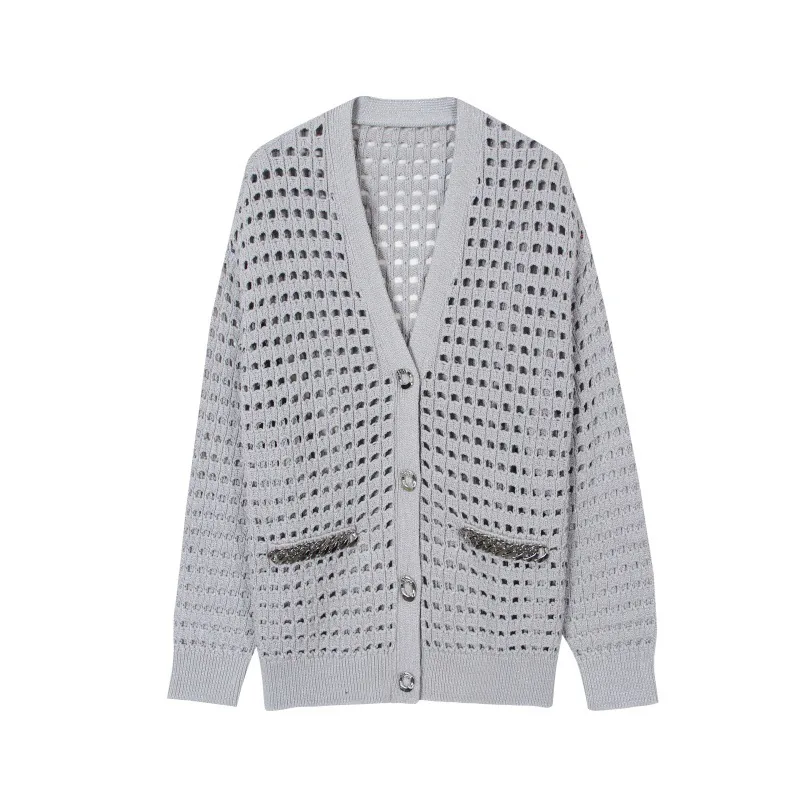
If pockets are part of a new cardigan, identify what they will hold, their opening width and the intended placement on the worn sample. Ask to see the front both empty and loaded with a representative object, then check whether the hem or side seam moves. The custom cardigan sweaters page shows the wider style range; request a pocket-construction sample before treating a standard cardigan schedule as this style’s schedule.
Conclusion
Keep the cardigan pockets’ accepted placement drawing, loading condition and post-care views with the sample revision. A later change to pocket size or attachment needs a comparison of the affected front before release.
FAQ
What is the best pocket type for a chunky cardigan?
Patch pockets usually suit chunky knits best. They show the stitch texture and stay easy to reinforce.
How high should cardigan pockets sit?
We place the opening near the natural reach of the hand, measured from the high point shoulder. The exact figure depends on the fit and body length.
Can pockets stop a cardigan from sagging?
Pockets cause sag more often than they prevent it. However, a firm pocket bag and a reinforced opening keep the front stable.
Do pockets change the price?
Yes, a little. Knitted-in and welt pockets take more programming and finishing time than a plain front.
Planning a cardigan with pockets? Contact our team with your sketch and we will suggest a pocket construction.