 CN Sweaters
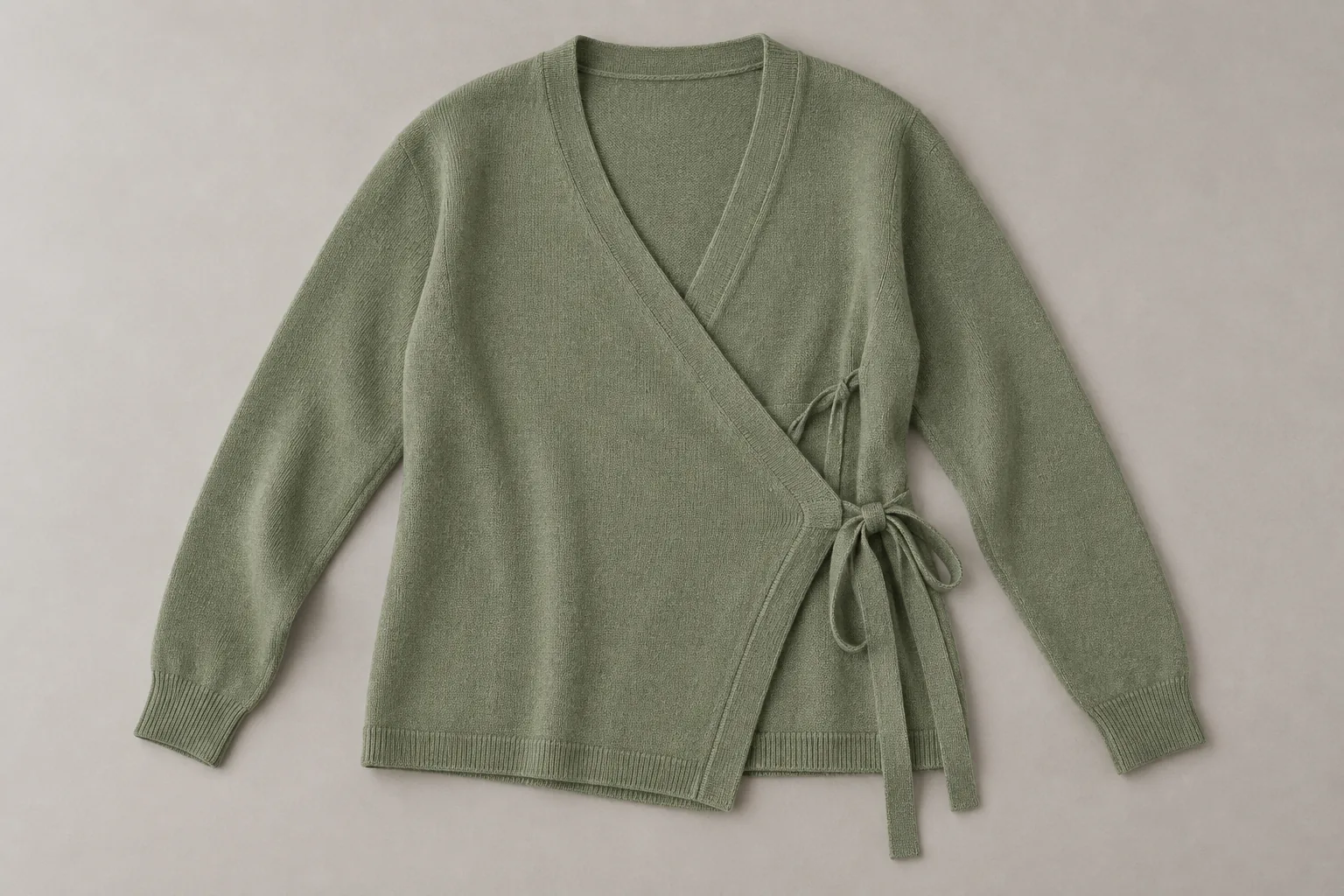
A wrap cardigan can cover the bust at rest yet open at the lower front when the wearer sits. Locate the changed overlap, neckline and tie route on the same sample. The next trial needs to preserve the chosen coverage without relying on a bow or manually arranged front to hide the gap.
How a wrap cardigan closure works
One front crosses the other and the tie or inner anchor retains that relationship. Its pull direction, attachment and panel shape participate in the closure, so front length alone cannot describe it.
Mark the neckline’s diagonal line, panel coverage and selected tie height. A change to one can alter the worn relationship of the others; compare the complete tied front before selecting it.
Define how the garment will be worn
Name the intended tied and open states, any inner tie, snap or button, and the actual underlayer. Those choices determine which closure comparisons the sample must support.
If open wear is intended, inspect the fronts untied. Review the actual selected tying arrangement separately, retaining its unadjusted view.
Planning wrap cardigan overlap and tie position
Mark required overlap at upper chest, bust, waist and lower front, adding other relevant levels where needed. Show neckline position, tie height and the attachment points on that closure drawing.
A large bow can conceal the overlap beneath it. Check the marked coverage in the tied garment before judging the knot shape or bow size.
Where to anchor the tie
Identify the inner and outer ties actually proposed. Show any side passage and how the tie travels through it. Compare the under-front and side seam when tied; a changed exit point can alter those relationships.
Compare the proposed tie structures, including any tubular, doubled or ribbed option. Inspect width, curling and hand in the selected yarn, with the tie’s stitch settings identified separately from the body.
Wrap cardigan front panels and neckline shape
Ask the technician to show how the diagonal or curved front is formed and finished. A fully-fashioned or other proposed route needs its actual edge and band trial; the method name alone cannot establish a clean or flat result.
Compare the diagonal edge and proposed band in the actual construction. Record any length difference and ease used during linking. Verify the proposed band-to-body relationship on the fitted and cared-for sample; a set amount of ease does not guarantee a flat neckline.
Yarn, gauge and weight for a wrap cardigan
Compare identified yarn and knit proposals on the target body, checking overlap and neckline after rest and movement. Choose the route from that result rather than a gauge range or nominal yarn weight alone.
Checking the wrap cardigan sample on the body
Use flat paired front lengths and band widths alongside tied form views of the closure map. Review standing, sitting and the relevant arm movements on the intended wearer arrangement where those use questions are required.
Tie the garment as intended and retain the view before rearranging it. If coverage meets the target only after handling, locate the fit, tie-route or edge question for the next trial.
Common wrap cardigan faults
- Neckline gaping while tied calls for comparison of the edge, pull direction and tie position.
- Front separation while sitting needs the overlap and lower-body room reviewed together.
- A twisted hem needs paired lengths, body balance and the tie passage examined.
- A rolled tie needs its actual structure, length and tying behavior compared before another route is chosen.
- A low under-front needs the inner anchor, panel geometry and wearing state located.
These observations identify comparisons rather than prove a knitting or pattern cause. If pressing restores the appearance, record the intervention and inspect the garment after its intended care and rest before carrying that result forward.
Wrap cardigan tie retention: the knot or the anchor?
A bow that looks neat in a photo can still loosen once the wearer moves. Before changing the tie, find out whether the knot is opening or whether something else is pulling on it. Each answer points to a different fix, and changing the tie first can hide the real cause.
Name the knot before judging retention
Write down the arrangement the wearer is expected to make: a single bow, a double knot or another tie, the direction of tying and how the tails should look. Keep that note with the tie width, structure, length and attachment in the tech pack.
Start every comparison from the same arrangement. Different tail lengths or repeated tightening can make two ties seem to hold differently when the real difference is in the tying. If the sample was re-tied during review, say so in the comment instead of presenting the final photo as untouched.
Watch which landmark moves first
Tie the sample as intended and note where the knot, both tails, the tie anchors and the front edge sit. Then have the wearer sit, reach and walk without re-tying, and photograph the same points again. What moves first tells you where to look:
- The knot opens while the anchors and front stay put: the tying arrangement or the tie itself is the question, so try another named knot or tie structure, one change at a time.
- The knot stays tied but a tail or anchor shifts with the front: the front is moving, so check the attachment, the diagonal pull and the body fit before making the tie thicker or longer.
- The tie rolls into a narrow cord before tying: look at the tie structure, edges and finishing, then compare the untied tie after the same rest.
- The result depends on repeated tightening: the tie may leave too little length to tie easily, or the instruction may be unclear, so keep untouched and re-tied photos separate and revise the instruction or the tie length.
A flat tie swatch can screen structure and hand, but only the garment shows the whole tying job. Body fit, diagonal pull and attachment position all take part, so change one per round where you can. If several change at once, you are choosing between whole garments rather than isolating the knot.
If care is part of approval, tie the same garment before and after the declared care route and compare the untied tie and the named knot in the same rested state. A substitute tie material or a different knot counts as a change to review, even when the bow looks familiar.
Grading a wrap cardigan across sizes
Check the closure map when grading the wrap cardigan, and keep it with the rest of the size grading rules. If the pattern scales in simple proportion to chest width, the overlap can shrink on small sizes and grow too wide on large ones. Similarly, the tie position must follow the waist, which does not move in step with the chest.
Set separate grade rules for overlap, tie height and tie length. Compare the actual tying allowance and knot in the represented sizes instead of scaling every point with chest width.
Before bulk, plan physical checks at lower, base and upper sizes and at any construction transition. The brand can then see whether overlap, tie height and tie length preserve the chosen closure map across the range.
Wrap cardigan washing, stretch and bulk inspection
A wrap relies on its band and tie retaining the intended relationship after care. If that result matters to approval, compare an identified garment before and after the declared care route. An applicable fabric stretch method such as ASTM D2594 answers a material question, not a worn-wrap fit result.
Ask how the selected tie route and paired front dimensions enter the production instructions. Agree inspection points for tie length, passage position and front lengths. The OEM/ODM process describes the broader handoff, and the quality control page shows where inspection fits.
Packing ties and retail presentation
Compare the selected fold or loosely tied packing arrangement after unpacking. Check tie tangling, creasing and the front presentation with the actual specimen, then retain the chosen packing reference.
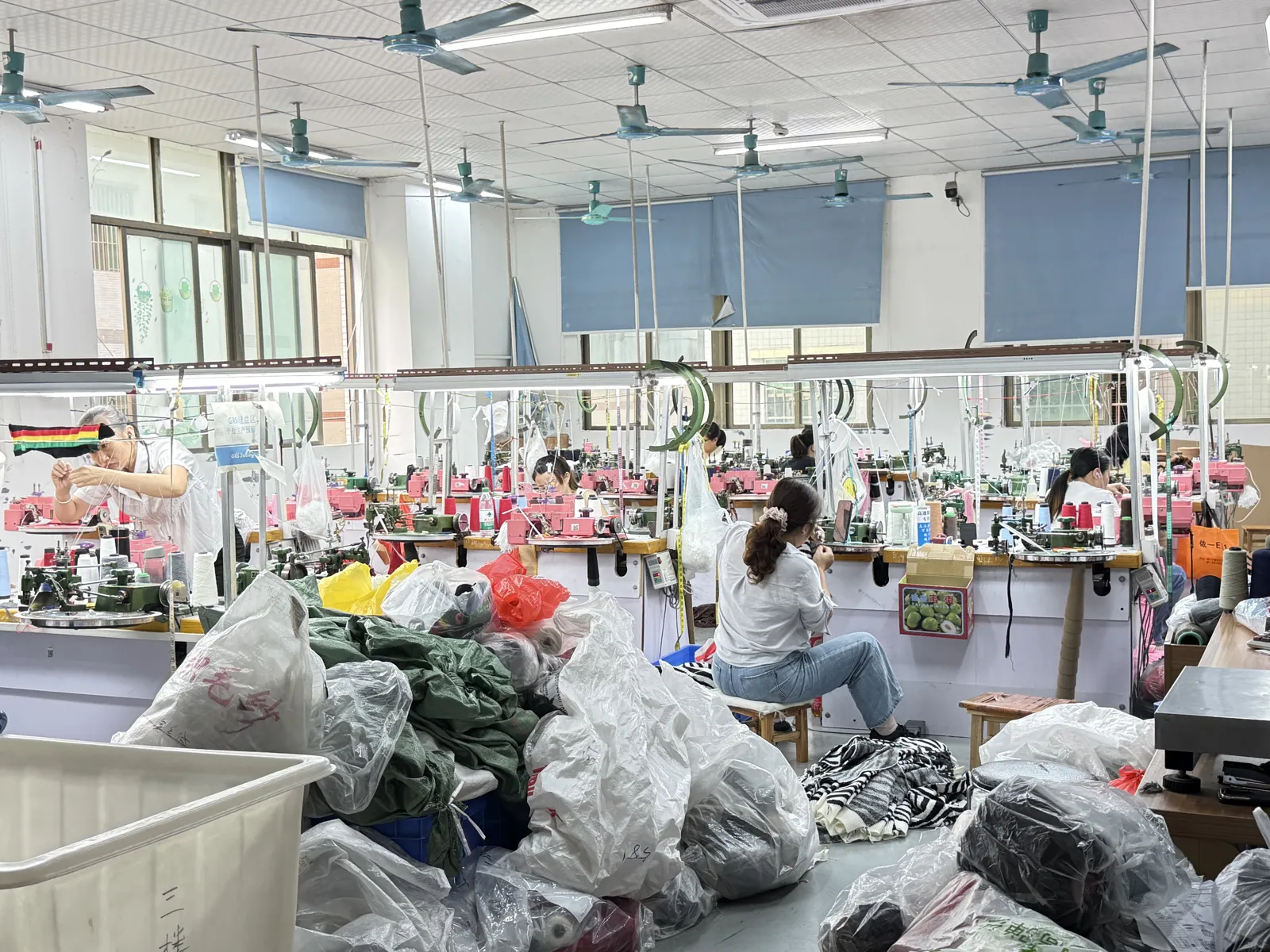
Tie and overlap inputs for a wrap cardigan quote
A wrap-cardigan quote needs more than a body measurement. Send the intended overlap at the waist, the tie exit point, tie length and the closed fit over the planned underlayer. If the tie is attached to a growing front edge, ask to review that edge after the declared care route and after wear on the size set. Confirm yarn, trim and how many comparison samples are needed before settling a delivery date for this construction; the MOQ and lead time page lists the standard order terms.
Include the closure drawing, tied movement views and underlayer reference when you send your sketch. The cardigan range shows the other cardigan styles.
FAQs
Can one tie length work for every size?
A shared length is a proposal to check against the target circumference and selected tying allowance. Give tie length its own size rule and compare component groups where that relationship changes.
Can overlap be approved on a flat table?
A flat view locates lengths and widths. The body and tie determine worn overlap, so review the intended sitting and movement states as well.
Should a wrap cardigan also look good when worn open?
Include that state when the brief promises it. The untied front needs its own hanging reference rather than approval from the tied photograph.
Should a wrap cardigan have an inner tie or snap?
Compare the proposed inner tie or snap with the actual under-front. It can change retention, inside contact and fastening, so show its position and complete wearing route before selecting it.
Does a loose bow mean the tie needs to change?
Not necessarily. If the knot opens while the anchors stay in place, the tie or the tying arrangement is the likely cause. If an anchor moves with the front, the knot is reacting to that movement, and a thicker tie or longer tails will not fix it.
What should a sample comment say about tie retention?
Name the conflict that was actually seen: the knot opened while the anchor stayed, the anchor shifted with the front, or the untied tie changed shape. That gives the next trial one clear task without reopening the whole wrap pattern.