 CN Sweaters
For most brands entering development, custom sweater gauge is the first technical decision that gets underestimated. It looks like a machine spec — a number printed on a factory sheet — but it directly determines hand-feel, fabric weight, cost, and which yarns are even compatible with your design.
The short answer: 12G is the most accessible starting point for mid-weight knitwear; 14G gives you a cleaner, lighter result with more design flexibility; 18G is reserved for genuinely fine, premium product where machine access and unit cost are both real factors you need to plan around.
If you’re developing custom knitwear for your brand and haven’t locked in a gauge yet, this article walks through each option from a factory perspective — where each gauge works, where it struggles, and what actually changes in your MOQ, lead time, and cost when you move up the range.
What Custom Sweater Gauge Means in Production
Needles, Density, and Fabric Character
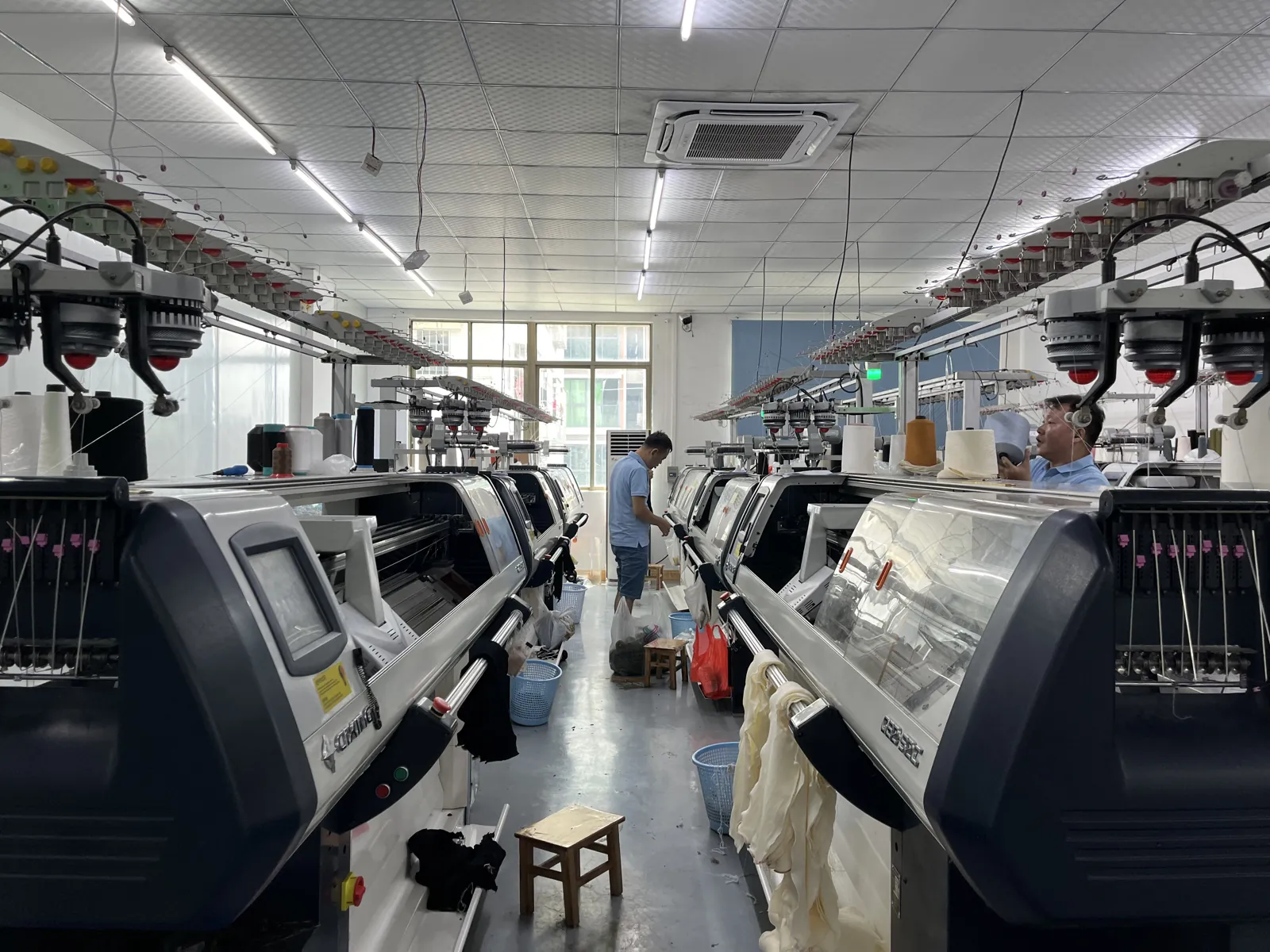
Custom sweater gauge — written as “G” in factory communication — refers to the number of needles per inch on a flat knitting machine. A 12G machine has 12 needles per inch; an 18G machine fits 18 into the same space. More needles mean finer yarn must be used, and the resulting fabric is thinner, denser, and lighter in hand.
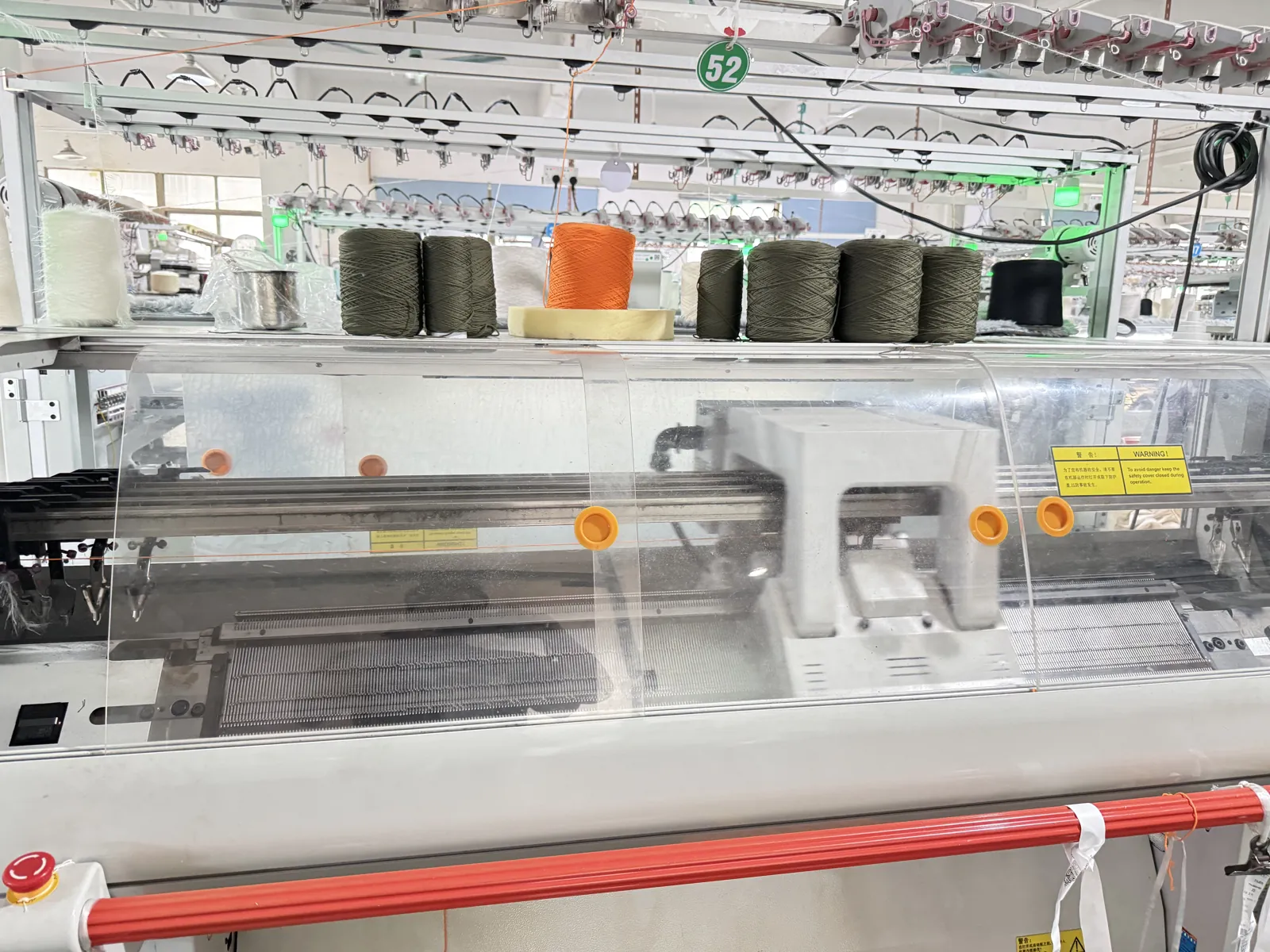
The standard industry classification breaks this into three tiers: low gauge (roughly 1.5G–5G) handles thick, chunky yarns; middle gauge (7G–12G) suits medium-weight constructions; high gauge (14G–18G) is for thin yarns and fine, lightweight fabric. As Maruyasu’s knitwear reference guide explains, gauge categories directly determine which thread thickness range is physically compatible with each machine — it’s not a matter of preference, it’s mechanics.
In practice, this means you can’t knit a chunky cable on an 18G machine, and forcing fine yarn onto a 5G machine produces an unstable, shapeless fabric. Gauge and yarn count have to be aligned before development begins — and that alignment needs to happen at the briefing stage, not after the first sample comes back wrong.
Why Custom Sweater Gauge Is a Production Decision, Not Just Style
It’s tempting to frame gauge selection as an aesthetic call — “do I want chunky or fine?” — but the production implications go further than appearance.
Custom sweater gauge determines which machines your order can run on, which directly limits your supplier options. It affects knitting speed and therefore labor cost per piece. It controls the level of stitch detail achievable in jacquards and textured patterns. And it sets the floor for which yarn counts are technically viable for your design.
Getting gauge wrong at the briefing stage forces a restart at sampling: a second proto cycle, additional development cost, and typically several weeks of delay. This is why gauge alignment is the first conversation worth having with any OEM knitwear manufacturing partner — before yarn is sourced, before patterns are drawn, and before anyone quotes you a production price.
12G as a Custom Sweater Gauge for Mid-Weight Styles
12G is the most common custom sweater gauge for mid-weight sweaters, and for straightforward reasons. It’s widely available across Chinese knitwear factories, works with a broad range of yarn types, and produces fabric that most markets immediately recognize as standard sweater weight. There’s no complexity premium, and no machine availability risk.
Fabric Feel, Yarn Compatibility, and Best Applications
At 12G, the fabric has a clearly defined stitch structure, a visible texture, and a hand-feel that reads as solid and substantial. It’s not chunky, but it’s not trying to be refined or delicate either. The drape tends toward the stiffer end, which works well for pieces that need to hold their shape — boxy crewnecks, structured pullovers, relaxed button-up cardigans.
Yarn-wise, 12G is compatible with a wide range: approximately Nm 2/24 through 2/48. This covers most wool and wool-blend yarns, cotton, acrylic blends, and mixed-fiber constructions. A 2/30Nm merino at 12G gives you a solid autumn-weight sweater; a heavier wool-nylon blend at the same gauge reads closer to workwear territory. The flexibility is real, and it’s one reason 12G remains the dominant gauge for mid-market pullover sweater development.
If your collection is positioned in the mid-market and you need consistent production across multiple colorways and size runs, 12G is your lowest-friction starting point. It handles cables, textured ribs, and straightforward jacquards without requiring specialist machines or tight yarn specifications.
What to Expect in Production and Cost
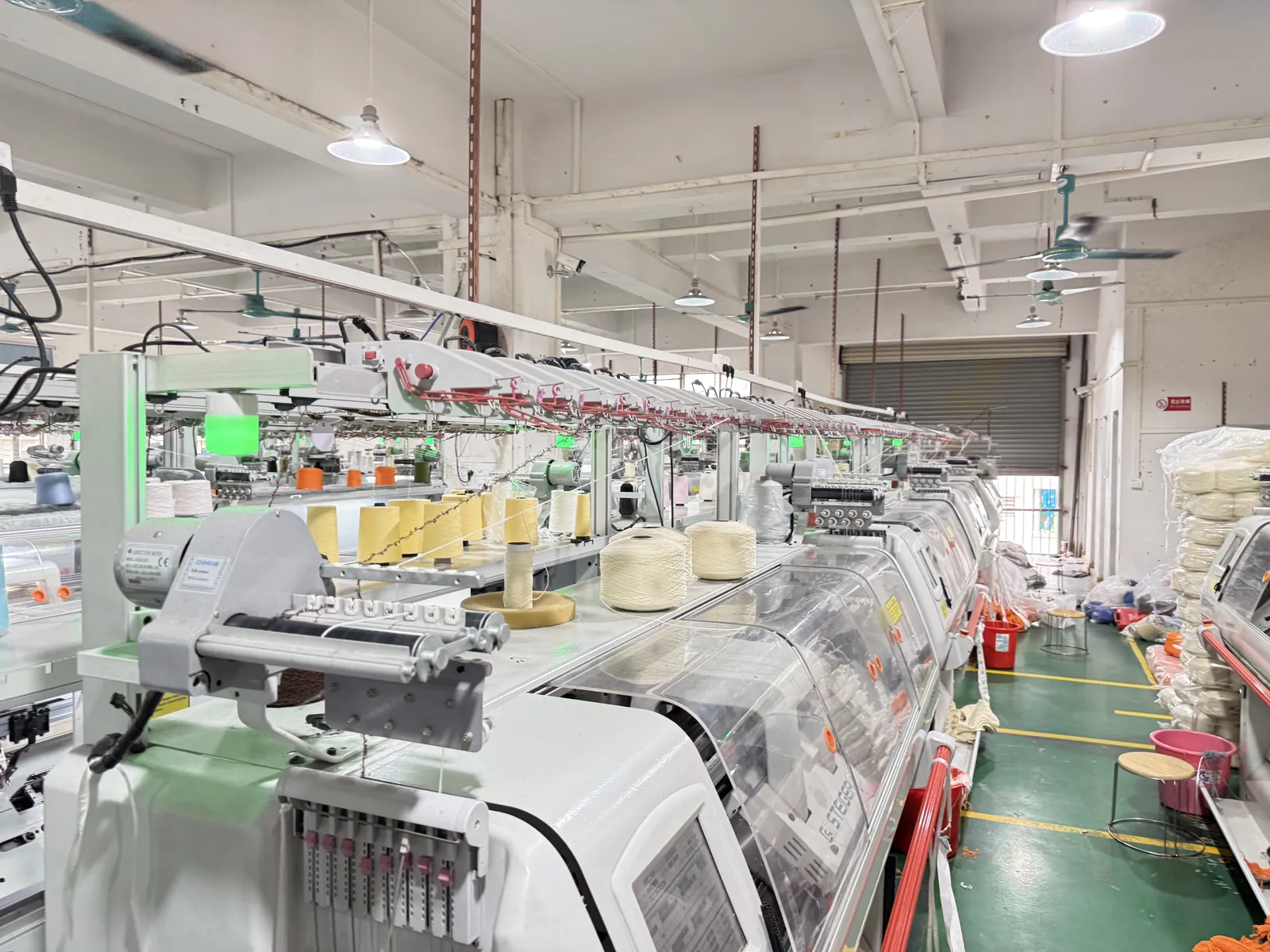
12G machines are the most widely available in the factory range. Your supplier pool is broader, machine scheduling is easier, and lead times are more predictable — especially during the pre-peak production window (roughly May through August for autumn/winter delivery). If you’re placing your first OEM order, this accessibility matters more than it might look on paper.
Knitting speed at 12G is relatively fast compared to finer gauges. That keeps machine-minutes low and helps hold unit costs down, particularly on runs in the 200–1,000 piece range. If your development budget is constrained or you need multiple rounds of sampling before locking a spec, starting at 12G keeps re-sampling cost manageable.
The real limitation: 12G fabric won’t satisfy buyers expecting lightweight, drapey, or premium hand-feel. For spring/summer knitwear or anything positioned at the top of a price range, you’ll hit the ceiling of what 12G can deliver fairly quickly.
14G as a Custom Sweater Gauge for Fine Styles
As a custom sweater gauge, 14G sits between the accessible mid-weight of 12G and the technical demands of 18G. In practice, it’s the gauge where product starts to look and feel premium without dramatically changing production feasibility or your supplier options.
Where 14G Outperforms 12G
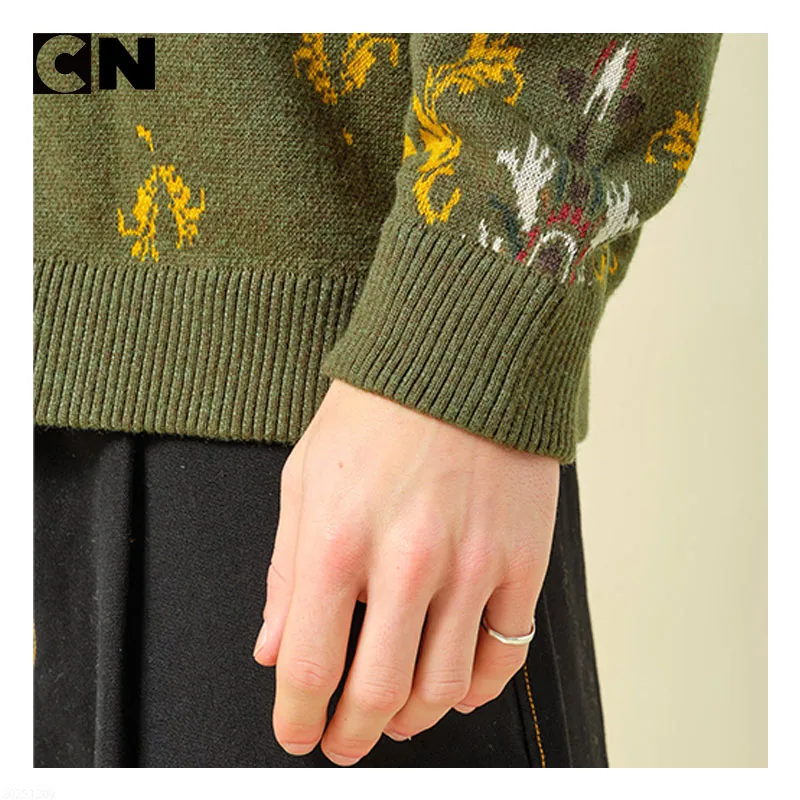
The most immediate difference is in fabric character. At 14G, the stitch surface is smoother, the fabric lies flatter, and the overall weight is lighter. Drape becomes more fluid. For a merino pullover or a lightweight layering cardigan, this difference is noticeable to an experienced end buyer — and worth paying for.
14G also opens up more design precision. The higher needle density handles detailed jacquard patterns more cleanly, and the finer stitch structure suits pointelle and open-work designs that would look coarse at 12G. Changhua Knitting Machine’s technical comparison makes this point directly: 14G provides superior results for intricate pattern work where 12G’s coarser stitch density starts to show limitations in sharpness and detail resolution.
Yarn-wise, the compatible range shifts upward to approximately Nm 2/28 through 2/60. This is where finer merino, lightweight cashmere blends, and silk-blend constructions become workable. The result is a sweater that positions well for bridge-to-luxury retail, spring and fall collections, and professional or business-adjacent styling.
Fine-gauge knit dresses are a natural 14G product — the fabric holds enough structure for a dress silhouette without the heaviness that 12G would introduce at that garment length.
Trade-offs and When to Think Twice
14G machines are less universally available than 12G, though most established knitwear factories in China carry them. Knitting speed is marginally slower, and machine-minutes per piece are slightly higher — which means unit cost creeps up relative to 12G, particularly on smaller runs where setup cost is spread across fewer pieces.
The firmer constraint is yarn selection. At 14G, you can’t use heavier yarns that would work at 12G. If your design calls for a bulkier structure, visible cables with significant weight, or a deliberately rugged texture, 14G won’t deliver that. This gauge rewards restraint — clean lines, refined surfaces, and moderate stitch complexity.
The practical filter: if your brief is a structured mid-weight sweater with prominent texture, stay at 12G. If it’s a lightweight smooth merino piece for layering or spring wear, 14G is the more technically honest choice.
18G as a Custom Sweater Gauge for Premium Styles
18G is the custom sweater gauge most brands reach for when they want a “fine cashmere-feel” result. It’s also the gauge where production assumptions most often miss the mark — on cost, on availability, and on what the fabric actually delivers.
What 18G Is Genuinely Suited For
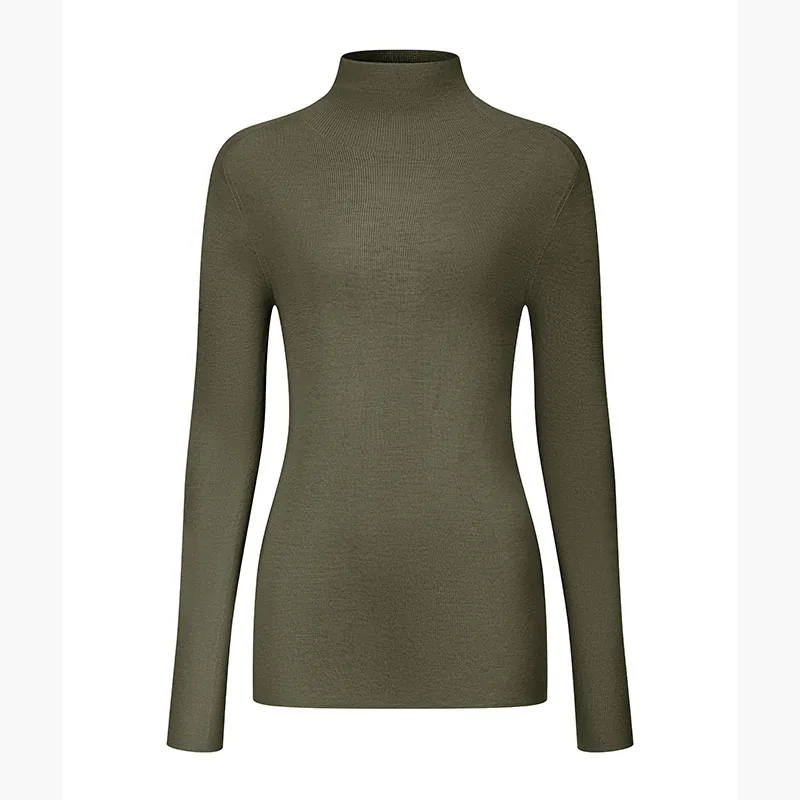
At 18G, you’re working in genuinely fine-gauge territory. The fabric is thin, smooth, and dense in a way that feels closer to a fine jersey than a traditional sweater. The hand-feel is soft and refined, which makes it well-suited for high-end cashmere tops, lightweight base layers, fine-gauge turtlenecks, and premium essentials that sit at the top of a knitwear range.
Yarn requirements at 18G are strict. You need very fine counts — typically toward the upper end of the Nm 2/60 range and beyond — including high-grade cashmere, superfine merino (17.5 micron or finer), or ultra-fine wool-silk blends. Yarn quality control matters more at this gauge because every inconsistency in the yarn surface shows up in the finished fabric in a way it simply wouldn’t at 12G.
The product positioning is specific: 18G makes sense where the customer is paying for material quality and refinement, and where that hand-feel is part of the value proposition. It doesn’t make commercial sense for casual-market knitwear or volume-driven basics where cost needs to stay controlled.
Machine Availability, Cost Reality, and Common Misconceptions
The honest limitation with 18G is factory availability. Not every knitwear supplier runs 18G machines, and those that do often have limited capacity on them. Fine-gauge programs are subject to machine-specific capacity constraints — shifting to 18G can mean waiting for machine time even at suppliers you’ve worked with before. This is a real lead-time risk that needs to be confirmed at the briefing stage, not discovered during sampling.
Knitting speed at 18G is slower than at 12G or 14G. More machine-minutes per piece means higher labor allocation, higher overhead, and a higher floor cost — before you account for the more expensive fine-count yarn. For most custom sweater development projects, expect 18G to carry a meaningful cost premium over 14G.
The common misconception worth addressing: that 18G automatically produces a better sweater. Gauge doesn’t define quality on its own. A well-executed 12G piece in a premium yarn, properly developed and finished, will outperform a poorly briefed 18G garment. The right question isn’t “which gauge is finer?” — it’s “which gauge matches what my end customer expects from this product at this price point?”
How Custom Sweater Gauge Affects Production Decisions
Reading the Numbers Before You Sample
Gauge is not an isolated variable. It affects MOQ feasibility, sampling cost, lead time, machine availability, and cost-per-unit — all at once. The table below gives a directional comparison across the three gauges based on standard production realities.
| Factor | 12G | 14G | 18G |
|---|---|---|---|
| Needle density | 12 per inch | 14 per inch | 18 per inch |
| Fabric weight / hand-feel | Medium-weight, structured | Lightweight, fluid | Very fine, soft, dense |
| Compatible yarn count (approx.) | Nm 2/24–2/48 | Nm 2/28–2/60 | Nm 2/60+ (fine counts required) |
| Typical product applications | Crewnecks, cardigans, casual pullovers | Merino tops, fine cardigans, knit dresses | Premium cashmere, fine turtlenecks, base layers |
| Machine availability | Widest — most factories | Common at established suppliers | Limited — fewer factories carry 18G |
| Production speed | Faster | Moderate | Slower (more machine-minutes) |
| Unit cost relative to 12G | Baseline | Slightly higher | Meaningfully higher |
| Sampling risk | Lower | Moderate | Higher (yarn + machine dependency) |
Figures are directional. Actual cost, lead time, and MOQ depend on factory, order volume, construction complexity, and production season.
How to Brief a Factory on Gauge
Custom sweater gauge should be part of your initial specification — not something that gets resolved after the first sample comes back wrong. A complete brief includes the gauge, intended yarn count and fiber content, target garment weight (in GSM or grams per piece), and a reference sample or hand-feel direction.
If you’re genuinely uncertain between 12G and 14G, the most practical step is to request a hand-feel swatch in both options before committing to a proto round. Most factories can produce a small swatch quickly, and the decision often becomes obvious the moment you’re holding both. That small step is far cheaper than a full proto cycle at the wrong gauge.
One thing to avoid: changing gauge mid-development. It requires new machine programming, new yarn sourcing, and typically a completely new sample round. It adds time and cost that most development budgets don’t account for. Getting gauge right at the brief stage is one of the simplest ways to protect your development timeline.
Making the Call
For most brands entering custom sweater development, 12G is the right starting point. It’s accessible, cost-effective, and covers the majority of mid-market product needs without complicating your sourcing or narrowing your supplier options. If your range evolves toward lightweight merino or fine-gauge layering pieces, 14G is a natural progression — a meaningful upgrade in fabric refinement without a dramatic change in production complexity or cost.
18G is a specialist gauge. Go there when you’re building a premium-positioned product range, when you have the development budget and timeline to absorb potential delays, and when you’ve already confirmed that your factory has the machine capacity to run it reliably.
The practical rule from a factory perspective: match gauge to the customer experience you’re actually selling, not to the gauge number that sounds most refined. A 12G sweater in the right yarn, developed properly and finished well, often lands better in market than an 18G piece that was under-briefed and over-promised.
Conclusion
Custom sweater gauge is a decision that looks technical but carries direct commercial consequences. Choose the wrong one and you’re looking at re-sampling costs, unexpected unit pricing, and a product that doesn’t match what your buyer expects to feel when they pick it up.
The starting point is almost always 12G — then move finer once your brief is clear and your customer expectation is locked. If you already know the product needs a lightweight, refined hand-feel for a spring collection or a professional market, go straight to 14G. And if you’re building something genuinely premium with fine cashmere or superfine merino, 18G is worth the investment — as long as you’ve planned for the availability and cost realities that come with it.
At Cainan Clothing, we work across all three gauge ranges, and the first question we ask is always the same: who is the end customer, and what do they expect to feel when they hold the garment? Answer that clearly, and the gauge decision follows naturally.
If you’re ready to move from brief to sample, get in touch with our team at cnsweaters.com — we’ll help you align gauge, yarn, and construction before a single machine starts running.
FAQ
What is the practical difference between 12G and 14G for a custom sweater order?
The main difference is fabric weight and hand-feel. 12G produces a more substantial, structured mid-weight fabric with a clearly visible stitch. 14G is lighter, smoother, and more fluid — better suited to layering pieces, fine merino styles, and spring or transitional-season knitwear. If you’re developing a classic everyday pullover or cardigan, 12G is the natural starting point. If the brief calls for a refined, lightweight result, 14G gives you that without the machine availability constraints of 18G.
Is 18G always more expensive than 12G to produce?
In most cases, yes. 18G knitting takes more machine-minutes per piece than 12G, which increases labor and overhead allocation. The fine-count yarns required at 18G also carry a higher material cost. That said, total unit cost depends on more than gauge alone — fiber content, order quantity, construction complexity, and factory capacity all play a role. A small-run 12G order in premium cashmere can cost more than a larger 18G run in a standard fine merino.
Can any knitwear factory produce 18G custom sweaters?
No. 18G machine capacity is not standard across all factories. Most mid-sized knitwear suppliers in China run 12G and 14G as core capacity, but 18G machines are less common and often have limited scheduling availability. If your project specifies 18G, confirm machine availability with the factory before starting development — not after the first sample round.
How does gauge affect MOQ in OEM knitwear production?
Gauge affects MOQ indirectly. Fine-gauge production takes more machine-time per piece, which can push factories toward higher minimum quantities to make a production run viable. That said, yarn package minimums and dyehouse batch requirements are typically the more practical driver of your real MOQ floor — these don’t change just because you’ve chosen a different gauge. Always ask the factory for a specific MOQ based on your yarn spec, not just the gauge number.
Should gauge be included in a tech pack before sampling?
Yes, always. Specifying gauge in your tech pack is one of the most straightforward ways to prevent expensive miscommunication in knitwear development. If you’re unsure which gauge is right, share your target hand-feel, fabric weight, and end-use context with the factory and ask for their recommendation — or request a swatch comparison before committing to a full proto. A swatch decision takes days; a gauge mismatch discovered at sampling takes weeks and budget to fix.