 CN Sweaters
Questions for a mens knitwear maker should test whether a supplier can maintain a commercial core line across seasons. A crewneck, half-zip, cardigan or vest may look uncomplicated, yet repeat sales depend on stable fit, yarn, colour, hand feel, workmanship and delivery. Small undocumented changes can make replenishment stock feel like a different product.
Core-line continuity does not mean freezing every input forever. Mills discontinue qualities, machinery changes and performance evidence may justify an improvement. The goal is controlled equivalence: know which characteristics define the product, which changes require approval and how current production is compared with the retained standard.
The following questions examine the manufacturer's continuity system from line architecture to repeat-order release.
Which Questions Should a Mens Knitwear Maker Answer About Core Styles?
A core style needs an identity that is more precise than its product name.
Ask how the style sits within the wider line. A core crewneck may share yarn and colour with a cardigan or vest, while using a different neck, weight or fit. Map shared and unique controls so an approved change to one product does not automatically flow into the others. This architecture also shows where consolidated yarn buying helps and where it creates hidden dependency.
Ask which characteristics cannot drift
Define target wearer, silhouette, layer, garment weight, yarn performance, gauge, stitch, shoulder construction, neck or placket, rib proportions, measurements, colour and finishing hand. Rank the features that customers recognise.
A navy merino crewneck may depend on compact surface, clean neck recovery and a specific finished weight. A cotton cardigan may depend more on placket stability and button spacing. Ask the supplier to identify the technical controls behind those qualities.
The custom cardigan or pullover guide helps connect the commercial product name to construction decisions.
How Should a Mens Knitwear Maker Store the Product Standard?
The standard should combine an approved physical garment with controlled digital records. Keep the tech pack, measurement chart, yarn specification, colour reference, program revision, wash route, labels, packing and test evidence.
Record storage owner, date and condition of the sealed sample. Knitwear can relax, yellow or absorb odour, so photographs and original measured data are also important.
Ask how the factory prevents a later concession from replacing the master. An accepted minor variation in one shipment should remain linked to that order unless the buyer formally updates the standard.
Create a one-page identity sheet for commercial and factory teams. It should name the features a customer would notice first, the physical reference, current revision and change authority. Add known failure modes from earlier orders. This sheet does not replace the specification; it tells a new merchandiser or technician where an apparently harmless change can damage the product’s continuity.
How Is Fit Kept Stable Across Seasons?
Men’s core products often rely on familiar proportions, making small fit shifts commercially visible.
Which Base-Block and Grading Records Should a Mens Knitwear Maker Provide?
Request the base size, fit intent, key ease values and complete grade table. Review chest, shoulder, armhole, sleeve, body length, neck, cuff and hem. Ask which styles share the block and how category differences are managed.
The factory should version each approved grade and record why it changed. If a return analysis led to a longer sleeve or broader shoulder, keep the evidence and effective season. The tech pack checklist can structure points of measure and construction notes.
Do not allow a new merchandiser to rebuild the chart from a sample without checking the approved history.
Ask how repeat fit is verified
Before bulk, compare a current pre-production or first-off garment with the retained standard in the same conditioned state. Measure priority points and assess balance, neck entry, movement and layer compatibility.
Use representative sizes when the yarn, gauge, program, wash or factory route changes. The fit sample versus size set sample distinction helps select the evidence.
Define an escalation rule for systematic drift. Measurements clustered near one tolerance limit can signal a process shift even if individual garments technically pass.
Compare the current garment by wear, not flat measurement alone. Check neck entry and recovery, shoulder position, reach, sleeve stack, hem behaviour and appearance over the intended layer. Use the same model dimensions or a documented equivalent. A repeat that meets the chart can still feel different if yarn bulk, seam allowance or finishing changed the usable internal dimensions.
How Should a Mens Knitwear Maker Manage Yarn and Colour Continuity?
Material continuity requires source records, current availability and a deliberate substitution process.
Create a product equivalence hierarchy. At the top are customer-visible essentials such as shade, hand, surface and fit. Beneath them sit technical drivers such as count, twist, fibre length and stitch density. A substitute can vary in one driver only if the finished evidence protects the higher-level characteristics. This keeps teams focused on product outcome without accepting an untested claim that two specifications are identical.
Ask for the yarn identity and supply route
Record mill or source, quality code, composition, count, twist, colour method, performance, certification, minimum, lead time and approved alternatives. Ask whether the yarn is stock-supported or made for each order.
The private label yarn planning guide provides the specification questions. The yarn MOQ versus garment MOQ guide explains why a reorder quantity may not align with the mill's requirement.
Ask how unused yarn is identified, stored, inspected and allocated. Old and new lots should not be mixed without a shade and performance decision.
Request a material continuity forecast at least one buying cycle ahead. The factory should flag planned mill discontinuation, long shutdowns, source consolidation, unusual minimums and ageing held stock. The buyer then chooses whether to reserve material, qualify an alternative or plan a visible product update. Early notice preserves options that disappear when a sales reorder is already waiting.
How Should a Mens Knitwear Maker Qualify Substitutions?
A substitute should be compared for fibre content, count, twist, strength, evenness, colour, bulk, hand, shrinkage, pilling and appearance in the approved construction. Commercial names or nominal composition are not enough.
Require a knit-down and finished garment where the risk affects hand, weight or fit. State which tests must be repeated and who approves equivalence.
Ask for a cost and claim bridge with every substitution. Show old and new source, technical reason, unit effect, minimum, lead time, residual stock and responsibility if the new route fails. A cheaper yarn that needs a larger purchase or additional testing may increase total exposure. Keep a rejected alternative on record so it is not proposed again under a different commercial name.
Use a change table:
| Proposed change | Minimum comparison | Release authority |
|---|---|---|
| new yarn lot | shade and first-off garment | colour and product owners |
| same quality, new mill | full knit-down and performance set | technical and quality owners |
| revised dye route | lab dip and bulk lot evidence | colour owner |
| changed wash | dimensions, hand and appearance | product and quality owners |
| discontinued component | physical proof and garment trial | brand and product owners |
How Does the Factory Keep Construction Repeatable?
Program control and finishing discipline turn a specification into the same garment again.
Ask about machine and program version control
Record gauge, machine type, needle bed, program name and revision, yarn tension basis, stitch density, shaping and panel identity. Ask who may edit a production program and how changes are approved.
If production moves to another machine group or site, require first-off comparison. The manufacturing capability information should be verified against the exact core construction.
Archive program files securely, but do not rely on them alone. Yarn behaviour and machine condition mean the current output still needs physical comparison.
Ask how linking, washing and finishing are standardised
Specify linking point, seam appearance, reinforcement, thread, trimming, mending limits, wash chemistry, load, time, temperature, drying, steaming and conditioning. These operations influence measurements, surface and hand.
The knitwear factory production flow helps locate evidence at each stage. Ask for batch identity and control records when a finish is critical.
Train operators against defect examples and first-off standards. A consistent program cannot compensate for variable linking or uncontrolled wash loads.
Establish a golden process window for critical operations. Record the acceptable stitch-density range, panel relaxation time, linking point, wash load and finishing condition rather than one ideal number with no response rule. When output approaches a boundary, operators need a named adjustment and verification step. This makes continuity resilient to normal production variation without allowing uncontrolled improvisation.
How Should Quality Performance Be Compared Over Time?
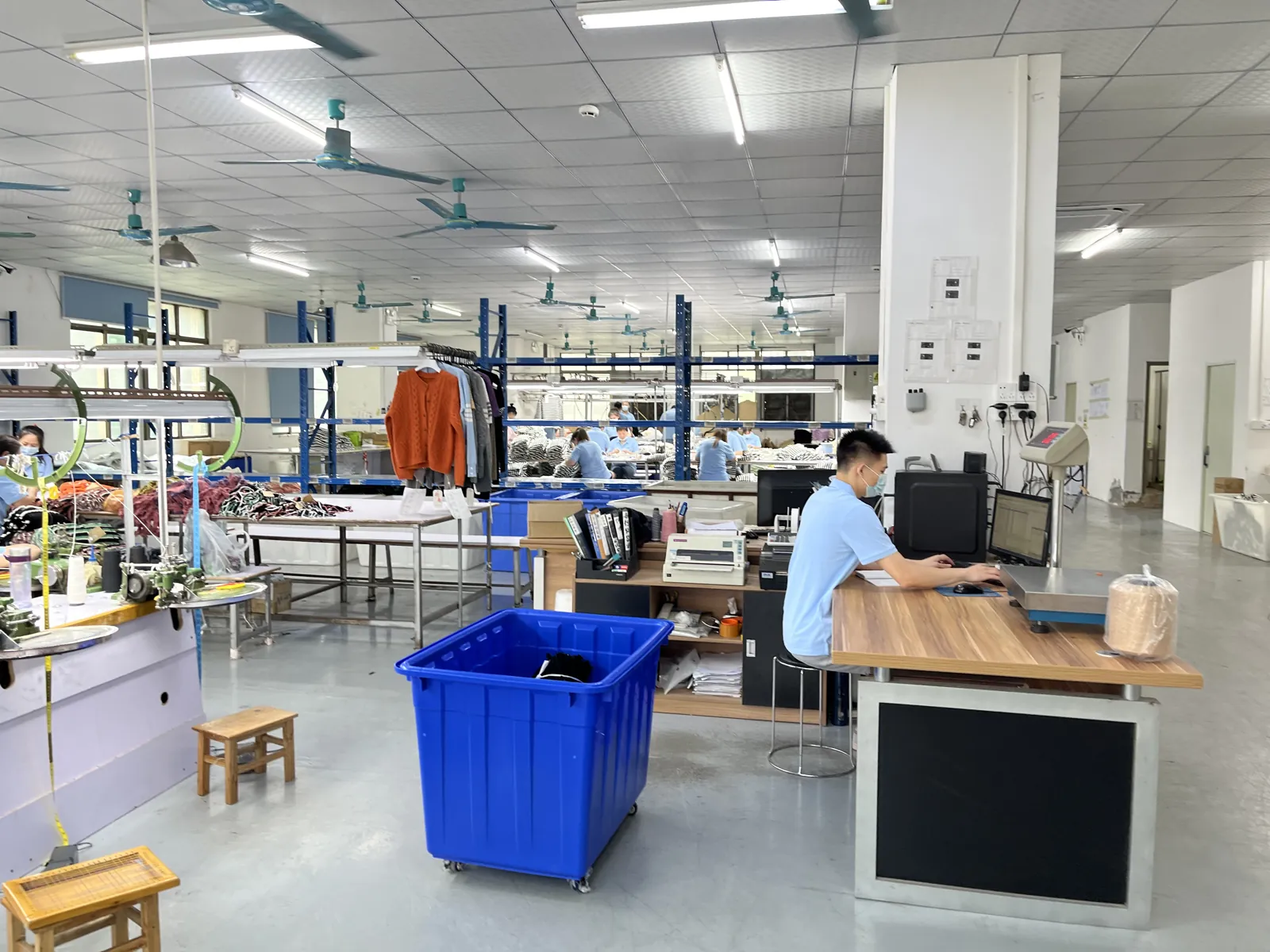
Continuity should be measured with trends, not remembered through individual claims.
Choose a reference period and comparison rule before reading results. Compare the same test method, conditioning state and sampling basis. Use control limits or agreed alert thresholds for the most important metrics, then investigate a trend before it reaches rejection. Record normal seasonal or lot variation so the team does not overreact to harmless movement or ignore a persistent shift.
Which Critical-to-Quality Metrics Should a Mens Knitwear Maker Provide?
Choose a short core set: finished weight, priority measurements, shade, pilling, dimensional change, seam strength or appearance, neck recovery, defect rate and packing accuracy. Set method, frequency, limits and owner.
Use the quality control framework to link in-line and final checks. The ISO textiles dimensional change preparation and marking standard illustrates why a named test method matters; select current methods appropriate to the destination and claim.
Compare results by order, yarn lot, machine group and finishing batch. A stable average with rising variation still needs attention.
Ask how complaints become corrective action
Require style, order, size, defect, photographs and use or care context where available. Separate isolated damage, fulfilment error, systematic product failure and expectation mismatch.
The factory should contain affected stock, investigate cause, verify correction and close the action with evidence. Keep the learning linked to the next production release.
Use aggregated returns and complaints without unnecessary personal data. The goal is process improvement, not a collection of customer identities.
Review social and sourcing continuity when a material or subcontractor changes. The OECD’s garment and footwear due diligence guidance provides a risk-based framework. Ask which entity performs knitting, finishing, embroidery and packing, and whether the evidence still covers the current route. Product continuity should not hide a new, unreviewed supply-chain risk.
How Are Components and Packaging Kept Consistent?
Small details often expose an uncontrolled repeat order before the garment itself is examined.
Ask for component source and artwork control
Record button, zipper, puller, label, thread, badge, hangtag, bag and carton specifications. Include supplier, material, colour, dimensions, artwork version, attachment and approved proof.
If a component is custom, define mould ownership, minimum, residual stock and replacement route. The care label and fibre content guide helps separate regulatory information from brand presentation.
Approve any source change against the garment. A button with the same diameter may differ in weight, edge, shank or colour after care.
Include care performance in component approval. For US products, the FTC’s Care Labeling Rule is one relevant official source. Complete the intended care cycle with buttons, zipper, labels and badge attached, then check corrosion, colour transfer, snagging, shrinkage and puckering. A component approved loose has not yet proved that it belongs on the core garment.
Ask how retail data changes are released
Barcodes, prices, season codes, country information and carton marks may change while the core garment stays constant. Keep variable data in a controlled order file and require proof approval.
Use the packaging and barcode setup guide to assign data, print and scan checks.
Test one complete pack at the start of each order. Old labels and new labels should be physically segregated, counted and reconciled so a correct garment is not released with obsolete data.
Use an effective-order field for every artwork or data revision. The file should say which purchase order consumes the old version and which begins the new one. At packing closeout, reconcile issued, used, damaged and destroyed labels. This simple boundary prevents mixed seasons and provides evidence when a warehouse finds an unexpected barcode or composition statement.
Which Repeat-Order Questions Should a Mens Knitwear Maker Answer?
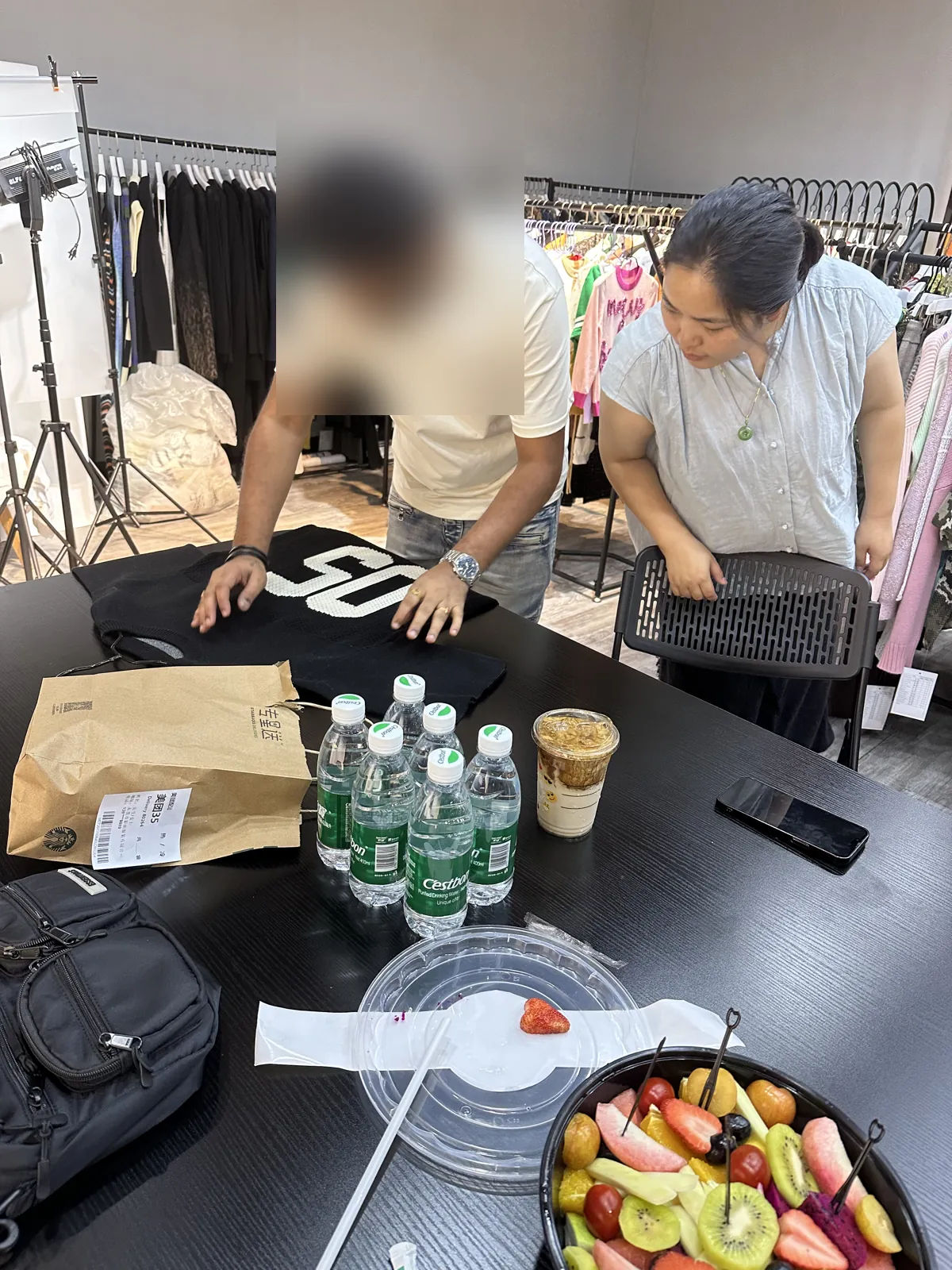
Calling an order a repeat should trigger a comparison, not bypass development control.
Ask for a repeat-order change declaration
The buyer and factory should each list changes since the approved standard: quantity, size ratio, yarn source or lot, colour, program, machine route, wash, component, test rule, packing, destination and delivery term.
Mark each item as unchanged, changed with no product effect, changed requiring evidence or unknown. The MOQ and lead time plan should be refreshed because current material and capacity conditions may differ.
No response should be treated as unknown, not as unchanged. Assign an owner and deadline before the release gate.
Which Evidence Pack Should Buyers Request From a Mens Knitwear Maker?
Require the current purchase order, standard revision, change declaration, material availability, first-off comparison, test status, size breakdown, component proofs, quality plan, packing data and delivery schedule.
Use the bulk planning guide to connect approvals with capacity and shipment. State who may release yarn, knitting, finishing and final shipment.
After completion, reconcile defects, measurements, material, components and delivery against the previous order. Continuity becomes stronger when each repeat adds evidence instead of simply copying documents.
Hold a short continuity review after the first production week and again at closeout. Compare the current order with the last on priority measurements, weight, shade, defect mix, rework and timing. Decide which difference is noise, which needs correction now and which warrants a controlled standard update. Keep the decision with the next order brief.
Name an expiry or review date for every provisional exception. A temporary substitute, alternate pack or widened tolerance should not continue merely because the next purchase order copied the last notes. Either retire it when the constraint ends or assess it as a permanent standard change with the proper owners.
What Should Buyers Ask Differently for Women’s Knitwear?
The continuity questions above apply equally to a women’s line, but the fit system carries more risk. Women’s ranges usually mix fitted and relaxed silhouettes, cover a wider spread of body shapes and are worn in more layering combinations, so one approved middle-size sample proves less than it does for a men’s core crewneck. Add the following questions when the order includes womenswear.
Ask how the block reflects the wearer and the layer
Give the factory the target customer, stature range, body-shape assumptions and what the sweater is worn over. Ask for measured meanings of slim, regular, relaxed and oversized: bust ease, shoulder position, armhole depth, sleeve volume, body length and hem behaviour. A fine-gauge shell worn next to the skin needs a different armhole and neck from a chunky cardigan worn over a blouse.
Before the first sample, ask the technician to mark the intended shoulder line, bust level, armhole, waist or sweep and garment length on a flat sketch, and confirm how the sweater should sit on the body. This catches mismatched assumptions while changes are still on paper.
Ask for grading and size-set evidence across the whole range
Women’s grades are rarely one uniform increment. Ask where the grade rule changes, which dimensions stay fixed and how each increment resolves to whole needles and rows on the machine. For petite or tall ranges, ask whether the factory builds a separate block or only adjusts length, because stature also moves armhole depth and shaping points.
Sample the base size plus both range edges, and add an intermediate size wherever the grade rule or a construction feature changes. Check that pockets, buttons, stripes, cables and logos stay in proportion on the smallest and largest sizes, and record those decisions separately from body grading so a decorative change does not alter fit by accident.
| Fit zone | Manufacturer evidence | Buyer decision |
|---|---|---|
| bust and sweep | ease and grade increments | silhouette by size |
| shoulder and armhole | shaping map | mobility and visual line |
| sleeve | width, length and pitch | layering and reach |
| neck | opening and recovery | entry comfort and coverage |
| body length | row plan after wash | styling across stature |
Ask how yarn, trims and finishing change women’s fit
Lighter yarns and closer fits make finishing faults more visible. On fine knits, check torque, seam grin and transparency under stretch; on heavy or long styles, check hanger growth and recovery after packing. Rib recovery controls neck entry, cuff comfort and hem shape, so confirm it after the full wash and conditioning route, not off the machine.
For cardigans, review front overlap, button tension and placket balance in every sampled size, because button spacing that works on the base size can gape on the largest. For cropped styles, set length size by size instead of shortening every size by one rule.
Conclusion
Men’s knitwear manufacturer questions should reveal whether the supplier controls a product through time. Define the core characteristics, keep a physical and digital standard, version the fit, identify yarn and qualify every meaningful change.
Ask how programs, linking, washing, components and packaging remain repeatable. Compare quality trends by lot and batch, then require a current change declaration and evidence pack before each reorder.
A reliable repeat is not an assumption that nothing changed. It is a verified decision that current materials and processes still deliver the approved fit, hand, appearance and brand presentation. Make that decision visible through a named owner, current comparison sample and signed release record. Review the record again before the next forecast is committed.
Frequently Asked Questions
Should a Mens Knitwear Maker Resample Repeat Orders?
At least approve a current first-off or pre-production comparison. Additional samples are needed when yarn, colour, program, machine route, wash, components or fit rules change.
How can a buyer manage a discontinued core yarn?
Request candidate sources, compare technical properties and knit-downs, make a finished garment, repeat relevant tests and approve equivalence or a controlled product update.
Can leftover yarn guarantee colour continuity?
It can help, but verify lot identity, storage condition, quantity and current garment appearance. Do not mix old and new lots without a shade decision.
Which records prevent fit drift?
Keep the approved physical garment, measurement chart, grade, pattern or program revision, wash state, measured photos, first-off reports and reasons for any block change.
Which Repeat-Order Item Should a Mens Knitwear Maker Prioritize?
Ask what has changed since the approved standard. Require the buyer and manufacturer to answer by work package and provide evidence for every material change.