 CN Sweaters
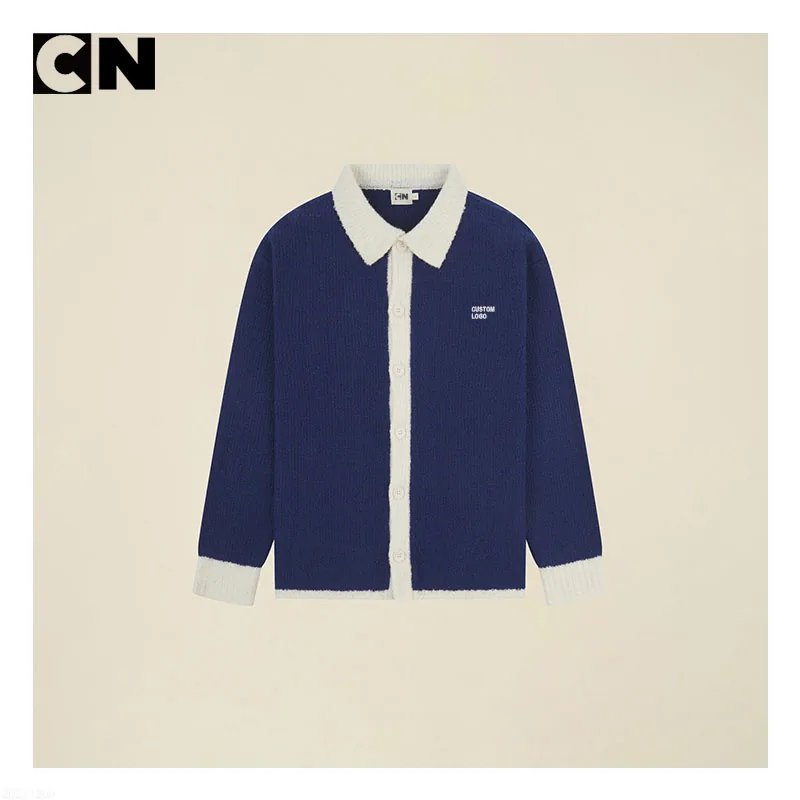
Custom cardigan sweaters are one of the most technically demanding knit categories we produce, and treating them as a pullover with buttons added is the single most common mistake we see in tech packs. A cardigan splits the front panel, introduces a vertical load-bearing structure, and forces every fit decision to negotiate with hardware. From a factory perspective, the placket, the knit gauge, and the shoulder line define whether the garment hangs cleanly or fights the wearer.
The cost of getting this wrong is rarely caught at first sample. It surfaces in bulk, when 600 pieces show inconsistent button alignment, hem flare, or front-band rippling after the first wash. Buyers who understand the construction levers early can write better tech packs, negotiate realistic MOQs, and avoid the kind of revisions that push lead times from ten weeks to fourteen. The sections below walk through the decisions we ask every brand to make before sampling on a custom knit cardigan program.
Why is Placket Stability Critical for Custom Cardigan Sweaters?
Placket stability decides whether a cardigan looks finished or amateur, and it is the first structural failure point we test in development. The front bands carry the buttons, define the closure line, and are pulled in two directions every time the garment is worn. If they stretch faster than the body fabric, the hem distorts, the buttonholes gape, and the closure line wanders off-center. We treat the placket as a structural component, not a finishing detail.
Why Gaping Happens in Bulk Production
Gaping is usually a tension problem rather than a sizing problem. When the rib gauge of the placket relaxes faster than the body during washing, the band lengthens and the buttonholes pull open at the bust line. We see this most often on 7GG and finer cardigans knit in cotton or cotton blends, where the yarn lacks the memory of wool. Specifying a tighter rib gauge for the placket than the body, or knitting the band on a separate machine setting, helps lock in stable tension.
Reinforcement Options We Recommend
For mid-weight and heavier cardigans, backing the inside of the placket with grosgrain ribbon or twill tape is the most reliable fix. The tape absorbs the vertical load, prevents the band from stretching, and gives a clean surface for buttonhole stitching. For lighter custom cardigan sweater programs where weight matters, we use interlock knit structures inside the band to suppress stretch without adding bulk. Both approaches add a small per-piece cost, typically 0.15 to 0.40 USD depending on tape width and labor, but they reduce return rates noticeably on fitted styles. For B2B buyers, that cost trade is almost always favorable once you factor in customer-service overhead on returns.
How Do You Choose Knit Gauge for Custom Cardigan Sweaters?
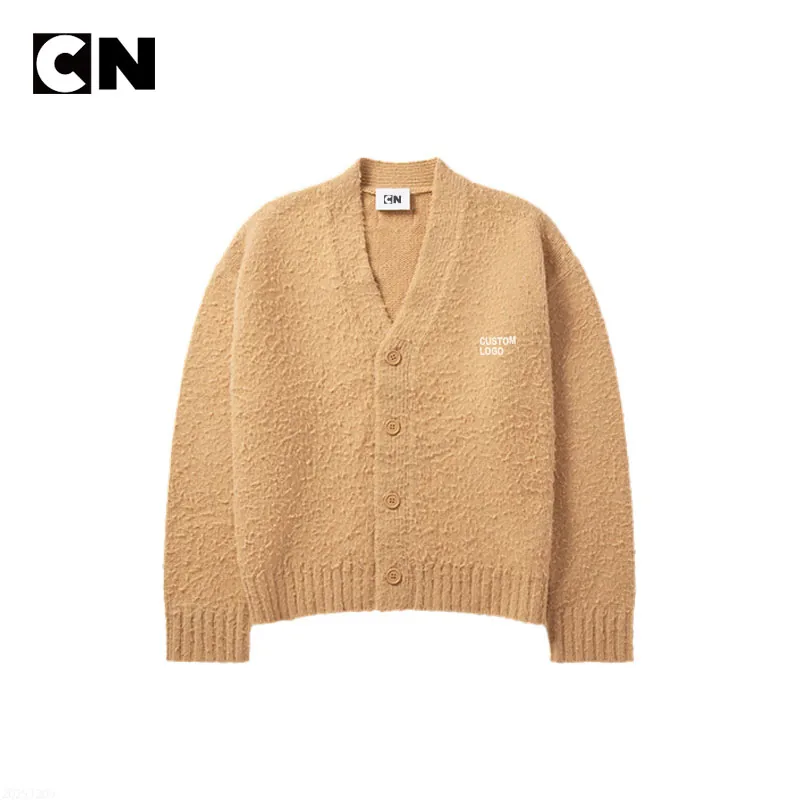
Knit gauge sets the visual weight, the price tier, and the production timeline of a cardigan before any other decision is made. Gauge refers to the number of needles per inch on the flat-bed machine, and it controls yarn thickness, stitch density, and how much insulation the finished garment delivers. A practical foundation on stitch structure and yarn-to-gauge matching is covered well in the CottonWorks knit basics learning hub, which we often share with new product developers.
Gauge Comparison for Cardigan Programs
The table below summarizes how the five most common cardigan gauges compare on weight, relative cost, and end use. Numbers are based on typical worsted-spun yarn assumptions and our internal production benchmarks.
| Gauge | Fabric Weight | Yarn Use per Piece | Relative Cost | Typical Knit Time | Best Use Case |
|---|---|---|---|---|---|
| 3GG | Very heavy, chunky | 500–700 g | High, mainly yarn-driven | Slow | Statement winter cardigans, hand-knit look |
| 5GG | Heavy, substantial | 350–500 g | Mid-high | Moderate | Premium chunky cardigans, cable patterns |
| 7GG | Mid-weight | 250–350 g | Balanced | Moderate | Year-round commercial cardigans, jacquard |
| 12GG | Light, refined | 150–220 g | Higher labor, lower yarn use | Slower than 7GG on comparable programs | Luxury basics, dressy cardigans, layering |
| 14GG | Very fine | 130–180 g | Highest labor, premium yarn requirement | Slowest | Ultra-premium, second-skin styles |
The pattern is clear. Coarser gauges cost more in yarn, finer gauges cost more in machine time and require premium yarn quality. For most commercial brands, 7GG remains the workhorse because it balances drape, warmth, and per-piece cost. For B2B buyers, choosing 12GG or 14GG means committing to longer production windows and tighter quality control, not just a higher price tag.
Matching Gauge to Brand Positioning
We advise buyers to align gauge with retail price tier rather than aesthetic preference alone. A 14GG cashmere cardigan retailing under 120 USD rarely makes commercial sense, while a 5GG cotton cardigan in a luxury boutique loses perceived value. Gauge is a positioning signal as much as a construction choice.
Technical Differences Between Set In and Tubular Placket Construction
The two placket construction methods we quote most often are set-in (sewn-on) bands and tubular (double-knit) bands, and they produce visibly different cardigans even with identical yarn and gauge. Choosing between them is a structure-versus-aesthetics decision, and it directly affects how the front of the garment ages over twenty wash cycles.
Set-In Placket Characteristics
A set-in placket is knit as a separate strip, usually on a tighter rib setting, then linked or sewn onto the front edge of the body. This gives us the most control over band density, because the placket can run at a different stitch tension than the body without compromise. The trade-off is a visible seam line on the inside, a small amount of added thickness from the seam allowance, and slightly longer assembly time. For structured cardigans, fitted silhouettes, and any style where the closure line must stay perfectly straight after washing, set-in plackets remain our default recommendation.
Tubular Placket Characteristics for custom cardigan sweaters
A tubular or double-knit placket is formed as a closed tube directly on the front edge, with the buttonholes worked through both layers. The result is a thicker, rounder edge with no visible seam, and an identical appearance on the inside and outside. Tubular bands look more refined on minimalist cardigans, oversized silhouettes, and unisex designs where a clean reverse face matters. They also distribute vertical load more evenly because there is no seam stress point. The downside is that any tension inconsistency during knitting shows up immediately, and rework is harder once the tube is formed.
How We Decide on Sampling Calls
From a factory perspective, we ask three questions during sampling. Does the inside need to look as clean as the outside? Is the brand willing to absorb a slightly higher knit-time cost for tubular construction? Does the buttonhole need to sit on a thick, rounded edge or a flatter, denser band? The answers usually point to one method without much debate. We document the choice on the tech pack so bulk production matches the approved sample.
What Are the Sourcing Trade Offs for Custom Trims and MOQs?
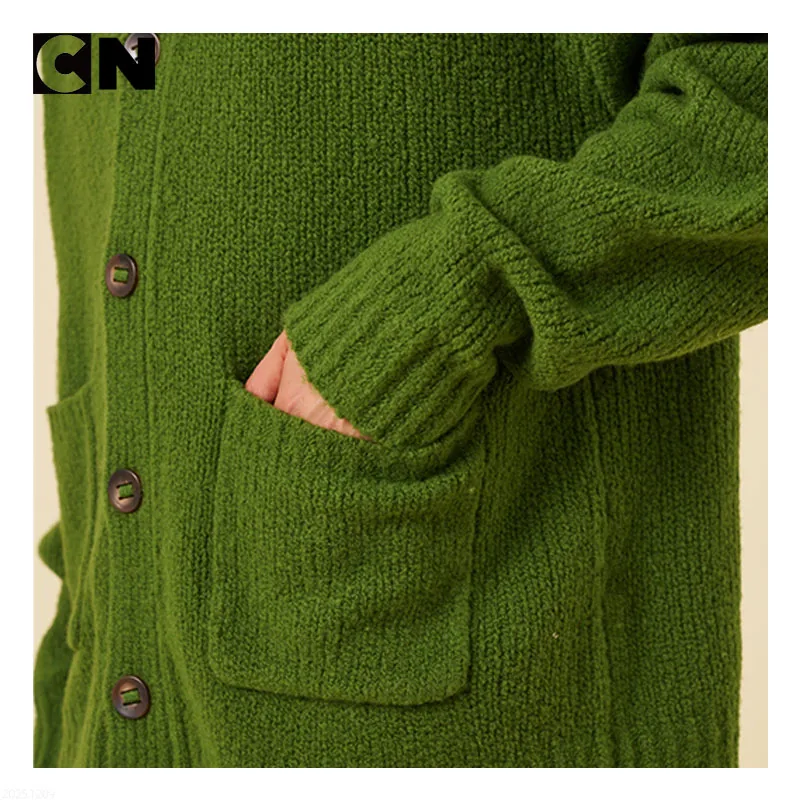
Custom trims sit on a different MOQ curve than the cardigan itself, and ignoring that curve is one of the fastest ways to blow a launch timeline. Buttons, zippers, woven labels, and hangtags each come from independent suppliers with their own minimums, lead times, and tooling costs. A cardigan factory can often produce 200 pieces per color, but a custom horn button supplier may require 3,000 to 5,000 units per design before they will run a mold.
Typical Trim MOQs and Lead Times for custom cardigan sweaters
Stock buttons in standard colors are usually available in quantities as low as 500 pieces with one to two weeks lead time. Custom-dyed or custom-shaped buttons typically require 2,000 to 5,000 pieces per color and four to six weeks to produce. Custom zippers, more common on zip-front cardigans, start around 1,000 pieces per color and length combination, with six to eight weeks lead time when teeth color or tape dyeing is involved. Woven labels and hangtags are usually more flexible, but still impose 1,000 to 3,000 piece minimums for custom artwork.
Practical Trade-Offs for Buyers
The buyers who launch on time tend to make one of three choices. They commit to higher trim quantities up front and amortize them across two or three seasons. They select from a curated library of stock trims that the factory already holds, which is one reason we maintain in-house trim stocks as part of our OEM and ODM development services. Or they accept a price premium for low-MOQ custom runs from specialist trim suppliers. Each path is defensible, but the decision has to be made before sampling, not after the proto sample is approved.
Why Trim Timing Shapes the Critical Path
Trim development runs in parallel with yarn dyeing and knitting, but it only stays off the critical path if it starts on day one. We have seen orders held three weeks at the finishing stage because custom buttons arrived late, even though the cardigans were ready to ship. Buyers should treat trim purchase orders with the same urgency as yarn confirmation.
How Do Custom Cardigan Sweaters Control Shoulder Fit and Hem Tension?
Shoulder fit and hem tension are the two fit zones where cardigans fail most often in bulk, and both are sensitive to knitting tension drift across thousands of pieces. A cardigan that fits perfectly on the proto sample can develop shoulder droop and hem flare in production if the factory does not lock down tension parameters and post-knit relaxation procedures.
Controlling Shoulder Drop
Shoulder construction on a cardigan falls into three families. Set-in sleeves place the seam at the natural shoulder point and give the most structured fit, which suits fitted and tailored cardigans. Drop shoulders extend the seam past the shoulder point for a relaxed silhouette, which suits oversized and unisex styles. Raglan construction eliminates the shoulder seam entirely. From a factory perspective, set-in sleeves require the tightest cross-back measurement control because any extra width pulls the shoulder seam off the wearer’s body. We measure cross-back on every twentieth piece in bulk production and reject lots that drift more than one centimeter from the approved sample.
Ribbing Stability at the Hem for custom cardigan sweaters
Hem ribbing has to do two jobs. It has to hug the body to prevent the cardigan from riding up, and it has to relax enough not to pucker the body fabric above it. If the rib is too tight, the hem cups inward and creates a tension line three centimeters above the ribbing. If it is too loose, the hem flares and the cardigan loses its silhouette after one wash. We specify rib gauge, rib depth, and rib yarn count separately from the body, and we steam-relax every garment after linking to release knitting stresses.
Front Hem Balance on Open Cardigans
Open-front cardigans have an additional risk. If the front bands stretch even slightly more than the body, the front hem drops below the back hem and the garment looks unbalanced. We address this by matching placket yarn count and rib structure to the body hem, and by hanging finished cardigans on dummies for a relaxation period before final pressing.
How Does Testing Ensure Quality for Bulk Cardigan Orders?
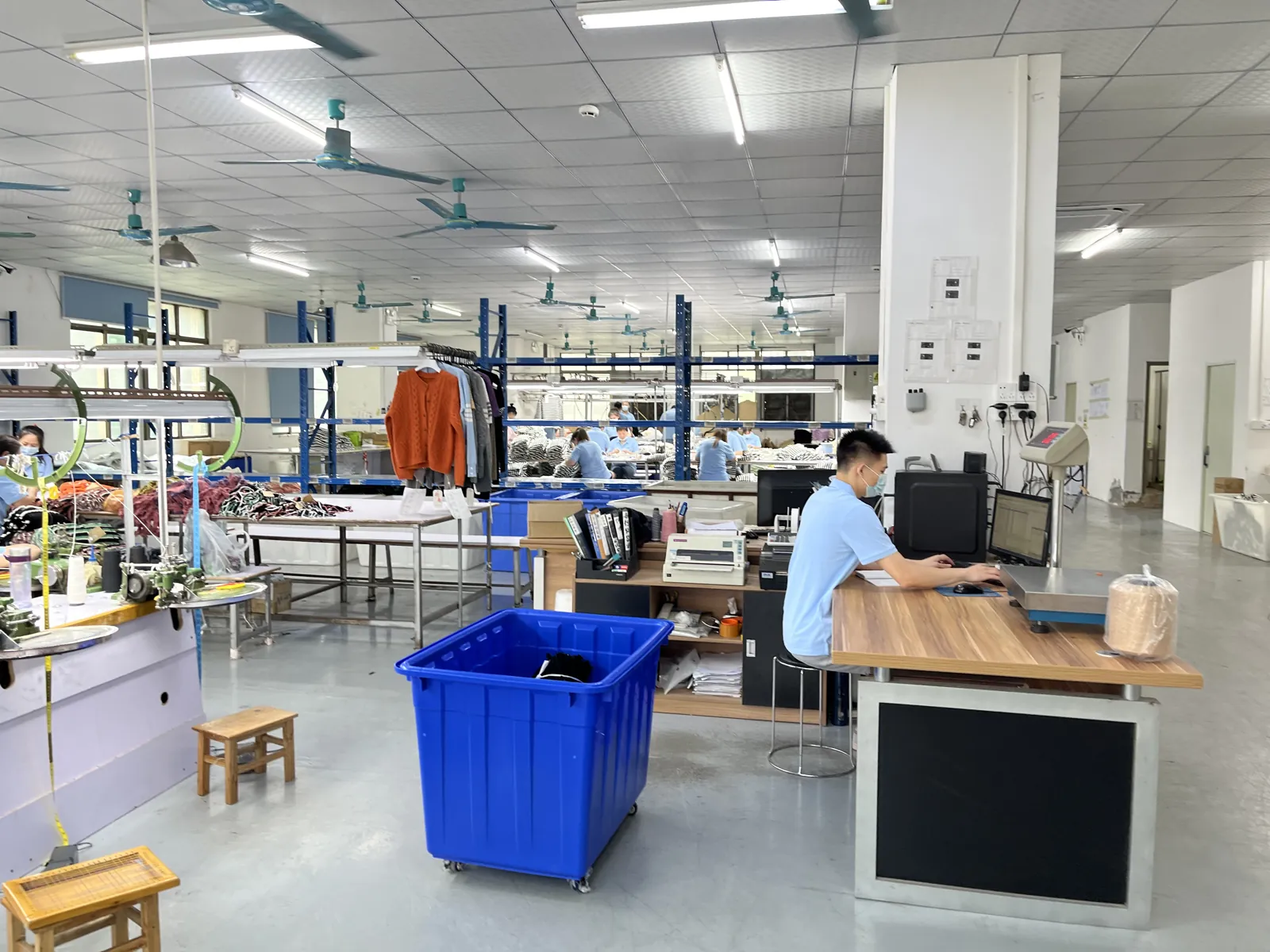
Testing is what separates a defensible bulk shipment from a quality complaint waiting to happen, and on cardigans the two tests that matter most are button security and dimensional stability. We build both into the production QC plan rather than running them only as pre-shipment exit tests. Third-party laboratories like Intertek provide standardized protocols that buyers can specify in their tech packs, and the broader scope of apparel testing services from Intertek covers the methods most brands reference for knitwear.
The Button Pull Test for custom cardigan sweaters
The button pull test, sometimes called the snap pull or button security test, measures the tensile force required to detach a button from the garment. The garment is clamped, the button is gripped by a calibrated jaw, and a tensile testing machine pulls until the button, thread, or fabric fails. Industry practice typically requires a minimum of 70 to 90 Newtons sustained for 10 seconds for adult apparel, with higher thresholds for childrenswear. We specify a 90 Newton minimum on adult cardigans and use a backing button on the interior for fitted styles, which can raise pull-test results above 150 Newtons.
Dimensional Stability After Washing
Dimensional stability testing measures how much a garment shrinks or distorts after laundering. The reference standards are ISO 6330 for the wash procedure and AATCC 150 or similar for the measurement methodology. Knitwear typically carries a tolerance of plus or minus 5 percent on length and width after one wash cycle. For cardigans, we also measure spirality, because diagonal twist of the front panels distorts the closure line and is impossible to fix after production. A 3 percent spirality limit is our internal cutoff for shipment approval.
Building Tests Into the Production Flow
We run button pull tests on a sample from every production lot rather than only at pre-shipment inspection. Dimensional stability is tested on the first 50 pieces off the line and again at the midpoint of the run. Catching tension drift at the midpoint is far cheaper than reworking 800 pieces after the fact.
Optimizing Your Product Development and Sampling Workflow
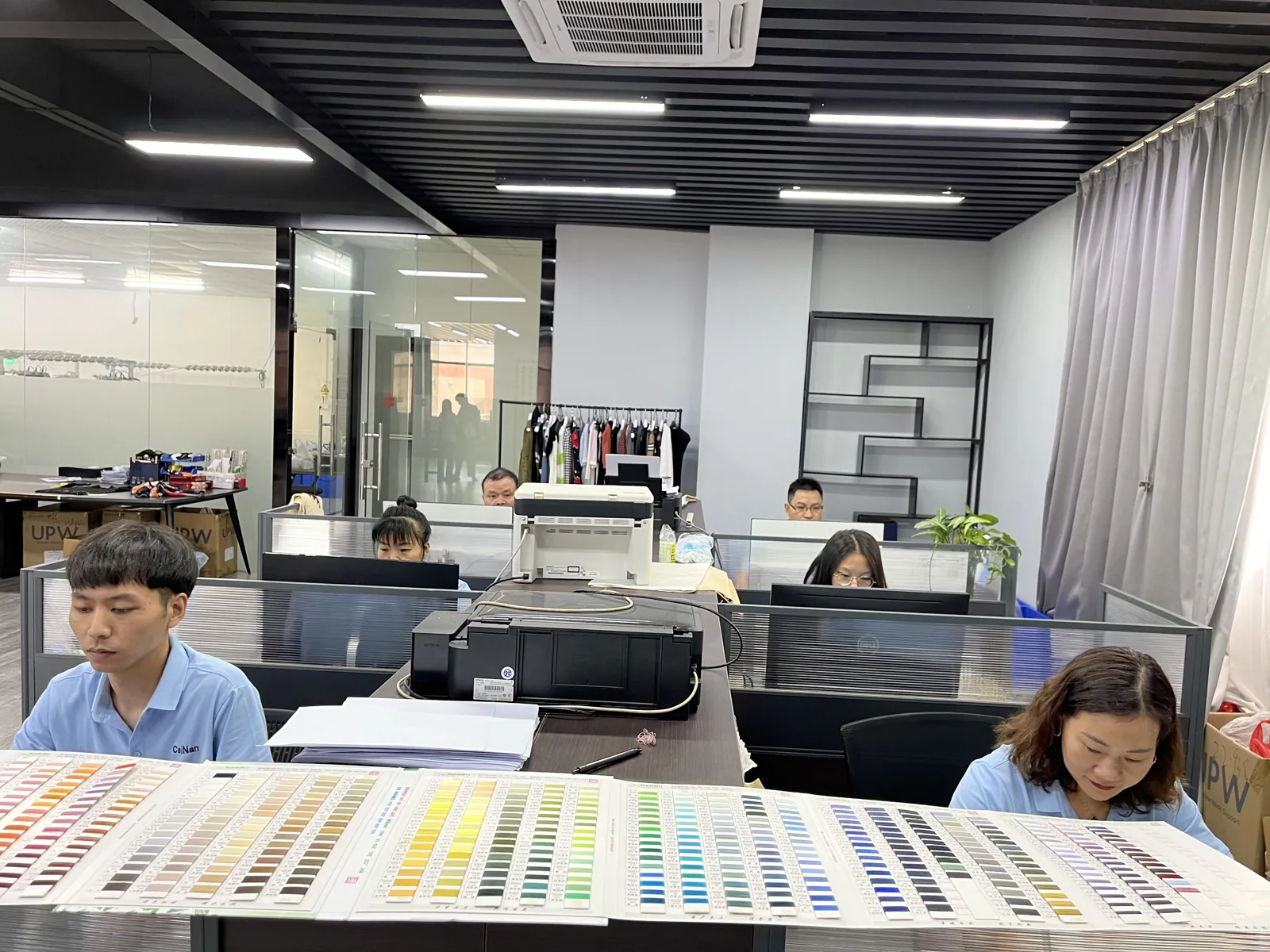
A well-structured sampling workflow shortens the development cycle by three to four weeks on the average cardigan program and reduces revision rounds from five or six down to two or three. The buyers who get this right tend to invest more time in the tech pack and less time in back-and-forth on protos. Our sampling and product development workflow is structured around getting decisions made earlier, not later.
What a Strong Cardigan Tech Pack Includes for custom cardigan sweaters
A cardigan tech pack should specify body gauge and placket gauge separately, body yarn count and placket yarn count, button size and shank type, buttonhole length and reinforcement, shoulder construction type, rib structure and depth at hem and cuff, and target measurements at twelve points minimum. Reference images for the closure line, the hem behavior, and the inside finish accelerate communication more than written descriptions. We ask buyers to send at least one reference image showing the closure detail and one showing how the hem should sit on the body.
Sampling Sequence That Saves Time
We recommend a three-stage sample sequence. The proto sample uses available stock yarn in an approximate color to confirm construction, fit, and silhouette. The fit sample uses the correct yarn and target color to validate measurements and washing behavior. The pre-production sample is made from bulk yarn on bulk machines, and it is what gets photographed, tested, and approved for production. Skipping the fit sample is the most common shortcut buyers ask for, and it is also the most common reason bulk gets rejected.
When to Bring the Factory Into Design
Buyers who share early concept sketches with the factory, before the tech pack is finalized, tend to avoid two or three impossible specifications per style. A factory can flag that a 14GG cardigan with a 5GG cable across the placket is not knittable on the same machine, or that a custom horn button needs an eight-week lead time, before those choices are locked into the tech pack. Early dialogue is the cheapest revision available.
Custom cardigans reward buyers who treat construction as a system rather than a checklist. Placket stability, gauge selection, shoulder geometry, trim sourcing, and testing protocols interact with each other, and a strong decision in one area can offset a constraint in another. Brands that lock these choices down before sampling consistently see shorter timelines, fewer revisions, and more predictable bulk quality.
If you are scoping a new cardigan program or refining an existing one, send us your reference images along with target retail price, target quantity, and intended season. We can return construction suggestions, gauge recommendations, and MOQ guidance within a few working days. Reach out through our cardigan development page with your reference images and program details, and we will reply with a tailored construction proposal.
FAQ
What MOQ Is Realistic for Custom Cardigan Sweaters?
For solid-color cardigans using stock yarn, we can run programs starting around 100 to 150 pieces per color per style. Custom-dyed yarn typically raises the minimum to 250 to 300 pieces per color because dye houses require 30 to 50 kg yarn batches. Multi-color intarsia or jacquard cardigans usually need 200 pieces or more per colorway to be economically viable. Custom trims often push the practical MOQ higher than the knitting minimum.
How long does a typical cardigan production cycle take?
From order confirmation to finished goods, a standard cardigan program using stock yarn takes 60 to 75 days, including sampling, bulk knitting, finishing, and quality control. Custom-dyed yarn adds 15 to 25 days for dye-lot scheduling. Custom trims can extend the timeline by four to eight weeks if not initiated at the same time as yarn procurement. We recommend planning for 90 to 110 days on a fully custom cardigan program.
Can I mix different gauges in one cardigan design?
Mixing gauges within a single garment is possible but requires separate knitting operations and careful linking. A 7GG body with 5GG cable detail on the placket, for example, has to be knit in two stages and joined manually, which adds cost and time. We recommend keeping the body and placket within one gauge step of each other to avoid disproportionate cost increases.
Should I use buttons, zippers, or snaps on a cardigan?
The decision depends on the silhouette and target customer. Buttons remain the default for classic and dressy cardigans, suit a wide range of styles, and are easy to replace if damaged. Zippers fit sportier or modern cardigans and require more precise placket construction. Snaps are useful for childrenswear and for fitted cardigans where button gaping is a concern. Each closure type has its own MOQ and testing protocol.
How do I prevent color variation between sample and bulk for custom cardigan sweaters?
Color consistency starts with an approved lab dip and a controlled dye lot. We recommend approving the lab dip under standard lighting conditions, confirming the bulk yarn matches the lab dip before knitting starts, and limiting each color to a single dye batch when possible. For programs across multiple seasons, we keep dye recipes on file and run a comparison against the original standard at the start of each new batch.