 CN Sweaters
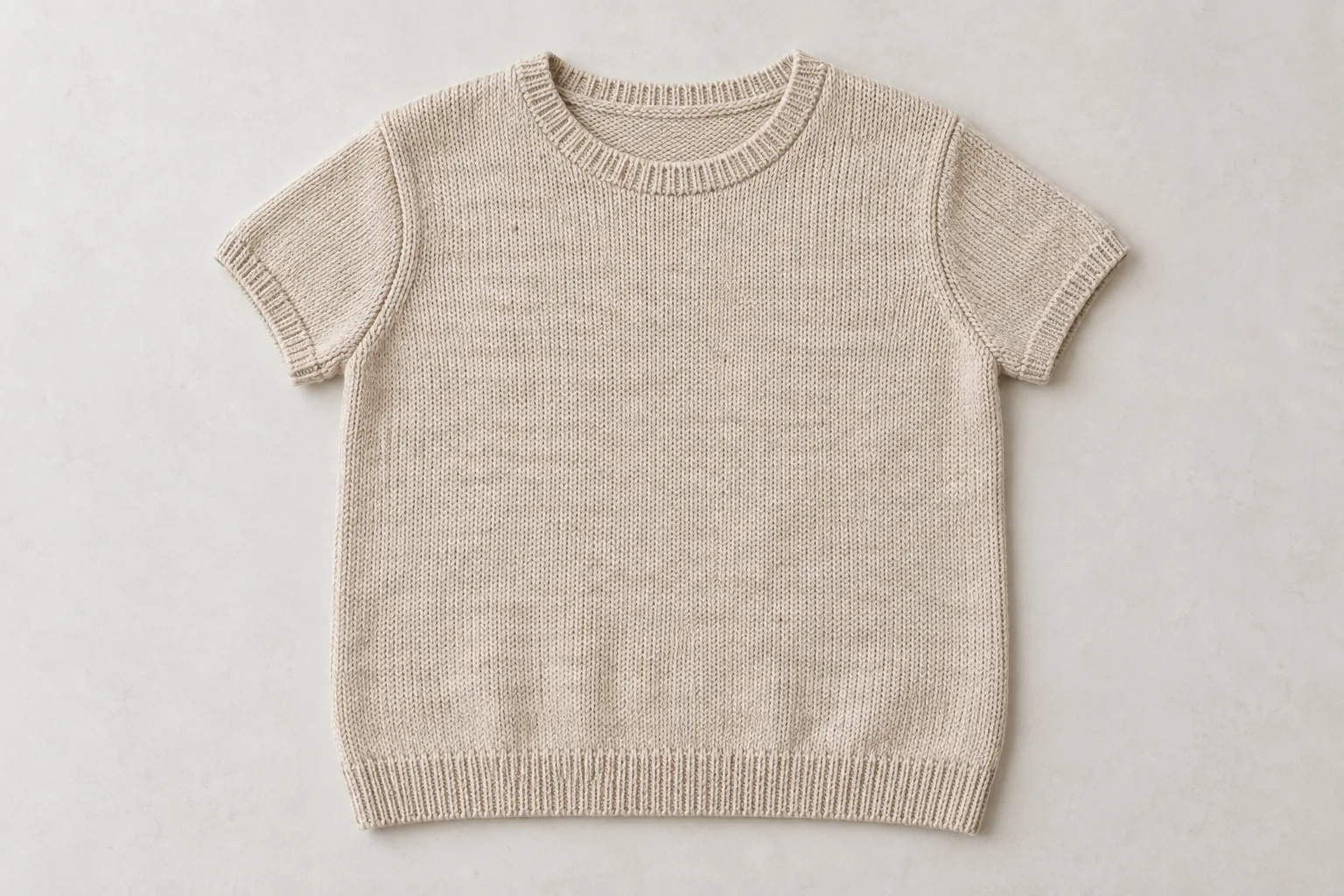
Two quotations for a short sleeve sweater vest can describe different garments. One supplier may extend the body over the upper arm; another may knit a separate sleeve. Confirm the shoulder-coverage construction before comparing prices, because the route changes the parts, joins and development work.
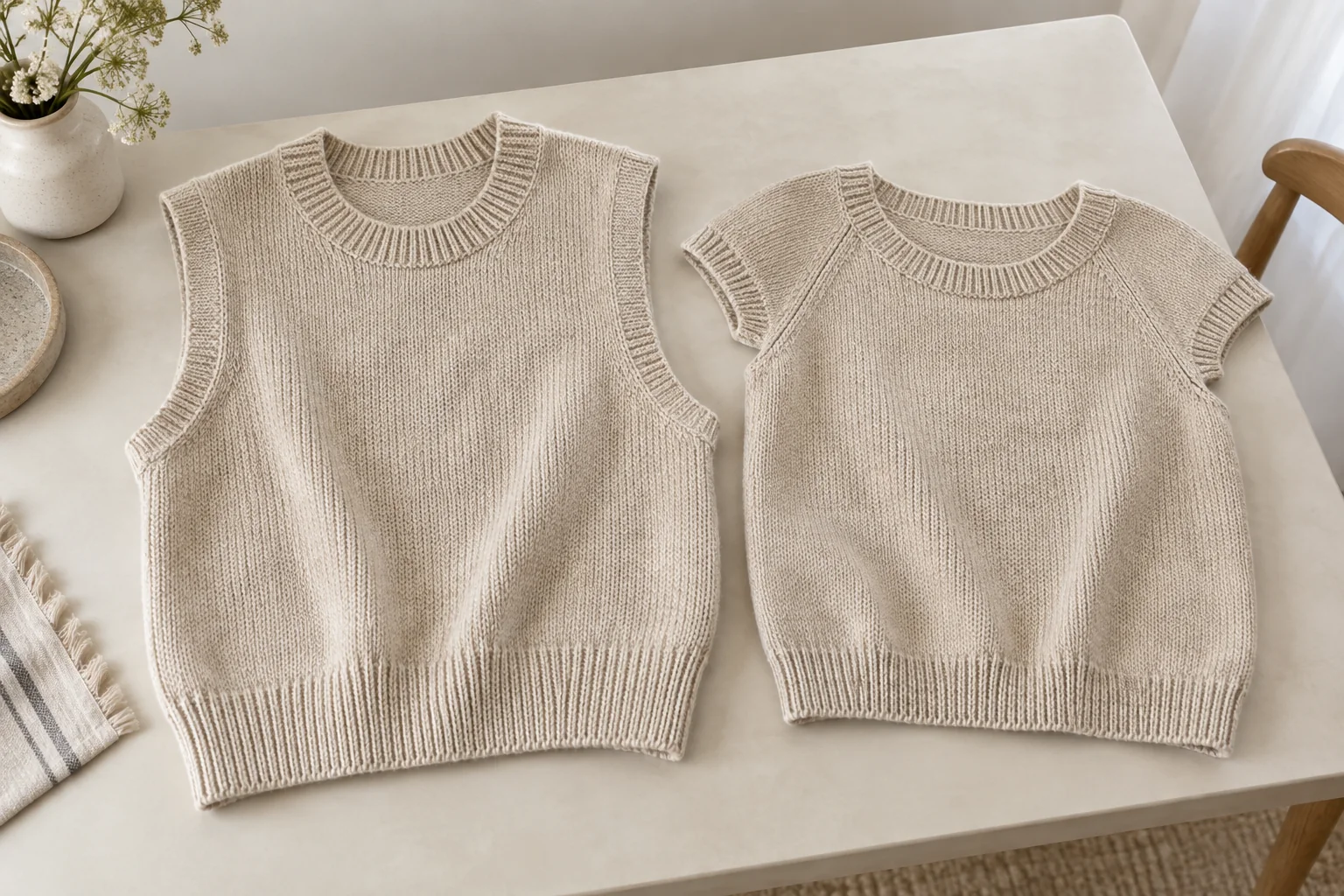
Sending a sleeveless vest measurement sheet with a request to add a small sleeve leaves the sample room to choose the armhole, sleeve opening and underarm relationship. A garment can resemble the reference at rest yet pull the body upwards during reach. Require front, back and underarm sketches of the proposed route.
What does short sleeve sweater vest mean in this brief?
Separate the selling name from the garment drawing
A product team can use the phrase short sleeve sweater vest for a shoulder extension, a cap-sleeve knit or a short-sleeved layering top. Ask which visible features the buyer intends to reproduce. The sleeveless jumper and knitwear vest comparison helps with naming; it cannot determine the sleeve construction from a phrase alone.
Mark the end of shoulder coverage on the drawing. Show whether the lower sleeve opening continues into the armhole, closes around the upper arm or ends above an open side. Include the back view, because an extended front shoulder can hide a different back shape in a flat product photograph.
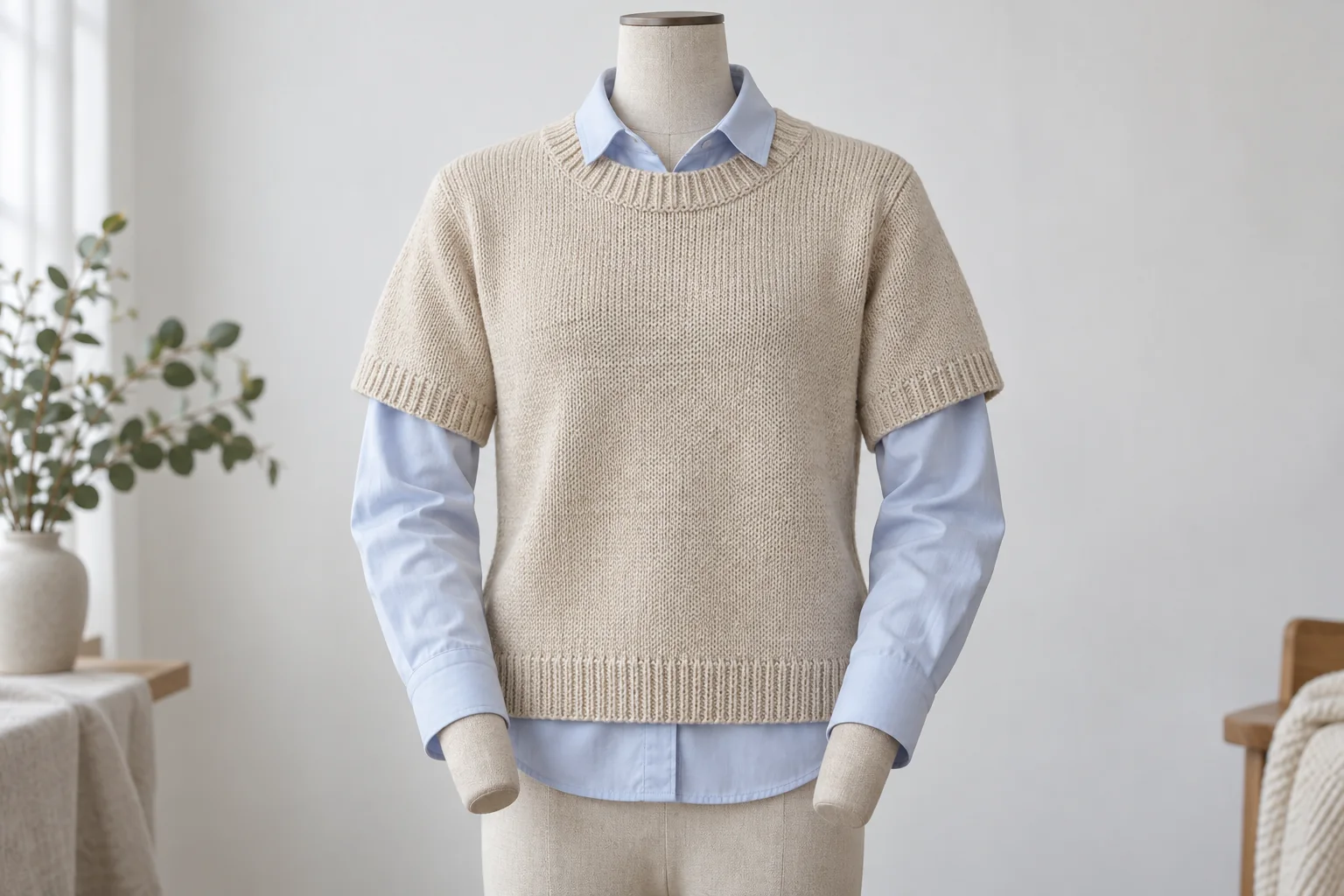
Keep a separate line for the intended wearing layer. A garment worn over a shirt needs the shirt represented in the fit review. If the same style is also intended for direct wear, document that second arrangement. Neither requirement follows automatically from calling the garment a vest.
Choose the short sleeve sweater vest construction route
Compare quotations against the same construction scope. A proposal with a separate sleeve and another with an extended body shoulder may involve different development work. A price difference alone does not tell the buyer which proposal answers the brief. Confirm the route first, then compare material, knitting, joining and finishing assumptions.
If the supplier needs to propose an alternative, retain both drawings until the buyer chooses. Do not approve one construction visually while leaving another construction in the written sample order.
Which short sleeve sweater vest references define the route?
Map the short sleeve sweater vest seams
A sleeveless armhole curve describes an opening in the body. An attached sleeve adds another shaped edge that must meet it. An extended shoulder creates a different relationship between body width, upper-arm coverage and the lower opening. Use separate measurement paths for these routes instead of renaming the same armhole dimension.
The knitted vest fit guide remains a reference for the sleeveless starting point. Before reusing that block, identify each point affected by the new coverage. These may include the shoulder endpoint, underarm level, side seam, upper-arm opening and overall sleeve reach.
| Proposed feature | Evidence needed | Decision it supports | Limit to record |
|---|---|---|---|
| Extended shoulder | Front and back outlines with opening edge | Whether body extension gives the intended coverage | Do not infer an attached sleeve |
| Separate sleeve | Sleeve and body seam paths with matching marks | Whether the two components can be assessed together | Ease and attachment require agreement |
| Integrated sleeve-body area | Supplier construction sketch and sample | How the underarm transition is formed | Appearance alone cannot identify the route |
| Sleeve opening | Measurement path and wearing-layer reference | Clearance and edge position on the upper arm | Flat width does not prove movement |
| Neck and shoulder anchor | Neckline and shoulder landmarks | Whether the body stays in its intended position | Review with the proposed sleeve present |
| Finishing state | Sample revision and care or pressing history | Whether dimensions are comparable | Unrecorded state prevents a fair comparison |
Measure the short sleeve sweater vest opening and reach
ISO 18890 supplies a garment-measurement reference. Add the route-specific points that the buyer and technician need. Record the garment position, the path of the tape and whether an edge is relaxed. A total reach measurement can complement component lengths without replacing them.
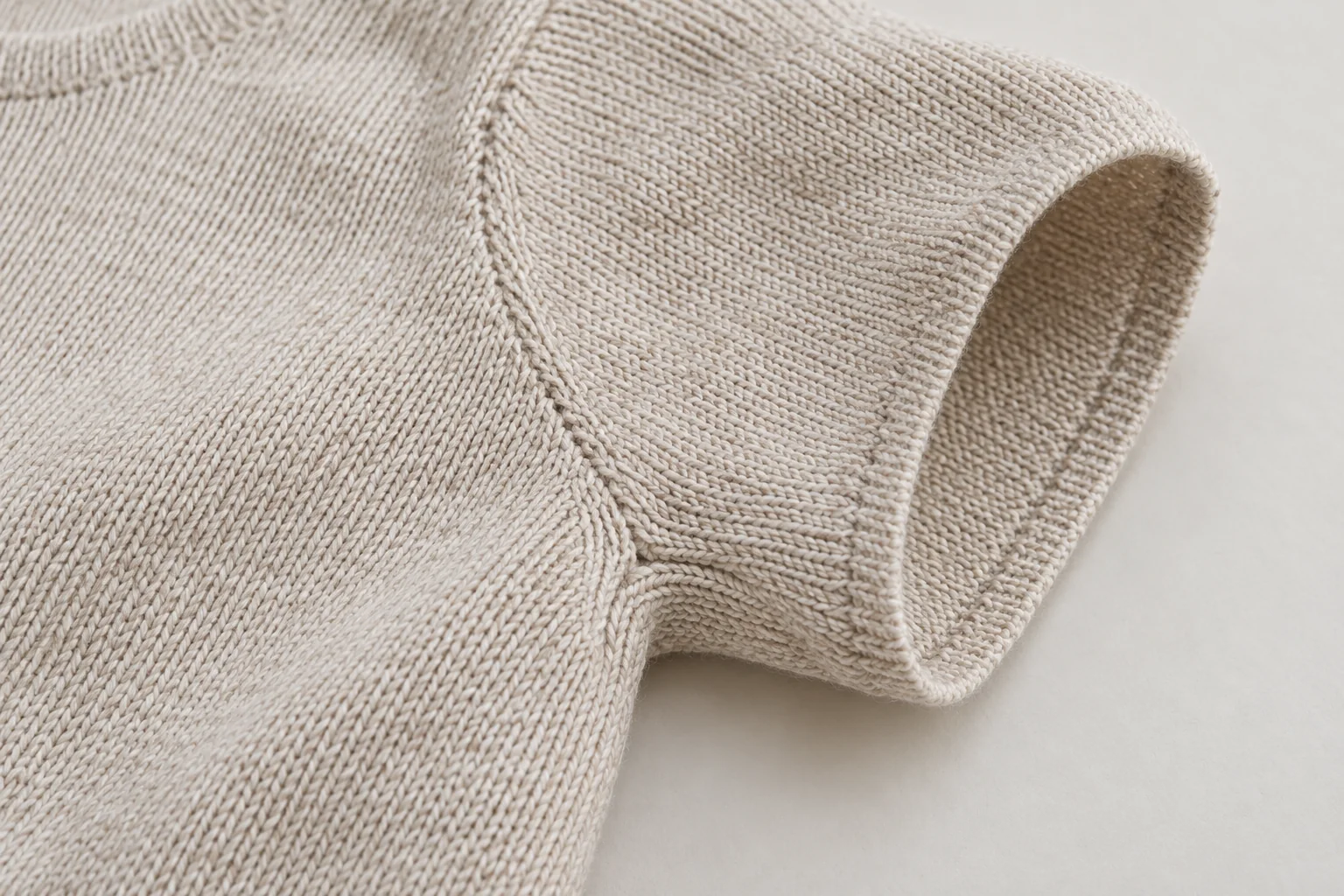
For an attached sleeve, retain front and back seam references separately where they matter to the construction. Two components can have similar total edge lengths and still meet differently around the armhole. Ask the technician to identify orientation and matching points on the actual proposal.
How should movement reveal a route problem?
Observe the short sleeve sweater vest during reach
Fit the short sleeve sweater vest in the declared wearing arrangement. Photograph the resting position, then use the movement relevant to the product. Reaching forward, lifting the arm and returning to rest can reveal different relationships. The buyer should specify a repeatable sequence and the observations required, without presenting it as an established laboratory method.
Watch the hem, side seam and neckline as well as the sleeve opening. If lifting the arm raises the whole body, record where the movement appears to be constrained. A low underarm, a restrictive opening, sleeve orientation and overall fit are possible contributors that need comparison. A single photograph cannot isolate one cause.
Allow the garment to return without pulling it down. If the wearer rearranges it, retain that fact with the photographs. A manually restored hem position does not demonstrate that the garment returned independently.
Compare coverage and clearance as separate requirements
A wider opening may give more room while exposing more of the underlayer. A longer shoulder extension may cover the upper arm while changing the body’s movement. The buyer needs to choose the acceptable relationship, rather than treating additional width or length as an automatic improvement.
Inspect the opening from front, side and back. Record any contact, folding or edge turnover against the intended appearance. For direct wear, use the agreed undergarment and coverage conditions. For layering, include the actual shirt sleeve and any cuff or seam that passes through the opening.
A pullover fit review can help locate a broader body issue. Keep that issue distinct from the route choice. Changing the sleeve should not become a way to hide a neckline or body balance problem that already existed in the base garment.
Which sample changes should be compared together?
Retain a clear relationship between the trial and the comment
If a trial changes shoulder extension, record what happens to opening position and total reach. If it changes an attached sleeve, retain the matching body armhole reference. Avoid comparing a new sleeve on a different body size or underlayer without recording those differences.
Start with the smallest comparison that can answer the question. A component sample may show a proposed edge finish or seam. It cannot establish the movement of the complete garment. Specify when the next decision needs a full sample, a joined upper-body section or a material swatch, and explain what each is expected to demonstrate.
For an attachment proposal, ask for an inside view and a handled sample. The linking-quality discussion gives the buyer language for the join. Do not infer seam elasticity, hidden bulk or edge security from the exterior alone.
Compare the short sleeve sweater vest after care
Record the sample’s original state before care. Then compare the same shoulder, underarm and opening references after the selected wash, dry, finish and rest conditions. The care route should come from the product brief and applicable method, rather than from whichever process is convenient for one sample.
Compare the sleeve and body together after care. If one part changes differently, note the resulting relationship before altering the pattern. Tightening an opening can change coverage and handling as well as dimensions. The next trial should therefore repeat the affected movement and resting views.
When the proposed construction cannot be reproduced in the selected yarn or route, record the supplier’s limit. A different construction is a new proposal for review, even if it achieves a similar photograph.
How does the route affect the size set?
Grade the short sleeve sweater vest geometry
The buyer should identify which relationships define the style across sizes. These might include shoulder coverage, the lower opening’s position and the sleeve’s reach over the intended underlayer. A chest increment alone does not specify how those relationships should change.
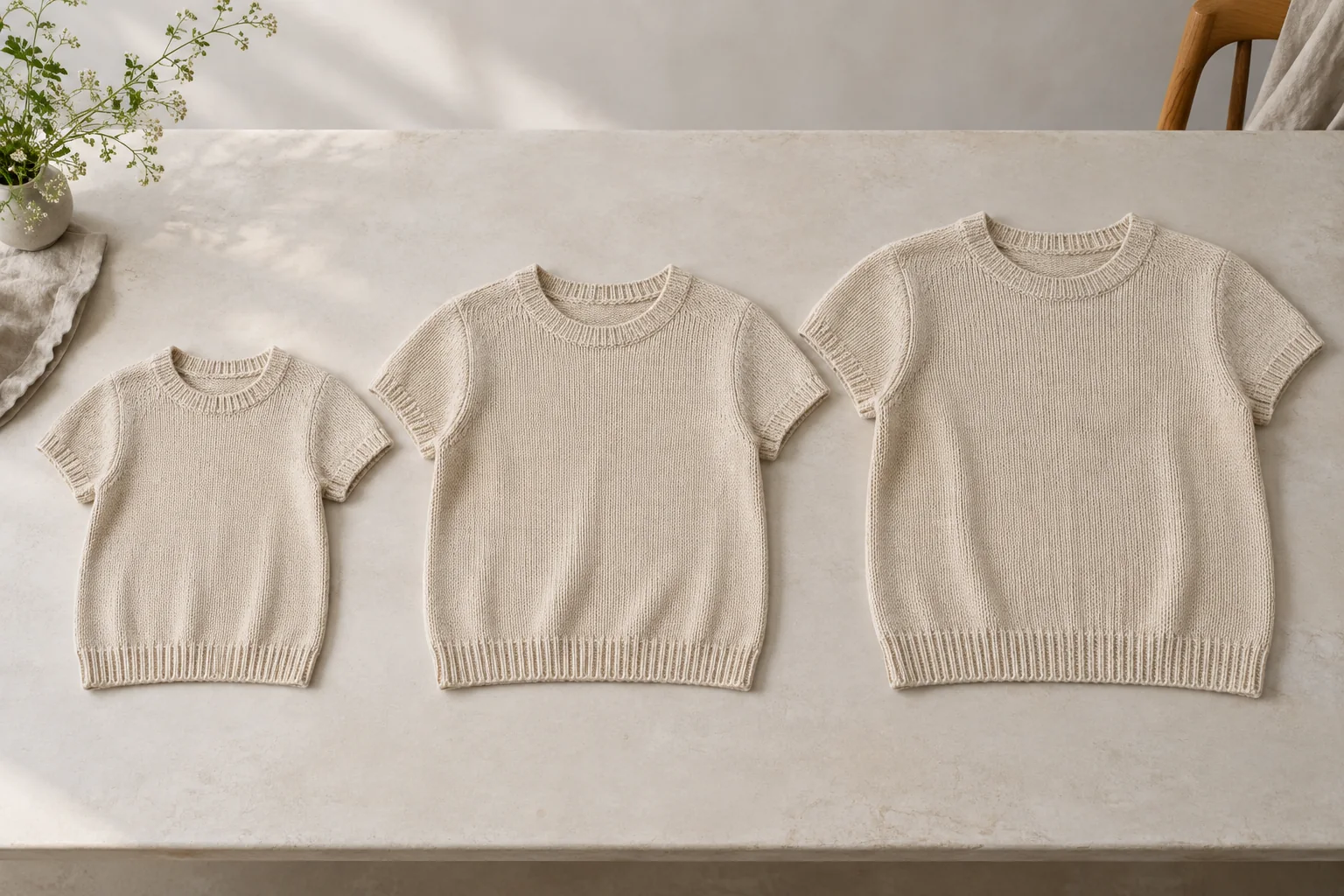
Select sizes that represent construction changes. A changed sleeve component, opening treatment or shoulder proportion can matter as much as the ends of the size range. Record what each sample is intended to represent, including any size that shares a component with another.
Keep the intended underlayer in the size-set review. A shirt used on the base size may not represent the sleeve bulk or arm position required for the other sizes. Record the comparison arrangement so the factory and buyer can repeat it.
Separate fit approval from dimensional acceptance
Set measurement tolerances against defined points and methods. Keep tolerance acceptance separate from a required visual or movement result. A sleeve opening can meet its flat measurement while its location or edge shape still needs revision.
What should the buyer approve before bulk preparation?
Use findings to choose the next development action
| Sample observation | Comparison to make | Development action | Closing record |
|---|---|---|---|
| Body lifts during reach | Body, underarm and sleeve positions through movement | Review the connected geometry | Repeatable movement views of the revised sample |
| Opening clears the arm but exposes too much | Front, side and back coverage in the intended layer | Revisit opening position or route | Accepted coverage reference with wearing state |
| Shoulder extension folds underneath | Resting outline against the proposed extension | Compare shape and edge construction | Revised drawing and unadjusted resting view |
| Attached sleeve rotates | Sleeve orientation and matching points | Check component and assembly references | Marked seam paths and joined sample |
| Opening changes after care | Same sample and declared care conditions | Review affected material, edge and shape inputs | Before-and-after dimensions and fit observations |
| A graded size uses a different route | Approved base construction against the size proposal | Treat the change as a separate approval | Size-to-construction map and representative sample |
A finding can have more than one plausible cause. Ask the technical team to explain the comparison behind its proposed correction. If the evidence does not separate the possibilities, retain that uncertainty in the comment rather than presenting a guess as a confirmed diagnosis.
Carry the selected route, component identities and measurement paths into the order. State the wearing layer and identify any size that changes sleeve construction. A selling name alone cannot tell another technician which components to make.
To discuss a new style with CNSweaters, include the construction sketch, reference garment and intended wearing arrangement when you send your short-sleeve knitwear brief.
Frequently Asked Questions
Can the buyer reuse an existing sleeveless vest block?
It can be a reference, but the new sleeve or extension requires its own review. Identify the points that change, including shoulder endpoint, underarm level and opening. Retain the original block revision so a technician can explain how the proposed route differs and what the next sample needs to establish.
Does a cap sleeve always need a separate knitted component?
The name does not determine the construction. Ask for a drawing showing the actual parts, seams and shaping. The buyer can then compare a separate sleeve with an extended or integrated proposal on the same wearing requirement, while recognising that each route may need different measurements and sample work.
Is a wider opening enough to solve restricted movement?
It is one possible change to investigate. Restriction can involve the opening’s position, sleeve orientation, underarm geometry or body fit. Record the movement and locations involved before changing width, then check whether the proposed correction also alters coverage or the resting silhouette.
Must every size use the same sleeve component?
No shared-component rule is assumed here. State the proposed size groups and assess their actual fit relationships. If the factory changes a component at a particular size, include that transition in the review and record the accepted mapping so the correct component reaches the correct body.
Can the sample be approved from a flat photograph?
A flat image can document outline, construction marks and selected dimensions. It cannot establish clearance on the upper arm or the body’s response during reach. Approve the relevant wearing states with the actual sample, and keep those records connected to the flat drawing used for production.