 CN Sweaters
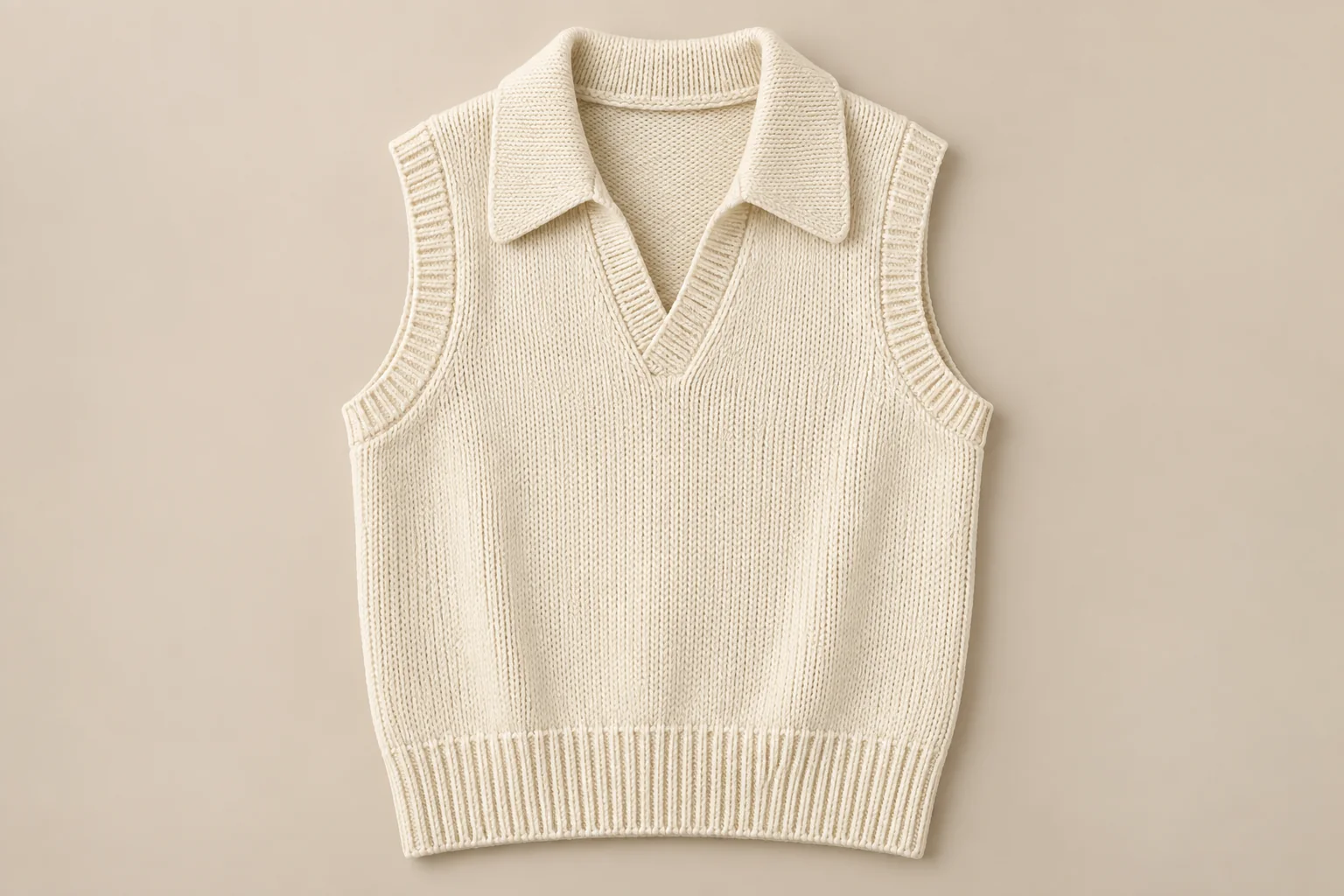
A collared sweater vest customer can find the shirt collar trapped even when the outer collar looks neat. The pattern engineer should review the turn-down collar, back-neck attachment and sleeveless shoulder together over the intended shirt. Choose a route that preserves the agreed fold without pulling the shoulders inward or opening the armhole.
Which brief defines the collared sweater vest?
Name the collared sweater vest visual target
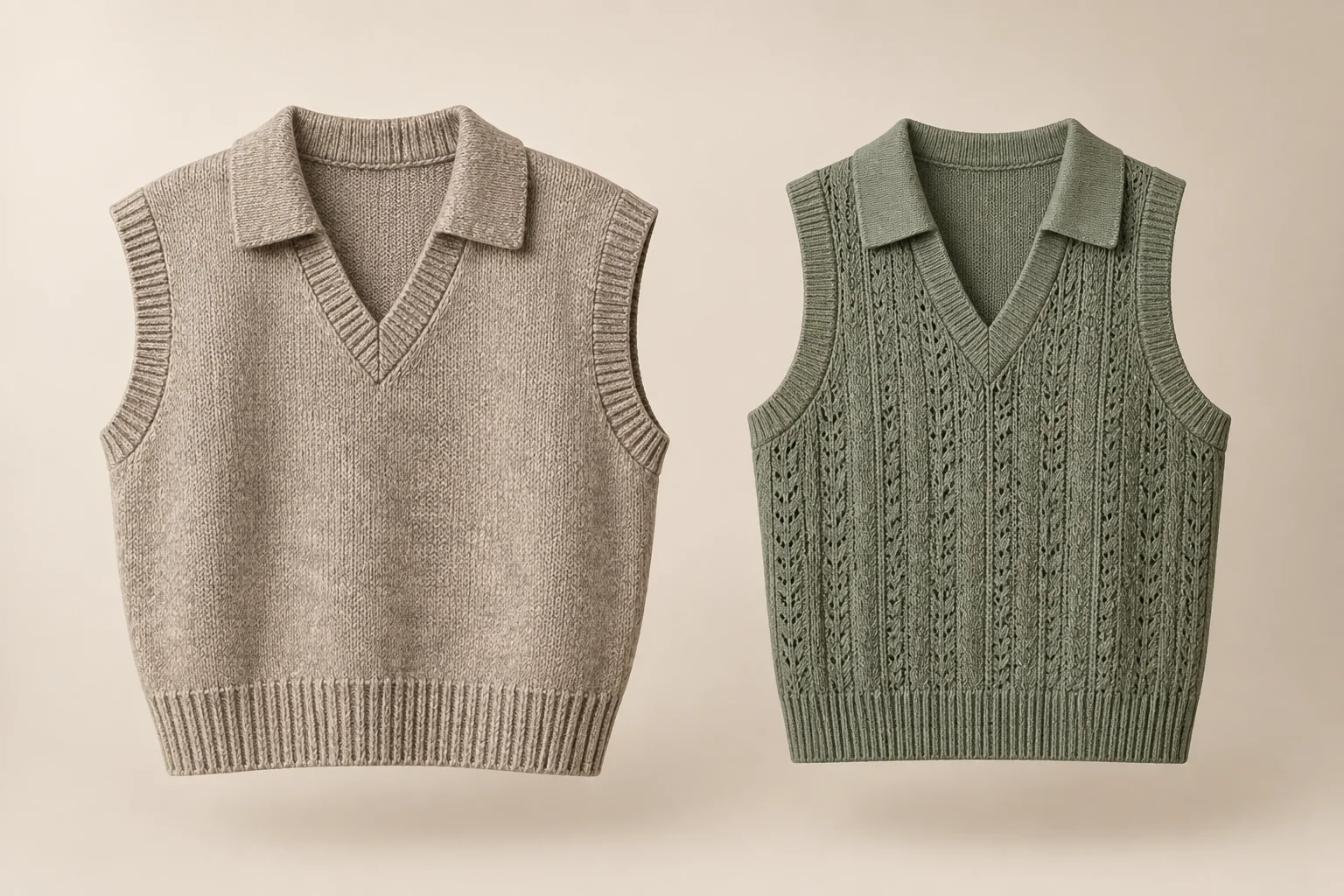
“Collared vest” can mean a narrow folded edge, a broad shirt-like turn or a soft collar that partly stands. These versions place material at different parts of the neck and shoulder. Give the technician a front and back reference with the desired turn line, collar end position and visible neckline depth. If the brand expects a shirt collar underneath, identify that shirt. A bare form and a thick shirt create different contact points.
Decide what the wearer puts under it
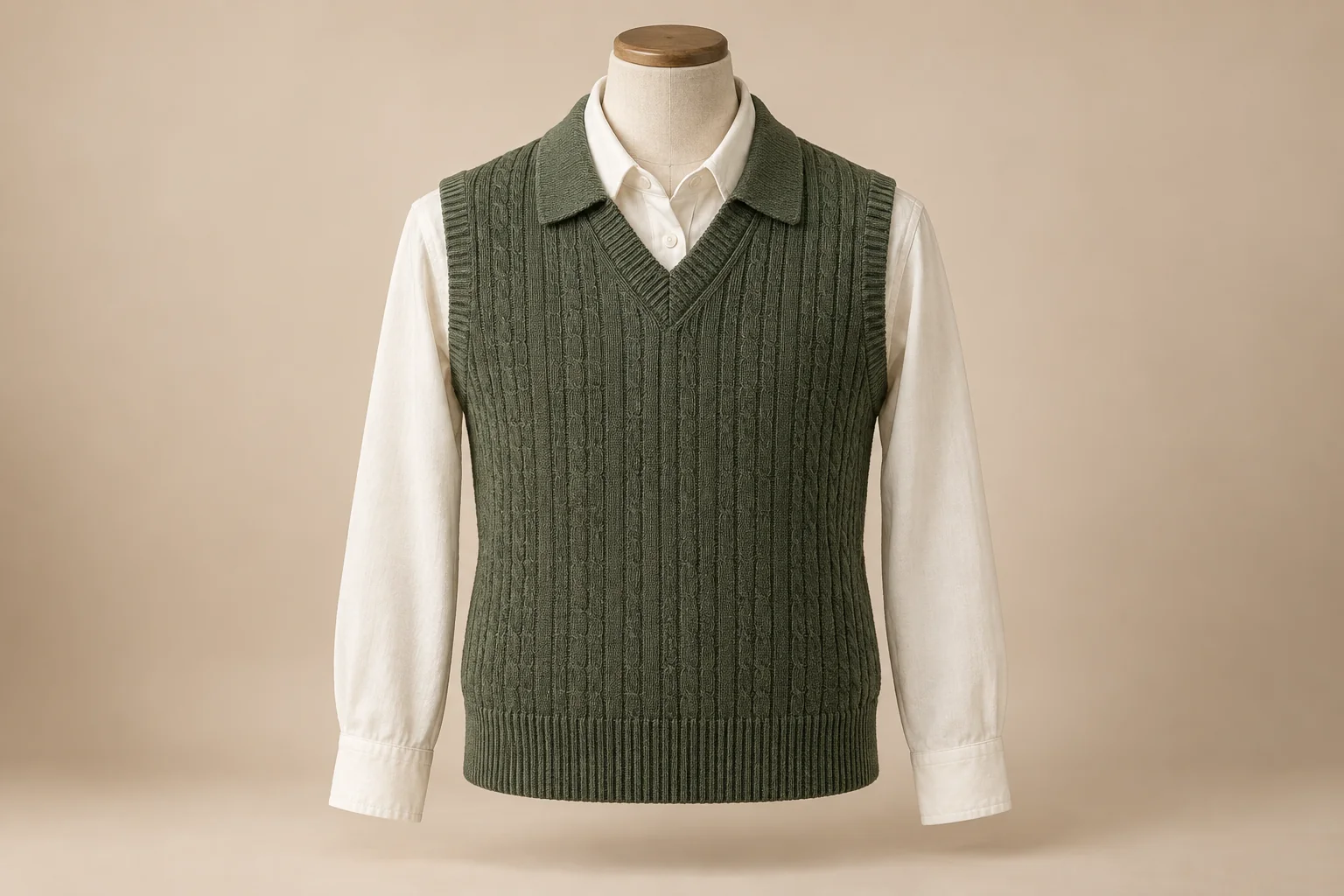
A vest layered over a shirt should be tried with the actual collar, placket and sleeve bulk intended for the product. A tee may expose a different neckline and armhole outline. Specify the primary underlayer and any alternative the product must also accommodate. Record how the vest is put on, whether the collar catches the shirt, and where the shoulder sits once the wearer stops adjusting it.
What collared sweater vest inputs belong on the drawing?
Map the collar attachment and shoulder line
Show the front and back neck edges, collar attachment route, folded end position and shoulder seams on one drawing. If a collar is knitted as an extension of the body or supplied as a separate component, record that route. Ask to see the inside at the neck-to-shoulder transition. A clean face view may hide a thick joining seam or a point where the edge turns unevenly. The collar drawing should show the approved fold after the garment has settled on a body, not just the detached component.
Compare collar routes with the same base vest material and fit where practical. If a new collar requires another neck edge, identify both changes; its finished attachment, fold and inside join must be represented in the sample.
The input table keeps the front, back and layering references together before a collar proposal is judged.
| Collar component | What to retain | Comparison supported | Responsible choice |
|---|---|---|---|
| Collar outline | Fold, ends and rear height | Checks planned turn | Designer approves reference |
| Attachment | Neck path and component identity | Locates bulk or pull | Technician sets route |
| Shoulder | Seam position and width | Checks vest support | Fit team marks body reference |
| Armhole | Shape, edge and opening points | Tests exposure and clearance | Buyer approves intended use |
| Underlayer | Actual shirt or tee | Repeats contact condition | Brand specifies styling |
| Sample state | Yarn, finish, revision and rest | Separates material changes | Sample room records version |
Give measurements identifiable endpoints
A collar height taken from a different fold line is not a comparable value. Mark the back-neck origin, folded edge, front collar end and shoulder seam. For the armhole, identify the top shoulder point and lower opening landmark. ISO 18890 describes garment measurement points and allows parties to agree additional ones. It does not set a preferred folded-collar width or vest armhole limit. Put this style’s unusual points on the drawing with the garment state in which they are measured.
How can a collared sweater vest affect shoulder position?
Observe the assembled vest at rest
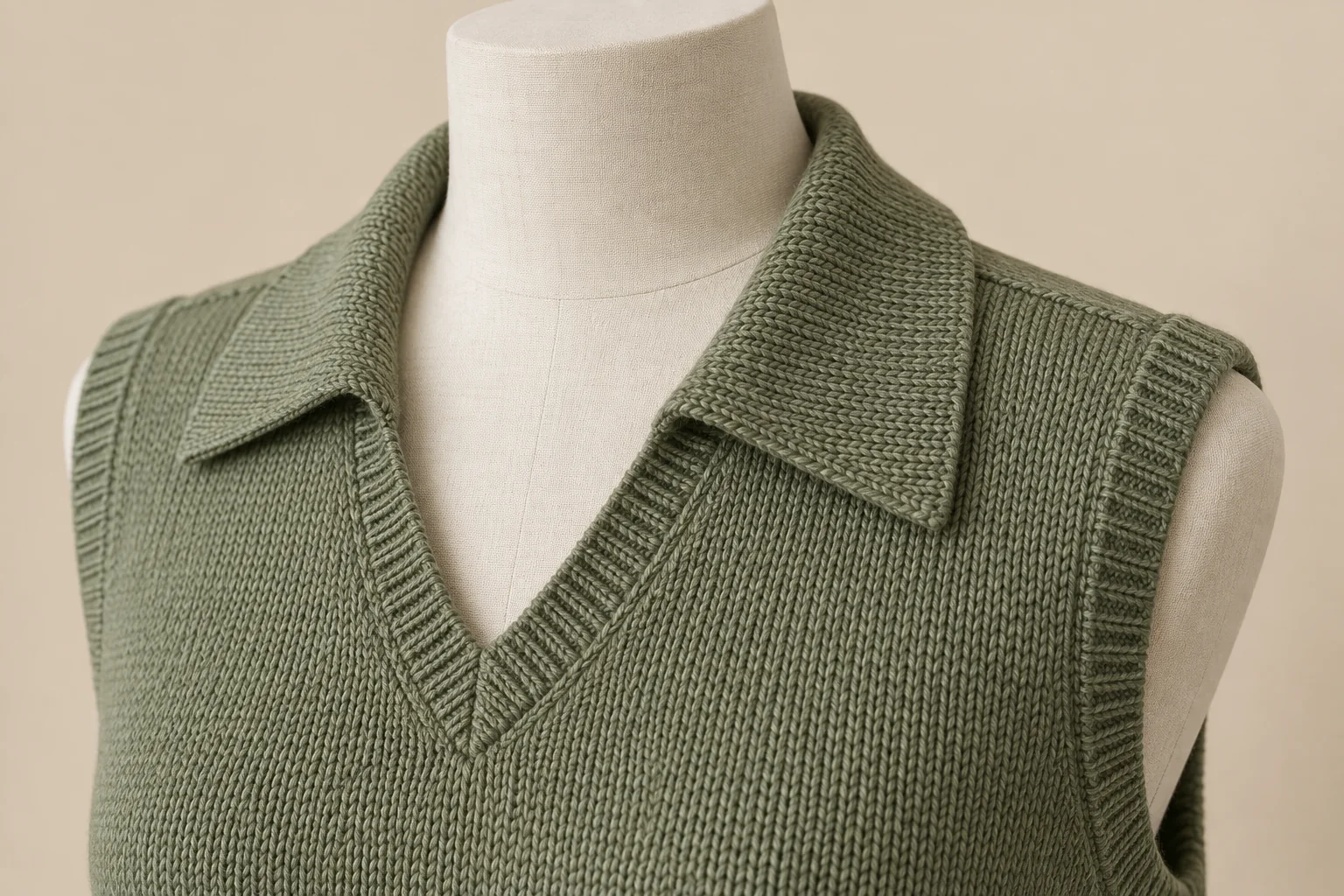
A detached collar sample can show texture and finishing, but the assembled vest shows how its mass is supported. Put the garment on the intended wearer and photograph front, back and side after it settles. Note whether shoulder points move toward the neck, whether the back neck rises or whether the front opening spreads. These are observations to investigate, not a conclusion that the collar is necessarily too heavy. The shoulder shape, neck attachment and body fit may all contribute.
Check collared sweater vest armholes before widening the body
Shoulder movement can change where the armhole edge rests against an underlayer. Observe the upper opening in front and the rear shoulder position at the same time. If the armhole gapes, the cause may be shoulder width, side shape, edge response or the underlayer. Adding width to the entire vest can hide one symptom while changing the intended body fit. Ask for a marked view of the first visible shift before naming a pattern correction.
Which collared sweater vest wearing actions should be repeated?
Dress, turn and reach in the stated outfit
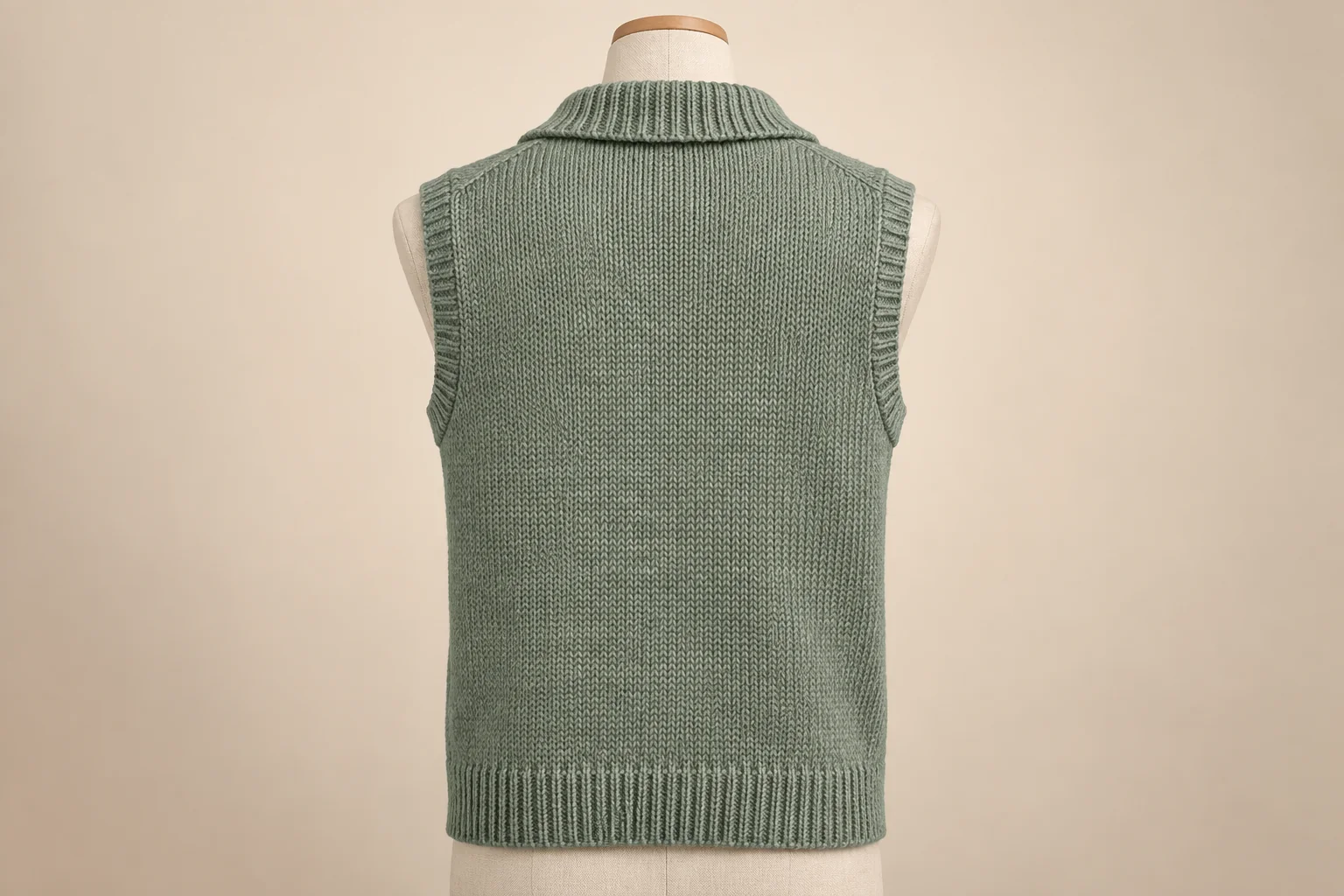
Ask the reviewer to put on the shirt, then the vest, without folding either collar by hand to make the first photograph. Record the initial contact at the rear neck, whether the shirt collar is trapped, and where the vest points rest. Have the wearer turn the head and reach forward in ordinary use. The goal is to see whether the collar or shoulder moves out of its intended position. Repeat the same sequence with a revised sample before declaring an improvement.
Look at the back as well as the front
A turn-down collar may cover the back-neck attachment, making a shifted shoulder less obvious from the front. Photograph the back after dressing and during the agreed actions. Note whether the collar rises, the rear neckline moves or one shoulder sits differently. If one side behaves differently, inspect its component and seam path before changing both sides. A symmetric flat sample can still sit asymmetrically if the body and underlayer interact in wear.
Which collared sweater vest changes reopen approval?
Recheck the neck after the planned care route
The collar, attached neck edge and body can change differently after care. Record the product’s intended wash or dry condition and identify the sample before comparing it. AATCC TM150 addresses length and width change of applicable garments after home laundering and has limitations for certain stretch fabrics. Do not call an informal care photograph a formal test. Keep dimensional results separate from the worn collar and armhole appearance decision.
Repeat the neck, shoulder and armhole views after the selected care and rest state, using the same shirt and wearer or form. Identify any steam or hand-shaping so it is not mistaken for the fold’s natural position.
A collar that loses height may need an edge or construction comparison; a shoulder that shifts after care may call for a body investigation. Avoid assuming either result comes from a fibre label alone. If a proposed yarn or finish changes, review the affected collar-to-shoulder relationship again. The yarn-substitution guide explains why a new material cannot inherit an older sample approval without evidence. Keep the previous physical reference for a matched review.
Grade the collar and vest as connected components
A collar end, shoulder width and armhole edge do not have to change by one linear increment through every size. Decide the range from the target bodies, then review lower, base and upper sizes and any component transition. Mark the collar’s folded position and armhole relationship on each sample. The custom knitwear grading guide gives the wider size-system logic; the collared vest still needs its own physical check.
If one size changes collar construction or shoulder route, retain an exception map. A base-size collar that turns well cannot approve a new larger component by drawing alone. Nor should a generous armhole tolerance be used to hide an unapproved shape change. Review the intended underlayer in risk sizes, then agree the measurable acceptance points. A first-off can be checked against the right component reference instead of a generic collar height for the entire range.
What evidence closes the collared sweater vest decision?
Tie a visible conflict to a proposed trial
The second table maps the observation to a bounded investigation. It does not assume that more reinforcement, a taller collar or a wider armhole is always better.
| Wear observation | Relationship to investigate | Buyer decision | Closing evidence |
|---|---|---|---|
| Collar traps the shirt | Neck entry and fold path | Trial the attachment route | Same-shirt dressing sequence |
| Shoulder pulls inward | Collar support and body width | Review connected system | Front/back rest views |
| Armhole opens in wear | Shoulder, side and edge relation | Hold coverage approval | Shirt-and-vest side views |
| Rear collar rises | Back neck or attachment | Compare identified components | Marked back and inside views |
| Appearance changes after care | Material and finish response | Reopen affected revision | Paired pre/post-care records |
| Only one size loses shape | Collar or armhole grade | Restrict that size group | Physical size-specific sample |
Frequently Asked Questions
Is a collared vest just a sleeveless polo sweater?
Not for this brief. This version has a turn-down collar without a working polo placket. A functional placket adds fastening and entry decisions that need their own drawing.
Can a shirtless fit sample approve layering?
It can show one appearance state. It cannot establish clearance or collar contact over the named shirt that the brand intends customers to wear.
Does a taller collar require wider shoulders?
No universal rule follows from collar height alone. Compare the assembled garment and actual attachment route on the intended wearer before changing the shoulder.
Is a flat armhole width enough for approval?
It is useful with marked origins. Worn side views and normal movement show where the opening rests relative to the underlayer and body.
When should the size range be rechecked?
Recheck when the collar component, shoulder rule, material or intended underlayer changes. Include sizes around construction transitions rather than relying only on the base sample.
The collar release record needs its fold, rear neck, shoulder and armhole on the same shirted sample. A new band or yarn may improve one view and shift another, so keep the accepted component identity beside the worn photographs. Put the uncertain junction in a CNSweaters vest development request rather than asking for a generally “neater collar.”