 CN Sweaters
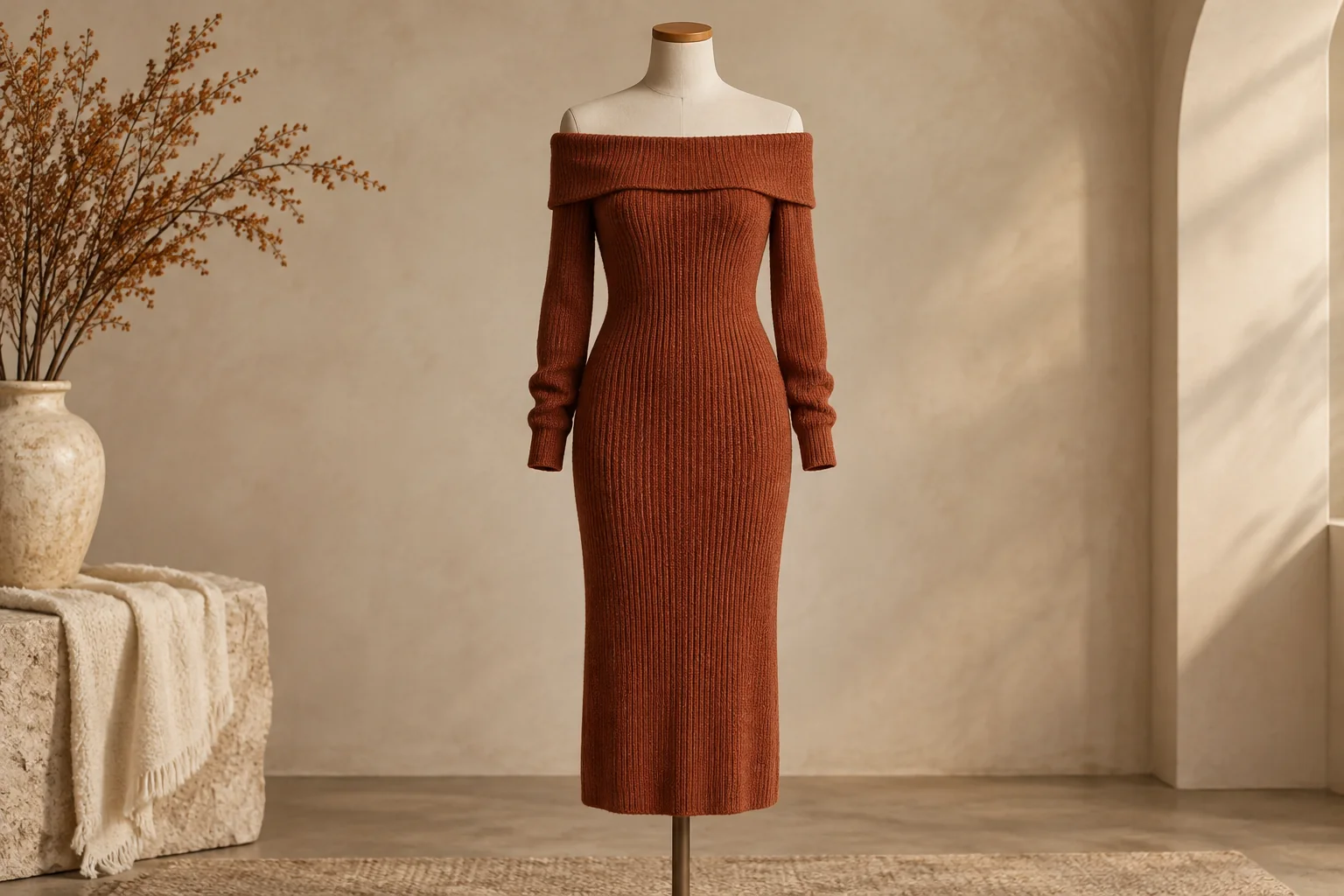
When the wearer raises an arm, a long sleeve can pull at the low neckline of an off shoulder knit dress. That movement does not isolate a neck-edge fault: sleeve route, armhole and full dress body may all change the load. A pattern engineer needs matched resting and movement views of the same garment before choosing a local edge or sleeve revision.
Begin with the brand’s exact off-shoulder outline. Mark how low the edge is meant to sit, what undergarment or layer it should clear, and where the front and back neckline belong on the chosen wearer. Then identify the long sleeve construction and material. A flat upper-body measurement cannot answer whether the full dress returns to the intended line after ordinary arm movement.
Which neckline state defines this off shoulder knit dress?
Mark the front and back neckline outline
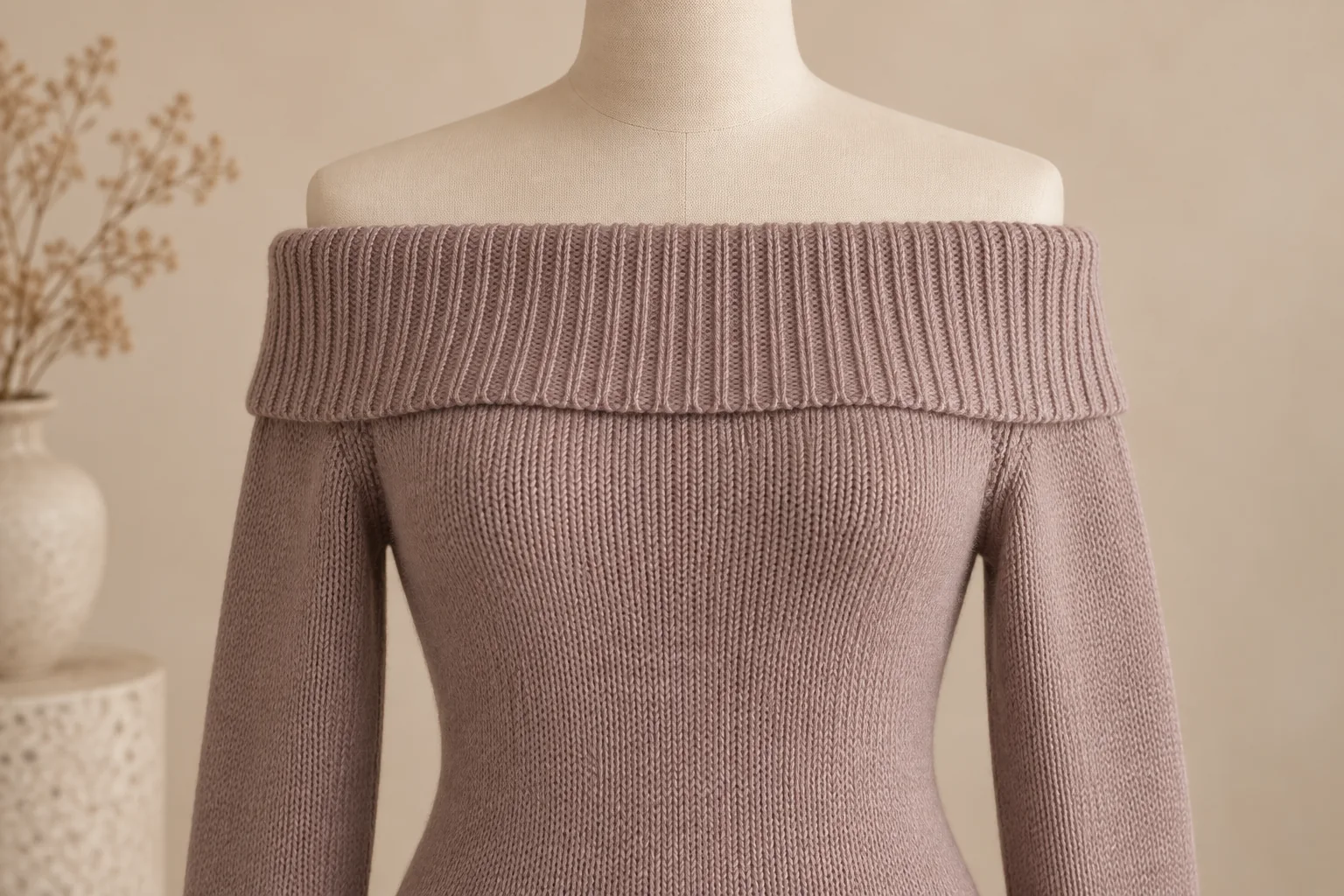
“Off shoulder” does not set a universal neckline depth or exposed area. The edge may lie straight across the upper arms, rise slightly at the back, or have another deliberate shape. Save a marked front, side and back reference on the intended wearer or form. Record the resting position before anyone pulls the edge down for a photograph. If the styling requires the wearer to adjust it continuously, the buyer needs to decide whether that behaviour belongs to the actual product brief.
Choose the relevant movement conditions
State whether the dress is intended for standing, walking, seated use and ordinary reaching. Specify the undergarment and sleeve layer, if any. Observe the first view after the garment is put on without hand-shaping the neckline, then repeat after the garment settles. Keep the fit model or form identity with each view. An off-shoulder style will move in use; the brand decides which motion is intended and when it stops looking like the approved silhouette.
Mapping the sleeve, opening and full body
Draw the sleeve and upper body as one system
Mark the neckline edge, shoulder or upper-arm contact area, armhole path, sleeve head or joining route, bicep, cuff and side seam. Show the full dress length and hem in the same drawing. ISO 18890 describes garment measurement points and allows parties to agree additional ones. It does not prescribe the off-shoulder curve or a universal tolerance for its movement. Identify the extra points the brand needs and measure them on a named garment state.
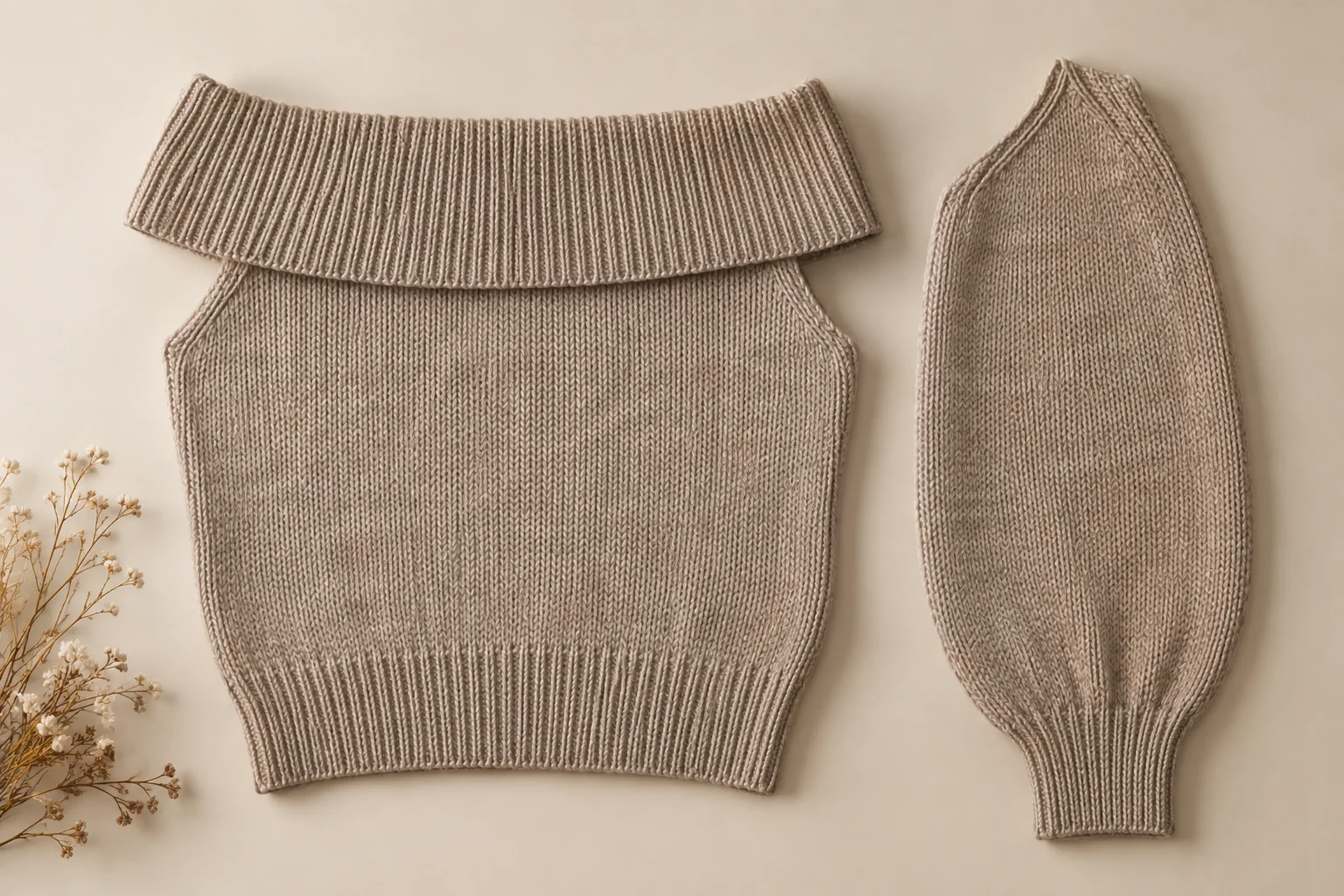
Give each sleeve a clear construction identity. A set-in sleeve, extended shoulder or another route can transfer movement differently. The knitwear tech-pack guide can carry a section drawing and joining instruction. Keep the approved neckline appearance beside that construction record. A photograph of the face alone may hide how the sleeve is joined to the upper body and why the edge shifts during reach.
| Neckline load input | Record required | Comparison enabled | Owner or boundary |
|---|---|---|---|
| Wearer and underlayer | Target profile and clothing beneath | Locates exposure | Brand sets intended use |
| Neckline | Front/back edge and resting state | Checks intended position | Designer signs outline |
| Sleeve route | Join, upper-arm and cuff path | Traces movement | Technician marks construction |
| Dress body | Length, side seam and hem | Separates lower-body pull | Fit team checks whole dress |
| Material | Yarn, knit, finish and revision | Identifies each proposal | Sample room labels garment |
| Actions | Rest, reach, seat and return views | Repeats observed shift | Buyer selects use sequence |
Keep body and garment points separate
Keep wearer measurements separate from the dress’s neckline, sleeve and body dimensions. A size label cannot explain a changed sleeve-to-neck relationship; use the actual body or form associated with each reviewed sample.
Following the first displacement in movement
Watch the first part that displaces
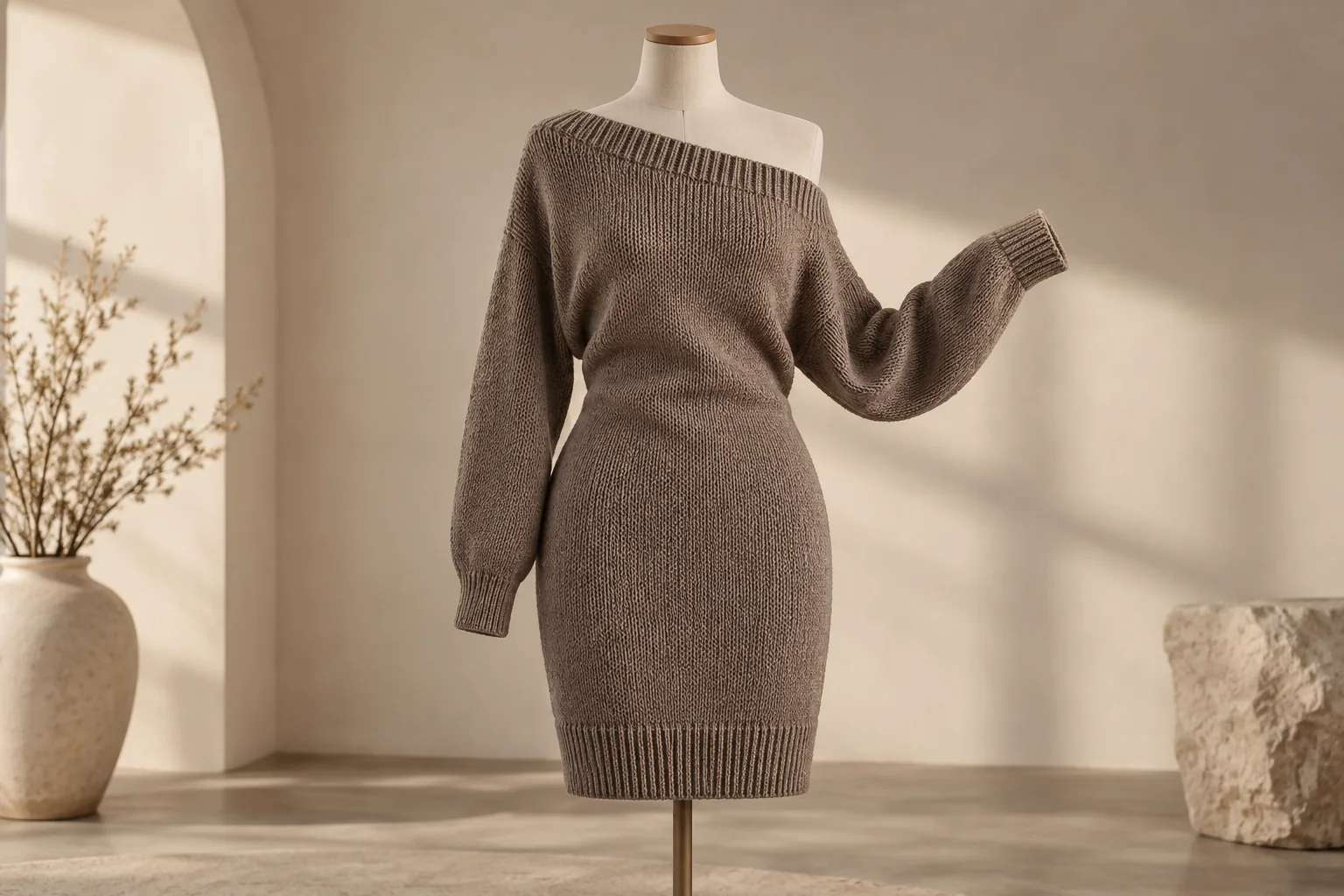
Have the wearer raise an arm slowly, reach forward and return to rest as the product use requires. Keep camera height and outfit consistent. Note whether the cuff, upper sleeve, armhole, neckline or hem moves first. If the neckline rises only when the sleeve pulls, the sleeve-to-body relationship needs investigation. If the edge slips while the arm is still, inspect its geometry, material response and back support. These are possible routes for a trial, not diagnoses from a single photograph.
Compare the sleeves before revising the entire neckline. If one side moves first, inspect its joining path, length and assembly with an inside view. If both pull evenly, compare the shared pattern and material response. These observations locate the next trial; they do not establish a cause on their own.
Check the hem and side seam at the same time
A long dress can rise or turn during arm movement, changing the visible neckline even if the edge itself has not been altered. Include the lower hem and side seam in one wide view. If the hem lifts with the sleeve, review body length, armhole and sleeve route before making only the neck edge tighter. If the lower body stays in place but the neckline changes, a local upper-body option may be a better next trial. Keep a close view of the edge as supporting detail, not the sole decision image.
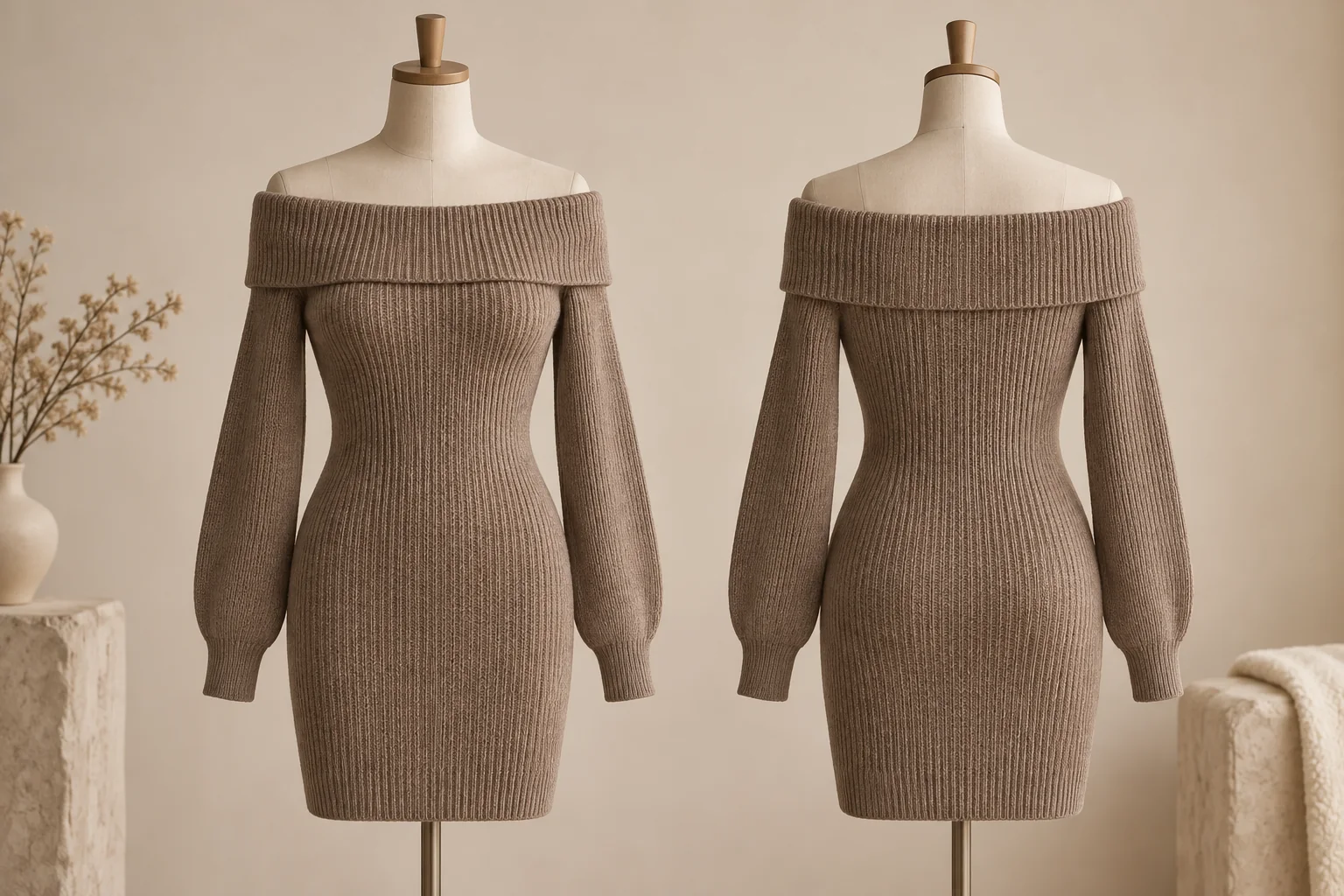
Which edge or sleeve change needs a trial?
Compare neckline support without hiding sleeve fit
A technical team may propose a different edge knit, facing, elastic component or joining route. Ask what the proposal changes and what it may affect visually. A stronger edge might hold its position while making the garment difficult to dress. A wider neckline might ease entry while exposing more shoulder than intended. Trial one defined relationship where practical, preserving the same body, sleeve and material reference. Keep an inside view of the changed component.
A construction proposal should name its yarn and assembly choices. No one neckline solution suits all dresses. If a trial also uses another yarn, name the combined change. The buyer can approve a full proposal if it works, but cannot claim the edge alone caused the result. The yarn-substitution guide sets the wider boundary for a later material swap.
Change the sleeve route deliberately
A sleeve that is too tight at the upper arm may transfer more movement into the dress body. An excessively wide sleeve can add visual mass and alter the style. Compare the actual upper arm, cuff, sleeve length and armhole with the target wearer. Do not assume adding width at the cuff repairs a bicep or sleeve-head conflict. A proposed sleeve change should include a new rest and movement sequence, plus a check that the neckline and hem retain the chosen silhouette.
ASTM D2594 concerns stretch properties of low-power knitted fabrics within its scope and is not recommended for commercial shipment acceptance. A material result cannot serve as an off-shoulder movement test. If an applicable fabric comparison informs the sleeve route, keep it beside the whole-garment views. Ask a qualified testing provider whether the method suits the actual specimen before citing a result. A hand pull on a dress should never be labelled a completed standard test.
Size transitions and declared care states
Review the range around construction transitions
A base-size dress may hold its chosen edge while another size pulls differently because sleeve, neckline and body grades do not change by the same amount. Select lower, base and upper sizes from the offered range, adding one where a new sleeve route, edge component or knitting program begins. The custom knitwear grading guide provides the wider process. This product needs its own size-specific off-shoulder rest and movement view.
Record body profiles, garment measurements and the exact sample versions compared. Do not enlarge a manufacturing tolerance to excuse an unapproved grade. If one size alone loses its neck position during reach, identify whether the cause is a component transition or a missing wearer-specific rule before revising every size. The approved size-set record should tell production which edge and sleeve combination each size group actually uses.
Compare the stated care state honestly
AATCC TM150 addresses length and width change after home laundering for applicable garments and notes limitations for some stretch fabrics. A dress that changes after the brand’s care route needs a matched measurement and appearance review; an informal wash cannot be reported as formal TM150 testing. Name the method actually used, sample identity, drying route and resting state. Recheck the neckline, sleeve and hem together.
A measured neckline width may remain inside its agreed range while the worn edge moves, or a width change may still leave the chosen appearance intact. Keep both findings. If material or finishing changes after approval, repeat the affected trial on that version. The reference-sample guide helps retain the physical garment that anchors the buyer’s accepted line. An unrelated styled photograph should not replace the identified pre/post-care comparison.
Choosing a revision for the observed action
Request a revision tied to the observed action
| Neckline shift during reach | Relationship to investigate | Buyer action | Closing record |
|---|---|---|---|
| Neckline rises during arm lift | Sleeve, armhole and upper body | Hold movement approval | Same-model rest/reach views |
| Edge slips while arms rest | Neck shape and support | Trial a defined edge route | Worn front/back and inside views |
| Hem rises with sleeve | Whole-dress balance | Review body and sleeve together | Full-length action sequence |
| Upper arm feels restricted | Bicep and sleeve route | Compare component option | Measured and worn sleeve views |
| Care shifts the edge | Yarn and finishing response | Reopen affected material | Identified pre/post-care records |
| One size behaves differently | Grading or component transition | Restrict that size group | Size-specific physical sample |
A second sample can improve the neckline but change the visible shoulder exposure. Record both effects and the buyer’s trade. The sample-feedback guide can carry the revision trail, while the physical sample fixes the approved shape. If a later colour, yarn or finish is proposed, compare it in the same wearing states before transferring an older conclusion.
Frequently Asked Questions
Does every off-shoulder dress need an elastic edge?
No. Choose a component from the actual design and garment trial. It may alter entry, feel and appearance as well as the resting neck position.
Can a sleeve swatch approve neckline stability?
No. A swatch helps screen material response. The connected sleeve, armhole, body and neckline must be reviewed on a whole dress.
Should the hem remain level through every reach?
The brand should define the accepted movement and return state. Record full-length views before setting a product-specific decision.
Can the same neckline grade serve every size?
Only after risk sizes and construction transitions have been checked physically. A fixed opening width may sit differently on different wearers.
Does a care result replace wearing observation?
No. Keep measured pre/post-care values and worn views together, with the actual care procedure and material version identified.
Share the matched full-length rest, reach and return views, with the actual underlayer and the first displaced zone marked, through the CNSweaters off-shoulder enquiry.