 CN Sweaters
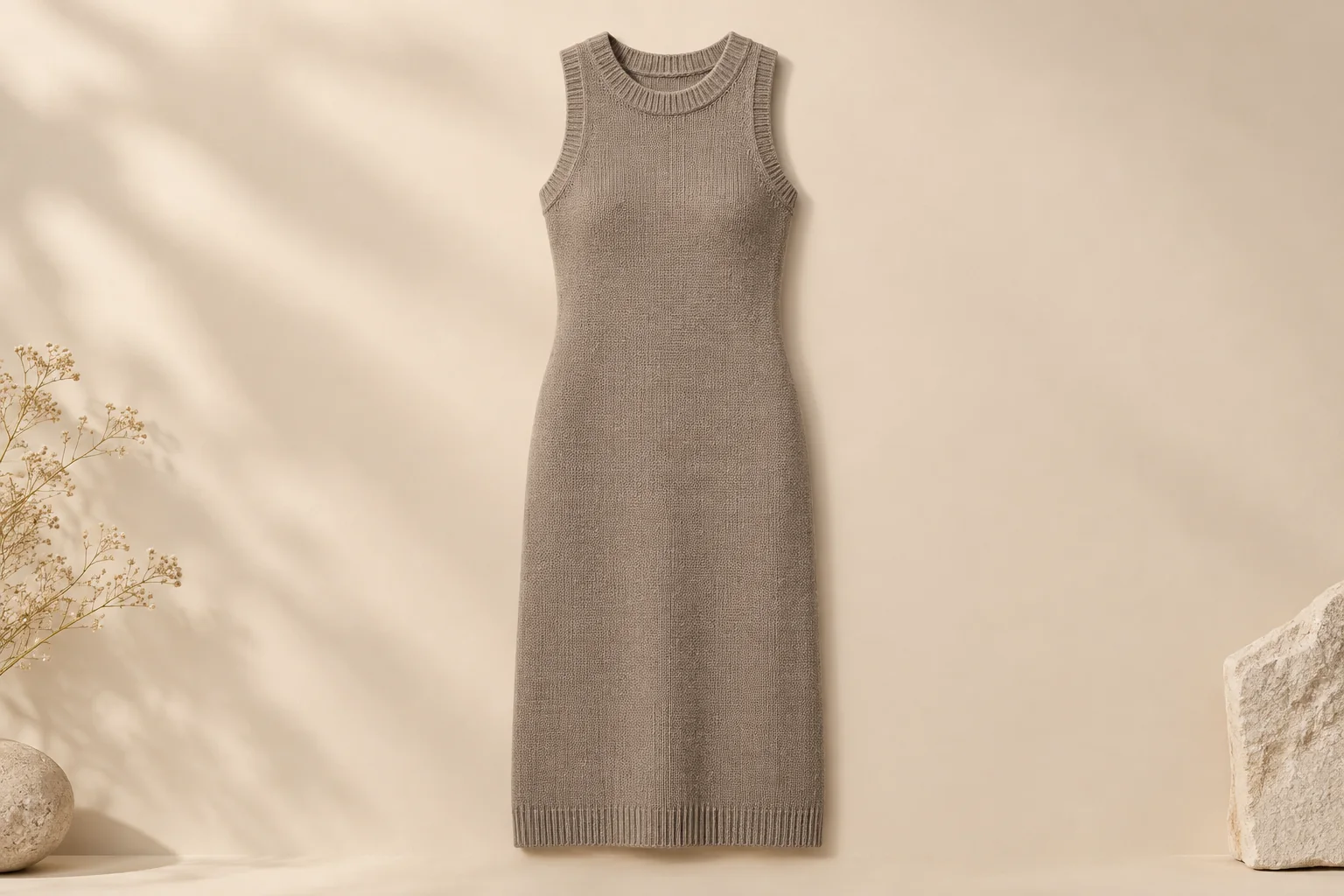
For a sleeveless sweater dress, procurement should compare the finished unit’s mass with the shoulder and neck route that carries it. A light swatch does not represent the full-length dress. If the neckline drops, first locate whether the shoulder narrows, the body lengthens or only the neck edge changes before choosing reinforcement.
What carries the weight of a sleeveless sweater dress?
Trace the sleeveless sweater dress shoulder-to-body route
Mark the front and back shoulder paths, neck edge, side seam and lower body on one drawing. Identify whether the shoulder is a narrow strap, a broad panel or another planned construction. Ask the technician where the load is taken as the garment hangs, and inspect the inside of a physical sample. A strong-looking top edge in a close photograph does not prove the entire dress will retain its position when worn or after care.
Name the garment state being approved
A newly finished dress, one that has been hanging, and one worn through normal movement may place the neckline differently. Define the state that matters to the product. Record how long the sample was rested or hung as actually observed; do not invent a universal conditioning period. Photograph the front, back and side without lifting the garment by hand between frames. Mark whether the hem and shoulder were both in the intended position in that state.
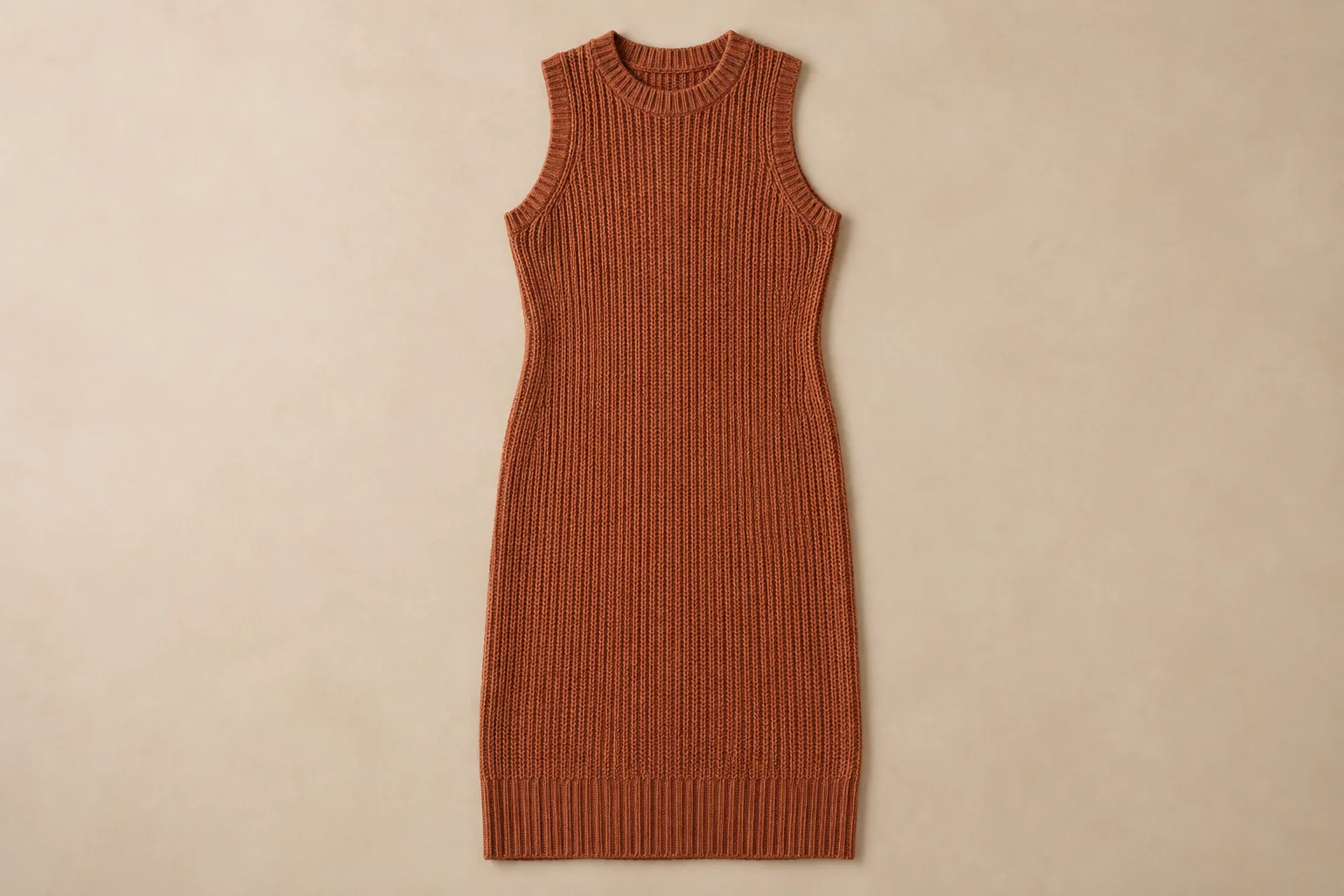
Which sleeveless sweater dress inputs define the support brief?
Record sleeveless sweater dress mass and geometry
If mass affects the design, measure the identified finished dress and state whether belts, lining or other sold components are included. A yarn count or fabric GSM estimate is not a finished-garment mass. ASTM D3776 describes mass per unit area of fabric, which has a different measurement object. The buyer can use an appropriate fabric value during planning without presenting it as the weight of a completed dress. Keep any mass target product-specific and tie it to the actually proposed construction.
Mark body length, front and back shoulder width, neck shape, armhole path and hem position. ISO 18890 describes garment measurement points and allows parties to agree additional ones. It does not establish an acceptable shoulder load or dress weight. Mark extra points where the buyer needs to see whether the upper and lower parts moved together. The tech-pack guide can carry these measurements alongside the material and construction identity.
The first table gives the sample team a comparable support record before construction options are changed.
| Support input | Record to retain | Comparison it supports | Choice owner |
|---|---|---|---|
| Wearer | Target body and underlayer | Locates neck and shoulder | Brand chooses fit reference |
| Dress mass | Finished garment and included parts | Compares actual proposals | Sample room identifies unit |
| Shoulder | Front/back width and joining path | Finds displacement | Technician marks construction |
| Neckline | Opening, edge and attachment | Tracks upper support | Designer approves visible line |
| Body length | Front/back length and hem target | Shows lower-body response | Fit team approves silhouette |
| Material state | Yarn, knit, finish and revision | Separates route changes | Buyer maintains option register |
Avoid treating one dimension as support proof
A shoulder width that meets its flat specification may still roll, stretch or move on a wearer. A neck opening can measure correctly while the dress hangs lower than the visual reference. Review the connected relationships in the garment’s worn state. Ask for a front/back drawing and an inside view of the junction. If two proposals have different yarn or stitch structures, identify them before comparing their shoulder outcomes.
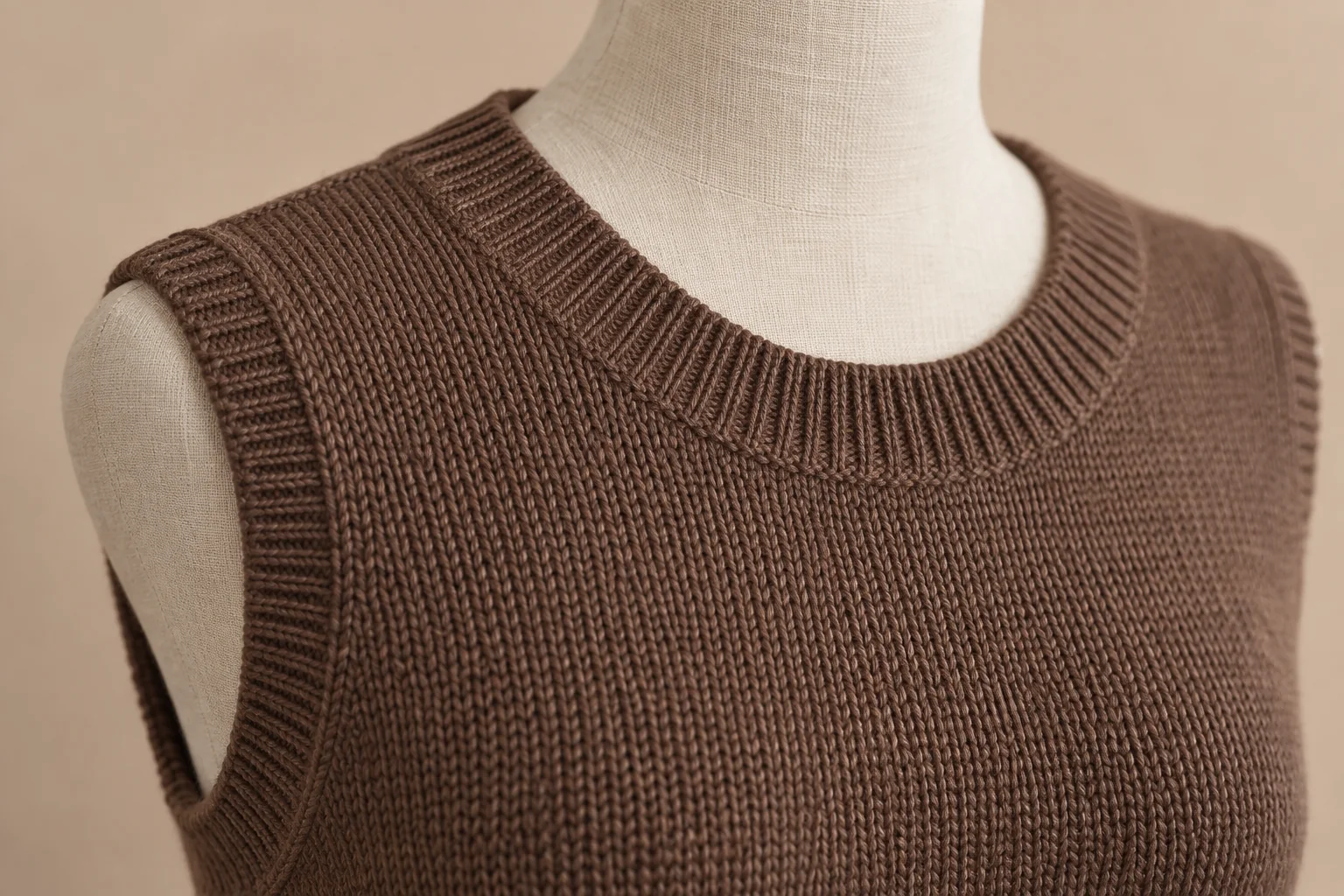
Which sleeveless sweater dress support routes need a trial?
Compare support routes in the actual yarn
A broader shoulder panel, a different joining route, a changed neck edge or a revised body knit may each change how the dress hangs. Ask the technical team to propose a bounded option and show the full garment in the named material. Do not assume that adding a tape or tightening an edge always solves the problem. It may change comfort, visible bulk or the intended neckline. Compare front, back and inside views before deciding which version the brand prefers.
Map a proposed reinforcement’s extent and endpoints, then inspect both shoulders and the back neckline inside and outside. A tape, facing and wider knit panel have different functions and contact profiles. Review the selected route on the complete dress in the original body shape.
Inspect the shoulder without losing the intended armhole
A wider support panel can narrow the visible armhole or move its edge. A tighter neckline can pull the shoulder toward the neck. After any upper-body change, review the side opening and the ability to dress. This is a consequence check, not a second article about coverage. The sleeveless vest fit guide can help with a generic sleeveless support reference, but a dress’s lower length and mass still require their own sample.
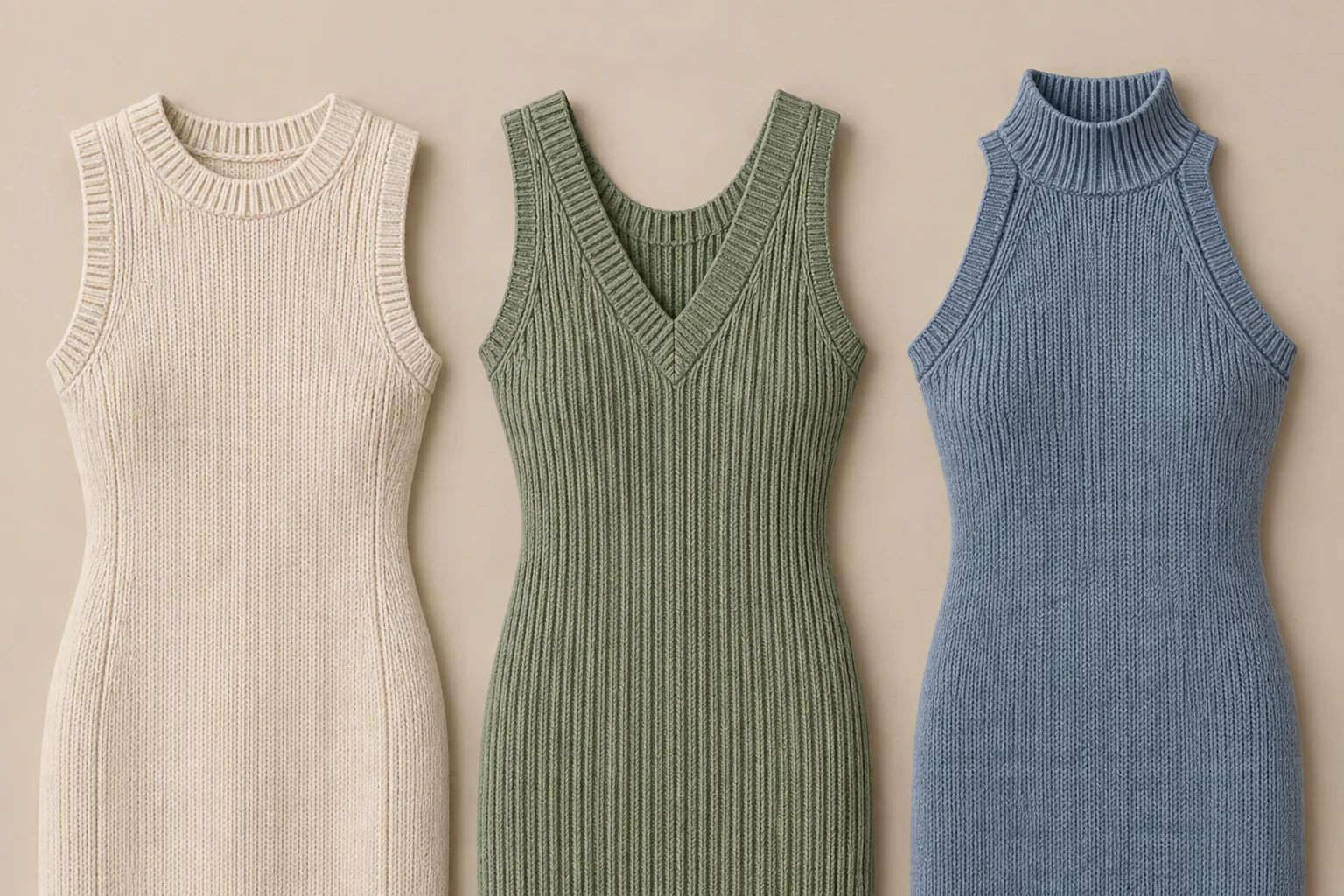
How should sleeveless sweater dress care evidence be read?
Compare the same sample through a named sequence
Take marked measurements and unadjusted views after the garment reaches an agreed initial state. Hang or wear it under a documented development sequence, then repeat the same observations. Record actual duration, support method and environment rather than describing the result as a standard test by implication. A hanger can hold the shoulder differently from a person, so a hanging trial and a wearing trial answer different questions. Keep both if both matter to the brand.
AATCC TM150 addresses garment dimensional change after home laundering for applicable garments and limits some stretch fabrics. A care comparison may be needed for this dress, but a casual wash does not become a formal TM150 result because the name appears in the brief. Save the actual procedure and condition used. The buyer should keep measured change beside the visual neckline, shoulder and hem assessment, since one result does not certify the others.
Diagnose which part moved first
If the neck edge drops and the hem lengthens, compare shoulder, body knit and finishing response. If the neck moves without a comparable change in dress length, inspect upper support and neckline geometry. If one shoulder changes more than the other, check assembly symmetry and sample handling before widening both sides. These are investigation routes, not guaranteed causes. A paired view should show the named point that changed between states.
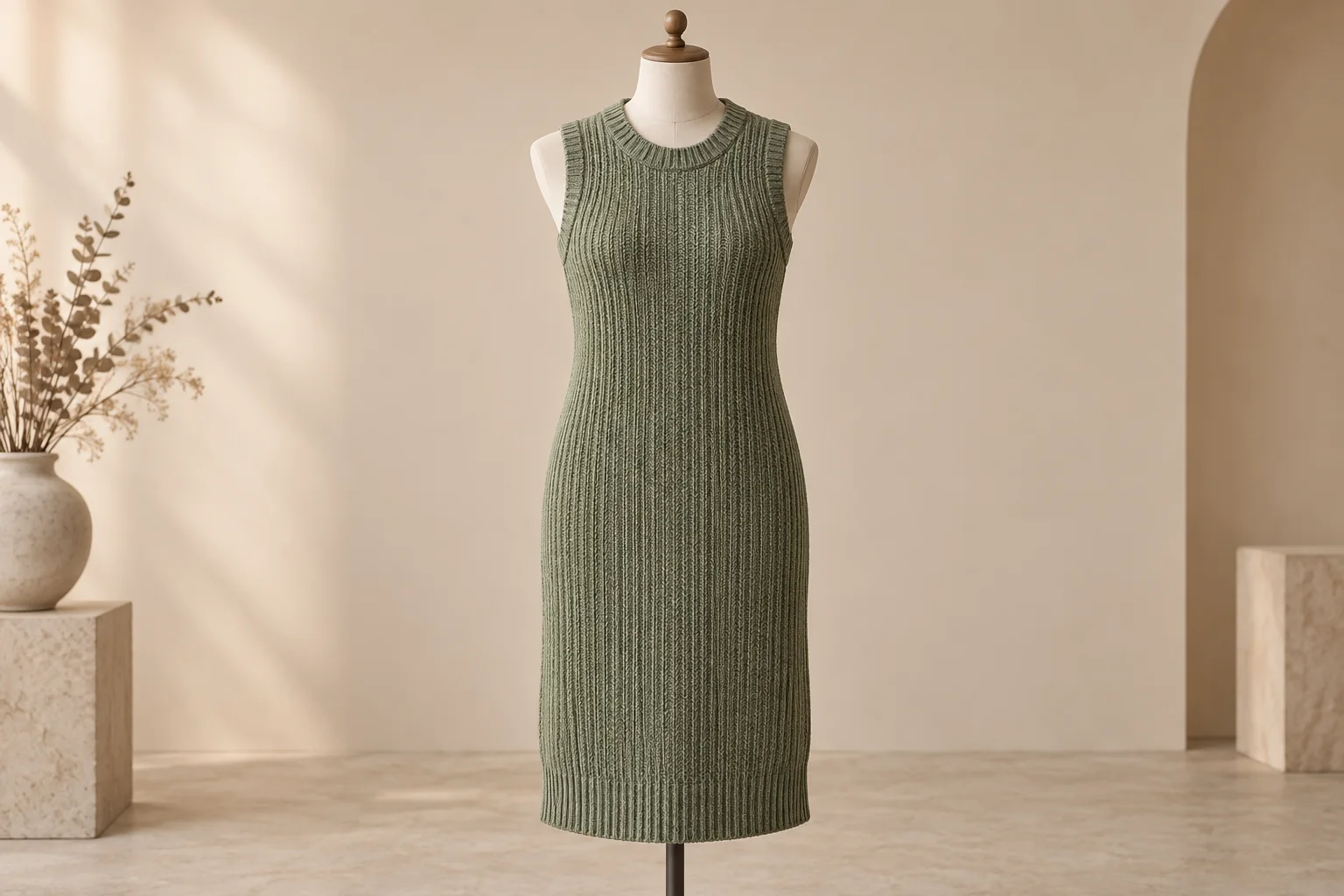
How should sleeveless sweater dress support change across sizes?
Review the sizes where structure changes
A strap or shoulder panel may not grade by the same amount as hip width and dress length. Map these components separately, then check selected lower, base and upper sizes. Add a transition where a new program, panel count, neckline finish or size block begins. The custom knitwear grading guide provides the general method for turning base approval into range evidence. This sleeveless dress needs an explicit upper support map beside its lower-body grade.
Compare whole-body wearing views with the same underlayer type and marked garment state. A good upper size photo cannot validate a lower size that uses a narrower shoulder route, and a flat shoulder measurement cannot establish that the hem remains at its target. Record which samples were actually reviewed. If a size uses a different material or neckline construction, carry that exception into the approval record instead of treating it as a small numerical deviation.
Separate product rule from acceptance allowance
The product rule determines where shoulder, neck and hem should sit in each size. A tolerance states the permitted measured difference from that approved rule. Do not enlarge a tolerance to cover an upper-body construction choice that was never agreed. Give the technician marked origins and physical references first, then set product-specific manufacturing limits. ISO 18890 supports the measurement basis, not a universal allowable change.
What evidence closes the sleeveless sweater dress decision?
Map a fault to one next comparison
The second table converts an observed problem into a bounded request. It does not claim a universal shoulder width, garment-mass ceiling or approved reinforcement.
| Load-path symptom | Relationship to investigate | Buyer decision | Closing evidence |
|---|---|---|---|
| Neck edge falls while worn | Shoulder and neck support | Hold upper-body approval | Marked worn revision views |
| Shoulder narrows after hanging | Join and material response | Trial a component change | Identified rest/hang comparison |
| Hem lengthens with neck shift | Body knit and vertical balance | Review complete garment | Front/back marked dimensions |
| Armhole changes after support edit | Panel width and edge position | Recheck side opening | Same-wearer side views |
| One size shifts differently | Grade or construction transition | Restrict that size group | Size-specific sample and map |
| New yarn changes drape | Material and finish identity | Reopen affected version | Matched old/new sample record |
Frequently Asked Questions
Does a wider shoulder always support a heavier dress?
No universal rule follows from width alone. Compare the assembled shoulder route, material and whole-garment drape on the intended wearer.
Can a swatch GSM estimate total dress weight?
No. Fabric mass per area and a completed dress’s mass are different objects. Identify and measure the finished sample if total mass is part of the brief.
Does a hanging test replace a wearer review?
No. The hanger and body support the dress differently. Keep both records when both states matter to the product.
Should a neckline be tightened if it drops?
First locate the change among neck geometry, shoulder path, material and dress body. A tighter edge may move another part of the garment.
Can a base-size support decision cover every size?
Only after selected size transitions and relevant care or wearing states are checked. Identify where a component or programme changes.
Treat the approved shoulder route as a complete-garment result, with the actual yarn, mass, neckline and rest condition recorded. A new side-coverage rule should not silently replace the load-path decision. Bring the support drawing and the size where it first changes to the CNSweaters dress construction enquiry before the pattern moves toward bulk.