 CN Sweaters
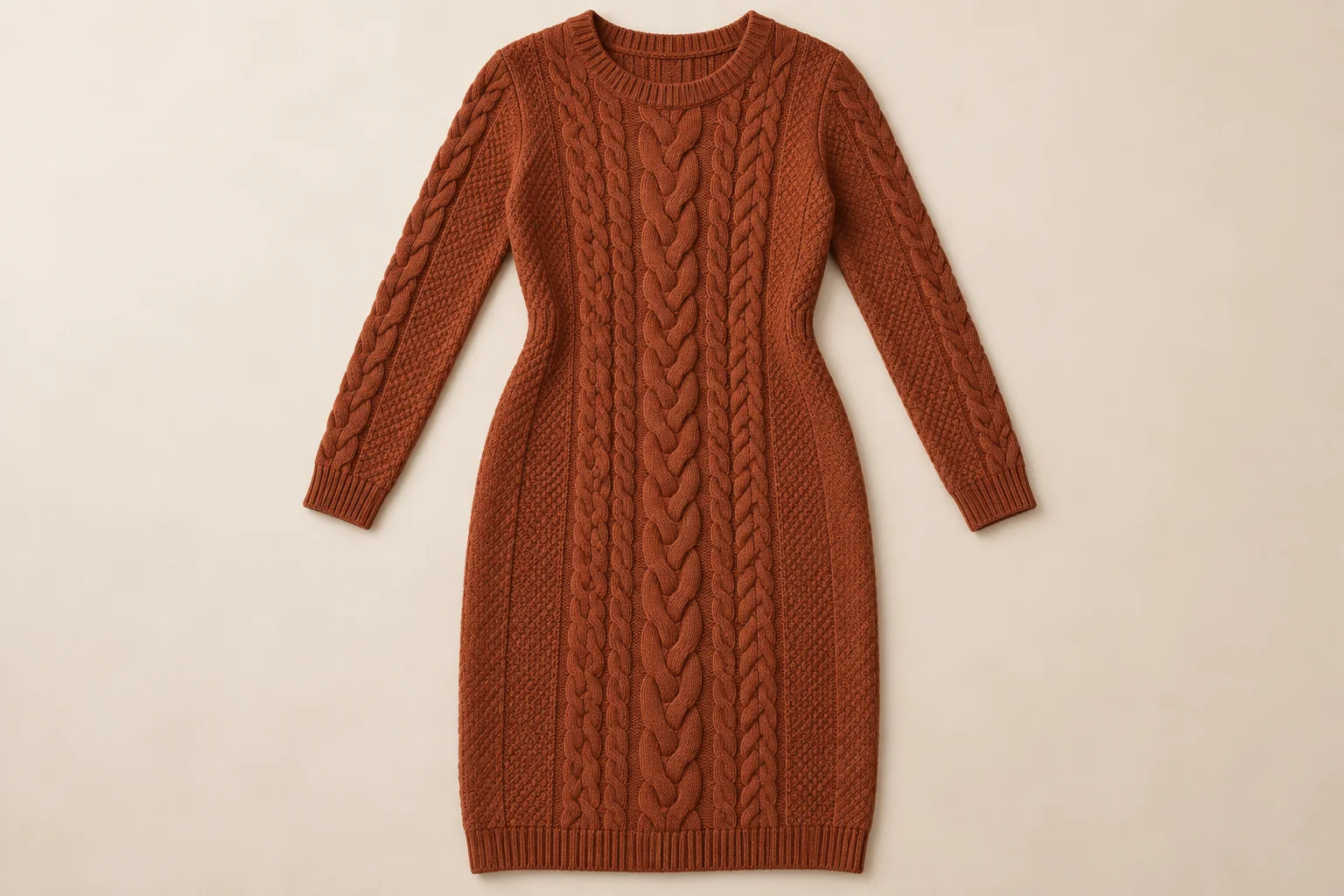
When waist shaping reaches a cable crossing, the technician and designer have a real choice: move the shaping, redistribute the background stitches or change the motif. For a cable knit dress, resolve that choice on the complete bust-to-hip map before programming the next sample. A balanced rectangular swatch cannot show where its crossings will sit on a shaped body.
The first decision is which visual landmarks must stay fixed and which may change. A central cable might remain on the garment centre while background stitches absorb width changes. Another design may intentionally move or interrupt a motif. Put those choices on the drawing before the sample room prepares size programmes.
Which cable knit dress paths define the design?
Select cable knit dress landmarks before counting repeats
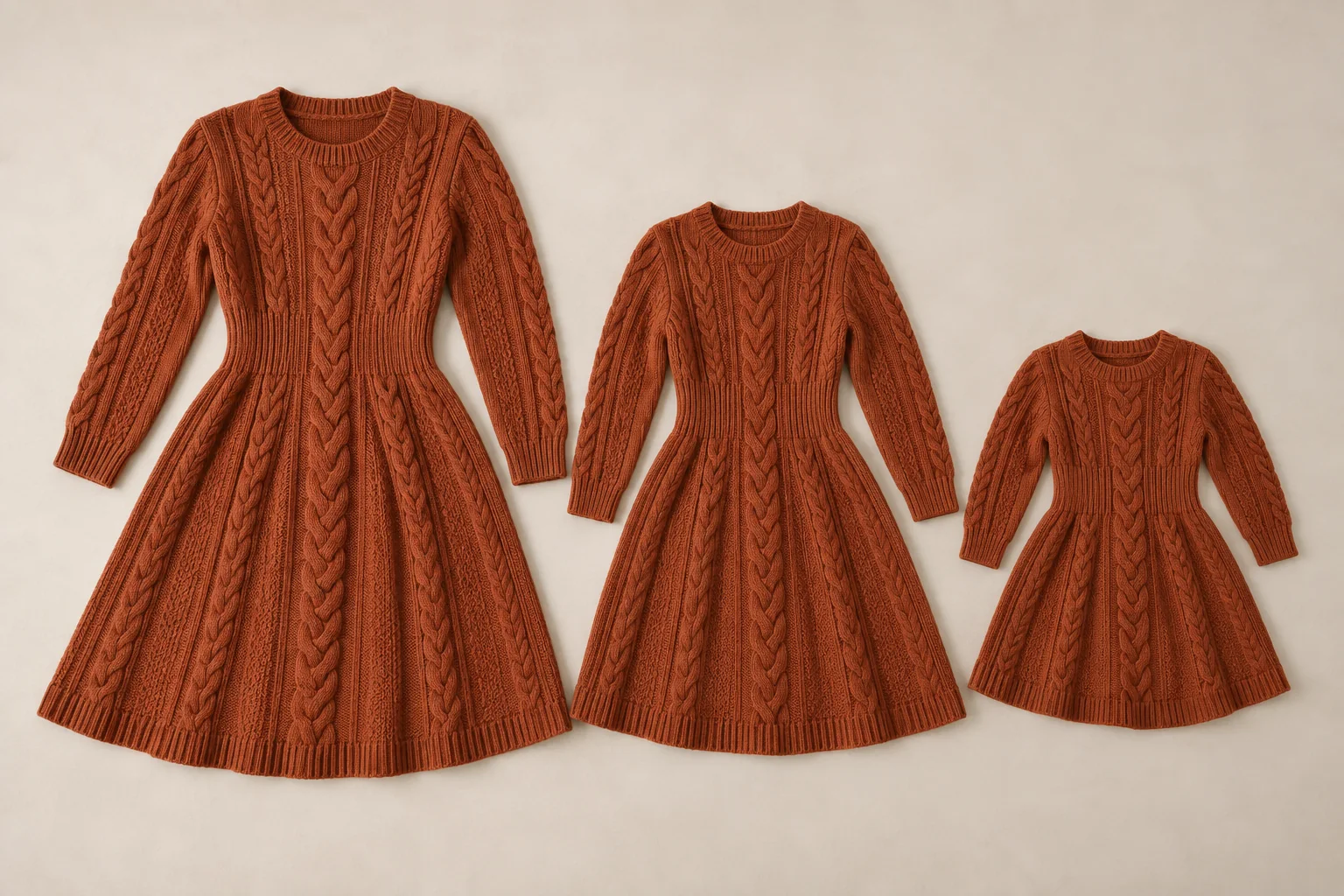
Mark the garment centre, neckline, waist reference, hip reference and hem. Then draw the cable paths relative to those landmarks. Identify the dominant motif, supporting cables and the background areas between them. A flat image of a fabric repeat does not show those garment relationships.
Describe any intentional asymmetry. If a cable is offset from centre or ends at a chosen level, show the accepted location. Without that note, inspection may treat the design as a fault or accept an accidental shift as styling.
Establish what the reference image cannot tell the factory
A photograph can show relief and placement, but may conceal the repeat count, reverse structure, side seam and shaped edges. Ask for the construction and chart information needed to turn the visible direction into a sample proposal. Do not infer yarn identity or machine settings from the image.
Ask the supplier to identify the yarn, construction and programme assumptions behind the proposal. Compare the digital rendering with the actual knit before accepting its relief or scale.
Where does waist shaping intersect a cable path?
Map cable knit dress body zones beside the artwork
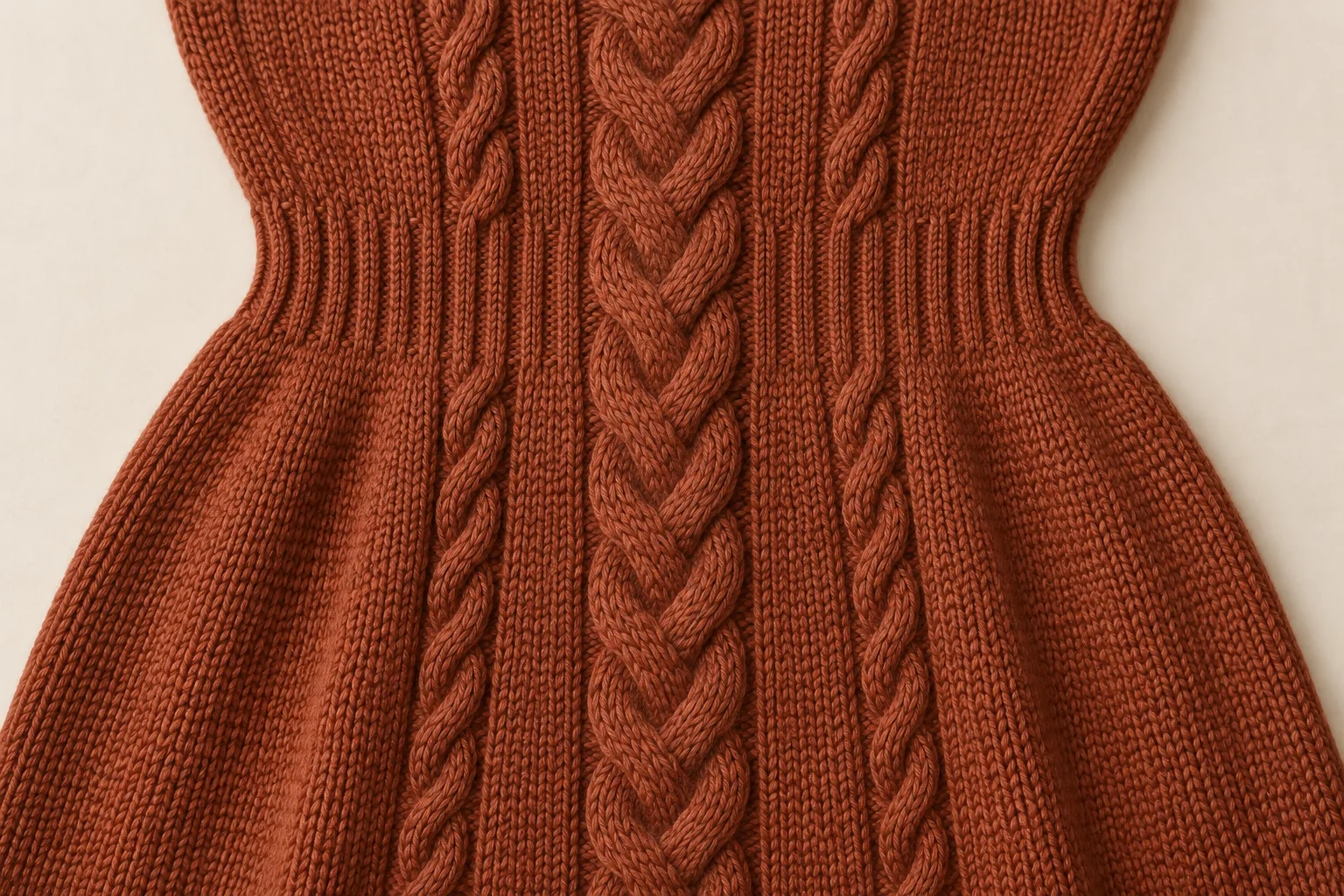
Put the intended bust, waist and hip shape on the same revision as the cable arrangement. Mark where the panel gains or loses width and identify the background space available beside each motif. The technician can then explain whether the proposed shaping stays outside the cable, enters it or changes its position.
Do not hide a conflict by reducing the garment drawing. A rendering can make the cable appear to fit by changing its scale, while the proposed knit still uses a different repeat. Ask for the relationship in both garment dimensions and the supplier’s programme references.
This input table connects the artwork decisions to the shaped dress.
| Map element | Evidence to retain | Decision it supports | Limit or responsibility |
|---|---|---|---|
| Dominant cable | Centre path and repeat identity | Whether the main motif stays aligned | Designer approves the visual anchor |
| Supporting motifs | Number, order and spacing by body zone | How the pattern fills the panel | Technician identifies the proposed programme |
| Waist transition | Shaping locations beside cable paths | Where width can change | Fit and artwork owners resolve conflicts |
| Hip transition | Panel width and background distribution | Whether the lower body retains the intended rhythm | Base sample does not approve all sizes |
| Neck and hem endings | Start phase and accepted partial motifs | How repeats terminate visibly | Buyer approves each intentional interruption |
| Front and back relationship | Panel maps and seam priorities | Which joins require continuity | Matching rules need explicit scope |
A blank background area on the sketch is still part of the design. Specify its intended width or relationship where it controls the visual spacing. Otherwise, a programme change can move the cables while preserving the same number of motifs.
Decide how to resolve a fit and artwork conflict
When the intended waist shape enters a cable path, ask for distinct proposals. The designer may prefer a different background distribution, an altered motif arrangement or a revised silhouette. Each proposal should show what changes in both fit and appearance. Avoid describing one as equivalent before the buyer has compared it.
ISO 18890 provides garment-measurement references. Add the motif landmarks needed for this dress, such as the location of a selected crossing relative to a body reference. Keep the measurement method explicit, and do not present a design-placement target as a standard tolerance.
Record which priority governs the decision when the requirements conflict. If the buyer accepts a different cable location to retain the fit, update the artwork reference. If the silhouette changes to preserve the motif, the fit sample needs review against the new shape.
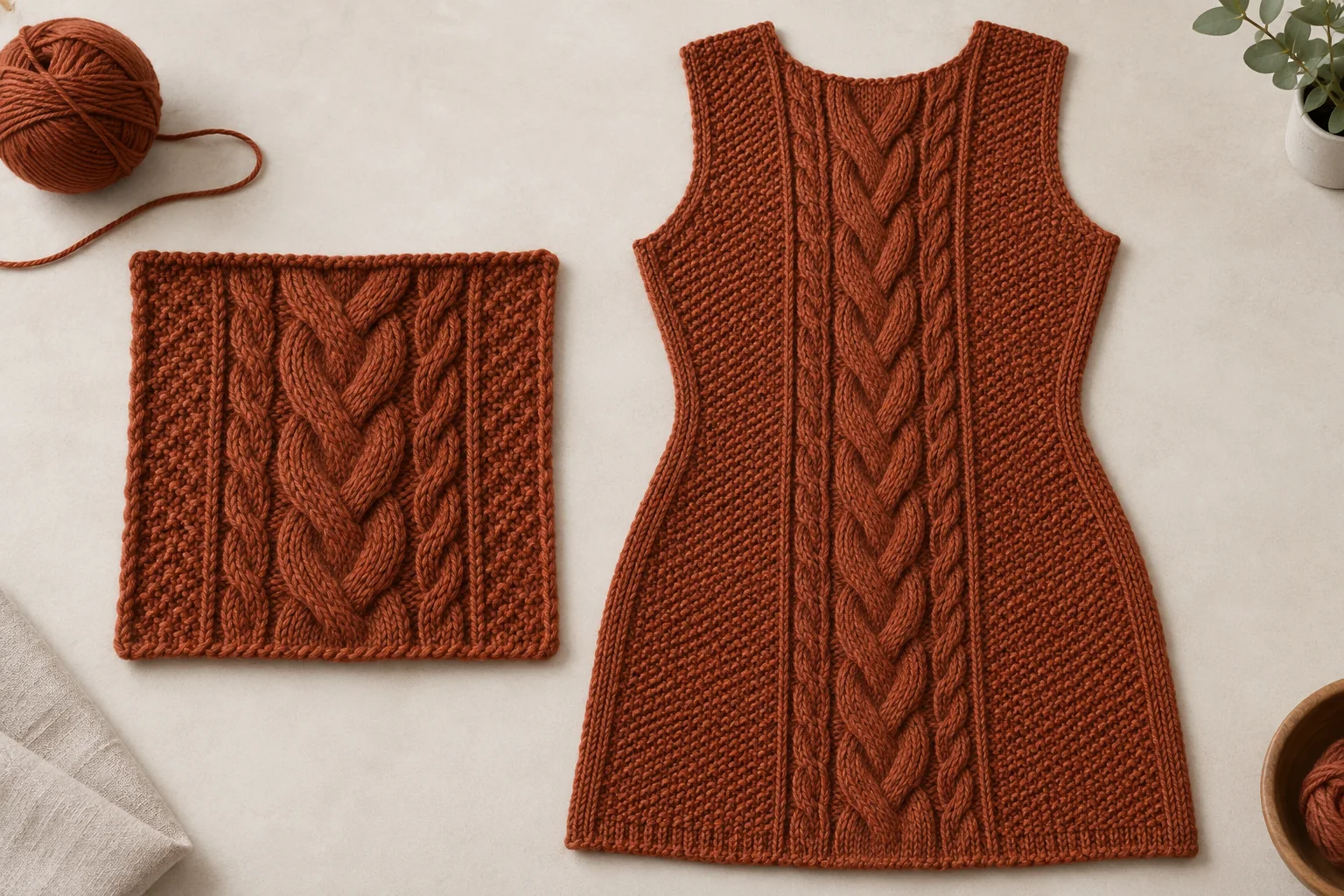
How should a knitted proposal be compared with its chart?
Keep cable knit dress charts and samples on one revision
Label the sample with the artwork and programme references used to make it. Ask the supplier to identify any adjustment made during development. A technician may have changed spacing, repeat phase or a shaped edge to make the proposal workable; those changes need to reach the buyer’s record.
Compare the garment centre and body landmarks first, then examine the motif. If the whole sample lies at an angle, apparent cable drift may be a positioning issue. Arrange it in the declared state without pulling individual cables into line for the photograph.
Retain a wider view beside each close-up. A detail image can show a clean crossing while concealing that the motif occupies the wrong part of the dress. The buyer needs both the local construction and its location in the silhouette.
Assess relief, width and spacing without inventing a rule
Inspect the actual knit in the proposed yarn and finish. Record how the cable and background areas sit beside one another, including any local narrowing, raised join or change in surface. These observations can guide a trial, but a visual difference does not by itself identify the correct knitting adjustment.
Keep the yarn-planning record with the comparison. A new yarn can change the visible motif even where the chart remains unchanged. If material and programme change together, list both and avoid attributing the result to one input.
Do not set a universal cable width, crossing height or background ratio from another product. The actual dress needs a buyer-approved reference for its intended relief and spacing. A technical proposal should explain how it will reproduce that reference and what remains to be checked physically.
For seams and attachments, connect the motif map to the linking-quality review. Keep any seam allowance or joining reference visible in the programme discussion so the approved cable is not assessed only before assembly.
Which wearing and care states belong in placement approval?
Compare the cable knit dress motif on the intended body
Review the cable knit dress on the selected wearer or form. Record the garment size and the fit arrangement. The bust, waist and hip can alter how the motif reads compared with the flat sample, so assess the intended wearing view alongside the panel map.
Look for the relationships defined in the brief. Does the dominant cable remain at the intended centre? Do supporting paths occupy the agreed areas? Are intentional interruptions still readable? A change in appearance should be described with a location and state, rather than a general comment that the pattern looks stretched.
Where movement matters, choose a repeatable sequence and retain unadjusted views. Distinguish a whole-garment shift from a local pattern distortion. The next sample should address the observed relationship without treating every change in appearance as a knitting-programme fault.
If the design includes a belt or another styling component, identify whether it is part of the intended product. Review its effect separately from the unstyled dress so the motif is not approved only when an accessory conceals a conflict.
Retain the same sample through care and rest
Record the care, finish and rest conditions used for comparison. AATCC TM150 concerns laundering-related dimensions in applicable garments. It does not define an acceptable cable arrangement; the buyer still needs its own placement reference and associated observations.
Compare the same body and motif landmarks after care. Keep overall length change separate from a changed local relationship between the cable and the waist reference. A longer garment may move every landmark down, while a programme or construction issue can affect one zone differently.
Preserve images before any manual reshaping. If the supplier proposes finishing as part of the correction, document the proposed route and compare the later state required by the product brief. A newly arranged cable is not evidence of persistent placement stability.
What changes when repeat count or dress length changes?
Define the rule for each cable and background zone
The buyer should decide whether a motif retains its visual scale, changes repeat count or follows another agreed approach across the range. Record that decision for the dominant cable, supporting motifs and background areas. A general instruction to grade proportionally leaves the most visible choices open.
Identify transition sizes where a repeat is added, removed or deliberately interrupted. These can require a different programme even when neighbouring sizes share the same construction. Show the proposed visual result before treating the transition as a routine production detail.
The midi and maxi dress grading guide helps separate length and body-zone decisions. Apply the selected length strategy to the motif map as well as the measurement sheet. A longer skirt can change the ending phase at the hem without changing the upper repeat.
Choose sample sizes that represent the artwork decisions
Ask for flat and wearing views at the relevant transitions. Retain a programme reference for each represented group and record any approved partial motif at the shaped edges. An exception accepted on one size should not become an undocumented rule for the entire range.
What must the selected motif map specify?
Connect the finding to a specific artwork decision
Use the table to identify the next comparison or approval needed when the sample differs from the intended map.
| Pattern observation | Relationship to investigate | Buyer decision | Closing evidence |
|---|---|---|---|
| Dominant cable drifts from centre | Panel position, shaping and motif placement | Retain or revise the centre-path rule | Marked map and matched sample view |
| Waist shaping cuts an unwanted crossing | Shaping line against the repeat phase | Choose another layout or fit proposal | Approved waist-zone comparison |
| Hip area changes motif spacing | Background distribution and body dimensions | Set the accepted lower-body rhythm | Flat and wearing views of the revision |
| Neck or hem ends on an awkward partial repeat | Start phase, length and finishing edge | Approve an intentional termination | Updated ending reference |
| A size transition changes visual scale | Programme grouping and grade choice | Accept or revise the transition | Size-specific artwork and sample evidence |
| Care changes the mapped relationship | Same sample before and after care | Hold the affected version for review | Care-state dimensions and motif views |
The accepted file should include the garment drawing, motif map, programme references, size grouping and sample identity. Retain the material and finishing records that belong to that version. Inspection needs to know which partial motifs and transitions are intentional before it can judge a production garment.
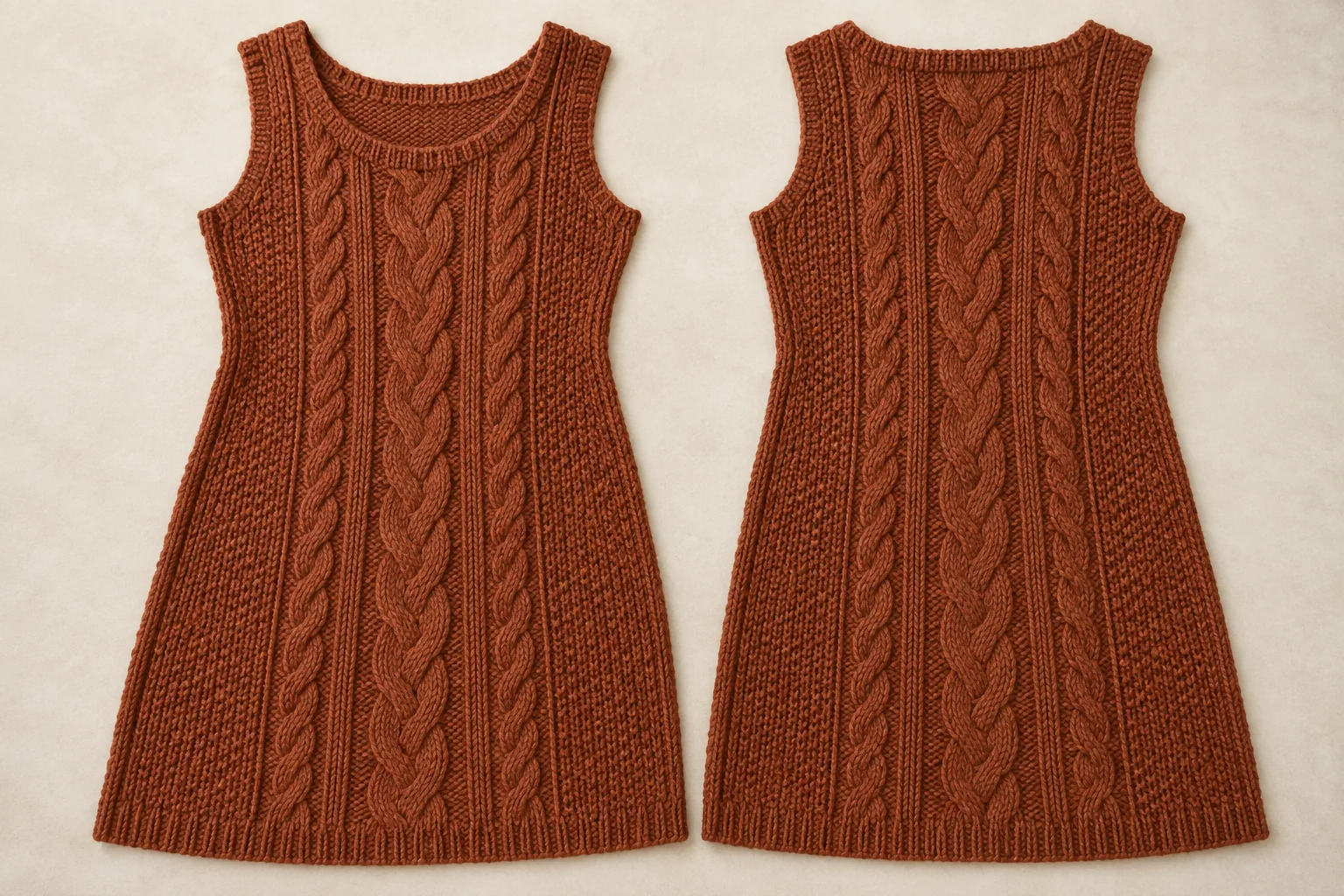
Keep the approved inside and seam views where they explain a visible pattern relationship. A front-only reference may leave the side or back interpretation unresolved, particularly where the design intentionally changes its motif arrangement around the body.
For a discussion with CNSweaters, include the complete dress drawing, cable reference, body-zone landmarks and the programme questions still unresolved. These materials provide a concrete starting point when you submit your cable knit dress brief.
Frequently Asked Questions
Must a central cable remain the same width in every size?
That is a design and development decision to record. Compare the proposed visual scale and body relationship across the represented sizes. If the strategy changes at a transition, retain the relevant programme and sample evidence instead of assuming that one base-size photograph defines the whole range.
Can shaping pass through a cable motif?
It can be proposed, but the resulting appearance and construction need review. Ask the technician to show where the shaping intersects the repeat and what the finished motif will look like. The buyer should approve any intentional interruption or altered shape against the actual garment requirements.
Is a swatch enough to approve the cable design?
A swatch can support decisions about local construction, relief and the proposed yarn. It cannot establish placement across the complete dress or the effects of its shaping and assembly. Use it as one input, then review the relevant joined garment and body-zone relationships.
What happens if the buyer changes the dress length?
Review the changed length against the repeat phase and intended hem ending. Keep the upper-body landmarks connected to the revised drawing. The change may affect one region or require a wider programme revision, so ask the technician to identify the affected scope before approval.
Should every side seam have a continuous cable match?
The brief should identify which seams require continuity and which may have a deliberate break. Different panel and motif arrangements can support different design choices. Mark the accepted join on the map and retain a sample view so inspection can distinguish an intended interruption from an error.