 CN Sweaters
A cotton quarter zip sweater works in a transitional retail line only when its finished weight, recovery and wash performance are specified as one system. Choosing “cotton” and approving an attractive first sample is not enough: the same design can become too heavy for late summer, too unstable after laundering or too weak at the collar for early-fall layering.
For buyers, the practical objective is to turn a seasonal idea into measurable development inputs. That means defining the wearing window, yarn composition, gauge, stitch structure, target garment weight, zipper behavior, fit after washing and bulk acceptance standard before production yarn is committed. These decisions give the factory a reproducible target and give the buyer evidence for approval.
What Makes a Cotton Quarter Zip Work Between Seasons?
The best transitional specification begins with use conditions rather than a generic request for a lightweight sweater. A product intended for air-conditioned offices, evening layering and early autumn needs a different balance from a dense winter pullover or a loose summer knit.
Define the wearing window and merchandising role
Write a one-sentence product role before discussing yarn. For example: “A clean unisex quarter zip for late-summer indoor wear and early-fall layering over a T-shirt.” Add the target climate, delivery month, retail price position and whether the garment will be worn next to skin. This prevents “transitional” from becoming an undefined aesthetic label.
The intended role affects every later choice. A next-to-skin style may need a smoother yarn and softer zipper guard. A layering piece needs enough ease at the chest and armhole without looking bulky when worn alone. A pre-fall floor set may prioritize muted commercial colors and easy care, while a premium capsule may accept more delicate handling for a more refined surface.
Buyers can review relevant knitwear product categories to compare how the quarter-zip silhouette should sit beside pullovers, cardigans and other layers in the assortment. The goal is not to copy another style but to assign this garment a clear job.
Convert “lightweight” into measurable targets
Do not approve weight only by handfeel. Record the approved sample’s finished garment weight in a stated size, the knit gauge, yarn count or yarn reference, stitch structure and key panel dimensions. A size-medium sample weighing 430 grams and another weighing 560 grams may both be described as “medium weight,” yet they will drape, retain heat and consume yarn differently.
Garment weight is the commercial result of several variables: fiber blend, yarn count and ply, stitch density, gauge, size and finishing. If one variable changes, the factory should recheck the finished result rather than assume the original approval still applies.
Lock Yarn, Gauge and Garment Weight Together
Yarn, gauge and structure must be approved as a package because no single field predicts the finished sweater. Cotton can produce a clean fine-gauge surface, a dry heritage texture or a soft lofty hand, but each route has different stability, cost and seasonal implications.
Choose composition for performance and claims
First decide whether the commercial promise requires 100% cotton or whether a blend is acceptable. A blend may be considered when the design needs more recovery, durability, softness or weight control, but the exact result depends on the fibers, percentages, yarn construction and finishing. The buyer should request the complete composition, yarn reference and color method in writing.
For products sold in the United States, the Federal Trade Commission explains that covered textile labels must disclose qualifying fiber names and percentages by weight. It also warns that a product should not be called “100% cotton” unless it contains only cotton, apart from permitted trim. Buyers can use the FTC’s cotton labeling guidance when preparing label copy and product claims.
Do not use vague terms such as “premium cotton” as a substitute for specification. If a named cotton type, organic claim or other attribute matters to the range, require supporting transaction and traceability documents appropriate to the target market. If the claim cannot be substantiated, remove it from the product brief and marketing copy.
CNSweaters lists cotton and blended materials among its yarn development options. A buyer should still approve the exact yarn for the current program; a general capability page does not replace a yarn card, composition record or tested sample.
Approve a swatch matrix before the full sample
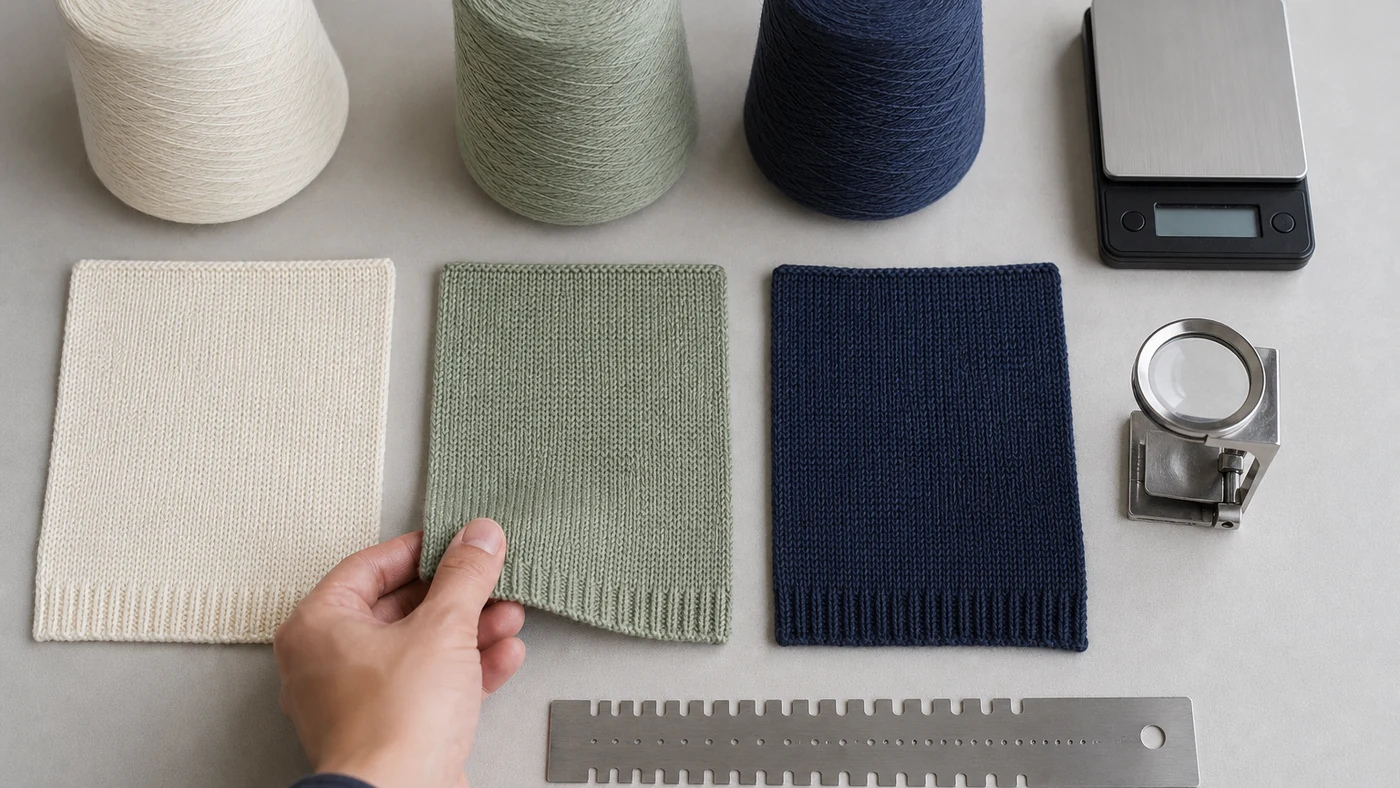
Ask for a small, controlled swatch comparison when the correct construction is uncertain. Keep the color and general stitch concept constant, then compare two or three viable combinations of yarn, gauge and density. Label every swatch with yarn code, composition, count or ply, machine gauge, stitch and date.
Review surface clarity, opacity, stretch, recovery, drape and likely garment weight. For a quarter zip, also consider whether the body fabric can support the zipper without collapsing or rippling. The chosen construction should then be translated into the tech pack and retained as a physical reference.
The following control table turns the seasonal concept into evidence that can follow the style from sampling to bulk.
| Specification field | Buyer decision | Sample evidence | Bulk control |
|---|---|---|---|
| Product role | Wearing window and layering use | Styled fit review | Approved PP sample |
| Fiber content | Exact percentages and permitted claims | Yarn document and label draft | Yarn lot and label check |
| Yarn and gauge | Reference, count or ply, machine gauge | Labeled swatch | Machine and yarn records |
| Finished weight | Target and tolerance for stated size | Conditioned garment weight | Sampled finished weights |
| Stitch density | Courses/wales or agreed factory measure | Measured swatch and garment | Panel checks during knitting |
| Wash stability | Method, cycles and dimensional limits | Pre/post-wash report | Production wash verification |
| Zipper and collar | Length, tape, puller, guard and geometry | Close-up construction approval | Inline alignment inspection |
This table should be project-specific. The values belong in the buyer’s approval pack, not in a generic email saying “same as sample.”
How Should the Collar and Zipper Be Engineered?
The collar and zipper are the highest-risk visual area because a stable metal or molded component is joined to a flexible knitted structure. Good appearance depends on compatible lengths, controlled feeding, adequate support and repeatable finishing.
Specify the complete zipper assembly
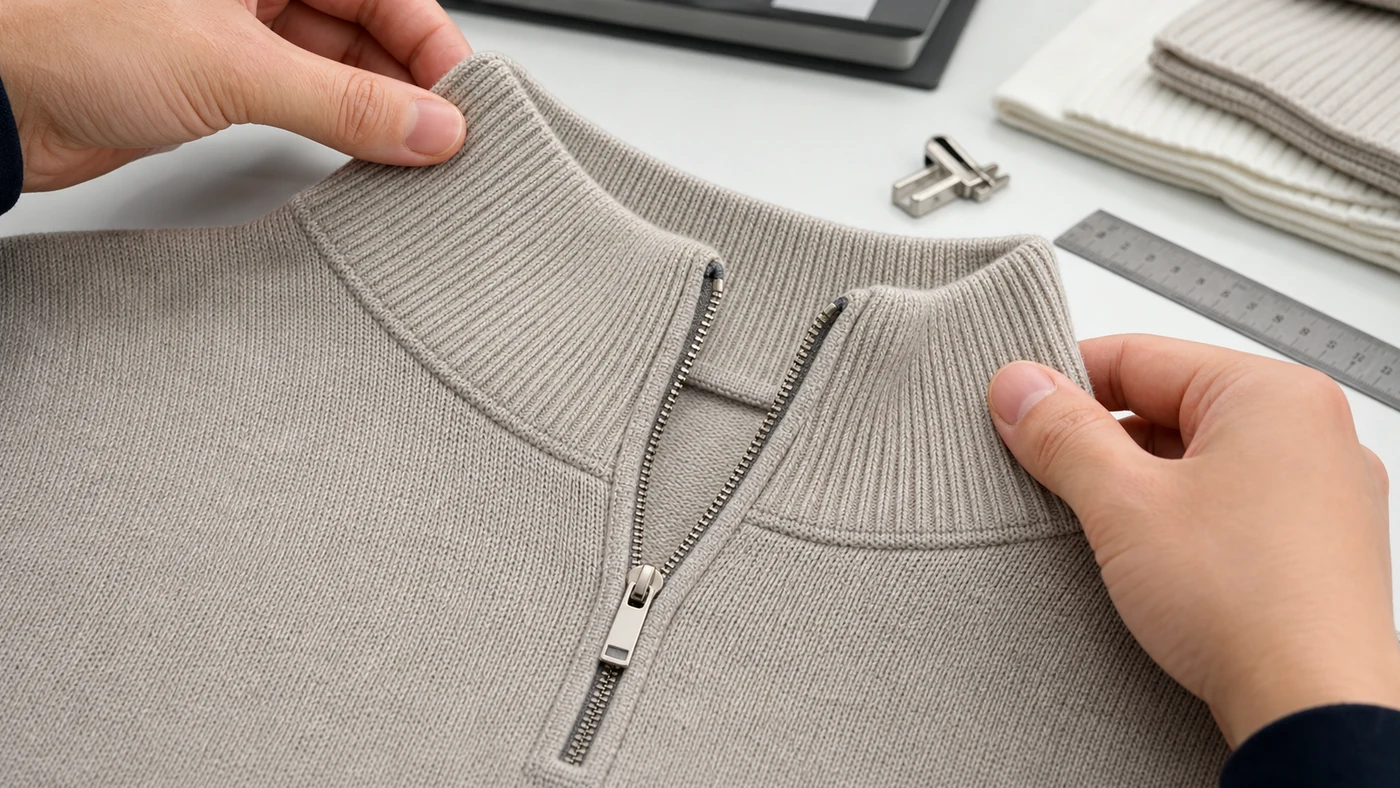
Record zipper type, material, tooth or coil appearance, tape color, puller, slider finish, closed length and supplier reference. State the measurement points for zipper length and opening depth. If the zipper is exposed, concealed or inserted into a placket, include an enlarged construction drawing rather than relying on a front-view sketch.
The zipper tape and knitted opening must be compatible after finishing. If the knit is stretched while the zipper is attached, the front can wave when relaxed. If the opening is eased too heavily, it can pucker. Sampling should assess the garment laid flat, hanging and worn, both before and after the approved wash process.
An OEM knitwear manufacturing workflow is most useful when the tech pack, measurement sheet, reference images and trim requirements identify the same target. Conflicting files should be resolved before the next sample, not left for the production line to interpret.
Protect collar shape and recovery
Define collar height, opening shape, overlap or facing construction, zipper guard, seam allowances and top-edge finish. Measure collar height at named points because rib can distort when pulled. For a fold-over collar, specify whether the measurement is taken folded or unfolded.
Rib structure, elastane content where used, density and finishing influence recovery. Test the collar after repeated opening, closing and wear simulation. The acceptance question is not simply whether the collar feels stretchy; it is whether it returns to the approved shape without flaring, twisting or exposing the zipper tape.
Build Wash Stability Into the Approval Process
Wash performance must be evaluated before fit is sealed because cotton knit structures can change in length, width, torque, handfeel and surface appearance during laundering. A sample that fits perfectly before washing may no longer represent the consumer experience.
Name the test method and care route
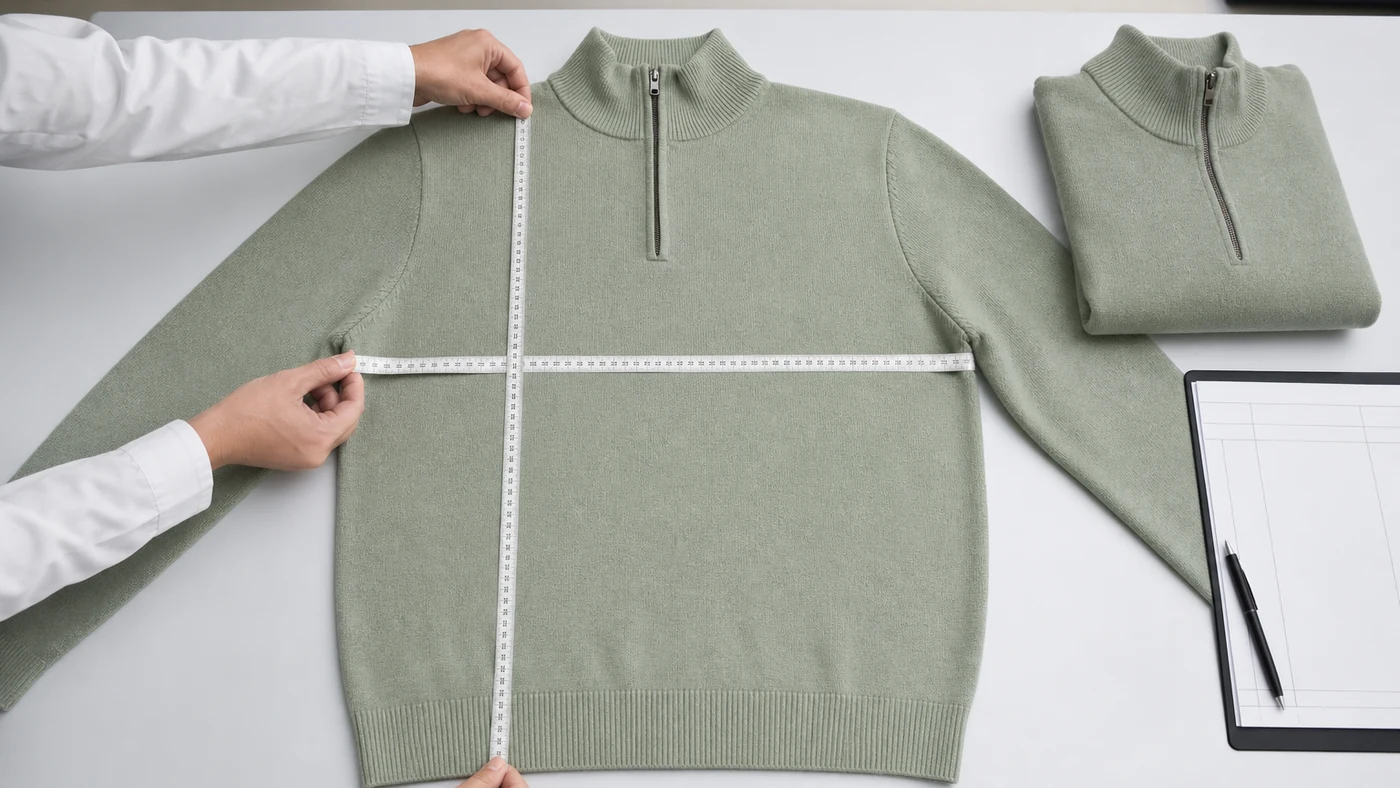
Specify the wash and drying procedure, number of cycles, conditioning, measurement points and allowable change. ISO 6330:2021 defines standardized domestic washing and drying procedures for textile testing, including several machine and drying routes. ISO 5077 covers the determination of dimensional change, while AATCC TM135 provides a home-laundering route for dimensional-change evaluation.
The chosen method should reflect the intended care label and market. “Wash test passed” is incomplete unless the report identifies the procedure and results. Record length and width change at critical garment points, not only on a fabric swatch. The zipper opening, collar, body length, sleeve length and chest may respond differently.
The FTC’s Care Labeling Rule guidance states that covered manufacturers and importers need a reasonable basis for care instructions and must warn against procedures that would harm the garment. Buyers should therefore approve care wording only after evidence supports the proposed routine.
Review appearance as well as dimensions
After laundering, inspect torque, seam spirality, zipper waviness, collar shape, rib recovery, color change, staining, pilling and overall handfeel. Photograph the garment in consistent lighting and record measurements in the same table used before washing.
If the sample fails, isolate the cause before changing multiple variables. Possible corrective routes include adjusting stitch density, relaxation allowance, panel dimensions, finishing, zipper application or care instructions. A revised sample must be retested; a verbal promise that bulk will improve does not close the approval gap.
How Should Buyers Approve Fit and Size Grading?
Fit approval should use the washed, conditioned sample and a risk-based measurement chart. The quarter-zip opening changes how the neckline sits, so standard pullover grading cannot always be copied without checking the collar and front opening.
Control measurements that affect layering
Include chest, body length, shoulder or cross-back, armhole, sleeve length, bicep, cuff, bottom opening, collar height, neck opening and zipper length. Add garment diagrams showing exactly where each point is taken. Record whether measurements are taken relaxed, stretched or folded.
Assess the sample over the intended base layer. Check mobility, neckline comfort, zipper-guard contact, collar balance and hem recovery. A transitional style should have enough ease to layer without creating excessive volume when worn alone.
Grade the construction, not only the body
Review how zipper length, collar height, neck opening and placket width change across sizes. A fixed zipper length may be appropriate for some ranges, but the resulting proportion must be checked. If zipper lengths change by size, the trim order and bill of materials must reflect each size break.
Request a graded nest or size-set plan before bulk. At minimum, inspect the highest-risk ends of the size range and any size where trim dimensions change. CNSweaters’ manufacturing capability describes multi-gauge production and controlled processes; the buyer’s own graded specification and approved size evidence remain the product-specific control.
Plan Color, MOQ and Timing Around the Retail Window
The assortment plan should be tested against yarn availability, color minimums, zipper procurement and approval time before the delivery date is promised internally. Too many colors can fragment a modest order and make continuity harder to control.
Build the calendar backward from the launch
Start with the required warehouse or store date. Work backward through transport, final inspection, packing, finishing, linking, knitting, yarn procurement, trim procurement, PP approval and sample revisions. Add decision deadlines for lab dips, zipper colors, labels and packaging.
Do not copy a published lead-time number into the purchase order. Timing varies with yarn availability, dyeing, color count, construction complexity, quantities and seasonal capacity. Use the project’s confirmed milestones. The MOQ and lead-time planning page can frame the discussion, but the written quotation and production schedule must govern the actual order.
Reduce fragmentation before cutting quality
If the proposed quantity is difficult to execute, first reduce unnecessary colorways, consolidate yarns across related styles or use an available yarn route. Do not automatically lower stitch density, remove wash testing or accept an unapproved zipper to meet a target price. Those changes alter the product and may create a larger markdown or return risk than the initial saving.
Ask the supplier to separate the cost and timing effects of yarn, color, zipper, labels, packaging and testing. This makes the tradeoffs visible and allows the buyer to protect the features that matter most to the retail proposition.
Convert the Approved Sample Into a Bulk Standard
Bulk consistency comes from a complete approval pack and staged checks, not from the memory of the sample-room team. The buyer and factory should be able to identify the same reference without interpretation.
Seal the approval pack
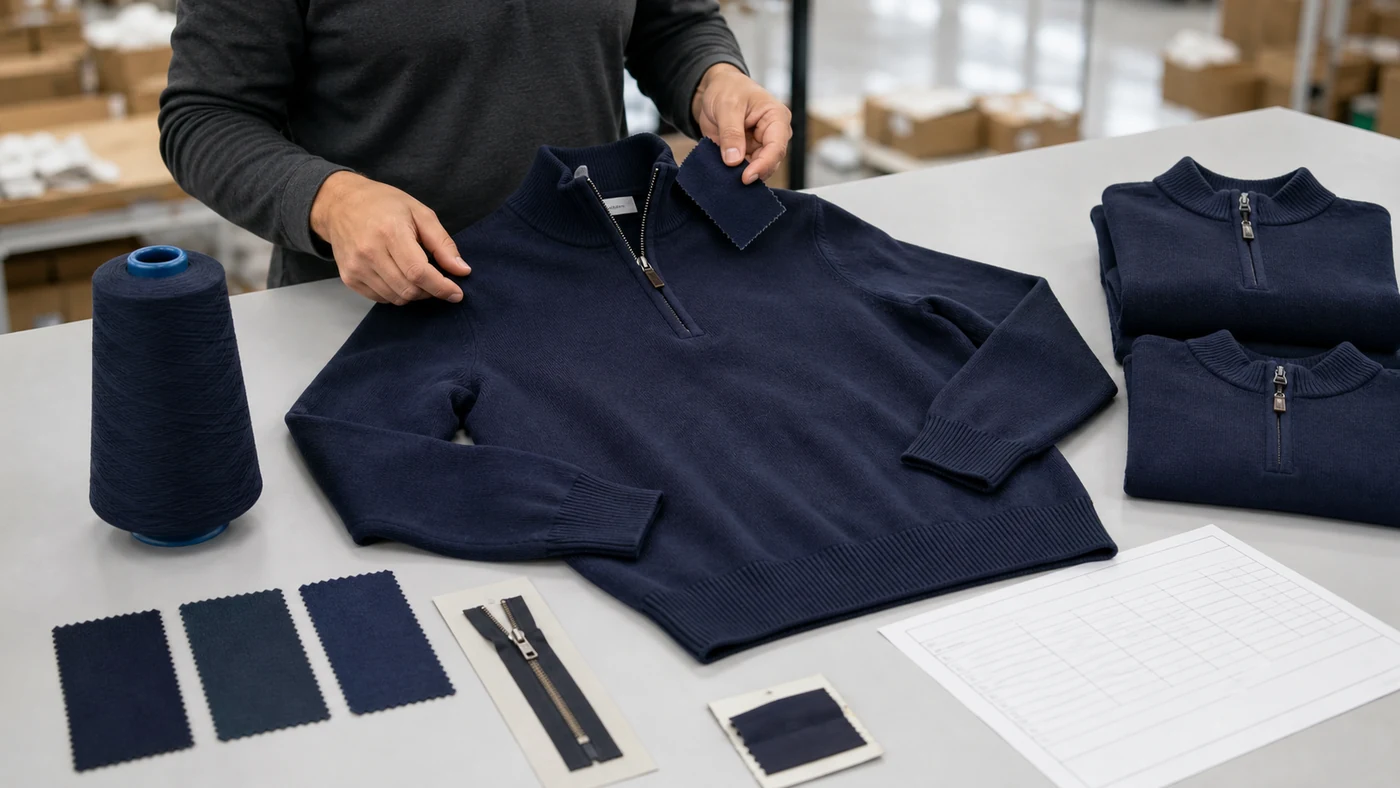
The pack should contain the dated PP sample, final tech pack, graded measurement chart and tolerances, yarn and color references, approved zipper, trim card, label artwork, care wording, packaging standard, test reports and approval comments. Mark superseded files clearly so they cannot return to production.
During knitting and assembly, check yarn lot, shade, panel measurements, stitch density, zipper alignment and collar shape early enough to correct the process. After finishing, compare measurements, weight and appearance with the approved standard. Final inspection should include a defined sampling plan and defect classifications agreed for the order.
Keep decisions traceable
Record who approved each change, the date, affected sizes or colors and whether retesting is required. A substitution in zipper tape, yarn lot or finishing route can affect appearance or dimensions even when the nominal specification seems unchanged.
The pass signal is straightforward: production samples match the sealed standard within agreed tolerances, required testing is complete, labels reflect the verified fiber and care information, and the shipping inspection is accepted. Until those conditions are documented, the program is not ready for release.
Conclusion
A successful cotton quarter zip sweater for a transitional line is not defined by cotton alone. It is defined by a controlled relationship among wearing window, composition, yarn, gauge, finished weight, collar recovery, zipper behavior, wash stability and graded fit. Buyers should approve those elements with labeled swatches, a washed and measured sample, a complete trim record and a sealed PP standard.
The strongest development sequence is to define the product role, compare viable constructions, test the selected sample under the intended care route and then build the production calendar around confirmed materials and approvals. This approach protects the seasonal launch without turning speed into guesswork. It also gives both buyer and factory a shared basis for correcting deviations before they spread through bulk production.
Related CNSweaters Resources
- OEM Knitwear Production Checklist
- Practical Sweater Factory Guide
- OEM Versus ODM Knitwear Selection Guide
- Knitwear Products and Development Categories
- CNSweaters Custom Knitwear Manufacturing
Planning a Cotton Quarter-Zip Program?
Send your intended market, launch date, composition, target weight, size range, color plan, zipper reference, quantity and care expectations. The development team can use those inputs to review a practical yarn, gauge, sampling and production route.
FAQ
Is 100% cotton always better for a quarter zip sweater?
No. The decision depends on the desired handfeel, recovery, durability, care route, price position and product claim. If a blend is used, approve the exact percentages and verify that labels and marketing statements match the composition.
What should a buyer include in the first sample request?
Provide the product role, target market, composition direction, reference images, gauge or surface direction, garment-weight target, measurements, zipper details, colors, labels, quantity and delivery date. Identify which fields are fixed and which the factory may propose.
When should wash testing happen?
Test before final fit and PP approval. Use the intended care procedure, record pre- and post-wash measurements and inspect appearance. Any material construction or finishing change that can affect performance may require retesting.
How can zipper waviness be reduced?
Control the relationship among knit density, opening length, zipper length, tape stability, sewing feed and finishing. Approve the garment laid flat, hanging and worn, before and after washing, rather than evaluating the zipper separately.
How should buyers plan a transitional delivery?
Work backward from the required warehouse date and include time for yarn and trim sourcing, sample revisions, testing, PP approval, bulk production, inspection and transport. Use project-specific written milestones instead of a generic published lead time.