 CN Sweaters
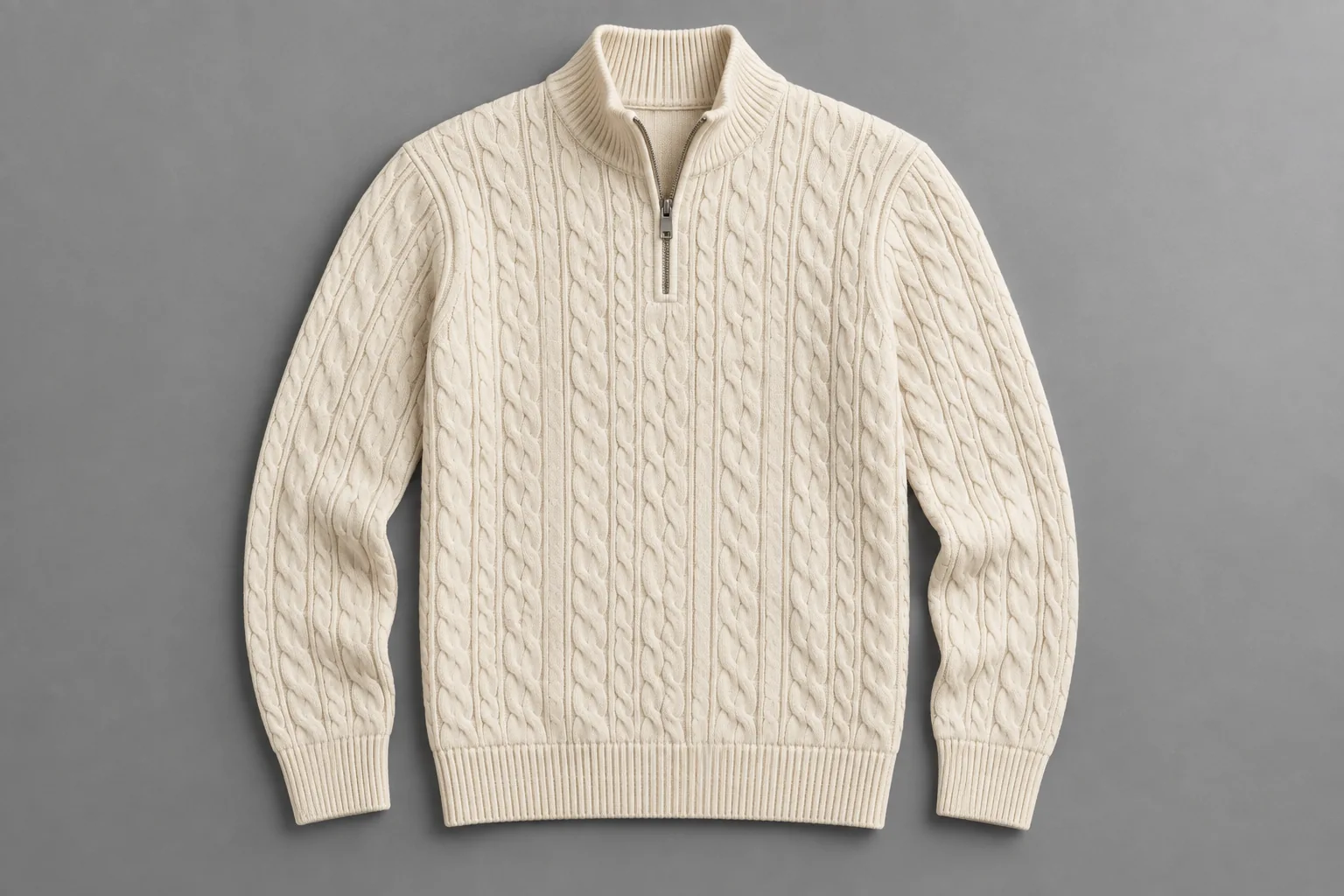
A cable cotton quarter zip can look perfect on the sample table and still come out of the wash with a wavy zipper. Cotton panels, cable zones and zipper tape can change differently during care. The collar may also recover differently from the body. So the real question at PP stage is simple: after washing, drying and pressing, does the center front still look like the approved sample?
Keep the cotton quarter zip yarn, cable program, zipper, collar and finishing route in one pre-production record. Compare that identified assembly before and after the selected care route. For more zip styles, see our custom knit hoodies and zip-up sweaters page.
Why the center front is the weak point of a cotton quarter zip
A quarter-zip has a short rigid element in the middle of a stretchy, moving fabric. The zipper tape and cotton knit may have different dimensional responses; compare the actual components. Changes in cable width or length can alter the relationship with the placket. When those two forces disagree, the zipper bows, the placket ripples or one side rides higher than the other.
In addition, the collar sits right on top of the zipper. A rib collar that relaxes more than the body can twist the top of the zipper or leave a gap at the stop. Because all of these parts work together, we review the center front as one system rather than as separate components.
Agree the cotton quarter zip care route first
Before a PP wash review, record how the identified garment will be washed, dried, pressed and rested, including whether the zipper is open or closed. Use the same collar and flat-lay position for paired readings so the numbers describe the garment rather than a changed setup.
The ASTM D1776 conditioning practice is a useful reminder here. It covers how to condition textiles before testing when a method calls for it. It does not set limits for this sweater. However, it supports the basic rule: never compare a freshly steamed piece with a rested one.
Freezing the cotton quarter zip version before the wash test
We treat the whole center front as one version. That means we record every input that could change the result:
Yarn: cotton composition, yarn item, count or ply, color and lot.
Knit: gauge, cable chart, background stitch, stitch setting and panel sizes.
Zipper: supplier, item, tape material, length and insertion method.
Placket and collar: placket support, rib structure, collar height and linking route.
Finishing: washing, drying, pressing and resting steps.
If any input changes after the test, the old result no longer covers the new version. For example, a different zipper tape or a tighter stitch setting can change the center front even when color and shape look the same. So we never swap in a “similar” zipper after testing and carry the approval forward.
We also define scope by size and color. Dark and pale cotton colors, separate yarn lots or size-dependent cable layouts may not react the same way. If one base-size sample is the PP standard, we write down which sizes and colors it covers.
Mark the cotton quarter zip measurement points
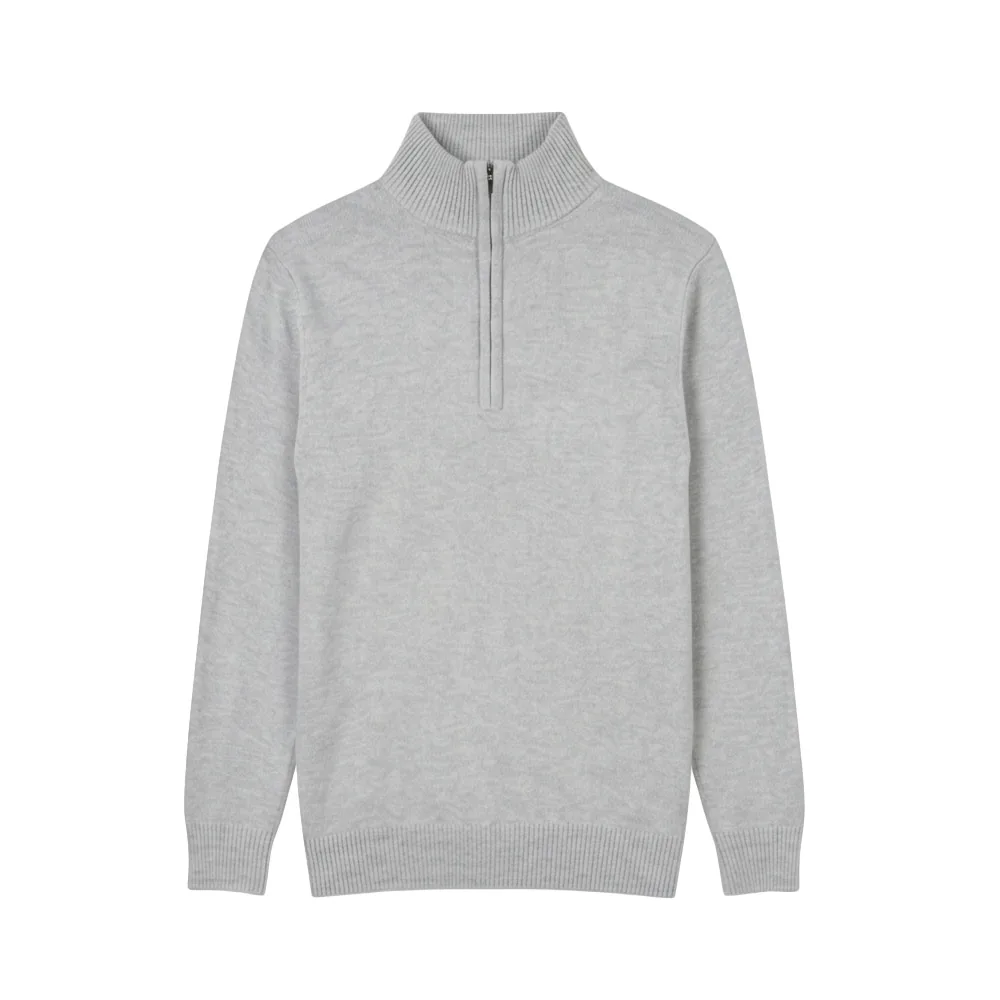
We measure the usual garment points first: body length, chest width, shoulder, sleeve, hem and collar circumference. Then we add center-front points: placket length, zipper opening, collar height and left-to-right symmetry at the placket.
For cable styles, we add a few more landmarks. These include cable repeat width, the distance from the cable edge to the placket and the point where each cable ends near the zipper and collar. These points reveal local cable and placket changes that whole-body measurements can miss. Our cable knit cost and lead time guide explains how cable choice affects sampling as well.
Reading cotton quarter zip shrinkage after washing
Overall garment shrinkage can hide a local problem. The body may stay close to spec while the placket shortens, the zipper bows or the collar puckers. On the other hand, the body can lose length while the center front still sits straight. So we record whole-garment and center-front results separately before we look for a cause.
AATCC TM150 covers length and width changes of garments after home laundering. It does not set the limits for this product; the buyer and our technical team agree those together. For our general approach, see how we control shrinkage in knitted sweaters.
Shrinkage or relaxation?
Cotton knit can stretch out of shape during knitting, washing, steaming, folding and handling. Some of what looks like shrinkage is really the fabric relaxing back. Therefore we record when each change appears: after washing, after drying, after steam or after the rest period.
Keep the raw before-and-after values at each measurement point alongside any percentage change. A rounded overall percentage cannot tell whether the zipper, cotton body or cable zones moved differently.
No hidden corrections
Sometimes a sample needs a quick pull or an extra press to straighten the zipper. If that happens, we photograph it before the correction and note what we did. Then we ask one question: will bulk production repeat this step on every piece? If not, the PP sample is not a stable standard.
Checking cables and zipper on the cotton quarter zip
Inspect the center front both zipped and open. With the zip closed, compare placket line, hem level and cable clearance; with it open, check collar roll, tape exposure and any one-sided twist. Record the actual assembly and care condition for each view.
Cable relief needs a fair comparison. We lay the washed sample beside the approved sample under the same light. Also, we avoid vague words such as “flat” and instead note which cable zones changed.
Function and appearance
After the stated care trial, check whether the installed zipper opens and closes without pulling the knit. Record tooth alignment and collar position on the same identified garment. This is a proposed PP function observation, not a completed durability test or a claim that this style has already passed.
For appearance, AATCC TM143 addresses specified post-laundering garment characteristics under its method. An ordinary photograph of the cable and seam after washing is a development observation unless the full applicable procedure was followed. Label which evidence supports the decision.
Look inside too
We also turn the garment inside out. Tape exposure, bulky linking, loose ends and an uneven zipper stop can make a front that looks fine closed but behaves badly when open. So our quality control team photographs both the face and the inside.
What goes into the cotton quarter zip PP record
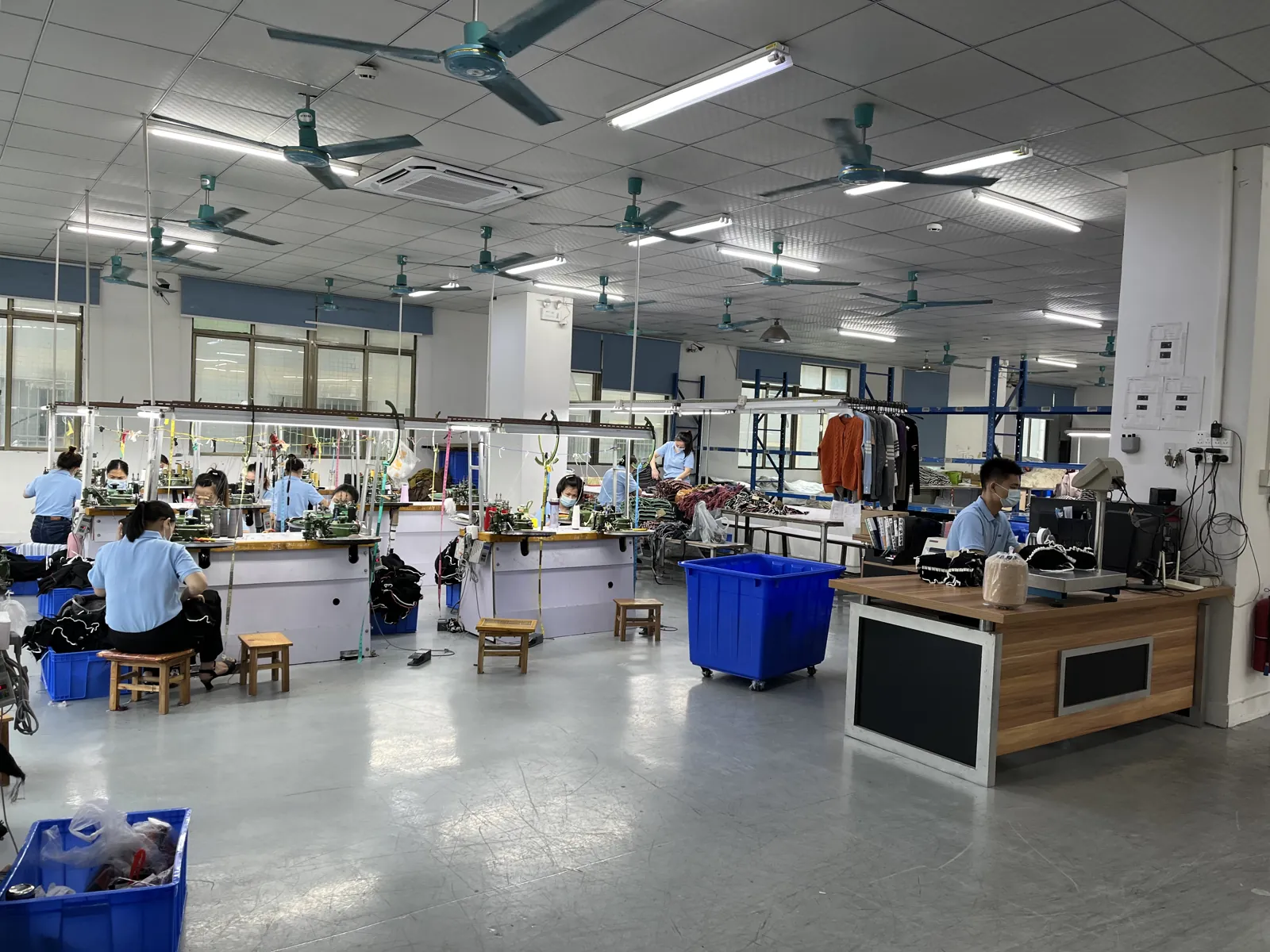
The PP file should let anyone repeat the approval. It includes the garment identity, the yarn and trim inputs, the cable and placket construction, the measurement map and the care route. It also holds before and after measurements, open and closed photos of the center front, collar views and any agreed limits.
We also note where the physical sample lives and who can change the decision. That way, a nice-looking pre-wash sample never becomes the only standard for cable relief and zipper alignment.
What a change reopens
A new yarn lot, stitch setting, cable chart, zipper, placket support, collar rib or finishing route can make part of the approval out of date. For example, a zipper change reopens function and center-front appearance. However, it does not change the approved color. A new washing route, in contrast, can affect shrinkage, cable relief and hand feel all at once.
Release, hold or revise the cotton quarter zip
A buyer can release the proposed style only after the identified PP garment meets the agreed dimensional, zipper and appearance limits. Hold the decision when the placket waves, the zipper shifts or an input changes without a new trial. This article supplies a review path; it does not report an actual A180 wash result.
Cotton quarter-zip evidence for the order handoff
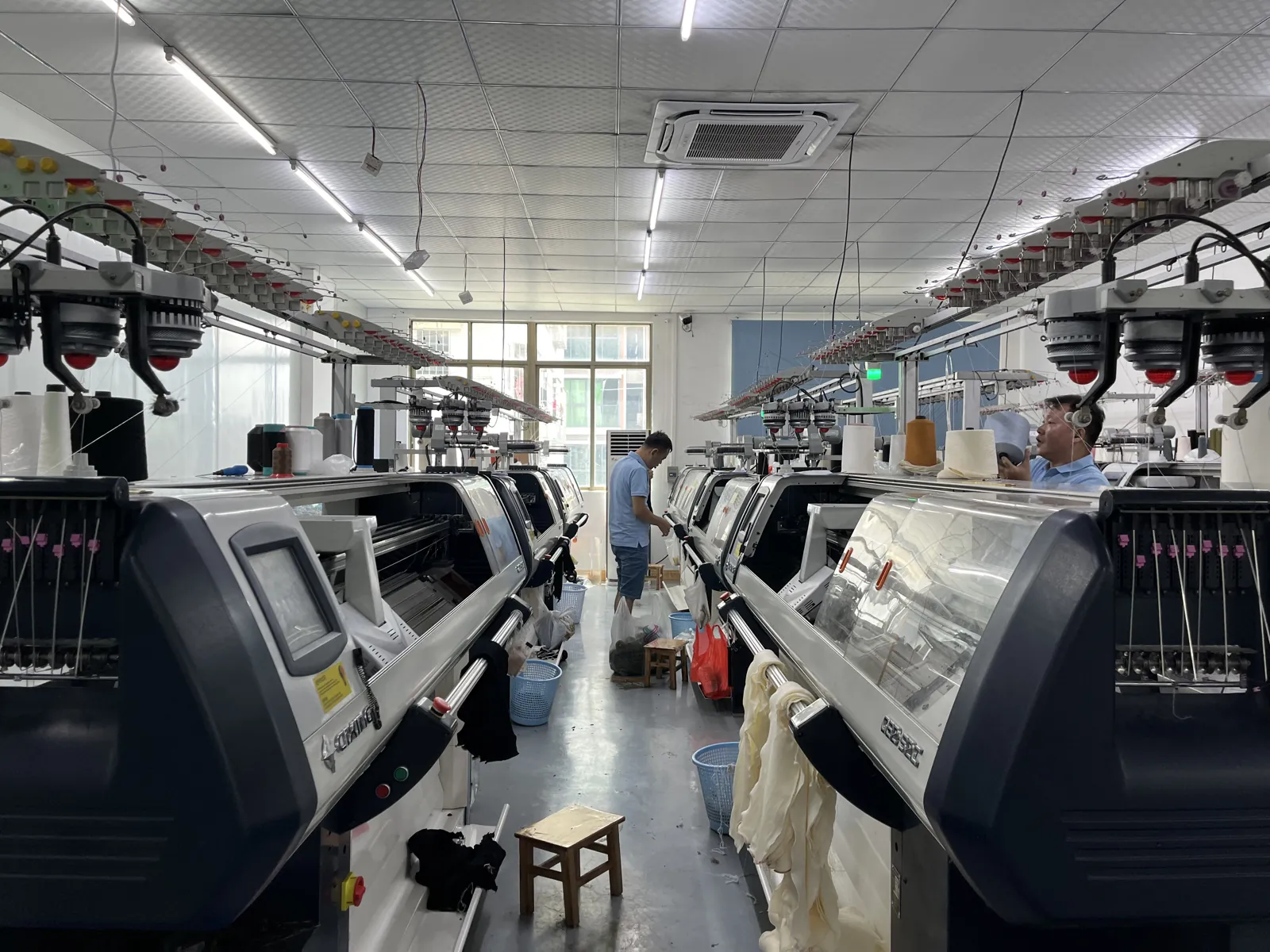
Before releasing a cotton cable quarter zip for bulk, record the identified PP sample, the care route, pre- and post-care measurements and the zipped-front appearance against agreed limits. If the yarn is sold with a Better Cotton or recycled-content claim, request current supply-chain documents and any applicable transaction evidence for that yarn rather than treating a generic factory certificate as proof. The MOQ and lead-time page offers general ranges; confirm the selected yarn, zipper and any repeat sample before committing to a date.
Conclusion
Keep the cotton quarter zip PP decision with its component identities, measured values and uncorrected post-care views. If a result depends on extra pressing or a substituted zipper, record that dependency before the sample becomes the production reference.
Send us your quarter-zip tech pack and we will plan the wash test with your first sample.
FAQs
Can a fabric swatch approve a cotton quarter zip center front?
No. A swatch shows how the cotton behaves. However, it cannot show how the zipper, placket and collar work together after washing.
Is overall shrinkage enough for release?
Not on its own. The body can pass while the placket shortens. So we also measure the placket, zipper opening and collar.
Should the zipper be open or closed when we measure?
Either works, as long as everyone uses the same state. Record measurements in the agreed closure state and photograph both open and closed views.
Does every size need the full PP wash test?
Not always. Select representative sizes where cable layout, zipper length or collar construction changes, and record why those samples represent the range.