 CN Sweaters
A commercially successful short sleeve cardigan is not a long-sleeve style with the sleeves removed. The lighter body, exposed arm opening and full front edge create a different balance of opacity, recovery, fit and trim weight. If those elements are not specified together, the sample may look clean on a table but flare at the sleeve, pull across the armhole or develop a wavy placket after washing.
For buyers developing warm-weather or early-fall knitwear, the practical task is to define how the garment should be worn and then convert that intent into measurable controls. Yarn, gauge, stitch density, garment weight, sleeve geometry, placket construction, buttons, wash stability and grading all need evidence before bulk production is released.
What Defines a Commercial Warm-Weather Cardigan?
The product role should be fixed before yarn is selected. “Summer cardigan” is too broad to guide a factory because it does not explain coverage, layering, climate, price position or care expectations.
Define the wearing situation and coverage
Write a concise use statement such as: “A lightweight button cardigan for indoor summer wear and early-fall layering over a camisole or T-shirt.” Add the target market, delivery window, styling layer, desired opacity and whether the cardigan is expected to be worn open, closed or both.
These choices affect fit. A cardigan worn closed needs sufficient chest and waist ease without button strain. A style worn mainly open needs front edges that hang vertically rather than rolling outward. A next-to-skin design may require smoother yarn and a softer neck finish. A layering piece needs enough movement without appearing oversized.
Buyers can compare cardigan construction options when defining the neckline, front opening, fit and closure direction. The current style still needs a product-specific tech pack and approval sample.
Turn “lightweight” into a controlled result
Lightweight should be recorded through a set of connected fields: fiber composition, yarn reference, yarn count or ply, machine gauge, stitch structure, finished garment weight in a stated size and measured stitch density. Opacity and recovery should be reviewed on the actual garment, not inferred from gauge alone.
Two styles made on the same gauge can behave differently because of yarn thickness, twist, stitch length, structure and finishing. A lower garment weight can improve warm-weather comfort but may reduce opacity, button support and edge stability. The objective is therefore not the lowest possible weight; it is the lightest construction that still performs the intended job.
Match Yarn, Gauge and Opacity to the Wearing Window
Yarn and structure should be approved as a package because the finished surface is a system. The buyer needs to see how the chosen combination responds to light, stretch, recovery, laundering and the weight of the front closure.
Compare viable constructions with labeled swatches
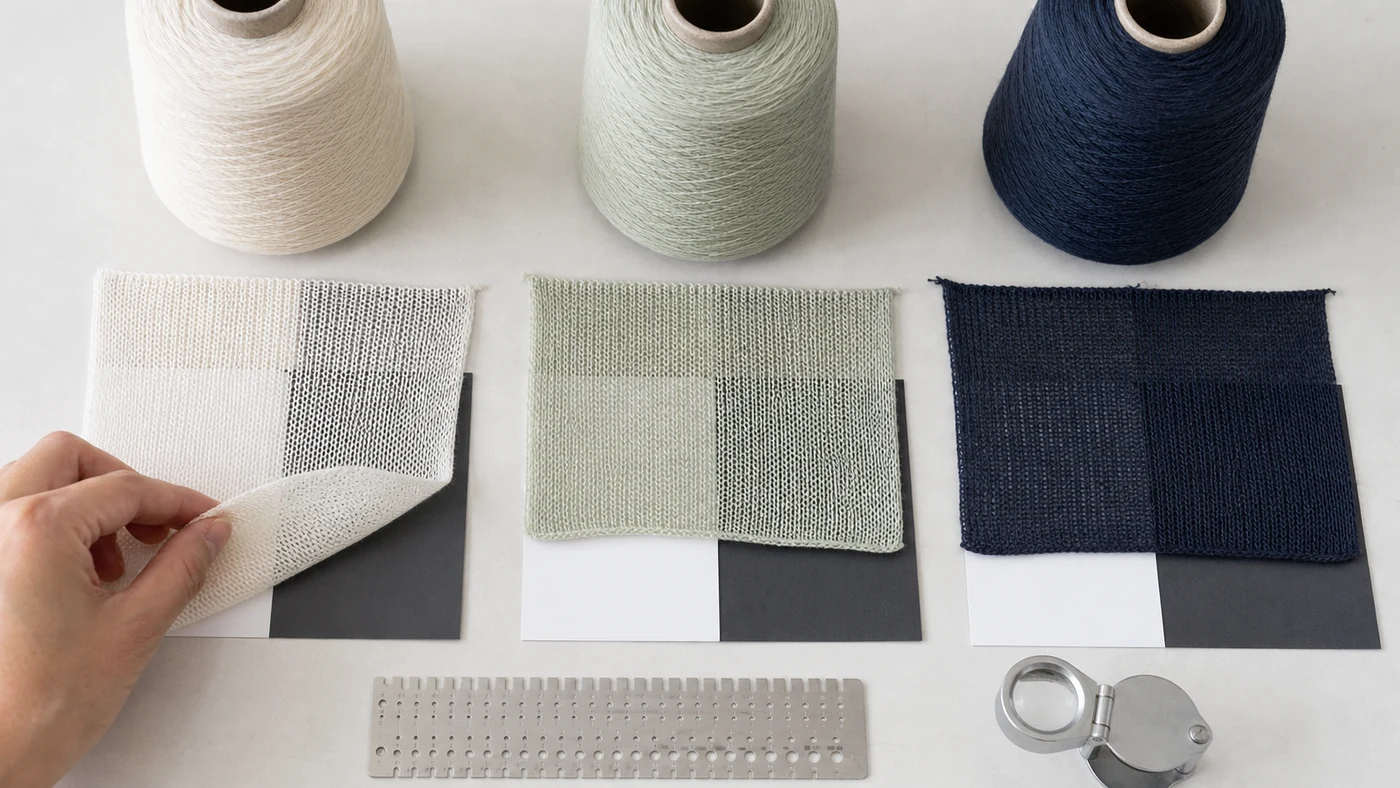
Request two or three swatches when the specification is not already fixed. Keep the intended color and general design direction consistent while comparing realistic yarn, gauge and density combinations. Each swatch should be labeled with composition, yarn code, count or ply, machine gauge, stitch and date.
Review the swatches in relaxed condition, under light tension and over both light and dark backing cards. This reveals whether the fabric becomes unexpectedly transparent when worn. Also check surface clarity, drape, snag sensitivity, stretch and recovery. If pointelle or another open structure is intentional, define the acceptable opening and placement rather than treating all transparency as a defect.
CNSweaters’ custom cardigan development covers multiple yarn, gauge and front-opening directions. For the buyer, the useful output is a selected, labeled swatch attached to the approved specification—not a general material name in an email.
Verify composition and labeling inputs
Record the exact fiber percentages and the supporting yarn information needed for the intended market. Do not use “cotton feel,” “silky” or “eco yarn” as substitutes for composition. If a named fiber type or environmental claim is part of the sales proposition, obtain suitable documentation before approving label artwork or marketing copy.
For the United States, the Federal Trade Commission’s apparel labeling guidance explains that most covered textile products need labels identifying fiber content, country of origin and the manufacturer or another responsible business. Requirements differ by destination, so the buyer or importer should confirm the rules for every sales market.
The selected yarn should then be assessed in the complete garment because a swatch cannot show full placket and sleeve behavior.
Engineer the Shoulder, Armhole and Sleeve Opening
The short sleeve changes the visible silhouette and concentrates attention at the shoulder and arm opening. These areas need their own dimensions and construction decisions rather than shortened long-sleeve measurements.
Choose the sleeve architecture deliberately
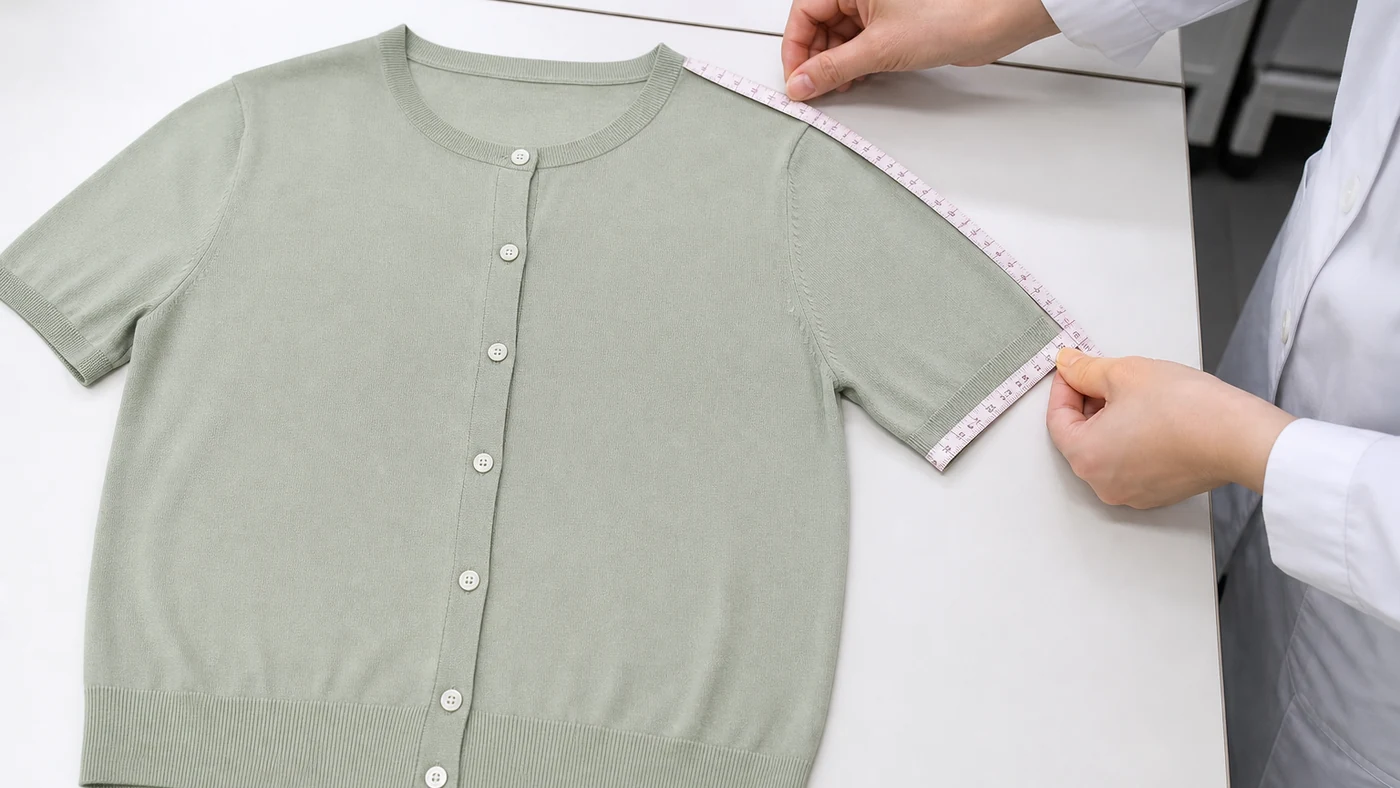
Specify whether the style uses a set-in sleeve, drop shoulder, raglan construction, grown-on sleeve or another shaped solution. Each route changes mobility, seam placement, appearance and grading. Include front and back drawings plus a close construction view when the sketch could be interpreted in more than one way.
For a set-in sleeve, control shoulder width, armhole depth, sleeve-cap shape, bicep and sleeve opening. For a drop shoulder, define the shoulder drop and finished sleeve length from the correct point. For a grown-on construction, check how the underarm transition behaves when the wearer raises an arm.
Evaluate the garment in motion. The wearer should reach forward and lift the arm without the body riding excessively or the armhole cutting in. At the same time, the opening should not expose more than intended when the arm is relaxed. Photograph front, side and raised-arm views during fit review so comments refer to visible evidence.
Control sleeve-opening recovery
State the sleeve-opening measurement and how it is taken. If the edge uses rib, tubular trim, a folded hem or another finish, identify its width, structure and attachment method. Record whether the measurement is relaxed and whether a stretch requirement is relevant.
The opening can flare when the trim is too loose, the body fabric grows during linking or finishing, or pressing distorts the edge. It can feel tight when the trim is over-tensioned or grading does not allow for the upper arm. Approve both appearance and comfort after the intended wash process.
The following table translates the main risks into evidence that can follow the style from sampling into bulk.
| Risk area | Buyer specification | Sample evidence | Bulk check |
|---|---|---|---|
| Opacity | Approved yarn, gauge, density and backing-card result | Labeled swatch and worn review | Yarn lot and panel density |
| Shoulder balance | Construction type and measurement points | Front, side and motion fit photos | Size-set measurements |
| Armhole mobility | Depth, shape and intended layer | Wear test with arm movement | Inline measurement check |
| Sleeve opening | Relaxed dimension, finish and recovery | Washed fit sample | Opening measurement and flare review |
| Front placket | Width, reinforcement and finished length | Hanging and buttoned sample | Edge alignment after finishing |
| Buttons | Diameter, weight, spacing and attachment | Approved trim card and use test | Position and security inspection |
| Wash stability | Named method, cycles and tolerances | Pre/post-wash report | Production verification sample |
The table should contain project values and tolerances. “Same as approved sample” is useful only when the approved sample, measurement record and trim card are clearly identified and retained.
Stabilize the Neckline, Placket and Button System
The front opening is the dominant construction feature of a short sleeve cardigan. A lightweight body must support two long edges and repeated button use without stretching, twisting or collapsing.
Specify the placket as a structure
Define neckline shape, placket type, finished width, edge construction, reinforcement, button overlap and total front length. State whether the placket is knitted with the body, attached separately or formed through another method. Include the intended appearance when the cardigan is open and closed.
The left and right front edges should be compared on a flat table and while hanging. Check whether their lengths match, whether the neckline meets cleanly and whether the hem aligns when buttoned. A small difference in edge feeding or finishing can become a visible diagonal pull across a fine-gauge garment.
The OEM and ODM development process can support work from a complete tech pack or a more open design direction. In either route, the buyer should close the same approval fields before bulk: placket construction, measurement, button standard and wash behavior.
Match buttons and buttonholes to the fabric
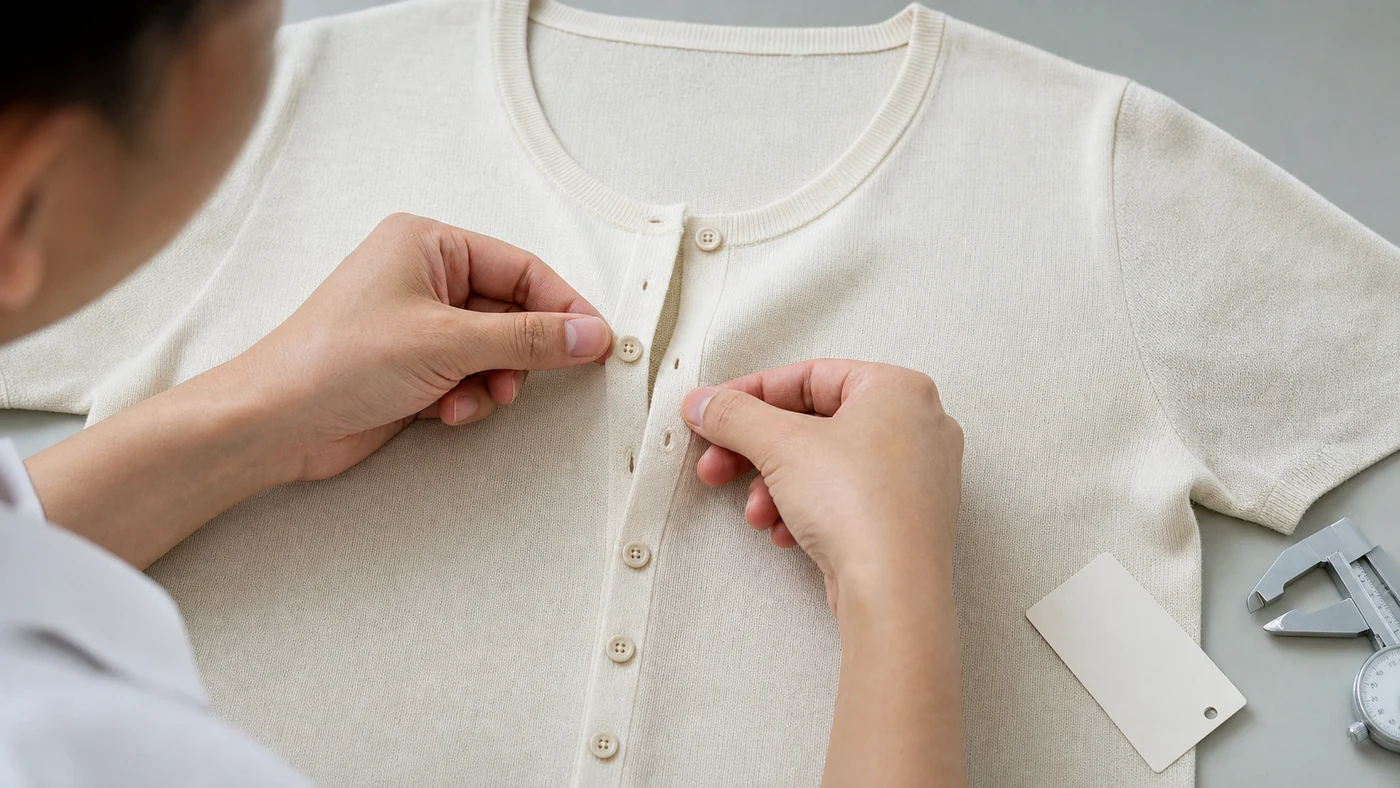
Record button material, diameter, thickness, weight, color, finish, shank or hole configuration, supplier reference and position. A button that suits a substantial winter cardigan may drag on a fine summer placket. The visual choice must therefore be checked against the fabric’s support and recovery.
Specify button count, spacing from defined points, buttonhole direction, opening size and reinforcement. Test repeated opening and closing. The button should pass without forcing the hole, while the hole should not relax enough to release it during normal wear. Check for yarn damage, distortion and placket growth after the use test and washing.
Button attachment strength may be part of a buyer’s quality protocol, but the method and acceptance level need to be agreed for that program. Avoid copying an arbitrary force requirement from another product without confirming that the button, yarn and construction are comparable.
How Should Buyers Approve Fit After Washing?
Fit approval should use a washed and conditioned garment when the care route includes laundering. Lightweight knitted structures can change in length, width, torque and edge shape, so an unwashed sample may not represent the customer’s experience.
Establish the test and measurement method
Define the washing procedure, drying route, number of cycles, conditioning, measurement points and allowable dimensional change. ISO 6330:2021 provides standardized domestic washing and drying procedures for textile testing, while ISO 5077:2007 specifies a method for determining dimensional change after the selected washing and drying combination.
Record pre- and post-wash measurements for body length, chest, shoulder or cross-back, armhole, sleeve length, sleeve opening, front edge and placket width. Photograph the garment flat and hanging under consistent conditions. Also inspect spirality, neckline shape, edge rolling, buttonhole change, surface appearance and handfeel.
The test report should name the procedure and show actual results. “Wash test passed” is not sufficient for a buyer who needs to decide whether the tolerance, care instruction and production standard are appropriate.
Build the care label on evidence
The care route should reflect successful testing and the destination market. The FTC’s Care Labeling Rule requires covered manufacturers and importers to have a reasonable basis for care instructions and to provide relevant warnings when expected procedures would harm the product.
Assess the complete garment, including buttons, labels and decorative components. If a trim change or finishing change can alter the result, determine whether retesting is needed. Care wording should not be finalized merely because the base yarn has been used before; construction and components can change the garment’s response.
Approve fit again after washing. Confirm that the intended layer still fits, the front edges remain balanced, the sleeve opening is comfortable and the hem does not rise when the cardigan is buttoned.
Plan Color, Trims and Production Timing
The seasonal calendar should be built around actual yarn, color and trim decisions. A lightweight cardigan may look simple, but multiple dyed yarns, custom buttons, labels and packaging can create separate approval and procurement paths.
Reduce avoidable assortment fragmentation
Review the number of colors, size distribution and trim variants before confirming the order. Consolidating a button finish or using one yarn platform across related styles can simplify approvals and reduce the risk of mixed components. This does not mean forcing every color through one unsuitable material; it means removing variation that does not add buyer value.
Approve color on the intended yarn and structure. Surface texture, fiber luster and stitch density affect how a shade appears. Compare lab dips or yarn references under agreed lighting and retain the approved standard. For pale colors, repeat the opacity review because the same construction may provide different visual coverage across shades.
If labels, buttons or packaging vary by market, keep a market-specific bill of materials. The factory should not have to infer which care label, language or component belongs to each shipment.
Work backward from the required delivery
Start with the warehouse or launch date, then account for transport, final inspection, packing, finishing, assembly, knitting, yarn and trim procurement, PP approval, testing and sample revisions. Add clear decision deadlines for color, buttons, labels and packaging.
Do not treat a general lead-time statement as the commitment for the current purchase order. Timing changes with yarn availability, color count, trim sourcing, sample revisions, order size, construction and seasonal capacity. The written quotation and confirmed production schedule should govern.
Where the style requires fully fashioned shaping or a fine gauge, verify that the supplier’s equipment and technical route match the design. CNSweaters describes its knitwear manufacturing capability across multiple gauges and structures, but feasibility should still be confirmed against the current tech pack.
Convert the PP Sample Into Bulk Controls
The approved PP sample needs a complete evidence pack. Bulk consistency cannot depend on a merchandiser remembering why the sleeve was changed or which button was finally accepted.
Seal the approval standard
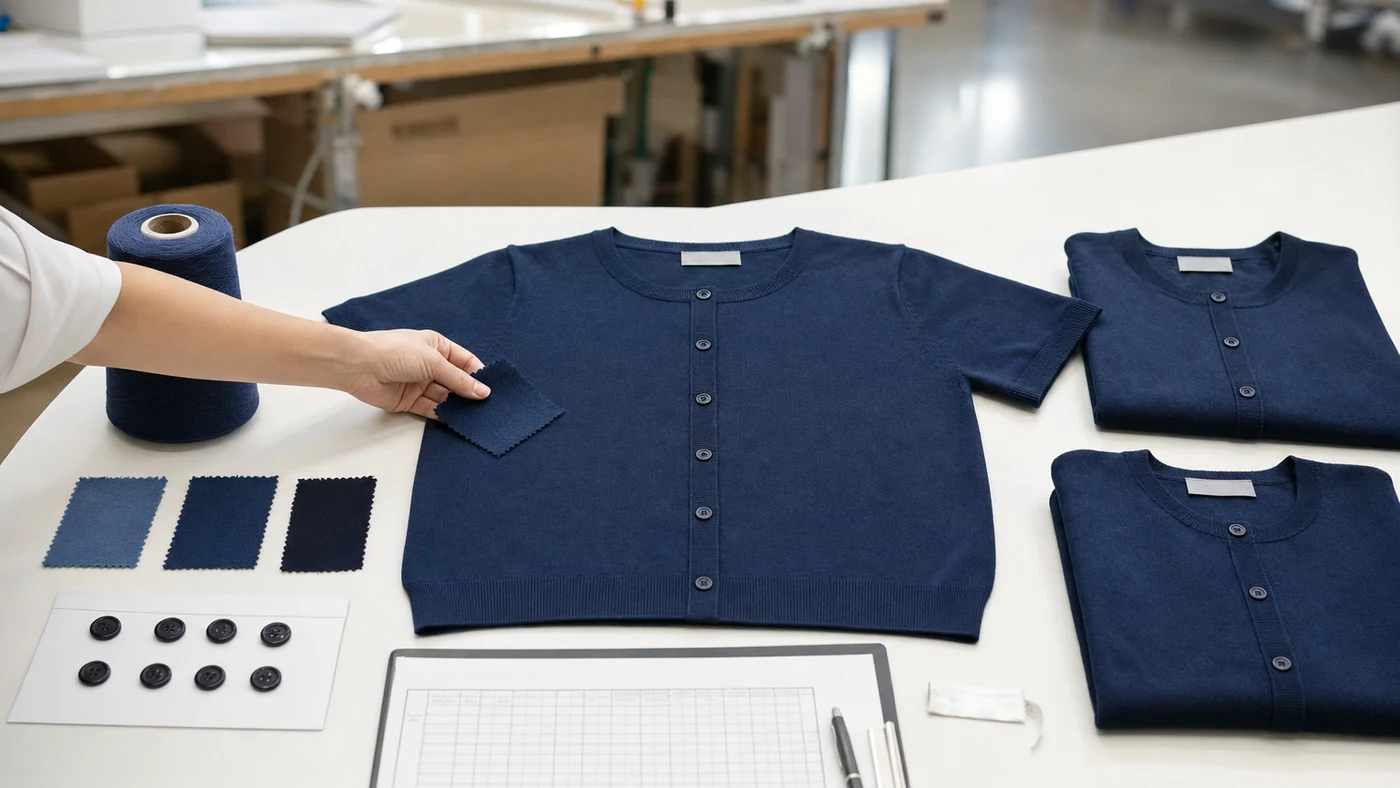
Retain the dated PP sample with the final tech pack, graded measurement chart and tolerances, yarn and color references, stitch or swatch card, button and trim card, label artwork, packaging standard, test reports and approval comments. Mark obsolete files as superseded so they cannot return to production.
The size-set review should include the ends of the size range and any size where construction or trim dimensions change. Check shoulder proportion, armhole mobility, sleeve opening, placket length, button spacing and front-edge alignment. Grading should preserve the design’s visual balance rather than merely adding the same amount to every measurement.
Inspect risk points before they spread
During knitting, check yarn lot, shade, panel dimensions, stitch density and shaping. During assembly, inspect shoulder and armhole linking, placket feeding, buttonhole formation and button placement. After finishing, compare garment measurements, weight, opacity, front-edge alignment and surface appearance with the sealed standard.
Final inspection should use an agreed sampling plan and defect classification. High-risk points deserve deliberate coverage across colors and sizes: flared sleeve openings, uneven fronts, button strain, loose buttons, mismatched buttonholes, twisted bodies and out-of-tolerance measurements.
The program passes when production evidence matches the sealed standard, required tests are complete, labels correspond to verified product information and the shipping inspection is accepted. Until then, the style remains under control review rather than ready for release.
Conclusion
A short sleeve cardigan for warm weather succeeds when lightness is balanced with coverage, recovery and structural control. Buyers should define the wearing situation first, then approve yarn, gauge, density and garment weight together. Shoulder and sleeve geometry must be developed for movement, while the neckline, placket, buttons and buttonholes must behave as one front-opening system.
The reliable route is to compare labeled swatches, fit the garment in its intended use, measure it before and after a named wash process and seal the final PP sample with complete production records. Staged checks should then focus on the risks that are most visible in a lightweight cardigan: opacity, sleeve flare, front-edge alignment, button function and wash-stable measurements. This turns a seasonal design into a standard that a factory can reproduce and a buyer can verify.
Related CNSweaters Resources
- Knitwear Products and Development Categories
- OEM Knitwear Production Checklist
- Sweater Factory Capacity and Sampling Guide
- Wholesale Supplier MOQ and QC Guide
- CNSweaters Custom Knitwear Manufacturing
Planning a Short-Sleeve Cardigan Program?
Send your target market, wearing window, composition, gauge or surface direction, opacity requirement, fit reference, colors, button details, size range, quantity and delivery date. The development team can use those inputs to review a practical sampling and production route.
FAQ
Is a short sleeve cardigan made from a long-sleeve pattern?
It should not be treated as a simple sleeve reduction. The shoulder, armhole, sleeve opening and body balance need to be evaluated for the short-sleeve silhouette, intended layer and movement requirements.
Which measurements matter most for a short sleeve cardigan?
Control chest, body length, shoulder or cross-back, armhole depth, sleeve length, bicep, sleeve opening, neckline, placket width, front-edge length and button positions. Define each point with a measurement diagram.
How can buyers prevent a wavy cardigan placket?
Match the placket structure and reinforcement to the body fabric, control feeding and finishing, and approve the front edges flat, hanging and buttoned. Recheck alignment and dimensions after the intended wash procedure.
When should buttons be approved?
Approve the exact button and buttonhole system during sampling, before PP approval. Check weight, diameter, spacing, color, opening force, yarn damage, attachment and performance after washing.
What should be checked before bulk production?
Seal the PP sample, final tech pack, graded measurements, yarn and shade standards, trim card, labels, packaging and test results. Confirm that size-set, wash and production-risk reviews have passed.