 CN Sweaters
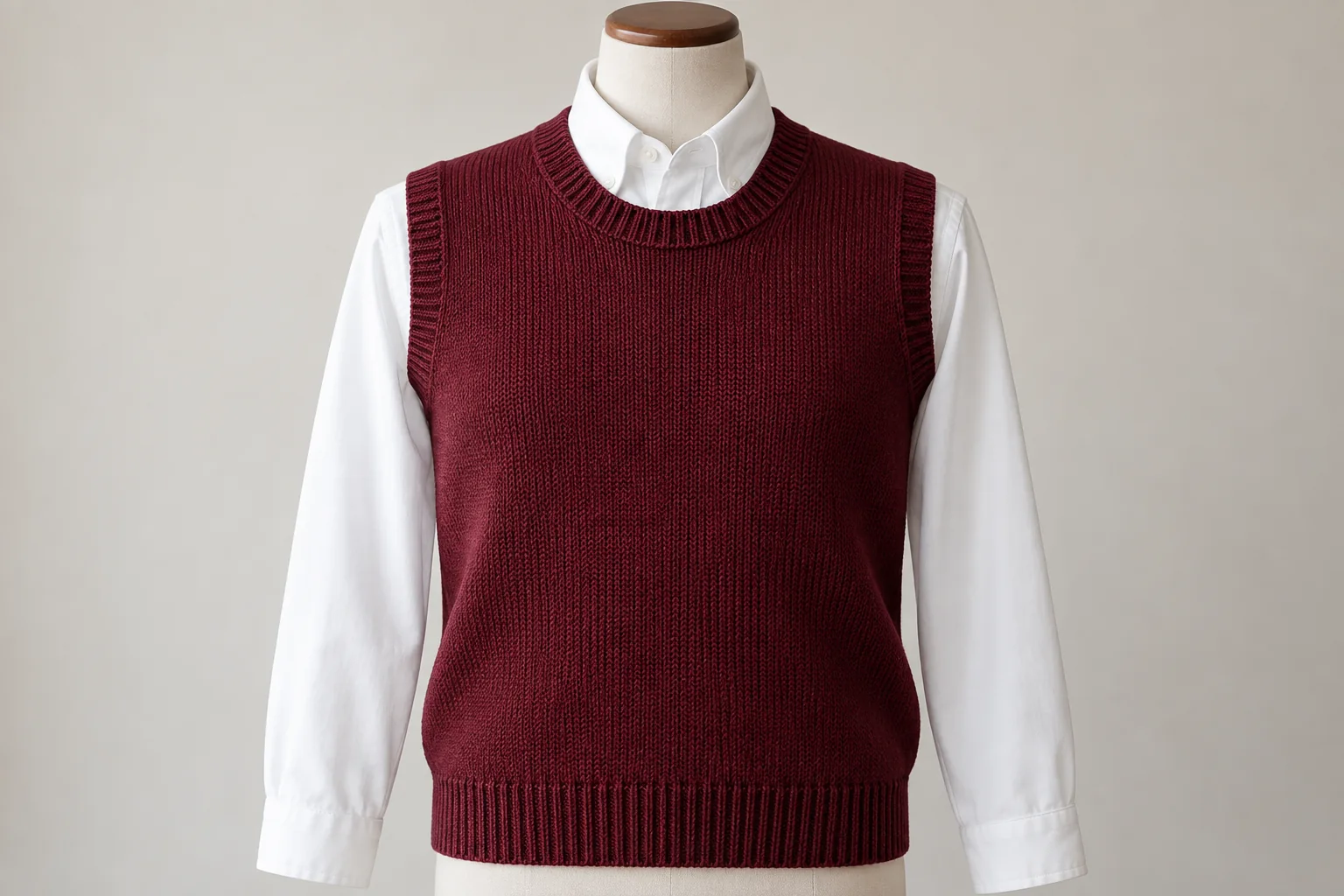
A shirt collar trapped beneath a crew neck vest can be hidden in the front photograph. Check the back and sides before changing the rib. The conflict may come from the vest opening, the shirt arrangement or the shoulder position of either garment.
Review the opening at rest, during dressing and after movement or care. Use the actual intended underlayer: a buttoned shirt collar, an open collar and a crew-neck tee occupy the same vest differently.
Which underlayer defines the crew neck vest opening?
Choose underlayers for the crew neck vest
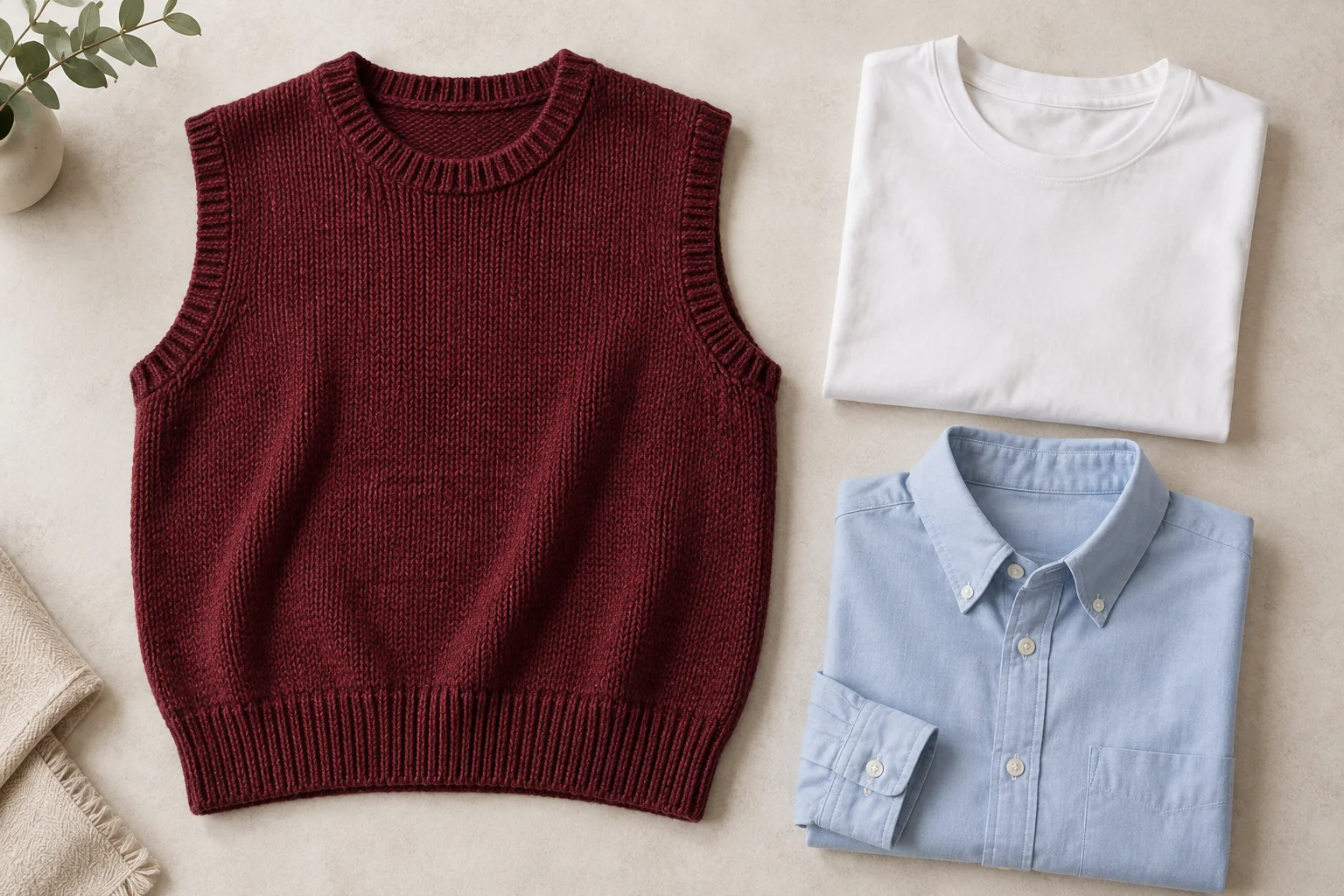
Use an actual shirt or tee from the intended wearing system. Record its size, neck construction and the way it is worn during the review. A buttoned shirt collar, an open collar and a high crew-neck tee occupy the opening differently. A generic note saying suitable for layering leaves these differences unresolved.
The knitted vest fit guide covers the wider body and armhole relationship. For this review, specify the neck area of the chosen layer in enough detail to repeat the comparison. Retain a photograph of the layer on its own, including its shoulder position and collar arrangement.
If the brand expects several outfits, select a reference set that represents their different neck shapes and thicknesses. Do not describe a result from one thin tee as approval over all shirts. A broad styling promise needs evidence that reflects the promised use, or a narrower product description.
Name what the neckline should reveal or cover
Mark the intended position of the vest edge relative to the shirt or tee. The brief may require a collar to remain visible, a tee edge to stay concealed or a deliberate band of the underlayer to show. Treat this as a design decision with a visual reference, not as a universal rule for crew necks.
A V-neck layering review addresses a different opening shape. A crew neck vest has its own front arc, back-neck position and side clearance. Borrow the discipline of using a defined outfit, while drawing the actual rounded opening rather than adapting a V-depth measurement by name.
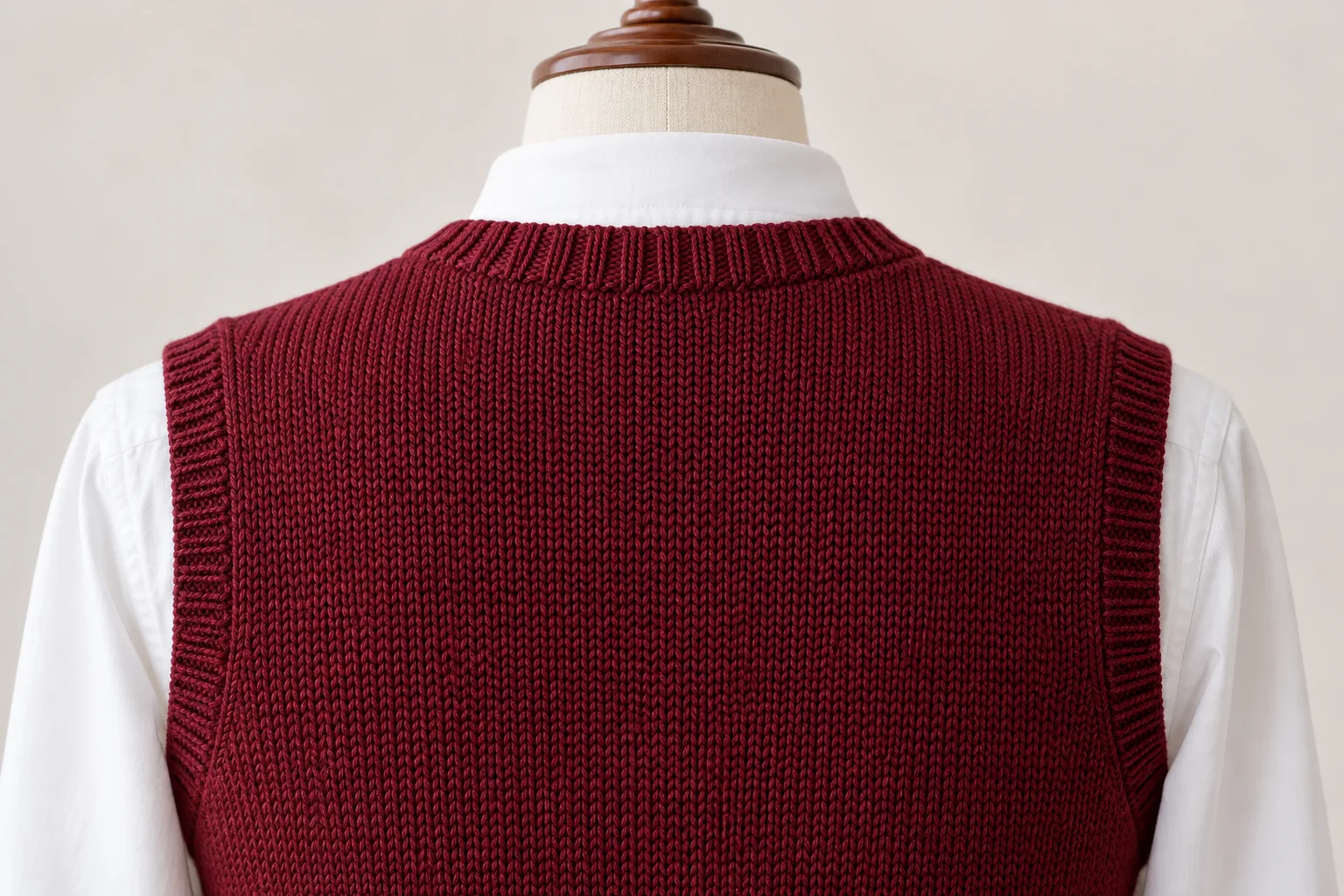
The accepted image should show front, side and back neck relationships. A front view can hide a shirt collar trapped at the back, particularly when the garment has been arranged for photography.
How should the crew neck vest opening be measured?
Mark the crew neck vest opening landmarks
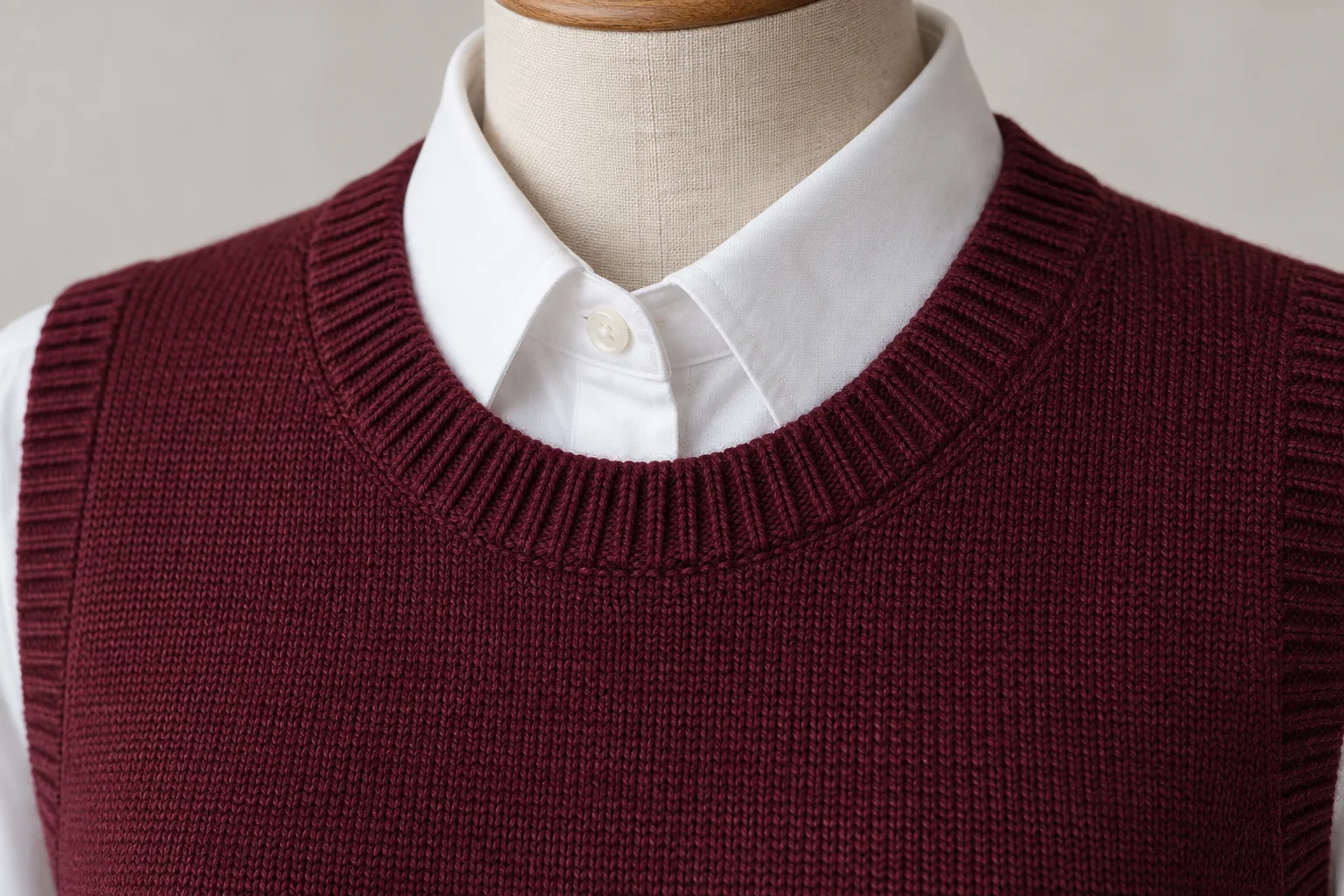
Identify the neckline attachment line and the finished rib edge separately. Record whether neck width is measured between attachment points or between finished edges. The two distances can change differently when the rib depth changes, even if the body neckline remains the same.
ISO 18890 provides a reference for garment measurement. Define additional neck and underlayer points with the technical team. The product file still needs its own target dimensions and acceptance criteria; the standard does not choose the amount of shirt-collar clearance for this style.
State the sample position and edge condition. A relaxed opening, an opening laid flat with folds removed and an opening under a defined extension are different measurement states. Label them clearly so the supplier does not compare readings taken under different amounts of handling.
| Reference item | What the buyer records | Why the record is needed | Boundary |
|---|---|---|---|
| Wearing layer | Garment identity, size and neck arrangement | Reproduces contact with the vest edge | One layer does not represent every outfit |
| Front arc | Depth and marked finished-edge landmarks | Locates the visible opening | Do not infer depth from a tilted photograph |
| Back neck | Edge position against the approved layer | Reveals trapping or backward displacement | Review from behind as well as in front |
| Rib construction | Depth, material and attachment reference | Separates edge changes from body changes | Material identity requires records |
| Measurement state | Relaxed, worn or specified extension condition | Makes readings comparable | Do not combine different states |
| Sample revision | Size, programme, finish and date | Connects the observations to one garment | Reworked samples need updated identity |
An opening’s perimeter cannot be inferred reliably from one flat width. If perimeter matters to the brief, agree how it will be measured along the actual shape and retain that method with the result.
The measurement-tolerance guide helps structure the agreement between buyer and supplier. Set the method before negotiating an allowance. Keep the accepted curve, side position and rib appearance alongside the numbers so an inspector can recognise a shape problem that a single width might miss.
Record any deliberate asymmetry in the styling reference. Otherwise, an angled shirt collar or an unevenly positioned tee can be mistaken for a vest-construction fault.
What changes between dressing and wearing?
Observe entry without turning it into an improvised test
A neckline may look correct once the vest is in place yet be awkward during dressing. Ask the wearer to use the intended dressing method and record where handling is needed. Do not prescribe a pulling force, repeated cycle count or pass percentage without an agreed method and product requirement.
Observe the whole upper garment. The opening, shoulder area and armholes can all influence entry. If the wearer pulls strongly at one side, note the location and subsequent edge shape. That observation can guide the next comparison, but it does not establish the material’s laboratory recovery performance.
Keep the initial resting view and the view after dressing. Photograph any manual rearrangement separately. This makes it possible to distinguish an edge that settles naturally from one that was put back into shape for the picture.
Review crew neck vest movement over the underlayer
Use ordinary movements relevant to the garment, such as turning the head and reaching forward. Note whether the underlayer remains in its intended position, whether the vest moves with it and whether the neck edge returns to the accepted resting line.
Inspect contact at the sides and back of the neck. A front edge can remain visually tidy while the back catches on a collar. Conversely, a moving shirt collar may alter the appearance while the vest opening itself remains stable. Record both garments before choosing which one the sample comment should address.
How should rib recovery and care be compared?
Distinguish edge behaviour from fibre expectations
Record the actual rib yarn, construction and attachment used on the sample. A fibre name alone does not establish how the assembled neck edge will extend or recover. The yarn-planning guide can help identify the information to request before comparing alternatives.
When a technical team selects a laboratory method, retain the specimen identity and its relationship to the garment. ASTM D2594 addresses stretch and growth in suitable low-power knit fabrics. It cautions against using the method for commercial-shipment acceptance. A casual pull on the finished neck should not be labelled as that test.
Separate immediate extension, recovery after the agreed rest and any persistent change. If the method does not specify the observation time or condition, the resulting figures may answer different questions even when they use the same units.
Compare the crew neck vest opening after care
Record the selected wash, dry, finish and rest sequence. Compare the neckline in the same wearing arrangement used before care. A change of shirt, size or collar position can obscure whether the vest itself changed.
AATCC TM150 concerns dimensions after laundering for applicable garments. Confirm method suitability with the responsible team, and retain the actual procedure record where formal testing is required. The brand’s visual clearance and dressing requirements remain separate product decisions.
Review the finished edge and the neckline attachment together. A rib that appears wider may reflect edge deformation, a changed body opening or differences in how the sample was arranged. Ask for measurements and views that separate those possibilities before specifying a tighter rib.
How should clearance transfer across sizes and materials?
Map crew neck vest sizes against the underlayers
List the vest sizes and the underlayers that each review represents. Keep body-size selection, garment-size selection and underlayer identity distinct. A label marked medium on two products does not guarantee the same neck or shoulder relationship.
Use the fit-sample and size-set guide to distinguish approval of the base opening from approval of its grade. Record changes to front depth, back depth, width and rib construction separately. A shared rib component or different knitting programme should be visible in the map.
Select samples around the decisions that change. If one group uses a different neck component, include that transition. If the intended layering garment changes proportion across the range, represent the relevant underlayer sizes. The review should explain why its samples cover the proposed assortment.
Do not require the same visible gap in every photograph without considering posture and garment arrangement. Define the controlled reference first, then assess the design relationship against it.
Recheck changes that affect the approved interface
A new yarn, edge finish or rib attachment can alter the opening’s behaviour while leaving the drawing unchanged. Follow a documented yarn-substitution review when material identity changes. State which clearance and recovery observations the new version must reproduce.
A changed underlayer can also invalidate an earlier comparison. Record it as a change to the wearing system, even when the vest is untouched. The buyer can then decide whether to narrow the styling claim, approve an additional arrangement or request a garment revision.
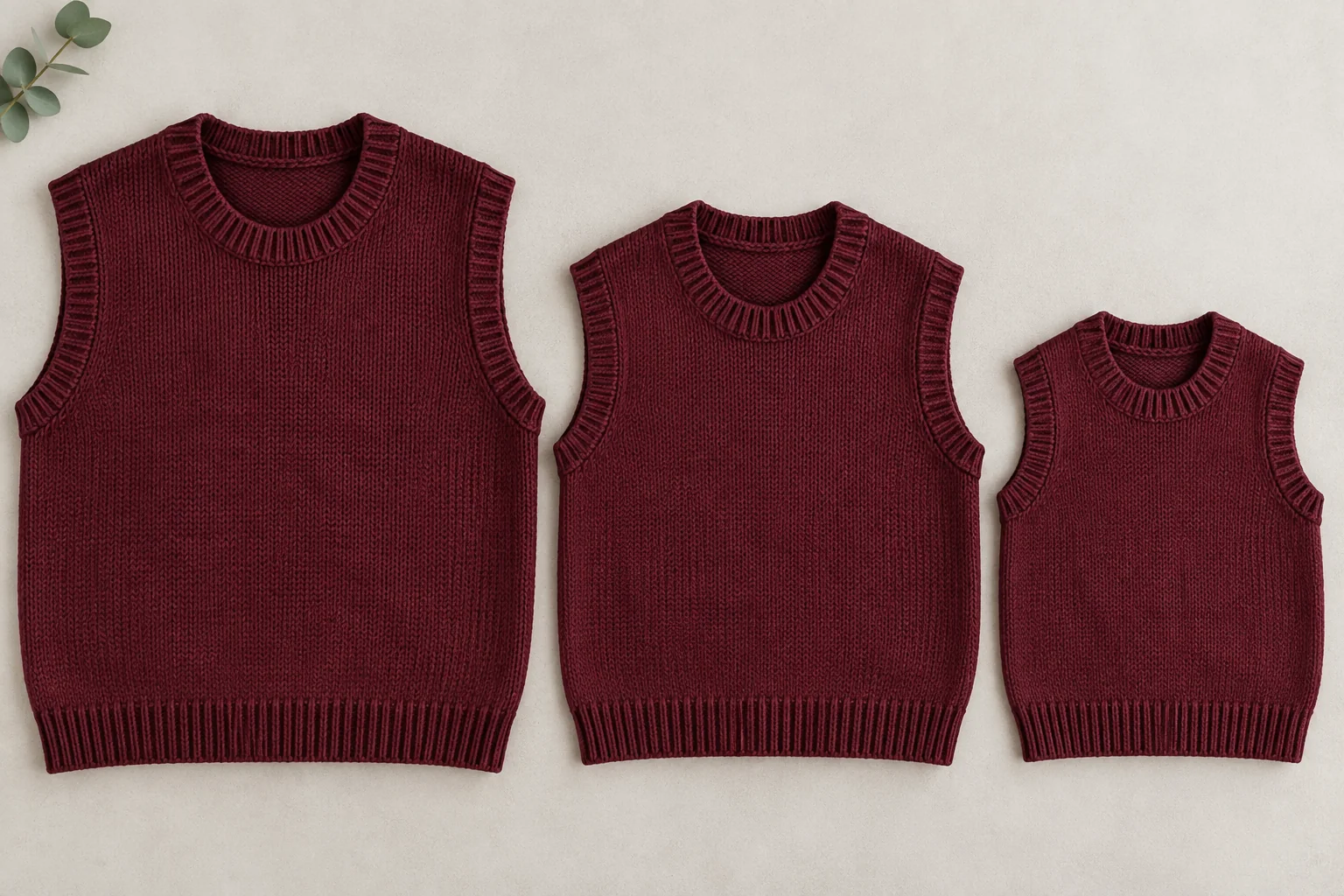
Which findings need revision before approval?
Turn a clearance observation into a specific request
| Observed conflict | Evidence to compare | Buyer decision | Required follow-up |
|---|---|---|---|
| Shirt collar bunches under the back edge | Back-neck shape and actual shirt arrangement | Review the intended outfit interface | Matched rear views and marked neckline points |
| Front opening reveals more than intended | Front arc, rib depth and underlayer position | Revise or accept the stated appearance | Updated reference and dimensions |
| Dressing requires strong local pulling | Entry sequence and affected upper-garment zones | Investigate the route and opening together | Repeatable entry observations on a revised sample |
| Edge remains displaced after movement | Original and rested edge positions | Hold the affected construction for comparison | Defined rest-state result and component identity |
| Care changes clearance | Same vest and underlayer before and after care | Review affected material or construction inputs | Care record with dimensions and wearing views |
| One size group differs | Size-to-component and underlayer map | Limit approval to represented versions | Additional size evidence or revised grade instruction |
The sample-feedback guide helps organise a clear instruction. Identify the neck zone, the underlayer and the state in which the conflict occurs. Attach a marked image and explain what the next sample must show.
If a proposal solves the conflict by changing the intended appearance, obtain a design decision as well as a fit decision. A deeper front opening may clear a collar while revealing more of the tee. The sample record should show that the buyer accepted the trade-off.
Include the underlayer reference, front and back neckline landmarks and the unresolved clearance observation in your crew-neck vest sampling brief.
Frequently Asked Questions
Can a flat neck-width measurement prove shirt clearance?
It describes one dimension in a specified garment state. Shirt clearance also depends on the front and back arc, rib depth, shirt arrangement and shoulder relationship. Use the measurement beside wearing views of the actual layer, and record any additional points needed to explain the observed contact.
Should all crew neck vests use the same neck rib depth?
Choose rib depth by comparing the required appearance, entry and recovery on the actual garment. Changing rib depth can move the finished opening even when the attachment line stays fixed, so update the drawing and measurement references together.
Is the tightest opening the best option for shape retention?
A tight opening may create a dressing or layering problem. Decide the required clearance and appearance, then compare constructions against those requirements. Shape retention needs evidence after the agreed movement and care; an initially narrow opening does not prove that it will recover as required.
Can the same sample cover a tee and a shirt programme?
It can be reviewed against both, but the two arrangements need identifiable records. Retain the layer sizes and neckline positions used for each comparison. If the garment only meets one arrangement, limit the approval accordingly or request a revision that can be assessed against both.
What should be retained if an underlayer is discontinued?
Keep its relevant measurements, construction description and photographs with the approval record, and retain a physical reference where practical. Treat the replacement layer as a new comparison. A similar selling description does not establish the same collar thickness, neck shape or shoulder position.