 CN Sweaters

The commercial value of a v neck sleeveless sweater is not decided by the V shape itself. It is decided by whether the neckline depth, armhole, shoulder line, gauge, and yarn weight match the layering scenario your customers actually wear. From a factory perspective, most failed sleeveless jumper projects are not failures of design taste. They are failures of construction planning before sampling started.
This piece is built around one core question buyers keep asking us: how do you turn a good-looking sleeveless sweater v neck reference into a style that sells across sizes, holds shape after washing, and performs in real layering use over a shirt, a tee, or a thin turtleneck? We will walk through neckline geometry, armhole and shoulder balance, yarn and gauge logic for season fit, size tolerance, sampling discipline, and the production checkpoints that decide whether a v neck sweater vests program scales cleanly or stalls at the second order.
Buyers who get this right unlock a layering product that sells in multiple seasons and rebuys reliably. Buyers who skip the construction logic usually end up with a sample that photographs well but returns at scale because the V gapes, the armhole digs in, or the hem flips out after one wash.
What Makes a V Neck Sleeveless Sweater Commercially Viable
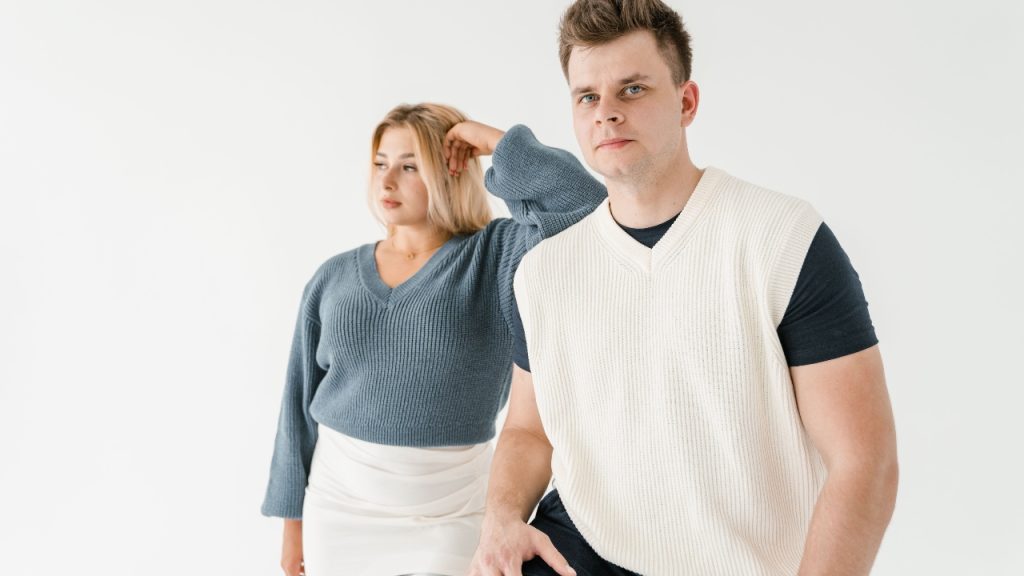
A commercially viable v neck sleeveless sweater is one where the neckline depth fits the intended inner layer, the armhole sits flat against the body, and the gauge supports the price tier you are selling into. If any of those three is off, the style may still pass a fit session on a single model, but it will not survive a size run or a wash test.
From a factory perspective, we judge a knitted sweater vest reference on three things before we even quote. First, what is the layering target — open shirt, tee, fine-gauge turtleneck, or worn alone. Second, what is the season placement — transitional spring, deep autumn, indoor winter. Third, what is the customer profile — slim European fit, relaxed US fit, or oversized streetwear cut. Those three answers decide the V depth, the armhole drop, the gauge range, and the yarn blend. Without them, sampling becomes guesswork and revision rounds multiply.
Why the V Shape Alone Does Not Sell
The V shape is a silhouette cue, not a selling point. What sells is the relationship between V depth and the collar of the layered shirt underneath. A V that is too shallow hides the shirt collar and kills the layering story. A V that is too deep exposes the chest and narrows the wearable occasions. Most reference samples buyers send us sit somewhere in between, and the job in development is to lock the depth to the specific inner garment the brand expects customers to wear.
The Three Layering Scenarios That Drive Construction
Layered over a button-down shirt, the V usually needs to clear the second button and sit clean over the collar stand. Layered over a tee, the V can sit higher and the neckline rib can be narrower. Worn over a fine turtleneck, the V needs to be deep enough to let the turtleneck breathe but the rib must be firm enough not to roll outward under the extra bulk.
How Deep Should the V Neck Be for Real Layering Use

V depth should be set against the inner garment, not against the model’s chest. For a standard women’s size M layered over a shirt, we usually start sampling between 11 and 14 cm measured from the shoulder seam at the neck point down to the V point. For menswear sizes, the starting range is wider, typically 13 to 17 cm depending on whether the brand wants a classic tailored look or a relaxed contemporary cut.
These numbers are starting points, not rules. The final depth depends on shoulder width, rib width at the neckline, and whether the front panel uses a mitred V or a linked V finish. Brands that copy a depth measurement from one reference into a different body block almost always end up with a neckline that reads differently on the new fit.
Mitred V Versus Linked V Finish
A mitred V gives a sharper, more tailored point and is easier to grade across sizes, but it requires a skilled linker and adds time per piece. A linked V with overlapping rib is faster to produce and more forgiving in production but reads softer and slightly more casual. The choice affects unit cost and lead time, so it should be decided before bulk pricing is locked, not after.
Neckline Rib Width and Stability
Rib width on a v neck knitted vest typically runs between 1.8 and 2.5 cm for fine gauge styles and up to 3 cm for chunkier 5gg or 3gg constructions. A rib that is too narrow will curl after washing. A rib that is too wide will flatten the V line and reduce the visual impact of the neckline.
How Shoulder Width and Armhole Drop Affect Fit Across Sizes

Shoulder and armhole are where most sleeveless jumper programs break down between sample size and the full size run. The reason is simple: shoulder and armhole do not scale linearly. A 1 cm grading step at the shoulder reads very differently on a size XS frame than on a size XL frame, and the armhole opening interacts with the side seam, the underarm rib, and the inner layer all at once.
From a factory perspective, we ask buyers to define the intended armhole behaviour first. Should the armhole sit close to the body so a shirt sleeve shows cleanly underneath, or should it drop slightly for a relaxed silhouette that allows a heavier inner layer. That single decision drives the shoulder seam placement, the armhole depth, and the underarm rib tension.
Standard Armhole Ranges We Use in Development
Below is a starting reference we use when buyers send a sleeveless sweater v neck design without specified armhole numbers. These are sampling starting points for a women’s size M, not finished spec sheets, and every program adjusts from here based on fit sessions.
| Layering Target | Shoulder Width Range | Armhole Depth Range | Underarm Rib | Typical Use Case |
|---|---|---|---|---|
| Slim layer over tee | 35–37 cm | 20–22 cm | 2.0 cm | Contemporary womenswear |
| Standard over shirt | 37–39 cm | 22–24 cm | 2.2 cm | Workwear, smart casual |
| Relaxed over knit top | 39–42 cm | 24–26 cm | 2.5 cm | Modern relaxed fit |
| Oversized streetwear | 42–46 cm | 26–29 cm | 2.5–3.0 cm | Unisex, streetwear |
These ranges work as a starting frame. The actual numbers locked in production depend on body length, target customer, and how the brand wants the knitwear vest to read on the rack and on the model.
Why Armhole Tension Decides Resale
A clean armhole edge is what separates a knitted sweater vest that customers reorder from one that gets returned. If the underarm rib stretches out after one wash, the armhole gapes and the garment looks tired immediately. We test armhole recovery during PP sampling, not after bulk, because correcting it after production is expensive and slow.
Which Yarn and Gauge Work Best for Each Season
Yarn and gauge together decide the season the sweater can sell into and the price tier it can hold. A 12gg cotton-blend v neck sweater vest sells into spring and early autumn. A 7gg lambswool knitted v neck vest sells into mid-autumn and winter. A 3gg or 5gg chunky wool vest sells as an outerwear layer for cold weather. Mixing these signals — for example, asking for a chunky 5gg look in a summer cotton yarn — usually produces a sample that satisfies no season cleanly.
The construction logic behind gauge selection is well documented in industry resources on knit textile design, and brands developing their first program benefit from reviewing how knit structure and yarn choice interact in commercial production before locking a tech pack.
Gauge to Season Mapping We Use
For transitional spring programs, we usually recommend 12gg or 14gg in cotton, cotton-acrylic, or fine merino. For autumn layering, 7gg or 9gg in lambswool, merino, or wool blends gives the body and warmth buyers expect. For winter outerwear layers, 3gg to 5gg in wool, wool-alpaca, or recycled wool blends builds the weight and texture that justifies a higher retail price.
Yarn Blend Trade-offs to Discuss Before Sampling
Pure merino gives the cleanest hand feel and best drape but carries higher yarn cost and tighter care requirements. Wool-acrylic blends bring cost down and improve dimensional stability but lose some of the natural hand. Cotton blends work well for warmer seasons but need careful gauge selection to avoid sagging in longer body lengths. Care positioning on these blends should align with recognised guidance for wool garment care and washing so the label and the construction tell the same story.
How to Control Size Tolerance and Fit Consistency in Bulk
Size tolerance on a sleeveless jumper is tighter than on a sleeved sweater because there is no sleeve length to absorb small body variations. A 1.5 cm chest tolerance on a sleeved style usually passes QC without complaint. The same tolerance on a sleeveless v neck knitted vest often reads as a fit problem because the armhole and the V point shift visibly with chest variation.
From a factory perspective, we ask buyers to agree tolerance bands at the PP sample stage and to sign off on a graded size set, not just a single fit sample. Programs that skip the graded approval almost always run into size-run complaints in the first bulk delivery.
Recommended Tolerance Bands for Knitwear Vest Programs
For a women’s knitted sweater vest, we typically work to plus or minus 1 cm on chest, plus or minus 0.5 cm on shoulder, plus or minus 0.5 cm on armhole depth, and plus or minus 1 cm on body length. These are tighter than standard sweater tolerances and they require careful linker calibration and steam pressing discipline in finishing.
Why Wash Test Sign-off Matters Before Bulk
A v neck sleeveless sweater that passes dry measurement can still fail after one wash if the yarn shrinkage or the rib recovery was not tested correctly. We run wash tests on PP samples following established apparel performance testing protocols so the brand sees the post-wash measurements before signing the production approval, not after the first customer return.
How Sampling Discipline Prevents Production Surprises
Most production problems on knitwear vest programs are visible at sampling if the sampling rounds are structured. We usually run three rounds: a development sample to confirm the construction and yarn direction, a fit sample to lock measurements and grading, and a pre-production sample in production yarn and production trims to confirm the bulk will match the approval.
Skipping rounds to save time almost always costs more time later. A development sample approved without a fit round often produces a bulk that fits the size M correctly but fails on XS and XL. A fit sample approved without a PP round in production yarn often shows colour, hand feel, or shrinkage differences once bulk yarn arrives.
What Each Sample Round Should Confirm
The development sample confirms silhouette, V depth direction, armhole behaviour, and yarn hand. The fit sample confirms graded measurements across the full size run and locks the tech pack. The PP sample confirms production yarn, production trims, care label, packaging, and finishing standard.
MOQ, Lead Time, and Sampling Cost Realities
For most knitwear vest programs, our standard MOQ sits around 300 to 500 pieces per colour for stock-yarn programs and higher for custom-dyed yarn. Sampling typically takes 10 to 18 days per round depending on yarn availability, and bulk production runs 35 to 55 days from PP approval depending on season load. These numbers are starting frames for B2B planning, and they shift with yarn sourcing, decoration complexity, and finishing requirements. Buyers planning seasonal drops should book sampling slots at least one full season ahead to avoid yarn lead time bottlenecks during peak production months.
For brands building a full program around vest styles, it helps to review the vest and sleeveless knitwear category alongside the broader sweater development range so the construction choices are consistent across the collection.
Conclusion
A successful v neck sleeveless sweater program is built on construction decisions made before sampling starts: neckline depth tied to the actual layering target, shoulder and armhole tuned to the intended fit profile, gauge and yarn matched to the season and price tier, and tolerance bands agreed at PP sample stage. The V shape gets attention on the rack, but the construction discipline is what drives reorders.
If you are planning a knitted sweater vest program for the next season, we are happy to walk through your reference and build a development plan around your specific layering target and customer profile. You can contact our development team directly to start the conversation. Send your V-neck sleeveless sweater reference, target layering scenario, size range, yarn idea, and quantity for development suggestions.
FAQ
What is the typical MOQ for a v neck sleeveless sweater program? For stock-yarn programs, our standard MOQ sits around 300 to 500 pieces per colour. Custom-dyed yarn programs usually require higher minimums because of dye lot economics. MOQ flexibility depends on yarn availability and how many colours are running in the same production window.
How long does sampling take for a knitted sweater vest? Each sample round typically takes 10 to 18 days depending on yarn availability and construction complexity. A full three-round process — development, fit, and PP — usually runs 5 to 8 weeks before bulk starts. Booking sampling slots ahead of season peak helps avoid yarn sourcing delays.
Can you match a reference sample I send for a sleeveless jumper? Yes, we develop from physical references, tech packs, or a combination. Sending a physical reference plus your target measurements gives the cleanest starting point. If only photos are available, expect one extra development round to confirm construction direction before the fit sample.
What yarn options work best for a transitional season v neck sweater vest? For spring and early autumn programs, 12gg or 14gg constructions in cotton, cotton-acrylic, or fine merino blends usually perform well. The choice depends on retail price tier, care positioning, and whether the brand wants a matte or a slightly lustrous surface on the finished garment.
How do you handle bulk production size tolerance on sleeveless styles? We work to tighter tolerance bands on sleeveless programs than on sleeved styles, typically plus or minus 1 cm on chest and plus or minus 0.5 cm on shoulder and armhole depth. These are agreed at PP sample stage and confirmed with graded size sets before bulk approval.