 CN Sweaters
A recycled cashmere jumper can look like a simple seasonal addition: choose a soft neutral, request a familiar crewneck, and attach a recycled-material story. The difficult part comes later. The buyer has to decide what the fibre claim covers, whether the proposed yarn can make the intended surface and shape, and which records will still connect the bulk order to the claim when the product is sold.
That is why a recycled cashmere programme should start as a controlled material decision, not as a marketing phrase. A useful brief distinguishes the commercial promise, the claimed material, the yarn offered for this order, and the finished garment that has passed the agreed checks. When one changes, the others may need review.
Are You Buying a Fibre Claim or a Material Programme?
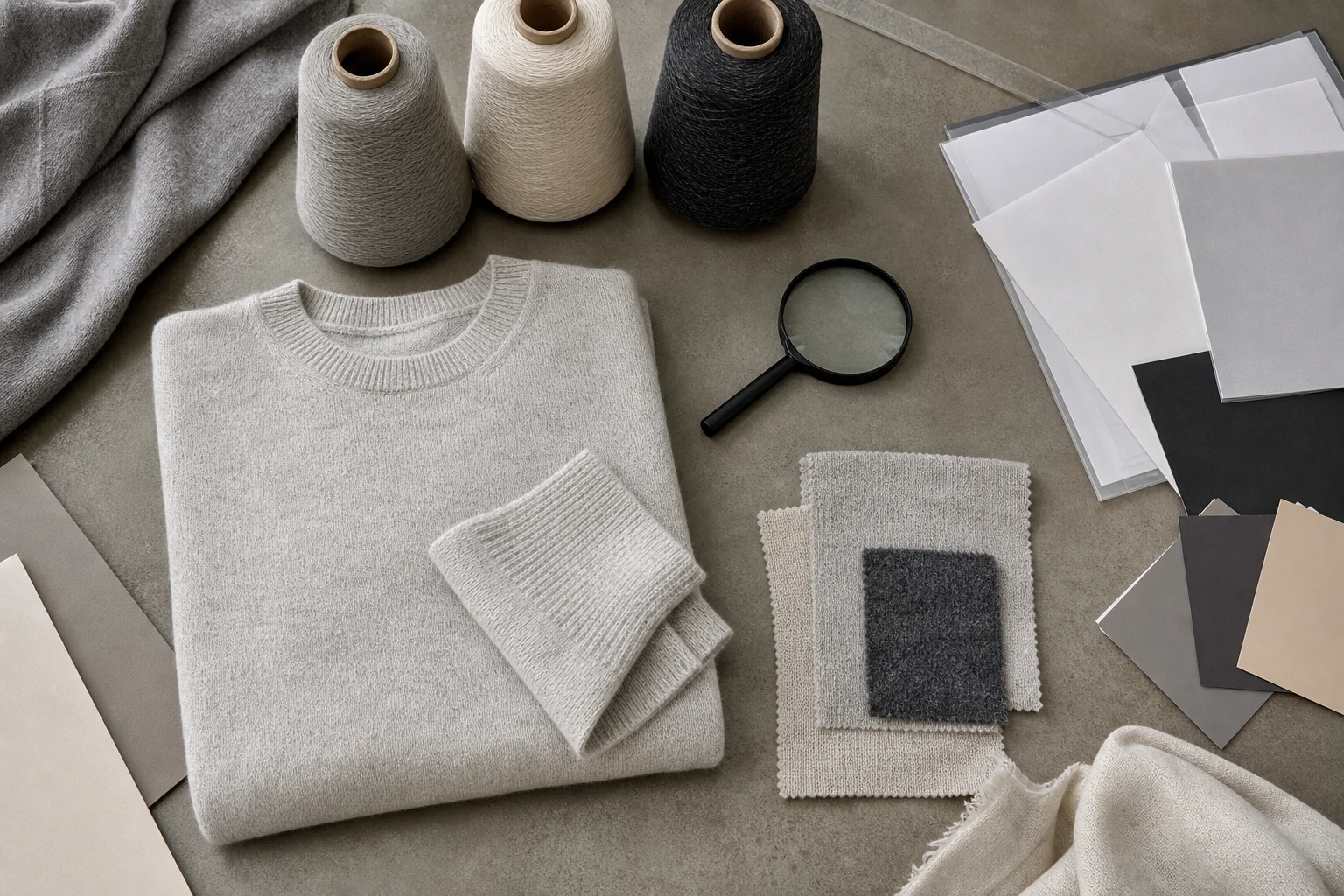
The phrase “recycled cashmere” is not a technical specification. It may describe a particular fibre-content claim, a supplier’s reclaimed-feedstock route, a blend with other fibres, or a consumer-facing product story. Before the team requests price or colour cards, write down what the customer is meant to receive and what the factory must reproduce.
State the garment promise before choosing the yarn
Describe the intended jumper in buyer language: for example, a medium-weight crewneck with a dry-soft hand, opaque body, stable neck opening, specified fibre composition, and a claim approved for named markets. Then turn that sentence into controlled fields: style number, fit block, target finished weight, yarn article, colour standard, stitch construction, gauge, rib dimensions, trim list, care route, label wording and packing.
The custom knit sweaters tech-pack checklist is a sensible place to make the fields visible to both brand and factory. Give each one an owner and a status. “To be confirmed” is useful when it is explicit; a blank line beside a sketch is not an instruction to substitute a fibre or finish.
Separate the retail story from the production decision
The retail team may care about a limited colour, a quiet luxury handle or a circular-material story. Production needs to know whether those words require a particular yarn lot, verified content, a specific finishing method, or a separate colour approval. Keep the customer claim in one line of the brief and the supporting evidence in another. That prevents a sales description from being mistaken for permission to use any yarn that feels similar.
For a replenishment, ask a narrower question: what precisely is being repeated? It could be the silhouette only, the yarn article and colour, the claim route, or all of them. The sampling checklist helps distinguish a knit-down, fit sample, size set and pre-production sample. Each answers a different question.
What Must the Recycled-Cashmere File Identify?
The material file should let a buyer trace the claim back to the yarn offered for the order without pretending that a general company certificate proves a specific shipment. Ask for the standard or programme named by the supplier, the relevant certificate holder and scope, the yarn article and colour, the proposed lot, and the documents that connect the lot to the sale where those documents are applicable.
Use the standard for the claim it actually supports
The Global Recycled Standard describes itself as a full product standard for verifying and tracking recycled raw materials through the supply chain. It also has processing criteria beyond the material claim. That does not mean every product marketed with recycled content automatically qualifies for every GRS statement, logo or wording. The buyer still needs the exact claim route and approval process for the item and selling market.
Textile Exchange’s current standards information notes a transition to the Materials Matter Standard while existing standards continue during it. Record the supplier’s standard, version, issue date and scope rather than copying language from a prior season.
Link documents to a physical reference
Ask the mill or yarn supplier to identify the commercial yarn name, internal article code, blend declaration, count or system used, ply or ends, colour reference, lot identifier, and substitution rule. Keep a sealed yarn or knit-down reference when possible. A supplier can change a blend, colour route or available lot without changing the name printed on a shade card.
Use the private-label knitwear yarn planning guide to keep those fields with the consumption and order file. The purpose is not to create paperwork for its own sake. It lets the buyer ask a concrete question when a new lot is proposed: is this the same material basis, an acceptable alternative, or a new development decision?
Cashmere may be one component of a blend, and a garment can contain sewing thread, elastic, labels, buttons or stabilising parts that affect care and performance. The US Wool Products Labeling Rules require covered wool-product labels to disclose fibre-content information, the manufacturer or marketer, and the country where the product was processed or manufactured. The final label and any claim should be reviewed for the actual destination, not inferred from a previous US or EU order.
For products sold in the EU, Regulation (EU) No 1007/2011 sets rules on textile fibre names and fibre-composition labelling. It is relevant because it requires the legal fibre descriptions and product information to be clear for consumers. The buyer’s working file should therefore identify who owns the final legal review and what test or declaration supports the listed composition. A mood board cannot carry that responsibility.
How Do You Protect Hand, Colour and Surface?
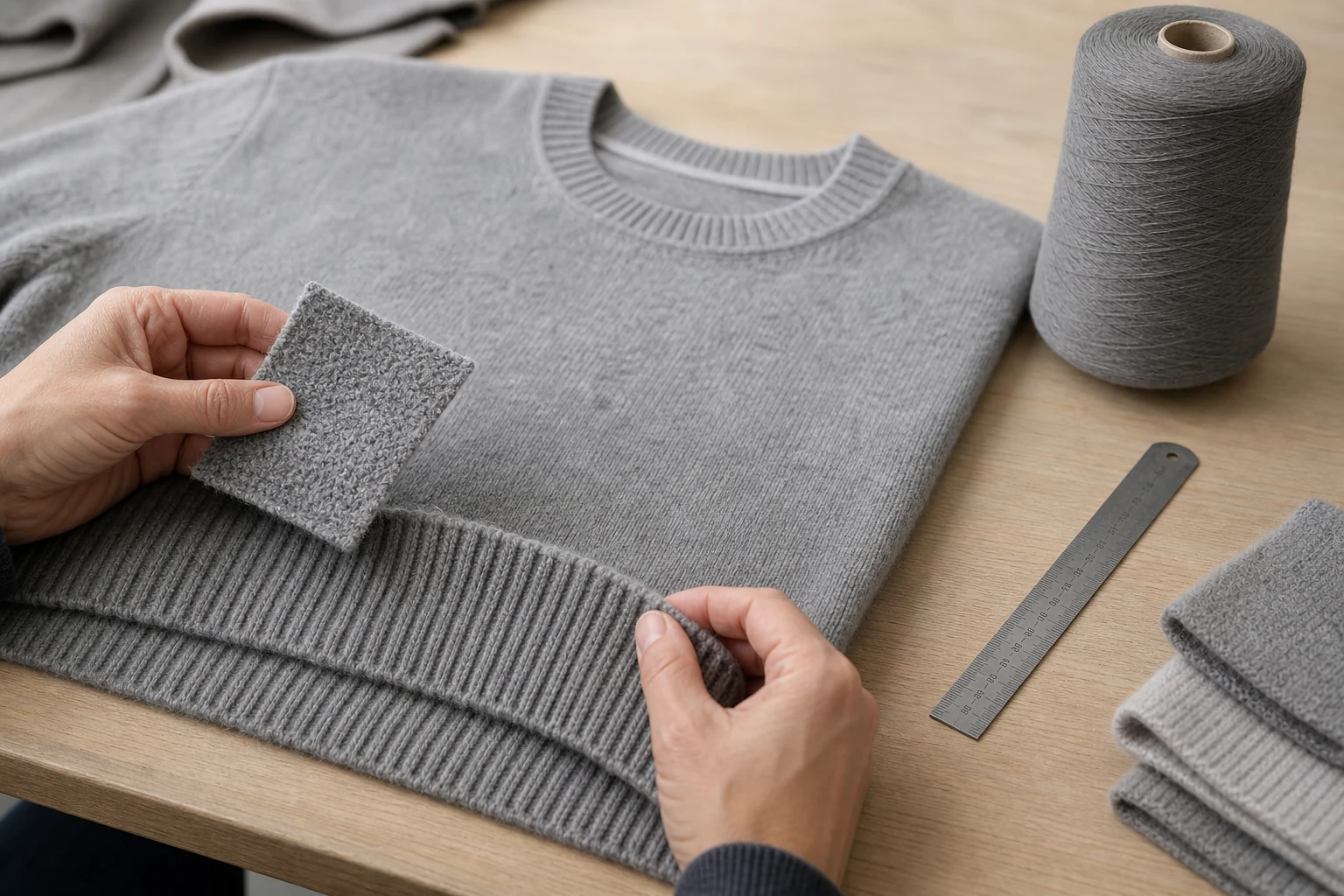
Recycled cashmere is usually chosen for its perceived softness and material story, but the finished surface is controlled by more than the fibre name. Yarn structure, blend, twist, stitch density, finishing route and colour all change how the jumper looks and feels. A useful brief defines the customer-facing characteristics without promising a result that no one has tested.
Approve the surface in the intended construction
Do not judge a yarn only by a cone or loose swatch. Knit the candidate in the planned body stitch, rib and colour, then finish it by the proposed route. Compare cover, visibility through the body, rib recovery, neck edge, seam appearance, loose-fibre shedding and surface change against the accepted reference. Use the same lighting and handling conditions for each comparison, and record whether the item is dry, relaxed or freshly finished.
The decision should be specific. A buyer may accept a more heathered appearance for an online-exclusive colour but reject it for a core-store neutral. That is a range decision, not a vague instruction to “make it premium.” Add the named reference, observer, date, product state and outcome to the colour and sample record.
Treat pilling and recovery as product risks, not adjectives
Instead of demanding “anti-pilling” or “long-lasting” in the brief, name the use condition and the evidence required. Is this an office layer worn over a shirt, a close-to-skin knit, or a gift item expected to retain a clean surface after the stated care method? The appropriate test method and acceptance limit should be agreed by the responsible technical and compliance owners before the sample is approved.
The care-label and fibre-content guide helps the team collect product facts, but it cannot substitute for a test on the actual construction. Record the sample’s condition before and after the intended care cycle, the parts examined, measured changes, photographs and any concession. If a finishing process is required to deliver the approved hand, that process belongs in the controlled bulk route.
Which Sample Decides a Real Risk?
Samples are expensive when they repeat questions already answered and cheap when they prevent a bulk mistake. Map each sample to a decision that cannot safely be made from the quotation or a yarn card.
Use a knit-down to settle material choices early
A knit-down can expose whether the proposed yarn and colour can achieve the intended stitch definition, opacity and rib behaviour. It is the right place to compare several densities, finishes or colour routes before the team cuts a full garment sample. Mark the selected construction and keep an approved piece with the yarn record.
The colour-defect control guide is useful when a colour route needs its own control. A shade name is not an acceptance condition. The buyer should identify a physical standard, the viewing condition and who can approve a lot that is close but not identical.
Use a garment sample to settle fit and load
The fit sample should be made in the proposed construction and approximate finished state. Check shoulder slope, chest, body length, sleeve balance, neck opening, rib recovery and the way the garment hangs after a defined rest. A jumper can meet a flat chest measurement and still fail commercially because the neckline rolls or the hem loses its shape when worn.
If the range includes a broad size spread, choose sizes that reveal the largest change in body width, sleeve length or garment weight. The pre-production sample review guide can separate the purpose of those approvals. Do not use grade arithmetic as a substitute for inspecting the sizes most exposed to load and recovery changes.
The approval sheet should list the measurement method, target and functional tolerance, sample condition, surface checks, care check, label version and unresolved questions. The measurement-tolerance guide is a practical reminder that a tolerance must describe both the point of measure and the condition of the garment.
When a result is outside the range, record the cause that is known, the proposed correction and whether the correction changes the yarn, construction, finish or claim evidence. A handwritten “please improve” comment does not allow a factory to run a controlled correction.
Where Does the Commercial Model Break?
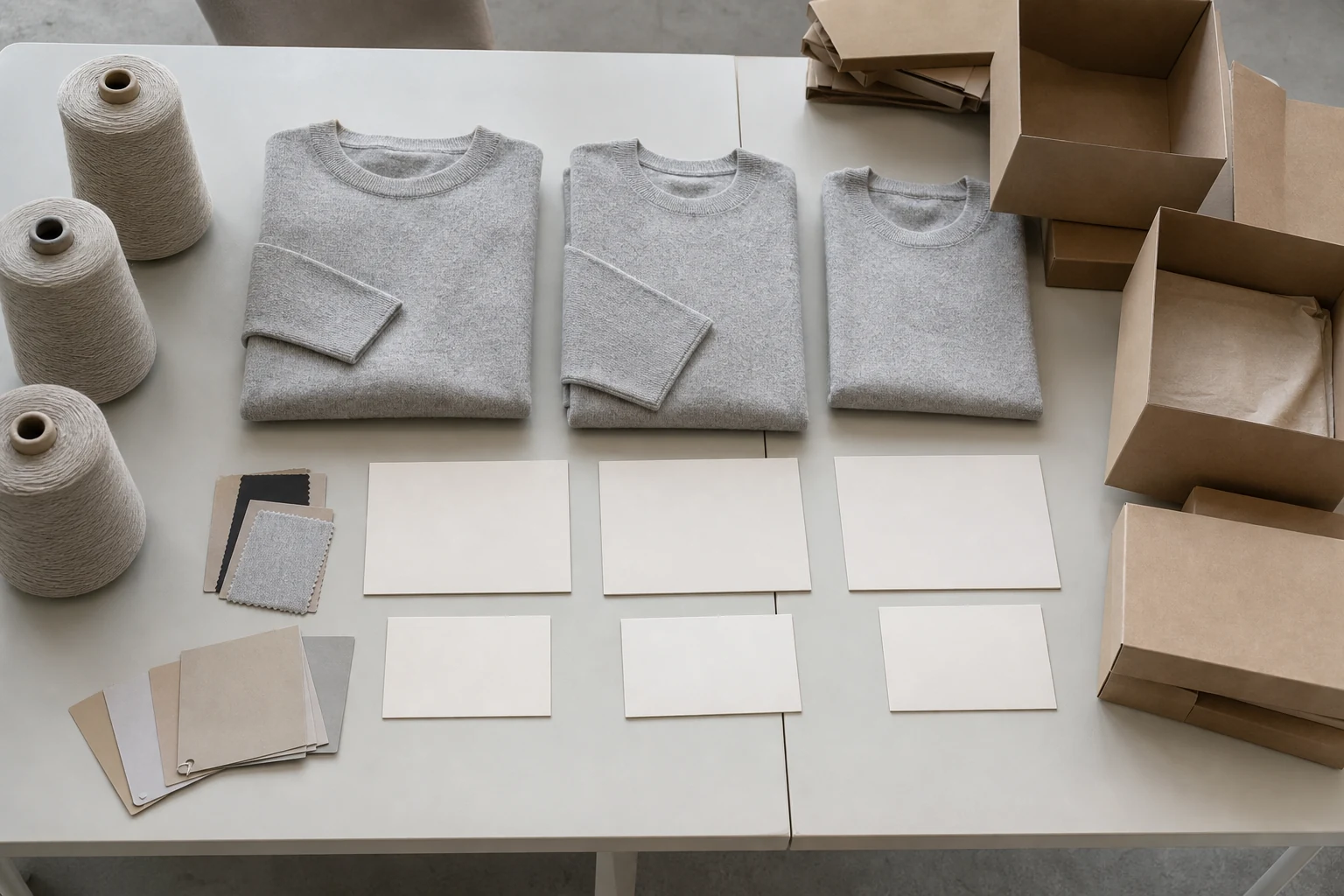
The cost risk in a recycled cashmere jumper programme is rarely just the quoted piece price. It can sit in a colour minimum, a limited certified lot, a blend substitution, a slow rework route, residual yarn or a late decision that sacrifices delivery time. Price the programme as a set of conditions, not as a single number.
Compare the order scenarios before reserving yarn
Build at least three scenarios: the confirmed base order, a downside case if sell-through softens, and an upside case for replenishment. For each, show size and colour mix, estimated yarn consumption, usable residual stock, proposed minimum, sample and test usage, lead-time assumption and the last decision date. Ask the factory which number actually controls the order: yarn minimum, dye minimum, machine allocation, packing quantity or finished-garment minimum.
| Commercial choice | Evidence required before commitment | What the buyer gives up |
|---|---|---|
| Use a held residual lot | lot balance, condition check and reference comparison | colour or size depth may be limited |
| Reserve a new lot | yarn article, material evidence, colour route and minimum | more stock exposure and a fresh approval gate |
| Narrow colours or sizes | sell-through by variant and consumption model | lower customer choice, but less residual risk |
| Run a pilot first | sample scope, cost and capacity hold | longer calendar before full release |
The custom sweater MOQ guide is useful for keeping the controlling threshold visible. A low garment quantity does not erase the material decision that sits behind it.
Ask where the quotation can change
Request the yarn basis, blend assumption, colour and lot conditions, knitting and linking route, finishing, testing, labels, packing, validity period and lead-time milestones. The custom sweater cost guide can help distinguish variable garment cost from threshold or development cost. The buyer should also ask which line changes if the material evidence, colour route or sample result changes.
This is especially important when a supplier offers a lower price after proposing an alternative yarn. It may be a legitimate option, but it is not evidence that the original programme costs less. Route it through the same material, sample and label decisions before treating it as an approved substitution.
What Has to Be True at Bulk Release?
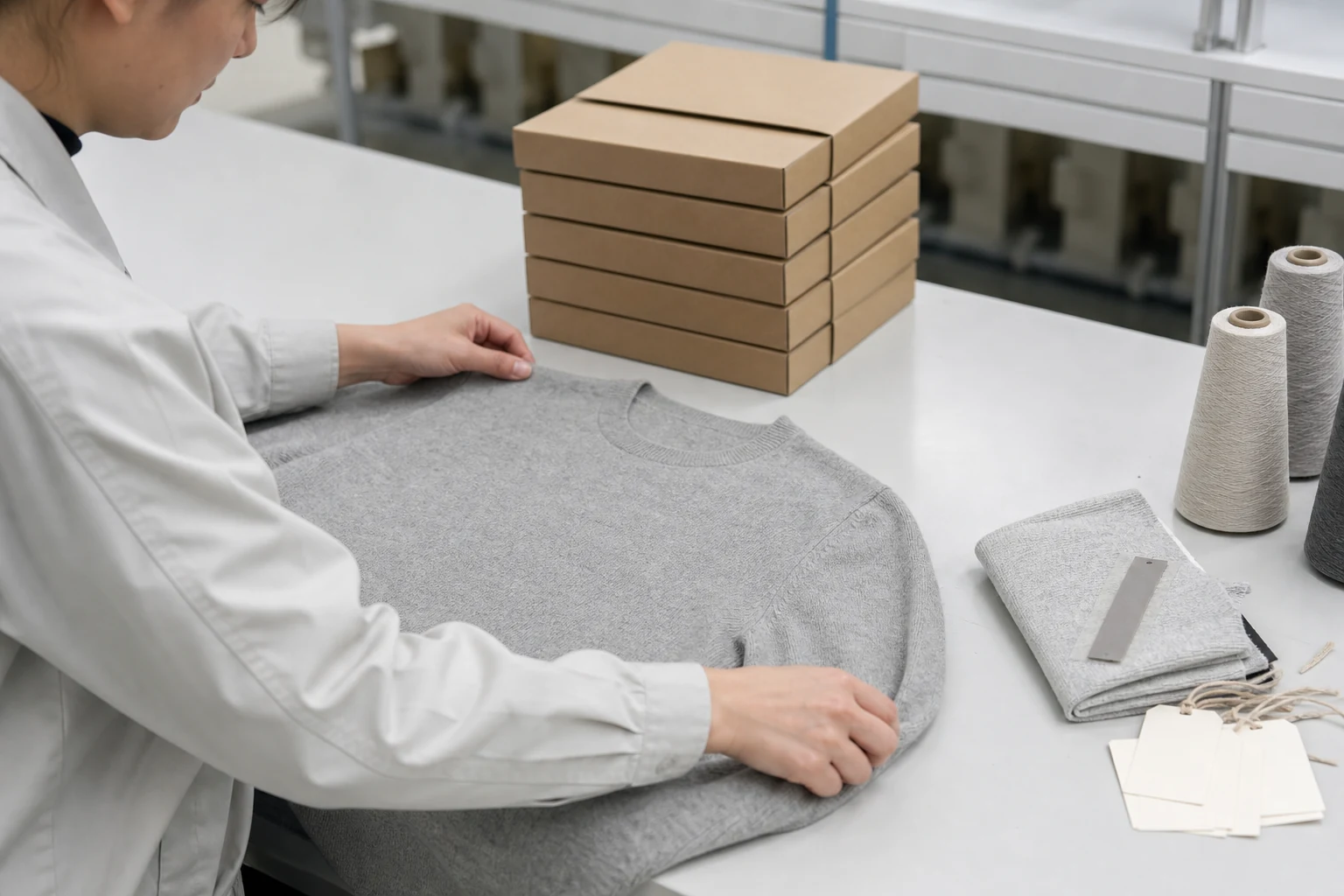
Bulk release is the point where the factory needs a complete, usable instruction set. It should not rely on a salesman’s memory of the sample table or a folder of disconnected files.
Release the actual production route
The release packet should identify the approved yarn article and lot or substitution rule, knit construction, machine or gauge where controlled, size table, colour standard, rib and trim details, finish, care and label artwork, packing specification, accepted sample, inspection points and escalation owner. Compare the first-off to the retained reference before the bulk route is fully released.
The bulk knit sweaters planning guide is useful only when it carries the current technical file and ownership. A pre-production piece made with a different yarn lot or finish batch does not prove the bulk route. Mark the records that must match and define who can hold a batch when one does not.
Check identity as well as appearance
An inspection team should be able to answer: which order, colour, size, yarn basis and label version is this unit? Review incoming-yarn identity, early output, measurements at the agreed condition, colour and surface comparison, trim function, care-label version, folding, barcode and carton details. The retail packaging and barcode guide can help connect the physical unit to the selling record.
If a batch is repaired, re-finished or mixed with another run, record that fact and reassess the affected check. The goal is not paperwork perfection. It is a traceable decision on whether the units still match the buyer’s approved programme.
What Should the Next Buyer Inherit?
The final file should allow a later buyer to decide quickly whether a new order is a repeat, a controlled substitution or a new development. Keep the approved garment, knit-down or yarn reference, material evidence, colour decision, sample and test records, measurement sheet, label artwork, packing proof, exceptions, final quantities and a concise end-of-order note.
Archive decisions with their conditions
The note should say what was accepted, why it was accepted, and what would require a new gate next time. For example: a shade was accepted only for a separate colour code; a particular finish was required for neck recovery; a residual lot was usable only for two sizes; or a revised blend needed fresh label review. Those conditions are more valuable than a folder called “final.”
Reopen only the affected controls
At the next enquiry, request a declared-change list for yarn article, lot, blend, colour, construction, gauge, finish, trim, care route, labels, packing and factory route. Match it against the archived record. A new colour may need a shade and surface review; a new blend may reopen label, care and fit questions; a different factory route may require a new first-off. That keeps the programme controlled without forcing the team to redo unrelated work.
Conclusion
A recycled cashmere jumper programme becomes credible when the buyer can connect the customer promise to the actual material and production route. The brief should name the fibre and claim evidence, the physical yarn and colour reference, the construction and finish that deliver the approved hand, and the sample that proves the remaining risk.
Before yarn is committed, compare the commercial scenarios and identify the controlling minimum. Before bulk is released, make sure the first-off, label, packing and material record describe the same route. Then archive the choices and their limits, including the evidence owner and the physical reference location. The next order can move faster because the team knows which evidence still applies and which change needs a new decision.
Frequently Asked Questions
Does a recycled-material certificate prove my exact jumper claim?
Not by itself. Ask which standard, certificate holder, scope, yarn article, lot and order-level documents support the proposed product claim, then obtain the appropriate legal and compliance review for the selling market.
Can a softer alternative yarn be used after sampling?
It can be considered, but it is a substitution. Recheck the material evidence, construction, surface, fit, care and label implications before it is treated as equivalent to the original programme.
What should a recycled cashmere knit-down decide?
Use it to compare the proposed yarn and colour in the intended stitch, density and finish. It should settle a defined surface or construction question before the team authorises a more expensive garment sample.
Why is the material minimum not the same as garment MOQ?
The quantity that controls the order may be a yarn or colour minimum rather than finished pieces. Model both thresholds with the size and colour mix before promising units or delivery dates.
What would stop bulk release?
Hold the release when the material identity, approved reference, first-off, label version, packing specification or required evidence no longer describes the route the factory will actually run.