 CN Sweaters
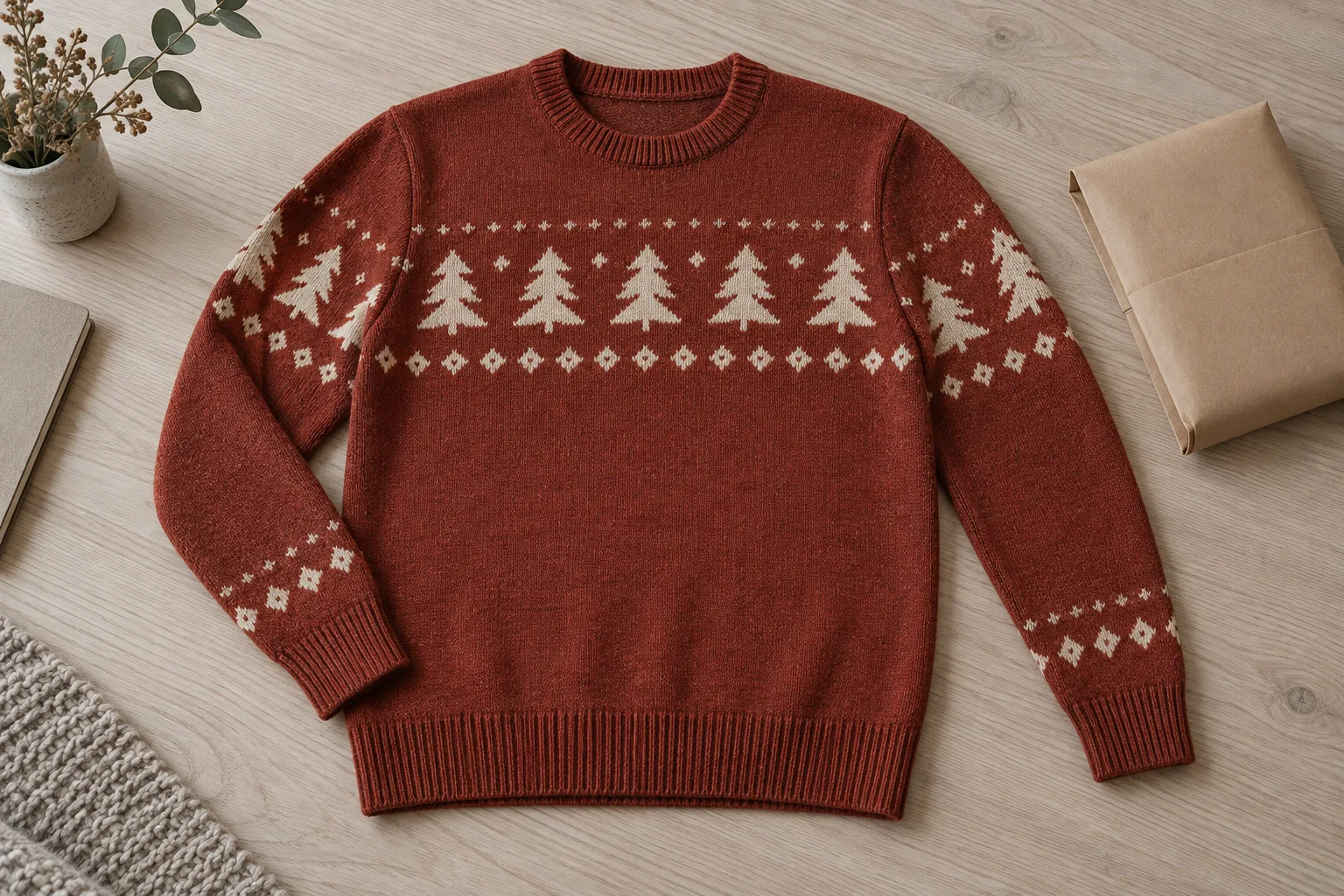
Christmas sweater design expiry risk begins with what is built into the garment. A year, a dated event or an unmistakably Christmas-specific message cannot be removed by changing the product description in January. Before approving custom Christmas sweaters, a brand should compare the design it wants for the holiday with the product it would still be willing to sell afterward.
The aim is not to make every sweater neutral. A deliberately short-lived design can be the right choice for a named event or collection. The buyer should simply recognize that choice before artwork becomes a production instruction. A quieter winter version has different possibilities, but it does not come with guaranteed demand or a promise that remaining stock will sell.
This guide considers ordinary adult garments and original or properly authorized artwork. It compares the calendar dependence of design versions, not reorder quantities, seasonal sales forecasts or a complete production schedule.
Where does Christmas sweater design expiry risk sit?
Separate the garment from the campaign around it
List the holiday cues on the actual sweater: words, year numbers, named events, characters, colour placement and decoration. Then list the cues on removable packaging and in campaign photography. This distinction matters because changing a hangtag is a different operation from removing a knitted message. Do not treat them as equally reversible design decisions.
Some cues have an obvious date, such as a particular year or company party. Others express a winter mood without naming Christmas. Ask the brand team to identify the intended meaning rather than declaring that one colour combination always reads as festive. Customers, markets and styling contexts differ. The record should state the team’s interpretation and the evidence used, not present it as a universal preference.
The Fair Isle development guide handles colourwork engineering. This article does not rename that process. A patterned sweater can be considered here regardless of technique, because the question is which calendar-specific meaning the buyer is choosing to make permanent.
Give the garment a use after the campaign
Write the proposed use without mentioning the holiday. For example, a hypothetical version might be described as a winter weekend pullover, while another is explicitly a commemorative event garment. If the description becomes implausible once the Christmas campaign is removed, do not call that version a year-round or continuing winter product merely to make the order feel safer.
The test can also reveal a worthwhile limited design. A commemorative garment may have a clear customer and purpose precisely because it names the event. Record that purpose honestly. The problem is not specificity; it is approving specificity while budgeting or presenting the product as if it were general stock.
Use the core and trend planning guide for assortment-level questions. Do not import its allocation framework into this decision. Here, the comparison is between two versions of one design and the claims the brand can make about each after the campaign ends.
Which design versions should the buyer compare?
Change the date-bound element rather than everything
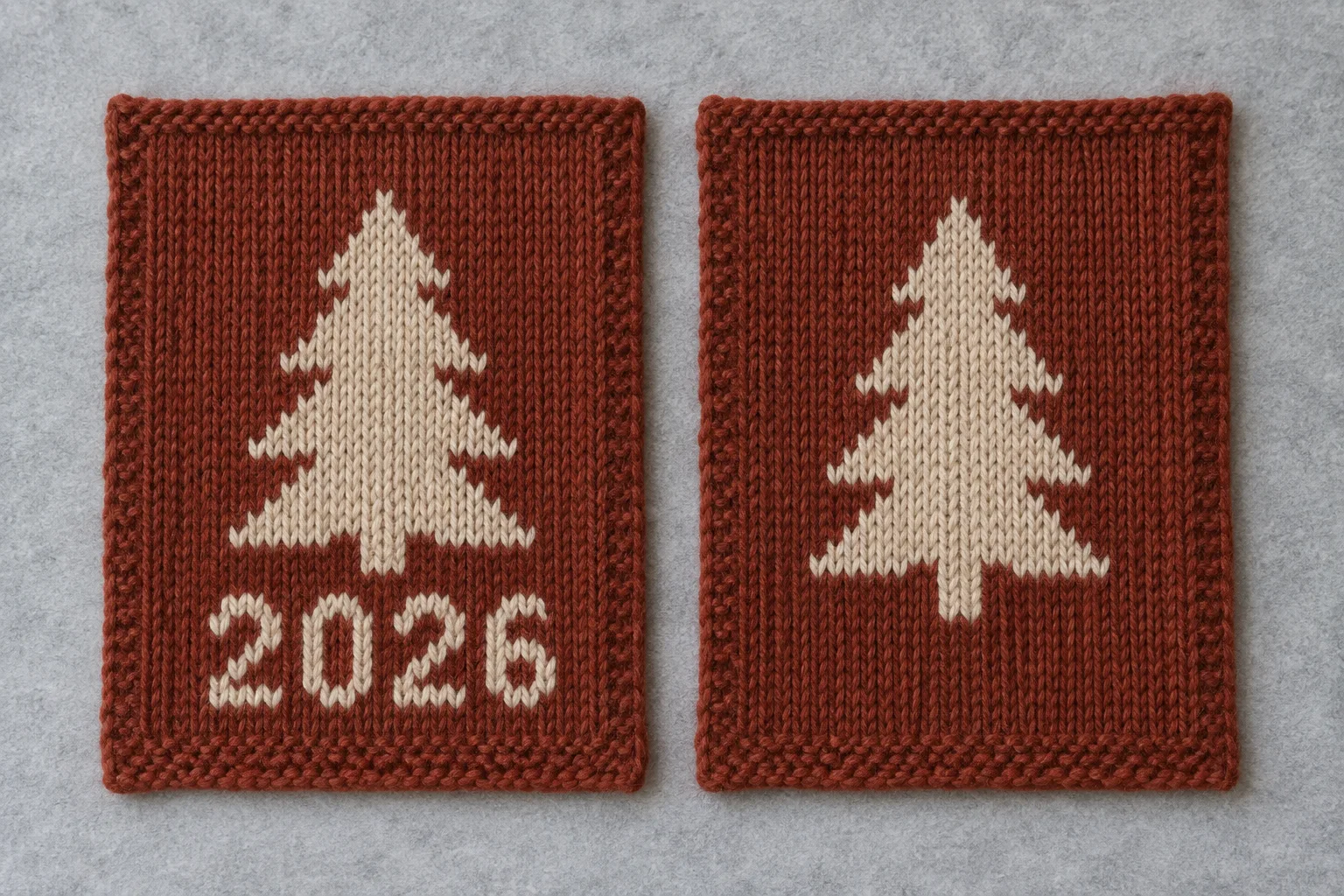
Prepare two versions with the same underlying fit and comparable material assumptions. In the first, keep the proposed Christmas-specific element. In the second, remove or relocate that element while preserving the intended design character. If you change silhouette, yarn, price position and artwork simultaneously, the review cannot show what the calendar cue contributed.
A third version may be useful when the holiday message can sit on a removable paper component instead of the garment. Treat this as a different product presentation, not an automatic solution. The brand must still like the undecorated or differently decorated sweater, and the packaging must accurately represent what the customer will receive.
Where an existing base is under consideration, use the white label knitwear guide to identify which features are actually fixed. Do not assume a supplier can move a knitted graphic to a hangtag without changing development scope, price or the agreed product route.
Compare the versions without an implied sales forecast
The following hypothetical comparison does not predict demand. It records what remains physically true after seasonal packaging and advertising are removed.
| Version | Permanent garment cue | After-campaign description | Decision condition |
|---|---|---|---|
| A | Original event name and year | Commemorative event sweater | Brand accepts date-specific identity |
| B | Original winter graphic without year | Winter graphic pullover | Brand approves the garment without holiday styling |
| C | Quiet garment with festive paper sleeve | Underlying pullover without sleeve | Base product and both presentations are approved |
Ask each reviewer to choose a version and explain the product reason. “B feels safer” is incomplete. A useful answer identifies which cue was removed and which brand use remains. Equally, “A is more exciting” should identify the event or visual promise that justifies its narrower life.
Record disagreements separately from the final choice. If the creative team wants A and retail wants B, the factory should not receive a hybrid assembled from conflicting comments. The approved artwork must correspond to the version named in the decision record.
How should originality and permission affect the choice?
Keep a winter idea separate from someone else’s expression
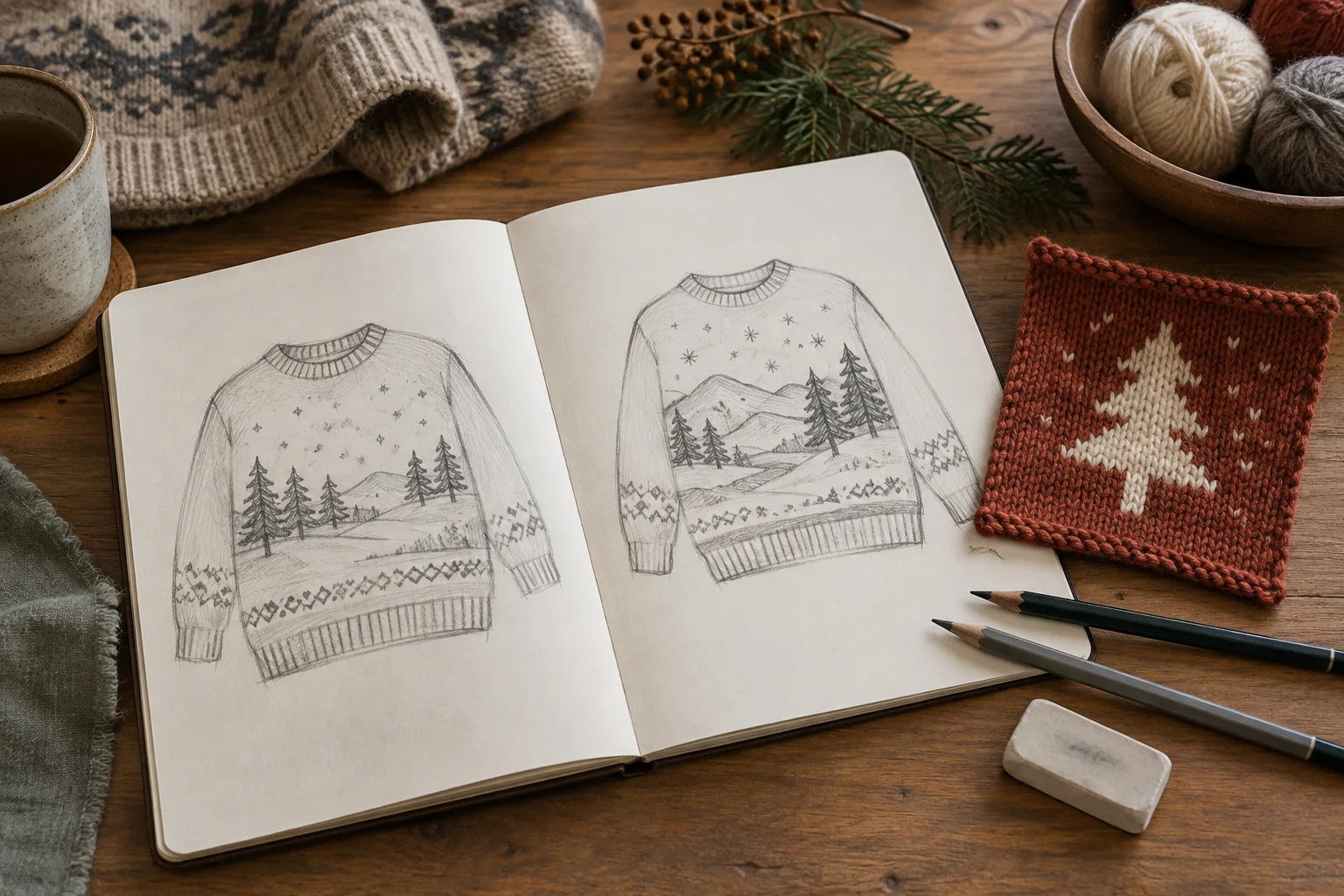
A broad idea such as a winter landscape is not the same object as another designer’s drawing of it. WIPO’s copyright guidance distinguishes ideas from protected forms of expression. That distinction is a reason to commission or create a specific independent design, not permission to trace a recognizable commercial graphic.
Keep a reference record showing what was studied and what the new artwork changes. Identify sources that cannot be copied, including identifiable characters, logos and drawings. An image found online is not automatically a manufacturing asset. If rights are unclear, resolve them or choose another route before the design enters the production pack.
The original vintage cardigan guide offers a useful reference-audit method. Apply its separation between research and product definition without claiming that a checklist proves legal originality. For a disputed or licensed element, obtain appropriate advice for the actual markets and intended use.
Treat brand and event signs as a separate check
WIPO’s trademark overview explains that signs used to distinguish goods or services can receive trademark protection. A seasonal joke or event reference should therefore receive its own review when it includes another business’s name, logo or distinctive sign. Removing the year does not resolve a permission issue elsewhere in the artwork.
For licensed work, record the approved artwork version and the permitted products, territories and period in the rights file. Ask the rights owner or adviser to resolve restrictions; do not infer them from a sample approval email. A longer usable design life may be irrelevant if the permission itself has a narrower scope.
Keep the supplier’s production permission distinct from a right to reuse the artwork for other customers or future collections. The vintage knit sweater reference guide can help turn a mood into a new specification. The buyer still needs an explicit decision about the particular assets being supplied and who may use them.
What should the physical sample prove about each version?
Review the garment without its holiday setting
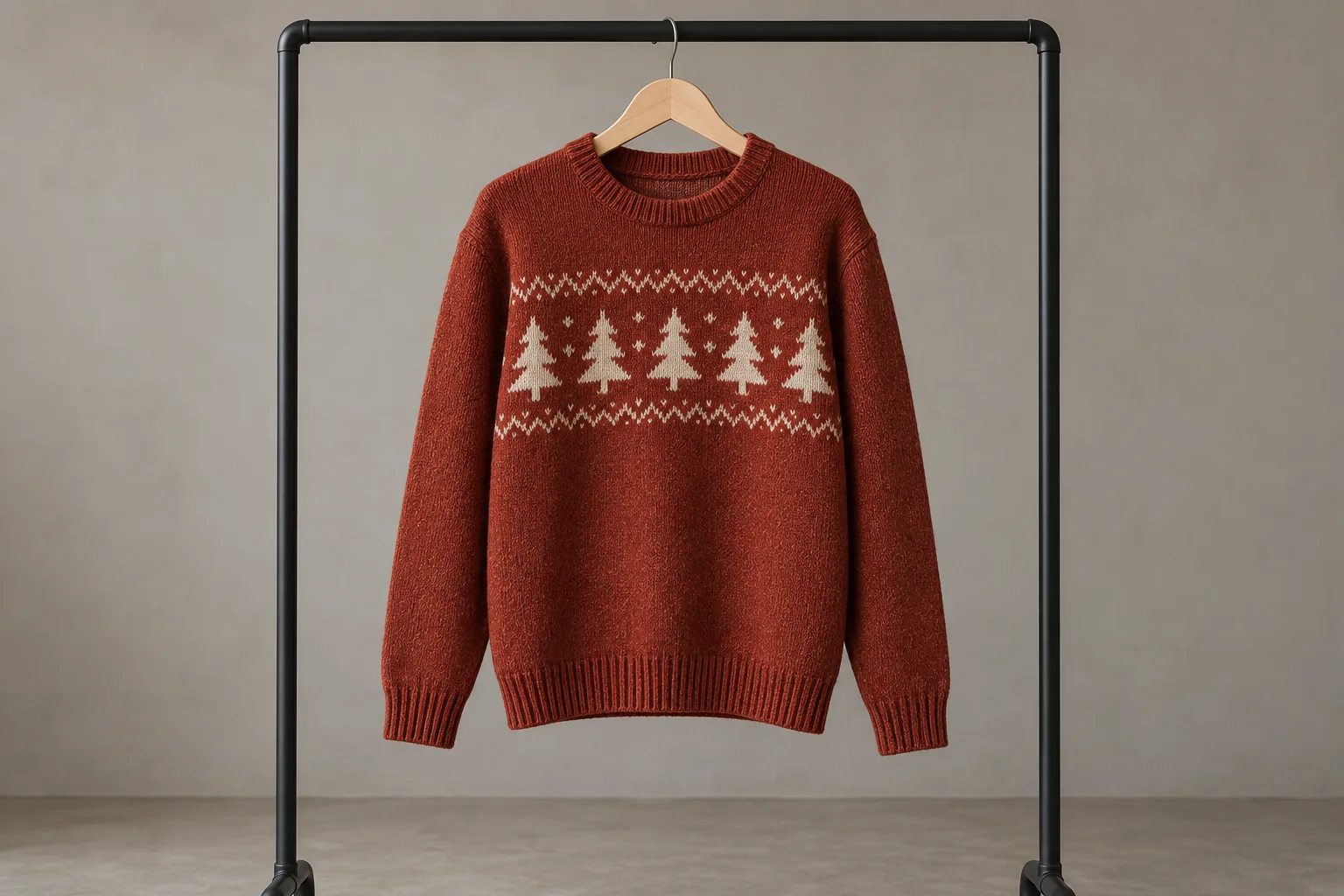
Show the sample against a plain background and with ordinary winter styling. Remove the campaign props from the review, not from the product. Ask whether the design still delivers the intended use written earlier. This is a structured design assessment, not evidence that consumers will buy it. Keep the reviewers’ observations labelled as judgments.
Look at the actual words and graphic placement across the intended sizes. A message that is discreet on a rendering may dominate a smaller garment or become difficult to read on a larger one. Record the observed result and ask the production team to explain any required adjustment. Do not solve a visual problem by making an undocumented artwork change during bulk work.
Use the fall sampling checklist to keep sample identity and comments controlled. Here, add a specific question: does this physical version carry the same degree of calendar dependence as the artwork that the brand approved?
Check the complete decorated garment’s practical use
Decoration can change how the garment is handled and cared for. Do not assume that evidence for the plain base automatically answers questions about the finished version. Ask for the relevant review of the actual materials and components, particularly when ornaments, applied graphics or contrasting elements are added.
For goods intended for the United States, the FTC’s Care Labeling Rule guidance requires a reasonable basis for care instructions and addresses the complete garment. This is a US-specific reference, not a rule applied to every market. For other destinations, identify the applicable requirements separately rather than copying a US label.
The care-label evidence guide is useful when documenting the relationship between the decoration and the care proposal. Avoid calling a removable ornament a simple solution until its attachment, removal and resulting appearance have been considered. If the design introduces children’s use, electronics or a different product function, stop using this ordinary adult-garment scope and arrange the appropriate review.
Which changes are real alternatives after the holiday?
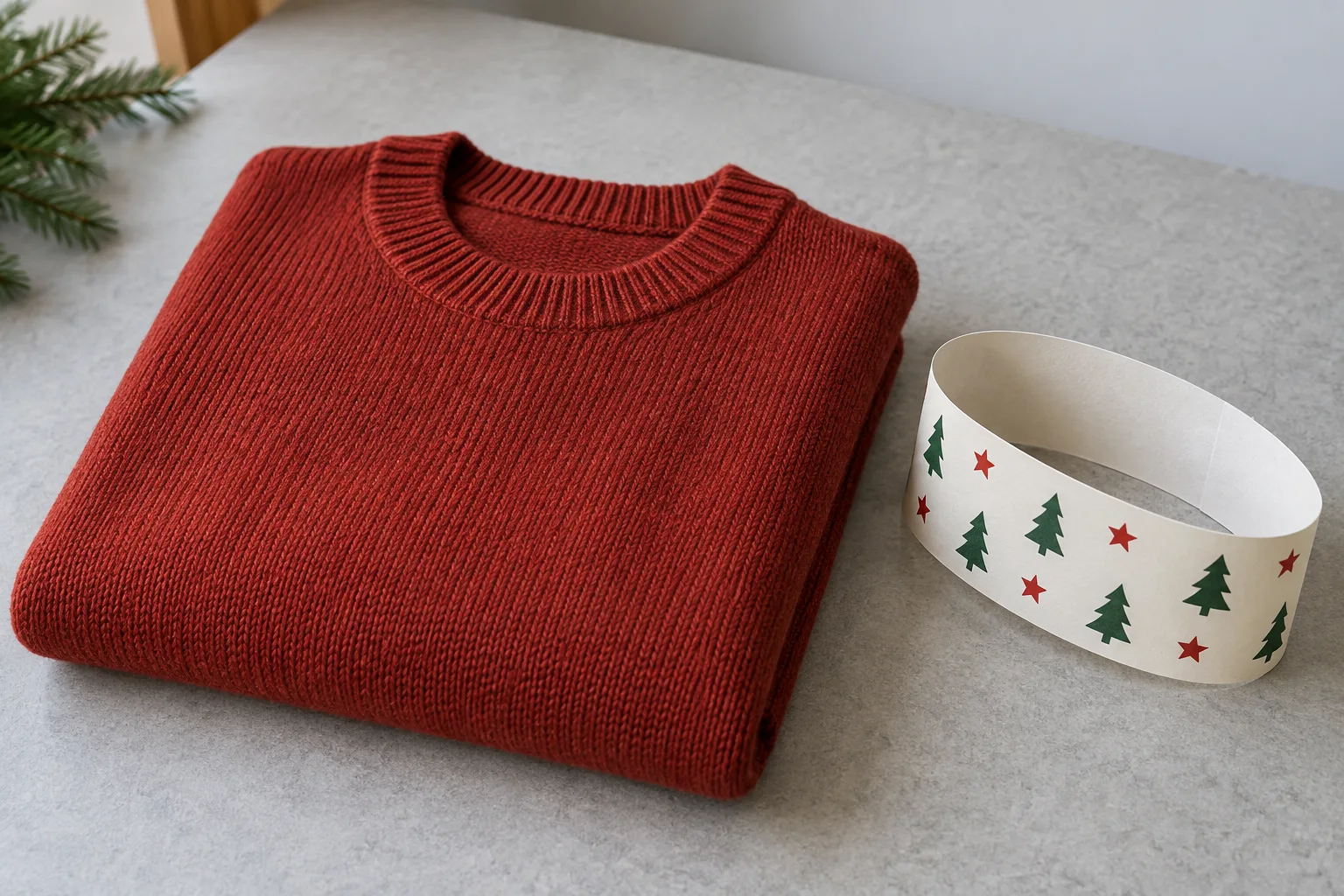
Distinguish a new presentation from a changed product
Write down the exact proposed action for each version after the campaign. Removing a paper sleeve can change presentation without changing the knit itself. Replacing a sewn component, altering embroidery or trying to remove a knitted motif changes the physical product and may require new evaluation. Do not describe all of these actions as “repackaging.”
For every proposed change, request a sample of the resulting condition before relying on it. If the brand expects a winter pullover after a removable component is taken away, inspect that pullover. Check for marks, attachment remnants, distorted areas or missing information. A verbal statement that the change is easy does not show what will remain.
The labels and packaging checklist helps identify the components involved. Keep mandatory product information separate from optional festive presentation. A packaging change must not remove information that the product still needs or introduce a description that contradicts the garment.
Reject exit descriptions that do not match the design
Consider a hypothetical sweater with a large knitted year. Calling it a “classic winter essential” after the event does not erase that year. The brand might still choose to offer it as a past-event item, retain it for an appropriate use or pursue another permitted route. The important point is that the description must remain honest about the product.
Likewise, removing Christmas words from a product title does not prove that a graphic has become commercially suitable for a later season. Revisit the original plain-background sample judgment and the brand’s approved use. If the later use depends entirely on a hoped-for customer response, record that uncertainty instead of presenting it as a solved design problem.
Before approving version C in the comparison table, check the retail packaging and barcode workflow. The team needs to determine whether the revised presentation requires changes in its own product records and picking instructions. Do not assume that using the same garment means every retail field should stay unchanged.
What should the final design decision record say?
State the accepted permanence in plain language
Write one sentence naming the version, the permanent holiday cues and the intended use. For example: “Approve version A as an adult commemorative sweater with the named event and year permanently knitted into the front.” That sentence prevents a later colleague from treating it as an undated winter style merely because the order spreadsheet contains a generic description.
Attach the approved artwork, physical sample reference, rights decision and information-pack version. List alternatives that were considered but not approved. A factory should not substitute the quieter version because it appears more reusable, just as it should not add festive wording because the campaign team used it in an advertisement.
Use the pre-production sample review guide to tie the decision to the actual production-intent object. Keep financial and timing approvals in their separate records. This design decision explains what the buyer accepts about the garment’s identity; it does not authorize an unspecified quantity or guarantee delivery.
Preserve the reasoning for the next collection
After the campaign, compare the original assumptions with the evidence that actually became available. Record whether the garment needed a different presentation, whether customers asked about the dated element and whether the proposed later use remained credible. Distinguish direct observations from interpretations. Do not attribute a weak or strong commercial result to the graphic alone when other conditions changed.
Keep the comparison useful for design, not just retrospective scoring. If the dated message prevented the later description the brand had planned, that is a concrete finding. If the winter version still depended on Christmas styling to make sense internally, revise the design brief next time. Neither conclusion requires inventing a universal rule about how much festive decoration customers prefer.
Use the final review observations to set a bounded design decision and the next action for each version.
| Review observation | Expiry risk | Design decision | Next action |
|---|---|---|---|
| A year or named event remains knitted into the garment | An undated later description would contradict the product | Approve only as a calendar-specific design | State the permanent cue and intended use |
| A festive sleeve is removable and the base garment passes its own review | Retail records may diverge between the two presentations | Approve the tested presentations separately | Save packed and unpacked references and update the affected records |
| Permission for a logo, character or drawing remains unclear | A longer design life does not resolve the rights question | Hold that artwork version | Resolve permission or choose an independent design |
| The plain-background sample does not support the proposed later use | The exit description depends on campaign styling | Return the version for revision | Revise the design or later-use description and review it again |
Finish with the narrow choice the evidence supports: approve the calendar-specific design knowingly, approve a tested alternative with less permanent holiday information, or return both versions for revision. A clear rejection can be more useful than an ambiguous compromise that neither delivers the event identity nor works as the intended winter garment.
Conclusion
Custom Christmas sweaters do not need to avoid explicit holiday identity. They need a buyer who recognizes which parts of that identity will remain after the campaign ends. Compare design versions while the underlying product assumptions are still comparable, and examine each physical sample without relying on festive photography to explain it.
Keep rights clearance, garment practicality and the proposed later presentation visible in the decision. A removable paper component is different from a permanent knitted message, and an undated graphic is not a guarantee of continuing demand. Choose the version whose actual product identity the brand is prepared to support.
Before development, assemble the original artwork alternatives, intended adult use, reference exclusions and the specific question your sample must answer. Contact CNSweaters to discuss the production inputs for your Christmas sweater design.
Frequently Asked Questions
Does removing the year make a design suitable for later seasons?
Not necessarily. Other words, graphics or event references may still define its meaning. Review the actual garment without the seasonal campaign and document the brand’s proposed use. A less explicit date is a design change, not proof of future demand.
Can festive packaging replace a holiday graphic on the sweater?
It can create a different presentation if the underlying garment is approved in its own right. Compare the packed and unpacked versions. Do not advertise a garment decoration that exists only on the packaging, and preserve the information the product still requires.
Should an event sweater always use a quieter design?
No. A specific event may be the reason the product exists. The buyer can approve that specificity while acknowledging its limits. The useful comparison is whether a quieter version serves the same intended purpose, not whether it looks safer in isolation.
Can an old graphic be reused if its colours are changed?
A colour change does not establish permission or independent authorship. Identify the source and relevant rights before supplying the artwork for production. Where another party’s recognizable material is involved, resolve the actual use with appropriate rights advice rather than relying on a cosmetic adjustment.