 CN Sweaters
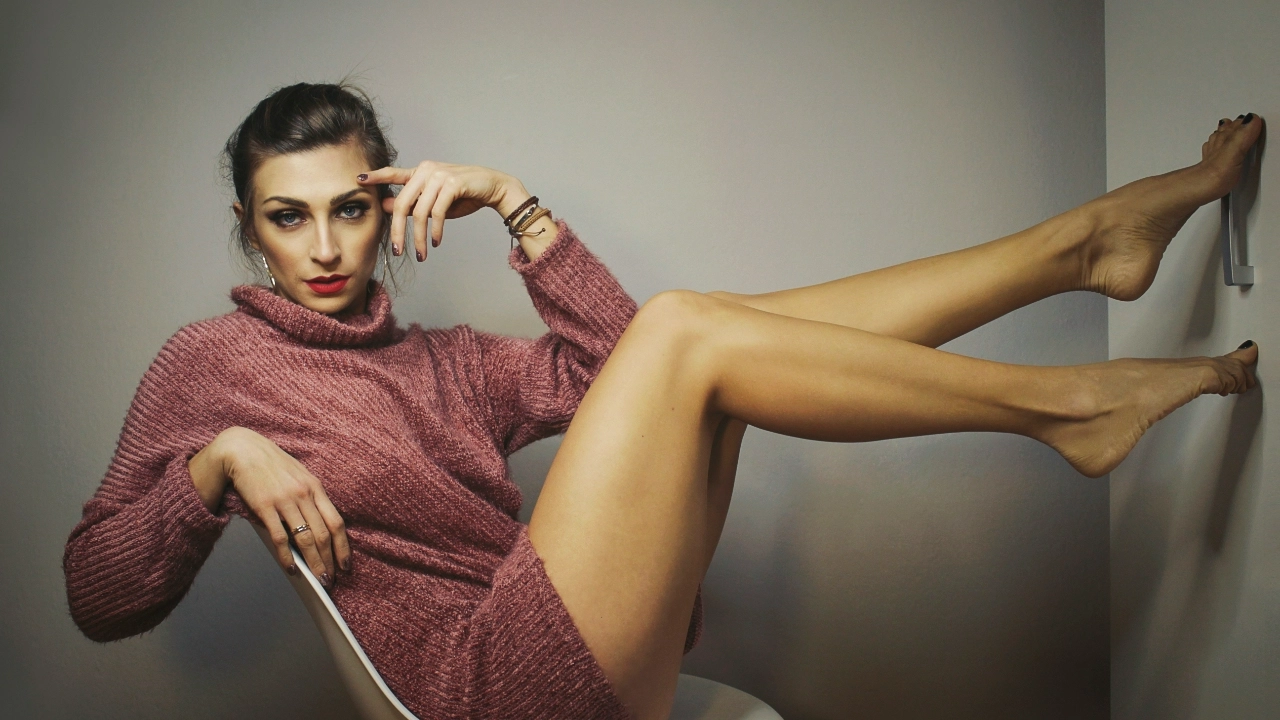
A knit sweater dress is one of the hardest private label items to develop because yarn choice and gauge directly control fit, drape and post-wash stability — far more than they do in a regular sweater or a woven dress. From a factory perspective, most fit problems we see in bulk are not pattern problems. They start at yarn selection, gauge setting and the sampling round before the tech pack is even locked.
This is especially true for ribbed knit dress, long sleeve knit dress, cable knit sweater dress and chunky knit sweater dress styles, where extra fabric weight, surface texture and stretch behavior amplify small mistakes. A 3% recovery loss on a top might be invisible. On a dress, it shows up as sagging hips, dropped hems and uneven sleeve length within the first wear cycle. Private label brands that treat a knit sweater dress like a longer sweater almost always end up with sample rounds doubling, bulk inconsistency rising and end-customer size complaints after launch.
The decisions that matter happen early. Yarn composition, ply, twist, gauge, knit structure, rib placement and recovery testing all need to be confirmed before sample approval, not after. Brands working with our knit dresses development team typically lock these specifications during the first two sampling rounds to reduce downstream risk.
What Makes a Knit Sweater Dress Harder to Develop Than a Sweater
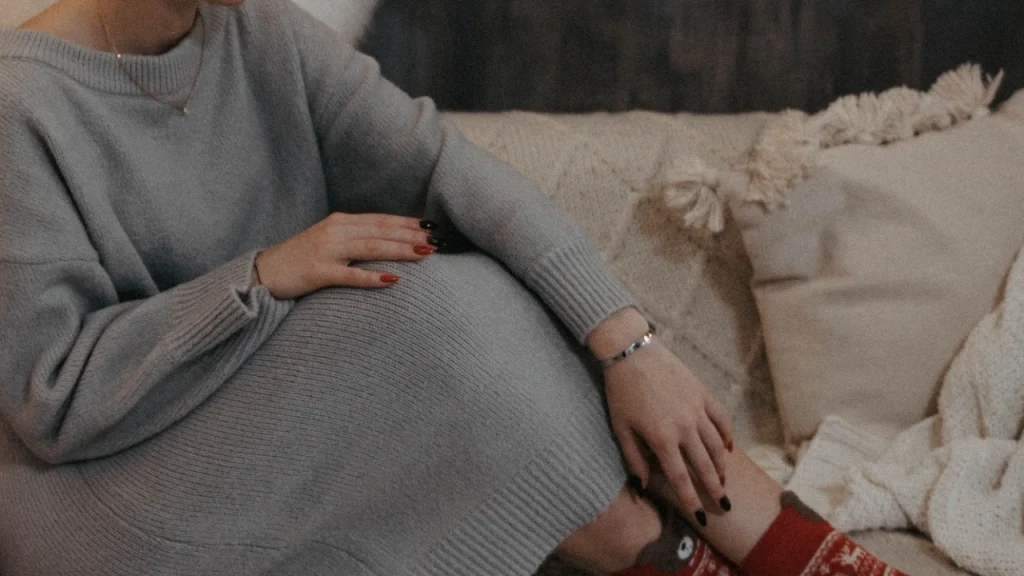
A knit sweater dress carries more fabric, more weight and more body contact than a sweater, which means every yarn and gauge decision is multiplied across a longer garment. The same yarn that behaves well in a cropped pullover can drop two to three centimeters at the hem in dress length, simply because gravity pulls on more fabric weight per panel.
From a factory perspective, three structural risks dominate development. First, vertical drop: long panels stretch downward under their own weight, and recovery becomes a real engineering question, not a finishing detail. Second, contact fit: dresses sit against bust, waist, hip and thigh at the same time, so a yarn with low elastic recovery shows looseness in the hip and tightness in the bust within hours of wear. Third, wash behavior: a longer panel exaggerates shrinkage. A 4% length shrinkage on a 50 cm sweater is 2 cm, which is often acceptable. The same 4% on a 95 cm dress is almost 4 cm, which usually fails a brand’s size tolerance.
This is also where ribbed knit dress and chunky knit sweater dress styles diverge sharply. Rib structures have natural extensibility that helps body fit but can collapse vertically under weight. Chunky gauges add fabric mass that accelerates hem drop. Neither problem is solved by pattern adjustment alone. It needs the right yarn, the right twist and the right gauge confirmed against a wash-and-wear test.
For B2B buyers, the practical implication is simple. Budget for at least one extra sampling round on dress projects compared to sweaters, and confirm fabric behavior before locking the size set.
How Does Yarn Choice Drive Fit Risk in Knitwear Dress Projects

Yarn choice is the single biggest fit variable in a knitwear dress, and it must be decided before pattern grading, not after. The fiber blend, ply, twist level and spinning method together determine how the dress drapes, recovers, shrinks and holds shape across washes. Two yarns with identical fiber percentages can behave very differently in bulk if their twist or spinning method differs.
Cotton-rich yarns give a clean handfeel and stable color, but pure cotton on a dress length tends to drop and bag at the seat without elastane support. Wool and wool blends recover better but can felt or shrink if wash care is not aligned. Acrylic yarns are budget-friendly and dimensionally stable, but cheap acrylics pill quickly on a dress because the body contact area is larger than on a sweater. Viscose and viscose blends drape beautifully but lose recovery fast, which is risky for fitted silhouettes.
A useful reference here: as the CottonWorks knit textile design guide notes, yarn size, staple length and spinning method are the primary cost and quality levers in a knit, and they directly drive shrinkage, pilling and drape behavior. From a factory view, this means the cheapest yarn quote on a dress project is rarely the cheapest finished result once you account for sampling rework and post-launch returns.
Matching Yarn to Silhouette and Wear Expectation
A fitted long sleeve knit dress needs a yarn with active recovery, usually achieved through wool, wool-acrylic or a cotton-elastane core. A relaxed chunky knit sweater dress can tolerate lower recovery because the silhouette hides minor sagging. A cable knit sweater dress needs a slightly tighter twist to keep cable definition crisp after washing, otherwise the cable visually flattens within five to ten wear cycles.
For private label buyers, the working rule is to confirm yarn behavior on a sampled panel washed three times before approving the bulk yarn. This single step prevents the majority of post-launch sizing complaints we see in the market.
Gauge, Knit Structure and Recovery Behavior
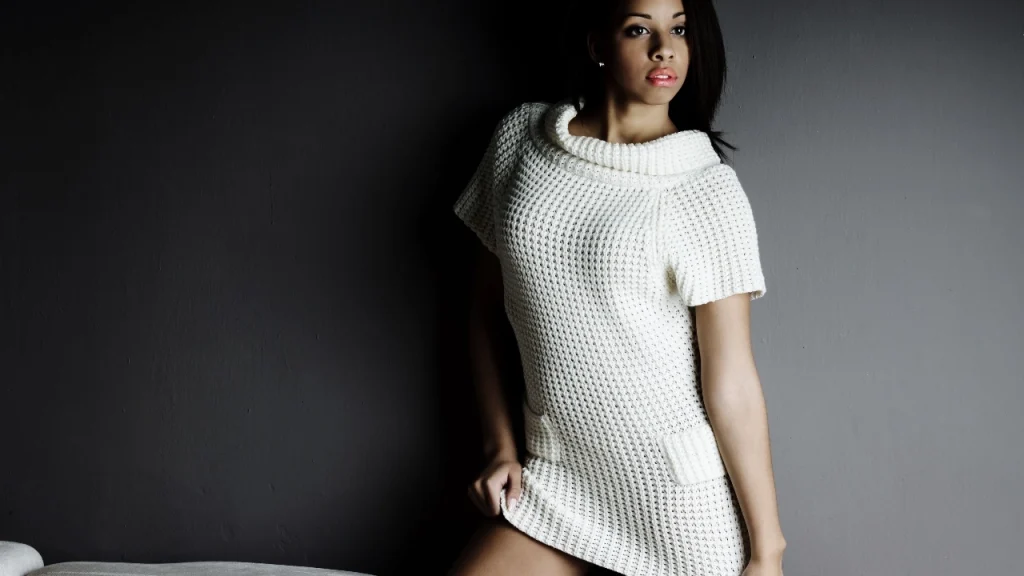
Gauge and knit structure decide how stretchy, how heavy and how stable your dress will be in bulk, and they need to be matched to silhouette before sampling starts. Gauge refers to needles per inch on the knitting machine. A 7gg or 5gg setting produces a chunky knit sweater dress with high yarn consumption and visible texture. A 12gg or 14gg setting produces a fine, light dress closer to a refined ribbed knit dress. The same yarn at different gauges produces very different drape, weight and fit.
Structure matters just as much. Single-knit jersey is lightweight and drapes well but curls at the edges and offers lower stability, which can be problematic on dress hems and necklines. Double-knit and interlock structures are heavier and more stable, which is why interlocks are commonly used for close-to-body dresses according to industry references on single and double knit fabrications. Rib structures bring extensibility, which is what makes ribbed knit dress styles popular for body-skimming fits, but rib also has the highest tendency to lose vertical length over wash cycles.
Here is a working comparison we use with private label clients when scoping new knit sweater dress development:
| Style Type | Typical Gauge | Common Yarn | Fit Risk Priority | Wash Risk Priority |
|---|---|---|---|---|
| Ribbed knit dress | 9gg–12gg | Wool blend, cotton-elastane | Hip stretch, vertical drop | Length shrinkage |
| Long sleeve knit dress | 12gg–14gg | Merino, cotton blend | Sleeve length stability, bust fit | Recovery loss |
| Cable knit sweater dress | 5gg–9gg | Wool, acrylic-wool | Cable distortion, hem flare | Felting, pilling |
| Chunky knit sweater dress | 3gg–7gg | Acrylic-wool, alpaca blend | Hem drop, shoulder droop | Length shrinkage, pilling |
The table illustrates a point that often surprises new buyers: each silhouette has its own dominant risk, and a single QC checklist applied across all four styles will miss the most important defects on at least two of them.
Why Recovery Testing Matters Before Bulk
Recovery is the ability of the fabric to return to its original dimensions after stretch. In a sweater, low recovery shows up as slight bagging at elbows. In a knit sweater dress, low recovery shows up as bagged seats, dropped hems and stretched bust panels — all visible problems on the wearer. We recommend a minimum of three wash-and-wear cycles on the first proto sample, with measurements taken at chest, waist, hip, hem and sleeve before and after, before approving the size set.
What Fit and Sizing Risks Should Private Label Brands Anticipate
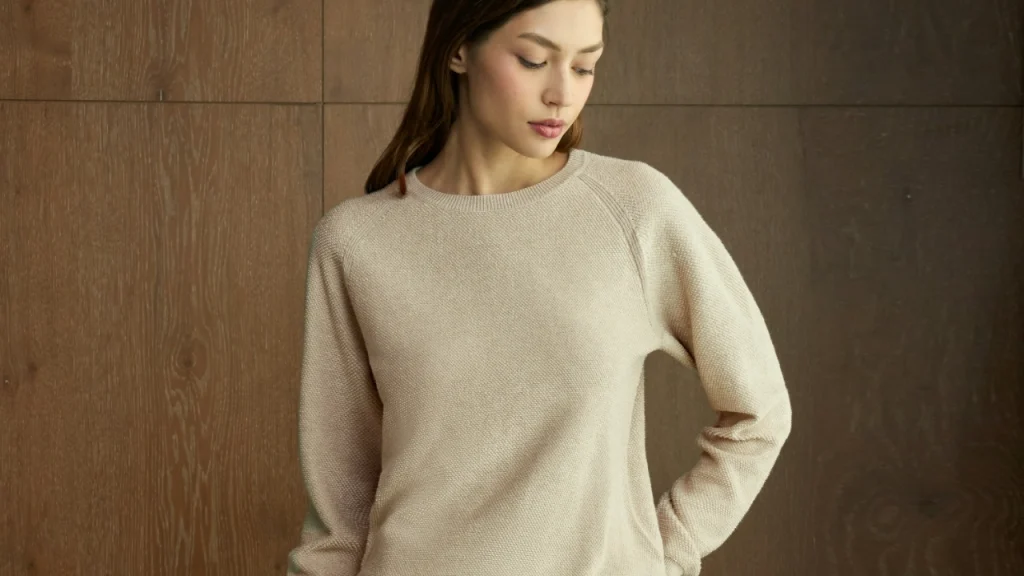
The most common fit risks on a private label knit sweater dress project are hem drop, bust-to-hip ratio shift, sleeve length variation and waist collapse on rib structures. These are not random defects. They are predictable consequences of yarn weight, gauge and silhouette interacting with body movement and gravity.
Hem drop typically ranges from 1.5 cm to 4 cm depending on yarn and gauge, and it is largest on chunky knit sweater dress styles where fabric mass is highest. Brands often assume hem drop can be solved by shortening the pattern, but this only works if the drop is uniform. In practice, hem drop is uneven across body sizes, so size 6 and size 16 of the same style may drop different amounts. This is where private label brands developing a private label knit sweater dress range need to validate fit on at least three grading points, not just the base size.
Bust-to-hip ratio shifts occur when yarn recovery is asymmetric. The bust area is under more stretch tension during wear, so it loses recovery faster than the hip area, which actually gains looseness from sagging. Over a wear cycle, this can flip the intended silhouette from hourglass to barrel-shaped within the same garment.
Sleeve length variation on a long sleeve knit dress is the most under-anticipated risk. Sleeves drop from shoulder weight, but they also shrink lengthwise after the first wash. The net change can be anywhere from minus 1 cm to plus 2 cm depending on yarn. Without a sleeve-specific recovery test, brands risk shipping bulk where sleeves vary by up to 3 cm across the size range.
For B2B buyers, the takeaway is that fit risk on dresses must be validated style-by-style and size-by-size. Generic tolerances borrowed from sweater development will under-protect a dress range.
How to Control Bulk Consistency and Post-Wash Behavior
Bulk consistency on a knit sweater dress depends on locking yarn batches, gauge tension, panel weight and wash protocol before production starts. Sample-to-bulk drift is the most common complaint we hear from private label buyers receiving their first dress order from a new supplier, and almost every case traces back to one of these four variables not being controlled.
Yarn batch consistency is the first defense. Yarns from different dye lots can differ slightly in twist, count and elastic behavior, which on a dress shows up as panels with subtle hand and stretch differences. For larger orders, we recommend reserving all yarn from one batch when feasible, or splitting orders by yarn batch and matching to size cluster.
Gauge tension is the second variable. Knitting machine tension drifts across an eight-hour shift if not monitored, and small drifts compound across long dress panels. A 2% gauge variation that is invisible on a 40 cm sweater body becomes a visible 1.5 cm difference on a 95 cm dress panel.
Wash protocol is the most overlooked. Bulk garments need a standardized wash, dry and steam process that matches the protocol used during sample approval. If samples were approved after hand-wash and flat-dry, but bulk goes through machine-wash and tumble-dry, dimensions will diverge. Apparel testing standards from organizations like Intertek apparel testing services provide useful benchmarks for dimensional stability, color fastness and pilling that brands can incorporate into their QC protocol.
Sample, Test and Approval Sequence We Recommend
A reliable sequence for private label dress development typically runs: yarn submission and approval, knit-down swatch with wash test, first proto sample, fit comments, second proto with corrections, size set approval across the full grading range, pre-production sample, and finally bulk with a top-of-production sample reviewed against the approved PP sample. This usually takes 45 to 70 days depending on yarn lead time, and skipping any step transfers the risk to bulk.
For brands planning seasonal launches, this means starting development at least four months before the in-store date, with buffer for one extra sampling round on the higher-risk silhouettes like cable and chunky styles.
Conclusion
A knit sweater dress is not a longer sweater, and it should not be developed on the same assumptions. Yarn choice, gauge, structure and recovery behavior carry more weight on dress silhouettes because fabric mass, body contact and wash exposure are all larger. The brands that get consistent bulk results are the ones that lock yarn behavior, validate recovery across multiple wash cycles, grade fit across at least three size points, and standardize the wash protocol between sample and bulk.
Most of these decisions cost nothing extra when made early. They become expensive only when discovered after bulk shipment. If you are planning a private label dress range and want a second opinion on yarn, gauge and fit risk before committing to production, our team is happy to review your concept directly. Share your knit sweater dress reference, target fit, size range, yarn idea and quantity with our knitwear development team for sampling advice.
FAQ
What is the typical MOQ for a private label knit sweater dress? For OEM/ODM knit dress projects, MOQ usually sits between 300 and 500 pieces per color per style, depending on yarn type, gauge and decoration. Custom yarn or custom dye lots typically push MOQ higher because yarn suppliers have their own minimums. Stock yarns and standard gauges allow lower MOQ. Confirm yarn availability before locking the quantity, as yarn MOQ often drives garment MOQ.
How long does sampling take for a knit sweater dress? Expect 18 to 30 days for a first proto sample once yarn is confirmed, and another 14 to 21 days per revision round. Cable knit sweater dress and chunky knit sweater dress styles typically need one extra sampling round versus ribbed or jersey styles because cable definition and hem stability require more adjustment. Total development time from yarn submission to bulk-ready PP sample is usually 45 to 70 days.
Which yarn is safest for a first private label knit dress project? A wool-blend or cotton-elastane core yarn at 12gg is usually the lowest-risk starting point, because it offers reasonable recovery, predictable shrinkage and broad acceptance across markets. Pure viscose, pure cotton without elastane, and very cheap acrylics tend to carry higher fit and pilling risk on dresses, even though they can work well on sweaters.
How do we reduce fit complaints after launch? Validate fit on at least three size points, not only the base sample, and run a three-cycle wash-and-wear test before approving the size set. Make sure the wash protocol used in your QC matches the wash protocol you communicate to end customers on the care label. Most post-launch fit complaints we see trace back to a mismatch between sample wash and end-consumer wash.
Can you handle refill orders with the same yarn and fit? Refills are possible when yarn is still available in the same batch family and the original tech pack, gauge and wash protocol are preserved. We recommend reserving spare yarn at first bulk if a refill is likely within six months, since yarn batches can drift in subtle ways between productions. Locking the original PP sample as the gold reference also helps maintain consistency across refill rounds.