 CN Sweaters
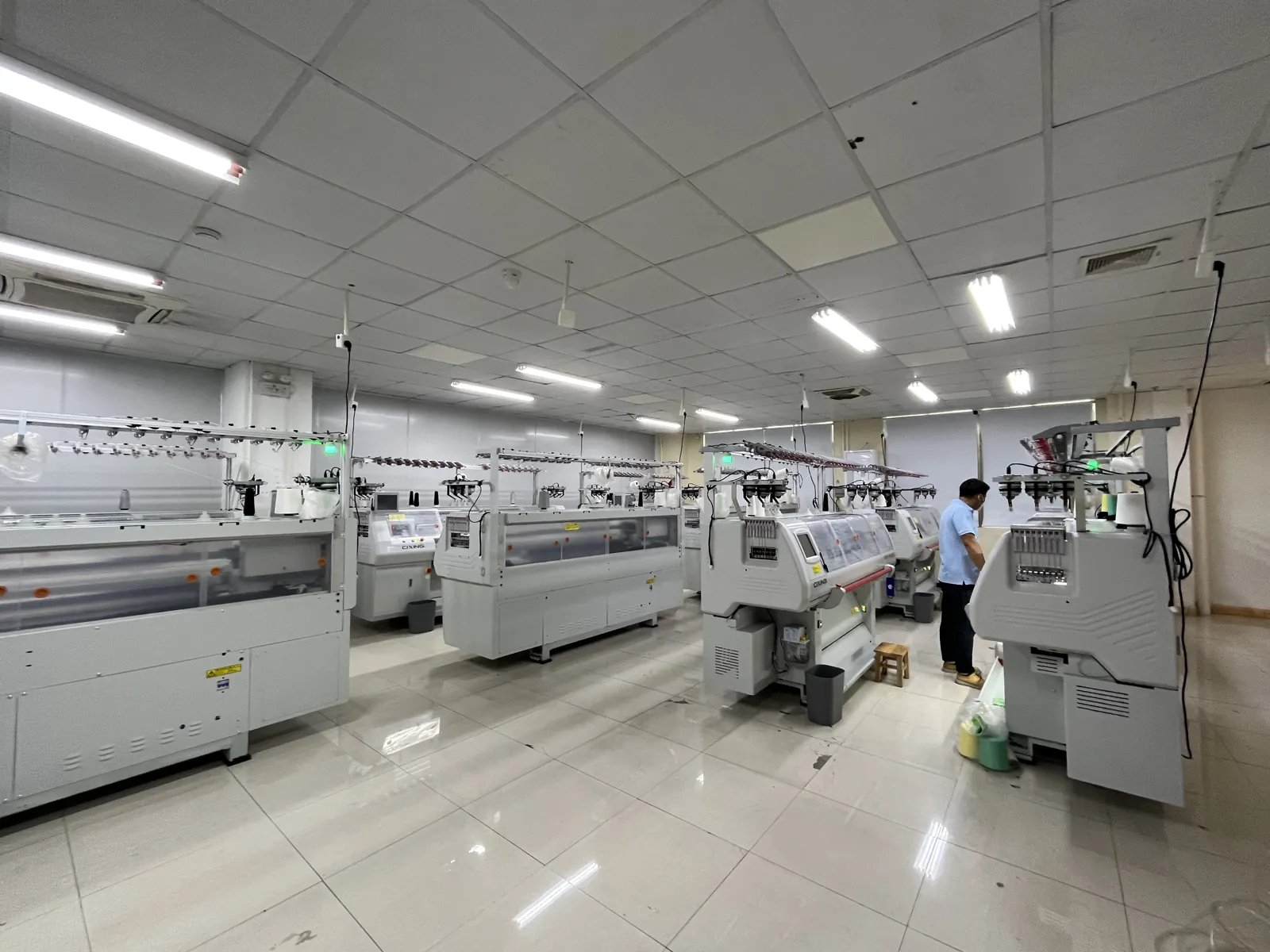
A knitted sweater manufacturer controls shrinkage by managing yarn relaxation, knitting tension, washing, steaming, and post-finishing as one continuous process, not as separate steps checked only at the end. If any of these stages is skipped or measured only on dry, unwashed samples, the garment will keep moving in size after the buyer receives it, and the problem usually appears in returns, not in pre-shipment inspection.
For brand owners, wholesalers, and sourcing managers, shrinkage is rarely about one bad batch. It is about whether the factory has a stable system that ties together fiber behavior, knitting density, wet processing, and bulk production records. When that system is missing, the symptoms are familiar: body length shorter after the first home wash, sleeves growing on a wool blend, color batches measuring differently, PP samples that do not match bulk, and end customers complaining that the sweater no longer fits.
A knitted sweater manufacturer often sees buyers approve a sample that has only been pressed and measured once, without relaxation time and without a wash test. The most common mistake on the factory side is treating shrinkage as a QC issue at the end, instead of a design and process decision at the beginning. The rest of this article explains how a responsible knitwear manufacturer builds shrinkage control into yarn selection, knitting, finishing, sampling, and bulk inspection, and what buyers should ask for before approving samples or releasing bulk.
How a Knitted Sweater Manufacturer Reads Shrinkage Risk
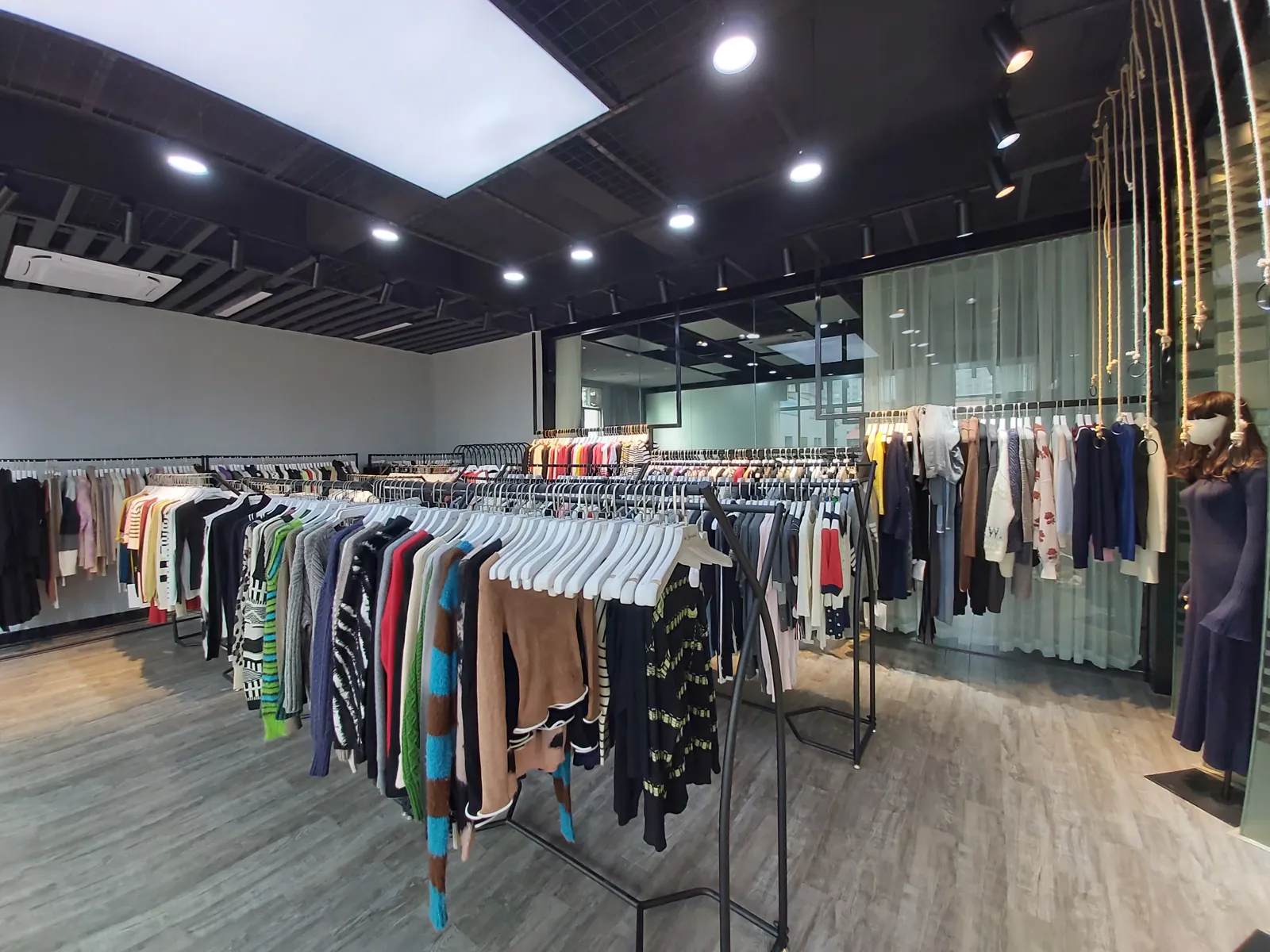
A knitted sweater manufacturer reads shrinkage risk from the fabric’s interlocking loops because they store tension differently from woven fabric. A woven shirt loses size mainly through fiber swelling and yarn relaxation in the warp and weft. A knitted sweater can lose, or sometimes gain, size in length, width, sleeve, body, and rib openings, and it can do so at different rates. That is why a single shrinkage percentage on a tech pack is often misleading for knitwear.
There are three movements happening at the same time. The first is yarn relaxation, where the yarn returns to its natural state after being stretched on the knitting machine. The second is fiber swelling during washing, which is heavy in cotton and viscose blends and lighter in pure acrylic. The third is felting and fiber migration, which mostly affects wool, cashmere, and mohair when temperature, agitation, and pH are not controlled. A knitwear supplier that treats these three movements as one number will almost always miss one of them.
How loop structure and stitch density change the result
A loose 3GG chunky knit and a fine 12GG jersey made from the same yarn composition will not shrink the same way. Lower gauge fabrics hold more air and more residual tension, so length shrinkage after washing tends to be higher. Tight rib structures at the hem, cuff, and neckline can also pull the body inward after relaxation, which buyers sometimes read as “shrinkage” even when the main body panel is stable. For custom knitwear projects, the stitch structure must be tested in the actual yarn, not estimated from a similar style.
How a Knitted Sweater Manufacturer Evaluates Yarn Risk
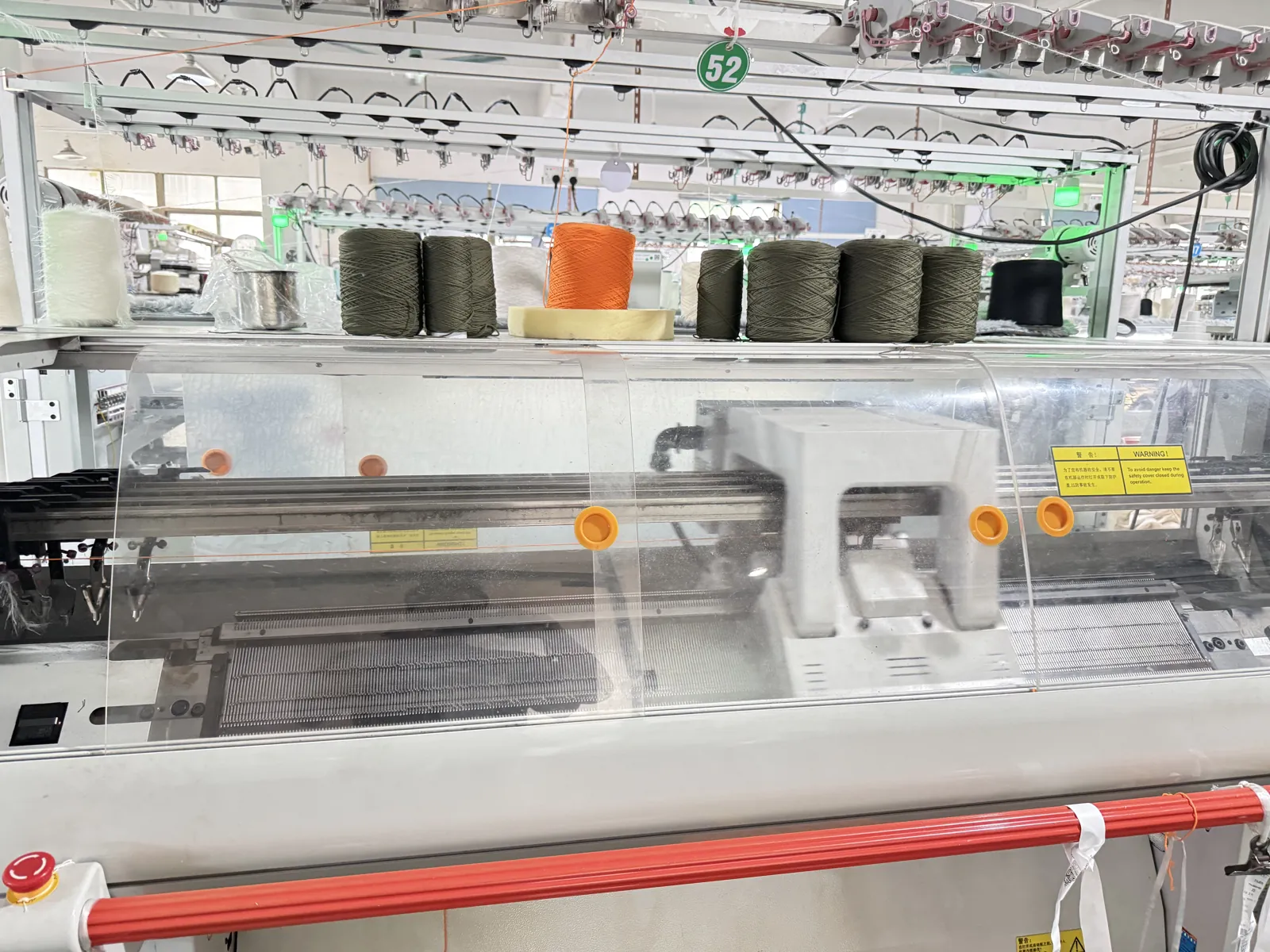
Yarn composition is the first variable a knitted sweater manufacturer checks, because it sets the upper limit on how much control the later stages can give you. Natural fibers move more than synthetic fibers, and blends behave according to whichever component is most reactive to water and heat. Buyers approving custom knit sweaters should match the tolerance they request to the fiber they choose, not the other way around.
Wool and cashmere shrink mainly through felting when scales on the fiber surface lock together under heat, moisture, and agitation. Cotton shrinks mainly through fiber swelling in water, and the effect is heavier in higher-twist yarns and tighter structures. Mohair has long, smooth fibers that resist felting but can lose loft if over-washed. Acrylic is dimensionally stable but can deform under high heat during steaming. Viscose and rayon blends are often the most unpredictable because the fiber loses strength when wet.
The table below summarizes typical behavior we see across bulk knit sweaters in our own production. These ranges are indicative for planning conversations with buyers and are not a substitute for testing the actual yarn lot.
Yarn Data a Knitted Sweater Manufacturer Should Compare
| Yarn type | Main shrinkage mechanism | Typical length change after wash | Sensitivity to heat | Notes for buyers |
|---|---|---|---|---|
| 100% Merino wool | Felting + relaxation | 3% to 6% | High | Needs controlled wash, neutral pH |
| Wool / acrylic blend | Mixed, depends on ratio | 2% to 4% | Medium | More stable than pure wool |
| 100% Cotton | Fiber swelling | 4% to 7% | Medium | Pre-shrink yarn helps a lot |
| Cashmere | Felting | 3% to 5% | High | Avoid hot tumble drying |
| Mohair blend | Relaxation + loft loss | 2% to 4% | Medium | Watch steaming time |
| Acrylic | Heat deformation | 1% to 2% | High at >130°C | Stable in wash, weak in heat |
| Viscose blend | Loss of wet strength | 4% to 8% | Medium | Highest variability across lots |
What this table tells a sourcing team is simple. The same tolerance, for example “maximum 3% shrinkage in length,” is realistic for a wool-acrylic blend but unrealistic for a viscose-rich yarn unless the factory uses a specific finishing route. That conversation belongs at the development stage, not at pre-shipment.
Why yarn lot variation matters in bulk
Even within the same yarn specification, different dye lots and spinning batches can shrink slightly differently. A custom wool sweater approved on lot A may move 0.5% to 1% more on lot B if the yarn was spun with slightly different twist or moisture content. Responsible knitwear manufacturers test each major lot for shrinkage before releasing it to the knitting floor, and they keep retain samples so any later complaint can be traced.
How a Knitted Sweater Manufacturer Controls Production
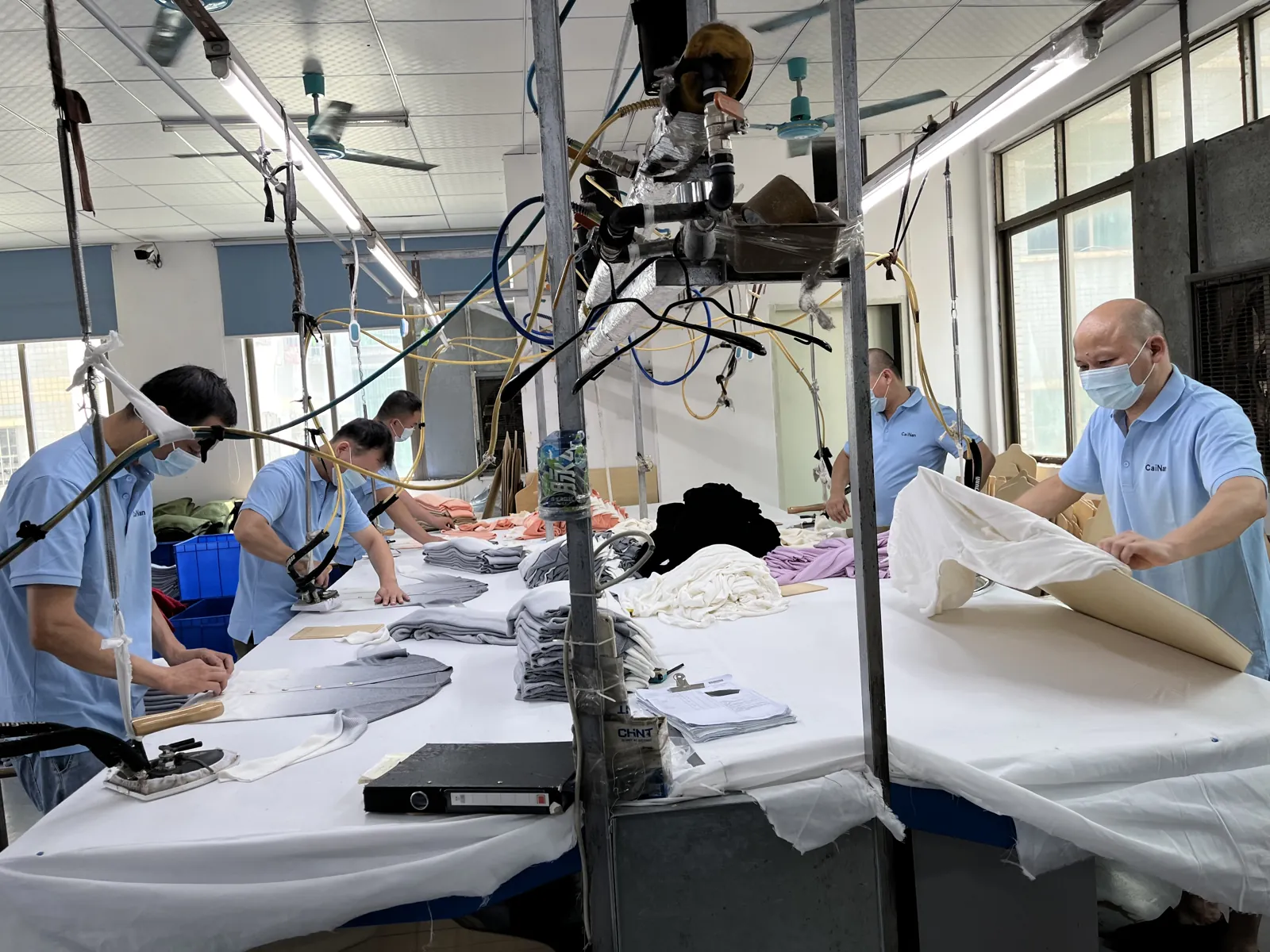
For a knitted sweater manufacturer, shrinkage control is a sequence, not a single test. From a factory perspective, every step from yarn intake to packing has the potential to add or remove dimensional stability. The buyer rarely sees these steps, but they should be visible in the factory’s process documents and inspection records.
Yarn intake is where it starts. Yarn is tested for moisture content, twist, and shrinkage in a relaxed state. Knitting is then done with controlled tension, because over-stretched yarn on the machine will pull back later. After knitting, panels go through linking, mending, and a relaxation step where the fabric is allowed to rest before any wet processing. Skipping the relaxation step is one of the most common reasons that a “fine” pre-wash measurement becomes a problem after delivery.
Wet processing, whether washing, scouring, or softening, is then tuned to the fiber. Wool and cashmere are washed at low temperature with low mechanical action and neutral pH. Cotton may need a controlled hot wash to release internal tension. After wet processing, garments are dried flat or on forms, then steam-pressed and given another relaxation period. Only after that final relaxation should measurements be taken for approval. AATCC publishes the textile test methods most commonly referenced in this part of the process, including dimensional change after home laundering, and a knitted sweaters supplier should be able to tell you which methods they follow and why. Our internal procedures, documented in our quality control workflow, are built around this idea that the last relaxation is part of the product, not a finishing detail.
Where most factories get it wrong
The two most frequent failure points we see, both in our own audits and in production we have taken over from other factories, are insufficient relaxation time and over-aggressive steaming to “correct” oversize panels. Steaming a sweater into shape masks the problem until the customer washes it at home. A serious knitted sweater factory will refuse to ship a garment that only meets size by being held in shape by steam tension.
What Buyers Should Confirm With a Knitted Sweater Manufacturer Before Sample Approval
Before approving any pre-production sample, buyers should ask the knitted sweater manufacturer to confirm a small set of items that, in our experience, prevent most shrinkage disputes later. These items are simple individually but they are usually missing in combination.
The first is a clear, signed base size chart with measurement points illustrated, including where on the garment each measurement is taken and in what state the garment is measured. The second is the washing condition the size chart refers to. A measurement on an unwashed sample and a measurement after one standard wash are different products. The third is the allowed shrinkage tolerance per dimension, not just an overall percentage. Body length, chest width, sleeve length, and rib opening can each carry their own tolerance.
The fourth is the measurement tolerance, which is separate from shrinkage tolerance and covers normal variation across pieces within the same size. The fifth is the number of test samples and the sampling plan for bulk. One garment measured once is not a quality record. The sixth, often forgotten, is approval of the same style in each color, because dye batches can shift dimensions by 0.3% to 1% even in stable yarns.
A practical pre-approval checklist
For private label teams running custom knitted jumper programs and similar custom-made knit sweaters, we suggest the following be on file before the seal sample is signed off:
- Yarn composition, count, and supplier lot number
- Size chart with measurement diagrams and measurement state defined
- Wash and care instructions matching the actual test
- Pre-wash and post-wash measurements for at least three garments
- Allowed shrinkage tolerance per dimension and overall measurement tolerance
- Color-by-color sample measurements once strike-offs are approved
- Agreed test method reference, for example an AATCC or ISO equivalent
If any of these items are missing at sample stage, the same gap will exist in bulk, and disputes will be harder to resolve. The way we structure this checklist inside our OEM/ODM development process is designed so the buyer signs off each item before patterns are released to the bulk floor.
How a Knitted Sweater Manufacturer Measures and Records Bulk Production
For a knitted sweater manufacturer, bulk shrinkage inspection is not the same as visual QC. A pre-shipment inspector looking only at appearance, label position, and packing will not catch a sweater that will shrink 6% after the first home wash. Dimensional stability has to be designed into the inspection plan from the start of bulk, not added at the end.
In our own production, we measure dimensions at three points during bulk: after knitting and linking, after wet processing and relaxation, and after final pressing and conditioning. Each measurement is recorded against the approved size chart and the agreed tolerance. For bulk knit sweaters and wholesale knitted sweaters orders, we also pull a defined number of garments per color per size for a confirmation wash, because color batches do not always behave identically even when the yarn specification is the same.
Third-party inspection bodies such as those described in Intertek’s apparel inspection services generally follow a similar logic: pre-defined sampling, measurement against a signed size chart, and dimensional change testing on a sub-sample. Buyers who want an independent record on top of the factory’s own measurements should arrange this before bulk starts, not after. The cost of a planned third-party check is much lower than the cost of unplanned returns.
What records the buyer should receive
A serious knitwear supplier should be able to share, on request, the yarn shrinkage test for the lot used, the pre-wash and post-wash dimensions of bulk samples per color, the inspection sampling plan, and any deviations found and corrected. If the factory cannot produce these records, the buyer is effectively relying on goodwill. For repeat programs and reorders, these records also let you compare batches over time and catch drift before it becomes a complaint.
How Lead Time, MOQ, and Cost Interact With Shrinkage Control
Buyers sometimes ask whether tighter shrinkage control adds cost or extends lead time when working with a knitted sweater manufacturer. The honest answer is that it can, but in a controlled way, and the trade-off is almost always favorable when you compare it to the cost of bulk rework. The factories that absorb shrinkage control into their normal workflow are usually the same factories that have predictable MOQs and lead times, because their process is already standardized.
Pre-shrinking yarn or running an additional relaxation cycle typically adds one to three days to the production schedule, depending on volume and fiber. A confirmation wash on bulk samples per color adds another one to two days. For a typical wool or wool-blend program in our facility, the full shrinkage control sequence is already inside the published lead time on our MOQ and lead time page, so buyers do not see it as an extra step. For more complex compositions such as cashmere or viscose blends, we discuss the additional time at the quotation stage so there is no surprise later.
When buyers should accept a slightly longer lead time
For first-time programs, color-critical launches, and any composition that has known dimensional variability, accepting a slightly longer lead time in exchange for a documented shrinkage process is almost always the right business decision. The orders where buyers push for the fastest possible turn are also the orders where shrinkage complaints tend to appear later. Our position is that a serious knitted sweaters supplier should be willing to explain exactly which extra days protect which risk, so the buyer can decide with full information rather than only on price. Buyers who want to compare across our full range can review what we keep in continuous development on our main product overview and the specific sweater category page before locking the spec.
What a Knitted Sweater Manufacturer Should Record Next
For a knitted sweater manufacturer, shrinkage is not a single number on a tech pack. It is the visible result of yarn behavior, knitting tension, wet processing, finishing, and relaxation, recorded and verified at sample stage and again across bulk. A knitted sweater manufacturer that takes this seriously will tie each of those steps to documents the buyer can see, not just to a final visual inspection. For brand owners and sourcing teams, the right move before any new program is to align on yarn behavior, signed size chart with measurement state, per-dimension tolerances, color-by-color sample approval, and a bulk measurement plan. To start a structured review for your next program, contact our team at cnsweaters.com and send your yarn composition, size chart, washing instructions, reference sample, target shrinkage tolerance, measurement tolerance, order quantity, and delivery timeline so we can confirm dimensional stability requirements before sample and bulk approval.
FAQ for a Knitted Sweater Manufacturer
What Shrinkage Tolerance Should Buyers Ask a Knitted Sweater Manufacturer to Meet? For most merino and wool-blend programs, a tolerance of 3% to 5% in length and 2% to 4% in width after a standard care wash is realistic when the factory runs proper relaxation and finishing. Asking for under 2% on pure wool usually requires either yarn pre-shrinking or a more expensive finishing route, and the factory should tell you which one applies before you sign off.
Why does my sample measure correctly but bulk shrinks more after washing? This usually happens when the sample is measured before full relaxation, or when bulk uses a different yarn lot than the sample. The fix is to measure samples after the same relaxation and wash conditions you will require for bulk, and to ask the factory for lot-level shrinkage tests on bulk yarn before knitting starts.
How a Knitted Sweater Manufacturer Handles Color and Reorders
Do different colors really shrink at different rates? Yes, small differences of 0.3% to 1% between dye lots are common, especially in cotton and viscose blends. For color-critical programs, a knitwear supplier should measure at least one bulk sample per color after wash and share the results before shipment, not only on the lead color.
Should I rely on the factory’s measurements or arrange third-party inspection? For new suppliers, first programs, and high-volume launches, a planned third-party inspection that explicitly includes dimensional measurement and a wash test on a sub-sample is worth the cost. For established programs with a stable record, the factory’s own inspection data is usually enough, provided you receive the actual measurement sheets and not just a pass certificate. Standard methods referenced by independent labs are listed in Intertek’s apparel testing overview.
How should I handle reorders to avoid drift between batches? Keep an approved seal sample and the signed size chart with measurement state on file, request the same yarn supplier and lot specification, and ask the factory to share pre-wash and post-wash measurements for the first reorder batch before full bulk runs. Most drift over time comes from quiet yarn substitutions or a relaxed wash step, both of which show up immediately in a documented measurement record.