 CN Sweaters
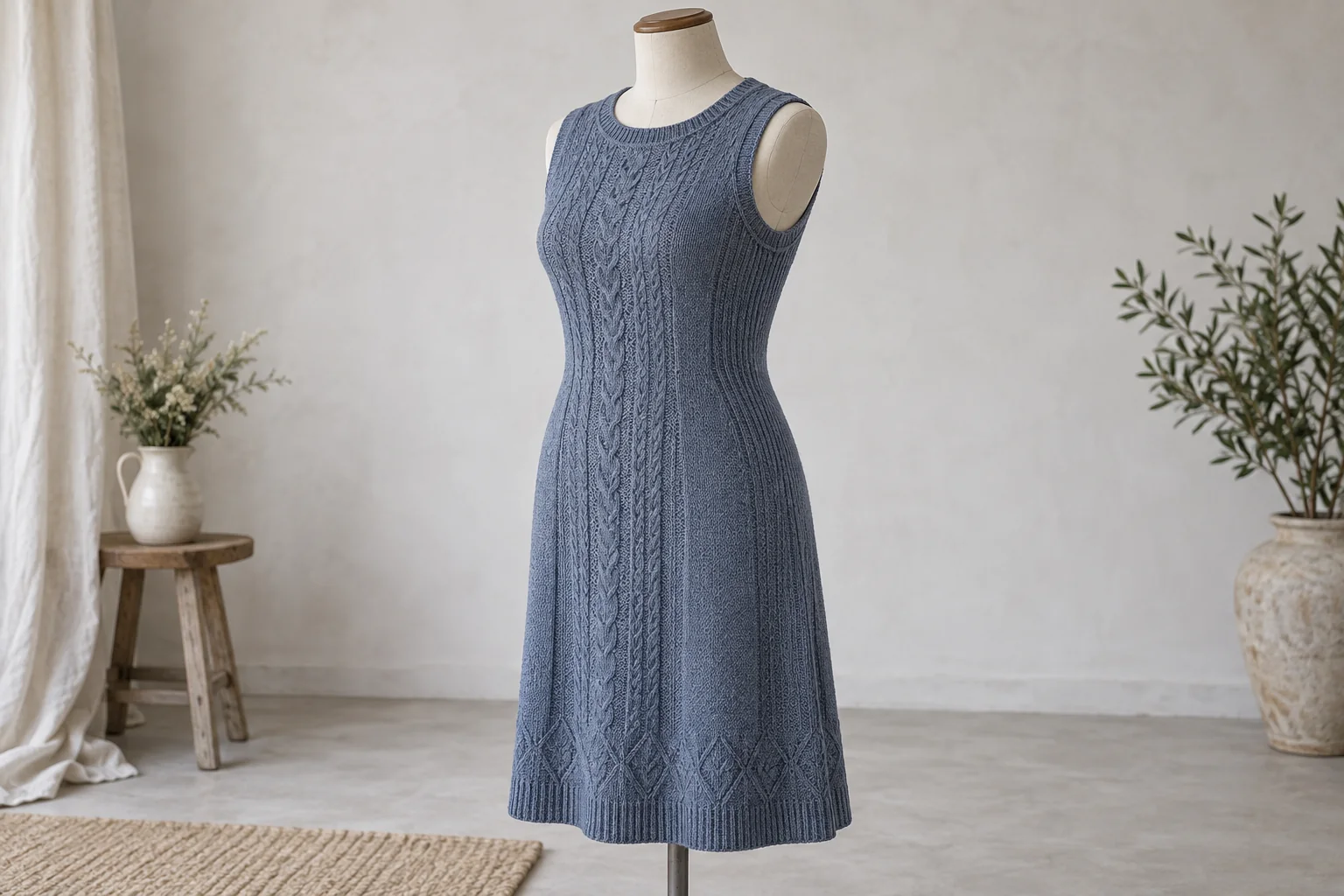
A sleeveless dress can meet the fabric-opacity requirement yet expose an undergarment through its armhole. Identify which boundary failed before requesting a denser knit, lining or smaller opening. Those changes solve different problems and can alter movement in different ways.
For the armhole decision, define the wearer or form, undergarment, shoulder position and movements that the sample must accommodate. Then record where coverage is required and where exposure is intentional. A request to make the armhole smaller does not identify which edge should move or whether the body’s fit is contributing to the problem.
What does dress armhole coverage mean for this design?
Map coverage against the undergarment
Use the actual undergarment type and wearing arrangement selected for the review. Record its relevant size and position, together with the dress sample and fit reference. Different strap, cup or side-band arrangements can produce different visible relationships around the same opening.
A brand may deliberately choose a low armhole or a visible layered look. That is a design decision to document. The technical brief should identify the intended exposed area and the parts that must stay covered, rather than relying on a general description such as modest or clean.
The knit midi-dress fit guide covers the wider garment relationship. Keep this review focused on the front armhole, lower opening and back armhole. Shoulder placement and upper-body fit remain relevant because they locate that opening on the wearer.
Use front, side and back references. A front photograph can show a tidy edge while hiding a gap at the lower side or back. Label the views so another reviewer can reproduce the comparison without rearranging the garment for the camera.
Separate exposure through an opening from transparency
An opening reveals what lies beyond its edge. Transparency occurs through the fabric itself. Identify which problem the sample comment describes before proposing a denser knit, a lining or a changed armhole shape. These interventions answer different questions and can have different consequences for movement and hand.
If both issues occur, create separate observations with their own reference views. That prevents a successful fabric-opacity change from being mistaken for a resolved armhole gap, or a raised edge from being accepted without reviewing the remaining surface transparency.
Reference views and opening landmarks
Mark coverage points before revising
Identify the front and back shoulder ends, underarm level, finished edge and attachment line where there is a separate band. Show the intended side-body boundary on the drawing. A technician needs to know whether the comment concerns opening depth, the front curve, the back curve or how the complete dress sits.
ISO 18890 provides garment-measurement references. Agree any additional armhole landmarks and coverage points with the technical team. A standard measurement method does not define the amount of exposure acceptable for this design.
| Review input | Record required | What it controls | Limit of the evidence |
|---|---|---|---|
| Dress sample | Size, yarn, construction and revision | Identifies the garment being assessed | Another colour or finish may need review |
| Fit reference | Wearer or form and relevant measurements | Locates the opening on a defined body | One reference does not represent every wearer |
| Undergarment | Type, size and wearing position | Makes the coverage boundary visible | A substituted item changes the comparison |
| Opening landmarks | Marked front, side and back points | Locates any gap or edge conflict | One flat depth cannot describe the whole curve |
| Movement sequence | Starting posture and required actions | Repeats the situation that reveals the issue | It is not automatically a standard test |
| Care state | Selected care, finish and rest history | Separates state changes from design changes | Unmatched states cannot support a direct comparison |
Record any adjustment made during fitting. If the reviewer shifts a strap or pulls the dress upwards, identify the reason and keep a view from before the adjustment. Otherwise, the approval file may show an arrangement the garment did not maintain on its own.
Pair measurements with controlled views
A dimension can confirm where a defined point lies on the flat garment. The wearing view shows its relationship to the undergarment and body. Use both when a sample meets the sheet but still exposes more than intended.
Set measurement tolerances against the agreed method. Keep those allowances separate from the coverage boundary. An edge can fall within its dimensional allowance while still missing a required visual relationship on the selected fit reference.
Use consistent camera height and garment arrangement when photographs are part of the comparison. Avoid interpreting an apparent difference in opening depth until the reviewer has ruled out a tilted view or changed posture.
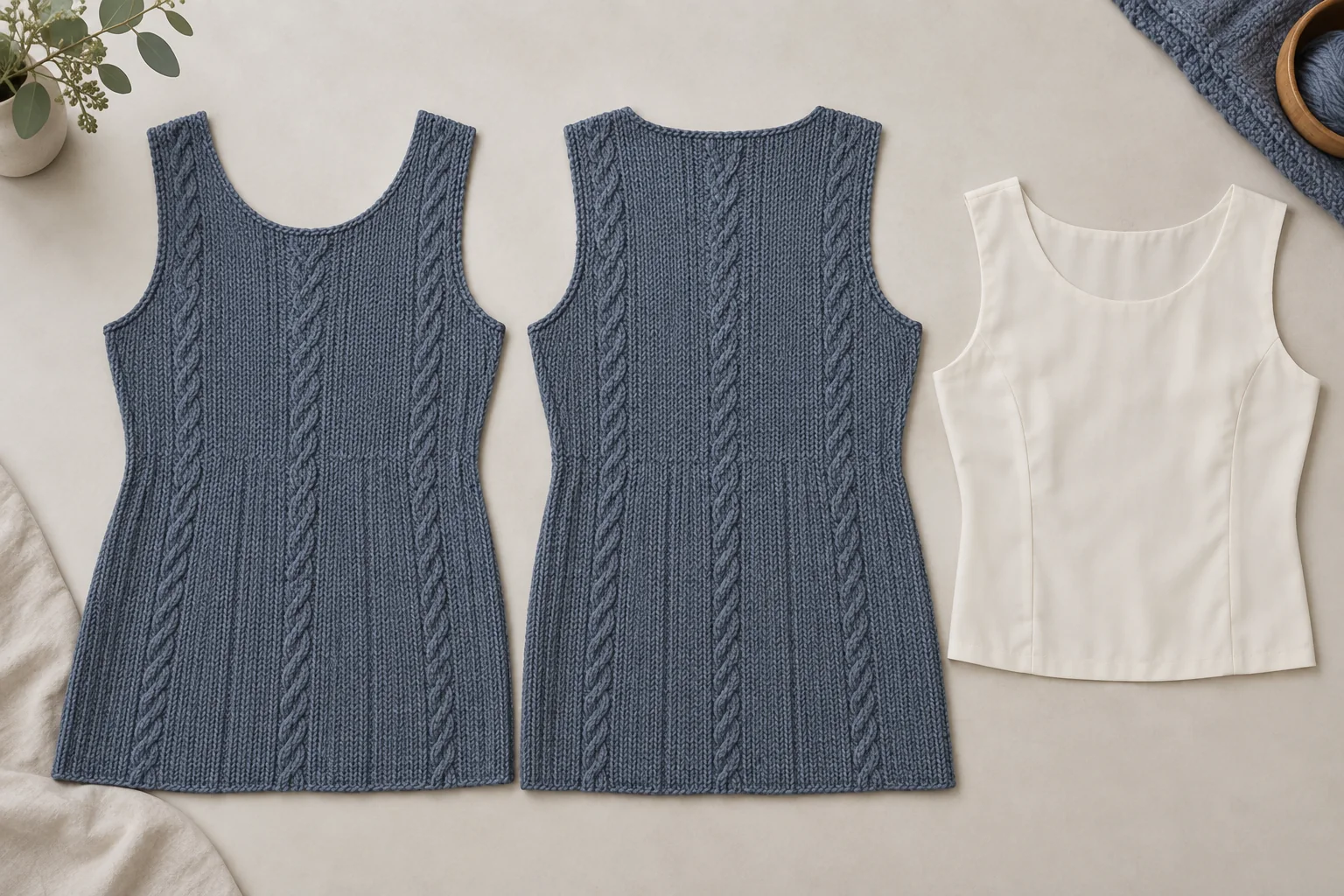
How does movement locate the affected relationship?
Observe coverage during movement
Begin with the dress resting naturally. Then perform the ordinary movements required by the brief, such as reaching forward or raising an arm. Record the opening edge, shoulder position, neckline and side seam together. A local gap can appear while the rest of the garment moves, so the edge alone may not identify the underlying issue.
If the dress shifts backwards, note whether the front opening moves with it. If the lower edge gaps while the shoulder remains settled, record that local shape. These observations help define a comparison; they do not prove which pattern or material change will solve the problem.
Keep an unadjusted view after movement. Where the wearer rearranges the dress, record the action. A restored photograph can explain the intended position, but cannot establish that the garment maintained it through the required sequence.
Identify whether the correction belongs to the edge or the body
Ask the technician to compare the suspected causes against the recorded observation. An opening that exposes an undergarment may involve its depth or curve, shoulder position, upper-body ease, band behaviour or a combination. Changing the whole armhole by one amount can affect several relationships at once.
A trial should state what changed and what remained constant. If shoulder slope and opening depth change together, describe the proposal as a combined revision. Do not credit the result to a narrower band when the body shape also changed.
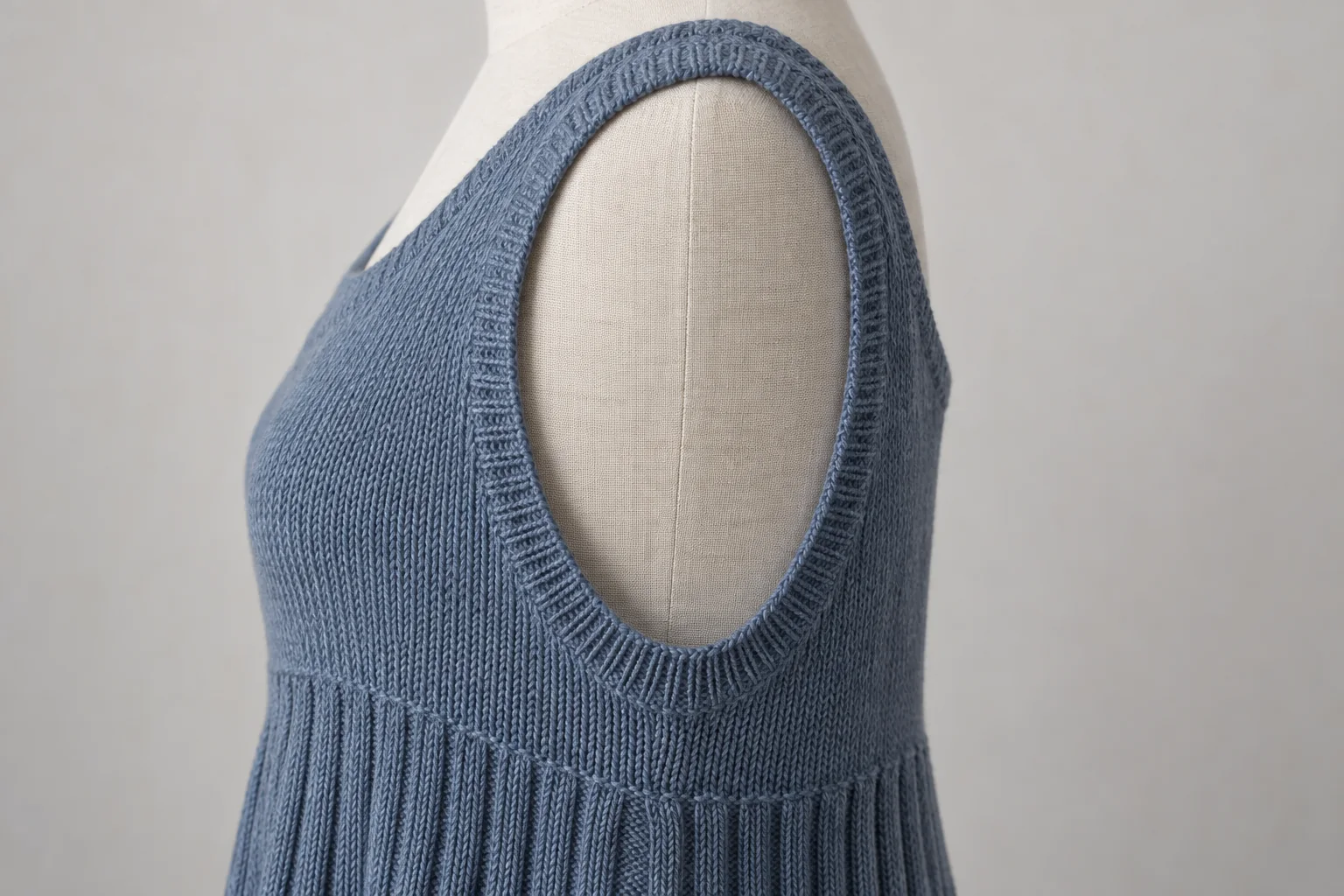
Comparing edge and lining proposals
Review the joined edge in the actual knit
A band, binding, turned finish or another edge treatment can be proposed, but its name does not establish the final behaviour. Inspect the actual yarn, joining method and finished shape on the sample. Ask for an inside view where the external photograph conceals layers or attachment details.
Record how the edge lies at rest and during the required movement. An initially firm edge may affect the opening differently from a softer one, but the decision belongs to the assembled comparison. Avoid presenting one rib structure or band ratio as universally correct for every sleeveless dress.
If a material replacement is proposed, use the yarn-substitution review to define the evidence that needs repeating. A matching fibre label or shade cannot establish identical armhole response. Keep the replacement sample distinct from the original approval reference.
Request a component comparison only when it can answer the current question. A band swatch can reveal its construction and handling, while the complete dress is needed to show coverage on the selected wearer.
Inspect where a lining starts and ends
A lining or slip may alter the visible side-body boundary, but its effect depends on the actual shape and attachment. Draw its armhole and neckline against the outer garment. State whether it is attached, removable or a separate item, and identify which component the buyer intends to supply.
Review the complete wearing system through the required movement. A lining that covers an area at rest may shift differently from the outer knit. A separate slip needs its own identity in the sample record so another reviewer can repeat the arrangement.
A lining decision can also change hand, movement and visible edge thickness. Record those trade-offs with the accepted sample instead of reducing the decision to a yes-or-no lined field.
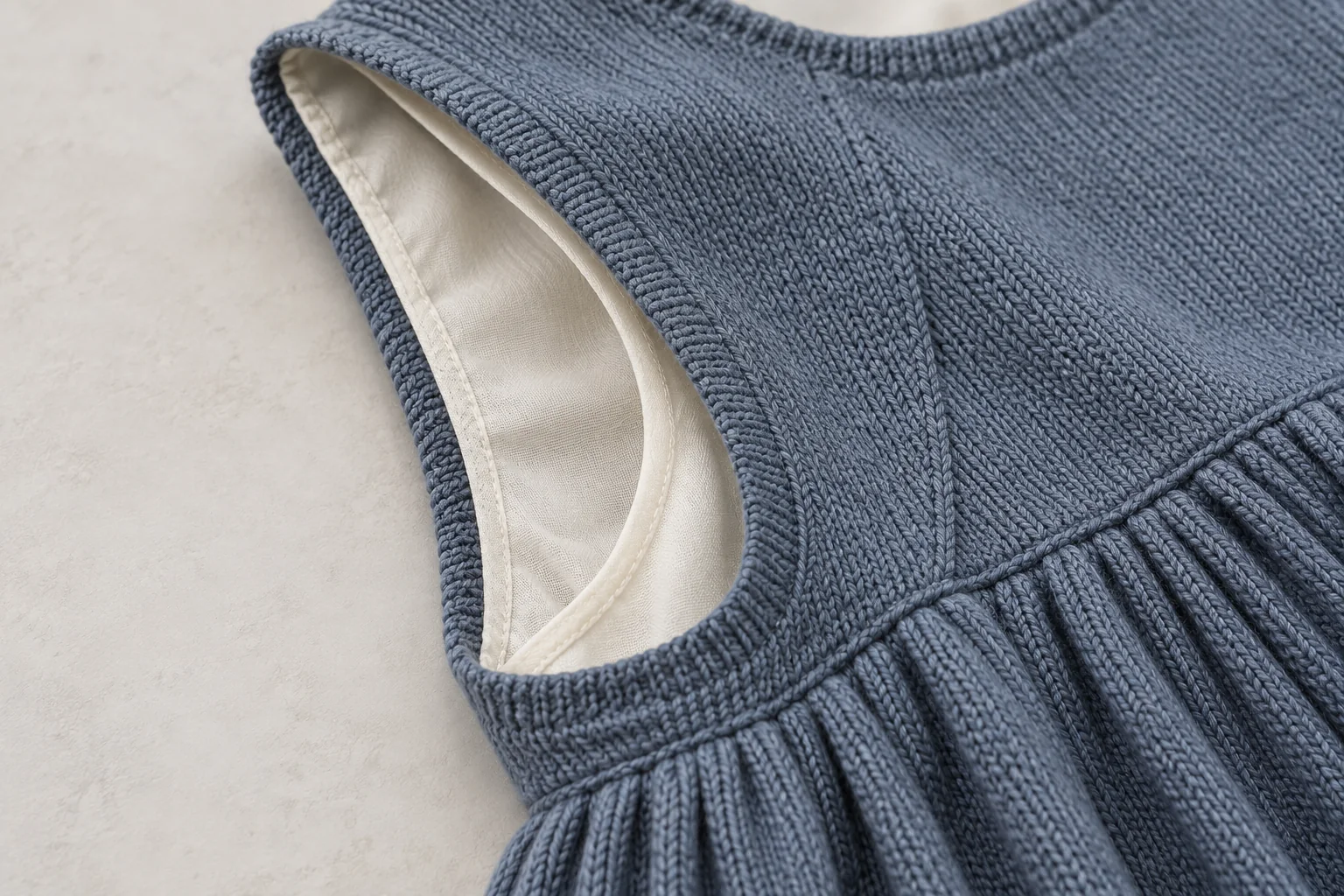
Care and size changes at the opening
Recheck coverage after care
Keep the sample’s yarn, size, construction and revision attached to its care record. Compare the same landmarks and wearing arrangement after the selected wash, dry, finish and rest sequence. Changing the undergarment or fit reference at the same time weakens the comparison.
AATCC TM150 addresses laundering-related dimensions for applicable garments. Confirm its suitability where formal testing is required. The brand’s armhole-coverage and movement criteria remain separate requirements; a dimensional test does not by itself approve them.
Record changes to the opening and the complete upper garment. If the shoulder position changes, the armhole may move even where its local edge length changes little. If the body remains stable but the band turns outward, retain that distinction for the next construction trial.
Select sizes for coverage review
Use the fit-sample and size-set distinction to separate the accepted base fit from its transfer across the range. Record how armhole depth, shoulder width, front and back curves and upper-body ease change. A chest grade alone does not specify these relationships.
Choose represented sizes around changes in the pattern or edge construction. Include a component transition where one occurs, and explain the scope each sample covers. Keep the intended undergarment arrangement appropriate to the fit reference rather than repeating one base-size item by convenience.
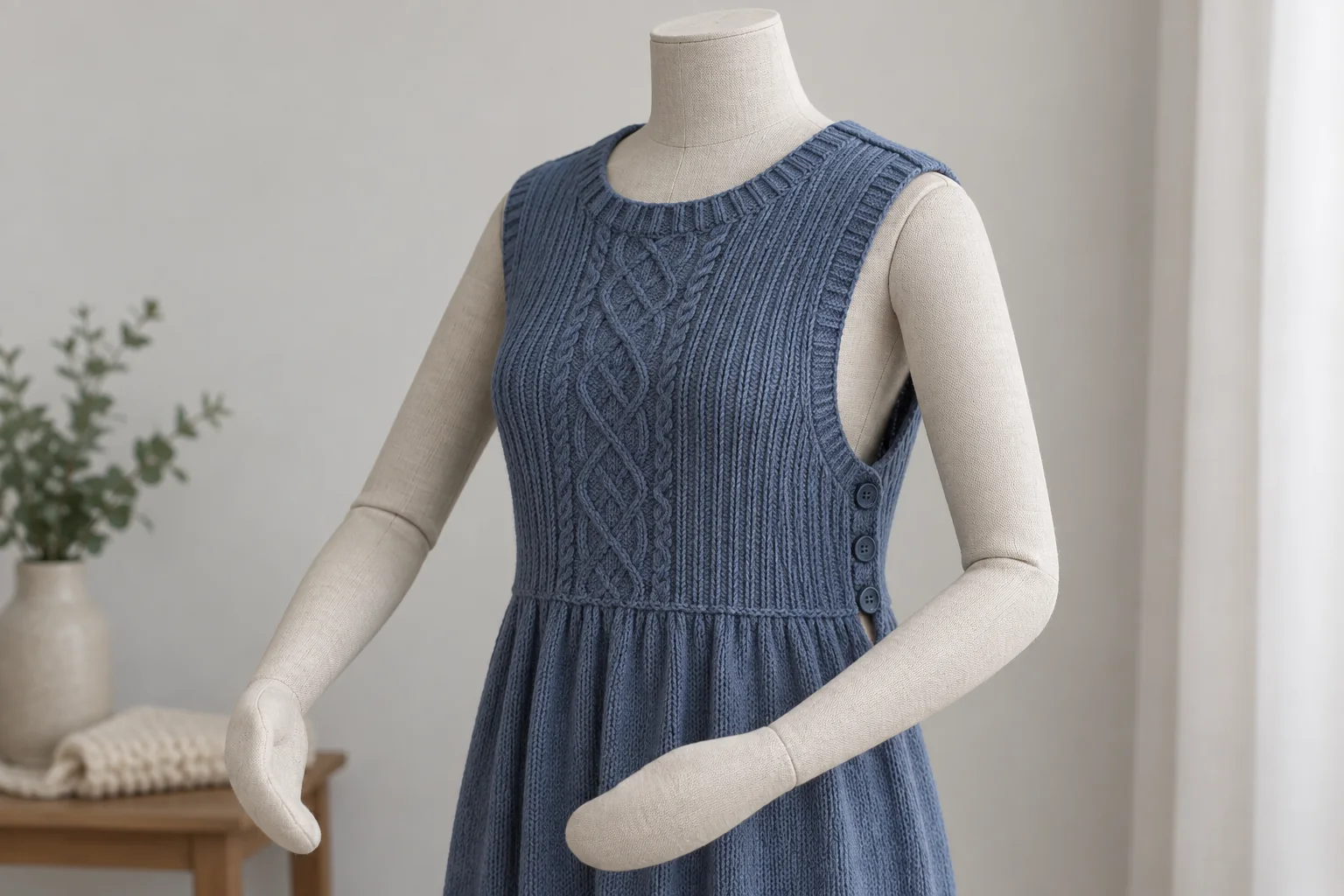
Which observation needs another sample?
Match the next action to the observed conflict
| Coverage observation | Question still open | Buyer action | Record needed next |
|---|---|---|---|
| Gap appears at the lower side at rest | Local curve or complete garment position | Compare opening landmarks and upper-body fit | Marked side view and corresponding dimensions |
| Front edge exposes more during reach | Edge movement versus shoulder displacement | Review the connected movement sequence | Unadjusted front and side views |
| Back opening catches an undergarment | Curve, layer position or edge construction | Compare the actual wearing arrangement | Rear view with identified garments |
| A firmer edge reduces exposure but restricts use | Coverage and movement requirements conflict | Compare another construction or shape proposal | Accepted trade-off on a handled sample |
| Lining moves away from the required area | Lining shape or attachment is unresolved | Review the assembled wearing system | Outer and lining references through movement |
| Post-care or graded versions differ | Original approval has a limited scope | Hold the affected version for comparison | Updated care or size evidence |
Put the accepted opening, edge and lining details in the knitwear tech pack. Pair that drawing with the fitting views of the same revision.
For a sampling discussion with CNSweaters, provide the current dress drawing, undergarment reference and unadjusted fitting views. Add the specific observation you need the next sample to resolve when you share your dress armhole coverage brief.
Frequently Asked Questions
Does a smaller armhole always provide better coverage?
A smaller opening changes its relationship to the shoulder, upper arm and body. It may address one gap while creating restriction or displacement elsewhere. Identify the affected edge and compare the proposed change through the required wearing states, rather than reducing the whole opening without a defined reason.
Can a mannequin replace all wearer observations?
A form can support repeatable positioning and static comparisons. It does not reproduce every movement or undergarment relationship required by the product. Define which questions the form answers and which need the selected wearer, then retain those limits with the sample record.
Can the same armhole be used for every knit structure?
It can be proposed, but each actual construction needs relevant evidence. Yarn, stitch arrangement, edge treatment and finish can change the assembled relationship. Keep the drawing constant when comparing those inputs where practical, and record any combined changes so the result remains interpretable.
Is a photograph enough to approve a lining proposal?
It can show visible coverage in the recorded state. It cannot establish attachment, hidden edge position or movement without further views and sample handling. Identify the lining component and review it together with the outer dress before approving the required wearing system.