 CN Sweaters
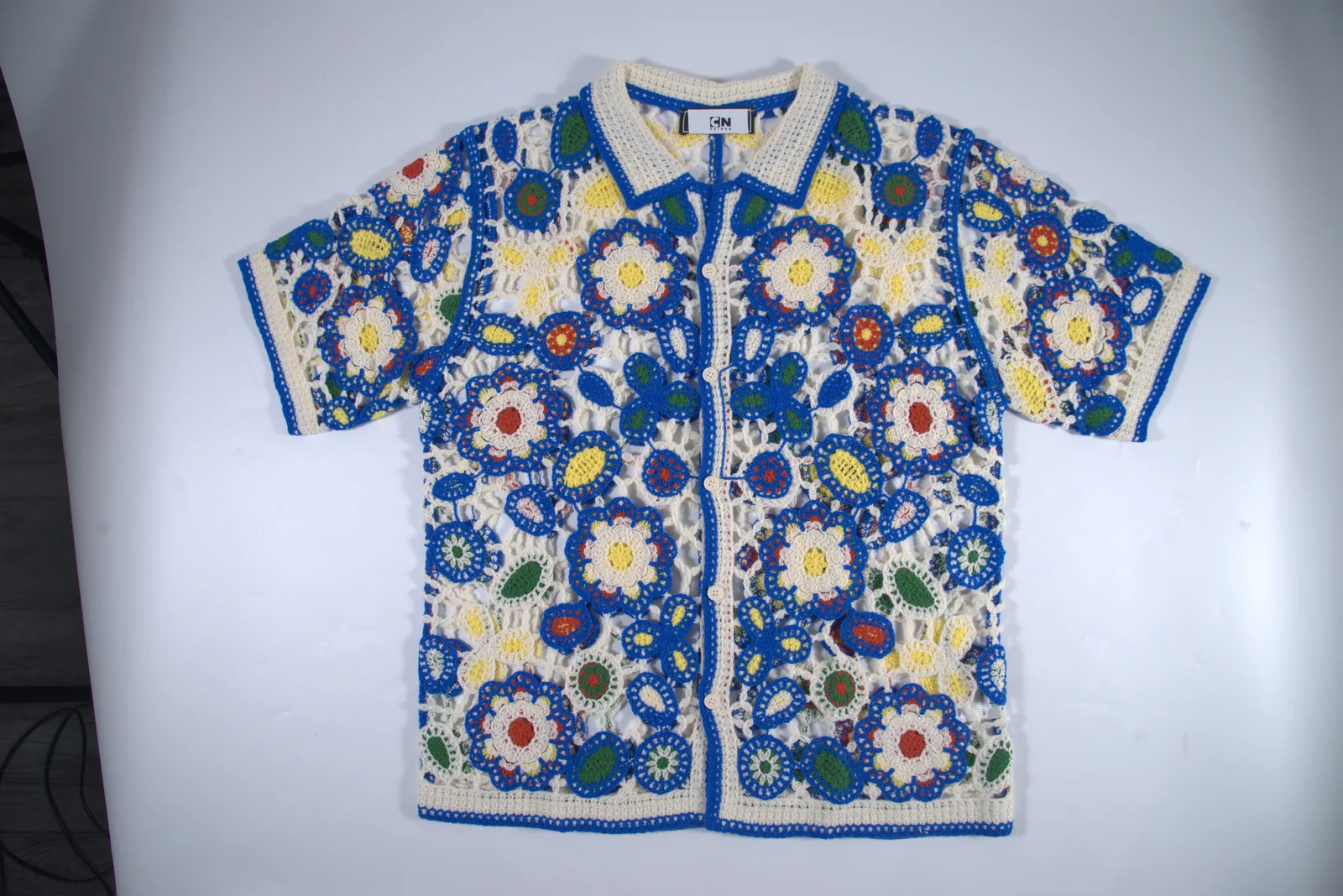
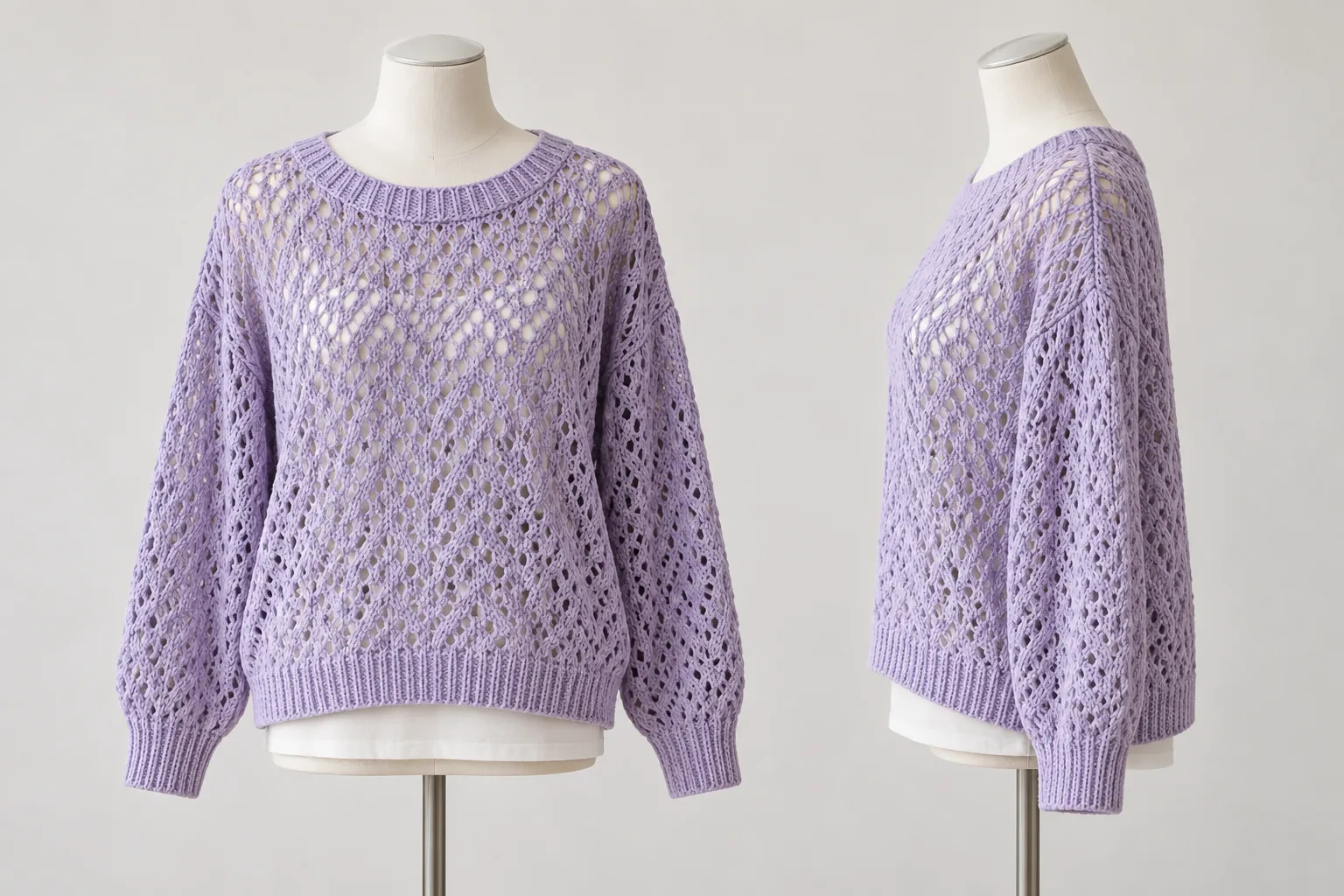
For a customer, an open-knit sweater pictured over a camisole can look like a complete outfit even if the underlayer is not supplied. The buyer should settle that product definition first, then map what each front, back, sleeve and side zone should reveal over the named layer. Keep colour, fit and lighting consistent when approving that appearance.
Which open-knit sweater zones need a coverage decision?
Name the open-knit sweater zones by garment landmarks
Start with the front, back, shoulders, armholes, sleeves and lower body. Divide a zone further only when the construction or product requirement changes. Use landmarks that a sample room and buyer can locate on the same garment.
Identify the expected role of each area. The buyer may accept more openness in a sleeve than in the front body. Design may use a closed band to frame an opening and another zone to reveal the named underlayer.
Avoid writing “opaque” over the whole drawing when the garment is intentionally open knit. Describe the visible relationship and the condition in which the buyer accepted it. If the buyer requires a performance claim, identify the separate evidence and method needed to support it.
Connect open-knit sweater coverage with fit and motif
Record the motif’s position on the intended wearer or form. A flat programme drawing alone cannot show the openings over the selected body block.
Keep those references connected to shoulder, chest, armhole and length measurements. If a motif appears lower on another size, ask whether placement, fit or the measurement origin changed before treating it as a knitting defect.
Which underlayer defines the open-knit sweater comparison?
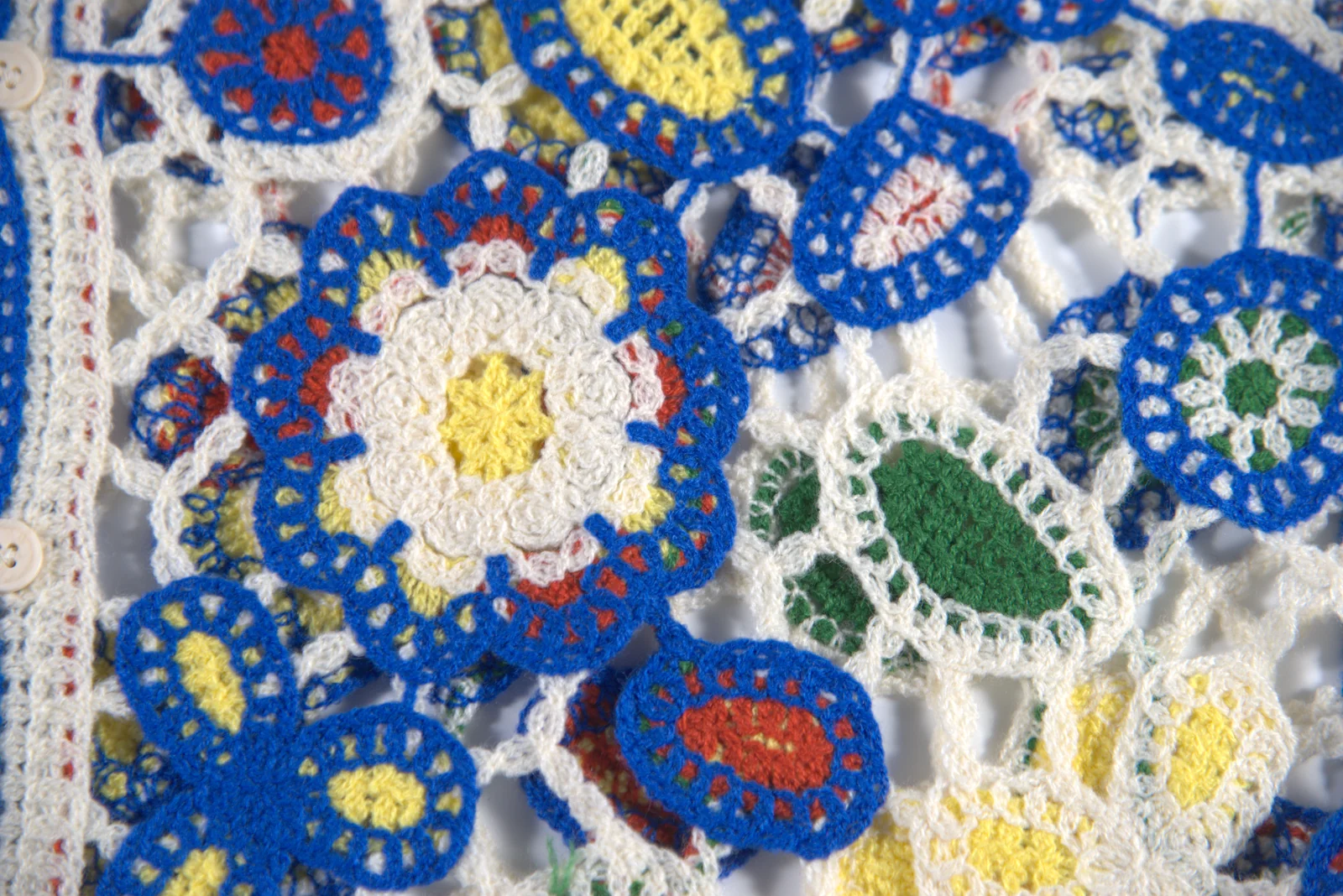
Record what comes with the open-knit sweater
State whether the buyer will sell the sweater alone, with a separate underlayer, with an attached layer, or as part of a coordinated outfit. The technical review should distinguish the supplied product from a suggested styling combination.
Record the underlayer’s colour, shape and relevant coverage. If the buyer will not supply it, identify the development reference and the appearance it supports. Other customer-selected layers may look different.
When the garment has an attached lining or closed insert, include it in the sample identity. An unlined sample can inform early decisions, but it cannot approve the complete lined construction.
Set equivalent views of each open-knit sweater
Document the backing or underlayer, lighting arrangement, garment placement and views needed for the comparison. Exact equipment instructions depend on the method chosen by the team; do not invent them to make an informal review look standardized.
This worksheet checks whether the coverage record is sufficiently defined.
| Map entry | Information to retain | Comparison condition | What remains limited |
|---|---|---|---|
| Front body zone | Motif boundary and intended visual coverage | Named size, fit and underlayer | Other body blocks or styling combinations |
| Back or shoulder zone | Programme placement and surrounding closed areas | Agreed front/back presentation | Areas hidden by hair or an unrelated layer |
| Armhole and side zone | Edge construction and nearby openings | Relaxed and specified worn state | Unrepresented movement or extension |
| Sleeve zone | Intended openness and motif arrangement | Approved arm position and background | Different sleeve styling |
| Underlayer relationship | Supplied or reference-only identity | Actual recorded colour and shape | Customer-selected alternatives |
| Image record | Sample revision, view and viewing setup | Unedited technical comparison | Retouched campaign imagery |
How does the open-knit sweater change during movement?
Separate intended opening from unintended distortion
An open-knit programme deliberately includes openings. The question is whether their appearance and placement remain consistent with the product brief in the reviewed states.
Observe the relaxed sample, the worn or on-form condition, the defined movement and the return to rest. Record which change is temporary and which remains after the agreed rest. Avoid presenting the most open instant as though it were the permanent state.
If an edge or attachment pulls a zone, record the adjoining construction. A local opening change may require examination of the boundary rather than a complete redesign of the motif.
Use the approved form or wearer and the intended ease. If a reviewer uses a different wearer or form, label that change. The photograph alone may not reveal the different fit condition.
Check the side and armhole views as well as the front. The front can look acceptable while a side zone becomes more open during reach. Preserve the normal movement chosen for that observation.
Which open-knit sweater colours and sizes need review?
Select combinations for a stated reason
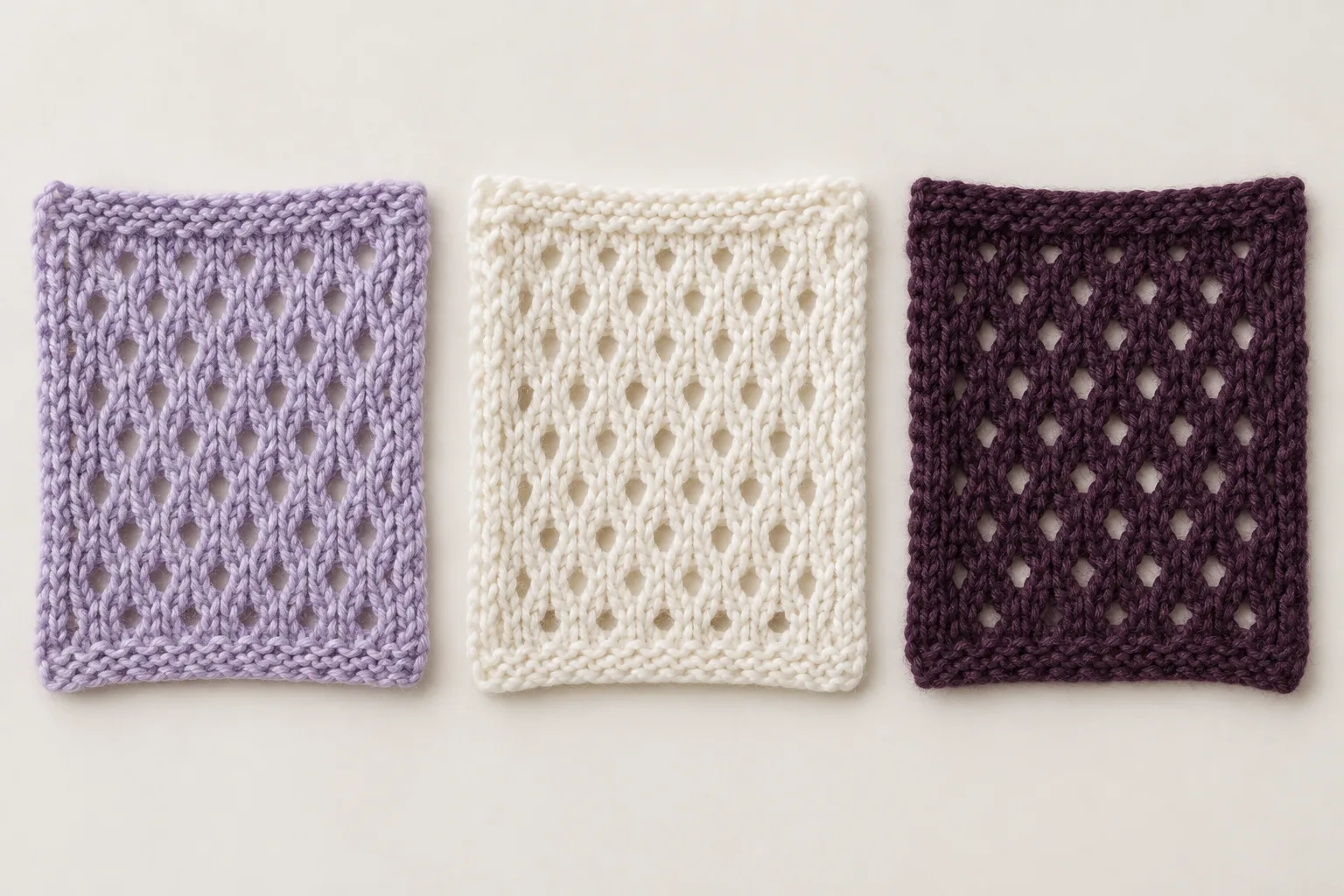
Create a list of the proposed sizes, colours and any material or finishing variants. Identify which combinations have physical samples and which remain represented by another sample.
Record the yarn, finish and size relationships used to group samples. A shared programme alone does not establish equivalent fit, colour contrast or finishing state. Ask the technical and design teams which variables are relevant to the coverage decision.
Do not declare that the palest colour or largest size is always the worst case. The comparison depends on the garment, background, fit and route. Record the reason for selecting a combination and preserve the observations that support it.
Where another colour has a different finish or yarn item, identify that difference before extending the earlier conclusion. Where another size shifts the motif, request the relevant programme and fit comparison.
How should care and material evidence enter the map?
Compare open-knit sweater zones before and after care
Record the selected care process, drying or support, finishing interventions and the state used for the final observation. Preserve the map coordinates so reviewers examine the same areas.
AATCC TM150 covers garment dimensional change after home laundering. It does not supply a coverage limit for the sweater. The team should distinguish a dimensional result from a visual coverage decision.
Look at edges, joins and motif transitions as well as the centre of the open field. A changed boundary may alter placement even when an isolated aperture appears similar.
How should technical and retail images remain consistent?
Preserve the unedited approval views
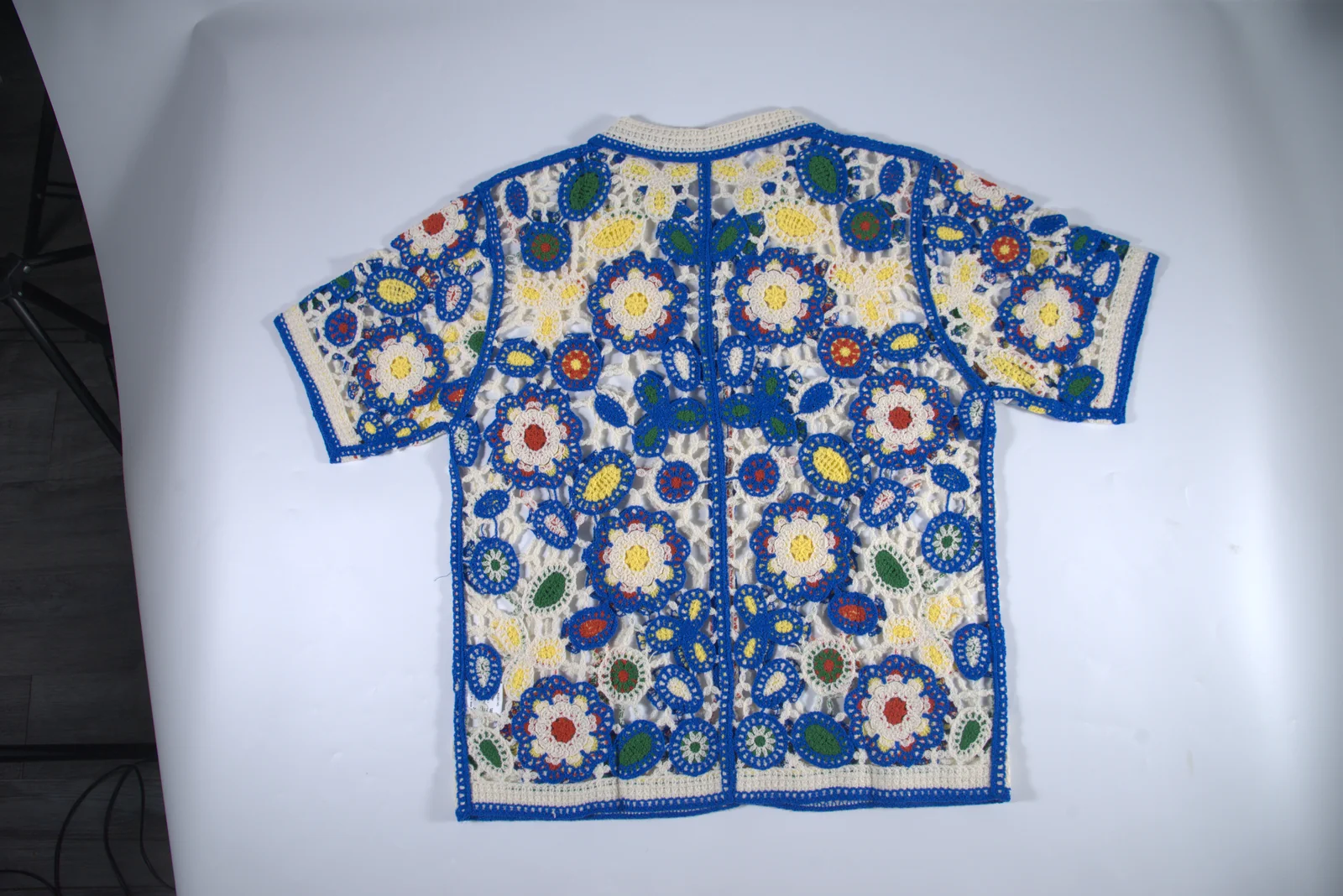
Retain the original image set used for the coverage decision, with the sample identity and viewing conditions in its associated record. A crop or contrast adjustment may change what a reviewer notices.
Campaign images may serve another purpose, but they should not replace the technical evidence. If the styling team uses a different underlayer or pose, document that as another presentation rather than implying it was the reviewed condition.
The buyer should check whether the product description matches what is actually supplied. An underlayer visible in every image can create an expectation even when it is not included in the order.
Separate unintended damage or missed structure from approved design openings. The visual reference should make the distinction clear enough that an inspector does not need to guess the designer’s intention.
When packing the sweater with a separate underlayer, preserve the component pairing in the product records and packing instructions. Pairing the sweater with another underlayer colour or shape may change the approved presentation. Ask the packing team to confirm the supplied combination against the product record before shipment.
Use the following table to assign a bounded next step.
| Observation | Question to resolve | Next action | Closing record |
|---|---|---|---|
| One zone opens more only on a different wearer | Whether the fit condition is represented | Repeat with the specified form or body block | Comparable fit and zone views |
| Motif shifts at a size transition | Programme placement versus grading | Review that size’s map | Updated programme and physical size comparison |
| A new colour looks more transparent | Contrast, material or finish difference | Identify inputs and repeat the agreed setup | Colour-specific observation and representation decision |
| Edge movement exposes another band of openings | Boundary construction and fit | Correct or reapprove the zone relationship | Revised edge and worn-view record |
| Appearance matches only in a retouched image | Reliability of the approval evidence | Return to unedited technical views | Accepted original comparison |
| Underlayer in imagery differs from the supplied product | Product definition and presentation | Align specification and retail information | Confirmed supplied components and approved presentation |
For a reorder, compare changed inputs before applying the earlier map. A new material, finish, grade or product presentation may reopen only selected zones; identify those dependencies rather than repeating unrelated work.
Prepare the coverage-zone drawing, actual underlayer, selected colour/size samples and unedited comparison views when you contact CNSweaters about an open-knit sweater project. Name the zone whose appearance changes and any combination still awaiting review.
Frequently Asked Questions
Can a photograph establish a universal opacity level?
No. It shows appearance under particular lighting, backing, fit and image conditions. A wider claim needs appropriate evidence.
Must every colour and size be sampled?
The responsible team should define a justified representation plan. Missing combinations should not become approved merely because they share a style code.
Can a body swatch replace a worn coverage view?
It can support selected material questions. It does not show the assembled garment’s placement or fit on the represented body.
Does every comparison need a contrasting underlayer?
Use the conditions chosen for the intended comparison. Contrast may be useful for a particular question, but it should not be introduced without recording its purpose.
What should change when an underlayer is removed from the product?
Review the product definition, covered zones and presentation. Earlier approval of the combined set may no longer represent the sweater sold alone.