 CN Sweaters
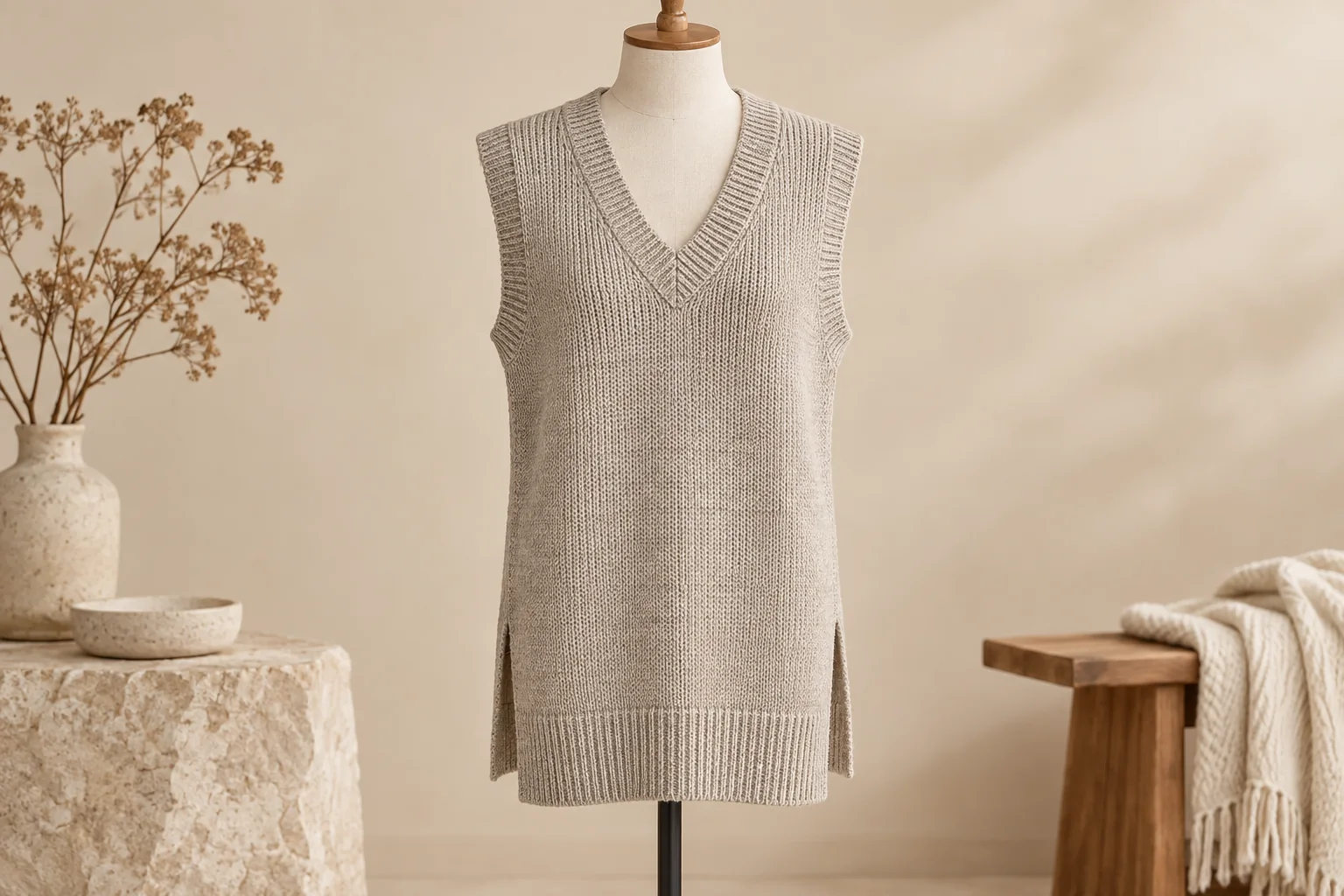
A long sweater vest that catches at the hip when a customer sits may need a different side opening rather than a longer hem. Review it over the trousers or skirt the brand expects beneath it. Procurement must choose a marked hem, hip clearance and slit relationship on that outfit; the hanger length is only one input.
Begin with the named underlayer and intended lower-body garment. Mark where the front and back hems should sit on that wearer, whether the sides are closed or slit, and how the vest should fall during walking and sitting. Those decisions allow the sample room to interpret a fit comment. “Make it longer” is not enough to define whether a revised vest still has the silhouette the brand chose.
What length makes this long sweater vest usable?
Anchor the long sweater vest hem to the wearer
A label such as longline does not establish where the hem belongs. On the selected wearer, identify whether the front is meant to stop at the upper hip, below the fullest hip or at another agreed landmark. Describe the back separately if it is intentionally longer. Then record the flat garment lengths from marked origins. A buyer can ask for a full front, back and side view on the intended underlayer instead of relying on a crop of the upper body.
State whether the piece is a vest or a dress
A long vest may be worn over trousers, a shirt or another layer. A vest dress has a different coverage and lower-body brief. Do not let the length alone rename the product or substitute for coverage checks. Record the styling and wearing condition the buyer intends. If the product is meant to function independently as a dress, give it the appropriate dress specification and fit review. The sleeveless jumper and vest comparison helps describe product roles without giving a finished hem value.
For a vest, specify how much of the underlayer should remain visible, whether the hem is meant to skim or clear the hip, and whether the wearer may sit with it closed at the side. The base sample should be judged with that outfit. A garment that slides upwards to find hip room has not achieved its planned longline shape simply because its flat length meets the drawing. Save both the unadjusted resting view and a corrected styling view so the fit team can distinguish construction from the way the photograph was arranged.
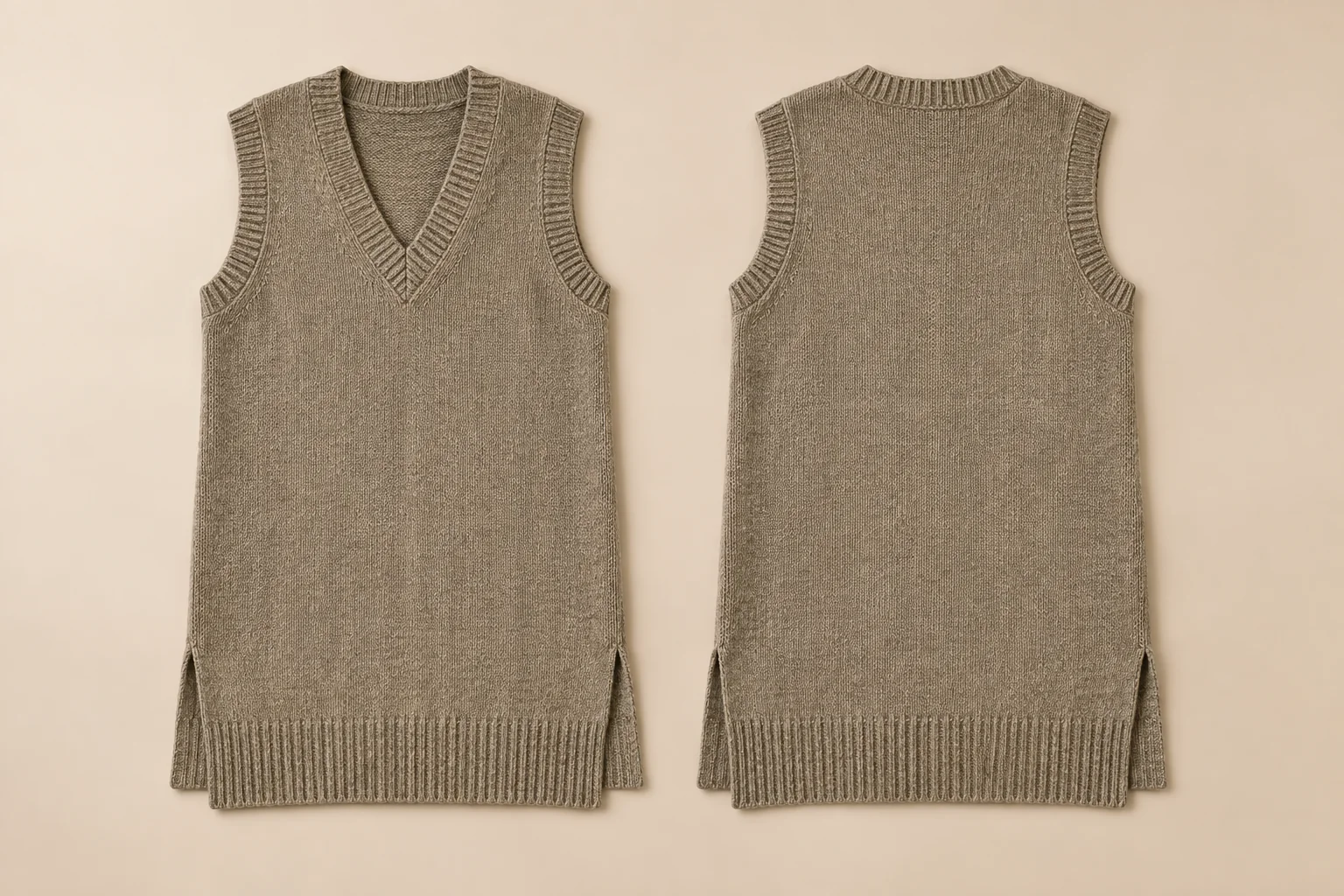
Which long sweater vest inputs define hip clearance?
Compare long sweater vest, wearer and underlayer dimensions
Record the target wearer’s hip and waist reference separately from the vest’s finished width. Include the thickness and length of the stated underlayer. A long vest that clears a tee may not clear a bulky shirt or another knit, and a wider hip measurement alone may fail if the side slit starts in the wrong place. Identify whether the product is intended to rest against the body, stand away from it or move freely over another piece.
The first table records what must be fixed before the buyer compares long-vest proposals.
| Layering reference | Record on the sample brief | Comparison it enables | Owner or limit |
|---|---|---|---|
| Intended use | Underlayer and lower garment | Tests actual layering clearance | Brand chooses outfit |
| Body landmarks | Waist, fullest hip and hem target | Locates the length on wearer | Fit team identifies model |
| Garment measures | Front/back length and hip width | Compares finished samples | Technician marks origins |
| Side opening | Slit start, finish and edge route | Checks movement and coverage | Designer approves boundary |
| Material state | Yarn, knit, finish and care revision | Interprets length change | Sample room identifies version |
| Size map | Sizes and construction transitions | Finds grading risk | Buyer selects review set |
Keep the side seam from hiding a clearance problem
A side seam that pulls forward can make the front hem appear shorter even when flat lengths match. Check the side view before asking for more front length. If the hem grips the upper thigh when the wearer sits, decide whether the issue is width, a misplaced slit, edge tension or the use case itself. A slit may improve movement but change how much side body and underlayer are exposed. Approve its top point and finished edge as part of the silhouette, not as an automatic remedy.
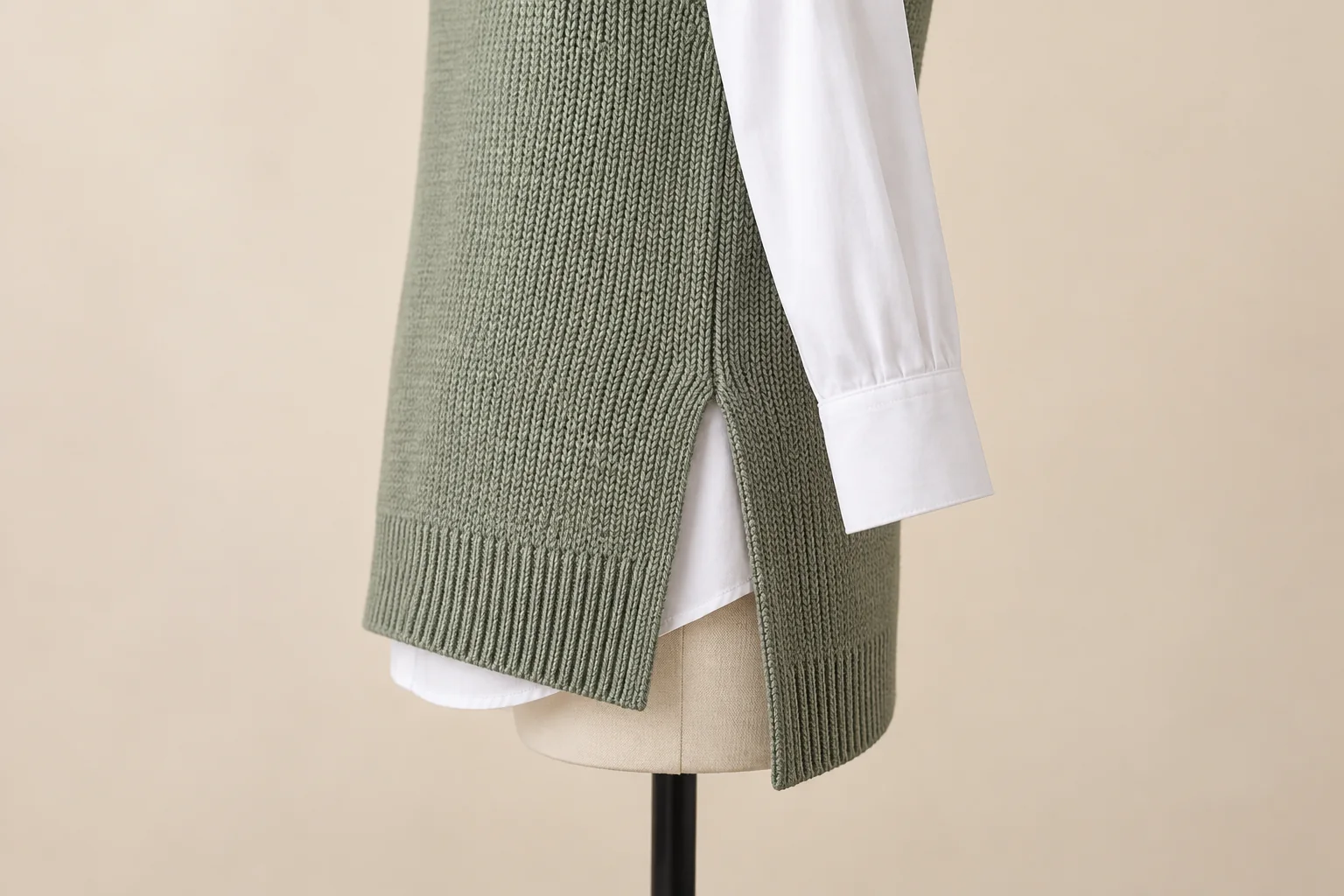
How should a long sweater vest side slit be chosen?
Decide what the opening is meant to solve
A slit can create hip movement, preserve a straight silhouette or expose a chosen underlayer. Name its job before sampling. If it is functional, test the actions it should allow; if it is visual, compare its line and how it falls at rest. A deep opening that lets the vest move may also reveal more side body than the brand accepts. The buyer should specify the upper end position and how the edge is finished in relation to the hip landmark.
Compare a no-slit or shorter-slit alternative only when it answers a defined clearance question. Keep body width and material the same where practical, so the result shows what the changed opening contributes.
Inspect the slit after normal movement
A flat slit can lie neatly while its upper corner opens or curls after walking. Photograph the side at rest, in a step and seated. Record whether the hem rises or the side seam rotates. If the slit edge pulls, check its knit structure and finish before extending the opening. If the slit stays flat but the garment catches over the hip, consider width and length instead. The observation belongs to the actual wearer and underlayer condition.

Which long sweater vest care states matter for length?
Compare the full garment in an identified state
A long knit hangs through more body length than a short vest. Record how the sample was stored, finished and rested before taking its measurement. Compare the same identified garment before and after a planned hanging or care observation; avoid reading a quick, freshly steamed value as the final wearing position. If a comparison uses separate garments, identify them and explain the limitation. Material, stitch and length can all contribute to the resulting shape.
AATCC TM150 addresses garment dimensional change after home laundering for applicable garments, with a stated limitation for some stretch fabrics. A development hanging observation is not the same as a completed TM150 test. Keep its method, condition and purpose separate. A front/back length reading may be useful, but the buyer also needs the worn hem and slit views. The measurement-tolerance guide explains how accepted dimensional differences are agreed for a particular product.
Check whether the lower shape stays intentional
After care or hanging, compare hem level, hip clearance, side seam and armhole position on the same reference body. A vest can gain length yet keep a pleasing longline outline, or retain measured length while losing its straight lower-body shape. Do not reduce those findings to a single percentage. Record the desired appearance and any measured values separately. If the yarn, finish or stitch proposal changes, repeat the affected comparison instead of assuming a previous result applies to the new version.
How should the long sweater vest be graded?
Map hem and hip changes by size
A fixed garment length may land at different body locations across the offered range. A fixed addition per size may also alter the planned longline proportion. Decide the target hem landmark for the population served by each size group, then map hip width and slit position alongside front and back length. The grade-sizes guide provides the general distinction between a base fit and a graded rule. This vest needs its own lower-body map.
Review lower, base and upper sizes, adding a transition size when a slit length, panel count or knitting program changes. Use corresponding wearer or form references and the same underlayer. Check the unadjusted side view as well as flat dimensions. A size that catches over the hip while neighbouring sizes move freely may need a targeted grade change, not a new universal width rule. Record the exact body and garment values; size labels alone do not tell the technician how to preserve the hem position.
Keep the armhole and shoulder in the range review
Length and hip clearance are the focus here, but the vest still hangs from its shoulders. A wider lower body or deeper side opening can change how the upper vest moves on a wearer. Review shoulder position, armhole exposure and neckline after the intended actions. If the garment slides while the hip is clear, do not enlarge the lower body further without checking the support path. The fit-sample and size-set guide can help the buyer retain size-specific physical references.
Keep the distinction between a grade and a tolerance. The grade says how the hem, hip and slit are intended to change. A tolerance says what measured variation is accepted at each size. Neither can rescue a poorly located hem target. The buyer should approve the body landmarks and physical wearing results first, then define manufacturing acceptance against those references. If one size uses a different slit construction, show that exception in the grade map rather than hiding it in a general note.
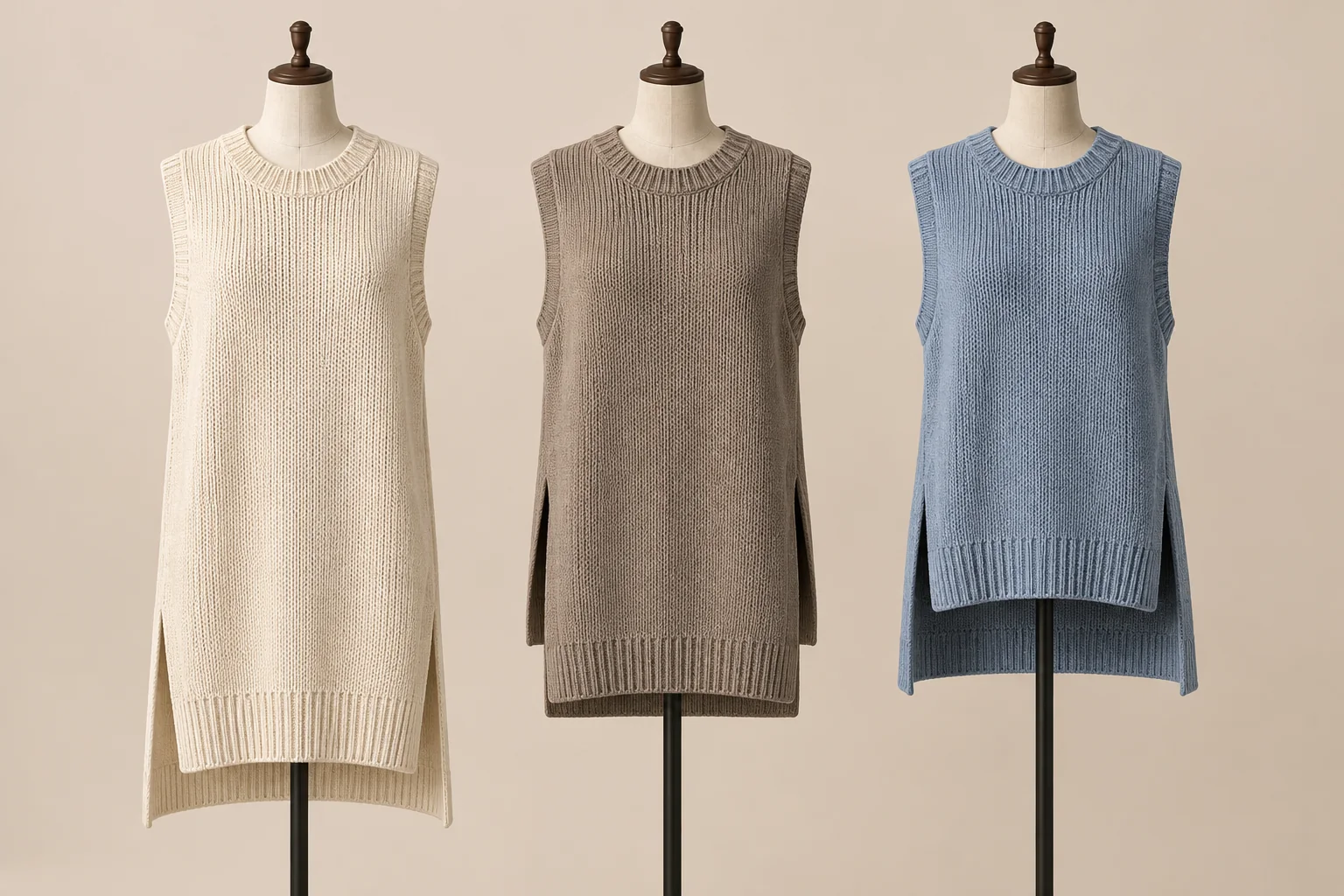
What evidence closes the long sweater vest decision?
Turn the observed difference into the next sample request
The second table converts a physical observation into a bounded action. It does not propose a universal hip-ease or slit-depth value.
| Hem or hip finding | Relationship to investigate | Buyer decision | Closing record |
|---|---|---|---|
| Hem catches while seated | Hip width, length or slit | Hold wear approval | Same-outfit seated views of revision |
| Side seam swings forward | Front/back balance and hip | Review panel relationship | Flat and worn side views |
| Slit opens above target | Slit endpoint or edge response | Trial a shorter/changed opening | Marked resting and walking views |
| Front length grows after care | Material and finish state | Reopen that version | Identified pre/post-care measures |
| One size loses longline proportion | Hem and hip grade | Revise that size group | Size-specific drawing and sample |
| Upper vest shifts as hip is cleared | Shoulder and armhole support | Review full vest system | Front/back action sequence |
Frequently Asked Questions
Is a long vest the same as a sweater vest dress?
No. Decide the intended use and coverage. A vest layered over another outfit and a dress worn independently require different lower-body and exposure checks.
Can hip width alone fix a catching hem?
Not always. Review the length position, side seam, slit and chosen underlayer in the same wearing state before specifying a wider lower body.
Does every long vest need a side slit?
No. A slit serves a named movement or visual purpose. A no-slit design can pass if it clears the wearer and keeps the intended silhouette.
When should the size set add a transition sample?
Add one when the program, side-opening construction, panel count or grading rule changes. Select by the risk to the product rather than a fixed universal number.
Does an approved base sample release all colours and yarns?
Only the identified construction and material were reviewed. Recheck affected hem, hip and edge relationships when the proposed yarn or finish changes.
The reference sample should show the hem with its actual lower garment, standing and seated. If a side slit changes, record its position and effect on hip clearance separately from length. The CNSweaters long-vest enquiry can carry the marked hem map and the remaining outfit condition that the next sample must resolve.