 CN Sweaters
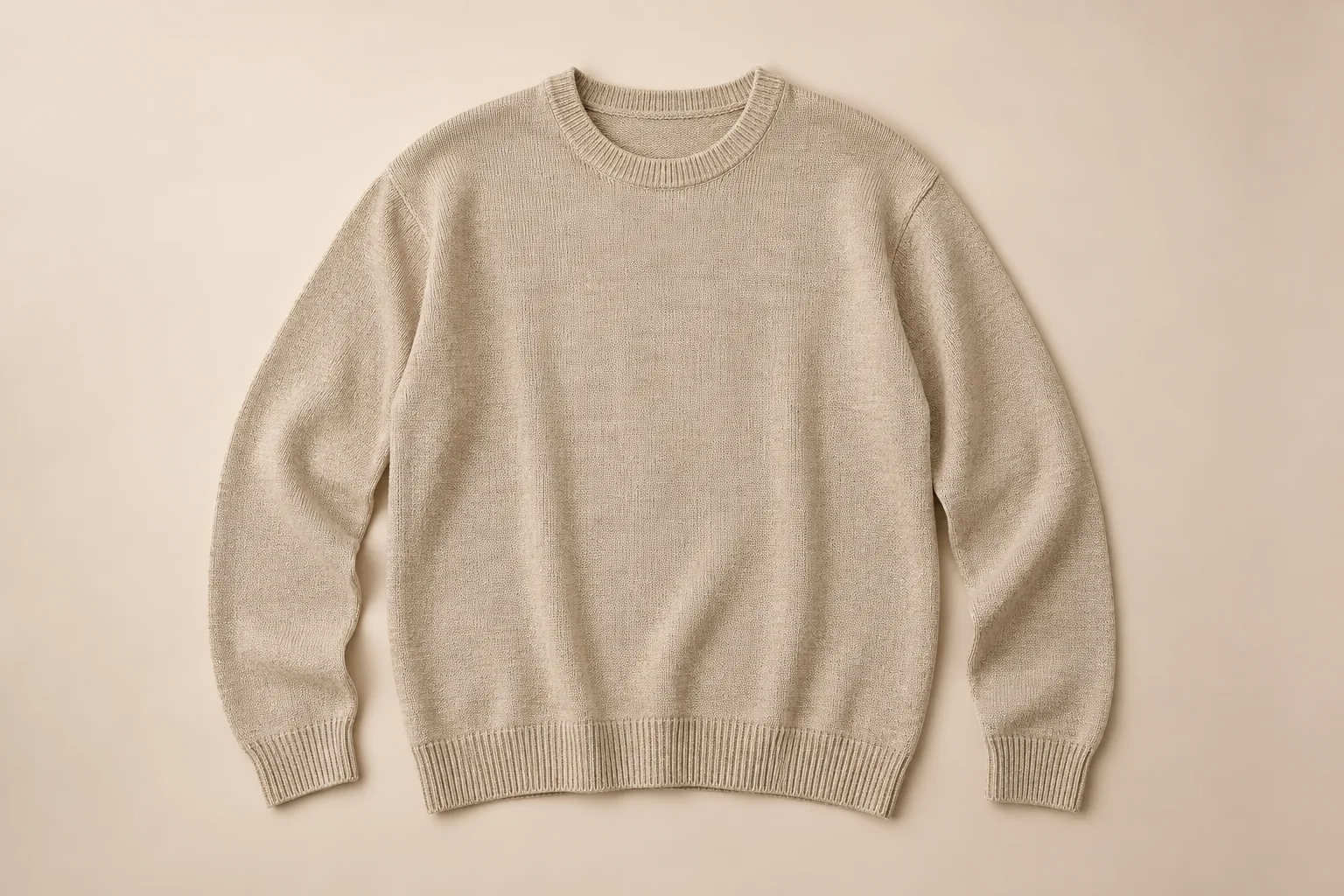
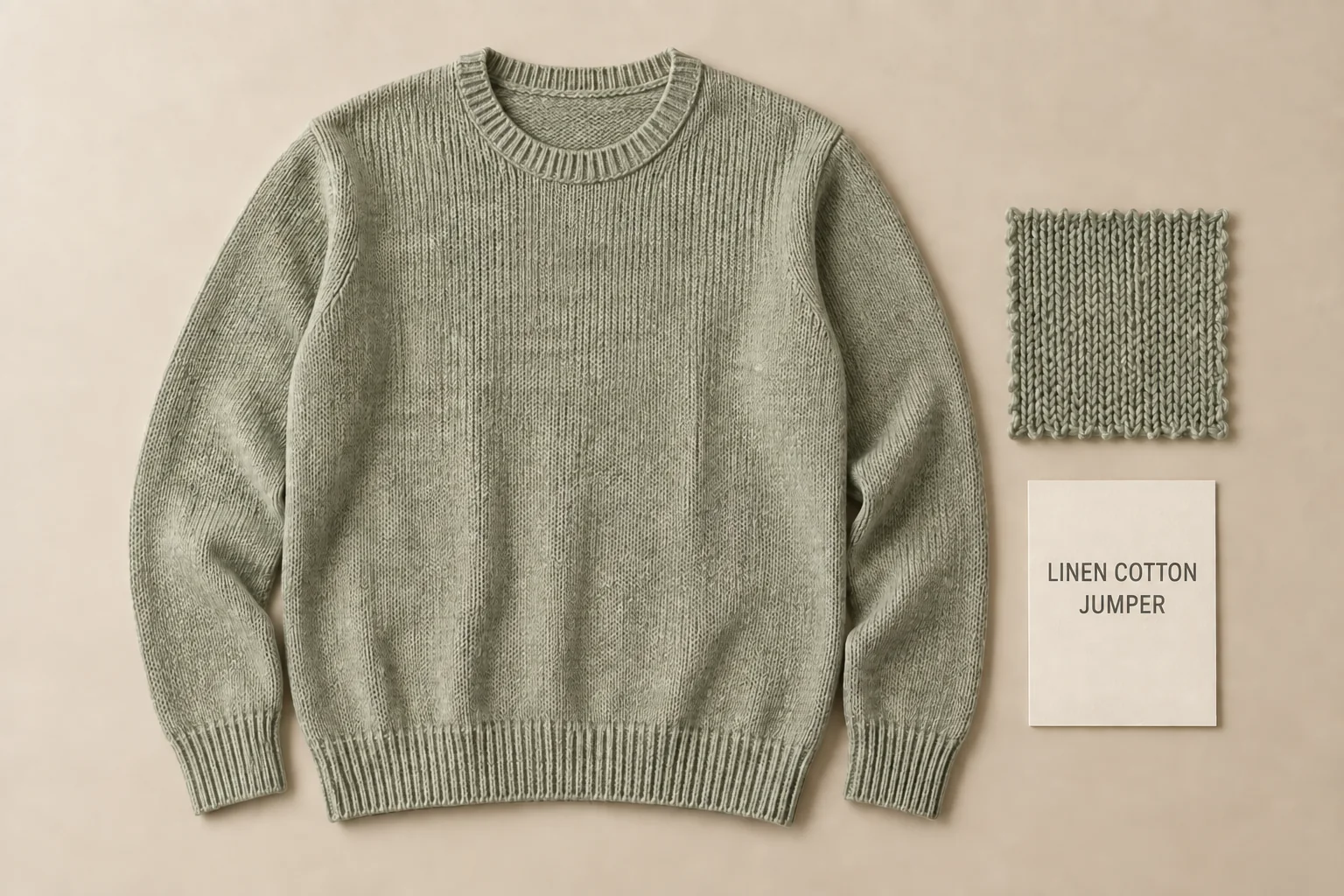
Two quotes for a linen cotton jumper can name the same fibre ratio yet describe yarns that knit into different surfaces and finished weights. Procurement needs the supplier item, construction and finishing route behind each option before choosing a blend. Put both candidates on one pullover brief and compare complete garments after the same care route; a swatch or percentage alone cannot approve the product.
What question should the linen cotton jumper trial answer?
State the required garment result
“More linen” or “more cotton” is not a testable approval instruction by itself. The brand may want a lighter layer, a drier-looking texture, a certain drape or a particular after-care silhouette. Put the desired observable result into the brief, along with the features that must not be lost. A long relaxed jumper and a cropped structured pullover may call for different balances even when their composition declarations look alike. Ask the sample room to make the same style reference for the compared options.
Choose what will remain fixed
For an interpretable first comparison, keep the target pullover measurements, neckline route, sleeve construction and stated care condition fixed where practical. If the candidate yarn needs a different gauge or stitch length to make a usable fabric, record the change rather than pretending that only the blend moved. Request the supplier’s actual yarn identification and composition documentation for every option. A later team cannot trace a generic swatch marked “cotton linen” through a size set.
Code each proposed yarn and keep its declaration, shade, construction and sampled finish together. Mark missing details as pending. State whether the next comparison isolates one input or deliberately compares complete routes.
Identifying yarn, knit and finish options
Record yarn, stitch and finish as one identity
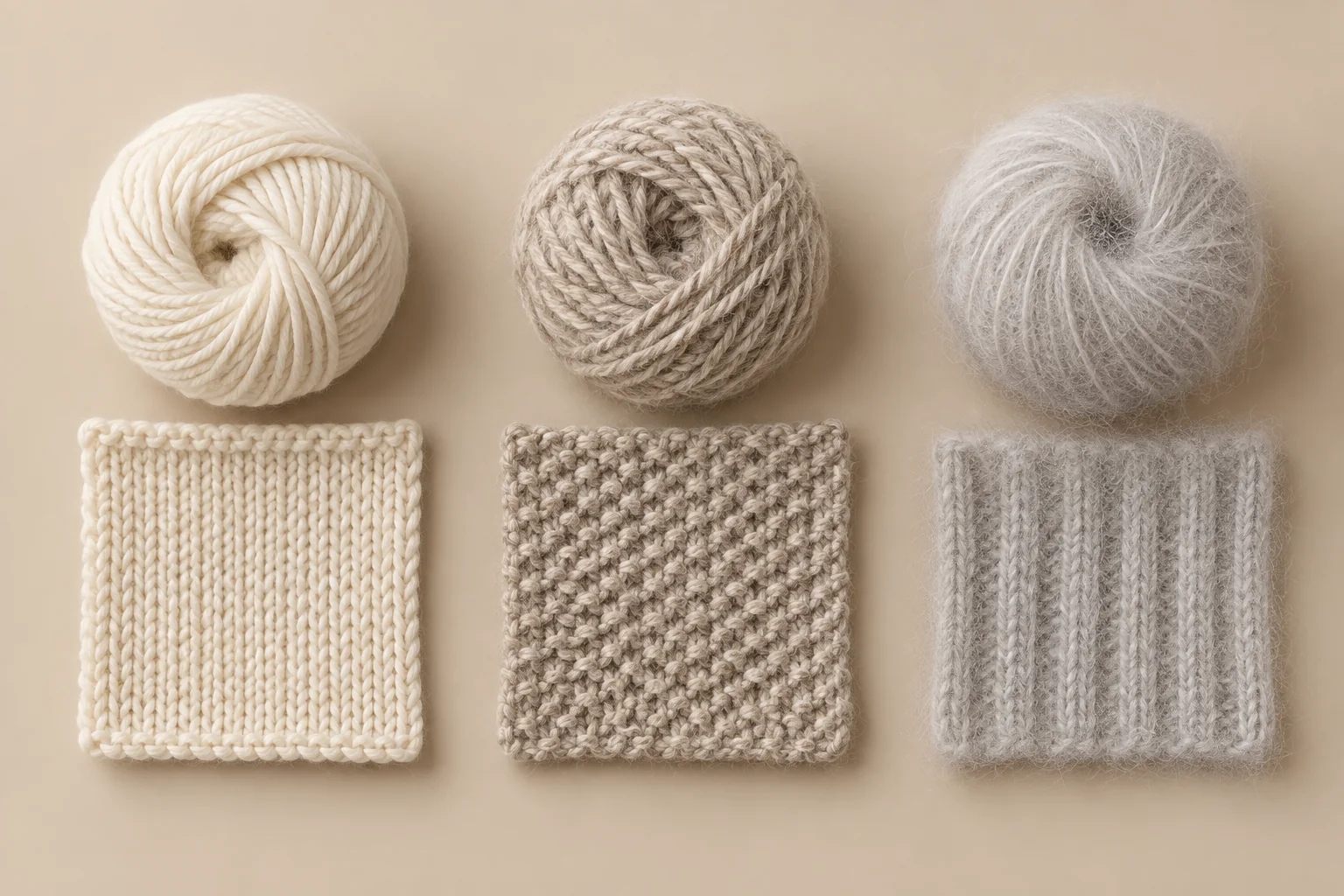
Yarn count, ply, twist, stitch, gauge, loop length and finish all contribute to the handled sample. Ask which inputs differ between the candidate jumpers and retain those differences beside the garments.
Keep the label tied to the actual tested garment. A change in shade or dyeing route may bring a finish change, so an undyed sample may answer a structural question without approving the chosen retail colour. The sample-feedback guide can carry the option code in each comment. Avoid a table of attractive percentages without the same-size garment and construction record that would make the percentages meaningful.
| Yarn candidate | Record to retain | Comparison it supports | Boundary or owner |
|---|---|---|---|
| Wear brief | Season, underlayer and intended silhouette | Checks relevance of hand and weight | Brand defines the use |
| Yarn option | Supplier item and declared composition | Traces each returned sample | Supplier supplies documentation |
| Knit route | Stitch, gauge and relevant program revision | Separates structure effects | Technician identifies the route |
| Garment basis | Size, pattern and measurement origins | Compares complete jumpers | Fit team fixes references |
| Finish and care | Wash, dry, rest and final colour route | Interprets changed dimensions | Buyer selects product care |
| Option state | Confirmed facts and pending evidence | Prevents early approval | Buyer keeps the register open |
Keep neckline and ribs comparable
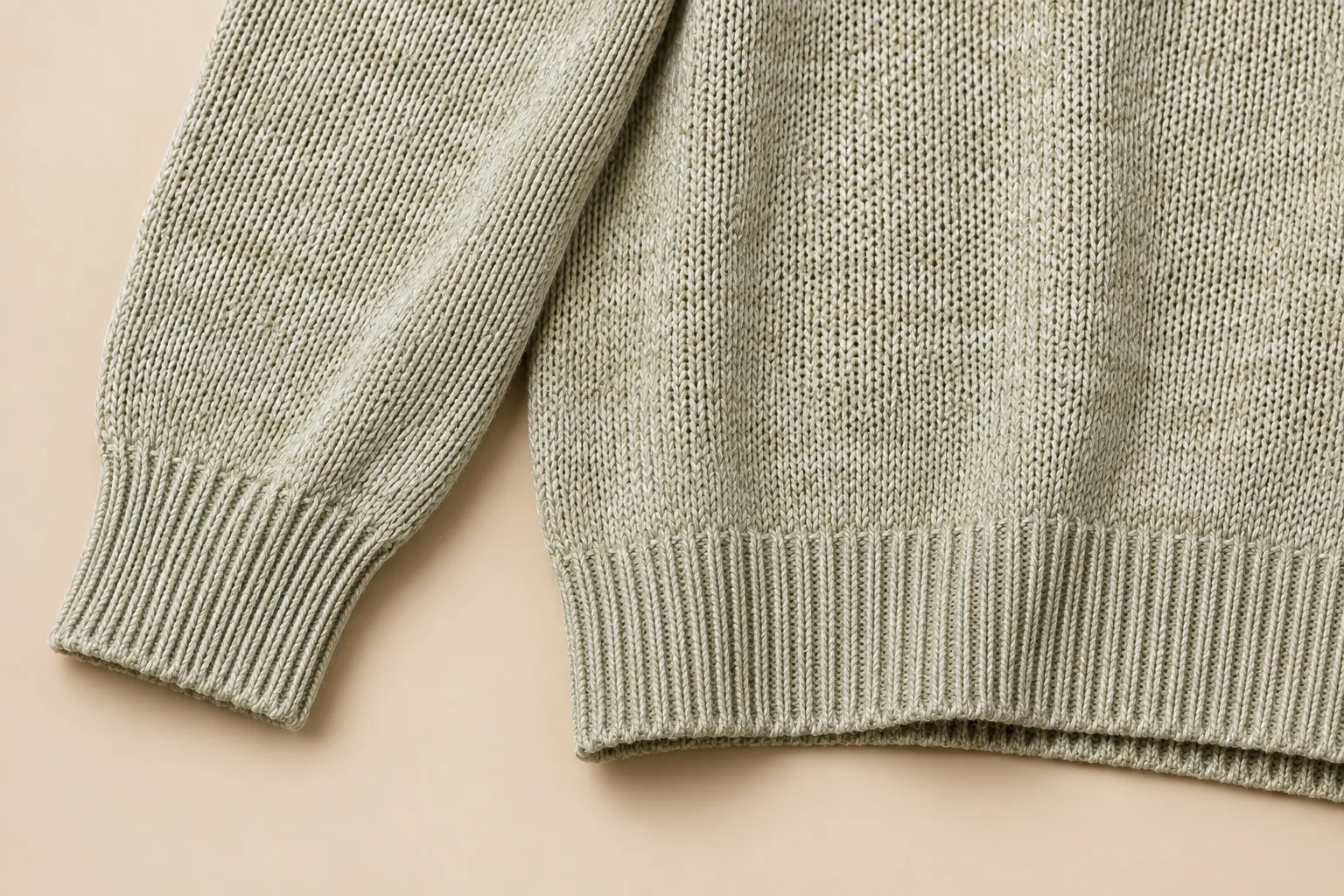
The neckline, rib hems and sleeve cuffs may respond differently from the main body. Inspect these parts on every candidate rather than choosing only from a body swatch. If one trial has a tighter hem or a different cuff depth, it may appear to hold its shape better because its components changed. Record those differences and ask whether the improvement belongs to the material or to the edge construction. A sample with a strong body and a weak neck still needs a product-level decision.
Comparing the completed jumpers after care
Observe the finished garment, not only the swatch
A swatch screens surface and knitting possibilities. The full jumper shows how those choices interact with seams, edges and garment weight. Measure the same size on a marked basis, then take unadjusted front, back and side views after the agreed rest. Check shoulder position, body length, sleeve reach, neck opening and hem level on the intended wearer or form. The trial should reveal whether the garment still performs its specified job as a pullover. Avoid using a swatch result as a substitute for the assembled garment.
ISO 18890 describes garment measurement points and allows parties to agree additional ones. It does not provide a desired weight or shrinkage limit for this jumper. Mark the exact points used to compare candidates. The fit-sample comparison guide is useful when the selected material moves into a size-set. The first material trial should not silently approve all sizes, especially if a different colour or production yarn is still pending.
Test the stated care route and retain appearance
Record the care method intended for the product. If a home-laundering dimensional test is relevant, AATCC TM150 publicly describes its scope for garment length and width changes and notes that it may not apply to some stretch fabrics. A casual wash of one prototype is a development observation, not proof that a formal method was followed. Give any measured change the method and sample identity needed to interpret it.
Assess the garment’s appearance alongside dimensions. A jumper may keep its overall length yet have a changed neckline or hem edge. Another may shift in length but retain the desired drape under a product-specific allowance. Neither outcome earns a universal pass without the approved brief. Keep the original and cared sample states paired in photographs. The measurement-tolerance guide explains how parties agree acceptance limits; it does not supply a ready-made cotton-linen number.
What can the selected option actually establish?
Keep material, mass and drape separate
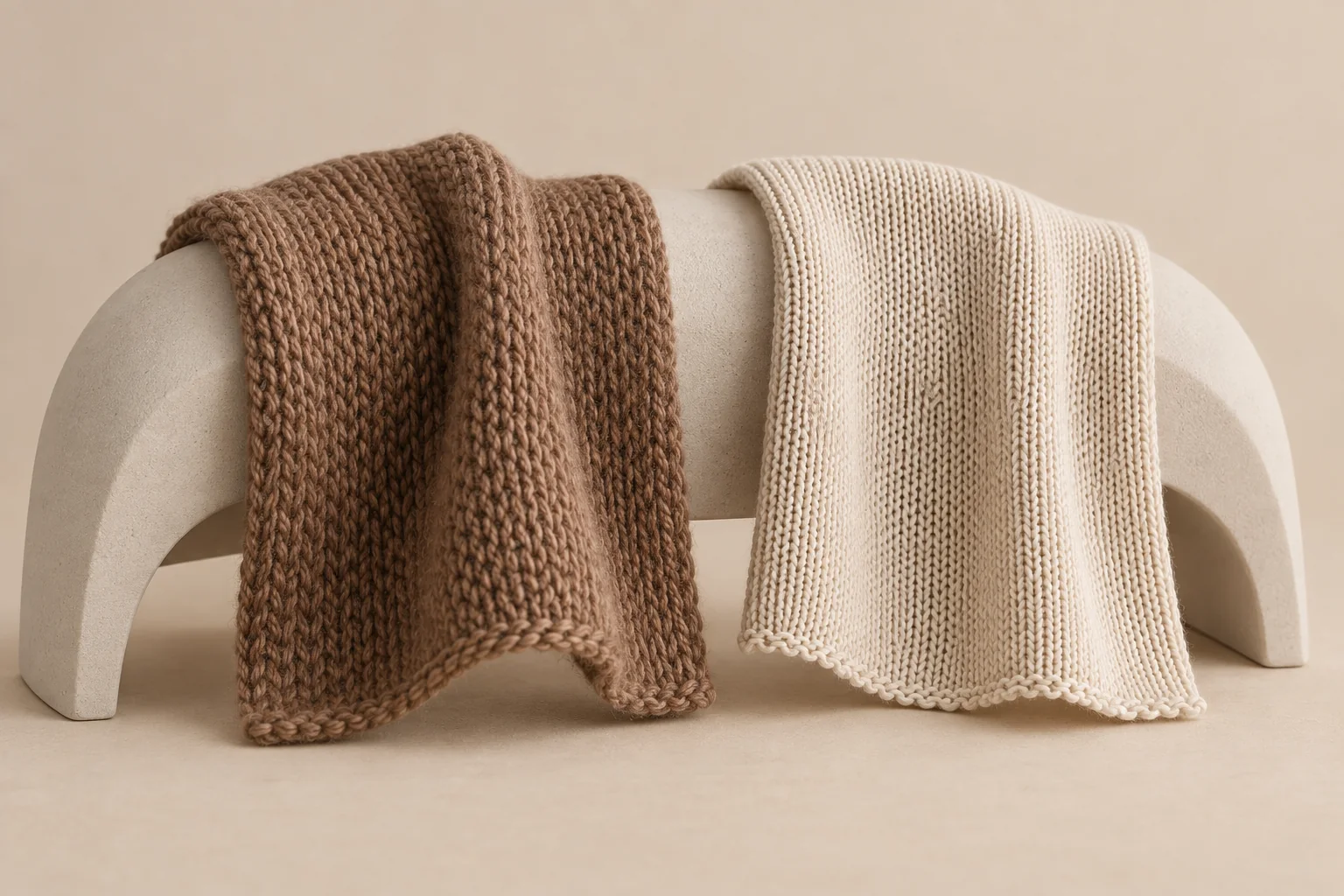
A lighter hand is not the same as a lower finished-garment mass. Weigh the whole identified sample if mass affects the product brief, and state whether accessories are included. Note the resting drape on the same form rather than describing it from fabric alone. A difference in apparent openness may reflect stitch or gauge instead of the declared fibre blend. Ask for a construction record before attributing a visual change to one component.
Limit the conclusion to the samples compared
If two options differ in yarn, knit route and finishing, the result compares two full proposals, not an isolated blend percentage. The buyer can still choose one, but the approval should say exactly which route it covers. If the preferred option is available only in a substitute yarn or colour, request another identified sample. The yarn-substitution guide explains why a replacement cannot inherit an older material approval without comparison.
Choosing the changed part for the next sample
Map the difference to the part that changed
Describe where an option differs before prescribing a solution. A changed neck edge calls for a neckline and material review; a shifted hem may involve body structure, finishing or length. A jumper that feels lighter but falls longer needs a paired mass and dimension record. The next trial should hold as many unrelated inputs fixed as possible. If that is impossible, label the combined changes and keep the question narrow enough to answer from a physical sample.
Choose the next evidence before expanding the range
A buyer can select an option for further development without approving bulk production. Ask whether the next sample must confirm the material in the final shade, a controlled wash state, a changed edge, or a size-set transition. Specify the sample identity and the comparison that will close the question. If the route changes after that, reopen only the affected decision. Do not order a full range of samples before the base material and body relationship is clear enough to grade.
Selecting the supported material route
Turn trial findings into a bounded decision
| Trial outcome | Relationship to investigate | Buyer action | Closing evidence |
|---|---|---|---|
| Neck edge shifts after care | Yarn, rib and finish response | Trial a defined edge change | Paired identified neck views |
| Body length differs by option | Knit structure or care state | Compare the full garment basis | Marked pre/post-care dimensions |
| Swatch appeals but jumper does not | Assembly and body weight | Hold material approval | Full-garment fit and drape views |
| Preferred hand raises garment mass | Yarn and stitch route | Review the weight budget | Whole-sample mass record |
| One shade behaves differently | Colour or finishing route | Reopen affected option | Final-shade sample comparison |
| Sample yarn will be substituted | Actual material identity | Pause transfer to size set | Identified replacement garment |
Frequently Asked Questions
Is there one best cotton-to-linen ratio for a jumper?
No universal ratio follows from the product name. Compare documented yarn proposals on the target pullover and judge the result against the brand’s stated wear, silhouette and care requirements.
Can a swatch approve the finished pullover?
A swatch helps screen construction and surface. It does not show neckline, cuff, hem or assembled-garment drape. Keep the full sample as the product reference.
Should two blend samples use identical machine settings?
Only where that produces a fair and usable comparison. If one yarn requires a changed knitting route, record the change so the result is understood as a full proposal comparison.
Does a wash observation prove a formal test result?
No. State the care procedure and sample identity actually used. Cite a formal method only when its scope applies and its procedure was followed; do not relabel an informal trial.
When can the buyer move to a size set?
Move when the buyer has defined the chosen material and body relationship well enough to grade. Keep pending shade, care or edge questions attached and sample risk sizes where construction changes.
Attach the side-by-side yarn and jumper register, care-state views and the accepted hand/mass/drape tradeoff to the CNSweaters material enquiry. Name the comparison still needed before selecting a route.