 CN Sweaters
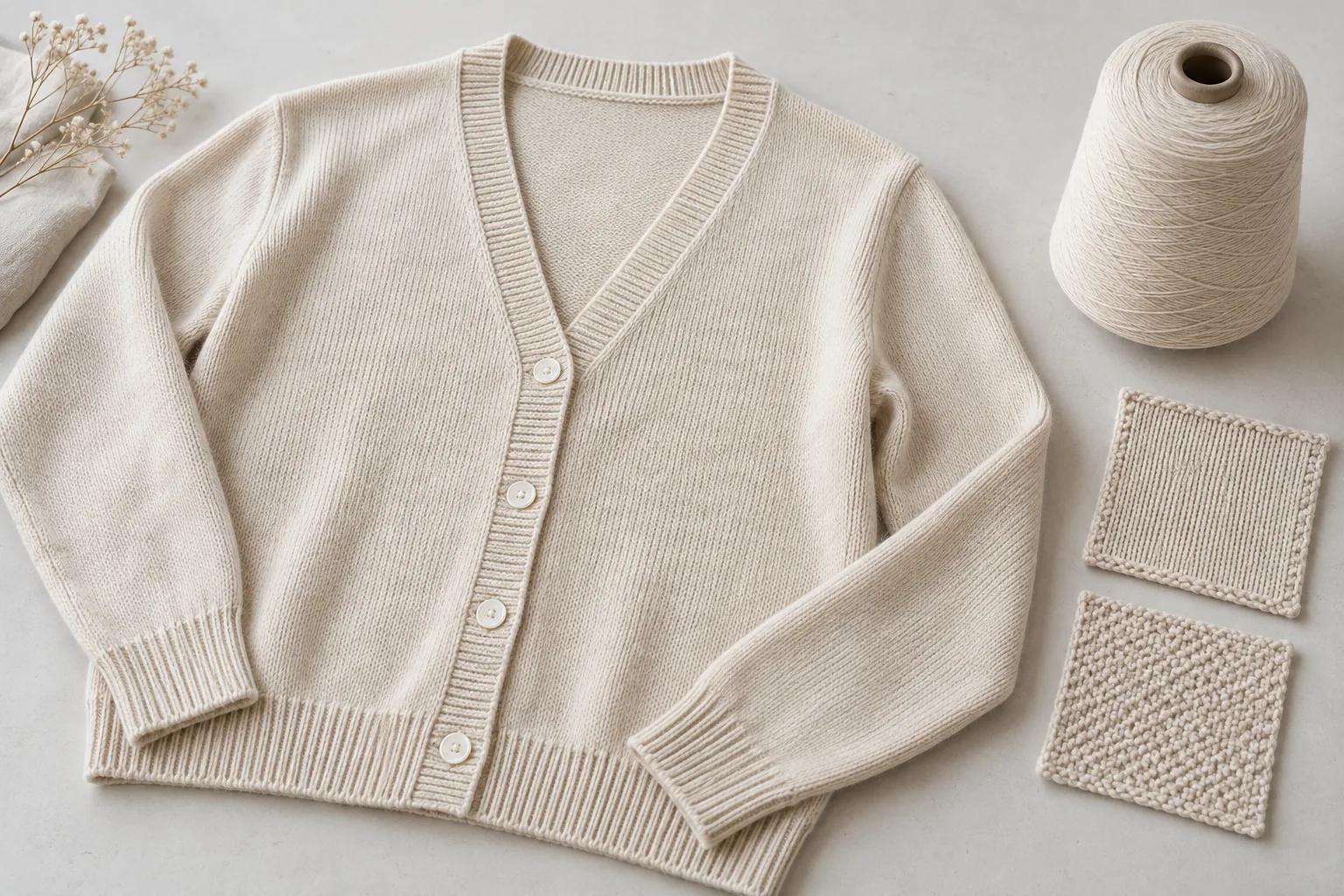
“Linen feel, lightweight, relaxed fit” can produce two attractive samples that cannot be compared. One may use a different blend, another finish or a different garment size. A linen knitwear sampling specification should name the choice being compared and require the sample room to identify what it actually used.
Before requesting a sample, divide the brief into fixed requirements, proposed options and missing evidence. Give every option a name and require the sample room to record what it actually used. The buyer can then compare the first-round options before choosing the final yarn or construction.
What should the first linen knitwear sample decide?
Write a question that a physical sample can answer
Start with the proposed garment and its use. A summer layering cardigan, a close-fitting top and a structured knit jacket do not ask the same questions of a yarn. Identify the part of the product that is uncertain: hand, coverage, shape, weight, an edge treatment or a proposed care route.
Write the requested observation alongside the question. If the buyer wants to compare two yarn options, identify the hand and appearance references, the garment state and the records needed from each sample. Avoid asking for one “best sample” while privately judging several competing objectives.
The first sample can explore a route without approving it for bulk. State whether the request is for a swatch, construction trial, fit prototype or a more complete development garment. That choice determines what the supplier can reasonably demonstrate.
Set material requirements and preferences
The buyer may fix the composition claim while leaving the yarn item open. Design may fix the silhouette while the technician proposes gauge and stitch. Keep those distinctions visible.
Identify acceptable trade-offs before samples arrive. If lower weight matters more than a firm edge, say so. If the garment must hold a particular shape, do not judge the softer option as superior merely because it feels pleasant in the hand. Agree those priorities before assigning any performance values.
Identifying material and finish options
Record the supplied material claim
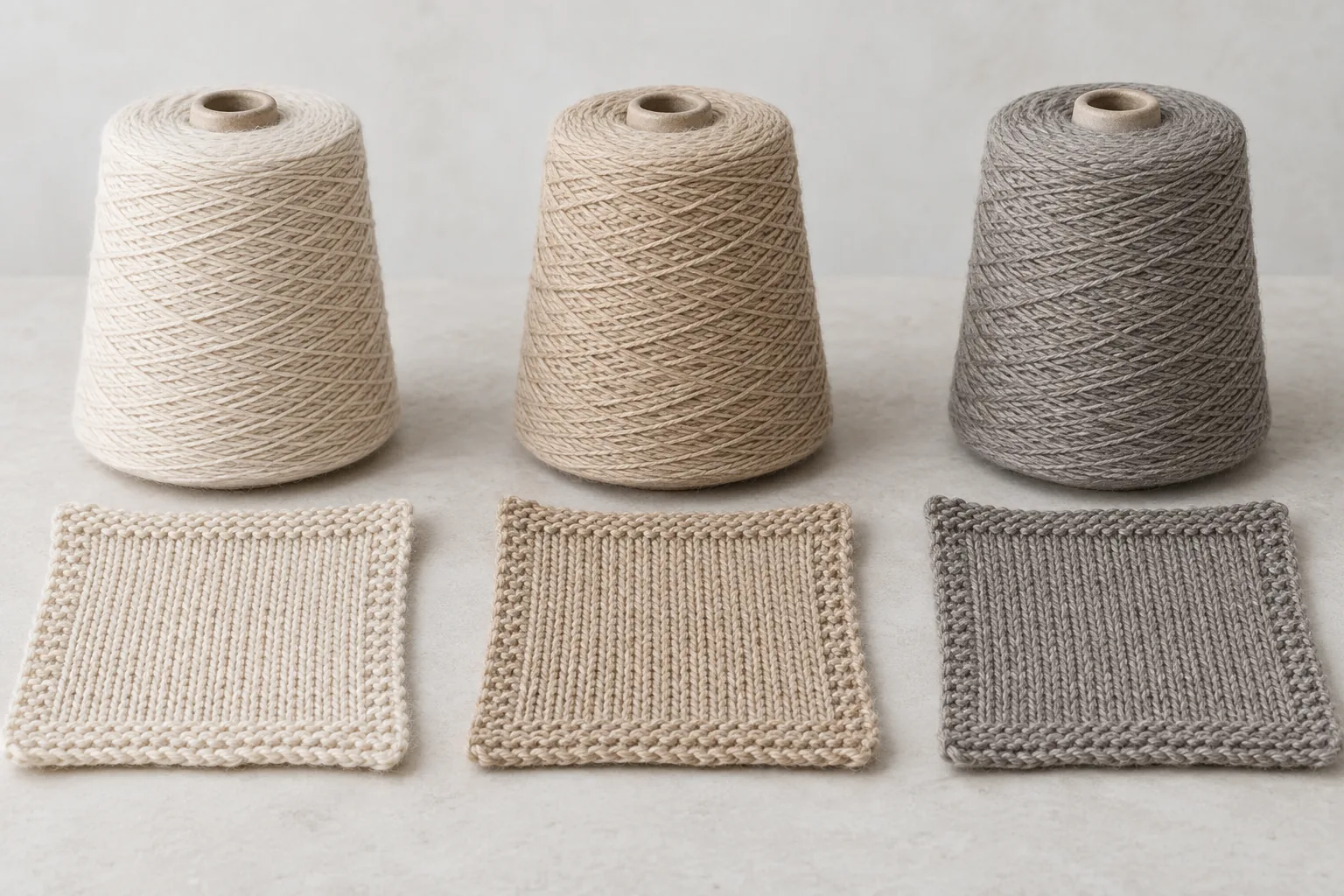
Keep the declared composition, supplier item, yarn construction information and source documentation together. Distinguish a confirmed yarn proposal from a visual reference described as linen-like.
Do not infer fibre content from slubs, a dry handle or a photograph. A material name on a mood board can express an aesthetic direction without establishing the identity of the yarn used in the sample.
Give each proposed blend a separate option code. Preserve the actual declaration and the information still pending. Do not combine different samples under a single “linen sample” label after they enter the review room.
If the supplier substitutes an unavailable yarn, require a substitution note with the returned sample. The substitute may answer a construction question while leaving material approval open.
Record colour and finish for each material option
Ask which colour and finish the sample room used for the development piece. A sample made in an available stock shade may be useful, but its representation of the intended colour route needs a conscious decision.
Describe the supplied hand reference and the sample’s finishing state. A washed swatch, an unfinished panel and a pressed garment are different objects. Comparing them without recording those states can lead the buyer to request a yarn change for a difference created elsewhere.
Which knitting inputs make comparisons useful?
Hold the right variables constant
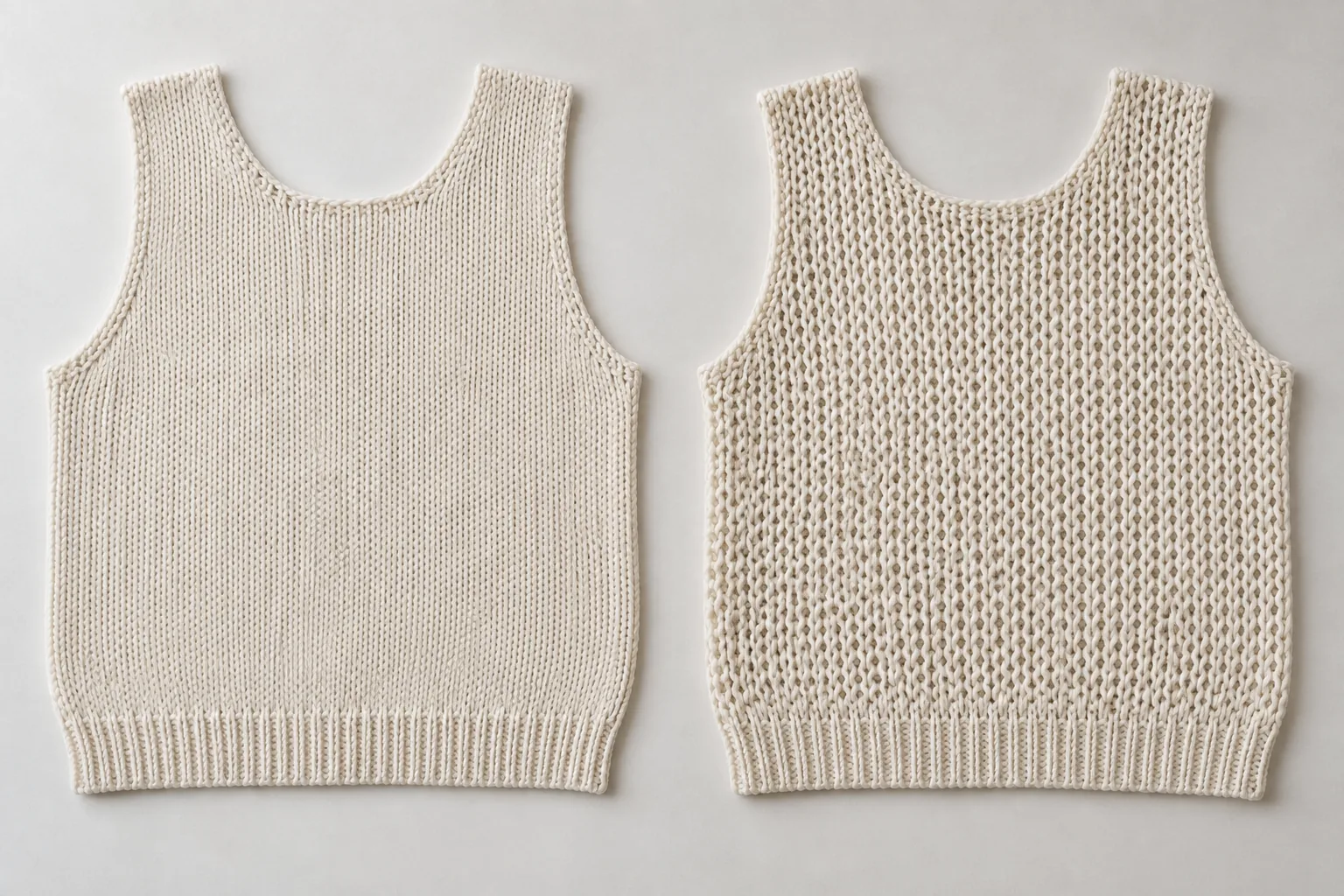
Decide which variable the comparison should isolate. If yarn is the variable, ask the technical team which other construction settings can remain comparable and which must change to produce a workable sample.
Hidden changes can make the buyer misread a comparison. One option may use another gauge, stitch, finish and garment shape as well as another yarn. Evaluate that option as a complete product route; it cannot show the effect of yarn alone.
Use the gauge selection guide when discussing the proposed combinations. Ask the factory to record the actual gauge and stitch settings for each sample, including any adjustment needed to knit the proposed yarn.
When cost is part of the decision, request a quotation for the documented combination. List the material, knitting, finishing, trim and packing assumptions in each quotation. This article does not supply price benchmarks; the task is to make quotations comparable. Compare prices only after both quotations include the required finish and cover the same scope.
| Input group | Fixed or open field | Record returned with sample | Why it affects comparison |
|---|---|---|---|
| Material identity | Declared fibre route and yarn choice | Supplier item, declaration and substitution note | Separates actual material from visual direction |
| Knitting route | Gauge, stitch and programme proposal | Actual settings and swatch identity | Explains construction differences between options |
| Finished target | Hand, coverage, weight or shape priority | Review state and observed result | Connects the sample to the buyer’s question |
| Garment geometry | Base dimensions and selected details | POM drawing and actual measurements | Prevents fit differences hiding material decisions |
| Treatment | Development finish and proposed care question | Process identification and observation sequence | Makes pre-treatment and finished states distinguishable |
| Outstanding evidence | Any unresolved source or technical input | Named owner and next action | Stops a provisional option becoming final by default |
Return the option register with the physical samples, using matching codes on the tag, swatch and comment sheet. Keep each finish route identifiable even after one garment is preferred; reordering its yarn with another sample’s finish could recreate a different hand.
Measurement origins and garment-state comparisons
Agree origins before discussing tolerances
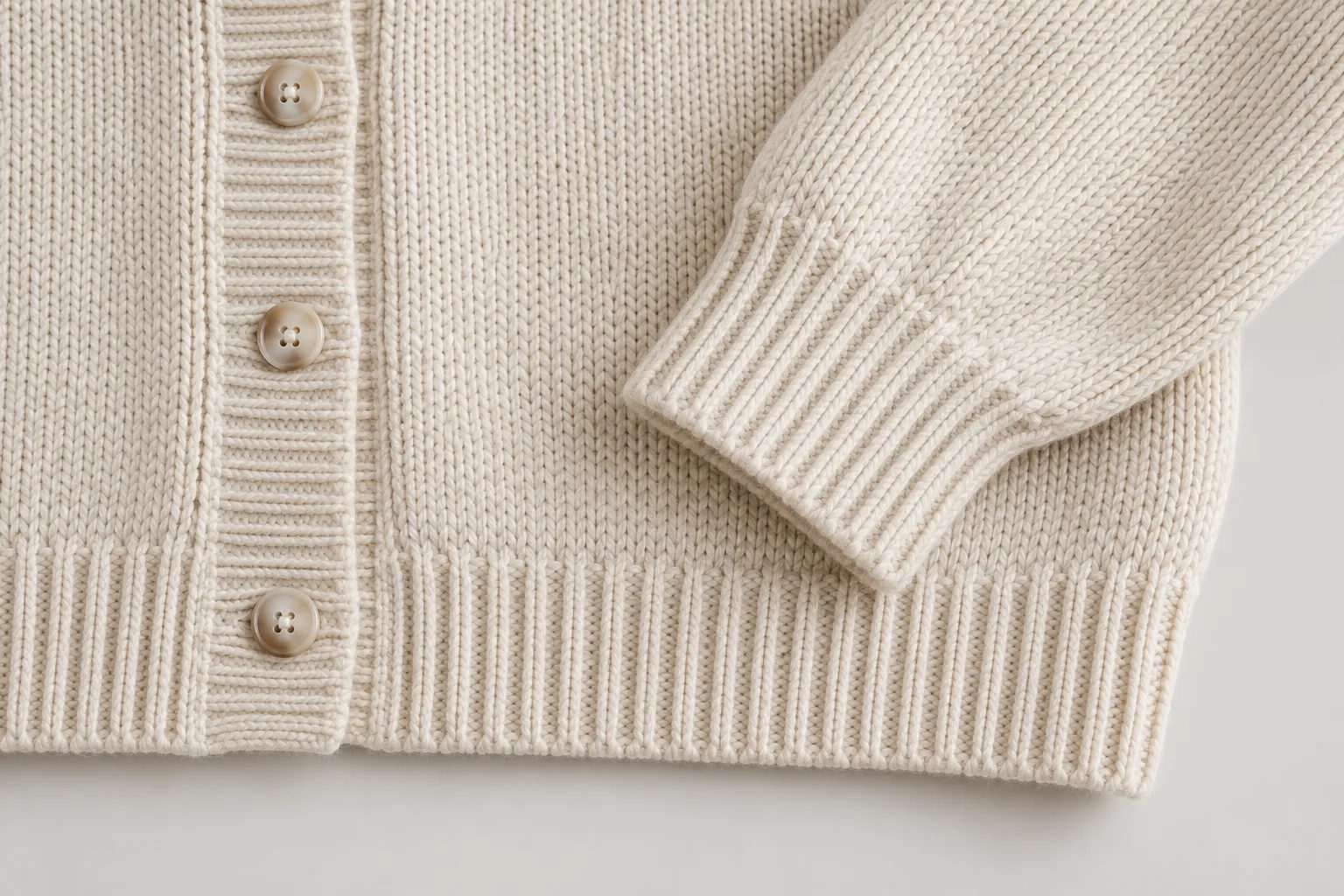
Choose the POMs that describe the proposed garment and the features under review. Describe how the technician lays the garment, fastens its openings and lets its edges rest.
ISO 18890 provides a reference for garment measurement points. Show additional project-specific points in the buyer’s drawing. The measurement chart guide explains why consistent origins matter.
For a cardigan, a front edge may need a separate reference from body length. For an open-knit top, coverage may need a visual record under an agreed backing. Include only the points that answer the sample question; a long chart is not automatically a useful chart.
Keep target and observed values in different fields. If the buyer has not agreed a limit, report the observation and leave acceptance open.
Define the basis of weight and appearance records
If weight influences the choice, say whether the comparison uses complete-garment mass, swatch mass or another defined basis. Include size and finish state with the measurement. Two numbers from different sample sizes do not settle which route is lighter for the intended product.
Take equivalent photographs of each option. Keep camera view, garment placement and background consistent enough to reveal the relevant difference. Preserve an unedited technical record alongside any attractive presentation images.
Photographs cannot establish fibre composition, breathability or long-term durability. They can show the garment’s appearance in a named condition. Request separate evidence for a claim that extends beyond what the sample review actually observes.
Which care questions belong before the next round?
Select the intended comparison
Ask whether the sample needs to show dimensional change, visual appearance after care, surface condition, or another defined issue. A single note saying “wash test” does not identify the work being requested.
AATCC TM150 addresses garment dimensional change after home laundering. The responsible technical team must select appropriate conditions for the actual product. A method name alone does not approve the garment or its proposed label.
The care-label evidence guide can help connect the intended instruction with the evidence request. Label laboratory results and informal sample-room observations separately, with the method and reviewer attached to each record.
If the garment is only an early construction trial made in substitute yarn, decide whether care testing that piece would answer a useful question. It may be more efficient to settle material identity before requesting a test intended to support the final product.
Preserve the state before correction
Record initial measurements, treatment identity, drying or support, rest and final observations. If the technician presses or reshapes the sample, record that step in the sequence.
A sample that looks better immediately after steam may be acceptable as a finishing proposal, but the buyer needs to see the rested result in the intended presentation. Keep the finish decision open until the supplier documents the actual route.
Do not alter the target dimensions quietly after observing a change. A revised target may be a legitimate design decision, but it must be visible in the sample comments and next request.
Choosing the next sample or missing record
Comment on a location and a decision
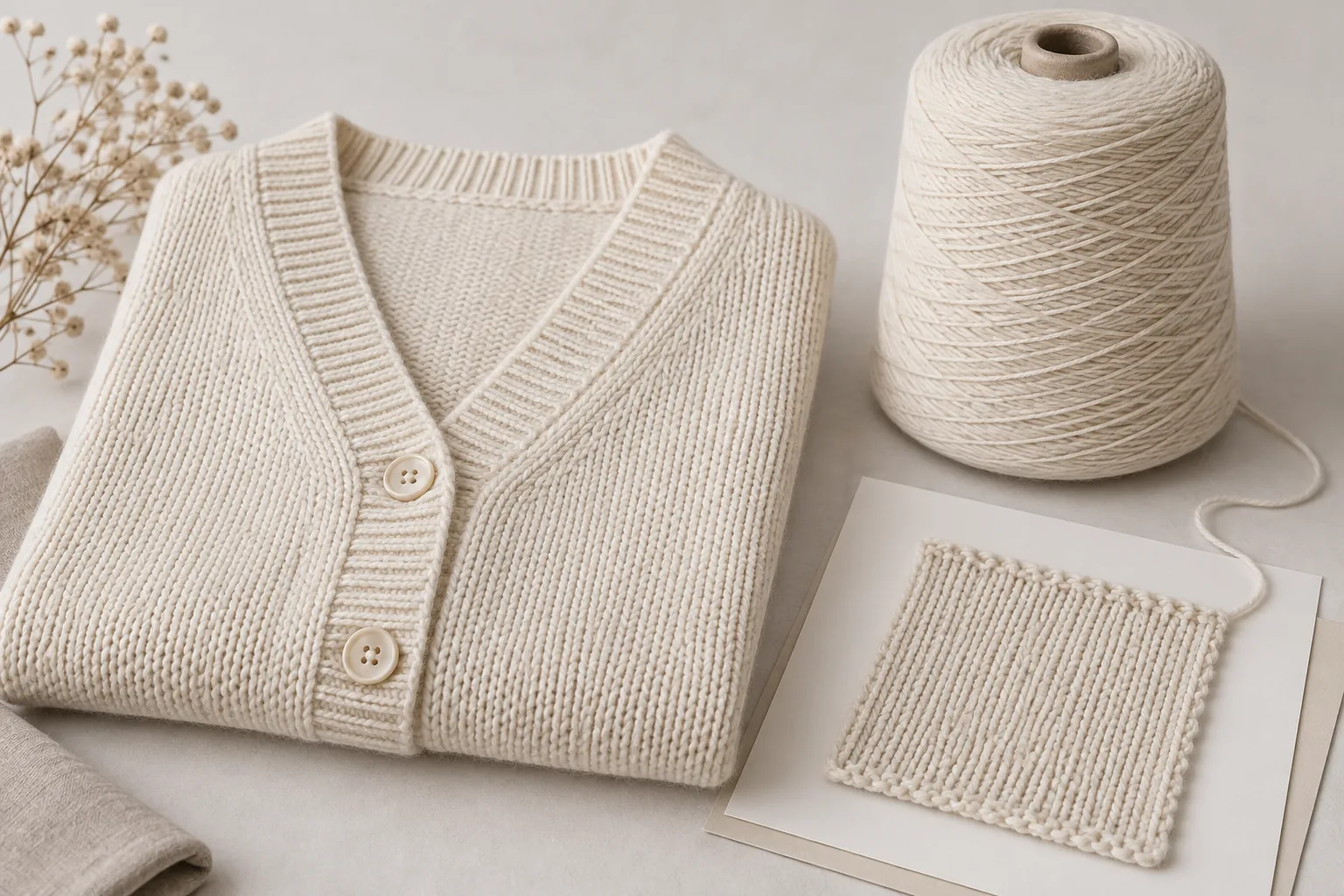
A useful comment identifies the option, sample revision, garment zone, observed difference and next action. Replace “make it better” with a description of the hand, dimension, edge or visual relationship that needs work.
Ask design and technical reviewers to resolve conflicting priorities before returning the file. One person may ask for a lighter garment while another asks for a firmer body. Those requests may require a trade-off or separate development options.
Keep accepted observations as well as rejected ones. Tell the supplier which hand, edge and fit features to preserve in the next sample, so a correction elsewhere does not erase an accepted detail.
Assign an action to each unanswered question before ordering another round. Some require a new physical sample, while others need a corrected record, a source document or a measurement repeated under the agreed method. Distinguish those actions in the request. Re-knitting a complete garment to resolve an unclear yarn label can waste time without improving the evidence; accepting a paperwork correction cannot resolve a physical fit problem. Each action should close the question that caused it.
| Sample finding | What it establishes | Next instruction | Evidence still required |
|---|---|---|---|
| Selected option answers the agreed questions | A workable development route is identified | Carry it into the named next stage | Any unrepresented size, colour or source route |
| Desired hand comes from an undocumented finish | Appearance is attractive but the route is unclear | Obtain finish identity and repeat the comparison | Repeatable process and rested sample |
| Yarn substitution was not disclosed | The sample does not represent the requested material | Relabel the option and review its limited use | Actual yarn declaration and intended-source sample |
| Several construction variables changed together | Only the complete combinations can be compared | Choose between routes or commission a controlled trial | A narrower comparison if cause matters |
| Measurements disagree between reviewers | The method may be inconsistent | Resolve origins and laying state | Equivalent remeasurement |
| Material decision is open but sizing has started | Downstream work may depend on a moving reference | Hold affected grading work | Signed base material and garment reference |
How should inspectors use the selected sample?
The knitwear QC checklist covers general inspection work. Add the specific linen-project observations that affected the decision, such as an edge appearance or a finished measurement relationship.
Use actual approved references for acceptable surface character. Do not ask an inspector to decide whether every visible variation is a defect without a product boundary.
For reorders, compare new inputs against the selected option register. A changed yarn source, finish or programme may require a fresh development check even if the retail name is unchanged.
Prepare the selected option register, physical references, target dimensions and unresolved care questions when you contact CNSweaters about a linen knitwear sample.
Frequently Asked Questions
Can a linen-like reference be used before composition is selected?
Yes, as an appearance or hand reference. Identify it as such and keep the actual fibre claim and yarn selection open.
Should every yarn option use identical machine settings?
Not necessarily. A technician should identify workable combinations. If settings differ, compare complete routes and avoid attributing every difference to yarn alone.
Can a stock colour represent the intended range?
It can support selected development questions. Record which colour and finishing decisions it does not yet represent.
When is a swatch sufficient?
When a swatch can answer the agreed material or stitch question. Garment fit, assembled edges and size relationships require evidence from an appropriate garment sample.
What if the first sample looks good but its records are incomplete?
Request the missing input and process information before using it as a reproducible reference. The next team needs the yarn identity, knitting settings and finish record to reproduce the appearance.