 CN Sweaters
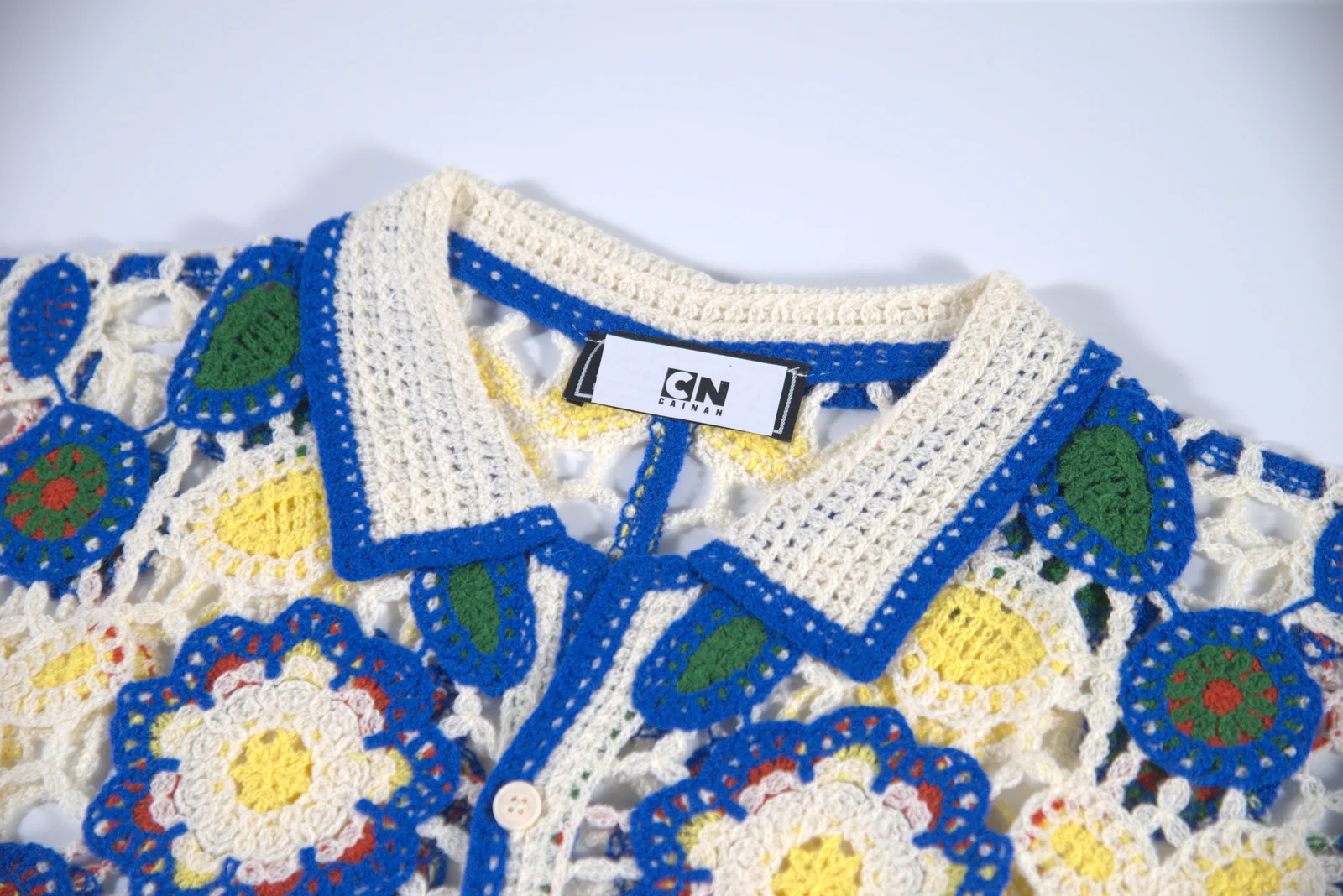
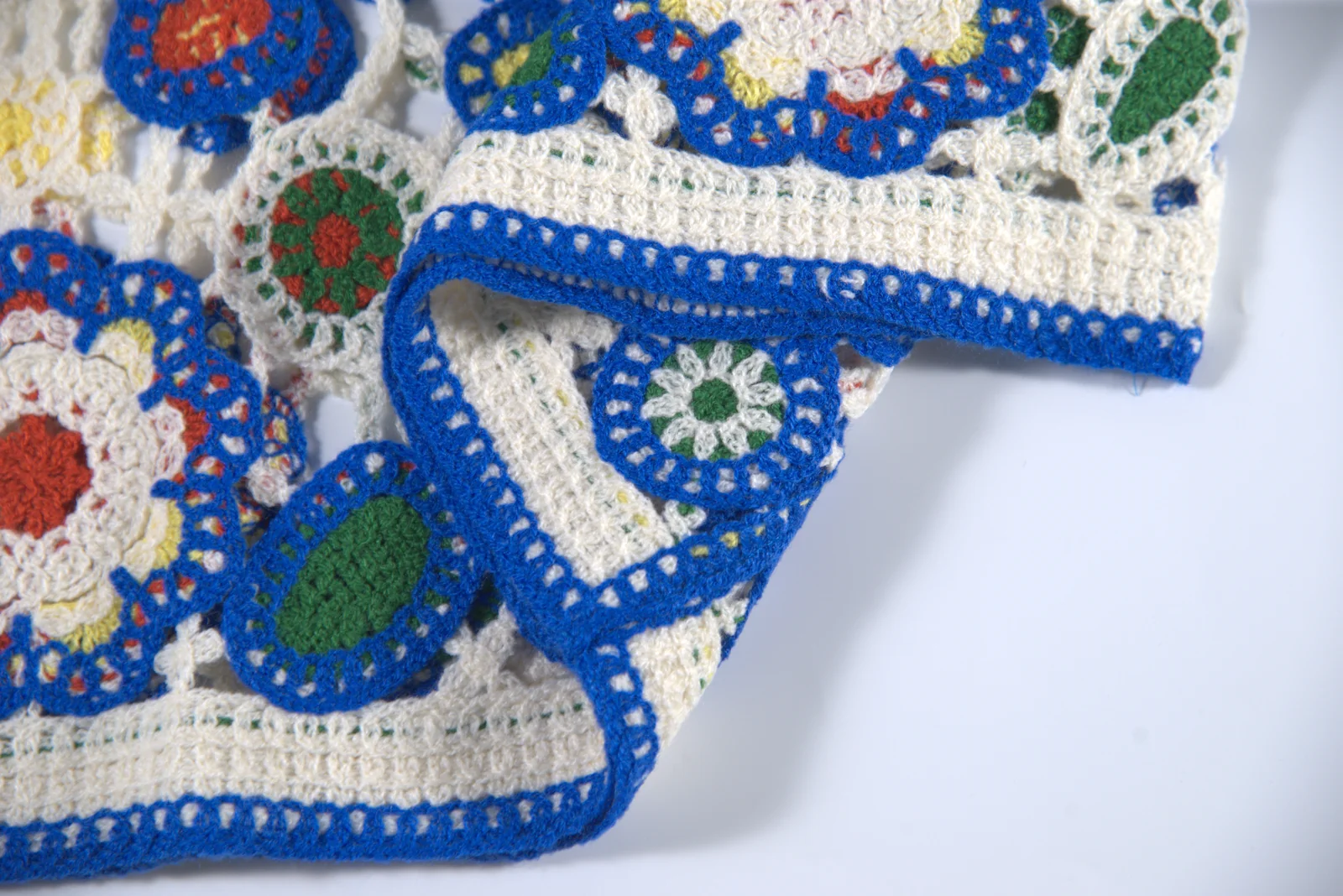
Choose the pointelle cardigan or lace construction route before comparing supplier prices or approving the first sample. A reference image may show openings and decorative motifs without revealing whether they come from the knitted body, a separately sourced textile, or an applied detail. Those proposals can look related while requiring different materials, drawings and assembly work.
Ask each supplier to explain the actual route it proposes. Then compare the bill of materials, motif placement, joins, edges, coverage and care evidence for that route. Record the chosen construction with its sample request, so the supplier works from the agreed materials and assembly route.
Does the reference show a pointelle cardigan or lace?
Mark the visible pattern requirements
Describe the desired motif, opening size, surface relief, transparency and edge appearance without guessing the process behind the image. Mark which details are essential to the product and which are only mood references.
Request a physical reference, close outside and inside views, or a supplier explanation where construction is unclear. A photograph can show a scalloped edge but may not establish whether it is integral, cut, finished separately or attached.
Keep the original reference distinct from the proposed sample. Use the reference-sample control guide to identify both. A supplier should be able to propose another route openly rather than making an undisclosed substitution under the reference name.
Ask how the panels are formed
Ask the supplier how it makes the body panels, forms the motif, shapes the garment and finishes the edges and joins. List the components it buys separately and those it makes for the garment.
If a reference might involve crochet, embroidery or another route outside the requested knitwear scope, record that uncertainty. Do not use a broad word such as lace to approve a process the buyer has not examined.
Comparing knit, textile and mixed proposals
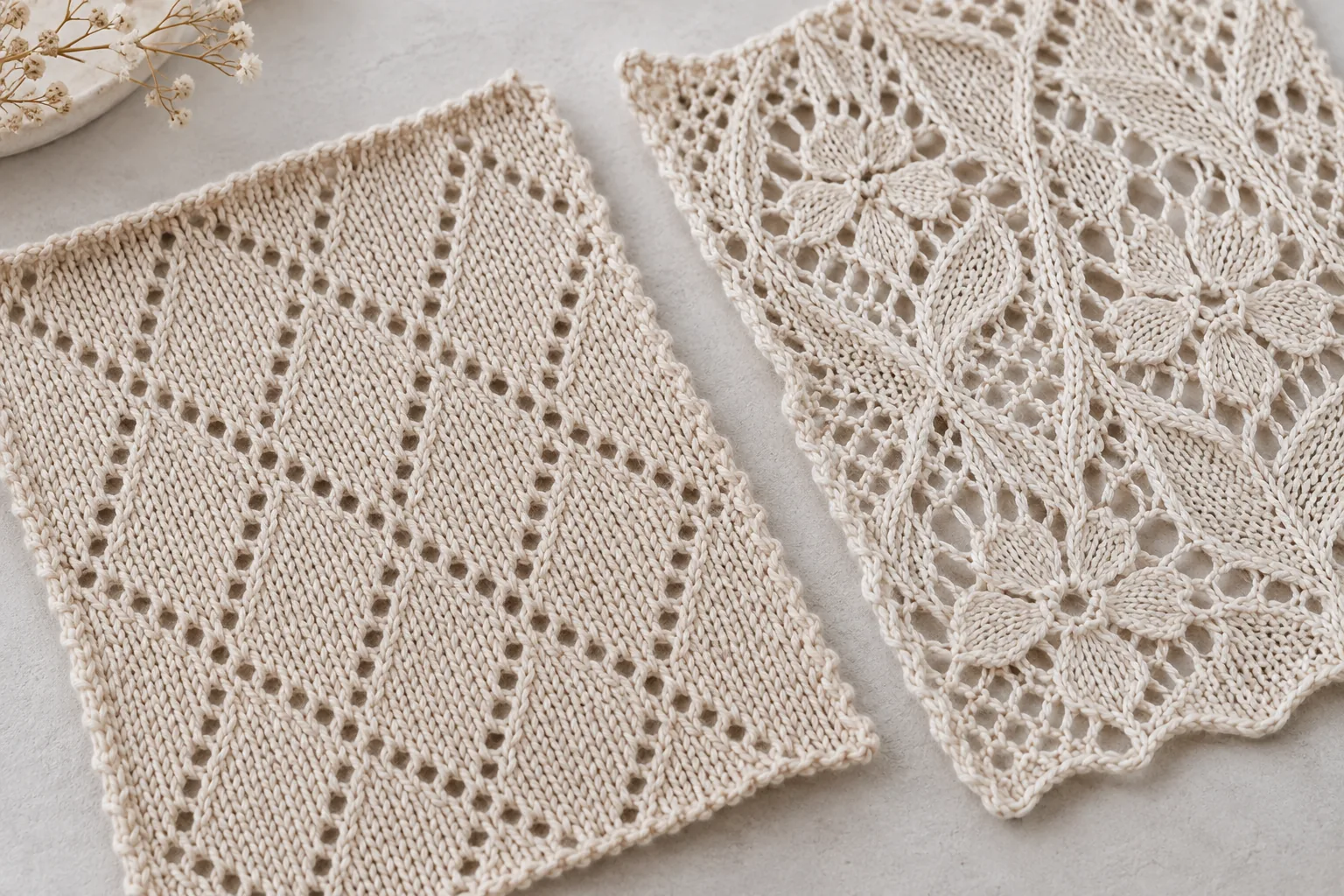
Identify knit and textile components
For a pointelle or other openwork knitted-body proposal, request yarn identity, gauge, programme or stitch reference, shaping method and the planned edges. For a proposal using separately sourced lace, identify the textile item, pattern pieces, orientation, joins and edge finishing.
A mixed proposal needs both records plus the interface between them. It may combine a knitted body with an inserted or applied textile. Approval of each material on its own cannot show how they behave together after assembly.
Compare the candidate routes
| Proposed route | Information to obtain | Reference that makes it checkable | Main unanswered question |
|---|---|---|---|
| Motif formed in the knitted body | Yarn, programme, gauge and shaping | Swatch and assembled panel with identified programme | Does the motif remain acceptable at shaping and edges? |
| Garment made with a separate open textile | Textile item, pattern, orientation and seams | Actual textile plus constructed sample | Can joins and edges preserve the intended appearance? |
| Knitted body with a textile insert | Both material identities and joining route | Complete interface sample, outside and inside | Can different materials move and respond to care together? |
| Decorative applied trim | Trim item, placement and attachment | Actual trim on the chosen garment construction | Does attachment change drape, coverage or local weight? |
| Reference with an unidentified route | Missing process or material information | Physical reference or supplier clarification | Is the intended product within the proposed capability? |
An early proposal can contain open fields. Decide which questions the first sample must answer before accepting the supplier’s quotation as complete.
Where should the motif meet shaping?
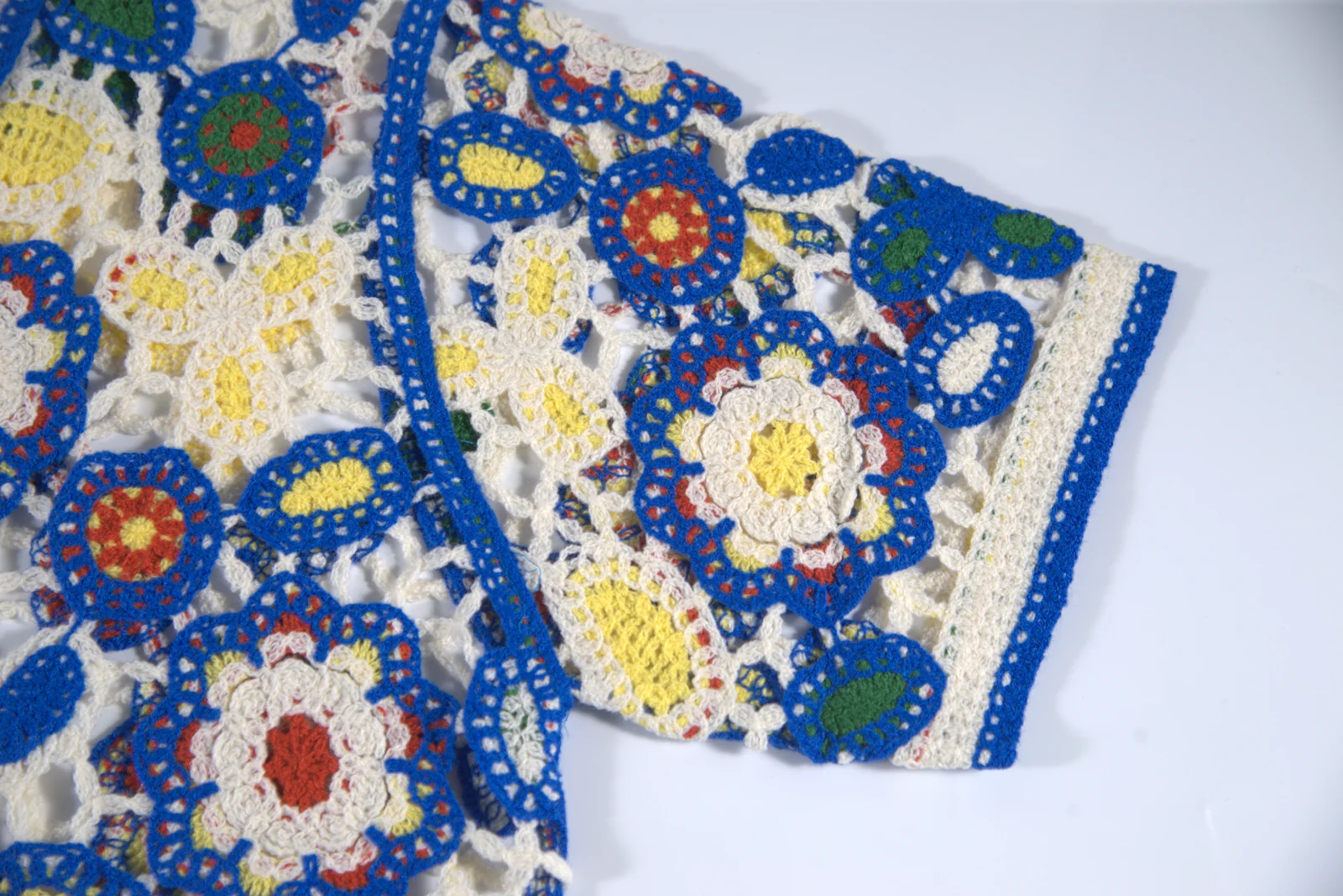
Draw where the repeat meets the garment
Mark the centre front, opening, neckline, shoulder, armhole, side seam and hem in relation to the motif. Specify any deliberate asymmetry or incomplete repeat. A drawing of a decorative swatch does not resolve its placement on a cardigan.
For a knitted-body route, ask how programme shaping affects the repeat. For a separate textile route, ask how cutting orientation and joining affect it. The supplier’s answer should describe its actual proposal.
The knitwear tech-pack guide provides a place for those drawings and revision notes. Keep the placement map with the sample rather than relying on email comments about which motif should be centred.
For a fastened cardigan, inspect the visible centre line as well as the cut or knitted edge. Overlap can conceal part of a motif. The buyer must decide the intended closed appearance rather than assuming matching open panels will create it automatically.
Specify each decorative edge
Specify how the supplier should finish each edge and where the decorative pattern stops. Scallops, shaped borders, bands and applied trims may need different references. Ask for inside views when attachment is hidden.
Record any edge correction made during sampling. Trimming, pressing or hand arranging may produce an acceptable presentation, but production needs the actual repeatable method. A photograph of the corrected edge should remain connected to the construction that made it possible.
What must a mixed-material sample demonstrate?
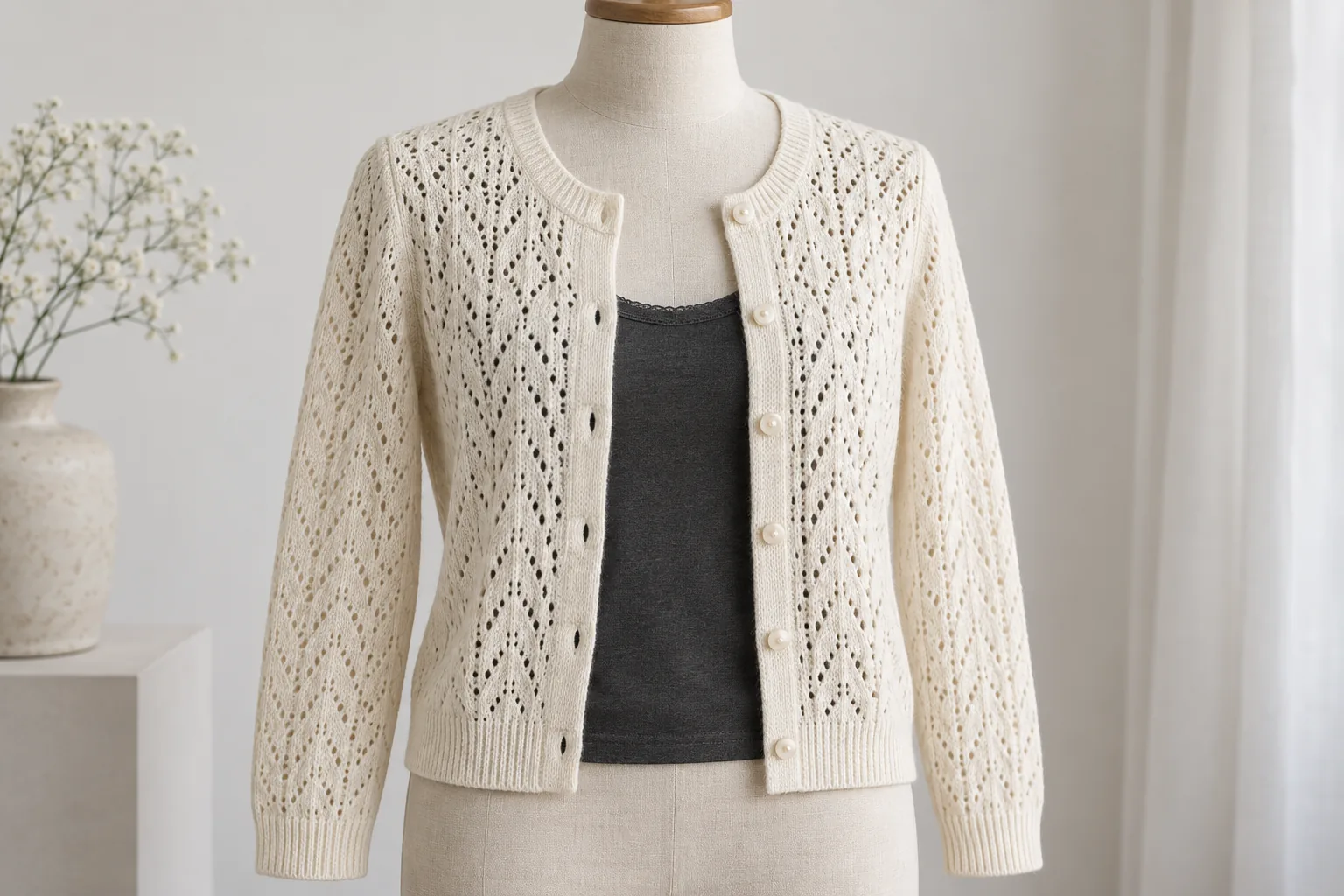
Review the join as an assembled interface
Look at the join’s position, thickness, flexibility and appearance from both sides. Identify any reinforcement or backing and show where it ends.
Observe how the joined area changes during normal wearing or handling. One material may move differently from the other. The technical team should investigate the actual relationship rather than assuming the materials are incompatible because their names differ.
Use the fit-sample and size-set comparison guide to distinguish a construction trial from fit approval. An interface sample may answer how two materials are joined while leaving the full cardigan’s drape and fit unresolved.
Review coverage over the intended layer
Review the cardigan over the intended layer or backing. Identify whether the product is deliberately sheer, offers coverage in selected areas, or includes an additional layer.
Keep the material and placement decisions visible. A lining can affect the assembled garment, so an unlined development sample should not automatically approve a lined production proposal.
Take equivalent views for the options being compared. A matching underlayer can make one route appear more closed than another photographed against contrast. Change the viewing condition only when it is part of the question, and record it.
Use a measurement drawing to locate coverage boundaries. ISO 18890 supports garment-measurement terminology; the buyer and technician should agree the motif and coverage landmarks for this cardigan.
Aligning materials and operations in the quotations
Align the included materials and operations
Request the quotation against an identified construction proposal. List the body material, separate textiles, trims, joins, edge finishing, lining if any, development work and packing assumptions.
One supplier may quote only a knitted body while another includes an insert, lining and extra finishing. Reconcile those scopes before using the totals to compare costs.
Ask which assumptions are provisional. Material availability, minimum purchase, repeat placement or a proposed finish may still require confirmation. Keep those fields open instead of filling them with estimates presented as supplier commitments.
A sample made with special hand treatment should disclose whether that operation belongs to the quoted manufacturing route. Otherwise, a price comparison can select a route that does not reproduce the accepted sample.
Check the unit behind each material assumption. A textile supplied by length, a trim supplied in repeats and a knitted panel made for a particular size require different consumption records. Ask the supplier how motif placement and edge requirements affect the proposed usage. Do not insert an assumed waste factor to make two quotations appear comparable. Retain the supplier’s stated basis and ask for clarification where the figure depends on an unresolved placement choice.
Identify whether a development charge covers programme work, pattern development or a joining trial. If the buyer changes the route after that work is complete, obtain the revised deliverables and charges before commissioning the next stage.
Compare the consequences of a route change
Changing from an integral knitted motif to a separately sourced textile can affect more than a material line. Review the drawings, joins, fit references, colour matching, care plan and source records that depend on the original choice.
Ask for a revised sample and quotation where necessary. Do not treat a visually close alternative as an administrative substitution.
Keep commercial and technical decisions connected. The buyer may accept another edge or motif position to suit the selected route, but that change should appear in the signed reference and product description.
Care and inspection for the selected route
Evaluate care in the selected assembly
Identify the proposed care instruction and ask the responsible technical team which evidence is appropriate. For an assembled cardigan, measurements and appearance should concern the actual materials and joins being sold.
AATCC TM150 addresses garment dimensional change after home laundering. Its scope does not prove that a particular lace or mixed-material route is suitable for a chosen instruction.
The care-label evidence guide connects broader care claims with evidence. Record the treatment and garment state used for the comparison before drawing conclusions about a join or motif.
Keep outside appearance, inside attachment and dimensions as separate observations. A garment may retain its measured length while a decorative edge curls or the join becomes more visible.
When the garment combines colours or materials from different sources, identify each component in the care record. Ask the technical team whether additional colour or appearance evidence is appropriate for that combination. A satisfactory observation on one plain component cannot establish how the assembled combination will look. Keep any altered material or finishing route outside the earlier conclusion until the technical team assesses what the earlier sample can still represent.
Write inspection references that match construction
Use the measurement chart guide for repeatable origins. Add motif alignment, edge finish and joining landmarks where those features drove the decision.
The knitwear QC checklist can cover general workmanship. Supplement it with the route-specific sample views so inspectors can distinguish intended openings from broken or distorted areas.
Do not use a pointelle programme inspection as a substitute for checking a separately sourced textile and its seams. Equally, checking a textile item’s identity does not confirm that the assembled cardigan preserves the approved motif placement.
Inspect hidden joins while the specified attachment remains accessible during assembly, and retain the record for that production group.
When should the buyer select or reject a route?
Close the construction choice with the evidence
| Finding | What remains unresolved | Buyer action | Evidence needed next |
|---|---|---|---|
| Reference image gives no construction detail | Identity of the intended route | Request clarification before comparing prices | Physical reference or documented process proposal |
| Two samples look similar but use different materials | Like-for-like comparison | Assess them as separate options | Material records and aligned quotations |
| Motif changes at shaping or seams | Placement expectation | Agree or revise the placement map | Corrected programme or pattern sample |
| Join pulls after the selected care route | Assembled compatibility | Hold that construction | Comparable before/after records and revised interface |
| Lower quote omits required lining or finishing | Commercial scope | Obtain a scope-aligned quote | Complete bill of materials and operations |
| Buyer accepts a different decorative edge | Product definition | Sign a revised reference | Updated drawings, sample and inspection instructions |
Keep a development option open when the supplier can obtain its missing material or interface evidence. Name that missing record or sample in the next request.
Prepare the physical reference, supplier route proposals, material declarations and aligned quotation scope when you contact CNSweaters about a lace-effect cardigan project.
Frequently Asked Questions
Does lace-effect identify a fibre composition?
No. It describes an appearance. Obtain the actual material declaration for each component.
Can a pointelle swatch approve a complete cardigan?
It can support selected knit and motif questions. Shaping, assembled edges, joins, fit and coverage still need suitable garment evidence.
Is a separate lace insert always a cut-and-sew route?
Ask the supplier to document how that specific material and insert are formed and attached. The visual label alone is insufficient.
Can one sample represent both lined and unlined versions?
Only for the aspects it actually represents. Added layers and attachments need a documented assessment of their effects.
What should happen when a cheaper substitute looks similar?
Compare its actual route and the decisions affected by the substitution. Obtain a revised sample or quotation where the original evidence no longer applies.