 CN Sweaters
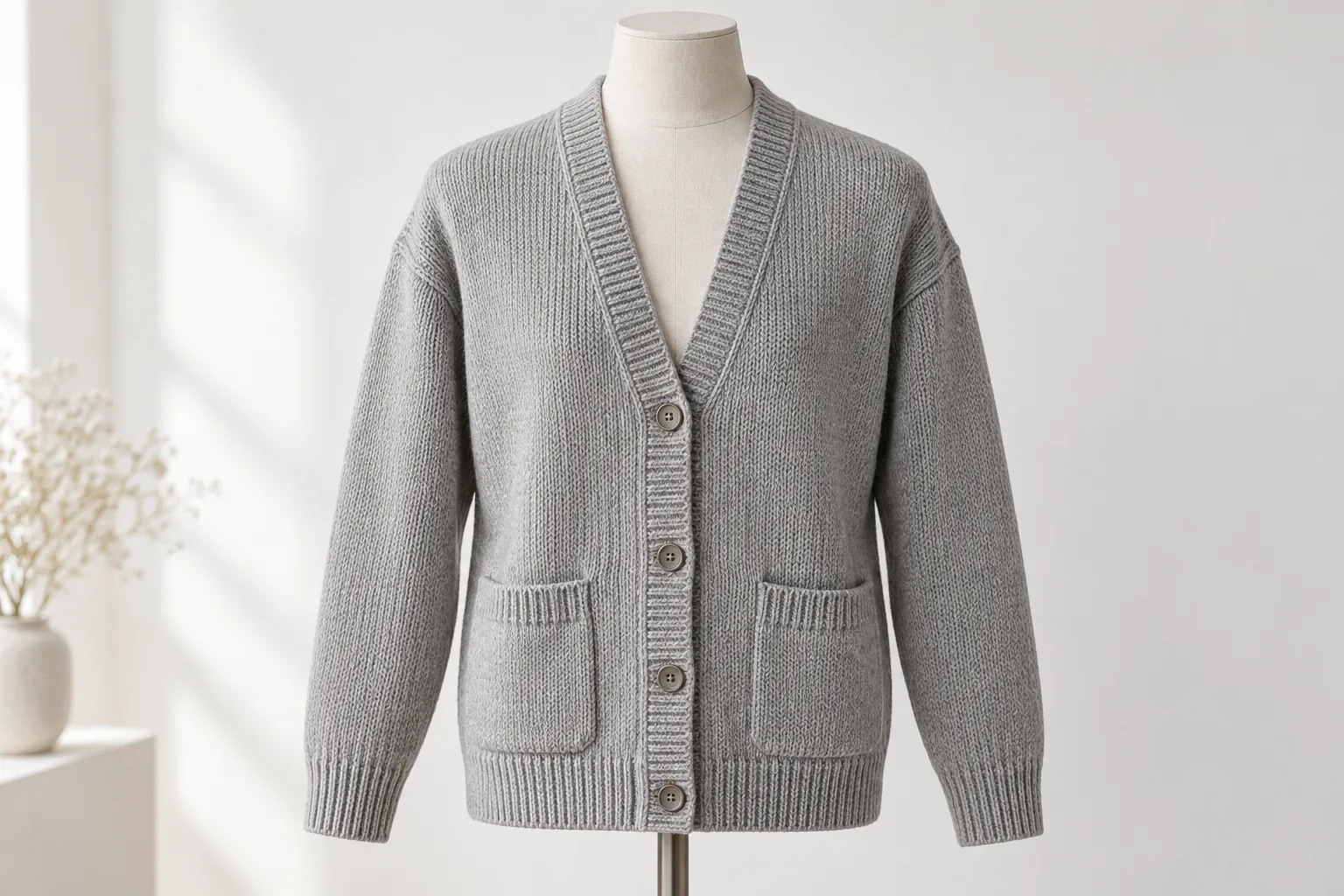
A knitwear designer choosing a cardigan jacket needs to decide where a tailored line is worth a firmer hand. A supported front beside a soft shoulder can fold at their junction; backing every zone can restrict the movement that made a knitted jacket attractive. Compare a drawn support map with the assembled garment in open, closed and worn states.
Before choosing the construction, the development team should draw a support map. Mark the shoulder, front edge, neckline, pocket area and hem; identify which zones need shape, which need movement, and how reviewers will inspect their junctions. Then compare sample routes with the material and fit differences made explicit.
Which cardigan jacket lines should hold their shape?
Identify the cardigan jacket’s essential lines
Ask design to name the intended shoulder line, front outline, body silhouette and lower-edge position. Include the garment open and closed if both presentations are part of the offer. A description such as tailored, relaxed or polished is not enough to select a support system.
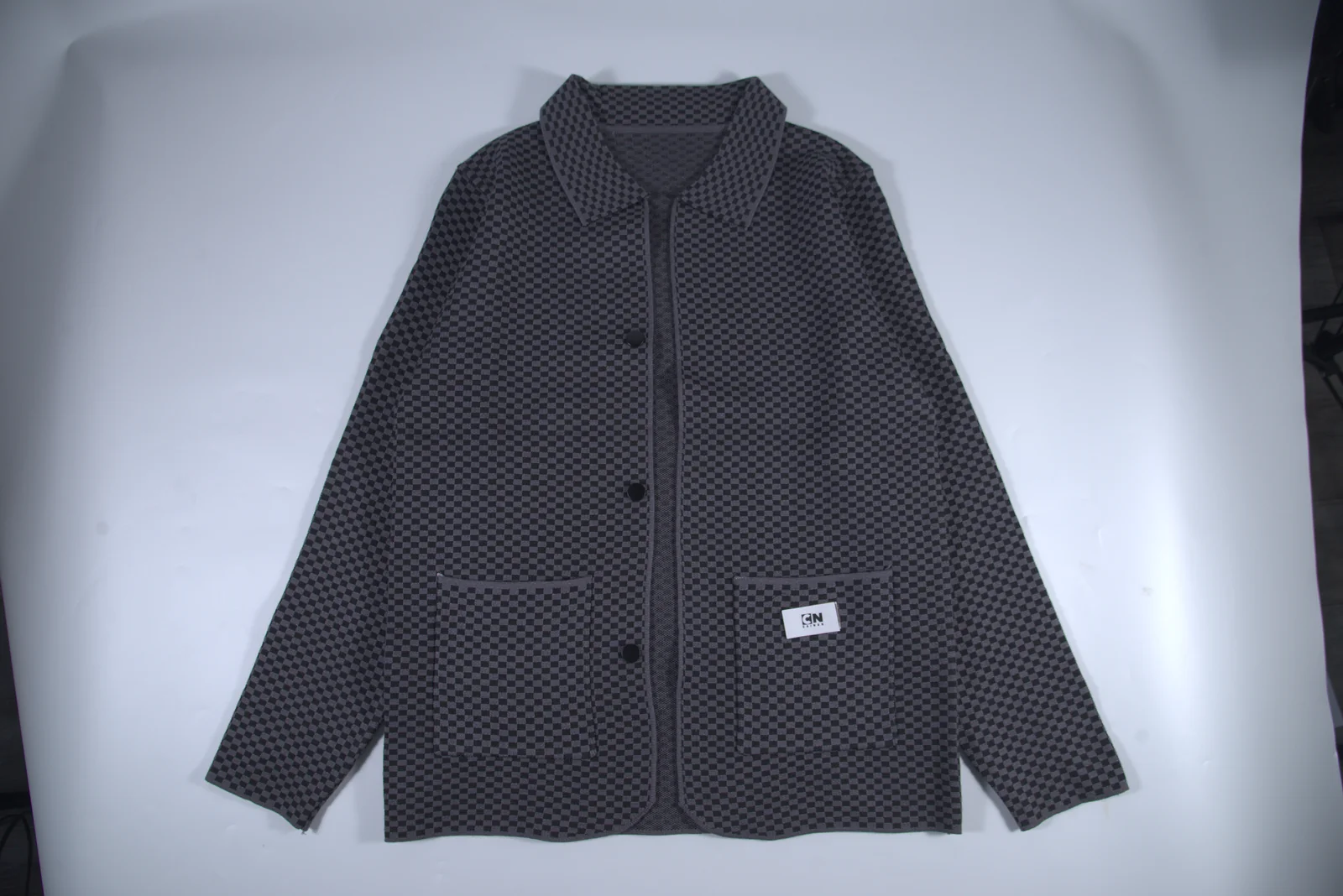
Record whether the style has a collar, lapel, pockets or a lining. These details can affect the front’s weight and movement. Keep them in the prototype used for the decision instead of approving a bare body and adding substantial components later.
Set the cardigan jacket’s movement requirements
Name the intended layer and normal actions: reaching forward, sitting, fastening the front and putting on an outer garment may expose different restrictions. Choose what applies to the actual product.
A sample can maintain its outline when stationary yet push away from the chest during movement. Record whether that behaviour conflicts with the intended use. The buyer should decide the acceptable trade-off rather than allowing “more structured” to become an unlimited instruction to add stiffness.
Keep the knitwear category clear. A woven jacket reference can express an appearance direction, but its internal construction is not proof that the same route will suit a knitted body. Ask the technical team to explain how the proposed route produces the required lines in the selected knit.
Where does the cardigan jacket need support?
Map cardigan jacket support by zone and junction
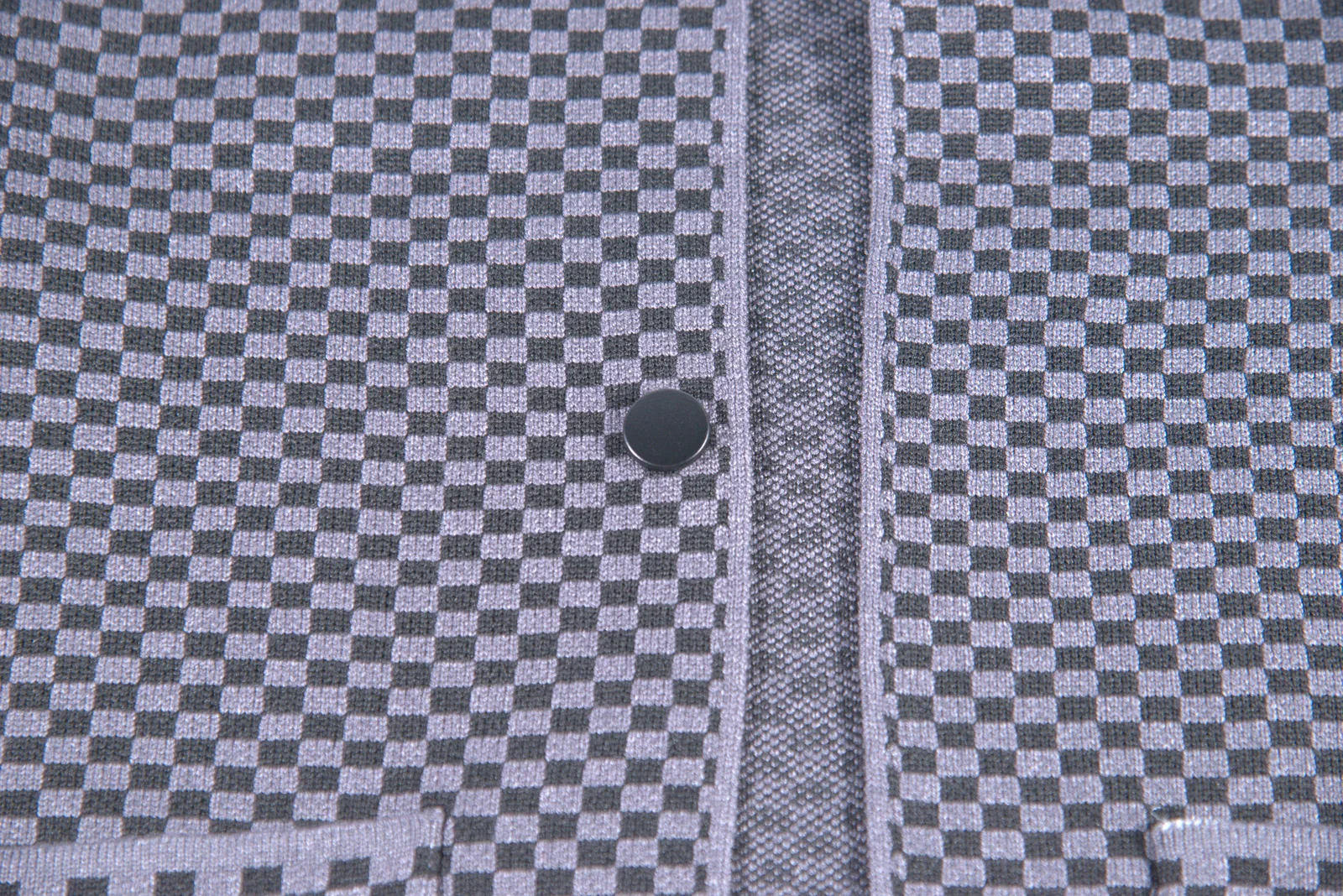
Draw each proposed support area, including its beginning, ending, width and attachment. Distinguish a structural knitted panel from a separate facing, tape, backing or other inserted component.
Pay attention to the end of a support. A short, firm area can create a visible junction with the more flexible knit beside it. The sample should show that junction from outside and inside, both at rest and during the selected movement.
For a collar or lapel, record the turn or fold intended by design. Support that helps one presentation may change another. Do not approve a closed-front view and assume the open garment has the same balance.
Identify the actual construction behind each zone
Ask for the actual yarn, programme, stitch settings, support item, attachment and finish used in the prototype. “Double knit” or “reinforced shoulder” should lead to an identifiable sample route, not replace that record.
Use this map to identify the sample views needed for each proposed support.
| Zone | Intended job | Construction record | Observation needed |
|---|---|---|---|
| Shoulder | Establish the selected upper line | Knit route, join and any support | Front, side and reaching views |
| Front edge | Preserve the open or closed outline | Placket, facing, backing and termination | Natural hang and closure behaviour |
| Collar or lapel | Hold the chosen turn and position | Layers, joining and internal finish | Open, closed and inside views |
| Pocket area | Carry its intended local role | Pocket construction and attachment | Empty and agreed-use appearance |
| Lower edge | Finish the silhouette without unwanted pull | Hem structure and front-corner treatment | Standing, sitting and rested shape |
| Transition between zones | Avoid abrupt restriction or a visible ridge | Support overlap or termination map | Close outside and inside comparison |
The map should show areas intentionally left flexible. Otherwise, a factory may extend a support to simplify assembly and unintentionally change the garment.
How should buyers compare cardigan jacket prototypes?
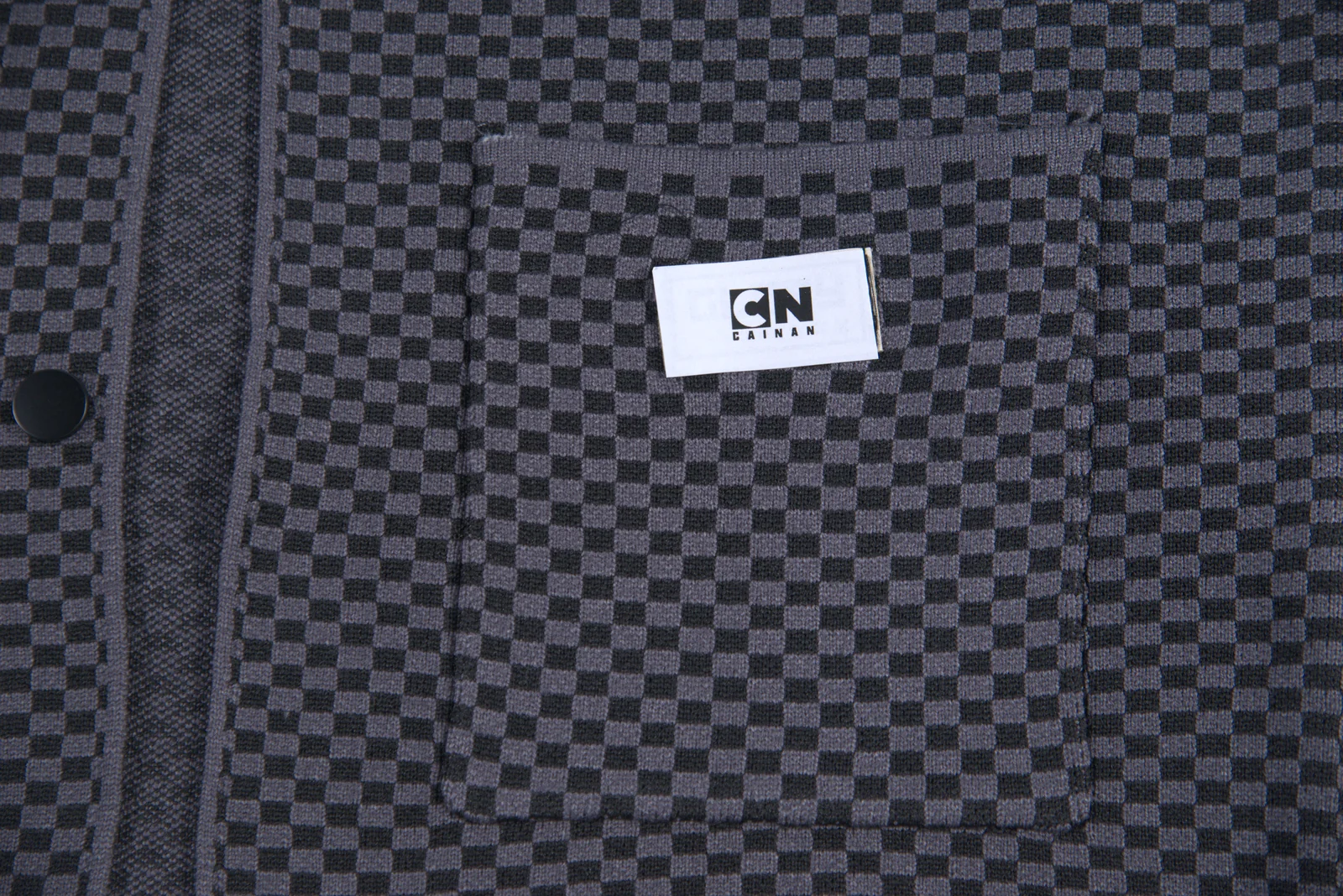
State what each alternative is testing
Choose a comparison question before ordering several versions. One trial may compare two front-support routes; another may compare complete yarn-and-knit combinations. Label them differently.
If the purpose is to understand a support change, keep the surrounding garment as comparable as the technical team can make it. If the yarn, gauge, fit and finish all change, judge the routes as complete alternatives rather than attributing the difference to support alone.
Ask suppliers to disclose practical construction limits while the choice remains open. A route may be difficult to reproduce at a particular edge or size. That information belongs in the decision before the buyer treats the sample as a production standard.
When quotations accompany the alternatives, compare the included construction. List the supports, facings, attachments, finishing and inspection work behind each price. A proposal with fewer components may be a valid product option, but it does not represent the same build automatically. Ask the supplier to identify any operation used on the prototype that is absent from the quoted production route. This prevents a hand-finished development garment from setting an appearance that the agreed manufacturing scope cannot reproduce.
Judge shape and hand in the assembled cardigan jacket
Compare the outside profile, inside build, bending at the supported zones and normal wearer movement. Record the underlayer, closure, finish and rest period, and use the same conditions for each comparison.
Avoid judging hand from a swatch alone when the garment includes facings, seams and several support layers. A pleasant body swatch does not show how the front feels after assembly.
Write comments at the relevant zone. “Option B is too rigid at the front corner when seated” gives the developer a clearer next action than “Option B is worse.” A preferred sample should retain the positive observations too, so the next revision preserves what already worked.
If a reviewer chooses a compromise, record it in plain language. For example, accepting a softer shoulder to preserve movement is a design choice, not evidence that the firmer shoulder failed a universal standard.
How should the cardigan jacket sit at shoulder and front?
Inspect the upper line before adjusting the hem
Place the prototype on the approved form or wearer and let it settle. Check neckline, shoulder slope, shoulder width, sleeve join and front hang. A front that appears uneven may begin with an upper-body imbalance.
Do not pull the lower edge into position before recording the upper line. A held hem can hide where the garment naturally places itself. Preserve the initial view and identify any styling correction separately.
Review the sleeve route present in the final proposal. Sleeve weight, fullness and attachment can change the shoulder presentation. A sleeveless prototype is useful for selected construction questions, but it cannot close every shoulder and movement decision for the complete jacket.
Compare the cardigan jacket open and closed
Fastening can change front overlap, neckline position, pocket alignment and the lower corners. Record the actual buttons, zipper or other closure used during the review.
If the buyer accepts one closure state but leaves another open, record both decisions. A buyer may decide the garment is primarily worn open, but any advertised closed use still needs an agreed functional boundary.
Inspect the inside when the front develops a ridge or fold. Compare the position of backing, facing, seam and support termination before asking for a broad pattern change.
Can the wearer move without losing the intended shape?
Use the product’s ordinary movement
Choose a realistic underlayer and repeat the agreed reaching, sitting and fastening sequence. Observe whether the shoulder restricts reach, the front lifts or stands away, or the hem pulls into another shape.
Record the garment after the movement and after the agreed rest. The purpose is to understand the proposed construction in use, not to perform an unnamed durability test.
Where another layer is part of the brief, check its interaction directly. A bulky support junction can behave differently beneath outerwear than on an uncovered form. Preserve the layering condition so the next reviewer can reproduce it.
Trace restrictions back to their zone
If the wearer reports restricted movement, locate where the restriction begins. Check armhole, sleeve join, front support and underlayer interference. Removing support everywhere can solve one observation while losing the intended shoulder or front line.
How should care and production preserve the chosen route?
Compare finished, cared-for and rested conditions
Specify the development finish and the care question before comparison. AATCC TM150 addresses dimensional change after home laundering; the responsible technical team must decide whether the method suits the proposed garment.
Measure relevant shoulder, front, body and hem references separately. Compare support transitions and inside layers as well as the external outline. A body dimension can remain close to target while an inserted or attached area changes its relationship with the knit.
Retain views before corrective steam or reshaping. If that treatment is part of normal production, document it and assess the rested garment, including any appearance that returns after the immediate effect has passed.
Specify the cardigan jacket construction for bulk
Record supplier substitutions before assembly. A component with a similar appearance or description is not automatically equivalent to the item used in the accepted prototype.
Keep an inside construction photograph or section sample for support areas that become hidden after assembly. Inspectors can use it to identify attachment and overlap without relying on the external silhouette alone. Define when the hidden feature can still be checked in production, and retain that record with the relevant group. A final outside inspection should not be described as confirmation of an internal feature it cannot observe.
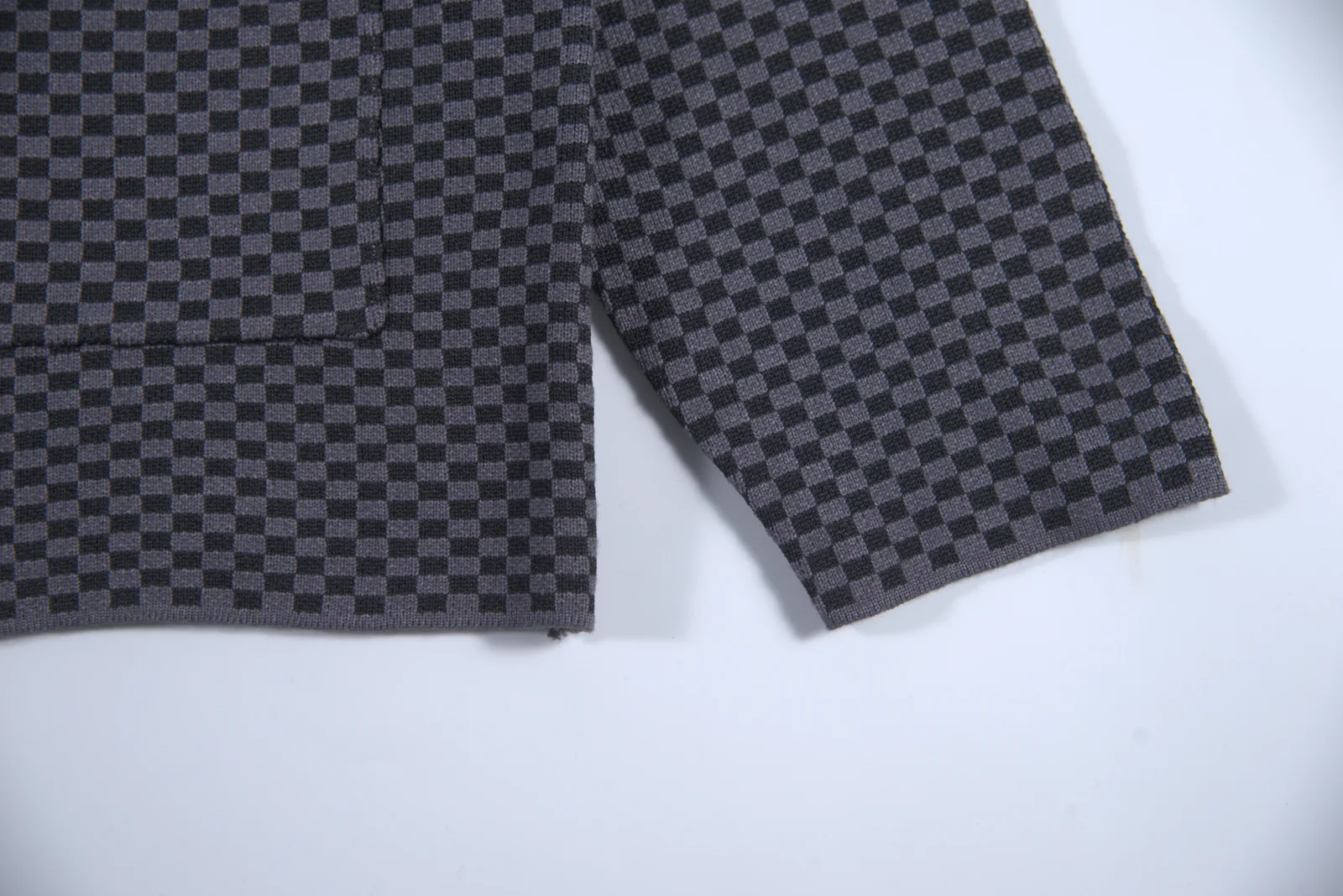
Use this table to choose the next action.
| Observation | Decision still open | Required action | Closing evidence |
|---|---|---|---|
| Shoulder line collapses while front remains firm | Upper support or fit relationship | Revise the affected shoulder route | Full garment and movement comparison |
| Front looks clean but restricts sitting | Shape versus movement compromise | Review support extent or construction | Accepted seated and rested views |
| Ridge appears where support ends | Transition treatment | Correct the local junction | Inside and outside detail of the revision |
| Closure changes the intended lower outline | Open/closed balance | Revisit fastening and front relationships | Paired state records with actual trims |
| Care changes one supported zone differently | Material and assembly compatibility | Hold that route for investigation | Equivalent care and rested comparison |
| Buyer chooses a softer silhouette | Commercial target | Sign a revised reference | Updated support map and accepted limitations |
If a reorder proposes another yarn, support, lining or finish, use those reasons to identify what must be checked again. Avoid assuming that matching flat dimensions reproduces the selected hand and shape.
For a development discussion, send the support-zone drawing, prototype comparisons, fit observations and actual component list when you contact CNSweaters about a knitted cardigan jacket. Identify the support junction that needs revision and the shape or movement that must remain.
Frequently Asked Questions
Can a woven blazer be the only construction reference?
It can express appearance, but the supplier still needs a knitted construction proposal and a sample that demonstrates the intended behaviour.
Does a firmer yarn remove the need for internal support?
That depends on the selected structure and silhouette. Compare the complete proposed garment rather than assuming one material choice answers every support question.
Should every zone receive the same backing?
Only if the design and technical review justify it. Different zones may need different movement and shape behaviour.
Can the buyer approve hand from an unfinished swatch?
It may support an early material choice. The assembled and finished garment still needs review when facings, supports or closures change the hand.
What is the most useful reorder record?
Retain the chosen support map and the reasons for accepting its shape-and-movement compromise, together with actual inputs and the signed garment reference.