 CN Sweaters
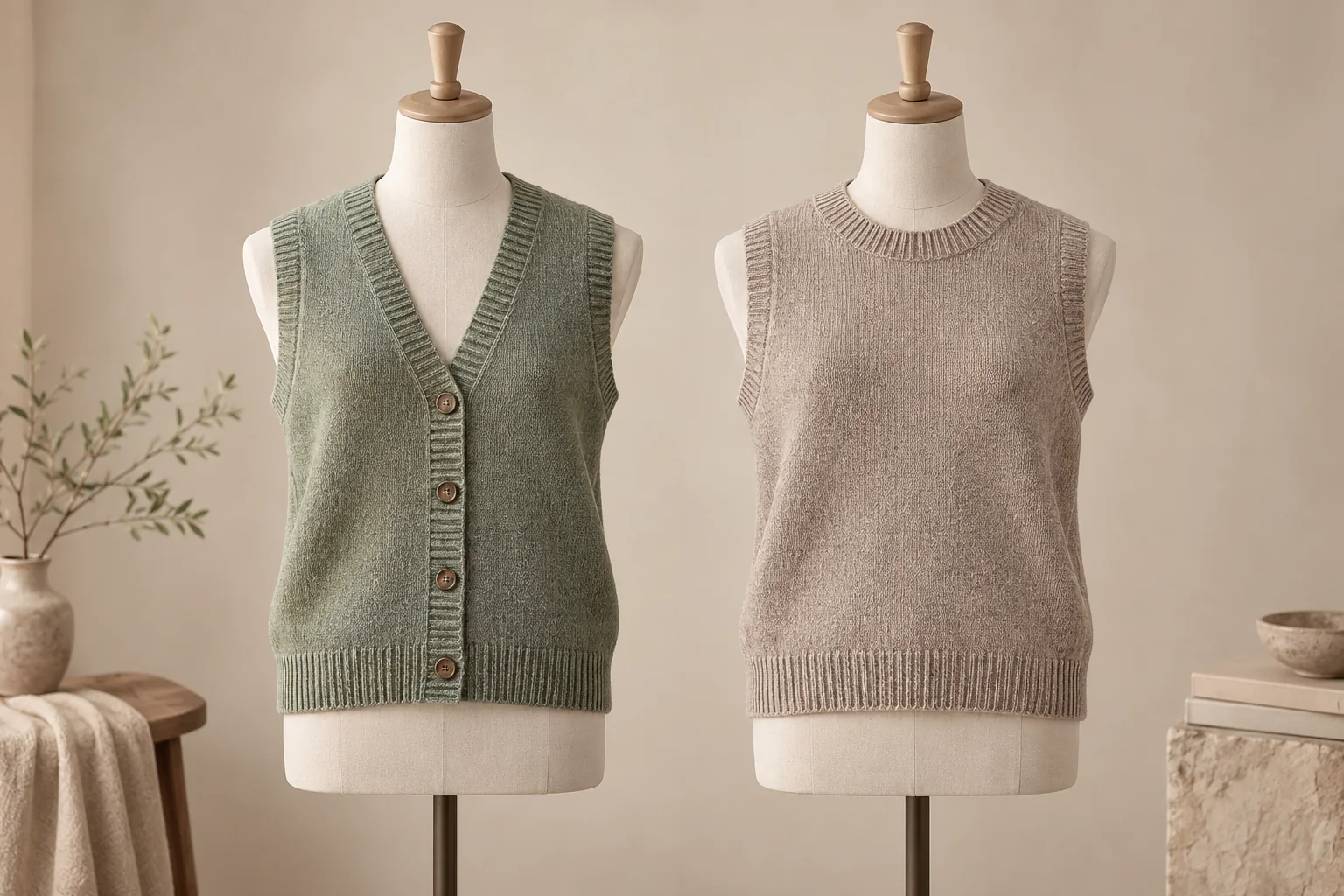
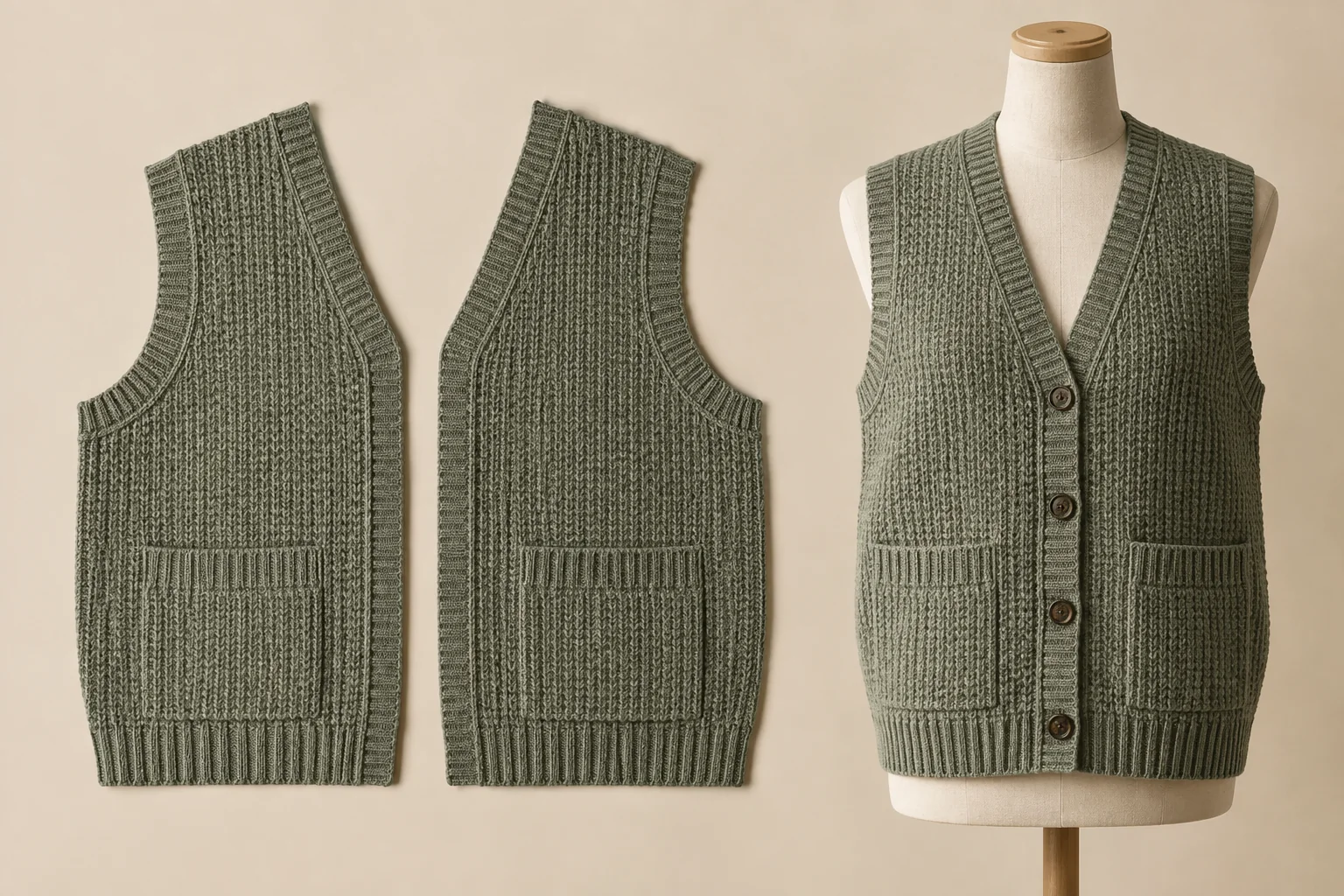
A buyer can place a cardigan vest and pullover vest in the same yarn family, but the garments cannot share a front-entry decision. One opens at the front; the other has to clear the head and shirt collar. That choice changes band, shoulder and armhole construction before styling details are added. Compare the routes as complete worn samples instead of pricing a pullover block with an opening cut into it.
Which product job separates a cardigan vest from a pullover?
Choose entry before copying a block
The pullover vest entry depends on a usable neck opening and the stretch and recovery of the chosen trim. The cardigan vest can open from neck to hem; it adds a new vertical edge that may carry a closure or hang freely. A brand may want the latter for layered styling, easier removal or a visible front detail. State the job, the planned fastening state and the desired opening line before selecting the block. A cardigan vest with no fastener still needs an approved natural gap and two front-edge paths.
Name the underlayer and wearing states
A shirt collar, long-sleeve tee and bare-neck styling do not present the same contact surface. Name the primary layer and any other outfit the product must support. For the cardigan vest, decide whether it must look right open, closed or partly closed. For the pullover vest, decide whether the neck returns to its intended shape after dressing. Take unadjusted front, side and back views before pinning a front edge into place for an attractive photograph.
Review armhole clearance in each route’s wearing states. A cardigan can reveal more of the shirt when open, while a pullover can look balanced after dressing yet require excessive handling to pass the head.
Route-specific garment measurements
Map body and garment references separately
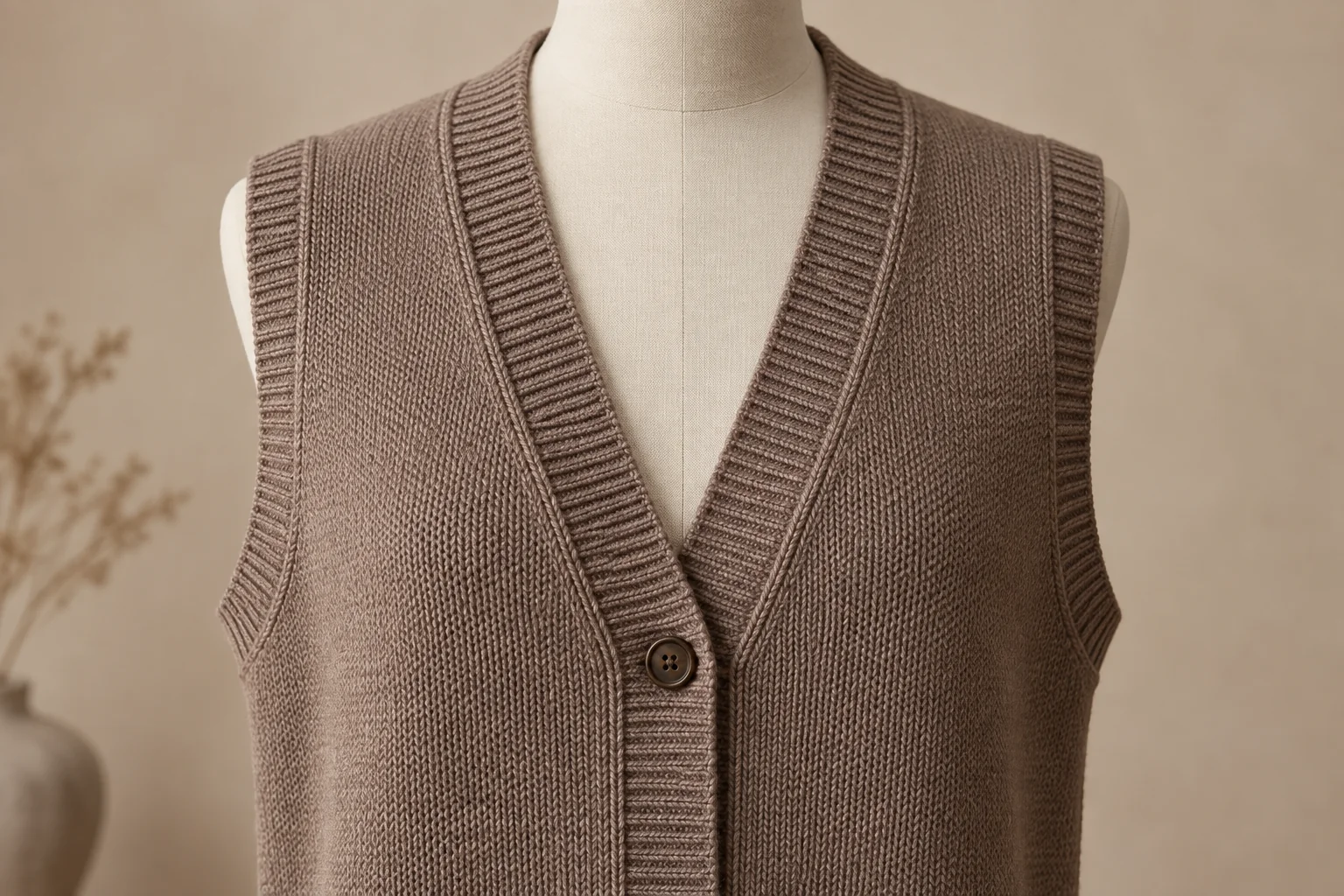
Start with the target wearer and named underlayer. Record the body points needed for shoulder, chest and arm movement, then mark finished vest shoulder width, neck opening, armhole path, chest and hem. ISO 8559-1 describes body-measurement definitions for apparel profiles, not the finished ease of this product. ISO 18890 describes garment measurement points and permits additional agreed points. Add the front-edge points a cardigan vest requires.
A closed pullover front may need only one front-centre reference, while the cardigan requires left and right front lengths, band width if present, overlap or natural gap, and the end of any fastening. Mark where the two routes share a point and where they cannot. The knitwear tech-pack guide can store the complete drawing. Do not present one chest width as proof that the two vests have interchangeable front balance.
| Route criterion | Cardigan vest record | Pullover vest record | Buyer decision |
|---|---|---|---|
| Entry | Front opening and fastening state | Neck extension for dressing | Choose how wearer enters |
| Front | Two edges, gap or overlap, band | Continuous panel and neckline | Approve front outline |
| Shoulder | Width and opening-side support | Width and neck-side support | Approve position in wear |
| Armhole | Edge and shirt clearance by state | Edge and shirt clearance after dressing | Compare exposure |
| Material | Yarn, knit and finished version | Yarn, knit and finished version | Identify comparable samples |
| Size transition | Closure or band rule changes | Neck and body grade changes | Select risk sizes |
Keep construction differences visible in the record
Different yarns, stitches or fit blocks make the prototypes complete alternatives rather than a comparison of the front opening alone. List those differences and inspect the actual inside finish of each.
Label each cardigan trial by its band, closure and paired fronts. Label the pullover by its neck trim and continuous front panel. State which components the selected silhouette depends on before asking another sample room to preserve it.
How does the split front affect shoulder and armhole fit?
Inspect support on the cardigan opening side
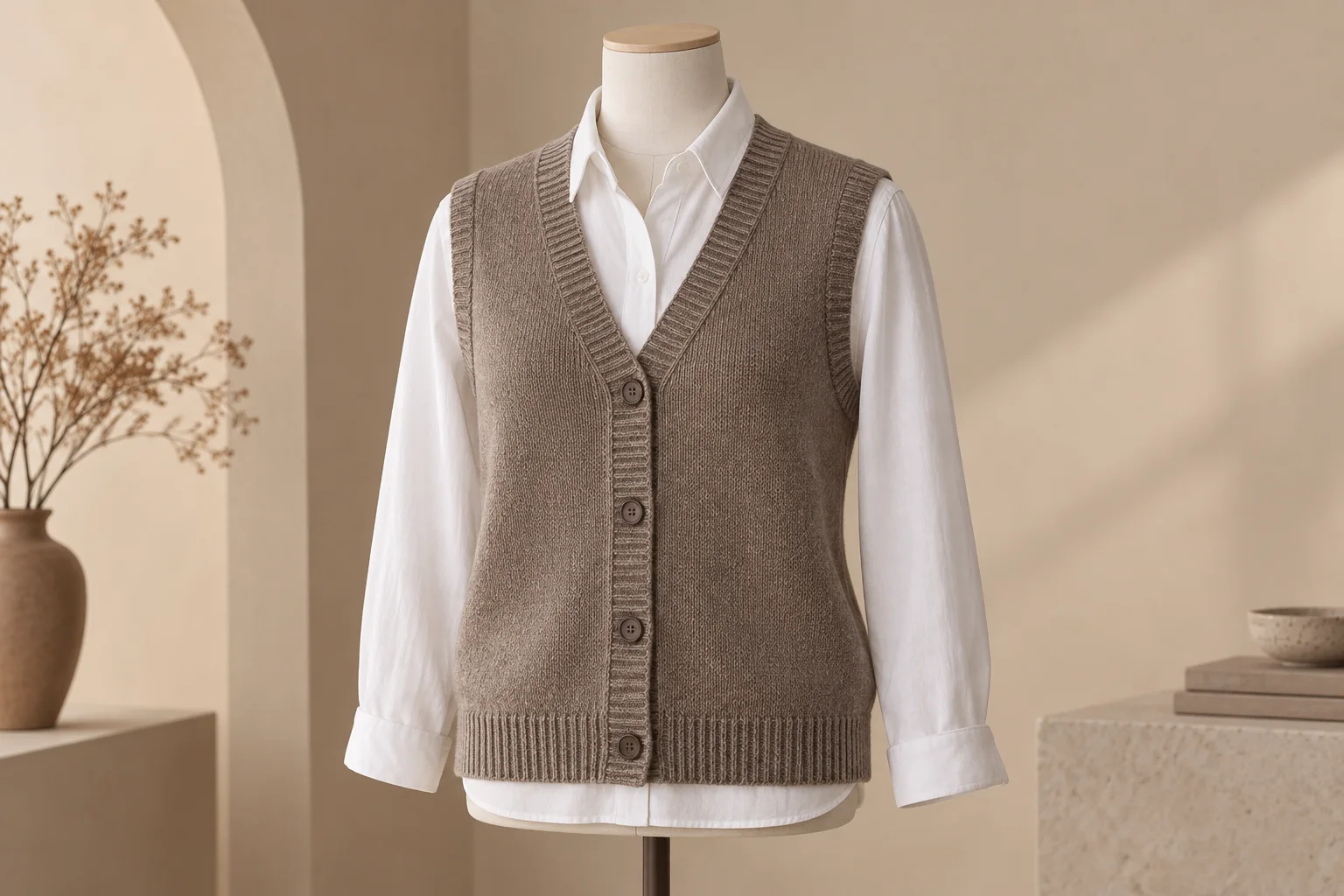
Two front edges can move independently. An attached band or closure may add material near the neck and shoulder; an unfastened front may swing when the wearer reaches forward. Put the cardigan vest on the intended underlayer and photograph it at rest and in the agreed fastening states. Mark whether the shoulder stays in place and whether the armhole edge reveals the intended amount of shirt or side body. A flat front photo will not show how the opening alters the side view.
A firmer cardigan front can straighten one line while pulling the shoulder inward. A wider body can close the front gap while increasing armhole exposure. Compare the worn front and side before choosing which relationship to revise.
Check the pullover after dressing
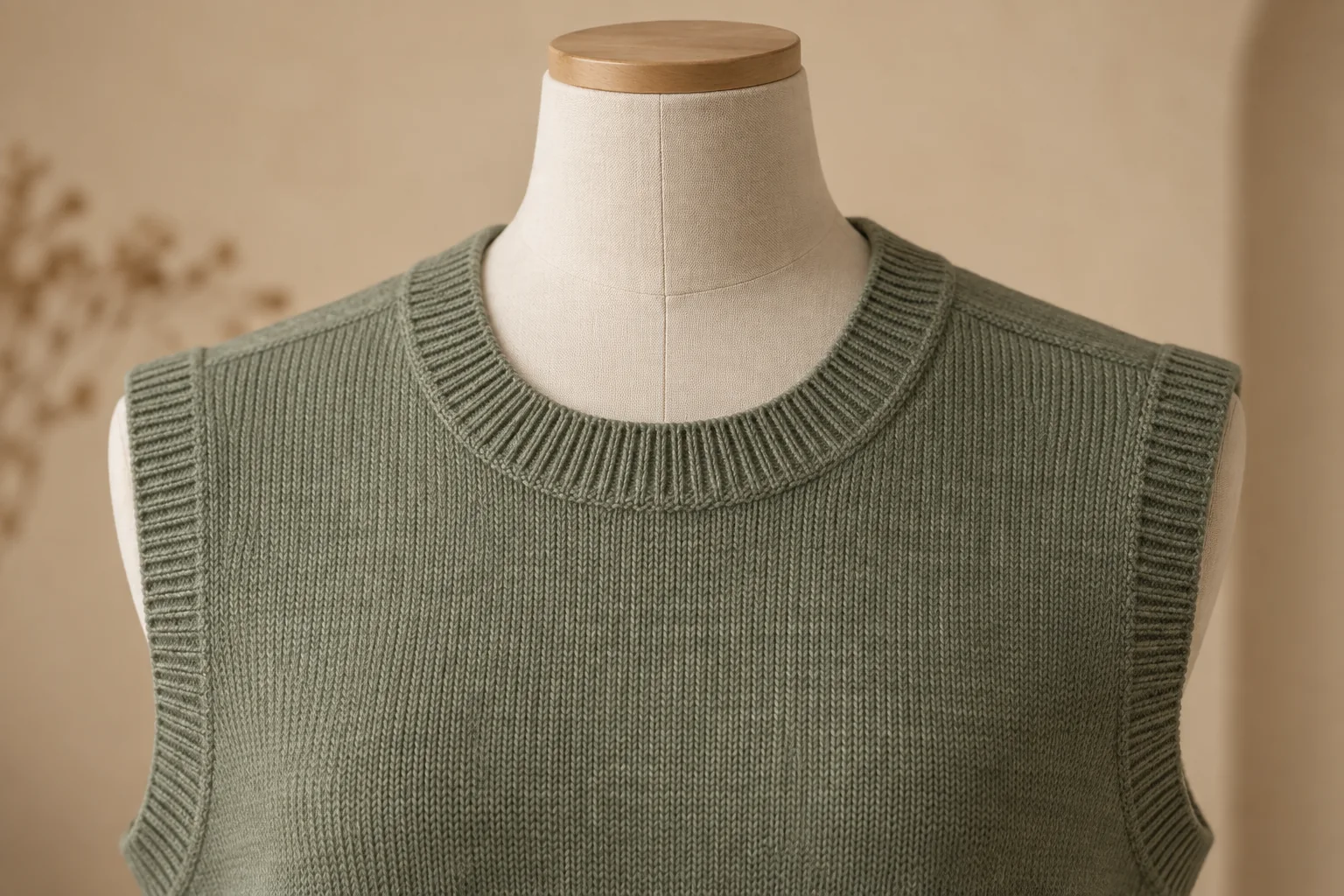
The pullover vest has no split front to release at the neck. Ask the reviewer to put it on normally and let the garment settle without re-shaping the opening by hand. Observe the neck trim, shoulder points and armhole edges over the named underlayer. If the neck takes too much force during dressing, investigate entry and edge response before widening the entire body. If the armhole gaps afterward, review shoulder position and side shape rather than assuming the entry is solely responsible.
Building the matched wearing comparison
Make the outfit and garment state repeatable
Choose the same fit model or suitable forms for the planned sizes, and use the same primary underlayer when comparing routes. Give each prototype its own label. Photograph front, side and back at rest. Then repeat the relevant action: open and close the cardigan if it has a fastener; dress and remove the pullover; reach forward and raise an arm for both if the product use calls for it. Note any manual adjustment. A before-and-after comparison with different shirts or posture may suggest a construction effect that was only styling.
Decide the route before adding decorative changes
A buyer may prefer a buttoned cardigan vest because it adds design interest, or a pullover vest because its front is uninterrupted. That commercial preference is legitimate. Keep it separate from fit evidence. Once a route is selected, refine button placement, trim colour or surface motif without claiming those later decisions were already tested by the basic comparison. If a new trim changes band weight or neck opening, reopen the affected part of the trial.
Grading and caring for each construction
Grade opening and shoulder by construction
A size set cannot simply enlarge one flat vest drawing and assume both routes keep their positions. The cardigan’s front gap, overlap or fastener count may change; the pullover’s neck entry may require a different rule. Shoulder width and armhole path must remain suited to the intended wearer in either case. The custom knitwear grading guide provides the broad framework. Build a route-specific map and select lower, base and upper size samples, adding a transition where a component or program changes.
Record the same wearing views for the risk sizes. A good base cardigan vest does not approve an upper size whose fronts spread or lower size whose armhole loses coverage. A good base pullover does not approve a neck opening that cannot be used comfortably in another size. Distinguish the intended grading rule from the measurement tolerance for each finished size. The measurement-tolerance guide covers how those limits are agreed after the route is chosen.
Review the actual proposed care route
A front band and a continuous body may change differently after care. Specify the product’s intended wash or dry method, then compare identified pre-care and post-care samples using the same garment points. AATCC TM150 describes garment length and width change after home laundering for applicable products, with limitations for some stretch fabrics. A development wash photograph does not become a completed standard test because it appears beside a method citation.
Compare appearance as well as dimensions. The cardigan fronts may still measure alike while one edge curls. The pullover neck may retain its width while sitting at a different position after dressing. If the yarn or finish changes, reopen the affected route; the yarn-substitution guide explains that earlier approval belongs to an identified material. Keep the previous accepted garment as a physical reference rather than inventing a universal recovery allowance.
Which route-specific fault needs another trial?
Link the observed fault to the next trial
| Construction conflict | Relationship to investigate | Buyer action | Closing record |
|---|---|---|---|
| Cardigan front swings in reach | Shoulder, edge and body balance | Trial one front route change | Unadjusted rest/reach views |
| Band lifts one shoulder | Band weight and neck join | Compare component options | Inside and worn front views |
| Pullover neck strains in dressing | Entry and trim response | Hold that route approval | Dressing and recovery sequence |
| Armhole gapes in either route | Shoulder, side and underlayer | Review route-specific fit | Same-shirt side view |
| Care shifts only a front edge | Knit and finish response | Reopen cardigan version | Paired edge and hem measures |
| One size loses clearance | Grade or component transition | Restrict size group | Physical size-set sample |
Frequently Asked Questions
Can a sweater vest simply be cut open to make a cardigan vest?
It can suggest a base shape, but the new front edges, band or closure, shoulder support and armhole position require their own sample review.
Does a cardigan vest always need buttons?
No. It may hang open by design. Define the natural gap and how the garment should look while moving over its intended underlayer.
Is a pullover vest easier to grade?
It removes a full front opening but retains neck-entry and recovery decisions. Check physical size samples around changes to the neck and armhole.
Can both routes use the same underlayer trial?
Use the same primary outfit to compare them fairly, then perform each route’s specific entry or fastening action. Add another layer only if the product brief requires it.
In a CNSweaters vest enquiry, name the selected entry route and attach its front, shoulder and armhole drawings with the unresolved fit view.