 CN Sweaters
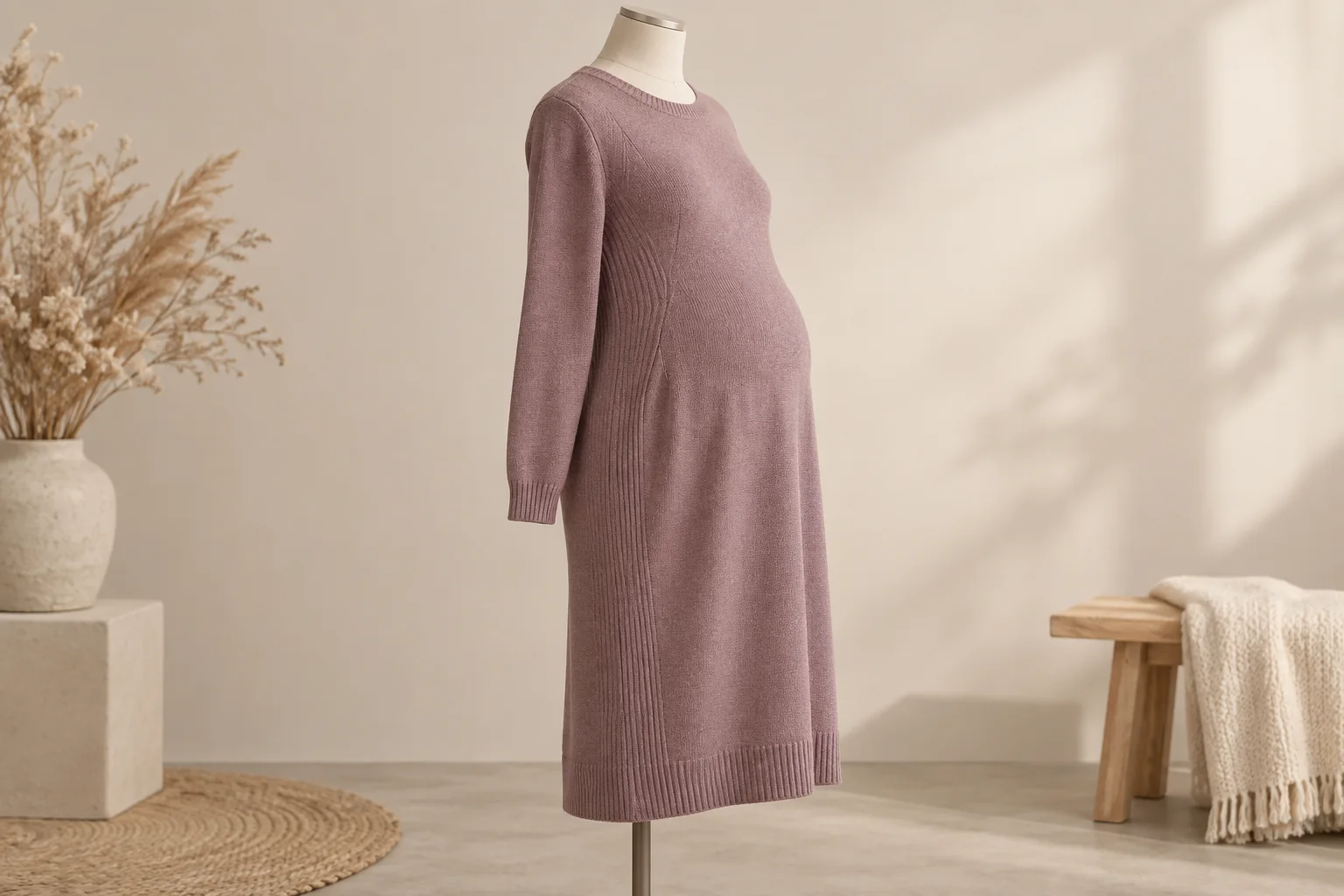
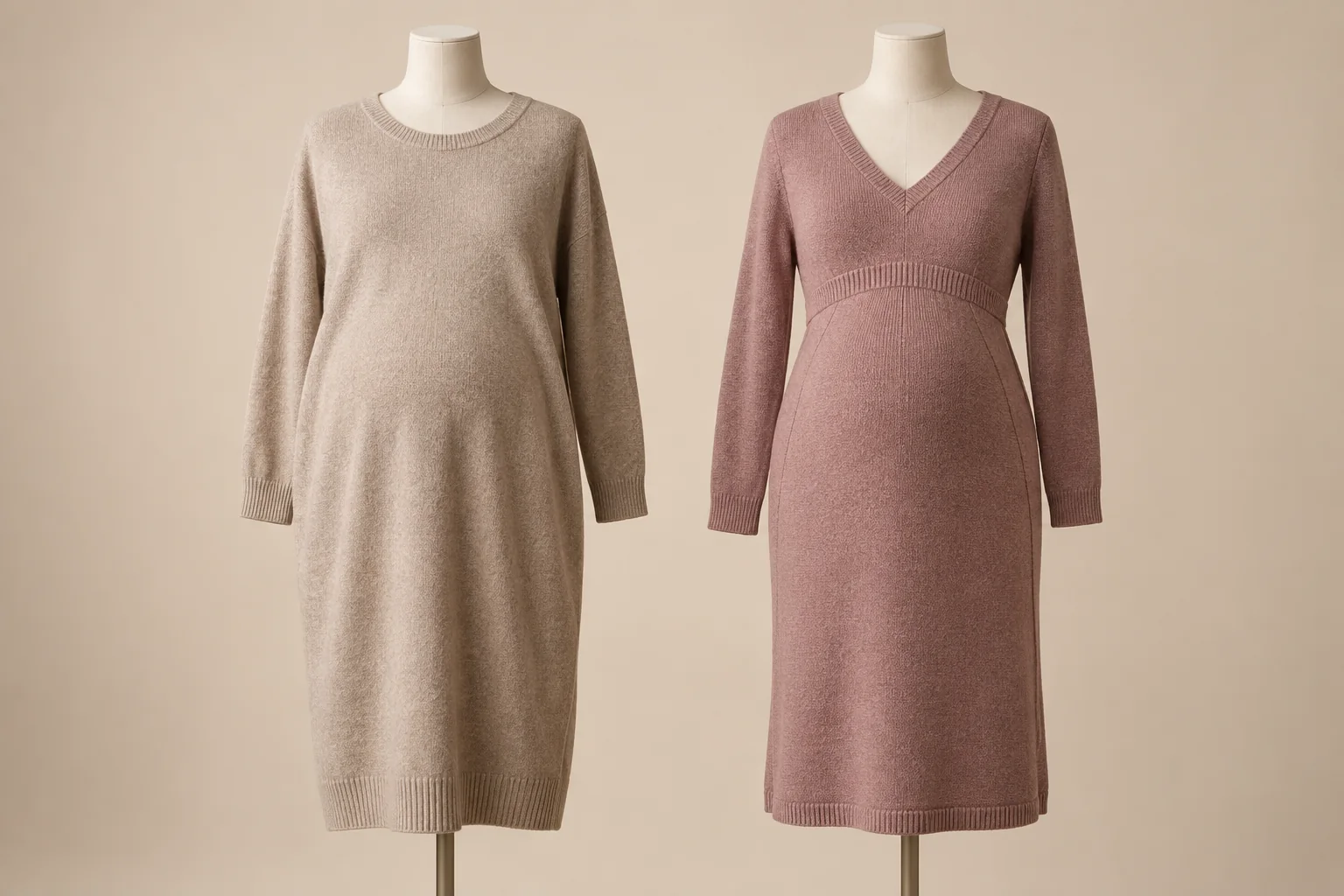
The maternity dress developer must allocate room to the bust, abdomen and hip while deciding which neck, shoulder and hem anchors should remain in place. Compare that zone map on the brand’s selected body profiles. An extensible swatch can screen a material, but only the assembled dress shows whether added abdominal room rotates a side seam or lifts the upper body.
Which wearer brief should define the maternity knit dress?
Choose maternity knit dress user profiles before mapping zones
Ask the brand which wearers its dress range is intended to fit. Record the body measurement source and any differences the range must represent; do not infer those measurements from a retail size label or one fit model. The same person can describe fit preferences differently for office wear, layering or a closer evening silhouette. Give the technician a product use brief and a set of authorised fit references, including the undergarments expected under the dress.
State the wearing and coverage conditions
Define dress length, intended underlayer, neckline coverage, sleeve or sleeveless construction, and whether the garment should skim or sit away from the body. Ask which actions matter in normal use: dressing, walking, reaching and sitting may reveal different issues. A photograph taken from one angle cannot establish how the garment feels or where it shifts. Keep a front, back and side reference in a natural resting state before adjusting the garment for a campaign image.
Which maternity knit dress measurements define the zone map?
Mark body and garment points separately
Record the body measurement basis for each chosen fit profile and the finished garment points for the dress. Mark bust, upper abdomen where relevant to the product, fullest abdomen in the chosen fit reference, hip, shoulder, neck opening and hem. Use only points that the fit team can identify consistently; do not invent a universal maternity measurement schedule. ISO 18890 describes garment measurement points and permits additional agreed points. Put the additional zone paths on the project drawing.
A dress can have the intended total width while allocating too little of it to one panel. Include front and back distribution, side-seam position and any shaped insert, rib field or gathered section. The knitwear tech-pack guide provides the wider document; the zone map needs extra evidence about where the garment actually gives room. Measure each identified dress after the same finishing and resting condition so options are comparable.
The first table fixes the records needed before the buyer asks for a new maternity dress sample.
| Wearer profile | Record needed | Comparison enabled | Boundary or owner |
|---|---|---|---|
| Fit profile | Body data source and user group | Checks sample relevance | Brand defines intended range |
| Wear brief | Silhouette, underlayer and actions | Repeats intended use | Buyer chooses use conditions |
| Expansion zones | Front/back bust, abdomen and hip map | Locates room in garment | Designer marks panel rule |
| Stable anchors | Neck, shoulder and hem landmarks | Detects displacement | Fit team approves coverage |
| Material state | Yarn, knit, finish and sample version | Interprets stretch response | Sample room identifies trial |
| Size matrix | Selected profiles and transition sizes | Finds rule breaks | Brand selects review set |
Keep maternity knit dress ease tied to an actual profile
Ease is the relationship between the chosen body and garment dimensions at a defined state. A negative-ease decision in one zone cannot be inferred from an unstretched swatch or copied to every user profile. Specify where the dress is meant to stretch in wear, where it should remain relaxed, and what movement the product must accommodate. If the brand has not chosen a target relationship, ask for paired alternatives rather than recording an invented number as a production rule.
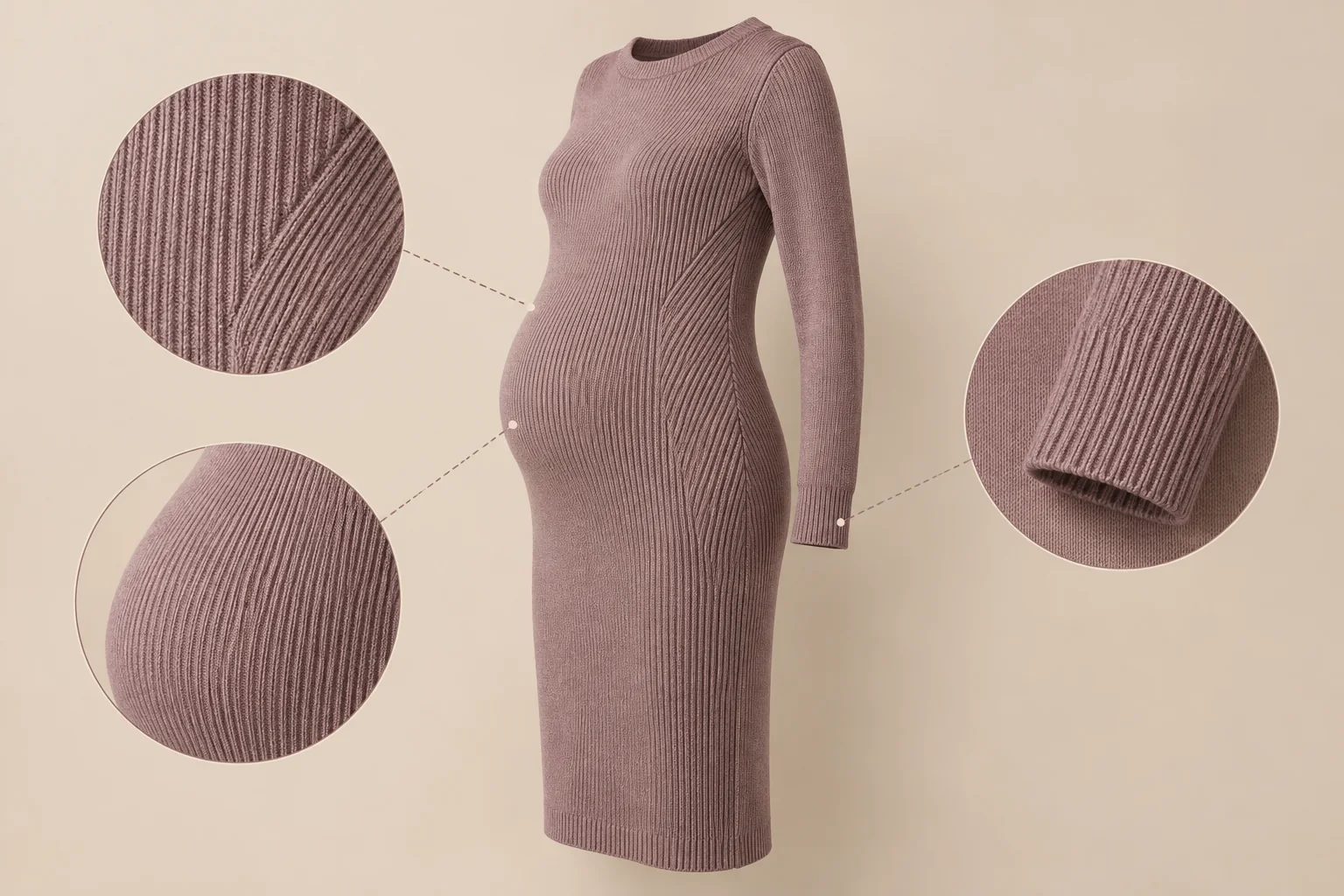
What can a maternity knit dress material trial establish?
Compare fabric and complete dress evidence
A knitted material’s stretch response can inform the design, but the assembled dress includes neck, shoulder, panels, seams and hem. CottonWorks’ knit basics describes how intermeshed loops allow movement. It does not certify that a particular garment accommodates a named wearer. Ask for an identified material option and examine the whole dress in the intended size and construction. If two options also use different panel shaping, record both differences.
Observe recovery in the stated wearing sequence
Observe the intended wearer dressing, moving and returning to rest in the selected undergarment. Locate extended zones and displaced anchors, then ask directly about restriction relevant to the apparel brief. A photograph cannot establish pressure, health effects or the wearer’s comfort.
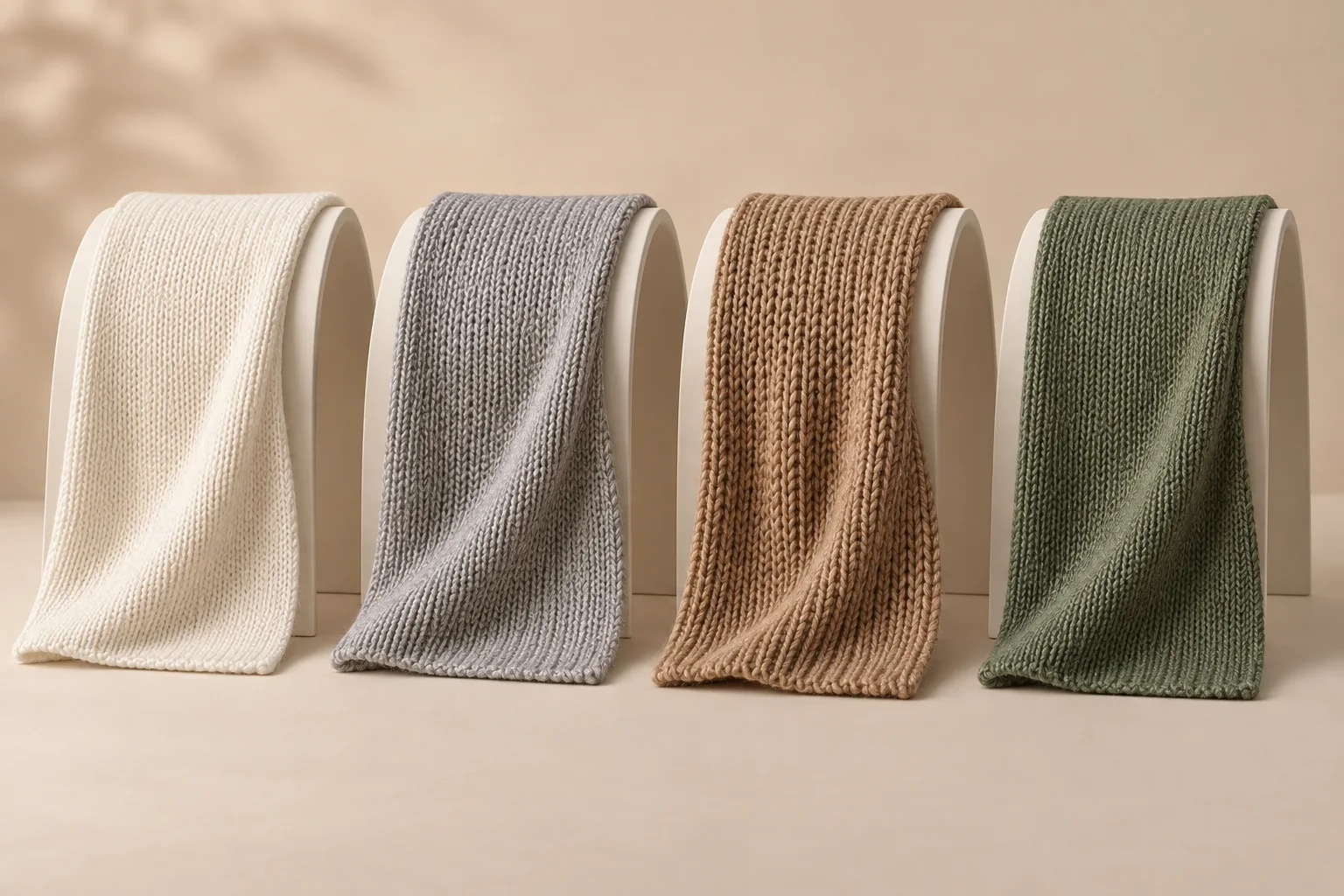
Which maternity knit dress anchors must stay stable?
Review shoulder and neckline position
Added front-body room should not be judged alone. Observe whether the shoulder seam remains at the intended place, the neckline covers the chosen area, and the back neck settles as designed. If the dress pulls from the front and lifts at the shoulder, simply widening the neckline may create a new exposure problem. Check the side seam and front/back panel distribution first. A sample may need a different shaping route rather than a larger opening.
Check hem and length during the same action
Room added to the abdomen may alter how the front length hangs relative to the back. Record the planned front and back hem landmarks and observe them at rest and while sitting or walking. A level flat hem can move to a different visible position on a body. Do not assume every wearer needs one fixed extra front length; compare selected profiles and ask the design team to approve the desired outline. A hem that stays down while the neckline pulls may still need an upper-body correction.
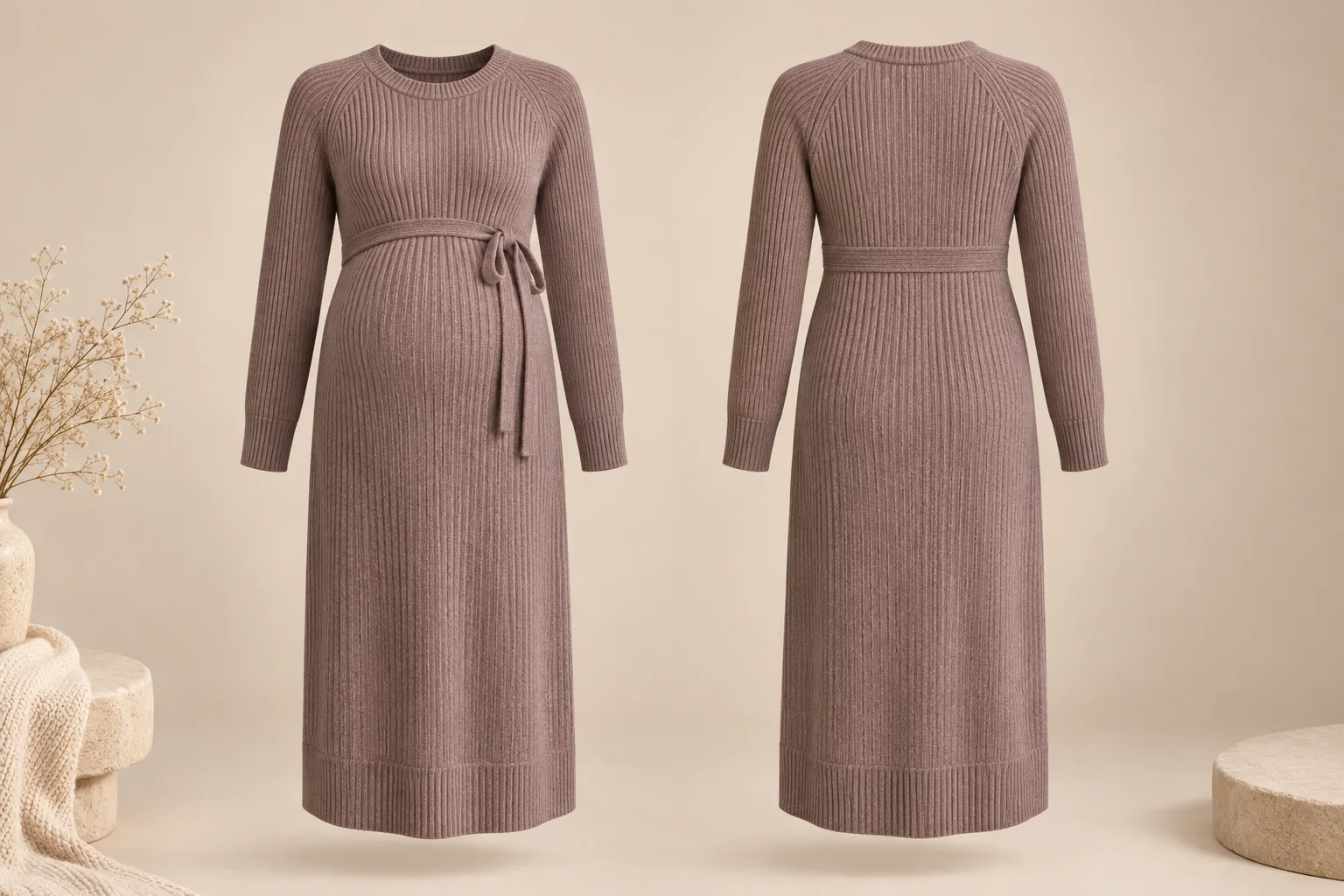
How should a maternity knit dress range represent more profiles?
Select samples around changing fit relationships
A size label may collect wearers with different bust, abdomen and hip relationships. The brand should define the profiles it intends to serve and select size samples that test those relationships, including a lower, base and upper size and any transition where panel construction changes. These are proposed review positions, not a universal maternity stage sequence. The actual sample plan depends on the offered range and available representative fit references.
Separate a grade rule from a claim about customers
A grade says how the garment changes between sizes. It is not evidence that all customers who buy those sizes will have the same body shape or fit experience. State the design profile behind each chosen rule. If one size requires a new front-panel route, show the exception and retain a physical sample. Avoid a universal promise that the dress “grows with every stage” unless the brand has defined the stages and tested the exact product for that claim.
What evidence closes a maternity knit dress fit comment?
Ask the next sample to answer one observable question
If the abdomen needs more room while the shoulder and hem are stable, trial a defined front-panel or knit-structure change. If added room shifts the side seam, compare panel distribution before increasing total width again. If the wearer reports restriction despite a generous flat measure, inspect the action and garment response rather than dismissing the report. Each request should identify the reviewed user profile, garment version, state and next observation needed.
The decision table turns a sample finding into a bounded action without inventing a pass percentage or pressure target.
| Zone response | Relationship to investigate | Buyer decision | Closing evidence |
|---|---|---|---|
| Front pulls while back stays loose | Panel distribution | Trial front-shaping change | Same-profile front/back views |
| Hem rises in sitting | Zone room and front length | Hold hem approval | Matched sitting and rest views |
| Neck shifts with front expansion | Shoulder and neckline anchors | Review upper-body support | Marked shoulder and neck sequence |
| Side seam rotates | Front/back width balance | Recheck panel allocation | Worn side view and drawing |
| One profile cannot dress easily | Entry and material response | Test a defined alternative | Dressed and undressed record |
| Care changes zone relationship | Knit and finish state | Reopen affected version | Identified pre/post-care sample |
Frequently Asked Questions
Is there one size progression for maternity dresses?
No. Define the intended wearer profiles and the fit evidence available. Do not assign a universal pregnancy stage or body change to each retail size.
Can a stretch fabric test approve comfort?
No. A fabric method may describe material response within its scope. Comfort and whole-garment fit require identified wearer feedback and garment observation.
Does more abdominal room solve every fit issue?
It may change the side seam, shoulder or hem. Locate the first conflict and compare a defined panel or material alternative with the same user profile.
Can one fit model approve the entire range?
One model can guide development. Check selected sizes and representative profiles before transferring that result across the planned customer group.
What claims should the product page avoid without evidence?
Do not promise medical support, pressure effects or a fit across unspecified pregnancy stages. Describe the actual garment design and verified fit conditions.
A maternity fit approval should name which wearer profiles and actions were represented. Untested conditions remain open; a fabric stretch number is not a comfort or medical result for the assembled dress. Use a CNSweaters fit-development enquiry to carry the zone map and one unanswered wear condition, so the sample team can propose a bounded next trial.