 CN Sweaters
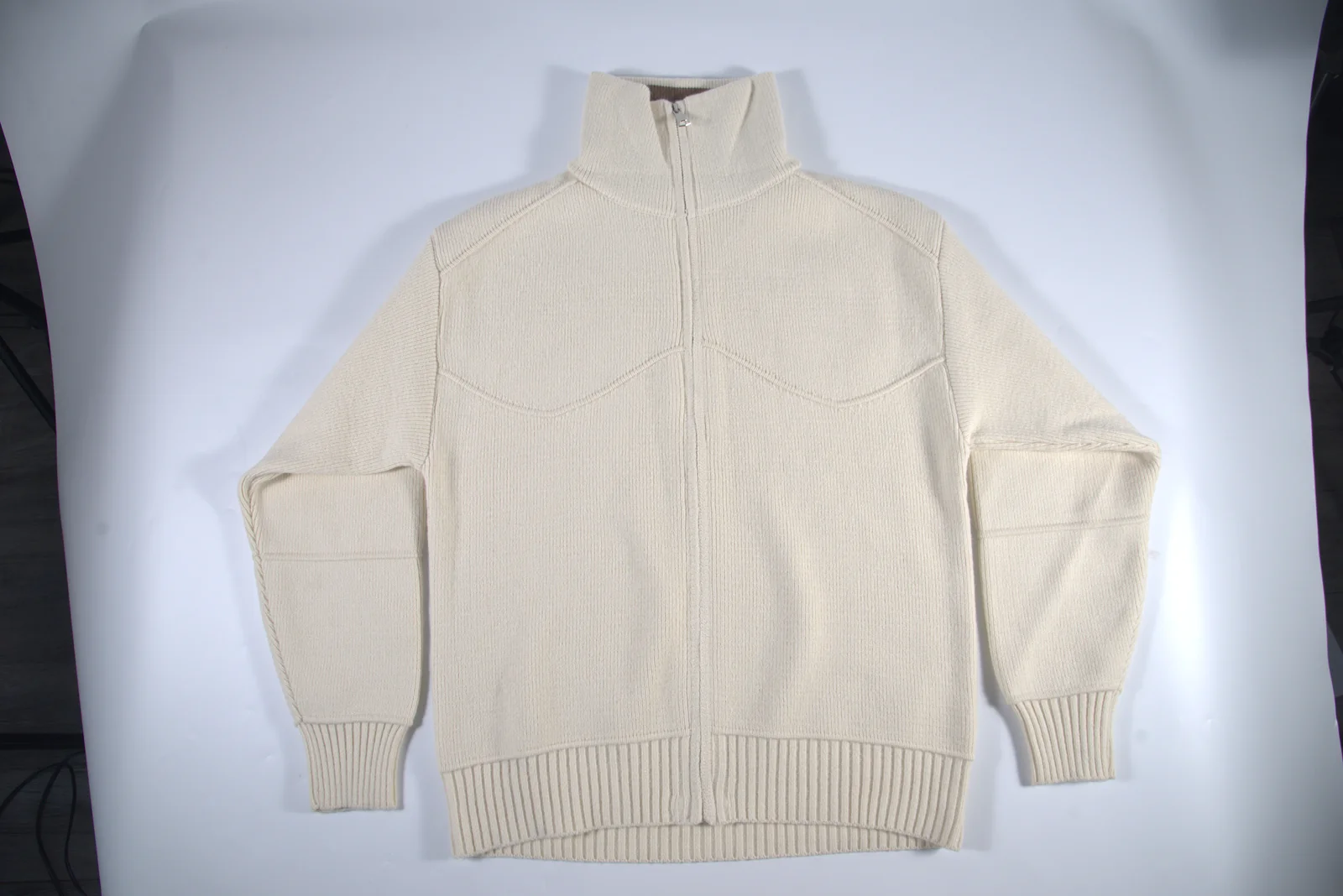
If a funnel collar twists only when the zip closes, compare the two states before replacing the component. If the twist is already present unfastened, examine collar, panel and attachment geometry. Steam that removes it only briefly creates a different question: what happens after the garment rests?
What should buyers record before correcting a funnel-neck zip?
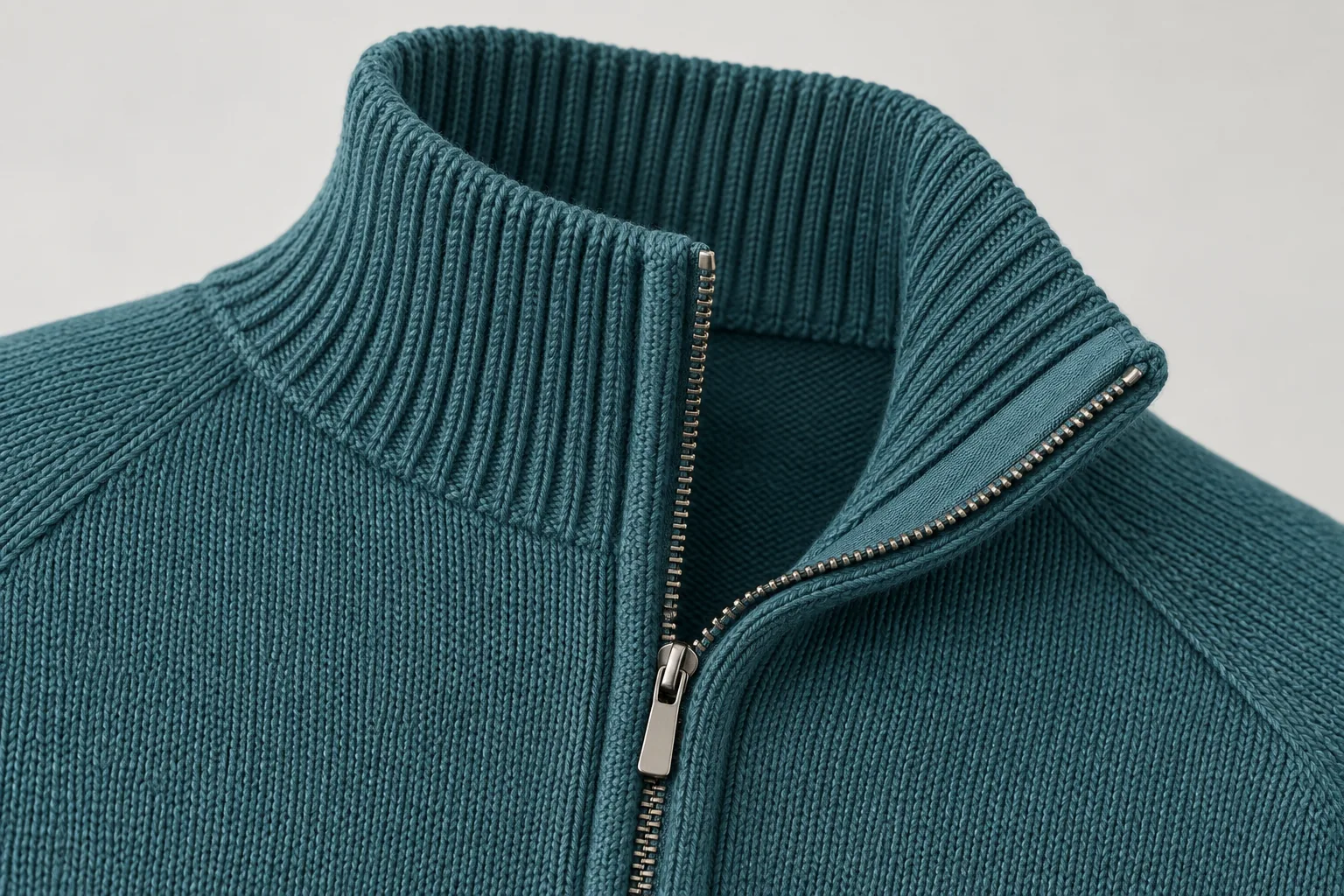
Keep the garment as received
Identify the garment, size, colour, yarn or programme revision, zipper item and known finishing history. Photograph it as received before pressing, unpicking or arranging the collar.
Record whether it arrived hanging, folded, fastened or open. If packing has pressed one side of the funnel, that starting condition matters to the comparison. It does not prove packing caused the symptom.
Use the reference-sample guide to keep the affected sample and accepted reference distinguishable. Retain the original findings even if someone can make the collar appear symmetrical by hand.
Ask the sender to describe any earlier correction. A garment already steamed or altered may still be useful, but its history limits what the reviewer can infer from the present appearance.
Describe the visible symptom before choosing a cause
Record the visible condition: left collar edge higher, opening rotated relative to the chest, diagonal placket, local wave, uneven fold, or another defined condition. Mark the location and view that shows it.
Avoid comments such as “bad zipper” when the only evidence is an uneven collar. A component, attachment, panel or fit issue can require different corrective work.
Record whether the symptom is stable, intermittent or dependent on the garment state. If reviewers disagree, repeat the presentation and measuring method before asking production to change construction.
Use consistent left and right references in the image record. State whether a label refers to the wearer’s side or the viewer’s side, and avoid mirrored photographs that reverse the apparent defect. Include a full garment view with each detail so the location remains recognisable. Label the edge and garment in each close photograph so a later reviewer can connect it to the measurement or corrective comment.
Comparing relaxed, closed and returned states
Build a short state sequence
Compare the relaxed unfastened garment, a normally closed opening, the specified partly open position, and the returned relaxed state where relevant. Keep the form or wearer and underlayer consistent.
| Comparison state | What to observe | Companion reference | What the observation cannot prove alone |
|---|---|---|---|
| Unfastened and relaxed | Collar edges, shoulder position and placket hang | Front, side and back views | Whether closing force causes the symptom |
| Normally closed | Centre line, top stops and neckline position | Same form and underlayer | Which component created a visible change |
| Partly open as sold | Fold, roll and left/right collar relationship | Agreed opening position | Behaviour at every possible zipper position |
| Returned to rest | Persistence or disappearance of the change | Original relaxed view | Long-term recovery or durability |
| After documented care | Dimensional and appearance differences | Matched pre-care record | Equivalence to another treatment |
| After a proposed correction | Effect on the original symptom and nearby zones | Uncorrected sample or its records | Cause if several variables changed together |
Locate opening movement against the body
Look beyond the collar. Record the neck opening, shoulder positions, chest reference, front length and the opening’s relationship with the garment centre.
If the upper body shifts when fastened, inspect its fit and paired geometry. If the body remains stable while one edge turns, focus the next questions on the local collar, placket or attachment.
Use the measurement chart guide and consistent terminology from ISO 18890. Add references for the top stop, collar edge and funnel turn where the general measurement chart does not describe the symptom.
Keep the two front and collar lengths separate. An average can hide the left/right difference the reviewer needs to investigate.
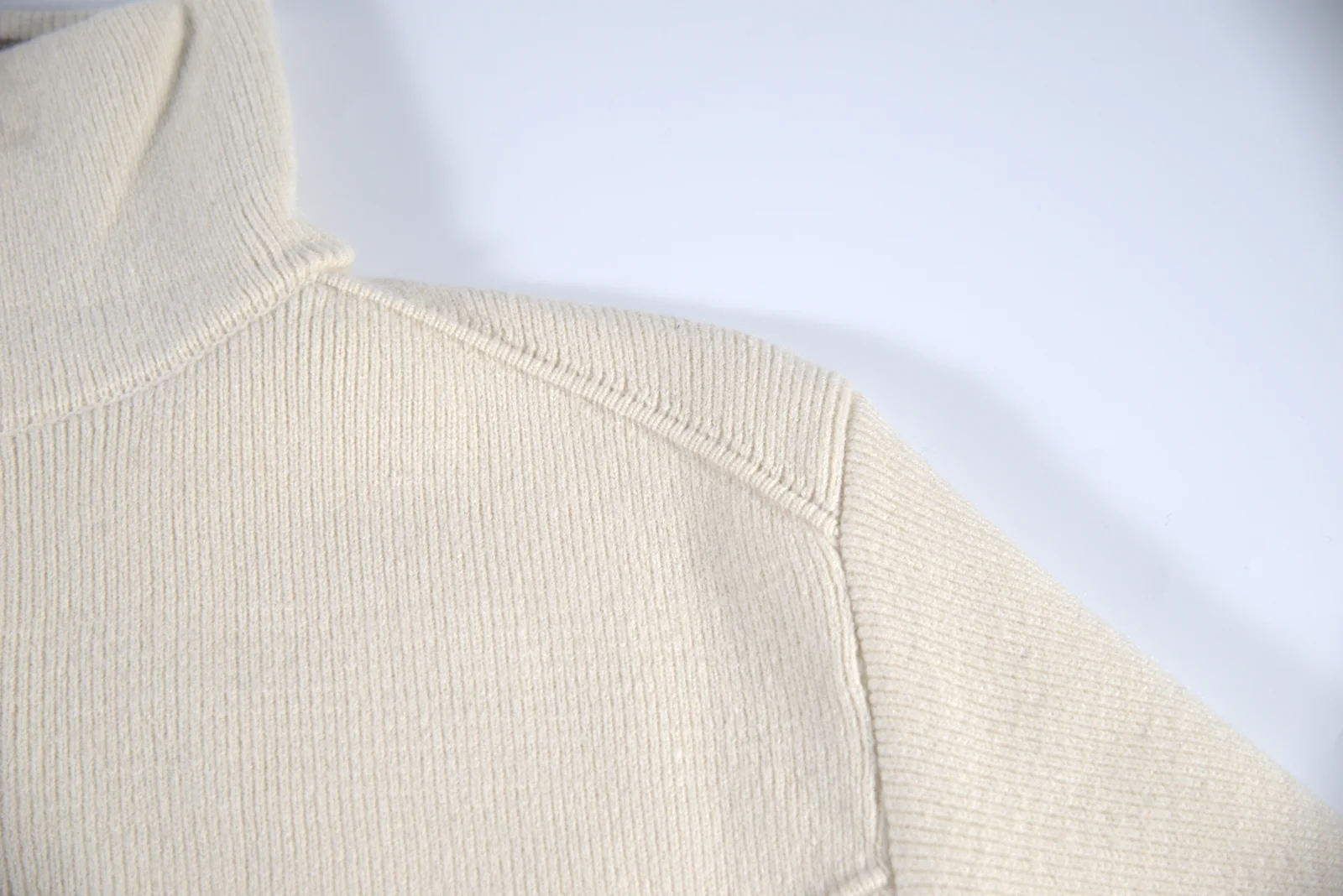
Does operation change the symptom?
Check function separately from appearance
Observe slider travel through the positions required by the garment brief. Note sticking, unusual force, contact with the knit or a change in collar shape during operation.
ASTM D2062 addresses zipper operability. Its scope does not turn an informal opening-and-closing review into a durability test, nor does component operation prove that the funnel neck fits correctly.
Record the actual zipper supplier item and the garment assembly used for the operation review. A loose zipper and an attached zipper answer different questions.
Distinguish a closed-end short opening from a separating full-length construction. Do not request an insertion check for a component that does not have that function. The review should match the installed zipper.
Inspect tape and attachment
Photograph both sides of the placket and the inside where accessible. Locate attachment start and end points, visible tape, support, facing and the connection to the collar.
Ask the supplier for the specified component length and the finished attachment reference. A catalogue length alone may not identify the tape’s placement inside this garment.
Review the left and right attachment routes without assuming that a visible mismatch establishes a sewing cause. Compare the records and physical landmarks; keep a suspected explanation labelled as a hypothesis until the corrective comparison supports it.
Document the original state before unpicking the only affected sample. If the technician needs to disassemble it, agree the sequence and photograph the components and attachment as they become visible.
Testing a suspected component or assembly cause
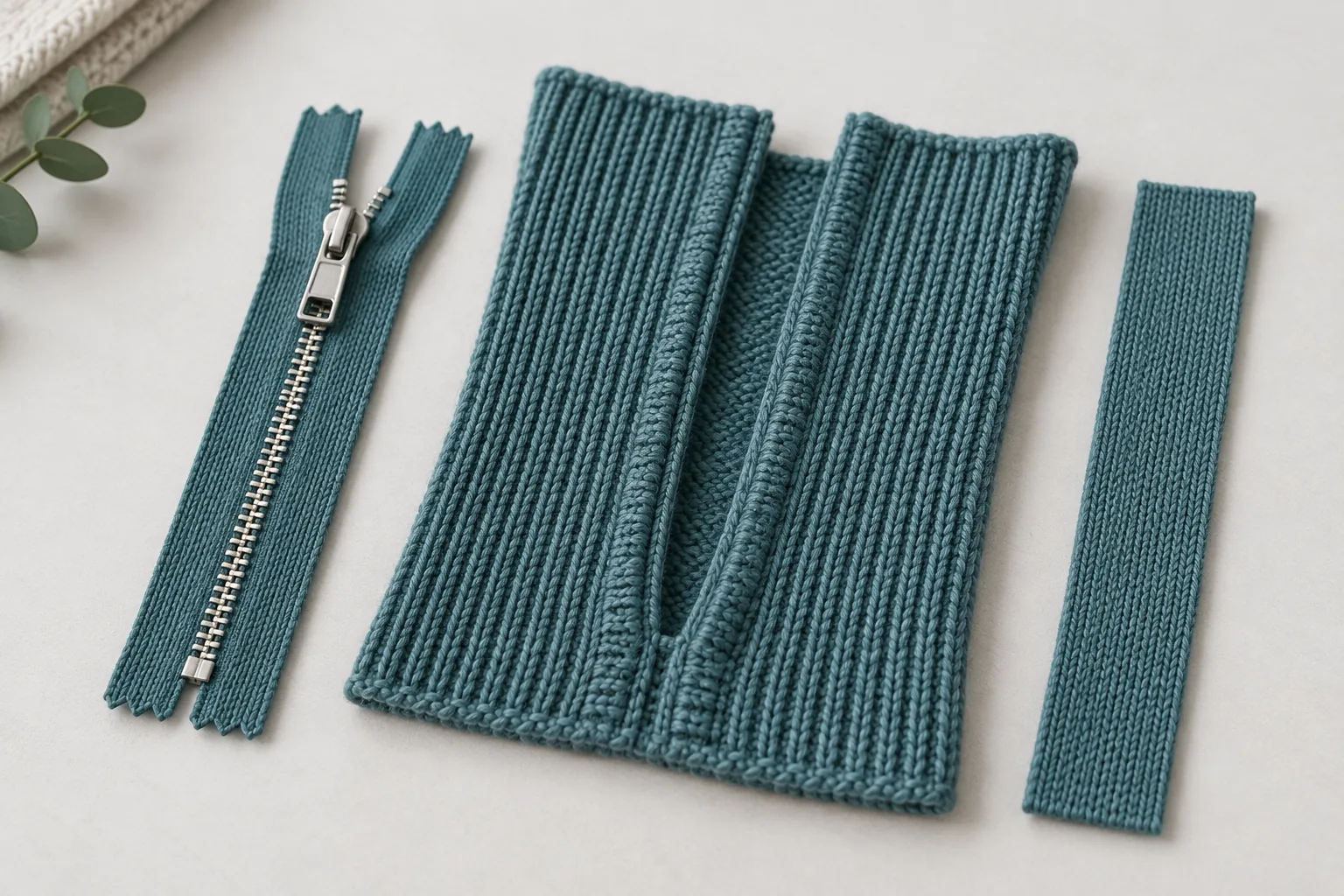
Ask one comparison to answer one question
Write a proposed cause and the observation that would support or weaken it. For example, the team may ask whether the symptom follows the zipper item, the collar revision or one attachment route.
Where practical, ask for comparable samples with the surrounding inputs held steady. If the factory must change several things to make a workable revision, list them and evaluate the complete revised route honestly.
Record comparisons that do not improve the symptom as well as successful ones. If a component change leaves the twist unchanged under equivalent conditions, that observation can help the technical team narrow the next question. It does not establish that the component has no effect in every construction. Keep the result tied to the actual samples and the variables controlled during that comparison.
Before commissioning another trial, agree which result would change the decision. The supplier should know whether the buyer needs a causal comparison, a workable revised construction, or both. Those requests may need different sample arrangements. Repeatedly asking for a better-looking garment without specifying the question can consume development time while leaving the same uncertainty unresolved.
Use fit evidence when the symptom follows a size or body
Compare the same sample on the approved form or wearer before attributing a change to hardware. A different underlayer or upper-body fit can change how the opening sits.
The fit-sample and size-set comparison guide helps separate a base-sample problem from a size-specific relationship. Review the affected size against its actual dimensions and grade instructions.
If one size shows twist, identify its collar, placket and component arrangement. A passing neighbour is useful comparison evidence, but it does not clear the affected size.
When the symptom appears only on one body block, document that limitation. The next action may concern fit representation rather than a blanket change to every zipper in the order.
What role do care and finishing play?
Compare the same collar before and after care
Record the garment before treatment, after the selected process and after the stated rest. Include drying or support, steam or press where used, and any manual reshaping.
AATCC TM150 addresses garment dimensional change after home laundering. The technical team must select a relevant method and conditions for the product; the method title alone cannot define the collar assessment.
Measure the relevant body, placket and collar landmarks rather than reporting only overall garment length. A local change can remain hidden inside a single summary value.
Distinguish a controlled finish from a temporary rescue
If steam removes the twist, record the route and the subsequent rested appearance. The observation may inform a finishing proposal, but it does not automatically identify the original cause.
ASTM D1776/D1776M provides conditioning guidance when required by a textile method. Use the selected method correctly rather than comparing a freshly treated collar with an unrelated stored reference.
Ask the supplier to specify the proposed finishing step and explain how production can repeat it. An operator’s one-time arranging action should not become the hidden requirement for an accepted inspection photograph.
If the buyer accepts a different collar roll or softness after finishing, update the product reference. Preserve the distinction between changing the appearance target and demonstrating compliance with the earlier target.
Accepting the corrective construction
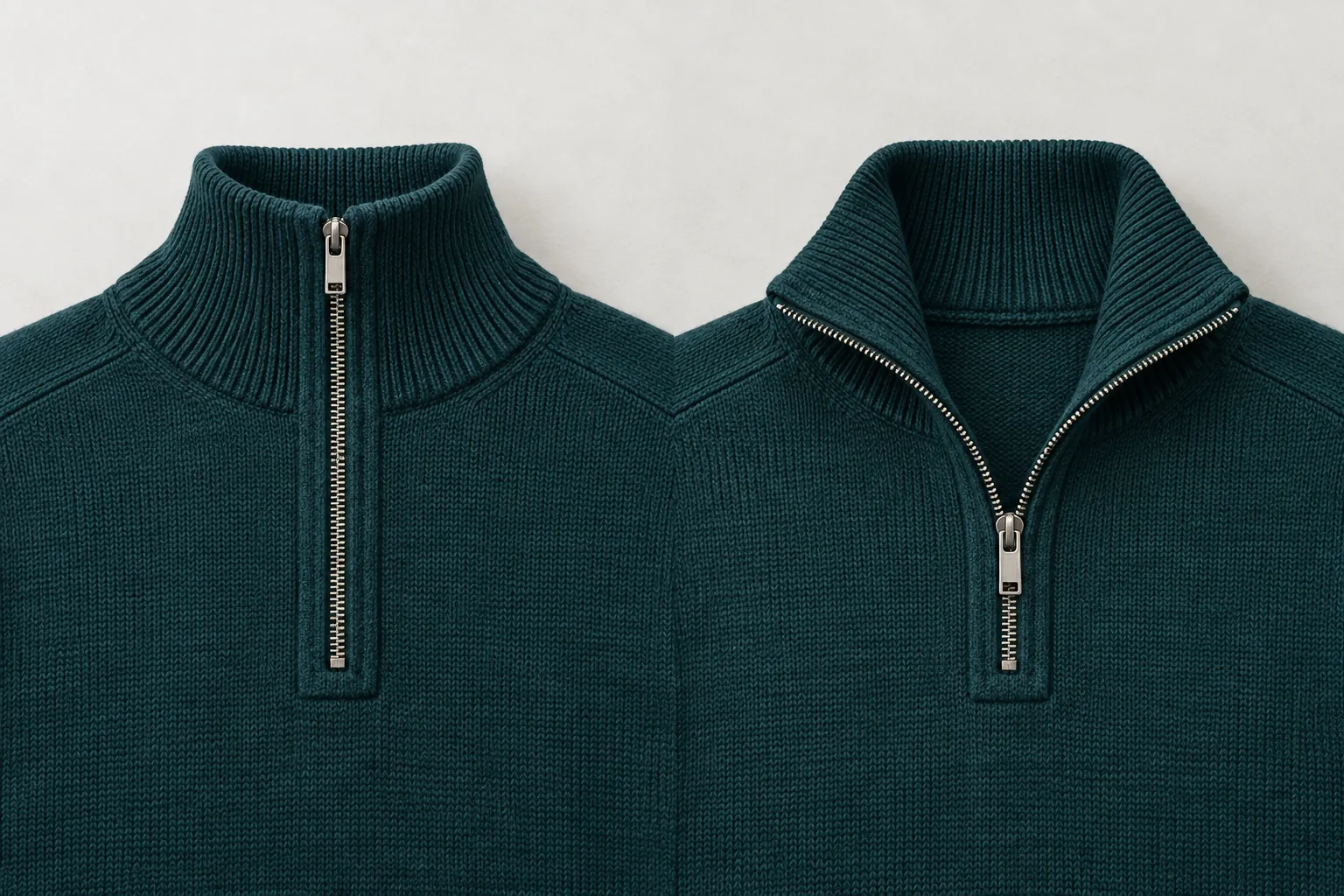
Check the original symptom first
Repeat the recorded state sequence on the corrected garment. Use equivalent views, measurement origins and the same relevant underlayer. Identify every changed input before comparing results.
Check whether the corrected sample meets the agreed limit for the original twist or wave. Then examine adjacent effects: collar fold, opening width, slider access, shoulder position and inside bulk may have changed with the correction.
A different zipper can remove a visible wave while altering the collar’s intended softness. A new support can straighten the opening while creating a ridge. The buyer needs to choose the resulting construction deliberately.
Separate correction evidence from order coverage
A successful corrective sample identifies a revised route. It does not show that every existing garment already follows that route.
List the affected sizes, component items, programme versions or production groups. Ask the supplier how production identifies those groups and which groups inspectors have checked.
If an inspector finds the issue during production, preserve the group’s status while the responsible team decides its disposition. Record that team’s decision on scrap, rework or release; a sample comparison alone does not authorize those actions.
Closing the cause and order-coverage questions
Match the disposition to the available evidence
| Finding | Interpretation still justified | Disposition | Closing evidence |
|---|---|---|---|
| Symptom appears only when the opening closes | Closure introduces a relevant change | Investigate the connected interface | Paired relaxed and closed observations |
| Twist is present before zipper operation | Cause may extend beyond closure action | Review collar, body and assembly inputs | Baseline geometry and inside records |
| New zipper and new support both remove the symptom | Revised combination performs differently | Assess the combined revision | Full change list and repeated state sequence |
| Steam helps only until the collar rests | Immediate appearance is insufficient | Keep the rested outcome open | Controlled treatment and later comparison |
| Corrected sample passes but affected groups are unidentified | Order coverage is unresolved | Hold the group-level decision | Traceable scope and inspection evidence |
| Buyer accepts another funnel shape | Target has changed | Sign the new product reference | Revised views, dimensions and limitations |
A hypothesis should remain provisional if the comparison does not isolate it. That is compatible with approving a satisfactory revised construction, provided the record explains what was and was not established.
Give inspectors the revised local references
The knitwear QC checklist needs the collar and placket views that reveal the original symptom. Define the garment state the inspector should use for those observations.
Retain the approved zipper item, support route, collar programme and correction record for reorders. If any dependency changes, identify the relevant checks before carrying the previous conclusion forward.
Prepare the affected sample, state-sequence photographs, paired measurements and component history when you contact CNSweaters about a funnel-neck zip development issue.
Frequently Asked Questions
Does zipper wave prove that the tape is too long?
No. Length, attachment, support, panel geometry and garment state all need consideration. Record the observation before selecting a cause.
Can a loose zipper test approve the assembled opening?
It supports component questions. It cannot show how the attached collar, placket and body interact.
Should every size be changed if one twists?
Identify the affected size and shared inputs first. A wider change needs a reason supported by the relevant scope.
Can a corrected sample pass without proving the original cause?
It can support approval of a clearly identified revised combination. The diagnostic record should state that the exact causal contribution remains unresolved.
What is lost if the sample is steamed before inspection?
Steam may alter the original state. Preserve the available history and identify which comparisons the reviewer can no longer make reliably.