 CN Sweaters
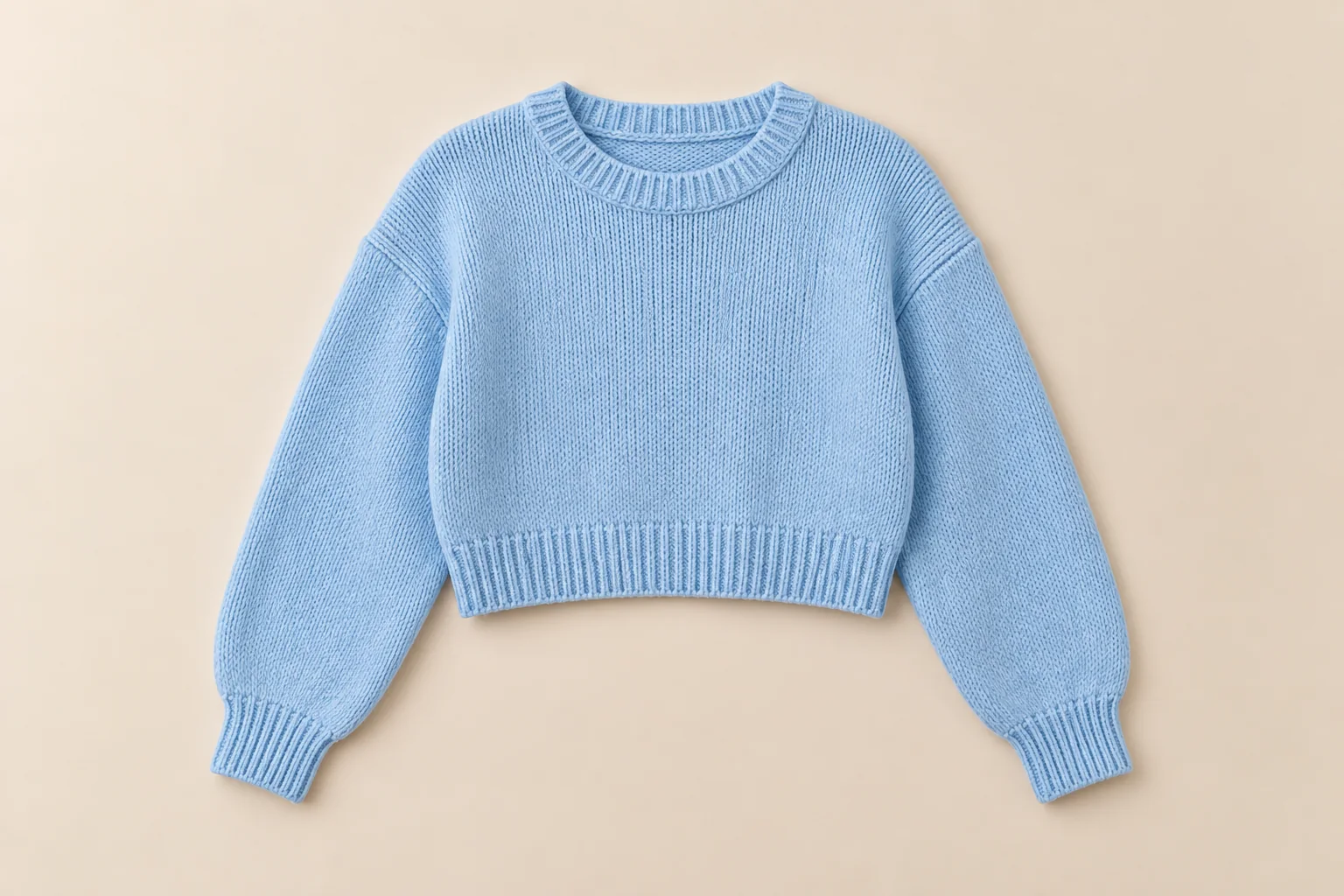
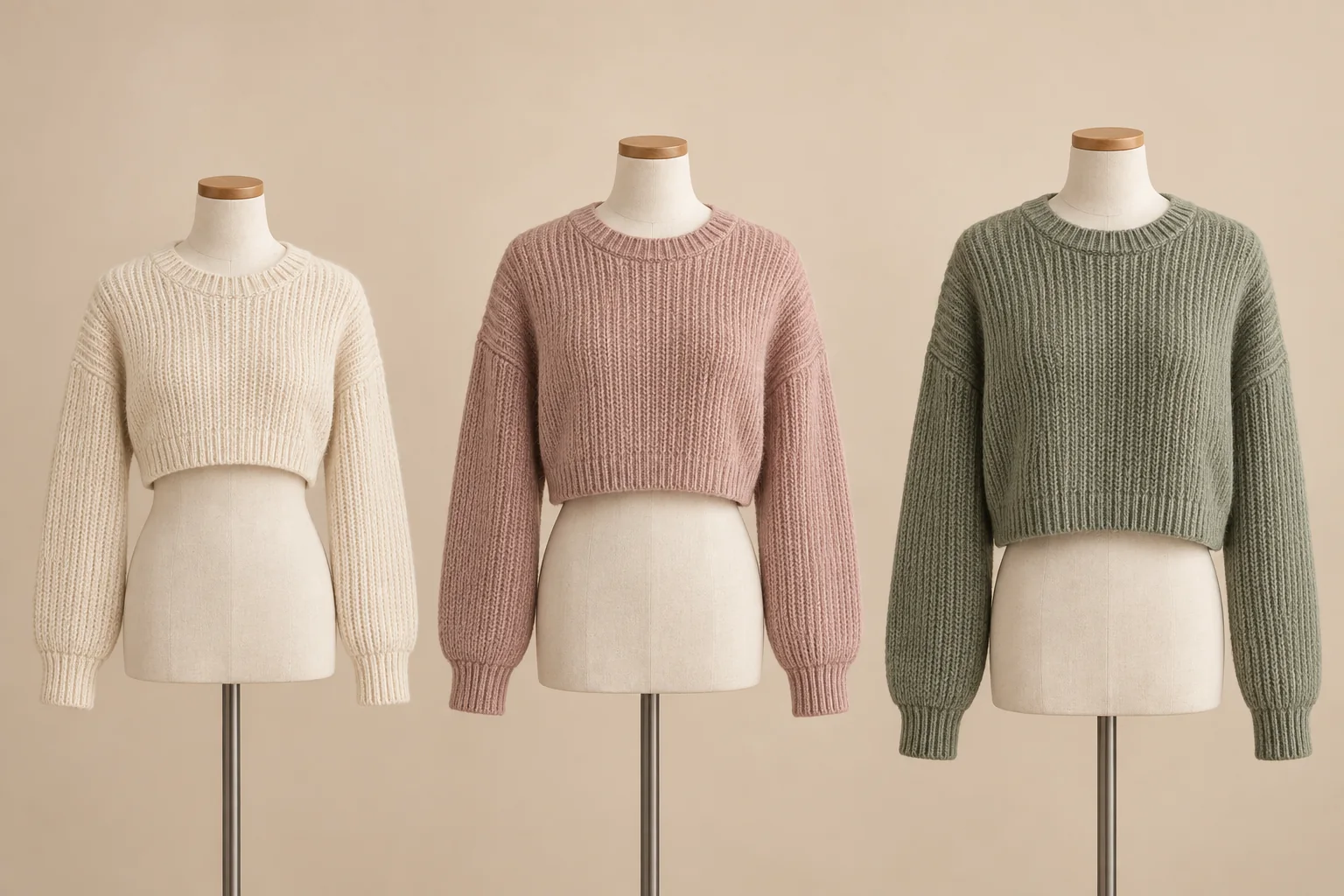
A size planner should ask which waistband a cropped sweater must meet before extending the base length through the range. An upper size can become waist-length, while a smaller size lifts beyond the intended gap during reach. Locate the crop on the selected outfits and compare shoulder, sleeve and hem together.
Which crop position defines cropped sweater grading?
Locate the cropped sweater grading hem landmark on the wearer
“Cropped” may mean ending above the natural waist, at the waist or at a brand-defined point over another garment. Identify that point for the actual wearer group before grading. Save front, back and side photographs with the intended trouser or skirt waistband and underlayer. Mark whether the sweater is meant to show a gap, meet a high waistband or overlap it. Styling a sample with raised arms or a tucked hem can make the apparent length difficult to interpret.
Decide what happens during ordinary movement
Ask the wearer to raise the arms, reach forward and sit if those actions belong to the product’s use. Photograph the garment before and after each without pulling it back into position. A cropped sweater will reveal more of the underlayer when the arms rise; the brand must decide the acceptable result rather than treating any movement as automatically defective. Note whether the hem returns, the back lifts more than the front, or the shoulder shifts.
Which measurements must cropped sweater grading connect?
Record body and garment references separately
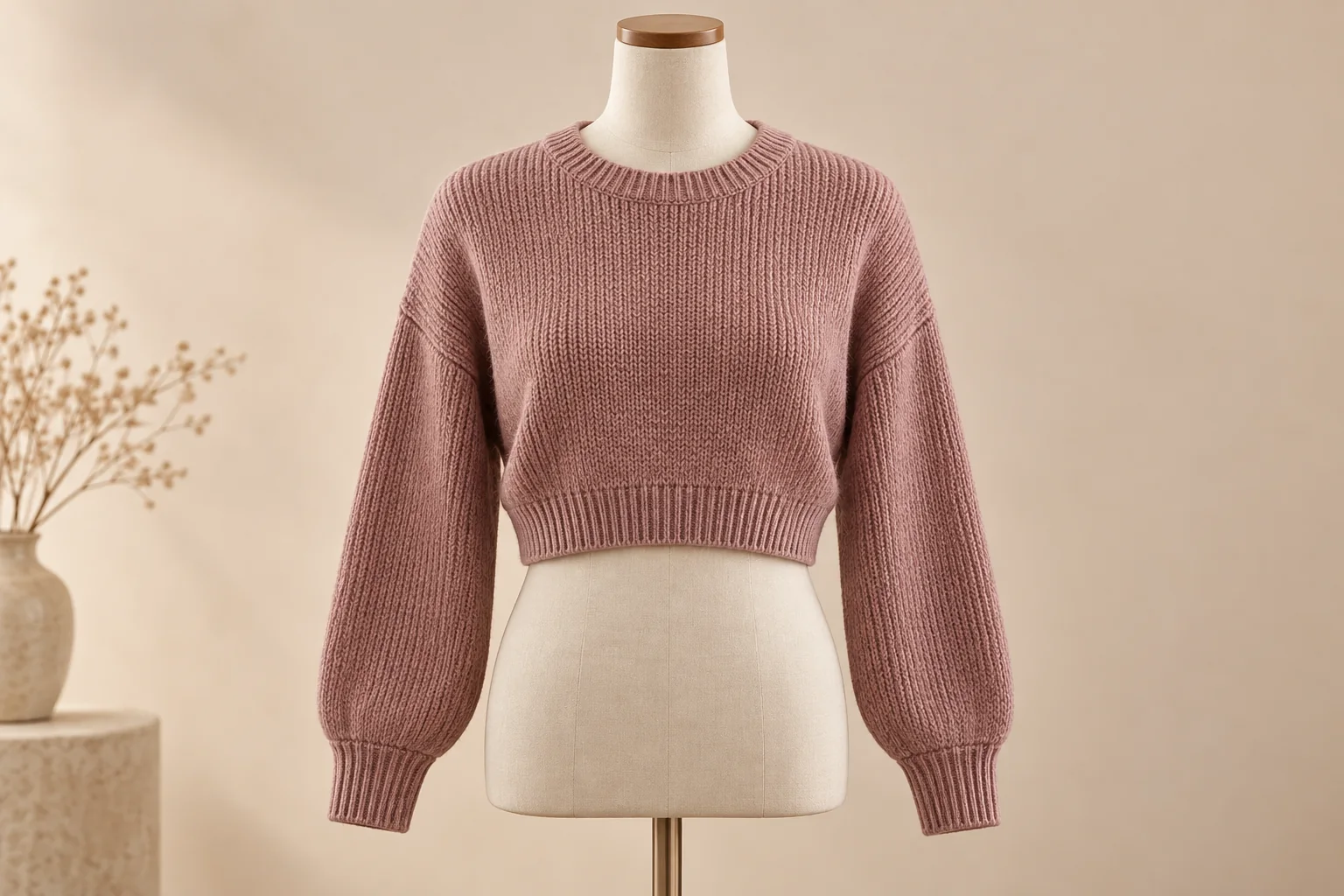
For each selected fit profile, mark the relevant torso, shoulder and arm landmarks on the wearer. Record finished sweater length from an agreed high point, front and back hem level, chest and hem width, shoulder location, armhole, sleeve and cuff position. ISO 18890 describes garment measurement points and permits additional agreed points. Mark any crop-specific start and end point on the drawing; the standard does not assign a desired sweater length or tolerance.
The first table gives the pattern and sample room a common basis for the proposed grade.
| Grade input | Record to supply | Comparison enabled | Responsible choice |
|---|---|---|---|
| Wearer profile | Body and outfit references | Locates intended crop | Brand selects customer range |
| Hem target | Front, back and side landmarks | Checks visual length | Designer approves silhouette |
| Upper body | Chest, shoulder and armhole points | Explains garment movement | Fit team reviews block |
| Sleeve reach | Shoulder path and cuff endpoint | Tracks reach compensation | Technician marks measurement |
| Material state | Yarn, knit, finish and sample revision | Separates length response | Sample room identifies trial |
| Size transitions | Rule and program exceptions | Selects risk samples | Buyer chooses review set |
Connect cropped sweater grading with sleeve reach
A cropped body can look even shorter when shoulder and sleeves pull it upwards. Sleeve length taken only from the shoulder seam can be misleading if the seam moves across sizes. Add a total-reach path from an agreed back-neck point to the cuff if it helps describe where the sleeve ends on the wearer. Mark the path and assess it alongside armhole and shoulder values. Two sweaters can have the same sleeve measurement and a different worn reach because the shoulder position changed.
How should a size set test cropped sweater grading?
Choose samples around proportion changes
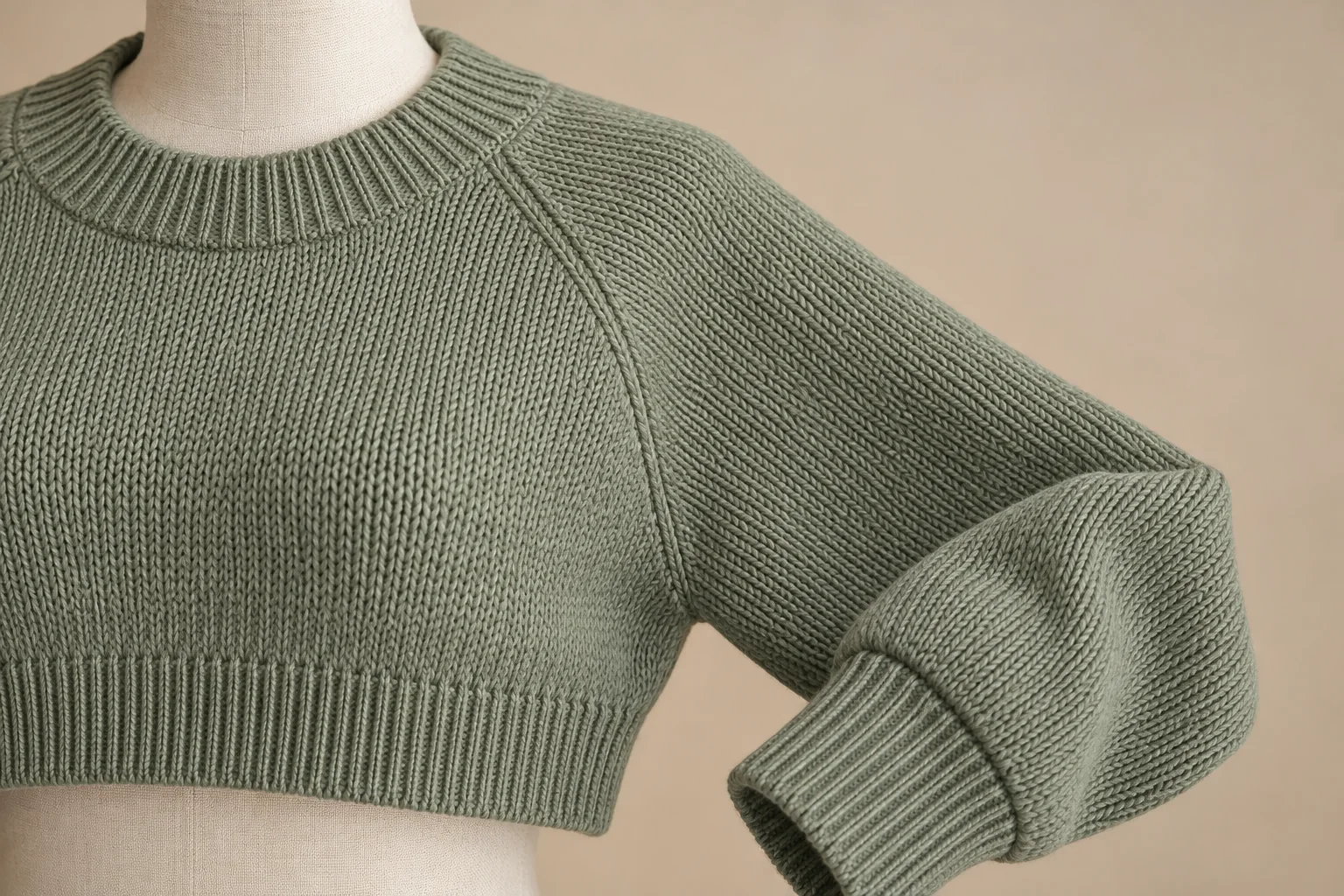
Review lower, base and upper sizes from the offered range. Add a transition where body panel shape, stitch program, rib width, shoulder route or sleeve construction changes. These are risk positions, not a universal requirement to make exactly four samples. Use a suitable wearer or form for each size. Photograph the sweater with the same type of lower garment or marked waistband position so the hem comparison means the same thing across the range.
Compare the intended waistband and actual front, back and side hem in each reviewed size at rest and after reach. If styling hides the hem, repeat the view. An intentional front/back difference needs both a drawing and a physical reference.
Keep front, back and side balance visible
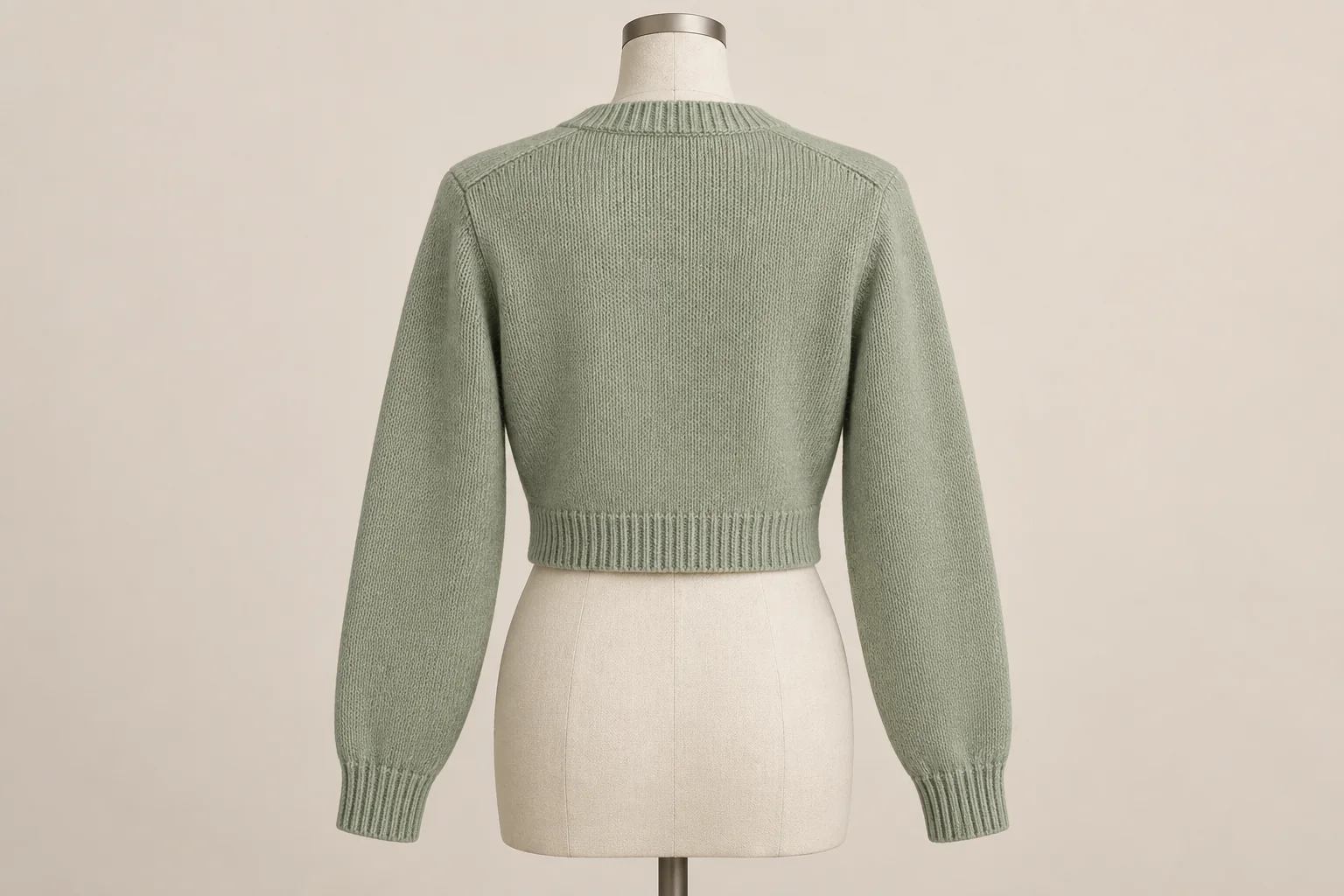
A short front photograph can hide a back hem that rides up or a side seam that tips forward. Ask for full-body front, back and side views at rest and after the chosen reach action. Note the shoulder and cuff in those views so a body-length problem can be distinguished from an upper-body pull. If one size shows a rise at the side while another does not, check seam balance and material state before adding hem length everywhere.
Which materials affect cropped sweater grading?
Review the actual yarn and knit construction
The proposed yarn, stitch, gauge and rib route influence how a cropped pullover hangs. A sample in an unrelated material can demonstrate a rough silhouette, but it cannot close length and movement approval for the selected construction. CottonWorks’ knit basics describes the flexibility of looped fabrics. It does not establish the exact recovery of this sweater. Identify every material and program revision used in a fit comparison.
Compare the declared care result with the visual target
Record the care route that applies to the proposed sweater and take the marked front/back lengths before and after it in a defined garment state. AATCC TM150 addresses dimensional change after home laundering for applicable garments and notes limitations for some stretch fabrics. An informal wash observation can guide development if it is labelled as such; it should not be reported as a completed formal method without the procedure and evidence.
Keep the measurements alongside a worn view after care. A small change in length may move a cropped hem across the chosen waistband landmark, while a measured change might remain visually acceptable on another silhouette. The buyer sets the product-specific target and tolerance. The measurement-tolerance guide explains how that agreement is made; neither it nor a care method supplies a universal crop pass number.
A cropped pullover has a continuous front, unlike a bolero cardigan’s separate open edges. Keep its dressing and hem behaviour specific to that construction when using a bolero as a style reference.
What evidence closes the cropped sweater grading decision?
Turn a changed proportion into a focused revision
The second table maps the observed issue to the relationship that should be reviewed. It offers no universal hem increment or automatic correction.
| Crop-fit outcome | Relationship to investigate | Buyer decision | Closing evidence |
|---|---|---|---|
| Hem rises during reach | Shoulder, armhole and sleeve | Hold movement approval | Rest and reach views |
| Upper size looks full length | Body landmark and grade | Revise that size rule | Same-outfit size sample |
| Back hem rides up alone | Front/back balance | Trial a back-panel change | Marked rear and side views |
| Cuff ends beyond target | Shoulder drop and sleeve reach | Review total-reach path | Worn cuff and seam positions |
| Care changes crop position | Material and finish response | Reopen affected version | Pre/post-care measures and views |
| One size needs new program | Construction transition | Restrict release to tested sizes | Size-specific reference and drawing |
Frequently Asked Questions
Is a cropped pullover simply a shorter standard sweater?
Not without review. Its hem target, sleeve reach and shoulder behaviour need to be approved together on the intended wearer and outfit.
Can a bolero cardigan grade be reused?
It can supply a style reference. Its open fronts and closure behaviour are different, so the pullover needs its own body and size map.
Does every size need the same added body length?
No universal increment follows from the label. Set the intended hem landmark for each size group and check physical samples around grade or program transitions.
Should the hem stay at one point during arm raise?
The brand should choose the allowed wearing result. Record the rest, reach and return states on the same wearer before accepting the behavior.
What if a yarn substitution changes length?
Identify the replacement yarn and compare the same size, outfit and care state with the accepted reference. Reopen the affected crop decision rather than importing an old result.
Crop length is approved when the hem lands at the intended body landmark in selected lower, base and upper sizes and sleeve reach still works. Keep any exception where the shoulder or panel program changes. The CNSweaters grading enquiry can carry that size map and the transition size that needs another physical check.