 CN Sweaters
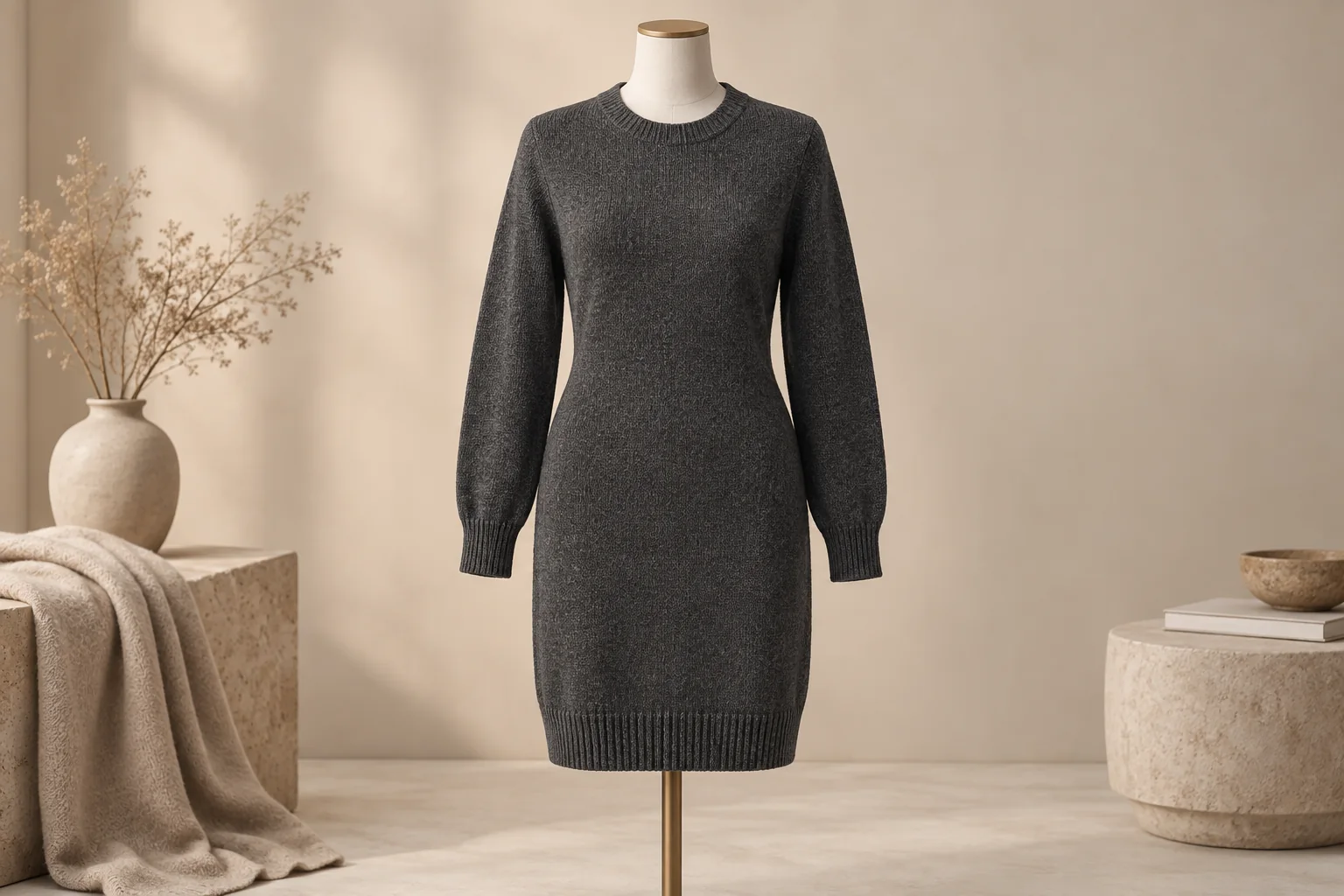
A customer may like a cashmere jumper dress standing, then find a fuller seat or shifted hem after sitting. The quality reviewer should compare that same dress and outfit before and after the agreed rest, without smoothing it into place. Locate the hip, side seam and hem that changed before selecting a yarn or panel correction.
Which wearing brief defines this cashmere jumper dress?
Set the cashmere jumper dress hip and seat outline
A straight jumper dress, a shaped midi style and a close-fitting rib dress can respond differently at the seat. Draw the desired front, side and back line on the selected wearer or form. Name the undergarment and any outer layer that changes friction or how the dress hangs. State whether a slight temporary change after sitting is acceptable, and what resting view must return. Without that boundary, two reviewers may call the same physical result a success and a failure.
Name the cashmere jumper dress seated condition
Ask the fit reviewer to sit in a position relevant to the product, return to standing, and let the dress settle without pulling its back hem or side seam into place. Record the garment state, wearer, seat surface and actual time observed. A brief fitting-room action may screen a problem; it does not simulate every customer’s daily wear. The buyer should define the comparison needed for its own claim and avoid implying that one informal action predicts a bulk return rate.
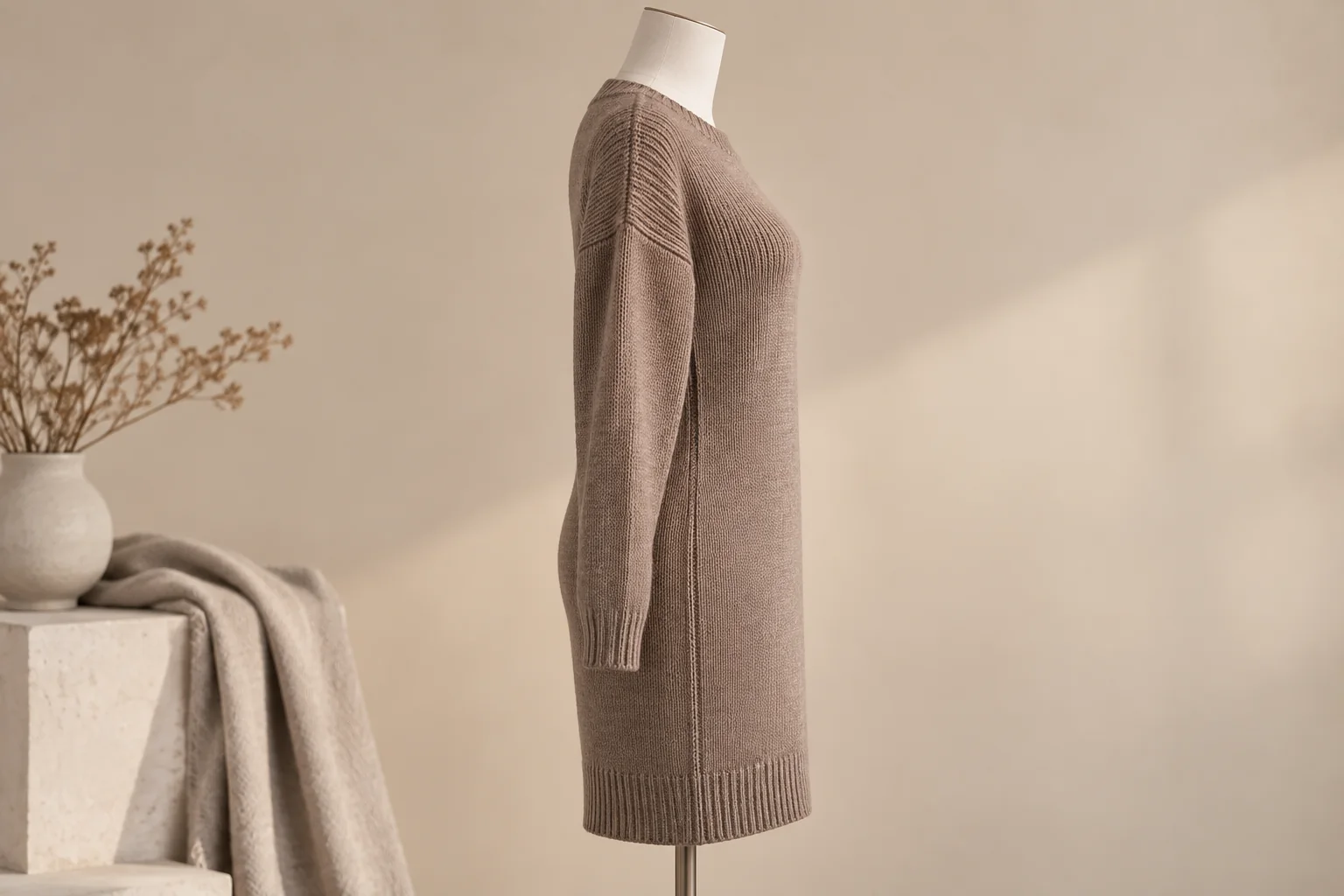
Which cashmere jumper dress measurements locate hip change?
Keep body and garment references separate
Record the target wearer profile separately from finished dress hip width, waist, front/back length, side seam and hem. ISO 8559-1 describes body-measurement definitions used in apparel size profiles; it does not prescribe ease for this cashmere dress. ISO 18890 describes garment measurement points and permits additional agreed locations. Mark any seat-zone point the buyer wants compared in the approved sample state.
Measure the identified garment at the same origins before and after the stated wearing observation. A flat hip width alone cannot show where fabric has shifted on a body. Give the technician front, back and side views with the wearer standing naturally and the dress unadjusted. The knitwear tech-pack guide can carry that marked map. Do not add an invented centimetre allowance because the article title names cashmere.
The first table identifies the records needed before anyone attributes a visual change to material or fit.
| Fit-state input | Record required | Comparison supported | Decision owner |
|---|---|---|---|
| Wearer and outfit | Profile and undergarment | Checks relevance of fit | Brand sets market brief |
| Base silhouette | Intended hip and seat line | Defines visual target | Designer signs reference |
| Garment points | Hip, waist, side seam and hem | Locates dimensional change | Fit team marks origins |
| Material route | Yarn, stitch and finish revision | Identifies sample option | Technician records proposal |
| Sitting state | Action, surface, duration and rest | Repeats observation | Buyer selects use condition |
| Size transitions | New shaping or program | Finds range risk | Brand selects samples |
Separate circumference from local distribution
Two dresses can have the same hip circumference and a different front/back allocation or side-seam position. If the back appears fuller after sitting, check where the side seam went and whether the hem or whole dress moved. Record a local close-up only after the full-body views. A technician may need a changed panel or knit route rather than another increase in total width. The measurement map should identify what remains fixed in each trial.
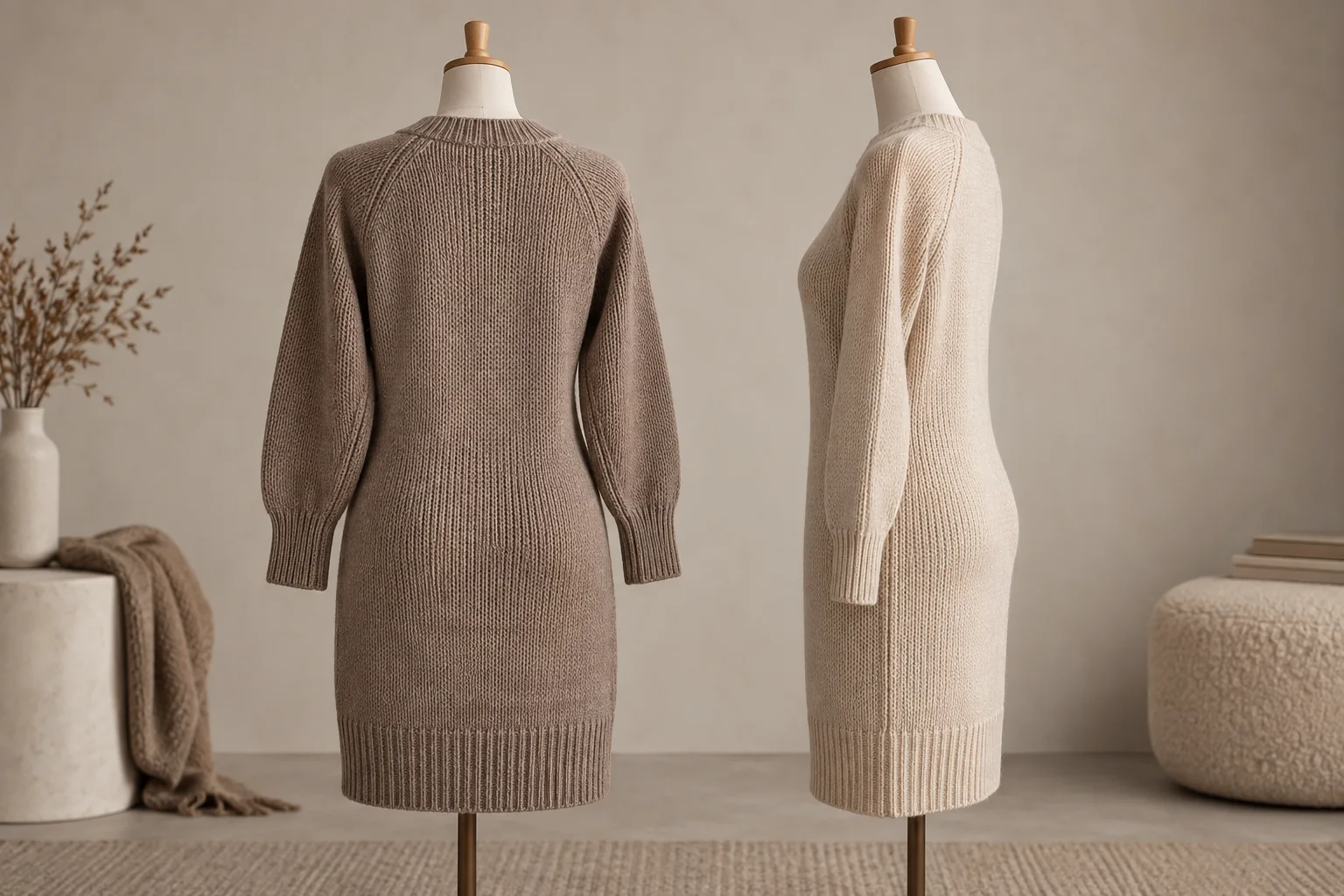
How should a cashmere jumper dress seated trial be interpreted?
Observe before, during and after wear
Take an unadjusted standing view, a relevant seated view and a return-to-stand view after the declared rest. Keep the same wearer, undergarment and camera position. Label each frame with the sample revision outside the public image. Record whether a crease, pull line, side-seam shift or longer back remains after the dress settles. These are distinct observations; “bagging” without a location or state is too vague for a correction.
Check the entire dress before a local fix
The seated view may show a shifted seat while the upper body remains stable, or a side seam and hem may move with it. Inspect shoulder, waist and hem in the wide photograph. If the whole dress rides up, a local seat reinforcement may not address the cause. If only a small zone changes, investigate its fabric and shaping without redrawing the shoulders. Keep left and right views where the dress is asymmetric in use or construction.
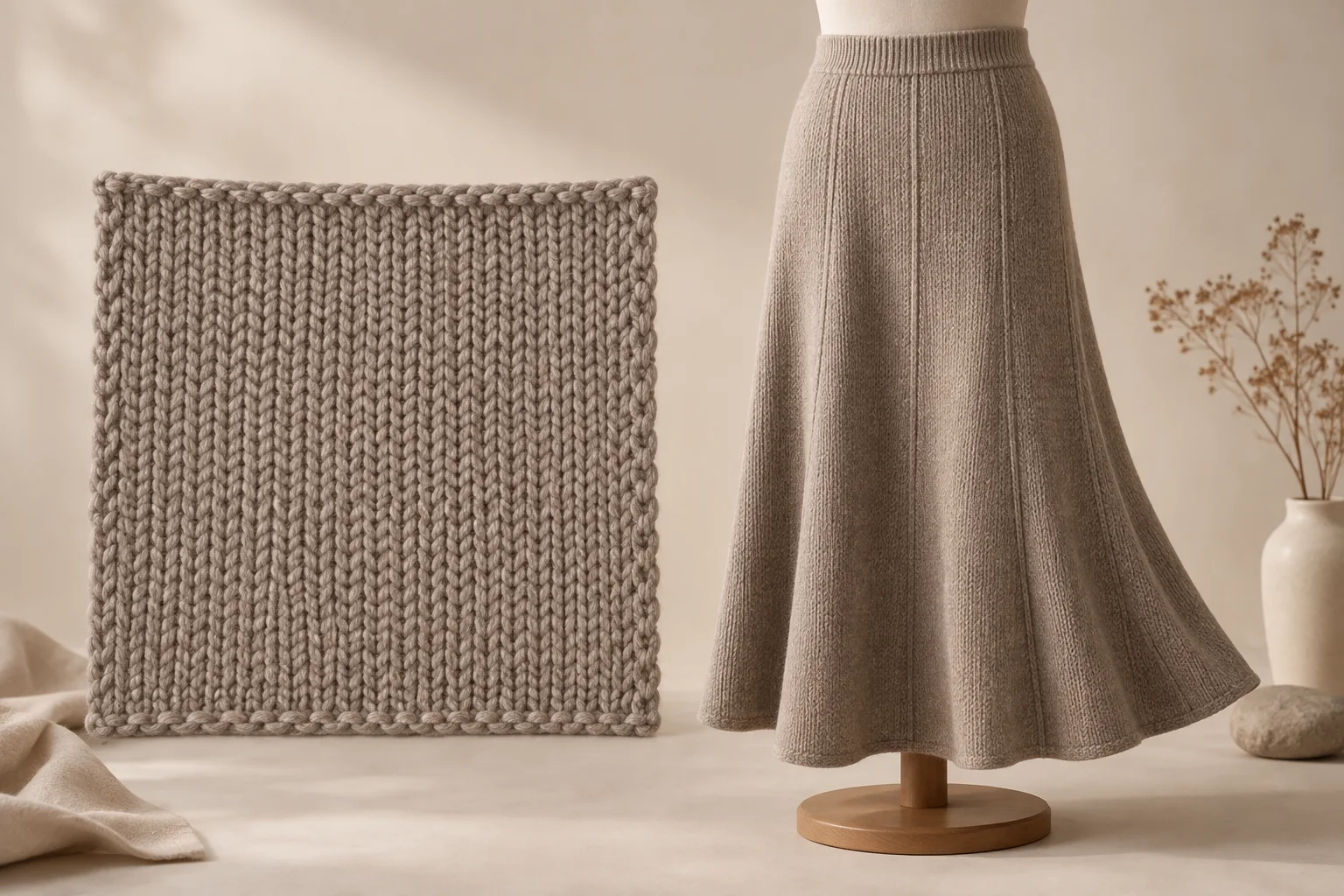
Ask where the wearer felt restriction and whether the dress returned to its expected position. Pair that location with the corresponding side or back view. If two body profiles give different results, retain them separately and request the relevant comparison instead of averaging a claim about cashmere.
What can cashmere jumper dress material and care evidence establish?
Compare identified knit proposals
A cashmere composition claim should be documented by the supplier; the photograph cannot verify it. Record yarn identification, knit structure, gauge where relevant, finishing and actual sample revision. If another route is proposed to improve hip response, compare complete garments in the same size and wearing sequence. An attractive swatch can screen surface and drape, but it cannot show how the shaped seat and hem settle on a person.
Label the care state truthfully
A cared garment may present a different hip, seat or length relationship. AATCC TM150 describes garment length and width changes after home laundering for applicable products and limits some stretch fabrics. If the product’s care route calls for a formal test, document whether that procedure was actually followed. An informal wash-and-photograph remains a development observation. Keep garment dimensions and the worn appearance together, each tied to the same sample and state.
Which cashmere jumper dress sizes need a separate fit check?
Select profiles around shaping transitions
A base-size hip and seat result may not hold when a new panel, rib distribution or size block begins. Select lower, base and upper size samples from the offered range, adding a transition where pattern or knitting program changes. Use a corresponding wearer or suitable form, the named undergarment and the same seated sequence. The grading guide for custom knitwear provides the general map; this dress still needs specific lower-body evidence.
A uniform circumference increment can alter the intended front/back distribution or move the side seam. Keep the chosen silhouette visible in the photographs. If one size changes after sitting while others do not, identify that group before prescribing a new rule for every size. A buyer can restrict approval to reviewed profiles and keep a clear plan for the missing ones instead of pretending that a base-size result covers all wearers.
Keep the size rule apart from tolerances
A grade sets the intended hip and seat shape by size. A tolerance states permitted variation when a finished unit is compared with that approved size. Both need marked origins and a garment state. A fit failure after sitting cannot be waived by a loose flat-width tolerance; it may require a better distribution or material route. Conversely, a visually good fit should still be checked against agreed dimensions where the product requires them.
What record closes cashmere jumper dress hip and seat decisions?
Tie a symptom to a bounded next trial
The second table maps what a buyer actually observed to a proposed investigation. It does not claim a universal cashmere growth amount.
| Seated-fit observation | Relationship to investigate | Buyer action | Closing evidence |
|---|---|---|---|
| Seat remains fuller after rest | Local knit and body shaping | Hold that version | Matched stand/sit/return views |
| Side seam rotates in sitting | Front/back allocation | Trial panel distribution | Marked side and back views |
| Back hem rises | Length, movement and hip fit | Review whole dress | Full-body action sequence |
| Only one size changes | Grade or program transition | Restrict that size group | Size-specific physical sample |
| New yarn responds differently | Material and finish route | Reopen affected approval | Identified old/new comparison |
| Flat hip passes but worn fit fails | Geometry beyond circumference | Review shape map | Worn view and measurement origins |
Frequently Asked Questions
Does cashmere always grow at the seat?
No universal result follows from a fibre label. Compare the actual yarn, knit and garment in a defined seated and recovery sequence.
Is one fitting-room sit test enough for bulk approval?
It can reveal a development question. Decide the wear conditions and range evidence the product requires before making a broader claim.
Can a swatch recovery test approve the whole dress?
No. It may inform material choice within a method’s scope. The complete garment’s hip, side seam and hem need physical review.
Should every size use the same hip increment?
Use target body profiles and physical samples around construction transitions. A fixed increment may shift front/back distribution and seated fit.
What if a different yarn looks identical?
Identify the replacement and recheck the affected wear and care states. Similar surface appearance does not establish the same garment response.
A change after sitting is meaningful only against a named material, wearer and recovery interval. Keep standing and seated hip/seat views with the same physical dress, and ask what else moved before altering a local panel. The CNSweaters jumper-dress enquiry can carry those marked states without promising that every cashmere garment behaves alike.