 CN Sweaters
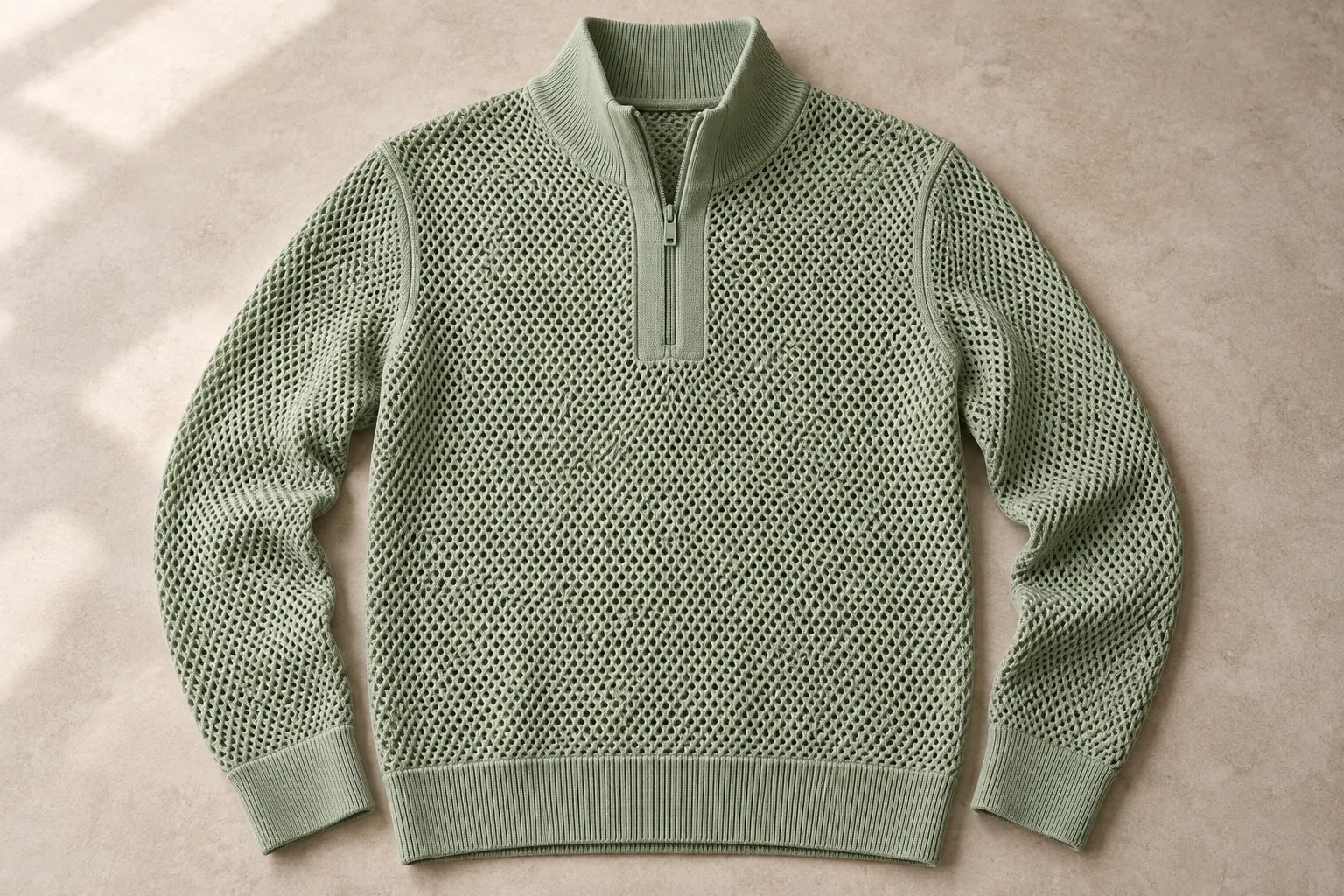
Review a mesh quarter zip at the boundary between the open knit and the zipper assembly. The mesh, tape and support can respond differently during handling and care. When the two meet, the fabric beside the zipper can wave, pucker or pull out of line.
Map the mesh termination, solid border, facing and zipper attachment before the first full sample. Compare those actual components in the required opening and care states. For more zip styles, see our custom knit hoodies and zip-up sweaters page.
Why a mesh quarter zip is harder than a solid one
On a solid jersey or rib quarter-zip, the fabric is dense and fairly stable. Its zipper attachment still needs verification in the selected construction. However, an open mesh behaves very differently. Its holes open when you pull the fabric and close when it relaxes.
As a result, a mesh panel can grow or shrink in length more than the zipper tape. That mismatch shows up as a wave along the zipper, a bubble at the zipper bottom or a twisted collar. A straight zipper on a solid sample, therefore, does not prove the same set-up will work in mesh.
Mapping the mesh quarter zip opening
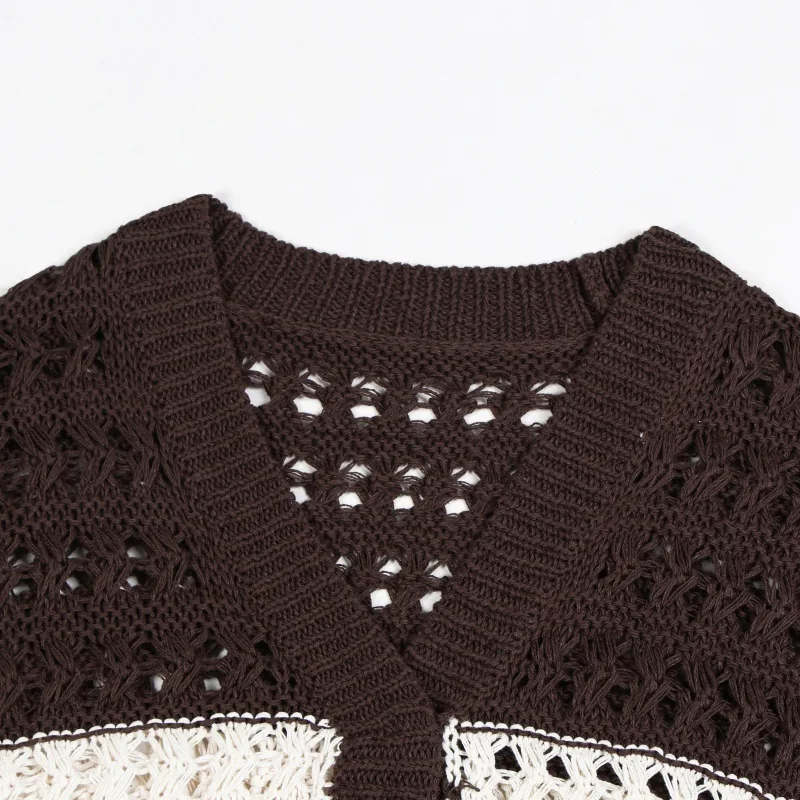
First, we mark the zones on the flat sketch. These include the mesh field, the solid border around the placket, the collar base, the shoulder and the zipper bottom. We also note whether the mesh runs under, beside or away from the zipper tape. Front and inside views both matter, because a front photo cannot show the facing.
One construction option ends the mesh before the zipper and adds a solid knitted border. Trial its width, stitches and joining route on the actual yarn; neither a fixed gap nor a closed border guarantees that the placket will stay flat.
Plan the transition rows
The change from mesh to solid should feel gradual. For example, a sharp switch from very open holes to dense jersey can create a visible ridge. A few rows of a half-open stitch can soften the line. We build this into the knitting program rather than adding it later.
In addition, we make a small reference set. It shows the approved transition plus one more open and one more closed option. Then the buyer can see the boundary clearly. That way, an attractive swatch from the center of the body cannot stand in for the zipper zone.
Choosing the zipper and collar for a mesh quarter zip
Next, we agree the zipper. We record the type, supplier item, tape, coil or chain size, puller, length, opening depth and color. For a light cotton mesh, a light coil zipper usually sits better than a heavy metal one. By contrast, a heavy zipper can drag the neckline down and pull the mesh open.
If the sample uses a stock zipper, we treat its approval as provisional. After all, a different tape or weight in bulk can change how the placket sits. So the bulk zipper should arrive before the final pre-production sample.
Collar states to check
People wear a quarter-zip in several ways. The wearer might zip it fully, leave it half open or fold the collar down. Therefore we check the collar in each of these states. We also note which one the brand will use for photos and retail display.
A solid rib collar is one option to compare on a mesh body. Check its support at the zipper top and its shape in the intended opening states. For wider tips on collars and zip weight, read our guide to linking quality in a knitwear factory.
Attaching the zipper to a mesh quarter zip
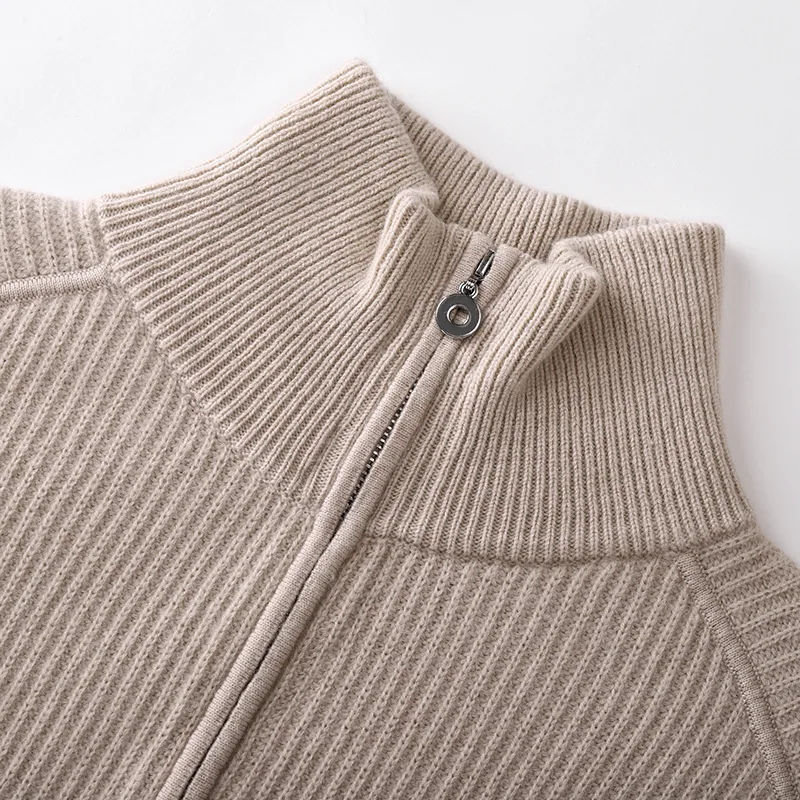
In practice, how we attach the zipper matters as much as which zipper we pick. We match the placket length to the zipper length on the relaxed fabric, not on stretched fabric. If the placket is longer than the tape, it waves. On the other hand, if it is shorter, it puckers.
A facing or narrow backing tape may support the placket during assembly. Compare that proposal with the actual mesh, seam bulk and front movement. At the zipper bottom, define the reinforcement against the intended loading; a standard box shape is not a universal tear-prevention guarantee.
Common faults at the zipper
- Wave along the zipper: the placket is longer than the tape, or the mesh stretched during sewing.
- Pucker at the zipper bottom: no reinforcement, or the border is too narrow.
- Collar twists when zipped: the two sides of the placket differ in length.
- Mesh holes distort beside the tape: the mesh starts too close to the zipper.
- Placket drops at the neck: the zipper is too heavy for the fabric.
Washing and zipper checks on a mesh quarter zip
Cotton knit and zipper tape may change differently during the selected care route. So a placket that looks flat after pressing may wave after the first wash. For that reason, we wash the sample through the label care route, dry it and let it rest. Then we check the placket again.
For a development check, record how the installed zipper opens and closes on an identified garment and whether the puller catches the mesh. If documented operability is required, ask a qualified laboratory whether ASTM D2062 applies to the actual zipper and question. Its public scope covers opening and closing, separator function and sticking at stops; it does not by itself establish every strength property or approve the placket’s appearance.
Grading the mesh quarter zip across sizes
The mesh map and the zipper opening should grade together. If the opening grows but the solid border stays the same, the large sizes may show more mesh near the zipper. Similarly, the smallest size may end up with almost no mesh on the chest.
Some brands keep one zipper length for all sizes, while others use two or three lengths. Both approaches work, but the choice should be in the tech pack. Use a size set that represents the selected zipper lengths and construction changes before bulk.
Checks during bulk production
Include zipper-zone wave, pucker, collar twist and puller movement in this style’s inspection plan, with the approved sample and an agreed sampling frequency. Separate results by zipper lot if the order requires that traceability. The general quality-control process does not prove that this exact style has already passed those checks.

See our quality control page for the full inspection flow.
Mesh and zipper inputs for a quarter-zip quote
For a mesh quarter zip, the quote should identify the mesh repeat, the solid zipper-support zone, the chosen zipper and the assembled front view. Ask for the same sample checked zipped and open, then after the intended care route; a flat swatch alone cannot show whether the placket waves. The site’s general gauge, quantity and sample ranges are planning inputs. Confirm which yarn and zipper are available and the actual approval rounds before setting this style’s calendar.
Conclusion
Retain the mesh quarter zip’s accepted transition map, zipper item and inside attachment views with the care results. Keep any changed size or component arrangement outside that approval until its interface has a comparable review.
Send us your quarter-zip sketch and we will plan the mesh layout and zipper with you.
FAQs
Can a solid sample approve a mesh quarter zip?
A solid sample cannot establish the behavior of a different mesh construction. Review the actual mesh, border and zipper assembly.
Should the mesh start right beside the zipper?
Usually not. A narrow solid border gives the zipper a stable base. Confirm the border and placket appearance after the selected care route.
Which zipper suits a cotton mesh sweater?
A light coil zipper is often the best fit. Heavy metal zippers can drag the neckline and open the mesh.
Do all sizes need the same zipper length?
Not always. Some ranges use one length, while others use two or three. We confirm it on the size set.