 CN Sweaters
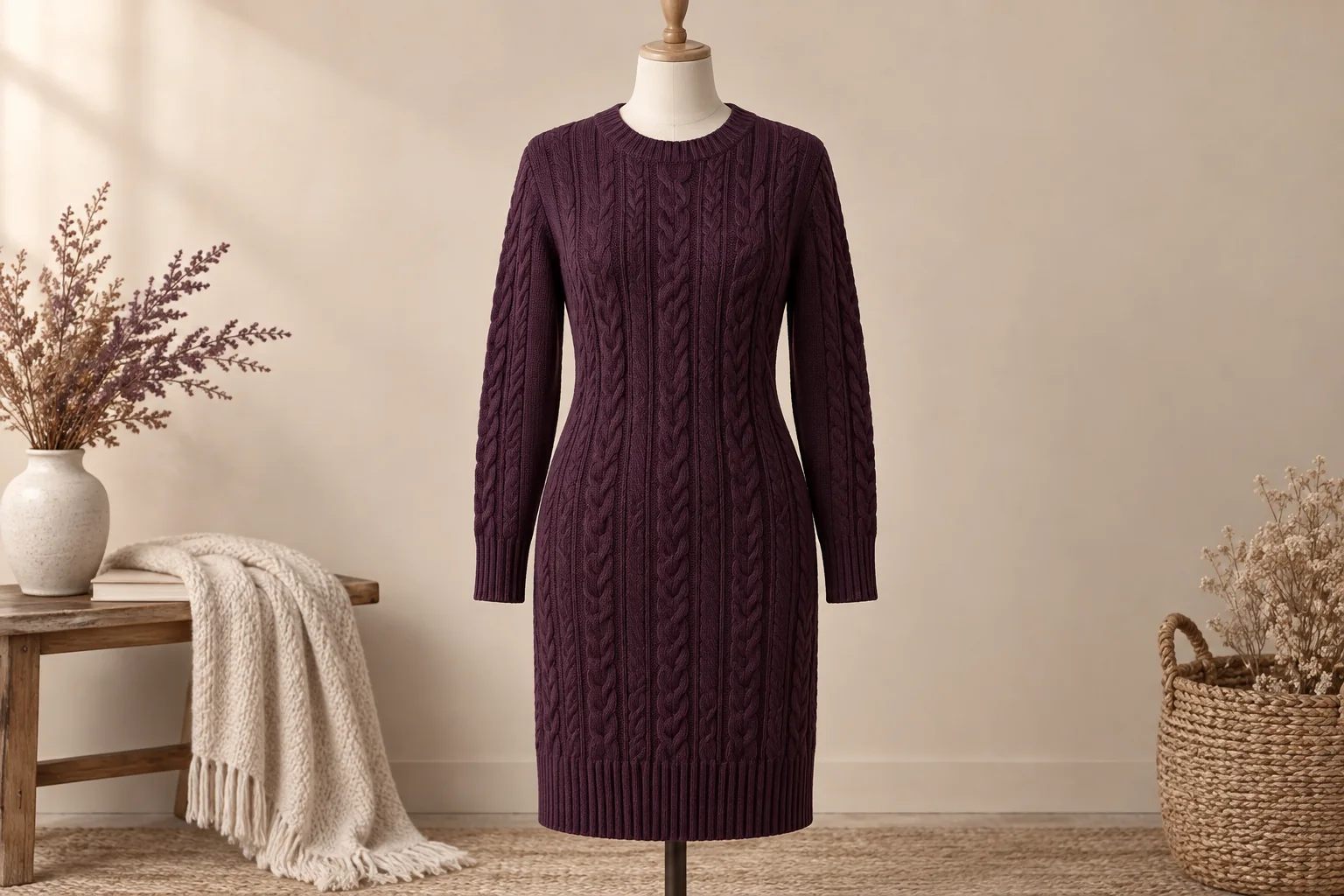
At a cable knit sweater dress seam, a raised crossing may create a ridge against the wearer even when the motif placement is correct. The assembly engineer needs to locate that stack and compare the complete dress’s shoulder and hem under its actual mass. Seam bulk, motif appearance and whole-garment weight require different evidence.
What should the cable knit sweater dress trial decide?
Define the cable knit sweater dress garment, not a mood
A fine cable on one dress and a large raised motif on another cannot be compared solely by the label “cable knit.” State the intended length, sleeve route, cable coverage, neckline and underlayer. Record whether the brand prioritizes visible relief, a softer drape, a particular finished weight or another result. When two goals conflict, ask for identified options rather than a supplier promise that one unnamed structure provides both.
Keep cable knit sweater dress artwork apart from seam approval
The brand can approve where a motif sits without approving seam thickness or finished mass. Conversely, a technically tidy seam may alter the cable outline the designer chose. Save the current artwork and physical sample in the review package. If a proposed seam route moves a cable or changes its visible relief, return that change to the artwork owner. A sample-room correction should not quietly substitute a new visual pattern for the one the buyer accepted.
Which cable knit sweater dress inputs make mass comparisons fair?
Weigh and identify the complete unit
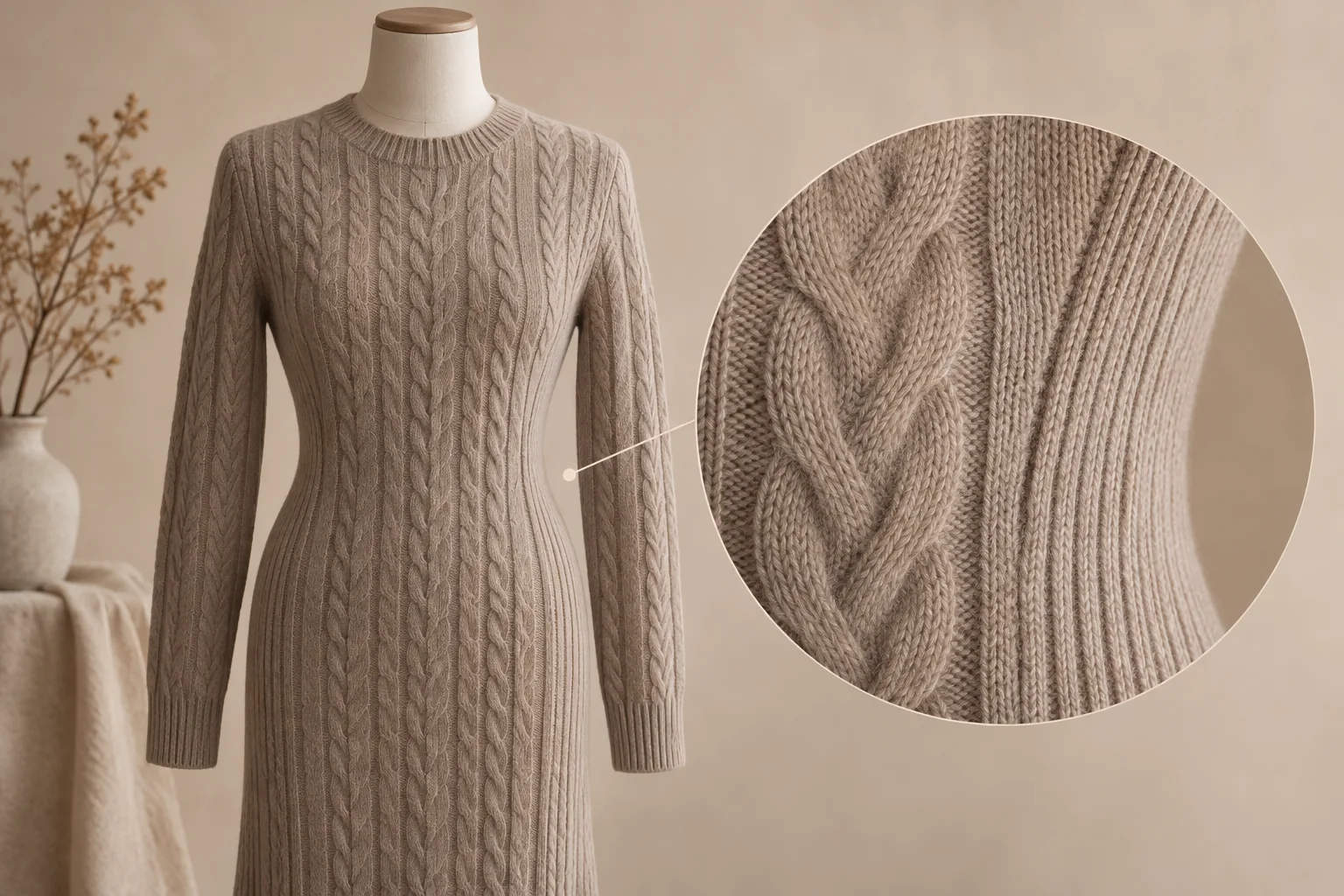
If finished mass affects the brief, weigh an identified garment in a stated condition. Record whether the measured unit includes a belt, lining, detachable piece or other sold component. A yarn estimate or small fabric swatch does not give the mass of the complete dress. ASTM D3776 covers mass per unit area of fabric. It can inform a suitable fabric comparison, but it is a different measurement object from the assembled dress.
Keep the scale reading, sample size, finish and care state with the full garment. Do not propose a universal weight ceiling from a product title; the brand must select an acceptable silhouette, handling and packed-unit brief. The knitwear tech-pack guide can carry the measurement basis. If an option changes yarn, cable coverage and dress length at once, call it a full-route comparison rather than attributing the mass difference to a single stitch choice.
The first table gives the buyer a comparable identity for construction options.
| Dress assembly input | Record required | Comparison supported | Owner or limit |
|---|---|---|---|
| Cable design | Artwork, repeat and zone map | Preserves motif identity | Designer approves visual target |
| Yarn and knit | Supplier item, gauge, ground and cable route | Identifies material option | Technician records proposal |
| Seam route | Join path, components and inside face | Locates thickness | Sample room explains assembly |
| Complete mass | Size, included parts and garment state | Compares finished units | Buyer sets mass basis |
| Fit state | Wearer, underlayer and hanging condition | Judges drape and support | Fit team runs review |
| Range transition | Sizes with changed panel or program | Selects physical checks | Brand restricts release |
Mark the garment points beside the joins
ISO 18890 describes garment measurement points and permits agreed additions. Mark shoulder width, front/back length, side-seam position, hem and relevant join lines for this dress. The standard does not prescribe an allowable cable thickness or weight. Take measurements on the finished sample in the condition used for the photograph. A seam can be visibly bulky even when total dress length meets its marked value.
How should cable knit sweater dress seam bulk be inspected?
Compare the junction on the garment
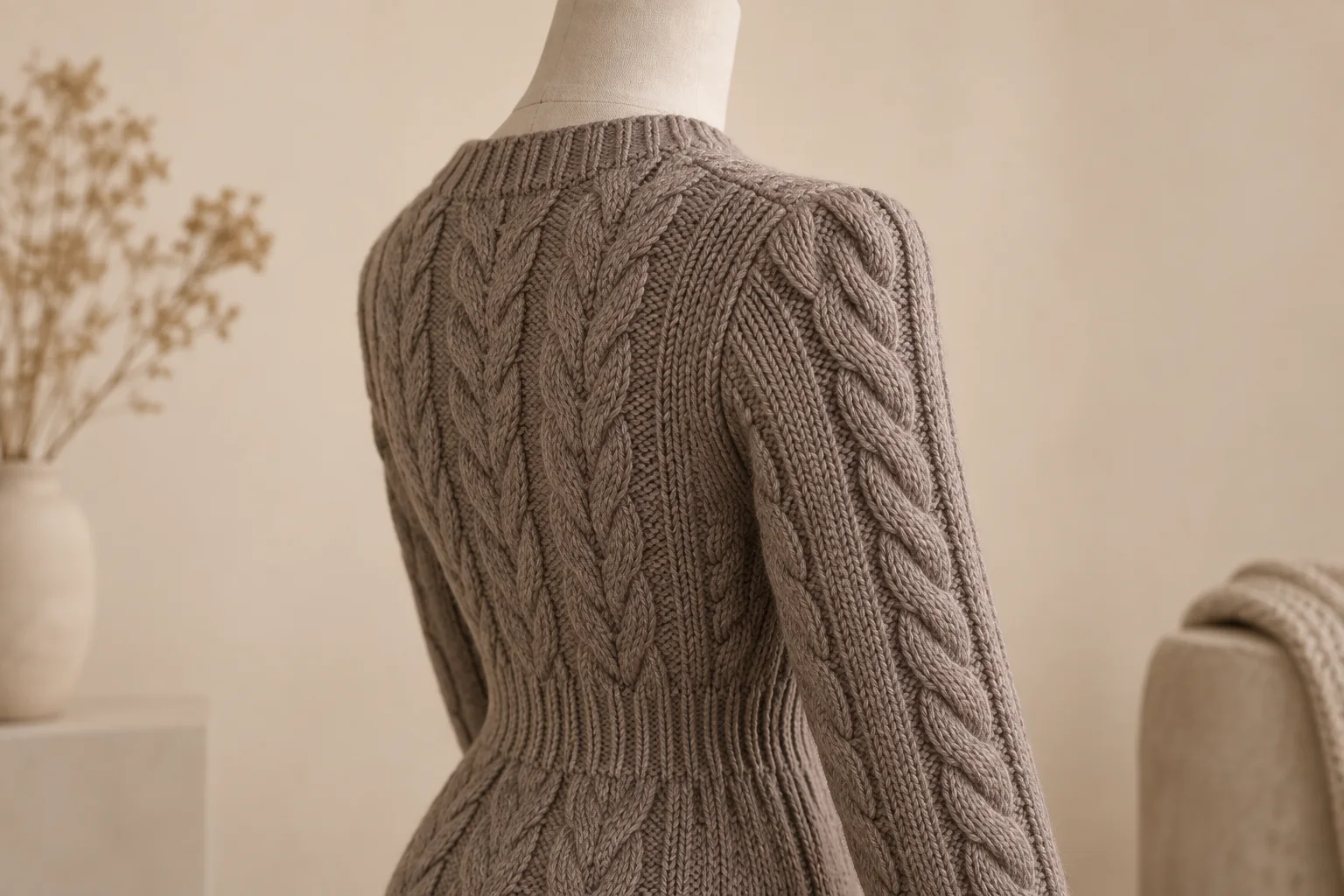
A cable may pass near a side seam, shoulder or sleeve join. Photograph the entire garment first, then enlarge the affected junction from both face and reverse. Mark which components meet there and whether the bulk appears at rest, in movement or after care. The linking quality guide explains why a knit join deserves its own control. It does not prove that a particular seam route has passed on this dress.
Ask the technician to show a proposal that changes the bulky relationship while preserving the chosen motif and fit. It may involve moving the join, adjusting a cable endpoint, revising seam allowance or using another assembly route. These are options to trial, not guaranteed fixes. A narrower join can look cleaner but transfer strain elsewhere. Keep the original and revision views from the same material and size when the purpose is to isolate construction.
Compare the face and reverse of the same marked junction after the garment rests. A revised join can remove an outside ridge while leaving one inside. Keep yarn and size consistent when isolating the joining route, and retain the actual construction with the worn comparison.
Check the inside against wearing comfort
The inside of a thick seam may contact the wearer or underlayer differently from the face shown in a product photograph. Name the intended outfit and ask the reviewer to report the location of pressure or rubbing, without converting an anecdote into a quantified performance claim. Compare front, back and side fit at rest and during normal movement. A local complaint at a seam does not justify an unmarked reduction in overall chest or hip width.
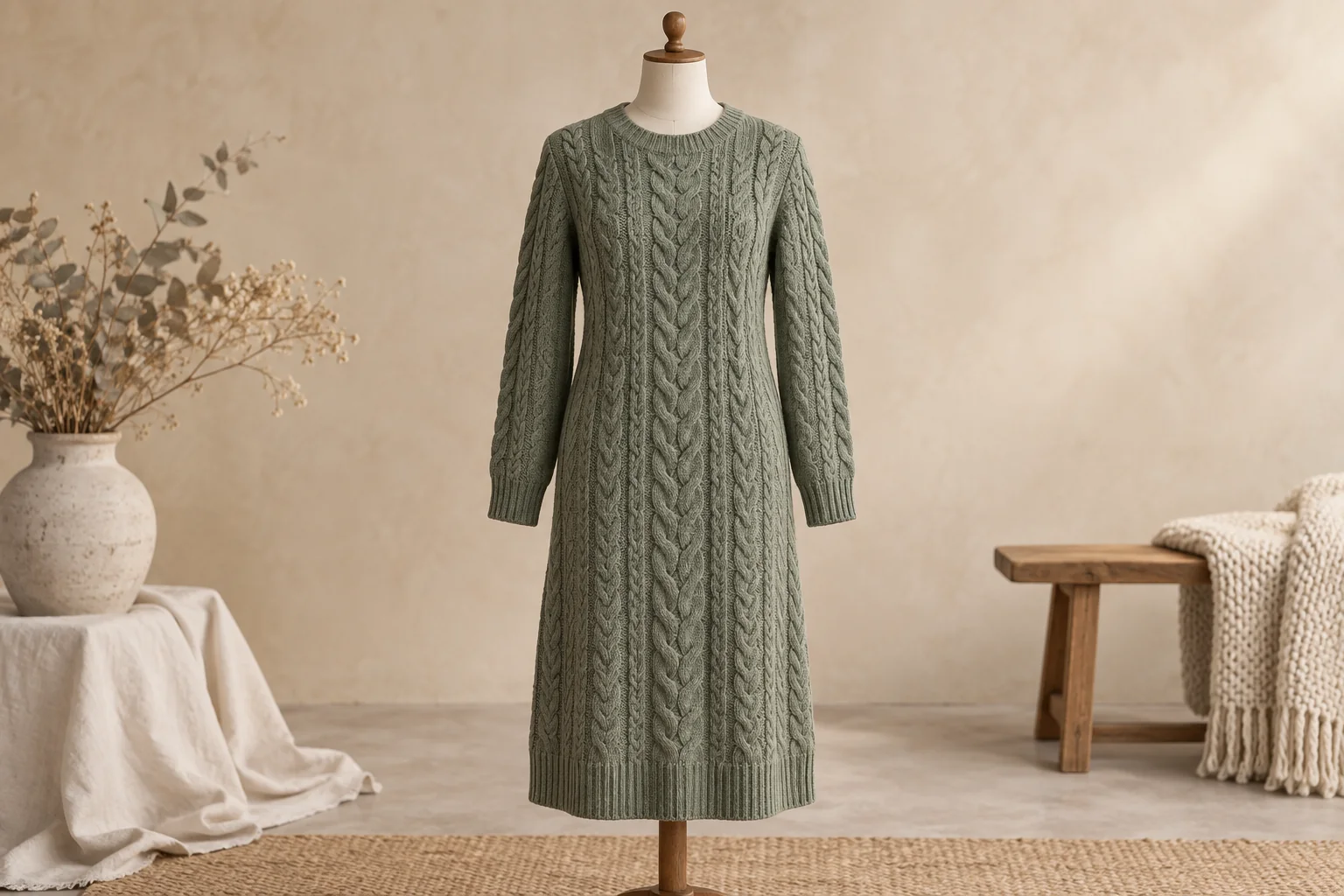
What connects cable knit sweater dress mass to shoulder support?
Observe the garment in a defined hanging state
Place the complete dress on the chosen wearer or appropriate form, record the initial neck, shoulder, side and hem positions, and compare them after an agreed period of hanging or normal wear. State the actual duration and support method; do not describe an informal hanging observation as a standard test. If the hem changes while shoulder points stay stable, investigate material and body shape. If the shoulder moves with the rest of the garment, investigate the joining and support route as well.
Change one load path deliberately
A buyer may be offered a lighter yarn, reduced cable coverage or a revised shoulder component. Identify which option is being tested and what must remain visually unchanged. If more than one item changes, record the combined proposal. A lower mass does not necessarily improve the chosen drape; a firmer shoulder may alter the neckline or armhole. Keep the same wearer, underlayer and whole-dress length when comparing the alternatives if possible.
Which cable knit sweater dress care and size results reopen approval?
Separate care dimensions from appearance
AATCC TM150 addresses garment length and width change after home laundering for applicable garments, with limitations for some stretch fabrics. A care trial is relevant only when its procedure suits the actual dress and product label. Record the route truly used. Save pre-care and post-care dimensions beside photographs of the cable relief, seam and shoulder. A passing length value does not automatically approve a changed motif or an uncomfortable join.
A cable may lie flatter after care while the side seam sits correctly, or the seam may become more prominent as the body settles. Describe the actual observed relationship. The measurement-tolerance guide explains how parties agree product-specific allowances. It does not supply a universal pass percentage for raised knitwork. If a yarn or finish changes after approval, repeat the affected garment comparison before transferring the earlier result.
Check transitions in the size set
Cable repeat, panel count and seam route may change across sizes. Select lower, base and upper risk sizes, adding a transition where a new program or join begins. Inspect mass of a clearly identified sample if it is a product criterion, and compare shoulder and side seams on the correct wearer or form. The custom knitwear grading guide provides the general range method. This dress still needs its own physical seam and support view at construction changes.
A size grade describes intended dimensions; a tolerance describes allowed measured variation against the approved size. Neither can substitute for the cable artwork map or a wearing comparison. Keep each size’s seam route named. A first-off unit can then be checked against the correct physical reference instead of one base-size photograph. If an upper size loses shoulder position, investigate that group rather than changing every dress without evidence.
What evidence closes cable knit sweater dress construction?
Map findings to bounded actions
The second table turns an observed issue into a comparison the next sample must answer. It contains no invented target mass, cable height or seam-thickness limit.
| Seam or load finding | Relationship to investigate | Buyer decision | Closing evidence |
|---|---|---|---|
| Shoulder shifts during wear | Garment load and upper join | Hold support approval | Matched worn front/back views |
| Side seam feels bulky | Cable, ground and join stack | Trial one junction route | Face/reverse and wearer views |
| Hem length changes while hanging | Material and body balance | Reopen affected version | Identified start/end dimensions |
| New yarn changes cable relief | Knit and material proposal | Check visual owner decision | Old/new whole-garment views |
| One size changes seam method | Program or panel transition | Restrict that size group | Physical size-set sample |
| Mass estimate differs from sample | Included parts or knit route | Revise the mass basis | Weighed complete unit record |
Frequently Asked Questions
Can a cable swatch approve the dress weight?
No. A swatch or fabric GSM can inform planning, but the finished garment with all included parts must be identified and measured if total mass matters.
Is a smaller cable always less bulky at a seam?
Not necessarily. The ground stitch, join and finish also affect the local stack. Compare a defined component route on the full dress.
Can measured length approve shoulder support?
No. Keep garment dimensions beside a worn shoulder and hem view. A numerical result does not show where the garment rests on a body.
Must every size use the same cable and seam route?
The design owner can approve transitions. Record the specific program and physical sample where the route changes, then inspect the affected size group.
What if care changes only the visual relief?
Review the accepted motif appearance on the identified material and care state. A stable garment length does not automatically release a changed cable look.
Approve seam bulk on the assembled dress, not from a cable swatch or a fabric GSM figure. Preserve the motif drawing separately so a thinner join does not quietly redraw the design. A lighter swatch cannot settle that combined approval. The CNSweaters cable-dress enquiry should include inside and outside junction views, complete-garment mass and the remaining shoulder-support decision.