 CN Sweaters
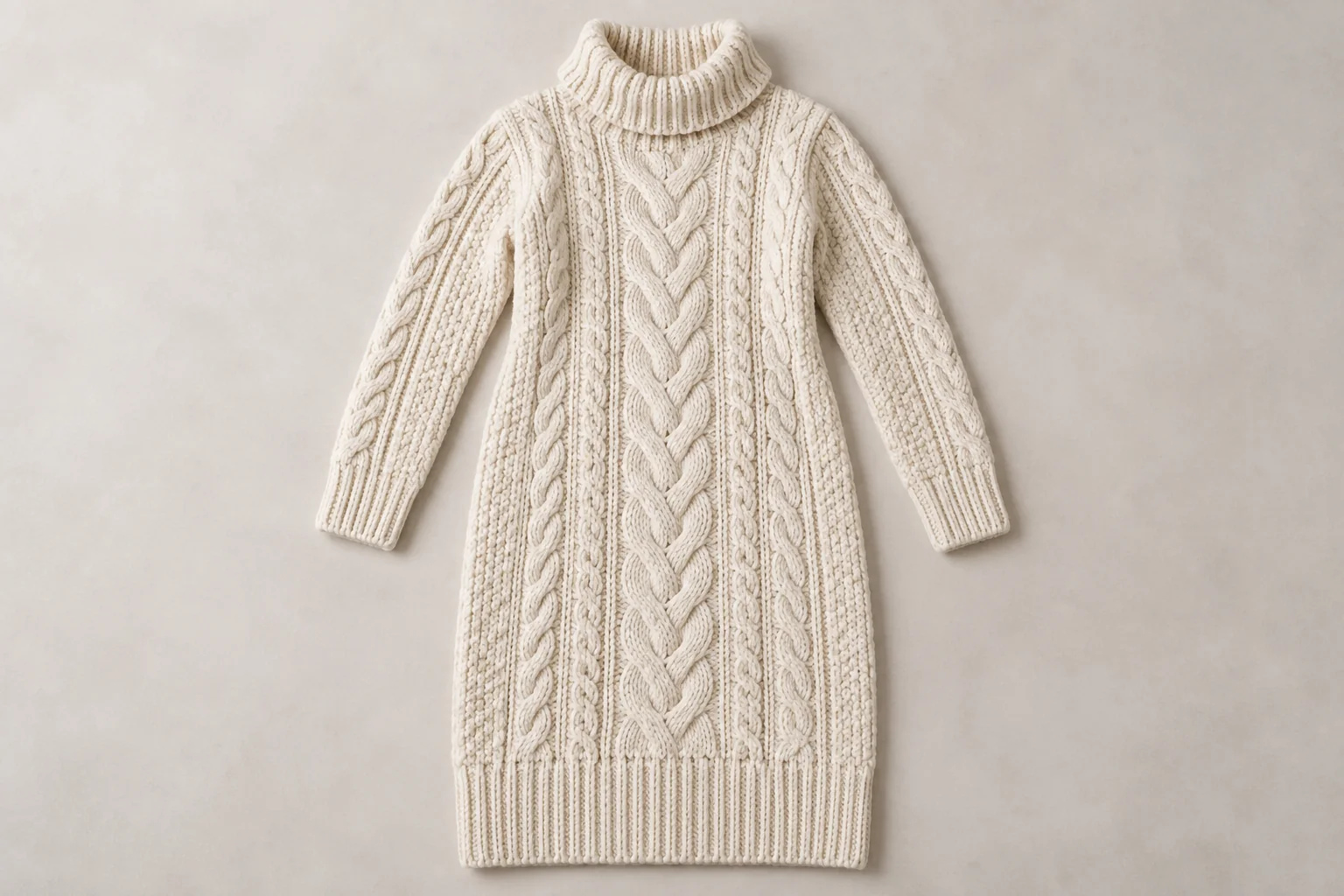
Before asking a supplier to reduce sweater dress weight, ask what was on the scale. A belt, separate slip, hangtag or bag may be included in one reading and absent from another. A fabric GSM figure describes mass per area; it does not replace the mass of the finished dress and its specified components.
Keep the garment requirement and packing requirement separate. A lighter design may change hand, silhouette or coverage, while a carton problem may come from its size mix or packing materials. First align the weighed unit and measurement state, then investigate the difference.
What does the sweater dress weight figure include?
Define the sweater dress weight unit before measuring
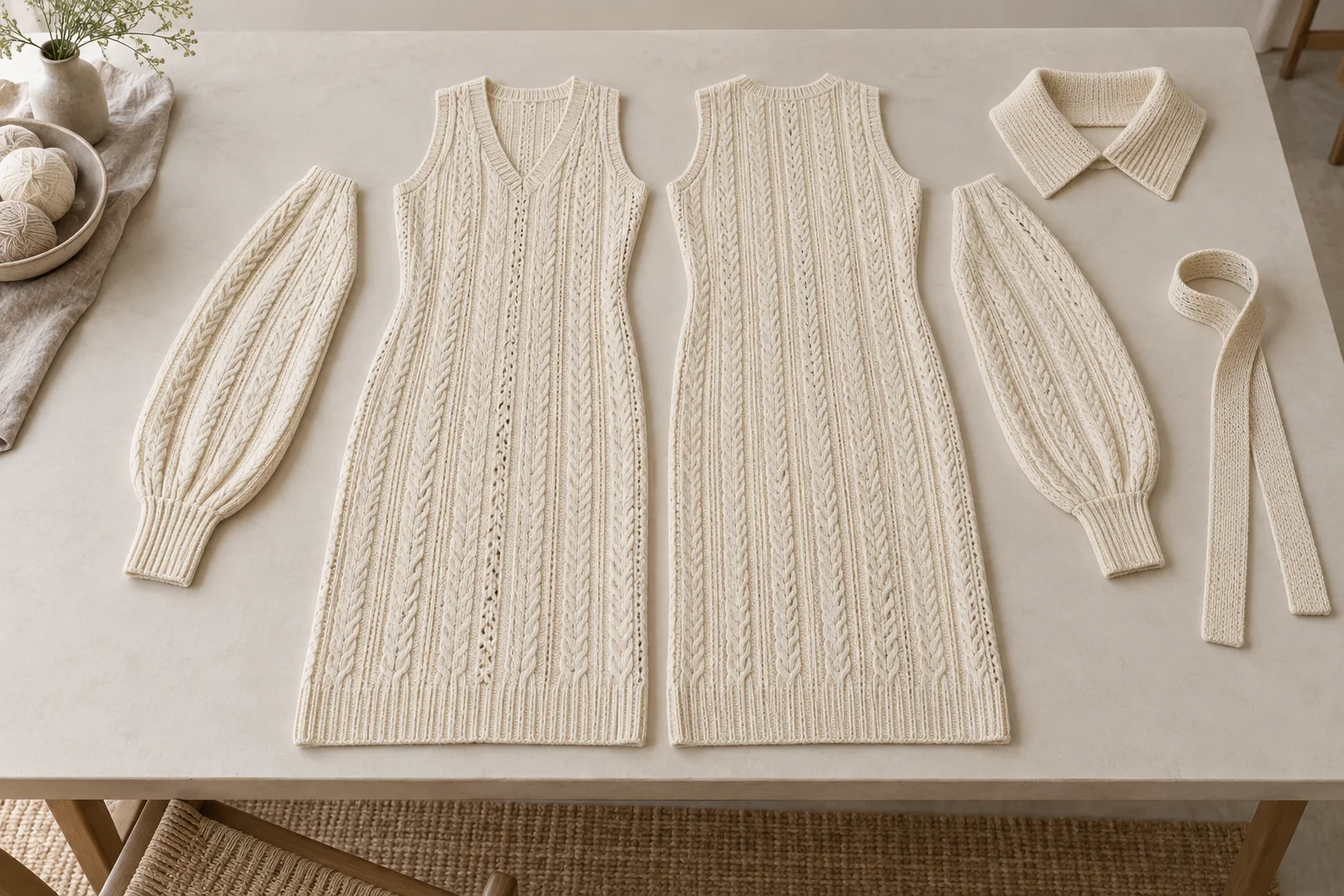
State whether the unit includes attached labels, buttons, a belt, detachable trim or a separate slip. A removable component can be essential to the sold product even if it is absent from a photograph of the outer dress. List those components before comparing sample weights.
Ask the supplier to identify the scale reading’s basis in its response. Garment only, garment with accessories and individually packed unit should be separate entries where they answer separate questions. An unexplained total cannot reveal which part accounts for a difference.
Keep fabric mass per area separate from total mass
ASTM D3776 concerns fabric mass per unit area. Its scope does not turn a swatch result into the measured mass of a complete dress. Use the appropriate fabric result for its purpose, then weigh the finished unit when the decision concerns the garment.
A fabric-based estimate may help compare early proposals if its area and construction assumptions are stated. It remains an estimate. Shaping, different stitch zones, seams, ribs and additional components can make a simple multiplication incomplete for the proposed dress.
The buyer should ask which inputs came from measurement and which came from calculation. When a prototype arrives, a difference from an estimate may require a better model of the garment rather than an immediate conclusion that production is out of tolerance.
Which inputs belong in the sweater dress weight budget?
Identify the parts that can change independently
Break the proposal into useful components without pretending that every gram can be allocated before sampling. The body, sleeves, neck treatment, pockets, belt, lining and other trims may have separate identities or development choices. Record the components that matter to the actual style.
A total figure does not locate the cause of a variance. If the sample is heavier than the accepted reference, compare its size, dimensions, material identity, construction and included components first. A different sleeve or added lining can explain a difference that would be invisible in a yarn-only comparison.
| Budget entry | Basis to record | Evidence available at development | Acceptance boundary |
|---|---|---|---|
| Finished outer dress | Defined size, revision and condition | Measured completed sample | Compare only against the same declared basis |
| Detachable components | Belt, slip or trim identities | Individual records and complete-unit check | State whether each is included in the sold unit |
| Material proposal | Yarn and knit construction assumptions | Swatch data and supplier estimate | Estimate does not replace garment measurement |
| Reference sample | Accepted identity and measurement state | Retained physical sample and result | Do not compare an unlabelled older garment |
| Individual packing | Bag, tissue, tags and other specified items | Packed-unit measurement | Keep separate from garment-only mass |
| Carton arrangement | Unit count and packing materials | Proposed carton calculation and physical check | Confirm the actual configuration before shipment |
State the product requirement that the budget serves
A target mass can relate to the intended hand, wearing experience, retail handling or packing constraint. Name the requirement. Reducing mass without preserving the chosen silhouette or coverage may produce a different garment, even if the new figure looks favourable in the budget.
How should sample weights be made comparable?
Control the sweater dress weight measurement state
Record whether the garment has been washed, steamed, pressed or rested before weighing. Keep the selected conditioning requirements and measurement method with the result. A newly finished sample and a retained reference may differ in state as well as construction.
ASTM D1776 addresses textile conditioning when required by a test method. The responsible technical team should select the applicable conditions. A note saying room temperature does not by itself demonstrate compliance with a formal conditioning procedure.
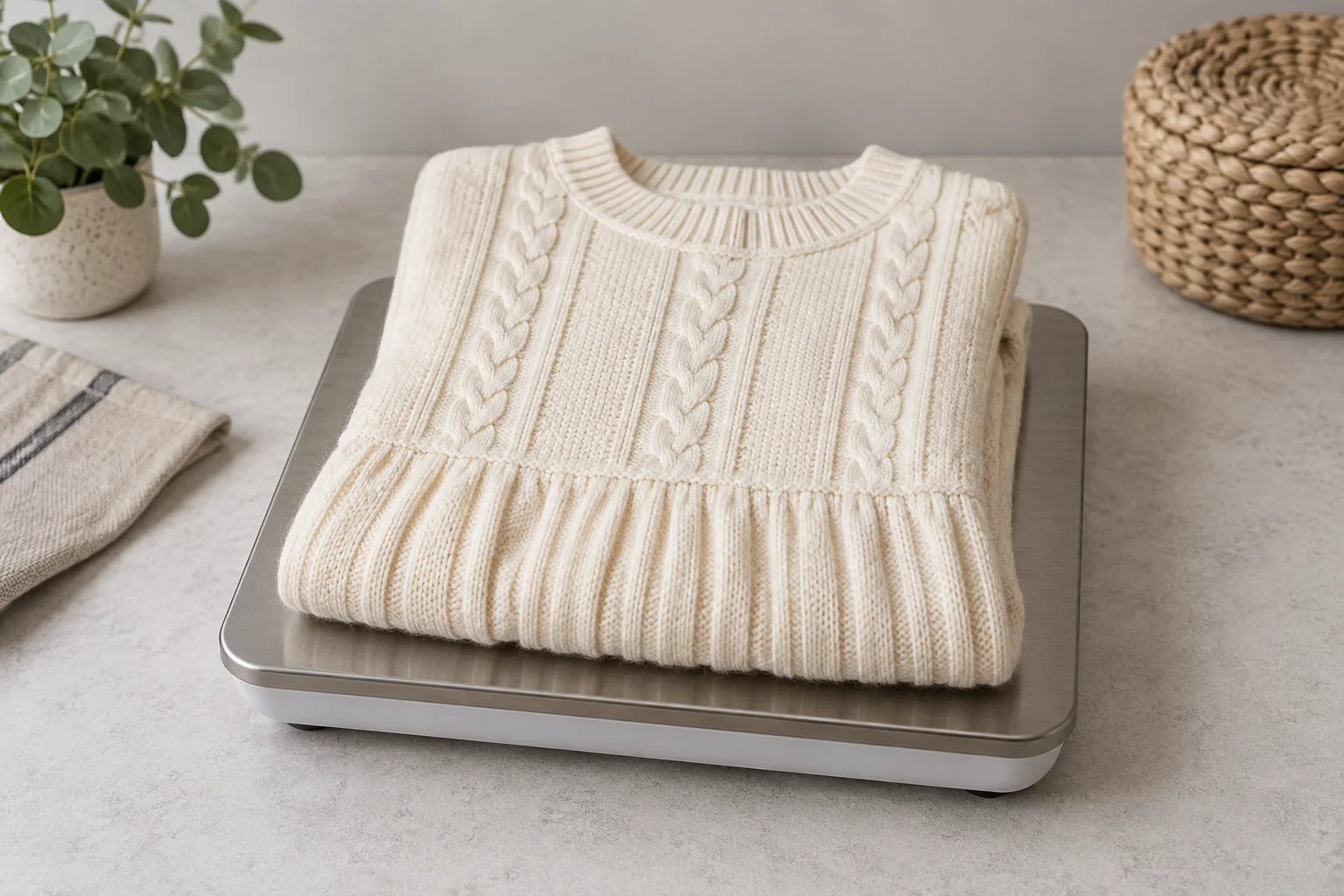
Use equipment appropriate to the expected measurement and the agreed method. Record the equipment identification and the unit used. Keep the entire garment supported by the weighing arrangement, and account for a tray or container consistently if one is used. The article does not prescribe an instrument resolution or a universal acceptance allowance.
Resolve sweater dress weight comparison errors
Check the size, length and components against the reference. Confirm that one result does not include a belt, hangtag or bag that the other excludes. Check the recorded units and any transcription before asking the knitting team to reduce material.
A repeat reading under the agreed setup can help investigate an unexpected result. Keep both the original and repeat records with an explanation of what changed. Replacing an inconvenient reading without noting the reason removes the evidence needed to understand the variance.
Which garment changes deserve a controlled trial?
Compare material and construction proposals against the same brief
The yarn-planning guide helps identify the material information needed for a comparable proposal. Keep yarn count, composition records, construction and finish with the trial. A fibre name or machine gauge alone cannot establish total finished mass.
Ask the supplier to show which part of the proposal changes. It may involve material, stitch arrangement, garment dimensions or a component. Compare the proposed result against the original product requirements as well as the mass target. A lower reading is not enough if the revised dress loses the intended coverage, shape or handling.
Where practical, retain other inputs while comparing a specific change. If several inputs must change together, list them and assess the combined proposal. Do not attribute a lighter sample to one yarn characteristic when its length or sleeve shape also changed.
Review wearing and handling after the change
Assess the actual revised dress on the intended wearer or form and in the agreed care state. Record shoulder position, hem and side-seam relationships, and the appearance required by the brief. Total mass and its distribution are related considerations, but one number cannot describe how the garment sits.
A heavy local component can affect the experience differently from mass spread across a body panel. Inspect the relevant pocket, collar, belt or sleeve in the assembly when it changes. Keep the observation specific rather than asserting that every heavier dress will behave the same way.
Follow a documented yarn-substitution review when the proposal replaces an accepted material. The replacement needs evidence for the product requirements it affects, not merely a similar total weight.
Retain the buyer’s chosen trade-off. If the team accepts a different hand or silhouette to meet a packing requirement, update the product reference so production is not asked to deliver both incompatible versions.

How do sizes and packing affect the approved range?
Represent sizes in the sweater dress weight budget
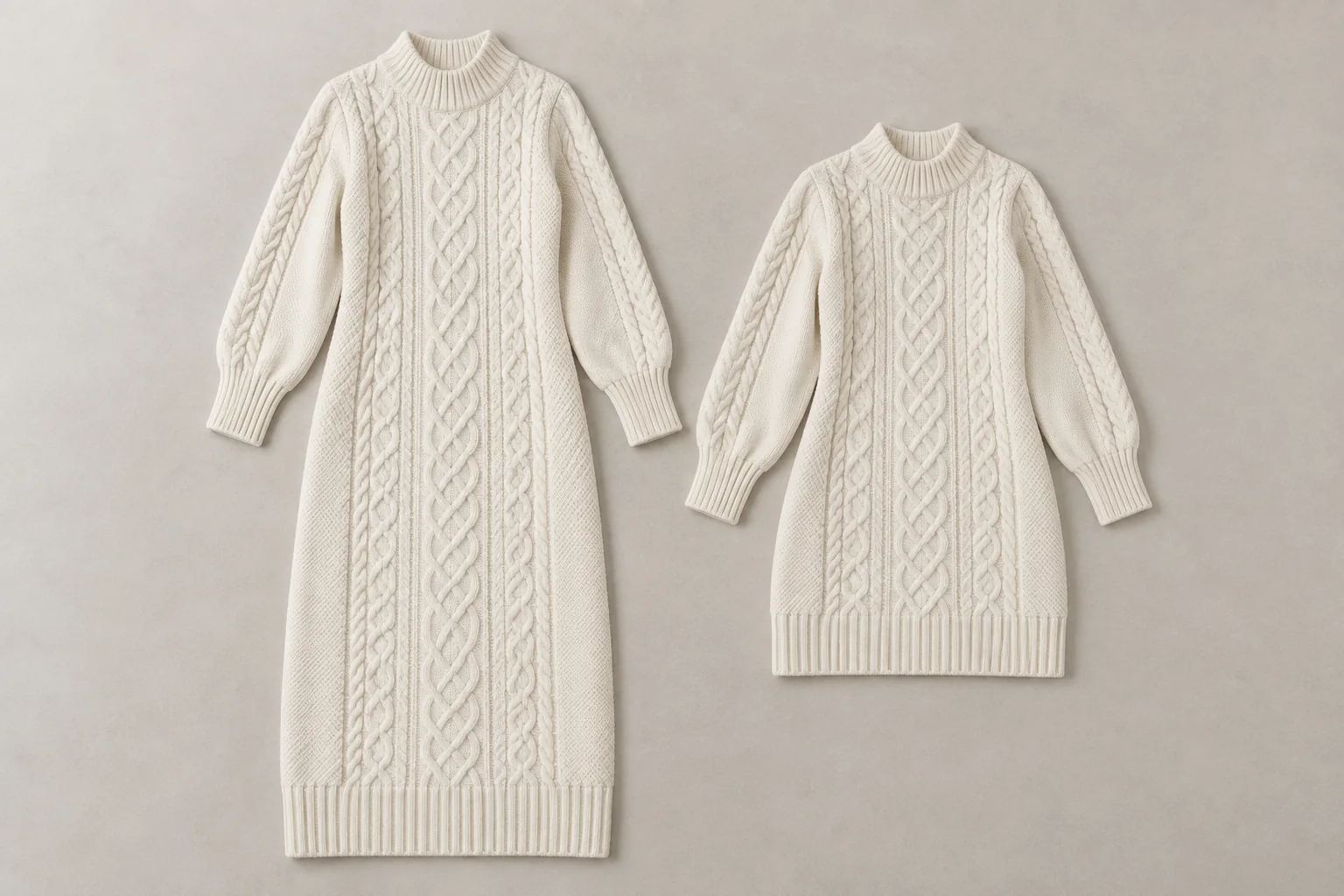
Record the size and length of every weighed sample. Do not apply one base-size result to the whole assortment without stating the basis of that assumption and the evidence still needed. A range can contain different components or construction transitions as well as different body dimensions.
Choose represented samples around those changes. A single extreme size may not reveal a component transition in the middle of the range. The review should explain which groups have measured evidence and where only estimates remain.
If the order mixes colours or finishes that require different material or processing choices, identify their comparison scope. Do not describe the base colour’s reading as a verified result for every variant without supporting records.
Calculate packing from the agreed unit and carton contents
Separate garment mass from packing materials and carton contents. In a simple accounting record, packed-unit mass includes the defined garment unit plus its specified individual packing. A carton record then includes its actual packed units, carton and other agreed materials. Keep the configuration explicit rather than presenting a total without its contents.
The labels and packaging checklist helps identify items that can be missed between development and packing. Confirm whether a belt, slip or accessory is inside the same package and whether its inclusion matches the reviewed product.
Use the retail packing and barcode guide to connect the packing instruction to the SKU and assortment. A carton with mixed sizes needs the actual mix represented in its calculation and check. Do not substitute the lightest sample’s mass for the whole assortment.
Packing volume and garment mass are different constraints. Review the required folded dimensions and actual carton arrangement as well as weight. The buyer’s logistics team should confirm the shipment requirement against the intended route and packaging specification.
What should happen when the budget and sample disagree?
Trace the sweater dress weight difference before revising
| Observed difference | First comparison | Buyer action | Record required to close it |
|---|---|---|---|
| Sample exceeds an estimate | Estimated inputs against actual finished components | Revise the estimate or assess a design proposal | Identified measured sample and updated assumptions |
| Two sample readings differ | Size, state, included items and method | Align the comparison basis | Matched weighing records |
| Lower mass changes the required silhouette | Revised construction against the accepted appearance | Choose or reject the trade-off | Fit and handling evidence with the new reading |
| One size group differs from plan | Dimensions and component transitions | Review the affected assortment scope | Size-specific measurements or justified revised budget |
| Garment meets target but packed unit does not | Packing contents against the approved list | Revisit packing or the product requirement | Complete packed-unit record |
| Carton result differs from calculation | Actual mix, materials and recorded unit masses | Correct the configuration before release | Verified carton contents and measurement |
For a discussion with CNSweaters, send the identified reference sample, current component list, required garment characteristics and packing constraints when you share your sweater dress weight brief.
Frequently Asked Questions
Can GSM replace a finished sweater dress weight?
GSM describes fabric mass per unit area. A complete dress includes its actual panel areas, construction zones and components. Use fabric data for the relevant material comparison, and retain a measured finished-garment result when the decision concerns the complete unit.
Should every size have the same weight target?
The brief should define its size-specific basis or permitted scope. Different sizes and components can require different expectations. Compare the represented samples and record which results are measured, which are estimated and which versions still need evidence before extending the approval.
Does reducing weight always reduce the quote?
No such saving is assumed here. A revised yarn, construction or assembly route can change several cost inputs. Ask for a quotation against the identified proposal and order conditions, then compare cost and product performance as separate decisions.
Why can a sample change weight after finishing?
Its state, material and construction records need to be examined. Moisture condition, processing and included components can affect the comparison, but a changed reading alone does not identify a cause. Align the measurement basis and retain the relevant finishing history before selecting a correction.
Can a carton calculation replace a physical packing check?
A calculation helps plan the arrangement when its inputs are identified. The actual carton can differ in assortment, materials or packing execution. Confirm the proposed configuration through the required physical check and keep the contents record with the measured result.