 CN Sweaters
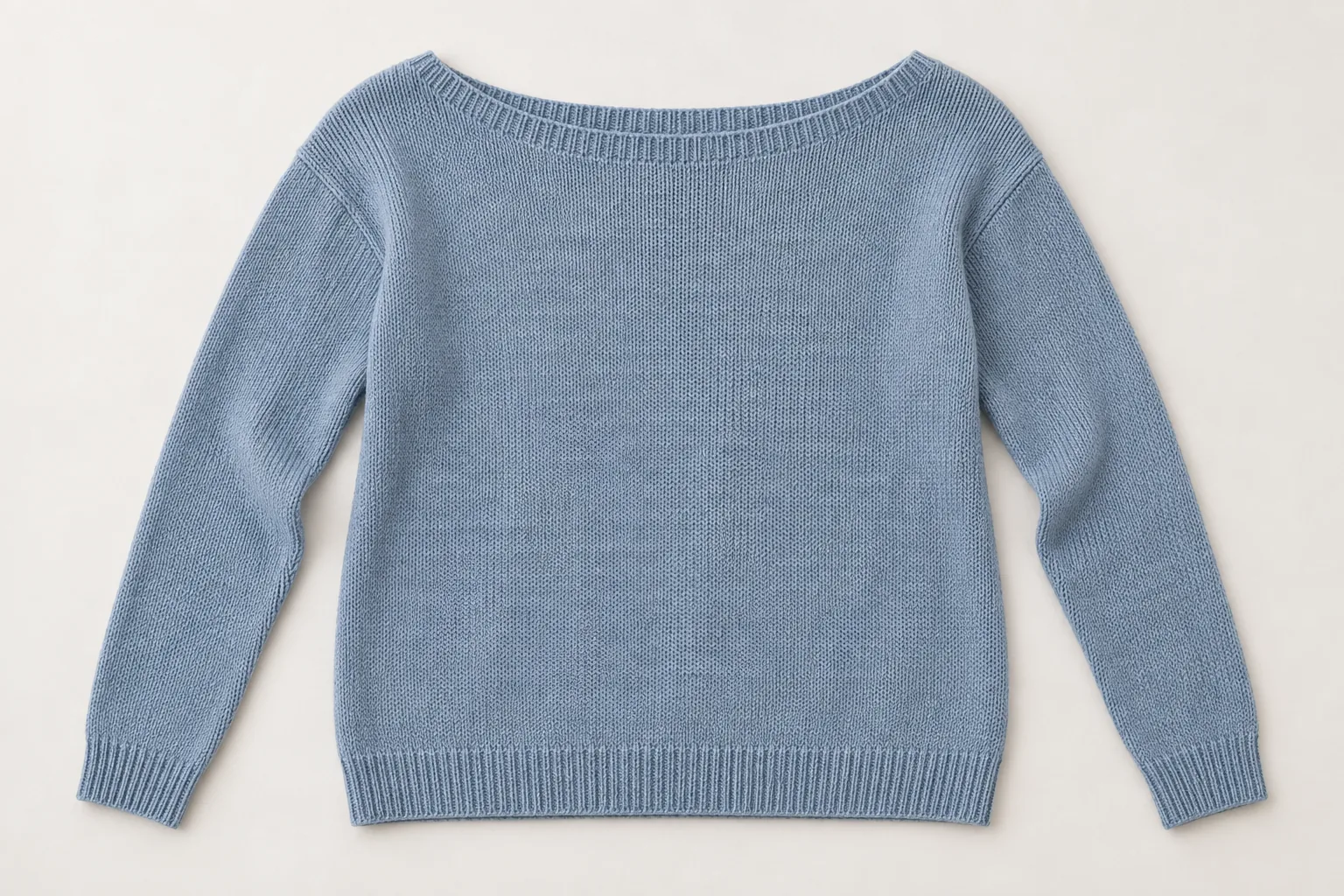
A boat neck sweater looks simple on a sketch: one wide, shallow line from shoulder to shoulder. Its width, front and back drop, edge construction and shoulder position need a shared reference. If the opening runs a little too wide, the sweater slides off one shoulder. If the edge relaxes after washing, the neckline gapes.
As a result, the neckline needs its own measurements, its own edge construction and its own wash check. Record the intended neckline position with the edge and shoulder construction, then compare that relationship after fitting and care.
What makes a boat neck sweater hard to get right
Width, drop and shoulder slope work together
Three numbers define a boat neck: opening width, front drop and back drop. Most tech packs list the width only. However, the front and back drops decide where the line sits on the collarbone. A small change in front drop can make the same width look like a scoop.
The shoulder matters too. Because the neckline ends close to the shoulder point, a narrow shoulder leaves little fabric to anchor the opening. Therefore we review shoulder width and neck width as a pair. For example, if a brand widens the neck by 2 cm, we ask whether the shoulder should grow as well.
On the shoulder or slipping off?
Some designers want the line to sit straight across the collarbone. Others want it to slide into an off-shoulder look when the wearer moves. Both work, but they need different targets. So we ask buyers to state the intended position with the first sample request, ideally with a photo of a reference garment.
Edge construction options for a boat neck sweater
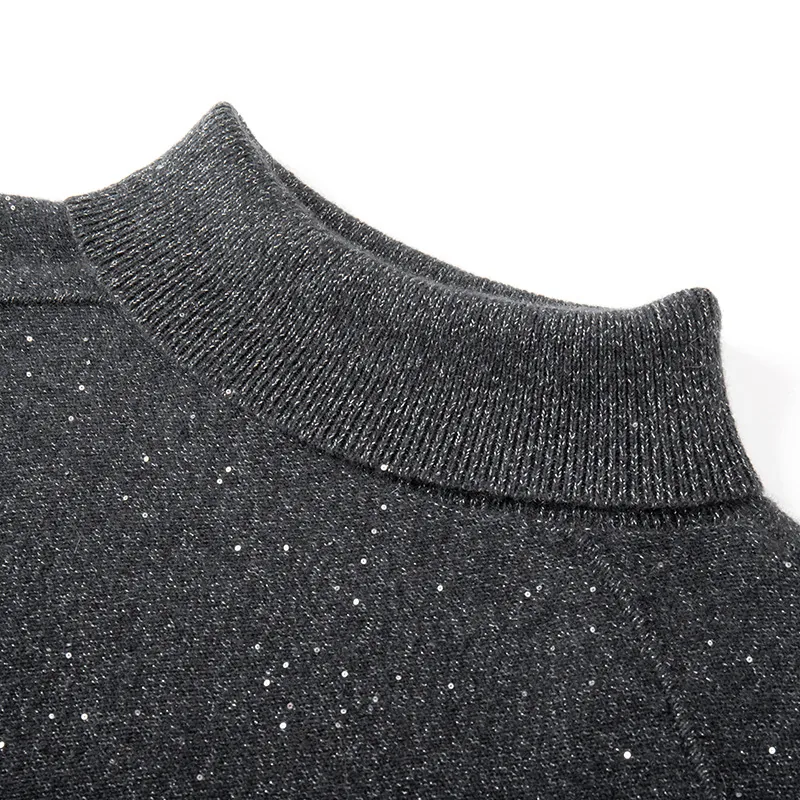
Review the neckline edge together with opening width, shoulder support and garment weight. Compare these four edge options in the actual yarn:
- Self-fabric roll edge: soft and clean, but it can grow if the yarn has little elasticity.
- 1×1 rib band linked to the body: good recovery and a neat finish, although it adds a visible band.
- Tubular (double-layer) edge knitted on the panel: flat and stable, with no linking seam at the front.
- Elastic yarn or tape inside the edge: holds the width well; however, it can change the handfeel.
Yarn choice changes the picture. Compare the actual yarn, stitch and edge assembly; fiber names and nominal gauge alone do not establish neckline recovery. Because we stock more than 100 yarns, we can often knit two edge versions on the same body for a side-by-side comparison. Confirm the sampling time for the selected yarn and edge trials; complex construction can take longer than the standard sample window.
Gauge plays a part as well. On a 12G or 14G body, a fine tubular edge looks refined. In contrast, a 5G or 7G chunky knit usually looks more balanced with a wider rib or folded band.
Linking tension on the neckline
When the band joins the body by linking, tension matters as much as the band itself. A tight linking line can pucker the edge and shorten the neckline. A loose one lets the band flare. Our in-house linkers check neckline length against the pattern before pressing. For more on this step, read why linking quality matters.
How we measure recovery on a boat neck sweater
Relaxed, extended, then relaxed again
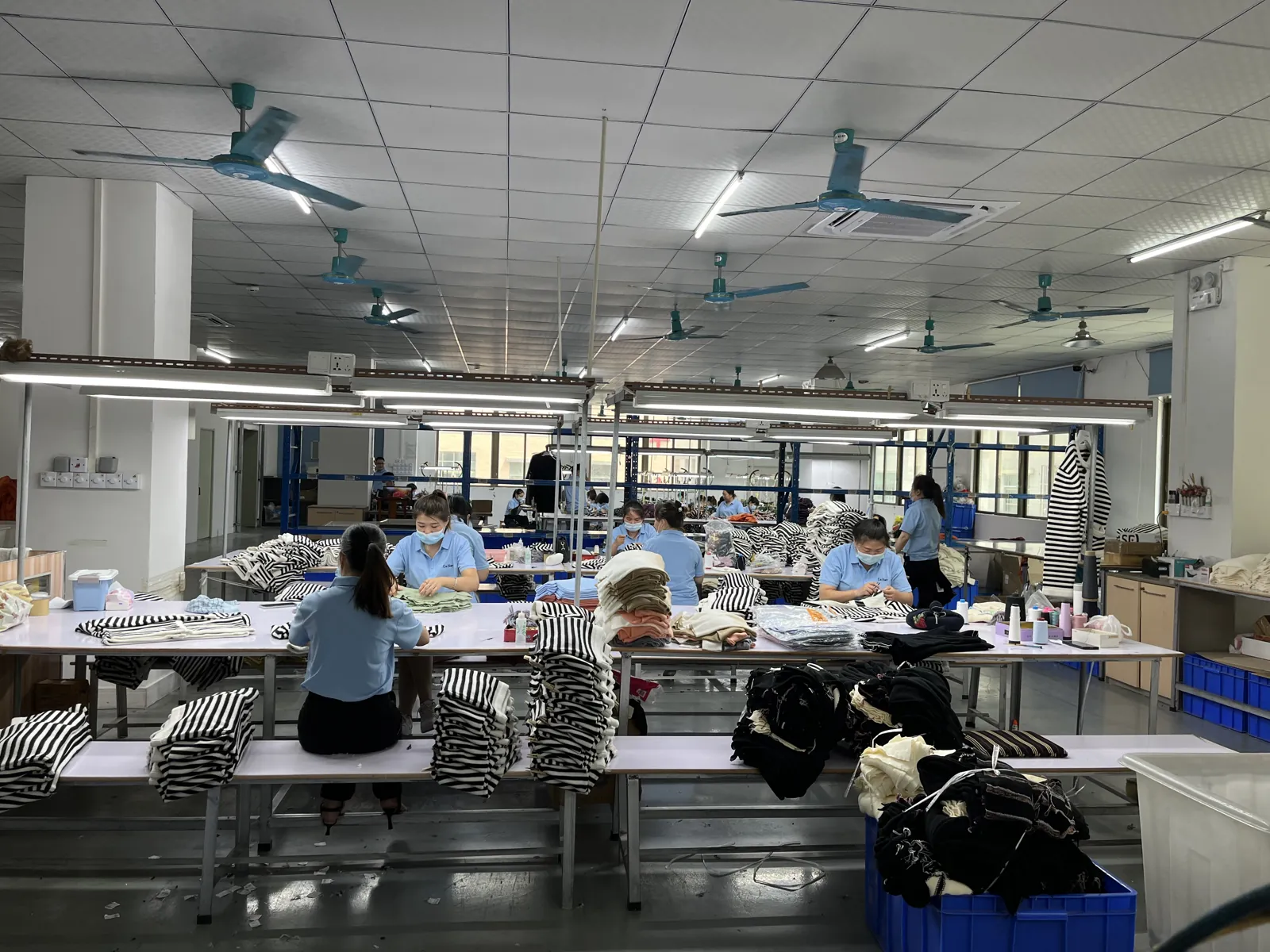
First, we measure the opening flat and relaxed, edge to edge along the neckline. Next, we extend it gently, to the point where the stitches open but do not strain. The gap between those numbers shows how much the edge gives when the wearer pulls the sweater over the head. Then we let the garment rest and measure the relaxed width again.
Record the difference between the initial and rested opening widths as a garment observation under the stated conditions. When that loss runs high, the neckline will look wider on the shop floor than on the approved sample. Stretch and recovery methods for knitted fabric appear in ASTM textile standards such as ASTM D2594. Buyers can ask a lab to run them on the finished fabric.
Wash, dry flat, measure again
A neckline that passes on a steamed sample can still fail after the first home wash. Therefore we wash at least one sample following the draft care label, dry it flat and measure the opening again. Methods such as AATCC TM135 and ISO 6330 give a neutral reference for wash and dry conditions.
We also check the shoulder seam after washing. If the seam has grown, the neckline can look wider even though the edge itself held.
Fitting a boat neck sweater on a body
A flat measurement cannot show how the line behaves on a sloping shoulder. So we fit the sample on a form and, when possible, on a live model in the base size. We look for three things. Does the line stay level front to back? Next, does it ride up toward the neck when the arms lift? Finally, does it drop off one shoulder when the wearer reaches forward?
If the neckline slides, the fix may not need a narrower opening. Check back-neck position, shoulder geometry and the opening together. A proposed adjustment needs a repeat fitting comparison; none of these changes guarantees that slipping will stop.
Grading the boat neck sweater neckline across sizes
Neckline width should not grow at the same rate as chest width. When a grade rule simply adds the chest increment to the neck, the largest size ends up with an opening no shoulder can hold. On the other hand, a neck that barely grows looks tight on the XL.
Set neck and shoulder increments from the intended fit rather than copying the chest increment. Review a size set that represents the range and construction changes before bulk; a base sample alone cannot verify those relationships. Our guide on how to grade sizes for custom knit sweaters explains the wider method.
Carrying the approved boat neck sweater into bulk
Once the buyer signs off, we record the edge structure, linking setting, yarn lot and pressing temperature on the production card. Because small shifts in any of these can change the width, bulk panels run on the same machine gauge and program as the approved sample.
During production, our QC team measures necklines from the first bulk pieces and then at regular intervals. Pressing often causes drift, since heavy steam can stretch the edge. For the full inspection flow, see our quality control process.
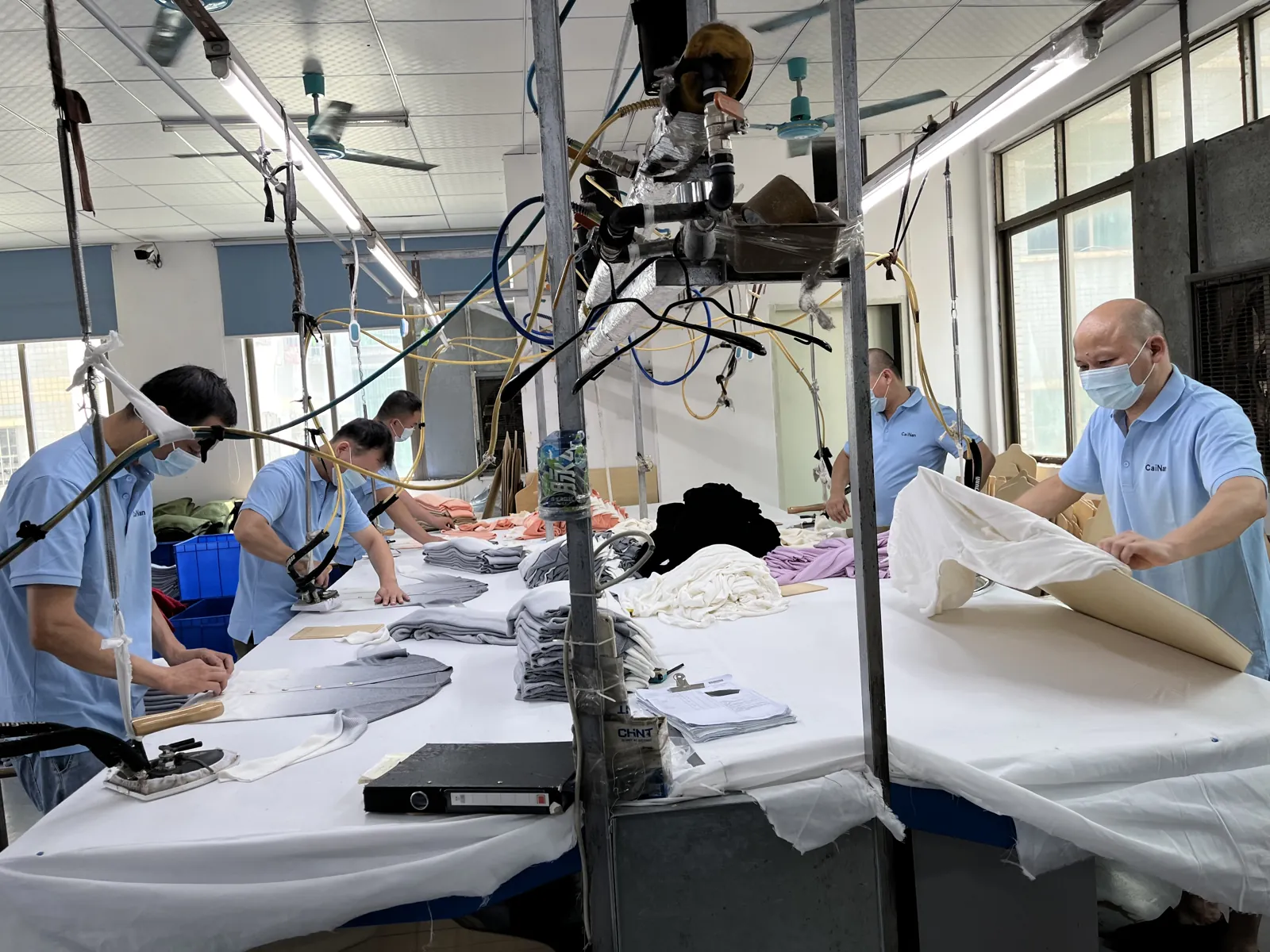
Carry the approved neckline measurement, shoulder width and recovery check into the size set before a boat-neck sweater is quoted for bulk. A wider neck can look balanced laid flat yet slide on the intended wearer, so show the sample both worn and rested after care. The custom pullover sweaters range offers other neckline routes; confirm yarn availability and the actual sampling calendar for this one.
Conclusion
Keep the boat neck sweater’s accepted opening position, measurement origins and edge revision together. When a later sample slips or gapes, compare it with those records before changing width, shoulder or trim.
FAQ
Why does a boat neck sweater slip off the shoulder?
Check whether the opening grew, the shoulder relationship changed or the edge remained displaced after wear. Repeat a comparable fitting before selecting a narrower opening or another edge construction.
Which edge recovers best on a boat neck sweater?
A 1×1 rib or a tubular edge in a yarn with some elasticity normally recovers best. By comparison, plain roll edges look soft but tend to grow.
How many samples does a boat neck approval need?
We suggest one base-size sample, one washed sample and a small size set. Each sample round takes 3–7 days.
Can you match a neckline from a reference garment?
Yes. Send the reference and we measure it flat and extended, then knit a sample to the same width and drop.
Ready to develop your next neckline? Send us your tech pack or reference garment and we will reply with sample options.